The 1920s: Supporter Backlash

The new series on Manchester City in the 1920s continues today with a 1,300 word subscriber article on the 1929-30 season. If you subscribe (see below) I hope you enjoy it. If you are not currently a subscriber then why not try it for a month (£3 per month or sign up for a year at a discounted £20 per year)?

Here’s the article:

Subscribe to get access

Read more of this content when you subscribe today. It costs £3 a month (cancel anytime) or sign up for a year at £20 per year. Subscribers have access to the 1000s of articles, features, interviews etc. posted so far and all those posted during your subscription.

The 1920s: Wembley

The new series on Manchester City in the 1920s continues today with a 4,900 word subscriber article on the 1925-26 season. If you subscribe (see below) I hope you enjoy it. If you are not currently a subscriber then why not try it for a month (£3 per month or sign up for a year at a discounted £20 per year)?

Here’s the article:

Subscribe to get access

Read more of this content when you subscribe today. It costs £3 a month (cancel anytime) or sign up for a year at £20 per year. Subscribers have access to the 1000s of articles, features, interviews etc. posted so far and all those posted during your subscription.

The 1930s: 1933-1934 Record Crowds And Wembley Glory

My series on Manchester City in the 1930s continues today with a 4,300 word subscriber article on the 1933-34 season. If you subscribe (see below) I hope you enjoy it. If you don’t subscribe then why not try it for a month (£3 per month or sign up for a year at a discounted £20 per year)?

Here’s the article:

Subscribe to get access

Read more of this content when you subscribe today. It costs £3 a month (cancel anytime) or sign up for a year at £20 per year. Subscribers have access to the 1000s of articles, features, interviews etc. posted so far and all those posted during your subscription.

The 1930s: 1932-33 The Number Game

My series on Manchester City in the 1930s continues today with a 1600 word subscriber article on the 1932-33 season. If you subscribe (see below) I hope you enjoy it. If you don’t subscribe then why not try it for a month (£3 per month or sign up for a year at a discounted £20 per year)?

Here’s the article:

Subscribe to get access

Read more of this content when you subscribe today. It costs £3 a month (cancel anytime) or sign up for a year at £20 per year. Subscribers have access to the 1000s of articles, features, interviews etc. posted so far and all those posted during your subscription.

The 1930s: 1931-32 A Minute to go!

My series on Manchester City in the 1930s continues today with a subscriber article on the 1931-32 season. If you subscribe (see below) I hope you enjoy it. If you don’t subscribe then why not try it for a month (£3 per month or sign up for a year at a discounted £20 per year)?

Here’s the article:

Subscribe to get access

Read more of this content when you subscribe today. It costs £3 a month (cancel anytime) or sign up for a year at £20 per year. Subscribers have access to the 1000s of articles, features, interviews etc. posted so far and all those posted during your subscription.

The 1930s: 1929-30 Supporter Backlash

My series on Manchester City in the 1930s begins today with a 1,300 word subscriber article on the 1929-30 season. If you subscribe (see below) I hope you enjoy it. If you don’t subscribe then why not try it for a month (£3 per month or sign up for a year at a discounted £20 per year)?

Here’s the article:

Subscribe to get access

Read more of this content when you subscribe today. It costs £3 a month (cancel anytime) or sign up for a year at £20 per year. Subscribers have access to the 1000s of articles, features, interviews etc. posted so far and all those posted during your subscription.

As well as subscriber pieces this series on the 1930s includes some free articles. Watch out for a daily post.

The 1920s – The First All-Manchester FAC Semi-Final

On this day (27 March) in 1926 the first all-Manchester FA Cup semi final occurred. You can see film of that game here and subscribers can read about the match below. Here’s the film from Bramall Lane:

https://www.britishpathe.com/asset/51947/

Subscribers can read the article below:

Subscribe to get access

Read everything on the site when you subscribe today. Monthly subscription is £3 per month (cancel anytime). Monthly subscribers access everything posted since 1 October 2022. Alternatively, sign up for a year at a time for the special discounted annual subscription of £20 for access to everything posted since the site’s creation in 2020.

60 Years Ago: McMullan

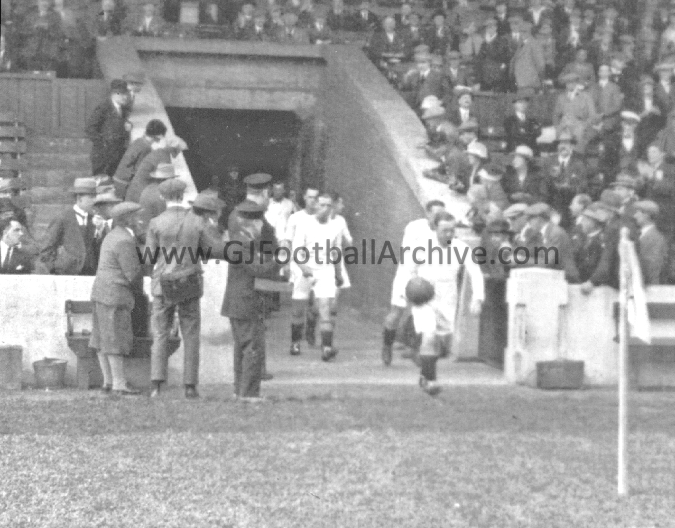
On this day (28 November) in 1964 one of Scotland’s greatest internationals of all time died. He was the former Partick, Manchester City, Oldham and Scotland half back Jimmy McMullan (seen leading out City in this photo). Here’s a MCFC profile of him I wrote a while back which, hopefully, explains a little as to why he should be remembered.

JAMES MCMULLAN (1926-33)

Half Back, 5ft 7in, 11st. 0lbs, b. Denny, 26 March 1895, d. Sheffield, 28 November 1964

Signed from Partick Thistle, 10 February 1926 (£4,700)

Transferred: Oldham Athletic, 15 May 1933 

Career: Denny Hibernian, Third Lanark, Partick Thistle, Maidstone United player-manager, Partick Thistle, City, Oldham Athletic player-manager

Debut v Liverpool, 27 February 1926

Appearances: League: 220 apps. 10 gls; FA Cup: 22 apps. 2 gls; Total: 242 apps, 12 gls.

One of Scotland’s greatest internationals of all time, left back Jimmy McMullan was already a significant star when the Blues signed him in 1926 for £4,700.  Clearly his arrival was a major talking point, especially as this was during City’s managerless period when vice-chairman Albert Alexander took on the management of the players.  Alexander must have possessed a great footballing brain and must have been a terrific negotiator as McMullan readily joined the Blues.

Within two months of his arrival McMullan was playing at Wembley in the FA Cup final.  City lost that game and were also relegated on the last day of the season creating a new, if unwanted, record.  

In 1927-8 he made 38 appearances and scored four goals as City won the Second Division title, and that same year McMullan captained Scotland to their most famous victory – a 5-1 defeat of England at Wembley.  It was a highly embarrassing day for England, but a great one for the City man.  He remained in the City side throughout the twenties and early thirties, and in 1933 he returned to Wembley again with the Club.  Sadly, his second final also ended in defeat, and the following May he moved to Oldham as player-manager.  He later had spells in charge at Aston Villa (their first official manager), Notts County, and Sheffield Wednesday.  He was Wednesday’s manager in 1938-9 when his side drew 1-1 with City at Maine Road.  Both sides were chasing promotion, and the single point was not enough for either side.  Wednesday missed promotion by a point to arch rivals Sheffield United.  In 1942, during the wartime seasons, McMullan’s contract was not renewed.  

He passed away at the age of 69 while still living in Sheffield in 1964.

If you enjoy all the free material on my website and would like to support my research and keep this website going (but don’t want to subscribe) then why not make a one-time donation (or buy me a coffee). All support for my research is valued and welcome. It allows me to keep some free material available for all. Thanks.

Choose an amount

£2.50
£5.00
£7.50

Or enter a custom amount

£

Your contribution is appreciated.

Donate

The 1932 FA Cup Semi-Final

In 1932 Manchester City and Arsenal faced each other in the FA Cup semi-final. It was the Blues’ third semi appearance in eight years and they would go on to better this stage in each of the following two seasons. This semi was controversial and it had major repercussions for City. You can read the full story (and watch highlights) below:

Subscribe to get access

Read this article and the entire website when you subscribe today. Annual subscribers (£20 per year) get full access to everything posted on the site (including interviews, articles, talks and books) so far plus new material for the length of their subscription. There’s also a monthly option (see below).

Subscribe to get access

Read this article and the entire website when you subscribe today. Monthly subscribers (£3 per month, cancel anytime) get full access to everything posted on the site since 1 October 2022 plus new material for the length of their subscription. Why not sign up for a month and see what you think?

Maine Road 100 – Day 5

The fifth of my posts counting down to the centenary of Maine Road’s opening game. Today it’s about the Players’ Tunnel at Maine Road…

Before I start notice on the black and white image the pitchside stone post. Yesterday I mentioned the carved edge style and how originally there were two impressive stone posts, one either side of the tunnel entrance. I said that by 2003 these had been remodelled extensively to match the rest of the white perimeter wall but that one of them still showed an element of the styling used throughout the stadium at the time of construction.

Maine Road’s Tunnel post. Photo by Ed Garvey

Well on the black and white image you can see that same post (on the right of captain Jimmy McMullan) in its original form.

So, what’s my angle for today? Well, it’s the players’ tunnel itself. In this 1926 image you can see the tunnel as it looked when it was first built. Eagle eyed readers may notice that the tunnel looks a little different to how it did during the 1970s onwards. That wall above the tunnel was actually taken down and the front of the seating above the tunnel was brought forward into the tunnel during the 1960s. You can see that by looking at this image of chairman Albert Alexander and Joe Mercer who are actually sat in front of where the original tunnel wall was. The space they occupy would have been open air, floating above the tunnel only a few years earlier.

Albert Alexander & Joe Mercer in the Directors’ Box extension (Copyright Mirrorpix).

The 1926 photo of the tunnel appeared in my 1997 book Manchester The Greatest City and about a year after it was published I received a letter from Canada. It came from an elderly City supporter who had emigrated to Canada many years earlier. His daughter had returned to England for a visit in 1998 and she popped into a bookshop (I think it was the old Sportspages shop) thinking that if there was a book on Manchester City she would buy it for her dad. She saw my book and bought it.

When she returned to Canada she gave the book to her father and while reading it he was stunned to find himself as a small boy on this photo. He is pictured leaning on the wall close to his mother and father. It was a remarkable coincidence but what made it even more special is that this photo came from film of the game. I was able, with the support of the British Film Institute to get a VHS copy of the game and I sent it to Canada so that he could also see himself and his parents on film, moving around.

For me that story gave me an overwhelming feeling that researching and writing about history can add significantly to the wellbeing, interests or lives of others. Research matters. There was also a great feeling of coincidence – I could easily have chosen a different illustration; the daughter may not have bought my book; her father may have only glanced through the book and so on.

1926 City v Fulham, Maine Road. Jimmy McMullan with the ball.

If you’d like to read more on the history of Maine Road, take a look at Farewell To Maine Road, which can be downloaded from this page:

If you enjoy all the free material on my website and would like to support my research and keep this website going (but don’t want to subscribe) then why not make a one-time donation (or buy me a coffee). All support for my research is valued and welcome. It allows me to keep some free material available for all. Thanks.

Choose an amount

£2.50
£5.00
£7.50

Or enter a custom amount

£

Your contribution is appreciated.

Donate