On this day (7 December) in 1957 Ken Barnes (pictured here with Don Revie and Johnny Williamson) became only the third person to successfully convert three penalties in a Division One/top flight game, as Manchester City defeated Everton 6-2. Albert Dunlop, who later became a City scout working for Barnes, was the Everton ‘keeper that day and Barnes remembers facing Dunlop for each attempt: “I stuck one to the left, one to the right and he was so confused by the time the third award arrived that I could have back-heeled it in!”
If you enjoy all the free material on my website and would like to support my research and keep this website going (but don’t want to subscribe) then why not make a one-time donation (or buy me a coffee). All support for my research is valued and welcome. It allows me to keep some free material available for all. Thanks.
Happy 60th birthday to former Everton, Manchester City & Oldham player Neil Pointon. Back in 2005 when both he and I were much younger, I interviewed Neil at his home Here for subscribers is that interview as it appeared when published in April 2005:
Subscribe to get access
Read more of this content when you subscribe today. It costs £3 per month (cancel anytime) or you can sign up for a year at the discounted annual rate of £20. The site was created in December 2020 and annual subscribers have access to everything, including PDFs of Manchester A Football History (that alone cost £24.95 when published) & more.
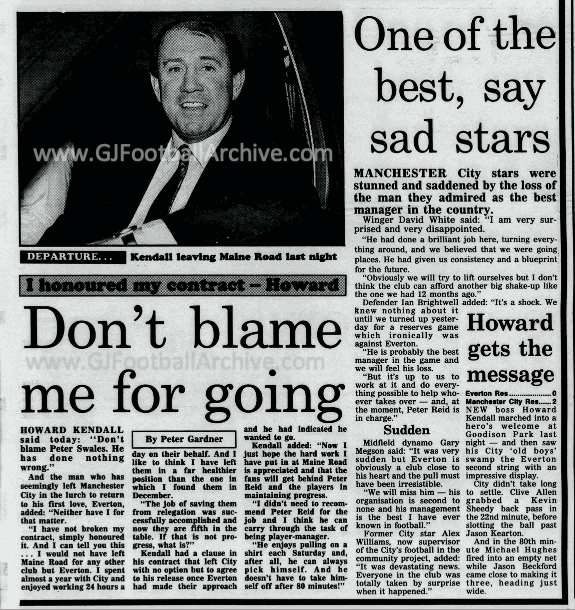
On this day (3 November) in 1990 Manchester City and Sunderland played out a 1-1 draw at Roker Park, watched by 23,137. This was Howard Kendall’s last match in charge as his affair with City came to an end. Within days he had returned to his first love Everton.
While you’re here why not subscribe and read a series of articles covering Manchester City in the 1990s (and other decades too)? Here’s an article on the 1990-91 season when a shock managerial departure could have disrupted the club but ultimately they finished 5th, 3 points ahead of Manchester United: (it’s a 2,700 word article available to subscribers):
Subscribe to get access – Monthly
Read more of this content when you subscribe today. It costs £3 per month (cancel anytime) to access everything posted since 1 October 2022 or there’s a special annual rate below which gives greater access and works out much cheaper.
Read more of this content when you subscribe today. It costs £3 per month (above) or £20 a year (here) to access everything posted since the site was created in December 2020. This special rate works out about £1.67 a week and gives access to everything posted, including PDFs of 3 of my books.
If you enjoy all the free material on my website and would like to support my research and keep this website going (but don’t want to subscribe) then why not make a one-time donation (or buy me a coffee). All support for my research is valued and welcome. It allows me to keep some free material available for all. Thanks.
On this day (5 October) in 1968 Manchester City wore Red & Black stripes for the first time. Malcolm Allison had suggested adopting AC Milan’s colours and City first wore them for their meeting at Everton on October 5th 1968. The game ended in a 2-0 defeat and the result brought a lot of complaints from fans about the use of the colours. However, due to a colour clash with Leicester, the new colours were worn in the 1969 FA Cup final. The club won that trophy and the kit soon entered City folklore as an important kit.
City chose to wear the new style for all the successful major finals that followed during Joe Mercer & Malcolm Allison’s time, including the club’s first European trophy in 1970. At one point Allison suggested making red and black the first choice kit.
There were however plenty of complaints about City adopting the colours. Take a look at an earlier post I made on those complaints here:
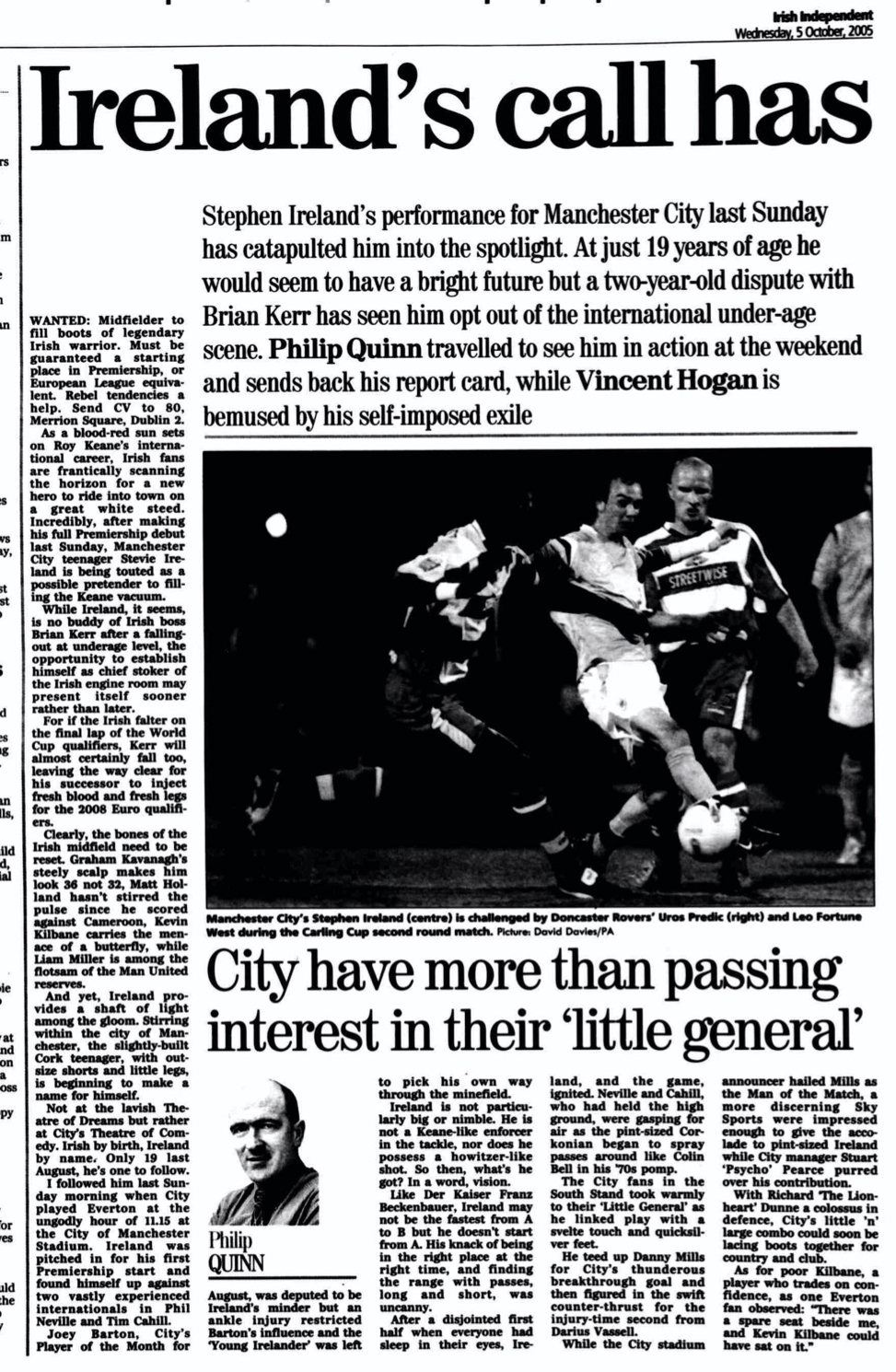
Everton, so often a bogey team back then for Manchester City, were defeated 2-0 on this day (2 October) in 2005. This was the first Sunday morning kick off in the Premier League and the match commenced at 11.15 with some fans making a point of the early start by wearing pyjamas. It was also Stephen Ireland’s first full Premiership game. Before the match he admitted to being “very nervous” and post-match he commented that the rest of the team had supported him: “That helped me ease my nerves and settle in as one of them.” You can see highlights and read more about the game below:
If you enjoy all the free material on my website and would like to support my research and keep this website going (but don’t want to subscribe) then why not make a one-time donation (or buy me a coffee). All support for my research is valued and welcome. It allows me to keep some free material available for all. Thanks.
If you’ve enjoyed this then why not subscribe? Every subscription directly helps support my research and provides the subscriber with access to everything posted on this site, including the entire Manchester A Football History and From Maine Men To Banana Citizens books, plus interviews, articles and more. I am not employed by anyone and all my research is self funded or comes from subscriptions to this site.
Five years ago today (28 September 2019) Manchester City defeated Everton 3-1 before 39,222 at Goodison Park. The City scorers were Jesus, Mahrez and Sterling and you can see highlights of the game below:
While you’re here why not subscribe to my website. It costs £20 per year (works out about £1.67 a month) and for that every subscriber gets access to a PDF of both Manchester A Football History and From Maine Men to Banana Citizens (both out of print) plus the hundreds of articles, interviews and videos already posted and a guaranteed 4 new exclusive articles per month (usually a lot more than that!). I am not employed to do any research and so subscribers help fund detailed research into football’s history. Thanks for supporting my work if you do already subscribe or buy my books.
If you enjoy all the free material on my website and would like to support my research and keep this website going (but don’t want to subscribe) then why not make a one-time donation (or buy me a coffee). All support for my research is valued and welcome. It allows me to keep some free material available for all. Thanks.
There’s a lot of furore this week about Manchester City’s decision to wear their new Oasis inspired kit instead of their home kit for their Champions League game with Inter Milan. Lots are talking about tradition, heritage and the like, so I thought I’d add a few words here that might have been overlooked or forgotten. So here goes…
Firstly, my position is clear that I’ve always been keen to see City wear home colours/blue for every fixture possible (whether home, away or at a neutral venue) but I’m a pragmatist and know that’s no longer likely. History and tradition does mean something but of course, when it comes to football, traditions change frequently. People may think City have only ever worn a particular colour at home or that the traditional away colours are red & black but these things are not true. Times change.
When it comes to wearing alternative kits at home it has been done more often than perhaps people realise. In fact the only decade when it hasn’t happened appears to be the 2010s – I say appeared because I haven’t got evidence of every home game in the 1890s and 1900s!
These last few days have caused some to recall the Middlesbrough game when David James went up front and the two Tottenham games at Maine Road in 80s/90s when the referee felt the kits were too close and City ended up changing. But there have been many other occasions. In fact it’s well over 100 years since City first chose to wear away colours/alternative strips at home when they didn’t need to!
The image above of Neil Young comes from the 1971 ECWC semi-final v Chelsea. Notice that Young is wearing City’s away colours.
Often when there was a clash of colours in a cup game City would wear their away strip. Games in the 1920s right through to 1970s saw the Blues don maroon, red/black and even scarlet at times at Maine Road.
Here’s another image from that Chelsea semi final:
1971 ECWC v Chelsea. Francis Lee. Photo by Alan Jubb
To the right you can see the North Stand under construction, as you can in the Young image.
Other games in living memory (not necessarily mine, but living memory for many older blues) include:
January 1971 – City v Wigan in FA Cup (red & black)
September 1970 – City v Bologna in Anglo-Italian Cup (red & black)
January 1968 – City v Reading in FA Cup (all maroon)
March 1966 – City v Everton in FA Cup (all maroon)
March 1966 – City v Leicester in FA Cup (all maroon)
March 1956 – City v Everton in FA Cup (maroon shirts, white shorts)
In earlier decades City often chose to wear an away shirt for cup ties where there was a clash. Prior to 1921 the FA rule was that home teams would have to change if there was a clash.
In March 1924 City chose to wear a kit they described as ‘Lucky scarlet’ for a FA Cup tie with Cardiff at Maine Road. So for well over 100 years City have often chosen to wear alternative kits at home instead of traditional blue when they didn’t need to.
Personally, I’d still prefer City to always wear blue no matter where they play, but that’s never going to happen anyway.
Incidentally, if you’d like to read more on the history of Maine Road, take a look at Farewell To Maine Road, which can be downloaded from this page:
If you enjoy all the free material on my website and would like to support my research and keep this website going (but don’t want to subscribe) then why not make a one-time donation (or buy me a coffee). All support for my research is valued and welcome. It allows me to keep some free material available for all. Thanks.
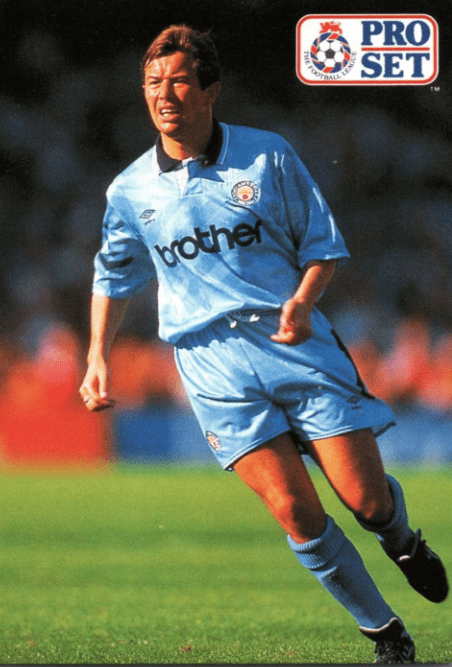
On this day (1 September) in 1990 a rare thing happened. Adrian Heath scored for Manchester City. Not only that but it was against his former team Everton and City won 1-0! There’s even film of it:
While you’re here why not find out more about the 1990-91 season when a shock managerial departure could have disrupted the club but ultimately they finished 5th, 3 points ahead of Manchester United. Here’s a 2,700 word article on that season:
Subscribe to get access – Monthly
Read more of this content when you subscribe today. It costs £3 per month (cancel anytime) to access everything posted since 1 October 2022 or there’s a special annual rate below which gives greater access and works out much cheaper.
Read more of this content when you subscribe today. It costs £3 per month (above) or £20 a year (here) to access everything posted since the site was created in December 2020. This special rate works out about £1.67 a week and gives access to everything posted, including PDFs of 3 of my books.
This series of articles and features will run throughout March with indepth articles some days and smaller ‘on this day’ style posts on others. There will be flashbacks to great games, players and more. Every day in March will offer something to enjoy.
Subscribers will get access to everything, while some on this day material will be free for all to view.
If you want to know more on this incredible decade for Manchester City Football Club then why not subscribe and read it all? If you’d like to know more about subscribing then see:
Continuing the series of features on Manchester City in the early 1900s! Today it’s an article on the 1908-09 season. If you’re a subscriber you can read this below.
If you’re not a subscriber then why not sign up for a month and see what you think?
Subscribe to get access
Read more of this content when you subscribe today. It costs £3 per month (cancel anytime) or sign up a year at a time for the discounted annual fee of £20. This gives access to everything on the site, including PDFs of 3 of my books and various other articles, interviews and audio material. Each subscriber has access to all content posted during their subscription period too. Why not sign up for a month and see what you think?
Continuing the series of features on Manchester City in the early 1900s! Today it’s a 2200 word article telling the story of 1905-06 when the FA ban almost destroyed Manchester’s Blues. This story is one of skullduggery (by other teams too!) and powerful figures seeking to limit opposition.
All of this sound familiar? Well, get a brew and start reading below if you’re a subscriber. Maybe read yesterday’s feature first?
If you’re not a subscriber then why not sign up for a month and see what you think?
Subscribe to get access
Read more of this content when you subscribe today. It costs £3 per month (cancel anytime) or sign up a year at a time for the discounted annual fee of £20. This gives access to everything on the site, including PDFs of 3 of my books and various other articles, interviews and audio material. Each subscriber has access to all content posted during their subscription period too. Why not sign up for a month and see what you think?






 Gary James' Football Archive