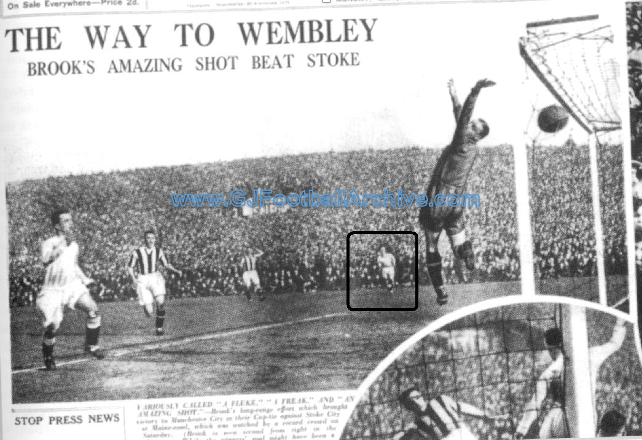
On this day (6 December) in 2004 Bradley Wright-Phillips marks his first League appearance for Manchester Cuty with an 80th minute goal against Middlesbrough. The game ended in a 3-2 defeat for City (Robbie Fowler scored the other City goal) but, if you fancy a flashback, you can watch highlights here: https://www.youtube.com/watch?v=IYEYZF118Ao
If you enjoy all the free material on my website and would like to support my research and keep this website going (but don’t want to subscribe) then why not make a one-time donation (or buy me a coffee). All support for my research is valued and welcome. It allows me to keep some free material available for all. Thanks.
Now that Erling Haaland has joined an exclusive group of Manchester City players who have scored 100 League goals for the club I thought I’d post a table of all those players. I’ve also listed them in a goals per game format (I’d love to do goals per minutes but we simply don’t have that information for all players). Here goes…
The goals per game ratios for all Manchester City players who have scored 100 league goals or more…
Goals
First Name
Surname
Goals Per Game
Total League Appearances
100
Erling
Haaland
0.9009
111
184
Sergio
Aguero
0.6691
275
126
Billy
Gillespie
0.5780
218
120
Horace
Barnes
0.5530
217
122
Tommy
Browell
0.5495
222
116
Frank
Roberts
0.5370
216
158
Tommy
Johnson
0.4817
328
112
Francis
Lee
0.4498
249
110
Fred
Tilson
0.4472
246
142
Joe
Hayes
0.4290
331
107
Alec
Herd
0.4163
257
146
Billy
Meredith
0.3989
366
158
Eric
Brook
0.3511
450
117
Colin
Bell
0.2970
394
If you enjoy all the free material on my website and would like to support my research and keep this website going (but don’t want to subscribe) then why not make a one-time donation (or buy me a coffee). All support for my research is valued and welcome. It allows me to keep some free material available for all. Thanks.
I’ve been sorting out my writing area and have been going through my collection. I’ll post a few odd bits on here over the coming weeks but I spotted this earlier today and thought I’d get this posted straight away. It’s the first issue of King of the Kippax and I remember buying it when it first came out in 1988. I’d previously bought Blueprint, which had included material from Dave and Sue Wallace (the editors of King of the Kippax), and used to eagerly look for any new fanzine back then. This copy remains part of my collection and probably will do for as long as I have a collection.
Dave and Sue created something special with this fanzine and who would have thought that decades later they would still be producing it. I missed the deadline for the last print edition of King of the Kippax sadly, but here’s something I wrote back in 2013 when there was a series of football anniversaries. I hope it gives a feel of how I felt about fanzines and the role of King of the Kippax over the decades.
It’s a season of footballing anniversaries this year (2013). The FA celebrates 150 years, the Football League 125 and King of the Kippax an amazing 25 years. Of these three anniversaries KK is inevitably getting the least focus but in many ways its significance to football, or at least our team, has been greater during its first 25 years than the FA’s first 25.
The FA did little to support football in Manchester for decades and it wasn’t until Manchester’s clubs started to take the FA Cup seriously that the organisation began to matter. But even then the FA did its upmost to prevent our professional clubs from challenging properly. In 1904 when City became Manchester’s first FA Cup winners how did the FA react? They decided we must be doing something illegal and sent auditors to the club to determine if we had ‘bought’ success. Okay, so they found a few irregularities with a transfer from Glossop, but for the following year or so they relentlessly pursued our club (and to be fair did something similar with Newton Heath, who became United, and with Glossop). Ultimately, we received a devastating punishment and the club could have died. I won’t go on about how unjust all of this was – City were no worse than most sides the difference being that the FA was determined to catch us out! – but if you do want to read an account of it dig out my latest book “Manchester The City Years”.
Despite all of this the FA Cup actually gave City our first success and we should ensure we celebrate 23 April 1904 (the date of the final) every year – make St George’s Day City’s day!
The Football League was more supportive of City during those early years, but prior to 1892 the League had no involvement from either Manchester side despite the League holding its first meeting in Manchester. Our celebrations of the League should really come in 4 years’ time when it’ll be 125 years since City (as Ardwick) joined the League. Although it’s worth pointing out that Ardwick and Manchester City were two separate organisations – and stressed as such at the time – and even existed alongside each other for a short while (personally though, I see MCFC as a continuation of Ardwick in spirit if not in legal terms). From 1892 to 2002 (when City last competed in the Football League) the Football League was central to City’s life. The competition became City’s lifeblood as far as competition was concerned.
What about KK? Well, unlike the other two KK was significant to City and City fans from the start. It was born in an era when fans had much to say but little opportunity to be heard. Alongside the other fanzines born in the late 1980s KK gave us a voice and a shared understanding of what the issues at City and in football were. Before the fanzines our only real outlet was the Piccadilly Radio phone-in on Saturdays which came in to its own during the time James H Reeve was at the helm. We had no forums, blogs, tweets etc. We didn’t have phone-in shows on national radio or fan columns in newspapers. We didn’t have interaction with the club, other than via supporters clubs meetings which some fans saw as being too weak to challenge the club on key issues (I won’t get into all of that here, but it’s worth noting that some fans did feel the Supporters Club was too close to Peter Swales and, as he was often the cause of fan concerns, that caused some issues).
We did also have the Pink postbag in the Saturday sports paper, sadly no longer with us. Unfortunately, journalists on the paper in the late 80s would contact the club to get their views before publishing a controversial or critical letter (this happened with one from me in 1987 which presented evidence about an issue that mattered to fans but was ultimately swept under the carpet). Censorship and club propaganda was an issue at a time when the game was dying and fans were being treated appallingly.
King of the Kippax helped to give us a voice and helped highlight the issues. Staff at City would be sent out to buy the fanzine in its early days, while others would do all they could to limit the fanzine’s opportunity to question what was going on – proving the significance of the fanzine. I don’t want to get too giddy about what KK and the other fanzines achieved but it is important that we all understand what has been achieved. It’s a bit like the electoral system – people fought hard to get the vote in the face of adversity but today we take it all for granted. We think it’s always been like this. Now with social media it would be easy to forget what KK and the other fanzines have achieved. Many fanzines have stopped being produced, which makes it all the more important to celebrate KK’s 25th anniversary and to congratulate Dave, Sue and all the contributors over the years for what they’ve achieved. I still read KK from cover to cover and find all the regular contributors interesting. I don’t always agree with everything I read but, I guess, that’s always been the point. KK has promoted debate and encouraged fans to think about issues, and that’s how it should be.
I hope King Of The Kippax continues to provide a powerful outlet for fans for years to come. It’s important that we remember that before the fanzines we didn’t have a voice. Thanks Dave & Sue, and the others, for all you’ve done and continue to do for us.
If you enjoy all the free material on my website and would like to support my research and keep this website going (but don’t want to subscribe) then why not make a one-time donation (or buy me a coffee). All support for my research is valued and welcome. It allows me to keep some free material available for all. Thanks.
Fifty years ago today (3 December 1975) Manchester City defeated Mansfield Town 4-2 in the League Cup. Subscribers can read all about the game below.
Subscribe to get access
Read more of this content when you subscribe today. It costs £3 per week (cancel anytime) or sign up on a yearly basis for the discounted price of £20 per year. Subscribers access every article, interview, feature etc. on the site throughout their subscription.
Today (3 December) in 1969 saw this image of United star Nobby Stiles having ‘dialogue’ as the original caption claims with City fans at the Platt Lane end of Maine Road. This was the first leg of the League Cup semi final and City won the leg 2-1 with goals from Colin Bell and Franny Lee. You can watch highlights here: https://www.youtube.com/watch?v=H0Y1KpM49Og
Manchester’s two top flight clubs met in their first ever League Cup tie between them during the 1969-70 season. That was the first season when all 92 League clubs entered the competition.
Here, for subscribers, is the background to each of the 1969-70 semi-final legs and a report on each game with lineups, attendance details etc.
Subscribe to get access
Read more of this content when you subscribe today. Subscribing gives access to all the articles posted so far, including a PDF of the book Manchester A Football History
Last night’s game and talk of comebacks has reminded me that only a couple of months ago I posted about a remarkable game from 24 September 1927 which ended with Manchester City beating Forest 5-4 at the City Ground. Manchester’s Blues had been winning 5-1 shortly into the second half before Forest started a fightback. Here’s a report:
24 September 1927 MCFC 5 Nottingham Forest 4
You can read more on this season for if you subscribe (see below). I hope you enjoy it. If you are not currently a subscriber then why not try it for a month (£3 per month or sign up for a year at a discounted £20 per year)?
Here’s the article:
Subscribe to get access
Read more of this content when you subscribe today. It costs £3 a month (cancel anytime) or sign up for a year at £20 per year. Subscribers have access to the 1000s of articles, features, interviews etc. posted so far and all those posted during your subscription.
I’ve been asked if Manchester City have ever thrown away a four goal lead… I’ve not started searching but there is a game in 1957 that saw City throw away a 3-0 lead in the first 30 minutes. The game ended in a 5-4 defeat and here’s the story of that match as told in my book Manchester The City Years (with contemporary match reports for subscribers below too):
In the FA Cup third round tie at struggling Newcastle (January 1957), a crowd of 57,890 were entertained with a performance from both sides that had many pondering why the League was such an issue. The game ended 1-1 at a rain soaked St. James Park, although Bill McAdams missed a relatively simple chance towards the end thanks to the poor conditions.
The following Wednesday 46,988 watched a match that was acclaimed the “game of the year.” Playing again in heavy conditions, the Blues were leading 3-0 within thirty minutes thanks to a Bob Stokeo own goal, an excellent header from the reliable Bobby Johnstone, and a minute later a Paddy Fagan effort from a fine through pass by McAdams. Newcastle appeared dead and buried, but the game was far from over.
Three minutes into the second half Newcastle fought back with a penalty from Tommy Casey. Sixteen minutes from time Alex Tait brought Newcastle’s tally to two, then with the pressure on City’s goal increasing the Geordies seemed destined to find the equaliser. Sure enough, with only five minutes remaining, Newcastle levelled via a Bill Curry header. According to Newcastle based reporters even the City fans applauded!
City had now lost the initiative. The match went into extra time and the Newcastle supporters began singing the “Blaydon Races.” The game appeared to be Newcastle’s, but with typical City unpredictability the Blues took the lead again. Bobby Johnstone netting his second of the game and third of the tie.
Despite the goal, Newcastle managed to regain control and Len White scored twice to end City’s hopes of a decent cup run. For Newcastle this has been recorded as “arguably the club’s most thrilling encounter.” The Big Book Of Football Champions even claimed that this “stirring battle of the giants” ensured the FA Cup remained “the greatest sporting competition in the world.”\
Read more of this content when you subscribe today. It costs £3 per month (cancel any time) or sign up for a year at the discounted price of £20 per year. Subscribers not only access these reports but also everything else on the site. Why not sign up for a month at a time and see what you think?
If you enjoy all the free material on my website and would like to support my research and keep this website going (but don’t want to subscribe) then why not make a one-time donation (or buy me a coffee). All support for my research is valued and welcome. It allows me to keep some free material available for all. Thanks.
It doesn’t feel that long ago since I did something like this for Sergio Aguero and I honestly felt it would be some time before the opportunity came again but then Erling Haaland arrived at Manchester City. So much was rightly made of Erling scoring his 100th Premier League goal last night that I thought I’d post a comparison between him and all other players who have netted 100 Premier League goals. Instead of totals though I decided to focus on the goals per game ratio and so here is a list of the top 25 goals per game ratios of PL players who have netted 100 goals or more. There are some amazing players on this list but significantly Haaland tops that list by some distance. It’s also gratifying to see that Aguero is third on the list.
The top 25 goals per game ratios for all PL players who have scored 100 goals or more… (note: some sources incorrectly put Kane above Aguero)
Goals
First Name
Surname
Goals Per Game
Total PL Appearances
100
Erling
Haaland
0.9009
111
175
Thierry
Henry
0.6783
258
184
Sergio
Aguero
0.6691
275
213
Harry
Kane
0.6656
320
190
Mo
Salah
0.6070
313
260
Alan
Shearer
0.5896
441
113
Ian
Wright
0.5305
213
144
Robin
van Persie
0.5143
280
127
Jimmy
Floyd Hasselbank
0.4739
268
150
Michael
Owen
0.4601
326
187
Andy
Cole
0.4517
414
103
Cristiano
Ronaldo
0.4364
236
121
Romelu
Lukaku
0.4353
278
163
Robbie
Fowler
0.4301
379
149
Les
Ferdinand
0.4245
351
145
Jamie
Vardy
0.4240
342
208
Wayne
Rooney
0.4236
491
111
Sadio
Mane
0.4221
263
104
Didier
Drogba
0.4094
254
106
Darren
Bent
0.3841
276
127
Son
Heung-min
0.3814
333
100
Matt
Le Tissier
0.3704
270
126
Robbie
Keane
0.3610
349
111
Dion
Dublin
0.3558
312
146
Teddy
Sheringham
0.3493
418
Watch this space for other comparisons over the coming weeks.
If you enjoy all the free material on my website and would like to support my research and keep this website going (but don’t want to subscribe) then why not make a one-time donation (or buy me a coffee). All support for my research is valued and welcome. It allows me to keep some free material available for all. Thanks.
A year ago today (2 December 2024) we had a wonderful celebration for the Manchester Corinthians – the incredible women’s team that toured the globe promoting football, Manchester and female endeavour. There were players there from every era of the Club’s existence with many in their 80s and 90s. It was a great celebration. Here are a few video clips and photos of what was a truly special day.
We’ll start with my welcome speech, which I hope explains the significance of the Corinthians to those who don’t know much about their story. I also welcomed a room of around 90 people…
Next two Corinthians who have been consistent promoters and advocates for the club over the years (decades, actually!): Margaret Shepherd and Anne Grimes. Margaret starts with thanks for the efforts to promote their story and then Anne reads her poem about legendary Manager Percy Ashley. Well worth listening to:
And now a special video. It starts with 90 year old Mary Bee speaking after receiving her copy of the Armstrong Projects North West Football Awards 2024 Special Recognition Award and ends with the Corinthians singing their anthem. An absolute must see!
A few key points from the reunion:
Players from Manchester Corinthian Ladies Football Club held a reunion on Monday 2 December to mark over 75 years since their club was established
Players from every era of the club attended, many in their 80s and 90s!
The reunion was held at Manchester City’s Stadium, where around 90 people gathered, with the majority being former players
Many players had not met since their playing days, in some cases for over sixty years
There were also video calls to founding players (1948-49) in North Devon and the Unites States
The reunion allowed former players to celebrate success at the Armstrong Projects Northwest Football Awards 2024 where they were presented with the Special Recognition Award for Services to Women’s Football. A similar award has since been made at the Manchester Sports Awards 2025.
A month after the reunion the club’s Authorised History was published, telling the incredible stories of these remarkable women. Copies available via Amazon and other bookshops, plus copies can be ordered direct from me on this website.
This was the media release for the event:
Women from the pioneering women’s football team Manchester Corinthians held a reunion at Manchester City’s Etihad Stadium on Monday (2 December 2024). In attendance were over 80 people, including over forty women who played for the club between 1948-49 and its final days over forty years later.
Several players in attendance were in their 80s and 90s, playing for the club in its formative years. This included women who participated in trophy winning tours across Europe and South America during the fifties, sixties and seventies.
North West Football Awards 2024 ball signed by Manchester Corinthians at the reunion
The Corinthians raised significant amounts of money for charity during their existence, while also promoting football and female endeavour at a time when participation in the sport was often frowned upon.
During the 1950s, playing as an unofficial England side, the Corinthians won a major European tournament in Germany and were supported on their travels by legendary Manchester City men’s goalkeeper Bert Trautmann.
In 1960 they found success in an unofficial ‘World Cup’ (officially the first ‘Torneo Internacional De Futbol Femenino’) in Venezuela as part of a significant tour of the West Indies and South America. Former player (outside right) Margaret Whitworth, who was present at the reunion, remembers: ‘We were treated like film stars. There were crowds everywhere we went. Playing in front of 56,000 was thrilling and the way women’s football was treated was so different to how it was back in England at the time. Here we had to play on park pitches or at other sports grounds, but there we played in major football stadiums.’
The reunion was organised by Dr Gary James who has been researching and promoting the Corinthians’ story for a decade. In recent years he led the project to erect a blue plaque to the team and later this month his book on the club, Manchester Corinthians: The Authorised History, will be published. For the first time it tells the story of the club from formation through to its final game. Many of the Corinthians present at the reunion have been interviewed for the book, which is destined to become the definitive story of the club. Their achievements deserve this recognition. More on the book here: https://gjfootballarchive.com/order-manchester-corinthians-book/
Organiser Gary James, a Research Professor at New York University, commented: ‘This remarkable football club gave opportunities for women to play at a time when women’s football was banned by the FA. They toured the world but, more importantly, they played a part in developing women’s football for over forty years. Their players and officials created competition and helped to change the way women’s football was governed. Some of their players are still coaching and developing teams today. For several years I’ve wanted to help them gain recognition, not simply for one high profile moment, but for over seventy years of activity. The reunion was my thank you to all of them for what they achieved for football and Manchester.’
During the late 1960s the club’s management played a leading role in the creation of the Women’s Football Association. Both the Corinthians and their sister club the Nomads were founder members, and their manager Gladys Aikin became a member of the governing body’s committee. In fact, Gladys oversaw the Women’s FA international committee which instigated the first official England international team in 1972. Corinthian Jean Wilson played in the historic first official international and she was present on Monday too. Gladys’s daughter Carol, a former goalkeeper with the Corinthians and a Women’s FA Cup winner with Fodens, was present at the reunion as memories of Gladys’s time were discussed.
Those attending the reunion talked fondly of the club’s original manager Percy Ashley, who was the driving force when the Corinthians toured the globe, winning tournaments and raising significant amounts for charity. After his death in 1967, the Corinthians continued to play and former players present on Monday remembered how, in the 1970s, they were frequently coached by the Manchester City 1956 FA Cup winner Dave Ewing at City’s Platt Lane training complex.
Many of the Corinthians present went on to become players with Manchester City’s women’s team during its inaugural season of 1988-89. This includes Lesley Wright who continues to find success as the England Over 60s walking football captain. She also coaches women’s football at Stockport County, continuing the Corinthian influence through to the modern day development of the sport.
About Manchester Corinthian Ladies Football Club
Manchester Corinthian Ladies FC was an English football club founded during 1948-49. Its driving force was manager Percy Ashley. At this time the FA ban on women’s football using FA affiliated grounds was in place (from 1921; lifted in 1970). During the inaugural seasons the Corinthians played friendlies and in small scale competitions in the UK, but during the mid to late 1950s they embarked on a series of European tours.
Their fame grew and they received invites to play across Europe, in Africa and in South America. Occasionally playing as an unofficial England side in tournaments (these were the days before there was an official England team), they found success often, becoming the most successful women’s team by some distance.
Under the management of Percy Ashley, followed by Gladys Aikin and then George Aikin, the Corinthians were important representatives of women’s football, both internationally and domestically, always contributing to the game’s growth and development.
The club spawned sister clubs, including Dynamo Ladies and the Nomads, who were also successful and often accompanied the Corinthians on tour and in competition. Both the Corinthians and Nomads became founder members of the Women’s Football Association.
Manchester Corinthians: The Authorised History
This book is a must for anyone interested in Manchester or women’s football and consists of over 350 pages. It is illustrated throughout and you can order it now for £25 (including UK postage and packaging).
If you live outside the UK then please contact for details of additional postage costs.
You do not need to have a PayPal account to order – use the ‘Pay with PayPal’ button above and it will give you the option to pay by credit/debit card without creating a PayPal account.
UK ONLY – Manchester Corinthians: The Authorised History
The story of a pioneering women’s club as told to Gary James by those who were there. This is UK only at £25 (incl UK postage and packaging). Outside UK contact for additional postage costs.
On this day (1 December) in 2010 City defeated Salzburg in the UEFA Europa League. It was a great night for Balotelli who scored twice. Subscribers can read about that game below:
Subscribe to get access
You can read more of this content when you subscribe today. It costs £3 per week (cancel anytime) or sign up for a year at the discounted rate of £20 per year. Subscribers get access to everything on the site, including being able to download the book Manchester A Football History and much more.