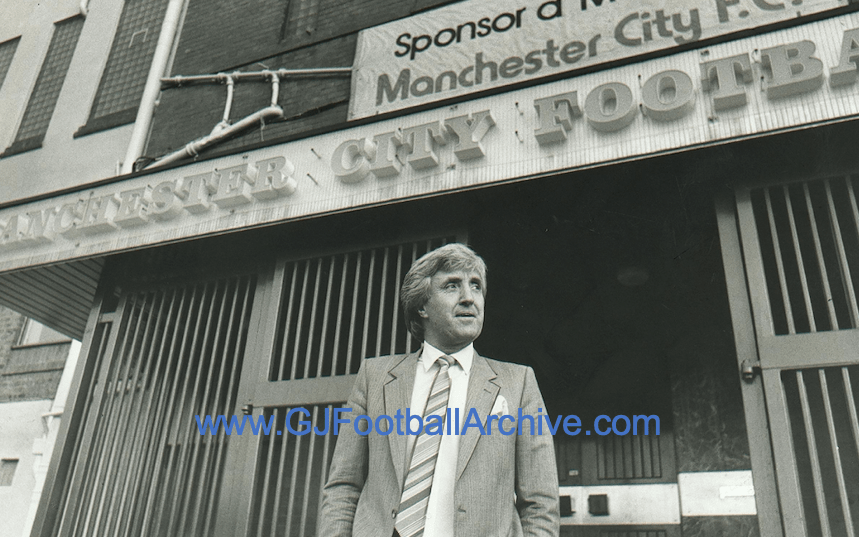
Back in 1995 I interviewed former Manchester City boss John Bond at his home. The interview lasted about two hours and here’s a brief snippet from that interview where Bond talks about beating Liverpool on Boxing Day 1981.
The Blues won 3-1 (Bond, Hartford & Reeves) then two days later (Bond says it’s the next day in this clip but it was 28th December) City defeated Wolves 2-1 at Maine Rd. John discusses a brilliant goal from Trevor Francis. City went top of the League after the Wolves victory.
Stick with the clip because it ends with Bond’s views on how Liverpool used to react to wins and defeats. I’d best not comment – have a listen:
This is only a brief clip of my John Bond interview. The full interview is being uploaded here in stages for subscribers. More details here:
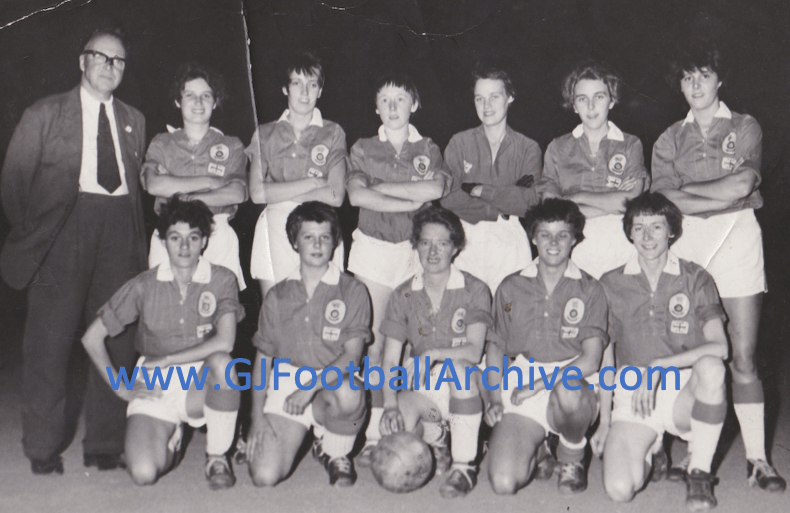
2019 marked the 70th anniversary of the establishment of Manchester Corinthians – a pioneering women’s team that toured the globe promoting women’s football and Manchester.
The Manchester Corinthians were a team of local women who were brought together under the management of Percy Ashley at a time when the FA banned women from playing on FA affiliated grounds. Established in 1949, Ashley’s team toured the world promoting the sport and demonstrating what a dedicated group of players the club possessed. This was at a time when FA affiliated clubs were banned from allowing women’s games on their grounds.
Many of the Corinthians are now in their seventies and eighties but they still get together from time to time to talk of their exploits. In September 2019 I managed to arrange with Manchester City for some of the women who played for the Corinthians to be guests of City at a women’s game at the Academy Stadium. While there I chatted with a few of the women. Margaret Hilton, who now lives in Australia, told me her memories of a groundbreaking tour in 1957: “Bert Trautmann, the City ‘keeper, joined us on a tour of Germany. He acted as an ambassador and watched some of our games. We saw him around but I was too shy to chat to him. It was great having that recognition and support.”
Corinthians, representing England, won a major competition in Germany which was, at the time, regarded as a women’s European Cup – these were the early days of cross-continent football and UEFA were not involved with organising competitions for the women’s game. Anne Grimes felt that winning that competition in 1957 encouraged the club to make further trips abroad and to play in major stadia. 50,000 watched them in a game at Benfica and then in 1960 the Corinthians ventured outside of Europe for a tour of South America. It was supposed to be a six week tour but such was the popularity of the games that the women were asked to stay for three months. Margaret ‘Whitty’ Whitworth told me: “We stayed in all the best hotels and it was quite glamourous. There were lots of scrapes along the way. We were young women and loved every minute of it. We didn’t care about the FA ban, we just got on and played.”
Whitty had joined the club as an eleven year old in 1958 and was fourteen when she travelled to South America. Her parents had to give permission but some of the women also gave up their jobs for the opportunity of representing Manchester – and England – on the tour. Whitty: “What a great experience for us all! The stadiums… the reception from the crowd… it was all incredible but we all just took it in our stride. It’s only afterwards that you look back and realise how significant it all was.”
A second team was established by Percy Ashley as time progressed called the Nomads – it’s no coincidence that Ashley chose the names Corinthians and Nomads. Both these names had been used by prominent amateur male football clubs that had toured promoting the game and this is exactly what he sought from his women’s teams. He wanted them to promote all that was positive about female participation in football and they certainly achieved that over the decades. The Nomads and Corinthians would face each other regularly, raising money for charity and, to ensure fairness and quality, the teams would be balanced when appropriate.
The Corinthians and Nomads won a host of tournaments and trophies over the years and in 1970 Whitty was player of the tournament when they found trophy success at Reims in France. Margaret Shepherd, nicknamed Tiny due to her height (she was a tall central defender!), remembers the excitement of that trip and the celebrations that followed the victory over Juventus in the final: “It was a great experience and the celebrations were so special.”
The experience of playing against leading European teams was to have a major impact on the lives of the women. In fact, Jan Lyons, decided to move to Italy to spend more time playing football and ended up playing for Juventus for two seasons in the Italian women’s league of the period.
Manchester Corinthians survived into the modern era and continued to play once the FA ban was lifted – a ban they had challenged. The club was still going strong in 1982 but, due to ground changes and related issues it soon officially changed its name to Woodley Ladies, though was often still known as Corinthians. Some of the 1980s team members became players with Manchester City’s women’s team in its inaugural season of 1988-89. By that time the volume of women’s clubs, leagues and competitions had grown.
The club was resurrected for a period in the late 1980s, playing in Tameside, but it was during the period between 1949 and 1975 that Corinthians were true pioneers. They promoted the sport globally at a time when many refused to accept that women could play football.
Hopefully, over the coming years, we’ll be able to promote the club, its achievements and these pioneering women further in Manchester.
I’m writing a detailed history of women and football in Manchester. If you played an active part in developing women’s football prior to the FA ban then please get in touch by emailing gary@GJFootballArchive.com or follow me on twitter: @garyjameswriter or facebook.com/garyjames4
My book on Manchester City Women (which talks of the evolution of women’s football since the late 70s and the Corinthians women who played for City) can be ordered here (all copies will be signed by me): https://gjfootballarchive.com/shop/
With City playing Everton this week (17th February 2021) here for subscribers is an in-depth piece on the time the Blues chose to wear scarlet in a crucial match with the Toffees.
Here is the story of the game:
Subscribe to get access
If you would like to read this in-depth article and all the others on this site (including the entire Manchester A Football History book) then please subscribe. It works out about £1.67 a month if you take out an annual subscription (£20 per year) or £3 a month if you’d like to sign up for a month at a time. Each subscriber gets full access to the 230+ articles posted so far and the hundreds scheduled to be posted in the coming weeks.
Back in November 1995 I interviewed the former Manchester City manager John Bond. At the time I was researching my in-depth history of the club called Manchester The Greatest City (later updated as Manchester The City Years).
I met John at his home and spent a good few hours with him chatting about the Blues and his career. I loved doing this interview and was always grateful for the time he gave me. He was quite frank, open and honest – which delighted me because he was a great talker. He was also happy for me to quote everything he said in the interview. I did end up quoting him extensively in the book (and in others I’ve produced) but, until now, none of the interview has ever been heard by the wider public.
Now, for the first time ever you can hear the opening 17 minutes of the interview. Here he talks about the steps taken by City to appoint him; the interview (and the directors involved in that notorious filmed interview for the City documentary in 1980-81); the signing of Tommy Hutchison, Bobby McDonald and Gerry Gow. As I said earlier, he is quite frank in his comments and that may surprise a few.
This audio recording of the first 17 minutes of the interview is available to subscribers of my blog until 19th February 2021. If you want to hear it then please subscribe below. If subscribers enjoy this piece then please let me know and, if you do, I will release other sections of the interview over the coming weeks.
Of course as this interview was recorded on my old cassette recorder the quality isn’t the best but I’m working on improving that for future pieces.
Subscribe to get access
If you would like to listen to this frank interview and read the in-depth articles on this site (including the entire Manchester A Football History book) then please subscribe. It works out about £1.67 a month if you take out an annual subscription (£20 per year) or £3 a month if you’d like to sign up for a month at a time. Each subscriber gets full access to the 220+ articles posted so far and the hundreds scheduled to be posted in the coming weeks.
I did several interviews about Manchester’s early football history a few years back. Most of these seemed to revolve around the story of Hulme Athenaeum. This is one of those interviews which I hope subscribers will be interested in. Sadly, I cannot recognise which radio station I did this interview for, nor can I find the exact date I did it (I’m guessing it was about 2015).
I hope subscribers enjoy it. If you do I’ll post more like this over the coming months. I’ve lots of interviews (of me and by me interviewing fans, players, managers etc.) which I’d like subscribers to listen to – if they enjoy them of course!
Anyway, here goes…
Subscribe to get access
If you would like to listen to this interview or would like to read the in-depth articles on this site then please subscribe. It works out about £1.67 a month if you take out an annual subscription (£20 per year) or £3 a month if you’d like to sign up for a month at a time. Each subscriber gets full access to the 200+ articles posted so far and the hundreds scheduled to be posted in the coming weeks.
It’s Swansea v Manchester City tonight in the FA Cup and so I thought I’d put together a few historical facts and stats about games between the two clubs.
Game One: The first competitive meeting between the two teams came in Division Two on 25 September 1926. The Blues had been relegated the previous May and the historic first meeting with Swansea Town (Swansea was not a city at this point) ended in a 3-1 City victory at Maine Road, before 24,314 fans. George Hicks, Tommy Johnson & Frank Roberts netted for the Blues.
The return game also ended in a 3-1 win on 12 February 1927. Hicks and Johnson both scored again, with Johnson netting twice. A Swansea crowd of 20,345 watched on.
The first top flight game between the sides didn’t come until 21 November 1981 (following Swansea’s promotion) and saw two each from Kevin Reeves and Dennis Tueart (the first a penalty 4 minutes before half time) help City to a 4-0 win. Here’s film of that game – see if you can spot the fan carrying two pints (presumably of Greenall’s or Grunhalle!) back to his seat (the days when we were allowed to drink in our seats or on the Kippax – well, not quite all of us. I was just 14 at the time!):
The first Premier League meeting came on 15 August 2011 – another 4-0 City win. This time Dzeko, Aguero (2) and David Silva each scored at the Etihad before 46,802. Film of that game here:
Incredibly the first FA Cup meeting didn’t come until 16 March 2019 and this saw City win 3-2 at Swansea (OG from Kristoffer Nordfeldt, Bernardo Silva & Sergio Aguero). City had been losing 2-0 (a penalty from Matt Grimes in 20th minute and Bersant Celina netted the other in 29th minute) up until Silva’s 69th minute goal. The action from this game can be viewed here:
Prior to tonight’s game of course: In terms of all time record the two teams have met on 36 occasions:
Played 36; City won 25; Drawn 4; Swansea won 7.
Breakdown by competition is:
League P34; City won 23; Drawn 4; Swansea won 7
FAC P1; City won 1; Drawn 0; Swansea won 0
League Cup P1; City won 1; Drawn 0; Swansea won 0.
The highest scoring game between the teams came in August 1927 when City beat Swansea Town 7-4 in Division Two. 34,316 watched a hat trick from Tommy Johnson and other goals from Peter Bell, Charlie Broadhurst, George Hicks and Frank Roberts.
Here’s hoping tonight’s game brings as much entertainment as that one did.
While you’re here, it’s worth taking a look at something else already posted on http://www.GJFootballArchive.com. It’s a profile of Tommy Hutchison who was a cult hero at MCFC and also spent time with Swansea City:
Liverpool had only lost one of their opening 12 games when they came to Maine Road in October 1977, while the Blues – who had opened the season undefeated in their opening 8 matches – were now struggling. This blog post focuses on what happened when the two clubs met in October 1977:
Subscribe to get access
If you would like to read this and the blog’s other in-depth, longer articles (including the entire Manchester A Football History book) then please subscribe below. It works out about £1.67 a month if you take out an annual subscription (£20 per year) or £3 a month if you’d like to sign up for a month at a time. Each subscriber gets full access to the 200+ articles posted so far and the hundreds scheduled to be posted in the coming months.
United taken over by the Glazers… City, so often priced out of major transfers during the modern era… Evra scheduled to make his United debut in the all-Manchester clash… This was the derby match played on this day (14th January) in 2006. It was only 14 years ago but what a difference!
The story of this game was written up a couple of years ago for an update of my 1991 book The Pride Of Manchester (co-written with Steve Cawley). Sadly, that book was never updated, though Steve and I put considerable effort into creating all the content.
Here, exclusively for subscribers, is the story of that game as drafted to appear in the updated but aborted Pride Of Manchester. I’ve also included film of the game embedded within the article below (You will need to be a subscriber to read the full content).
Subscribe to get access
If you would like to view this article then please subscribe. It works out about £1.67 a month if you take out an annual subscription (£20 per year) or £3 a month if you’d like to sign up for a month at a time. Each subscriber gets full access to the 150+ articles posted so far and the hundreds scheduled to be posted in the coming weeks.
On this day (14th January) in 1928 Manchester City faced Leeds United in a FA Cup tie. Although the result went City’s way, the game was to affect the Blues for several weeks afterwards.
The reason is that the ‘Citizens’, as they were occasionally called in the press, lost the services of Bert Gray for part of January and February following this third round cup tie with Leeds. Gray had broken a cheek bone after about thirty minutes and was replaced by winger Billy Austin, who managed to keep Leeds from scoring on a few occasions, as the Blues won 1-0. The City ‘scorer was Tommy Johnson (pictured above).
There’s film of the game here which is well worth watching for the mud. It’s difficult to tell if any of this footage shows Austin in nets (I think it does but am still studying it!):
Tomorrow (13th January 2021) Manchester City and Brighton meet in the Premier League. So far there have only been 24 games between the two clubs with the first coming in 1924. This game was a newsworthy FA Cup tie due to the return of a legend to the City team. In fact it was so newsworthy that a movie company sent their camera (you’ll see from the footage it never moved!) to Brighton’s Goldstone Ground to capture the return of a true Blue hero.
Subscribe to get access
If you would like to view this article then please subscribe below. It works out about £1.67 a month if you take out an annual subscription (£20 per year) or £3 a month if you’d like to sign up for a month at a time. Each subscriber gets full access to the 150+ articles posted so far and the hundreds scheduled to be posted in the coming weeks.



 Gary James' Football Archive