On April 26 1969 Manchester City defeated Leicester City in the FA Cup final. It is worth pausing to consider how the Blues compared to football’s other successful sides in the competition at this point. City’s four FA Cup successes placed them behind Aston Villa (7), Blackburn Rovers (6), Newcastle United (6), Tottenham Hotspur (5), The Wanderers (5) and West Bromwich Albion (5). Bolton, Sheffield United and Wolves had, like City, each won four FA Cups, while Manchester United had only won three, Liverpool one and Chelsea had not yet won the trophy. In fact Chelsea had only won one major trophy (the League Championship) at this point in their history.
Here for subscribers is a long read on that final and the events surrounding it:
Subscribe to get access
Read more of this content when you subscribe today.
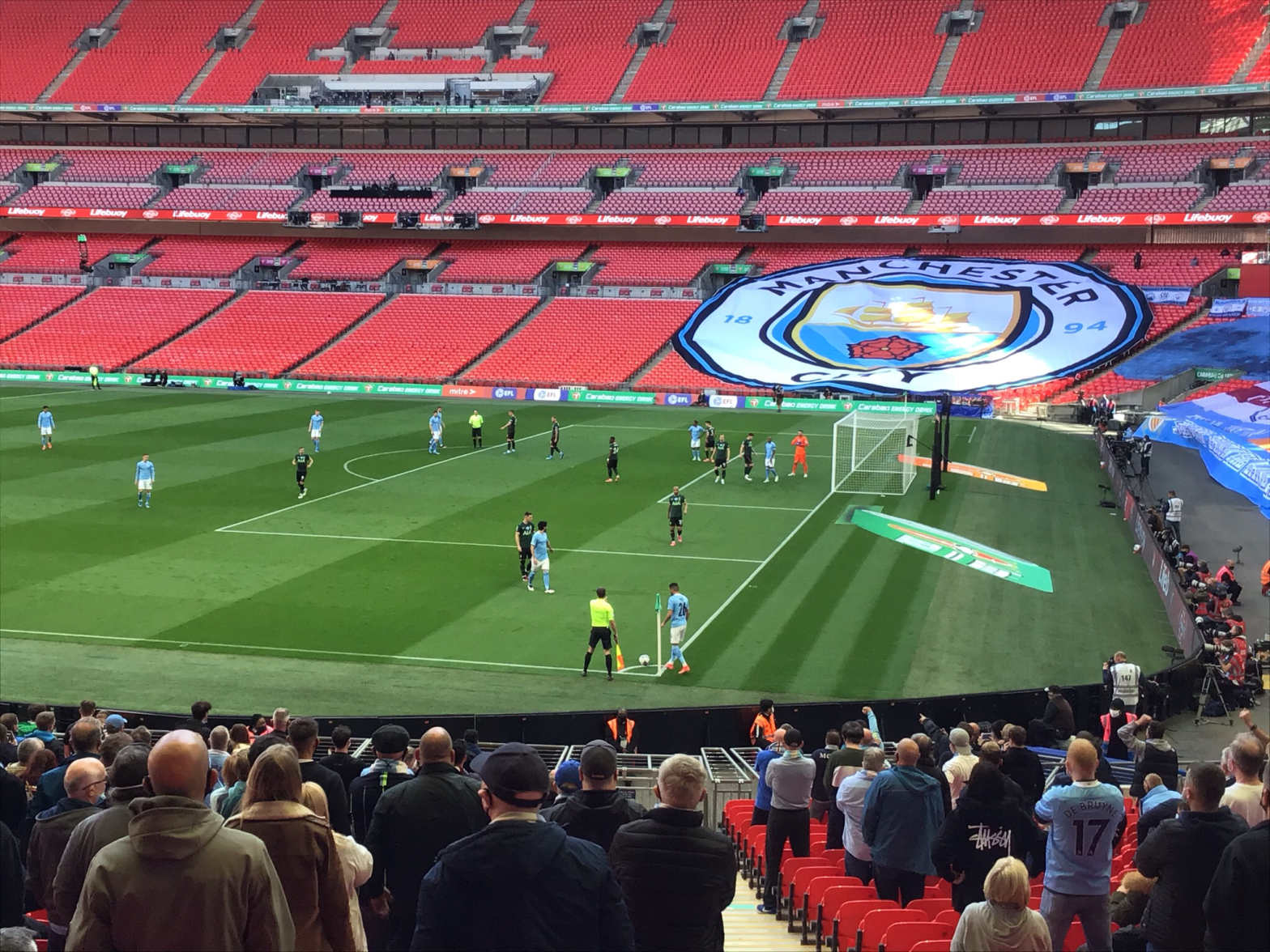
On this day (25 April) in 2021 Manchester City defeated Tottenham Hotspur 1-0 thanks to a Laporte goal in the League Cup final at Wembley. The game was played in front of a Covid restricted crowd of 7,773.
On this day in 1904 (23 April) Manchester found its first major trophy success. The captain and goalscorer was the great Billy Meredith. Last year, following the purchase of the oldest surviving FA Cup by Sheikh Mansour (to loan to the National Football Museum) I helped Manchester City with the story of the cup and its significance to Manchester. They’ve produced a video telling the story and it can be viewed here:
Malcolm Allison gave Manchester City confidence and a will to win that few have ever equalled. He was an exceptionally brilliant and confident coach – some would say the greatest the world has ever seen (probably Allison himself would say this!) – and working with Joe Mercer he helped the Blues achieve incredible success.
Subscribe to get access
Read more of this content when you subscribe today.
As League champions, the Blues were expected to coast through the 1968-9 season, particularly as the Charity Shield match against Cup winners West Bromwich Albion ended in a comfortable 6-1 City victory. Unfortunately life is rarely that easy and only one of the first nine games ended in victory – a 3-2 win over Wolves. The Blues simply could not get into the rhythm they had enjoyed the previous season. One of the reasons for this was that they had embarked on a rather disastrous tour of America during the summer which, amongst other problems resulted in an injury to captain Tony Book He was kept out of action until January.
Subscribe to get access
Read more of this content when you subscribe today.
Back in the 1960s and 1970s, despite major success in England, reaching a European quarter-final was a bit of a rarity. So,I’ve decided to take a look back at Manchester City’s first ever European quarter-final, I’ve written this feature looking at the first time the Blues reached a UEFA organised tournament’s quarter-final. That was in 1969-70.
This article is available to subscribers below (you can subscribe now and access this and all the other content on my site):
Subscribe to get access
Read more of this content when you subscribe today.
On this day (April 11) in 1981 John Bond’s Manchester City faced Bobby Robson’s Ipswich in the FA Cup semi-final. Here’s a piece I wrote for the Times a few years back on the significance of the game for both teams.
Subscribers can view the article and all others on here (including the entire Manchester A Football History and a PDF of my first book). It costs £20 a year (works out about £1.67 a month) or join up a month at a time for £3 and you can sign up below. Thanks.
Subscribe to get access
Read more of this content when you subscribe today.
On this day (April 9) in 2005 a 90th minute volley from Kiki Musampa – his first for the Blues – at the northern end of the stadium gave Manchester City a 1-0 home victory over eventual European Champions Liverpool. This was Stuart Pearce’s first league victory as City manager.
The Musampa goal was described at the time as a ‘spectacular volley’ – You can judge for yourself here:
Former City and England captain Pearce guided the Blues through the final nine games of 2004-05 after the departure of Kevin Keegan. Apart from a 2-1 defeat in his first game, the Blues were unbeaten until the end of the season. This run included the victory over Liverpool and wins over Birmingham (3-0), Portsmouth (2-0) and Aston Villa (2-1).
As a result Pearce was named the Barclays Premiership Manager of the Month for April.
This weekend marks the latest in the series of games between one of the Manchester clubs and a Liverpool team. Today (9 April 2022) relegation worried Everton face United and tomorrow League Champions and leaders City take on second placed Liverpool at the Etihad. Much will be made of the Manchester-Liverpool rivalry and it is true that the two cities have been rivals for over 150 years (it certainly predates the building of the Ship Canal!) BUT the football clubs have not always been rivals. In fact Utd and Liverpool have been close over the decades at times while the on-the-pitch rivalry between City and Liverpool was extremely strong in the late 60s and 70s.
The strength of the two conurbations’ footballing rivalries came during the late 1960s but intensified in the late 70s. Prior to this one-off seasons may have seen grudge matches or significant games between clubs from the cities but nothing more than that. In fact for many, many years Manchester United and Liverpool, for example, were extremely close. They once put forward a suggestion to the Football League that all home teams should wear red and away teams white – the rest of football soon got wise to the plan!
There was also the time when United and Liverpool ‘fixed’ a game of football. It’s a long story (amazingly United’s solicitor was part of the ‘neutral’ investigating committee!) and can be read here:
The rivalry between the footballing clubs developed in the 60s and there were many significant games between all the clubs in the two cities with several prominent matches (there were significant grudge matches between Everton and City for example in the 60s and at one point Liverpool’s Bill Shankly told the media that City were Liverpool’s biggest rival!).
Back in 1995 I interviewed former Manchester City boss John Bond at his home. The interview lasted about two hours and here’s a brief snippet from that interview where Bond talks about beating Liverpool on Boxing Day 1981.
The Blues won 3-1 (Bond, Hartford & Reeves) then two days later (Bond says it’s the next day in this clip but it was 28th December) City defeated Wolves 2-1 at Maine Rd. John discusses a brilliant goal from Trevor Francis. City went top of the League after the Wolves victory.
Stick with the clip because it ends with Bond’s views on how Liverpool used to react to wins and defeats. I’d best not comment – have a listen:
I’ve covered one particularly bitter moment in the City-Liverpool rivalry from the 80s that concerns John Bond here:
I hope this weekend’s games between go well and it’d be great if one of Manchester’s Blues could score four goals as Fred Howard did on his debut against Liverpool – see:
Defender Bobby Kennedy proved to be a popular player after joining the Blues in 1961. He went on to make 251 (plus 3 as sub) appearances for City over a seven year period and was a key member of City’s mid sixties side. In April 2005 Gary James caught up with him at the stadium.
Subscribe to get access
Read more of this content when you subscribe today.




 Gary James' Football Archive