Maine Road 100 – Day 92

For Day 92 of the Maine Road 100 countdown I’m taking a look at the history of the Kippax Stand… Enjoy!

2024 will mark 30 years since we said goodbye to the terraced Kippax Stand and for those of us old enough to remember those days at Maine Road that stand, above all else, represented the passion fans had for their club.

Unlike most other grounds City’s main terracing ran the full length of the pitch and wasn’t tucked away behind a goal. Because of its positioning the Kippax breathed life into every area of the stadium and was huge.  Originally, it held in excess of 35,000, but even in its final days it still gave the impression of power and passion.

The Kippax was originally known as the Popular Side, matching a similarly dominant feature of the Blues’ Hyde Road ground, when it opened in 1923. That first season it held an estimated 35,000 in a crowd of 76,166 – then a national record attendance for a club ground. In 1934 when 84,569 packed into the stadium City’s vast stand may well have held almost 40,000. Incidentally, that 84,569 became the new national record attendance for a club ground (a record that still stands as Wembley is a national stadium, not officially a club ground). You can read about that crowd and game here:

Incidentally, I know City fans get a lot of abuse these days from fans of certain other clubs about filling stadia etc. Well, if you need any ammunition that 84,569 record crowd is over 22,000 higher than Liverpool’s record crowd (61,905 – a figure which wouldn’t get anywhere near City’s top ten crowds!).

Throughout the period up to the mid-50s the Popular Side developed its reputation but it was when it was roofed in 1957 that it became the true heart of the club. Back then it was extended slightly, although legislative changes had reduced terracing capacities by this time. The club announced it would be known as The Kippax Street Stand and that is what it officially remained until 1994 although most of us knew it simply as The Kippax.  Its capacity by this time was about 32,000, reducing to 26,155 by the end of the 1970s.

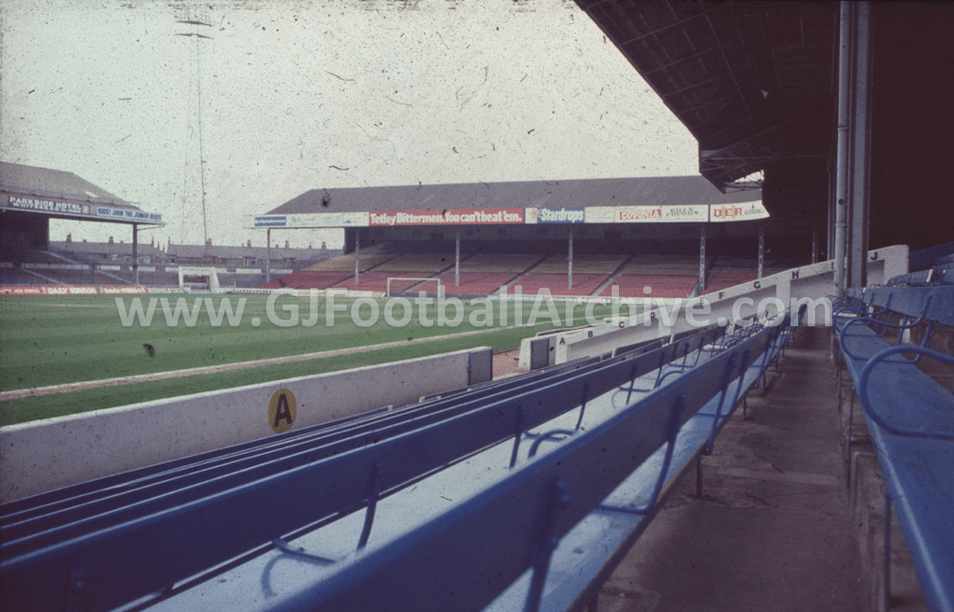
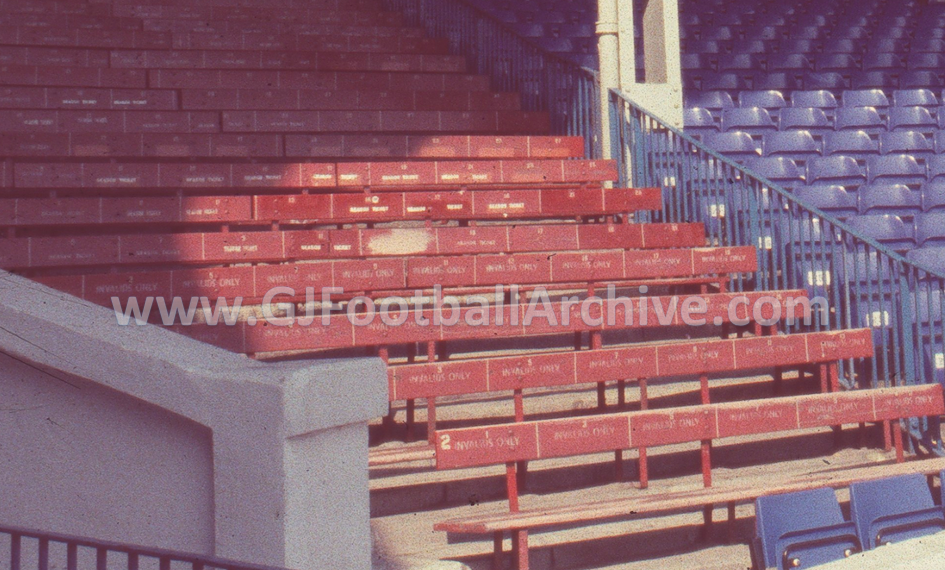
The Kippax accommodated fans of every age and gender and, although it was a formidable place for opposition supporters, it was a welcoming stand for Manchester’s Blues. Young children would sit on the walls and railings, while older fans would find their own preferred viewing spot. Here’s a few snippets about the old stand:

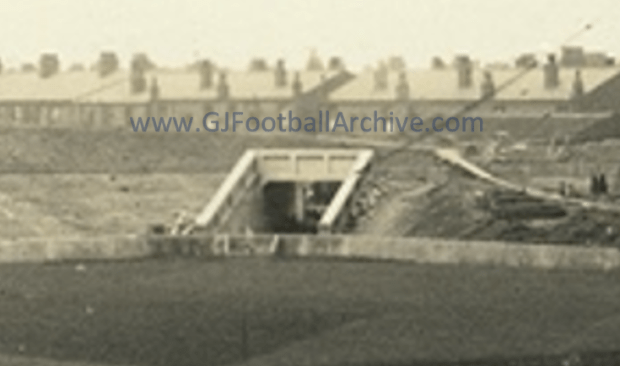
  • Originally four vast tunnels (one in each corner and two built into the stand) and two significant stairways allowed fans to move onto the Popular Side.
  • A flag pole, positioned at the back of the terracing up to 1957, allowed a blue and white flag emblazoned with the words City FC to proudly fly. The flag was then re-positioned until it disappeared for good in the 1960s. See:

Maine Road 100 – Day 52

  • Chanters Corner, also known as The Sways, was the area where the more vocal members of City’s support gathered. Packed above a tunnel and next to the segregation fence, fans here often generated the main chants.
  • The 1960s saw The Kippax’s reputation grow. Fans sang their way through success after success as Joe Mercer’s Aces won the European Cup Winners’ Cup and every domestic trophy possible. The Kippax would begin every game with the chant “Bring on the Champions!” and then follow up with a song for every player as they warmed up.
  • The final capacity of The Kippax was 18,300 – making this the largest terraced area at a League ground on its final day (The Kop held its final game on the same day but had a smaller capacity).
  • The Kippax was used for the last time on 30 April 1994 for the visit of Chelsea.
  • The Blue Print flag was a popular presence on many match days from the late 1980s until 1994, making its last appearance at The Kippax’s final game. The flag had been reduced in size by then. But it still covered much of the terracing.  Blue Print was a City fanzine and they had paid for the flag.
  • Segregation was unnecessary for most of the stand’s existence, but by the end of the 1960s a rope would often be used to separate City and United fans on derby day. This was replaced by permanent barriers in the mid-70s which were increased over the years to keep home and away fans apart. Away fans were positioned at the Platt Lane end of the stand by this time.
  • It says much about the passion of the place that in the late 1970s the BBC came to film The Kippax chanting and in full flow.
  • In 1985 when City defeated Charlton 5-1 in a promotion decider on the final day of the season the Kippax was so packed that supporters remain convinced that its official capacity of 26,155 was significantly exceeded. Those of us on the terraces that day will never forget the shock we all experienced when the official crowd of 47,285 was announced – some 5,000 short of capacity!
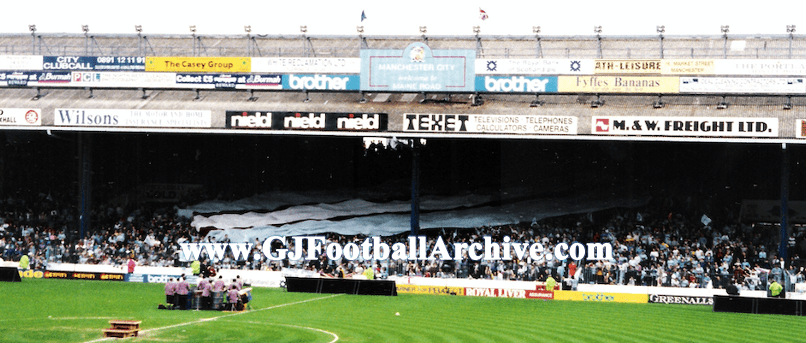
The Kippax is no more, but those of us who experienced the stand will never forget its power, passion and presence. Its spirit lives on with thousands of Blues who stood there now bringing their own children and grandchildren to the Etihad who, if legislation allows, will soon be able to stand in a section specifically created for that purpose.

If you’re interested you can read how Maine Road got its name here:

While you’re here I’d like to thank you for taking the time and trouble to visit my website. I am not employed by anyone and no one pays me to do research or interviews. I do not have sponsorship or advertising either. I’ve set up this website to help share my 32 years plus writing and research. The intention is to develop the archive and to provide access to as much of my material as possible over the coming weeks, months & years. Subscribers can already access over 280 articles/posts including the entire Manchester A Football History book and audio interviews with former City bosses Malcolm Allison and John Bond.

It costs £20 a year (it works out £1.67 a month) or £3 if you’d like to sign up a month at a time to get full access for as long as you subscribe (see below). Thanks for the support, Gary.

Subscribe to get access – Annual

This has been a sample of the material on http://www.GJFootballArchive.com If you would like to read all the in-depth articles and listen to the audio interviews then please subscribe. It works out about £1.67 a month if you take out an annual subscription (£20 per year). Each subscriber gets full access to the 1000+ articles posted so far and the hundreds scheduled to be posted in the coming weeks.

Subscribe to get access – Monthly

This has been a sample of the material on http://www.GJFootballArchive.com If you would like to read all the in-depth articles and listen to the audio interviews then please subscribe. It works out about £3 a month if you take out a monthly subscription (cancel anytime; access everything since 1 October 2022).

There are plenty of other Maine Road related stories on my site. For details and links see:

https://gjfootballarchive.com/category/manchester-city/maine-road/

Maine Road 100 – Day 77

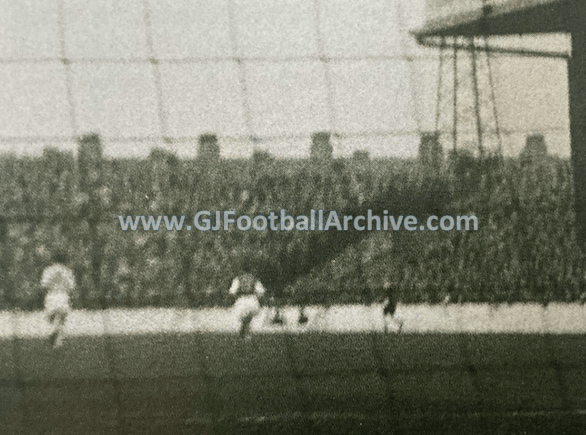
For post 77 in my Maine Rd 100 countdown a reminder of a record City have held for almost a century! This image is of a day in 1924 when City attracted the highest crowd on a club ground. The drawing is looking from the Main Stand towards the Popular Side, later Kippax. It’s no longer the record attendance because it was beaten by another record crowd at Maine Rd a decade later. Want to know more? The read on…

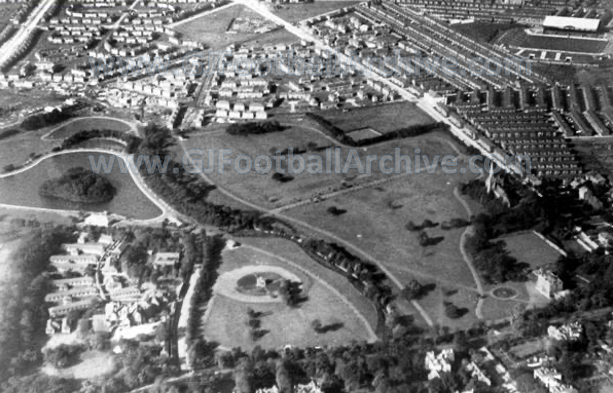
1925 Aerial photo of Maine Road and Platt Fields Park

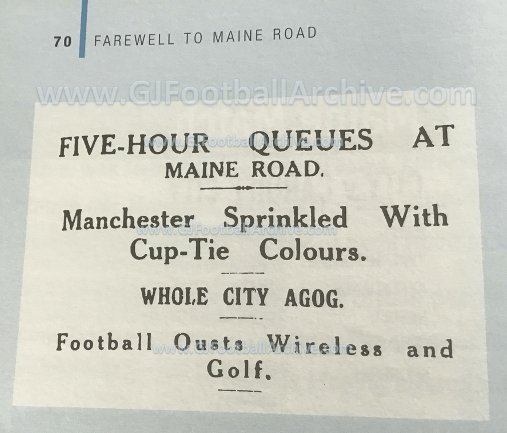
A record Manchester City have held for 99 years was set on 8 March in 1924 – the record is the highest attendance on a club ground! The record set in 1924 saw 76,166 attend City v Cardiff. City had moved to their new Maine Road stadium in August 1923. The capacity of the venue was estimated at around 90,000 but was actually approximately 83,000 when the stadium opened (it was enlarged in 1931 and 1935).

In its first season the capacity was tested and, on that day (8 March) in 1924 the largest attendance for any footballing fixture (including three FA Cup Finals) in Manchester gathered to watch the Blues. This was also, at the time, the record crowd for any game played on an English club ground. It was beaten ten years later when 84,569 watched City v Stoke. You can read about the remarkable day in 1924 below:

Subscribe to get access

Read more of this content when you subscribe today. It costs £20 a year (access to everything) or £3 per month (see below).

Subscribe to get access

Read more of this content when you subscribe today. It costs £20 a year (see above) or £3 per month (cancel anytime; access to everything posted since 1 October 2022).

You can read about the attendance that brought this record (again by City at Maine Road) here:

A National Record – 84,569

Other record crowd articles can be seen here:

Welcome to Gary James’ Football Archive

Subscribe to get access

This has been a sample of the material on http://www.GJFootballArchive.com If you would like to read all the in-depth articles (including the entire Manchester A Football History book and the audio interview with John Bond) then please subscribe. It works out about £1.67 a month if you take out an annual subscription (£20 per year) or £3 a month if you’d like to sign up for a month at a time. Each subscriber gets full access to the 260+ articles posted so far and the hundreds scheduled to be posted in the coming weeks.

Maine Road 100 – Day 74

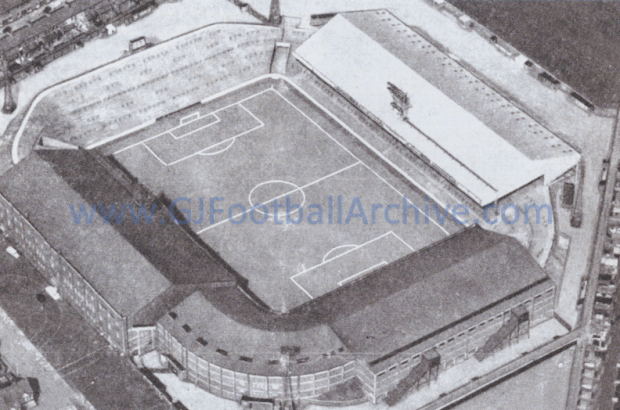
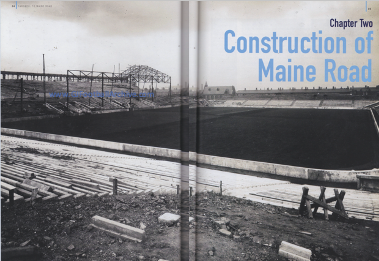
For post 74 of my Maine Rd 100 countdown I’m posting this image of the original Scoreboard End being built at the old ground. The Scoreboard End lasted from 1923 until 1970 when it was demolished and replaced by the North Stand. Here’s an aerial photo from almost 40 years later showing the Scoreboard End as the last remaining uncovered stand.

A couple of years ago (and going on for the following 35 weeks) I posted the Scoreboard End being built image as part of my Name That Historic Ground series. Every Monday I challenged readers to see if they could recognise a different ground each week from an old photo. Some were easy, others not so. If you missed them you can now go through each week’s ground and the answers. You can start here:

You can find the answer to that and then page back through all the past quizzes here:

https://gjfootballarchive.com/category/historic-name-that-ground/page/8/

While you’re here why not subscribe to my site and you can then access every article, interview, audio recording etc. already posted and those that will be posted during your subscription. It costs £20 per year (about £1.67 a month). You can subscribe below:

Subscribe to get access

Read more of this content when you subscribe today.

Maine Road 100 – Day 52

The 52nd post in my series counting down to the centenary of Maine Road’s opening game takes a look at the CITY F.C. flag that proudly flew above the Popular Side (Kippax) for decades.

There had been a CITY F.C. flag at Hyde Road and it may well be that this was the same flag. It was often referred to in the media during its life at Maine Road, such as in this 1925 cartoon:

The first derby at Maine Road
The City flag flying at Maine Road’s first Manchester derby

The flag flew proudly over the Popular Side until the stand was roofed in 1957. Then the flag was moved to the Scoreboard End, eventually disappearing in the 1960s when rumour has it that it was taken down by Liverpool fans. I’m not certain if that’s true and I’ve never found any evidence but if you do know more please let me know.

I do know that in the 1930s a disgruntled City fan lowered it during a difficult game and it caused outrage. It was mentioned in the local press and the culprit had to make a formal apology to the club and his fellow City fans.

This 1971 image shows the roofed Kippax Stand. The flag was originally on a flag pole roughly where the number 7 is in the days before the stand had a roof. When the Kippax was roofed it was moved to the back of the Scoreboard End. The North Stand (10) replaced the Scoreboard End in the early 1970s.

Maine Road aerial 1971 from Farewell To Maine Road

If you’d like to read more on the history of Maine Road, take a look at Farewell To Maine Road, which can be downloaded from this page:

If you enjoy all the free material on my website and would like to support my research and keep this website going (but don’t want to subscribe) then why not make a one-time donation (or buy me a coffee). All support for my research is valued and welcome. It allows me to keep some free material available for all. Thanks.

Choose an amount

£2.50
£5.00
£7.50

Or enter a custom amount

£

Your contribution is appreciated.

Donate

Farewell To Maine Road – Part Six

Here for subscribers is the sixth part of Farewell To Maine Road as planned. Subscribers to my website are able to download PDFs of the first four sections of my Farewell To Maine Road book (which retailed at £25) here. So if you’ve not yet had chance, take a look now. Enjoy!

Subscribe to get access – Monthly

If you would like to read the book and download a PDF of it then you can subscribe now at £3 per month or £20 a year. Monthly subscribers access everything posted to the site since 1 October 2022. All subscribers get everything else posted during their subscription too. You could always try a monthly subscription to see what you think (cancel any time).

Subscribe to get access – Annual

As well as Farewell To Maine Road annual subscribers get access to everything posted since the site was created in December 2020 (that’s 100s of articles, videos, history talks and PDFs of two other books: Manchester A Football History and my first book From Maine Men To Banana Citizens).

Next week I’ll be posting the next section of this 320 page, fully illustrated & detailed book for subscribers to enjoy.

You can see the contents pages to see what’s included in this book, published in 2003, and read the Introduction here:

The book has been out of print since 2004 with every copy sold within about six months of publication. Since then I’ve been keen to bring it up to date with stories about the site and the Etihad but that’s not been possible as no publisher has been prepared to invest in the way that Polar Publishing did to ensure it was the right quality.

Copies occasionally appear in second hand book shops or at online retailers but these often sell for ridiculous sums of money. The last time I checked there was one for about £100 here:

When it was published in 2003 apparently, I commented (though I can’t remember saying this, mind you it was 20 years ago): ‘On 320 beautifully illustrated A4 size pages this book tells the story of Maine Road from conception, right through to its final days as a sporting venue. With excellent photographs – including rare illustrations of the stadium during construction never previously published and images from every era – this has been a very interesting book to research, write and compile. I’ve also tried to ensure the views of ordinary fans are included, and some of the most powerful Maine Road moments are captured by the fans who saw them happen.’

In a review, Hugh Ryden wrote in King of the Kippax: ‘The architecture, the moving memories, the reproduction of rare photos and memorabilia and its extensive quotations, make FTMR a must.’

Another King of the Kippax regular Steve Worthington wrote: ‘Following on in the winning formula of his epic “Manchester The Greatest City”, the highly acclaimed author and Manchester City Football Club Historian Gary James has rolled up his sleeves once more and has produced yet another fabulous football book for all to treasure and enjoy. “Farewell to Maine Road” is not only a must for all Manchester City supporters, it is also an essential for all football fans who possess a genuine interest and passion for the history of our great British past time. It catalogues the birth, evolution and ultimate decline of what was once England’s premier and revolutionary provincial football stadium; Maine Road, Moss Side, Manchester M14. Soon to be demolished into oblivion, Maine Road is vividly remembered in all its former glory in this classic portal to the past. Beautifully written with the knowledge and passion you would expect from a lifelong Moss Side Pilgrim, the book provides a definitive literate and graphic illustration of Maine Road’s long and varied history. It contains a rich tapestry of previously unpublished photographs, one of which, a unique atmospheric shot of the famous ‘Ballet on Ice’ (a famous Manchester City V Spurs clash in the late sixties), is arguably worth the cost of the book on it’s own. Having consumed and digested every morsel of information contained within, it is difficult for me to imagine how much painstaking work and dedication it must take to produce and compile a book of such quality. Whilst they continue to produce triumphs such as this, the marriage of Gary James and Polar Publishing is truly one made in a Sky Blue Heaven. This 320-page masterpiece has pushed the boundaries of football publications to a new and higher level and has already prompted tears of nostalgia in my eyes. But don’t take my word for it, sign up a copy and see for yourself, you’ll not be disappointed.’

The publicity blurb said: ‘The only officially approved history of Maine Road is the perfect book for any supporter of City; Maine Road attendee; or general football enthusiast. 

The book details the history of the stadium focussing on its development, and on the key games and events which have made Maine Road such a famous and important venue. Using first hand accounts, as told by supporters, players, administrators, and the media this book has been written and designed to the same high quality used in the highly acclaimed Manchester: The Greatest City. With special features on all the big City matches, international games, FA Cup semi-finals, League Cup finals, Rugby finals, concerts, religious meetings, and even on United’s use of the stadium during the forties and for European Cup games in the fifties. In addition both City’s former ground Hyde Road and future venue the City of Manchester Stadium have been covered to provide the complete history of City’s three homes. 

‘As with earlier works by Gary James & Polar Publishing this book is destined to be regarded as the definitive history of Maine Road & Manchester City’s other grounds.’

My publisher, Julian Baskcomb, commented: ‘Gary James is the appropriate man to write this work after a lifetime’s research on the club and its stadium. As a boy Gary was a regular in the Platt Lane Stand; then at the age of 16 he bought his own season ticket for the Kippax Stand and has been a season ticket holder ever since. He is also a respected journalist with articles for a wide range of publications including The Times and has recently managed the development of Manchester City’s new museum.’

Maine Road 100 – Day 37

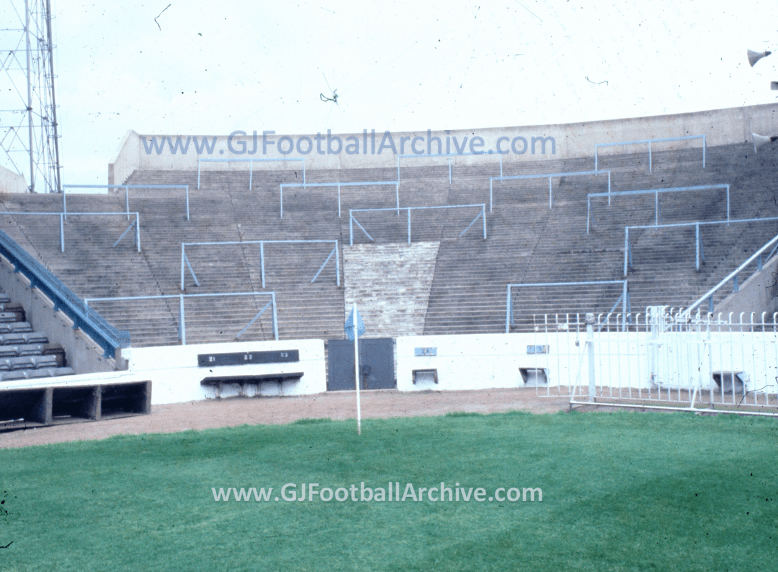
It’s day 37 of my posts counting down to the centenary of Maine Road’s opening game and today’s feature is – don’t get too excited – on this corner! I’ve said before that a photograph can say so much if you look closely at it and learn how to ‘read’ images like this. This is true for this simple photo of the corner between the North Stand (left) and Kippax (right). So what does this picture tell us? Well….

This was built as part of the North Stand development back in 1971 but it remained part of the Kippax. It was never roofed – meaning that this corner and the one on the other side of the Kippax were the only areas of Maine Road never to have a roof over them. If you’re counting the Main Stand had 3 roofs/roof developments during its life; the Platt Lane had 2; the North Stand one, and the Kippax two.

This corner was always accessed via Kippax turnstiles and it was always within the Kippax boundary walls. When the North Stand was built the exterior wall behind the stand was removed and turnstiles built into the stand but this corner never had any of that.

I’m not certain why the original corner terracing was ever demolished. Originally this corner had a large tunnel (like those in the other corners) and maybe they demolished that and built the new terracing because they felt it would increase capacity, but the corner is actually a little smaller than the one it replaced.

The rake of the steps is steeper than the rest of the Kippax and is the same as that in the North Stand. This suggests that there may have been plans to carry the North Stand around the corner. Former chairman Eric Alexander, who was primarily responsible for the new North Stand, had a vision of rebuilding the Kippax next but the arrival of Peter Swales as chairman killed that off. Maybe Eric was thinking ahead?

Strangely, there’s a concrete wedge in the middle which looks like newer concrete, roughly where the original tunnel would have been (though somewhat narrower).

Notice the loudspeaker (top right) pointing to this corner from the Kippax to ensure those standing here could hear the tannoy system. They used to test it in an empty stadium and never understood why fans couldn’t hear it in the Kippax on match day!

The floodlit pylon can be seen at the back, left. Also the blue fence on the left trying to stop fans climbing in to the North Stand – I do remember fans sneaking in occasionally.

There’s also the first pitch side fence on the right. This was positioned in front of the Kippax to stop fans getting on the pitch but all they needed to do was climb into this corner and go through the gate in the wall!

The white wall contains a gate where the old police/first aid dug outs used to be (see photo below of the same corner in the early 1960s) and the small seats built into the wall that the police and first aid people used to sit on at the time this photo was taken.

There’s also the corner flag visible.

The following is the Platt Lane/Main Stand corner when first built in 1923. It gives an impression of how the North Stand/Kippax corner would’ve looked at that time too.

1923 Platt Lane/Main Stand corner tunnel

The North Stand/Kippax corner was demolished in 1994 and later the ‘Gene Kelly’ temporary stand was located there.

For those unfamiliar with Maine Road this photo may help locate the terraced corner between the North Stand and Kippax. It’s number 9 on this image and you can see the Kippax wall behind it. Note the wall behind the North Stand has yet to be removed from this image, taken in 1971.

Maine Road aerial 1971 from Farewell To Maine Road

If you’d like to read more on the history of Maine Road, take a look at Farewell To Maine Road, which can be downloaded from this page:

If you enjoy all the free material on my website and would like to support my research and keep this website going (but don’t want to subscribe) then why not make a one-time donation (or buy me a coffee). All support for my research is valued and welcome. It allows me to keep some free material available for all. Thanks.

Choose an amount

£2.50
£5.00
£7.50

Or enter a custom amount

£

Your contribution is appreciated.

Donate

Farewell To Maine Road – Part Five

Here for subscribers is the fifth part of Farewell To Maine Road as planned. Subscribers to my website are able to download PDFs of the first four sections of my Farewell To Maine Road book (which retailed at £25) here. So if you’ve not yet had chance, take a look now. Enjoy!

Subscribe to get access – Monthly

If you would like to read the book and download a PDF of it then you can subscribe now at £3 per month or £20 a year. Monthly subscribers access everything posted to the site since 1 October 2022. All subscribers get everything else posted during their subscription too. You could always try a monthly subscription to see what you think (cancel any time).

Subscribe to get access – Annual

As well as Farewell To Maine Road annual subscribers get access to everything posted since the site was created in December 2020 (that’s 100s of articles, videos, history talks and PDFs of two other books: Manchester A Football History and my first book From Maine Men To Banana Citizens).

Next week I’ll be posting the next section of this 320 page, fully illustrated & detailed book for subscribers to enjoy.

You can see the contents pages to see what’s included in this book, published in 2003, and read the Introduction here:

The book has been out of print since 2004 with every copy sold within about six months of publication. Since then I’ve been keen to bring it up to date with stories about the site and the Etihad but that’s not been possible as no publisher has been prepared to invest in the way that Polar Publishing did to ensure it was the right quality.

Copies occasionally appear in second hand book shops or at online retailers but these often sell for ridiculous sums of money. The last time I checked there was one for about £100 here:

When it was published in 2003 apparently, I commented (though I can’t remember saying this, mind you it was 20 years ago): ‘On 320 beautifully illustrated A4 size pages this book tells the story of Maine Road from conception, right through to its final days as a sporting venue. With excellent photographs – including rare illustrations of the stadium during construction never previously published and images from every era – this has been a very interesting book to research, write and compile. I’ve also tried to ensure the views of ordinary fans are included, and some of the most powerful Maine Road moments are captured by the fans who saw them happen.’

In a review, Hugh Ryden wrote in King of the Kippax: ‘The architecture, the moving memories, the reproduction of rare photos and memorabilia and its extensive quotations, make FTMR a must.’

Another King of the Kippax regular Steve Worthington wrote: ‘Following on in the winning formula of his epic “Manchester The Greatest City”, the highly acclaimed author and Manchester City Football Club Historian Gary James has rolled up his sleeves once more and has produced yet another fabulous football book for all to treasure and enjoy. “Farewell to Maine Road” is not only a must for all Manchester City supporters, it is also an essential for all football fans who possess a genuine interest and passion for the history of our great British past time. It catalogues the birth, evolution and ultimate decline of what was once England’s premier and revolutionary provincial football stadium; Maine Road, Moss Side, Manchester M14. Soon to be demolished into oblivion, Maine Road is vividly remembered in all its former glory in this classic portal to the past. Beautifully written with the knowledge and passion you would expect from a lifelong Moss Side Pilgrim, the book provides a definitive literate and graphic illustration of Maine Road’s long and varied history. It contains a rich tapestry of previously unpublished photographs, one of which, a unique atmospheric shot of the famous ‘Ballet on Ice’ (a famous Manchester City V Spurs clash in the late sixties), is arguably worth the cost of the book on it’s own. Having consumed and digested every morsel of information contained within, it is difficult for me to imagine how much painstaking work and dedication it must take to produce and compile a book of such quality. Whilst they continue to produce triumphs such as this, the marriage of Gary James and Polar Publishing is truly one made in a Sky Blue Heaven. This 320-page masterpiece has pushed the boundaries of football publications to a new and higher level and has already prompted tears of nostalgia in my eyes. But don’t take my word for it, sign up a copy and see for yourself, you’ll not be disappointed.’

The publicity blurb said: ‘The only officially approved history of Maine Road is the perfect book for any supporter of City; Maine Road attendee; or general football enthusiast. 

The book details the history of the stadium focussing on its development, and on the key games and events which have made Maine Road such a famous and important venue. Using first hand accounts, as told by supporters, players, administrators, and the media this book has been written and designed to the same high quality used in the highly acclaimed Manchester: The Greatest City. With special features on all the big City matches, international games, FA Cup semi-finals, League Cup finals, Rugby finals, concerts, religious meetings, and even on United’s use of the stadium during the forties and for European Cup games in the fifties. In addition both City’s former ground Hyde Road and future venue the City of Manchester Stadium have been covered to provide the complete history of City’s three homes. 

‘As with earlier works by Gary James & Polar Publishing this book is destined to be regarded as the definitive history of Maine Road & Manchester City’s other grounds.’

My publisher, Julian Baskcomb, commented: ‘Gary James is the appropriate man to write this work after a lifetime’s research on the club and its stadium. As a boy Gary was a regular in the Platt Lane Stand; then at the age of 16 he bought his own season ticket for the Kippax Stand and has been a season ticket holder ever since. He is also a respected journalist with articles for a wide range of publications including The Times and has recently managed the development of Manchester City’s new museum.’

Maine Road 100 – Day 27

It’s day 27 of my posts counting down to the centenary of Maine Road’s opening game. Today – the wooden benches! Many a fan’s first experience of Maine Road was sitting on the benches in the old Platt Lane Stand.

These images may bring back a few memories. The Platt Lane benches were painted maroon and yellow for many years – I’m not certain if they were originally that colour. Older fans may know the answer but if they were maybe it was because they were installed at a time, the early 1960s, when those two colours had been used as City’s second choice kit?

Maroon is City’s traditional away colour but in 1959 a yellow shirt with maroon cuffs and V was used. If there was a link then that was not obvious by the time my Dad was taking me on to the Platt Lane as a young boy.

For me it seemed so odd, but then again the new North Stand had grey seats, and back in 1923 much of Maine Road was painted green. So I suppose there was never much logic around football grounds.

City used to paint on to the seats whether they were for season ticket holders, ‘invalids’ (obviously the wording back then, not today’s wording!) or if they were just numbered you could either sit there if it was an unreserved seating game or the number would match a ticket holder.

Platt Lane corner benches – note the wording on the seats. Some say season ticket; some ‘invalid’ and some are numbered/unreserved.

Most of the benches lasted about 40 years, but some were destroyed when Leeds United fans visited in November 1990 and were replaced for the stand’s final season or so with blue plastic seats. The stand was demolished in 1992.

November 1990: Jimmy Frizzell inspects the damage after Leeds fans smashed up some of the Platt Lane benches.

The Main Stand also had benches for much of its existence. These were painted blue and in some cases had arm rests. They had been part of the original build in 1923 and were replaced in phases during the 1970s and 1980s.

The Main Stand’s benches with the Platt Lane Stand’s maroon and yellow benches in the background

For those unfamiliar with Maine Road this photo may help. This shows the original Platt Lane Stand corner (number 3) where the maroon seating with ‘invalid’ wording image was taken. The benches damaged by Leeds fans were near the front of the stand under number 5. The Main Stand bench image is taken to the left of number 2 looking towards the floodlight near 5 and 6.

Maine Road aerial 1971 from Farewell To Maine Road

If you’d like to read more on the history of Maine Road, take a look at Farewell To Maine Road, which can be downloaded from this page:

If you enjoy all the free material on my website and would like to support my research and keep this website going (but don’t want to subscribe) then why not make a one-time donation (or buy me a coffee). All support for my research is valued and welcome. It allows me to keep some free material available for all. Thanks.

Choose an amount

£2.50
£5.00
£7.50

Or enter a custom amount

£

Your contribution is appreciated.

Donate

Farewell To Maine Road – Part Five

I’m sure most readers will understand that due to commitments surrounding Wembley last week and the Champions League final today I am unable to post the fifth part of Farewell To Maine Road as planned. Instead the next section will be published next Friday or Saturday depending on a few factors. Subscribers to my website are able to download PDFs of the first four sections of my Farewell To Maine Road book (which retailed at £25) here though. So if you’ve not yet had chance, take a look now as you prepare for the Champions League final. Enjoy!

Subscribe to get access – Monthly

If you would like to read the book and download a PDF of it then you can subscribe now at £3 per month or £20 a year. Monthly subscribers access everything posted to the site since 1 October 2022. All subscribers get everything else posted during their subscription too. You could always try a monthly subscription to see what you think (cancel any time).

Subscribe to get access – Annual

As well as Farewell To Maine Road annual subscribers get access to everything posted since the site was created in December 2020 (that’s 100s of articles, videos, history talks and PDFs of two other books: Manchester A Football History and my first book From Maine Men To Banana Citizens).

Next week I’ll be posting the fifth section of this 320 page, fully illustrated & detailed book for subscribers to enjoy.

You can see the contents pages to see what’s included in this book, published in 2003, and read the Introduction here:

The book has been out of print since 2004 with every copy sold within about six months of publication. Since then I’ve been keen to bring it up to date with stories about the site and the Etihad but that’s not been possible as no publisher has been prepared to invest in the way that Polar Publishing did to ensure it was the right quality.

Copies occasionally appear in second hand book shops or at online retailers but these often sell for ridiculous sums of money. The last time I checked there was one for about £100 here:

When it was published in 2003 apparently, I commented (though I can’t remember saying this, mind you it was 20 years ago): ‘On 320 beautifully illustrated A4 size pages this book tells the story of Maine Road from conception, right through to its final days as a sporting venue. With excellent photographs – including rare illustrations of the stadium during construction never previously published and images from every era – this has been a very interesting book to research, write and compile. I’ve also tried to ensure the views of ordinary fans are included, and some of the most powerful Maine Road moments are captured by the fans who saw them happen.’

In a review, Hugh Ryden wrote in King of the Kippax: ‘The architecture, the moving memories, the reproduction of rare photos and memorabilia and its extensive quotations, make FTMR a must.’

Another King of the Kippax regular Steve Worthington wrote: ‘Following on in the winning formula of his epic “Manchester The Greatest City”, the highly acclaimed author and Manchester City Football Club Historian Gary James has rolled up his sleeves once more and has produced yet another fabulous football book for all to treasure and enjoy. “Farewell to Maine Road” is not only a must for all Manchester City supporters, it is also an essential for all football fans who possess a genuine interest and passion for the history of our great British past time. It catalogues the birth, evolution and ultimate decline of what was once England’s premier and revolutionary provincial football stadium; Maine Road, Moss Side, Manchester M14. Soon to be demolished into oblivion, Maine Road is vividly remembered in all its former glory in this classic portal to the past. Beautifully written with the knowledge and passion you would expect from a lifelong Moss Side Pilgrim, the book provides a definitive literate and graphic illustration of Maine Road’s long and varied history. It contains a rich tapestry of previously unpublished photographs, one of which, a unique atmospheric shot of the famous ‘Ballet on Ice’ (a famous Manchester City V Spurs clash in the late sixties), is arguably worth the cost of the book on it’s own. Having consumed and digested every morsel of information contained within, it is difficult for me to imagine how much painstaking work and dedication it must take to produce and compile a book of such quality. Whilst they continue to produce triumphs such as this, the marriage of Gary James and Polar Publishing is truly one made in a Sky Blue Heaven. This 320-page masterpiece has pushed the boundaries of football publications to a new and higher level and has already prompted tears of nostalgia in my eyes. But don’t take my word for it, sign up a copy and see for yourself, you’ll not be disappointed.’

The publicity blurb said: ‘The only officially approved history of Maine Road is the perfect book for any supporter of City; Maine Road attendee; or general football enthusiast. 

The book details the history of the stadium focussing on its development, and on the key games and events which have made Maine Road such a famous and important venue. Using first hand accounts, as told by supporters, players, administrators, and the media this book has been written and designed to the same high quality used in the highly acclaimed Manchester: The Greatest City. With special features on all the big City matches, international games, FA Cup semi-finals, League Cup finals, Rugby finals, concerts, religious meetings, and even on United’s use of the stadium during the forties and for European Cup games in the fifties. In addition both City’s former ground Hyde Road and future venue the City of Manchester Stadium have been covered to provide the complete history of City’s three homes. 

‘As with earlier works by Gary James & Polar Publishing this book is destined to be regarded as the definitive history of Maine Road & Manchester City’s other grounds.’

My publisher, Julian Baskcomb, commented: ‘Gary James is the appropriate man to write this work after a lifetime’s research on the club and its stadium. As a boy Gary was a regular in the Platt Lane Stand; then at the age of 16 he bought his own season ticket for the Kippax Stand and has been a season ticket holder ever since. He is also a respected journalist with articles for a wide range of publications including The Times and has recently managed the development of Manchester City’s new museum.’

Farewell To Maine Road – Part Four

Continuing from last week, subscribers to my website are able to download a PDF of the original Farewell To Maine Road book (which retailed at £25) in sections posted each week for the next few weeks. Today, we’ve got the fourth section. Enjoy!

Subscribe to get access – Monthly

If you would like to read the book and download a PDF of it then you can subscribe now at £3 per month or £20 a year. Monthly subscribers access everything posted to the site since 1 October 2022. All subscribers get everything else posted during their subscription too. You could always try a monthly subscription to see what you think (cancel any time).

Subscribe to get access – Annual

As well as Farewell To Maine Road annual subscribers get access to everything posted since the site was created in December 2020 (that’s 100s of articles, videos, history talks and PDFs of two other books: Manchester A Football History and my first book From Maine Men To Banana Citizens).

Next week I’ll be posting the fifth section of this 320 page, fully illustrated & detailed book for subscribers to enjoy.

You can see the contents pages to see what’s included in this book, published in 2003, and read the Introduction here:

The book has been out of print since 2004 with every copy sold within about six months of publication. Since then I’ve been keen to bring it up to date with stories about the site and the Etihad but that’s not been possible as no publisher has been prepared to invest in the way that Polar Publishing did to ensure it was the right quality.

Copies occasionally appear in second hand book shops or at online retailers but these often sell for ridiculous sums of money. The last time I checked there was one for about £100 here:

When it was published in 2003 apparently, I commented (though I can’t remember saying this, mind you it was 20 years ago): ‘On 320 beautifully illustrated A4 size pages this book tells the story of Maine Road from conception, right through to its final days as a sporting venue. With excellent photographs – including rare illustrations of the stadium during construction never previously published and images from every era – this has been a very interesting book to research, write and compile. I’ve also tried to ensure the views of ordinary fans are included, and some of the most powerful Maine Road moments are captured by the fans who saw them happen.’

In a review, Hugh Ryden wrote in King of the Kippax: ‘The architecture, the moving memories, the reproduction of rare photos and memorabilia and its extensive quotations, make FTMR a must.’

Another King of the Kippax regular Steve Worthington wrote: ‘Following on in the winning formula of his epic “Manchester The Greatest City”, the highly acclaimed author and Manchester City Football Club Historian Gary James has rolled up his sleeves once more and has produced yet another fabulous football book for all to treasure and enjoy. “Farewell to Maine Road” is not only a must for all Manchester City supporters, it is also an essential for all football fans who possess a genuine interest and passion for the history of our great British past time. It catalogues the birth, evolution and ultimate decline of what was once England’s premier and revolutionary provincial football stadium; Maine Road, Moss Side, Manchester M14. Soon to be demolished into oblivion, Maine Road is vividly remembered in all its former glory in this classic portal to the past. Beautifully written with the knowledge and passion you would expect from a lifelong Moss Side Pilgrim, the book provides a definitive literate and graphic illustration of Maine Road’s long and varied history. It contains a rich tapestry of previously unpublished photographs, one of which, a unique atmospheric shot of the famous ‘Ballet on Ice’ (a famous Manchester City V Spurs clash in the late sixties), is arguably worth the cost of the book on it’s own. Having consumed and digested every morsel of information contained within, it is difficult for me to imagine how much painstaking work and dedication it must take to produce and compile a book of such quality. Whilst they continue to produce triumphs such as this, the marriage of Gary James and Polar Publishing is truly one made in a Sky Blue Heaven. This 320-page masterpiece has pushed the boundaries of football publications to a new and higher level and has already prompted tears of nostalgia in my eyes. But don’t take my word for it, sign up a copy and see for yourself, you’ll not be disappointed.’

The publicity blurb said: ‘The only officially approved history of Maine Road is the perfect book for any supporter of City; Maine Road attendee; or general football enthusiast. 

The book details the history of the stadium focussing on its development, and on the key games and events which have made Maine Road such a famous and important venue. Using first hand accounts, as told by supporters, players, administrators, and the media this book has been written and designed to the same high quality used in the highly acclaimed Manchester: The Greatest City. With special features on all the big City matches, international games, FA Cup semi-finals, League Cup finals, Rugby finals, concerts, religious meetings, and even on United’s use of the stadium during the forties and for European Cup games in the fifties. In addition both City’s former ground Hyde Road and future venue the City of Manchester Stadium have been covered to provide the complete history of City’s three homes. 

‘As with earlier works by Gary James & Polar Publishing this book is destined to be regarded as the definitive history of Maine Road & Manchester City’s other grounds.’

My publisher, Julian Baskcomb, commented: ‘Gary James is the appropriate man to write this work after a lifetime’s research on the club and its stadium. As a boy Gary was a regular in the Platt Lane Stand; then at the age of 16 he bought his own season ticket for the Kippax Stand and has been a season ticket holder ever since. He is also a respected journalist with articles for a wide range of publications including The Times and has recently managed the development of Manchester City’s new museum.’