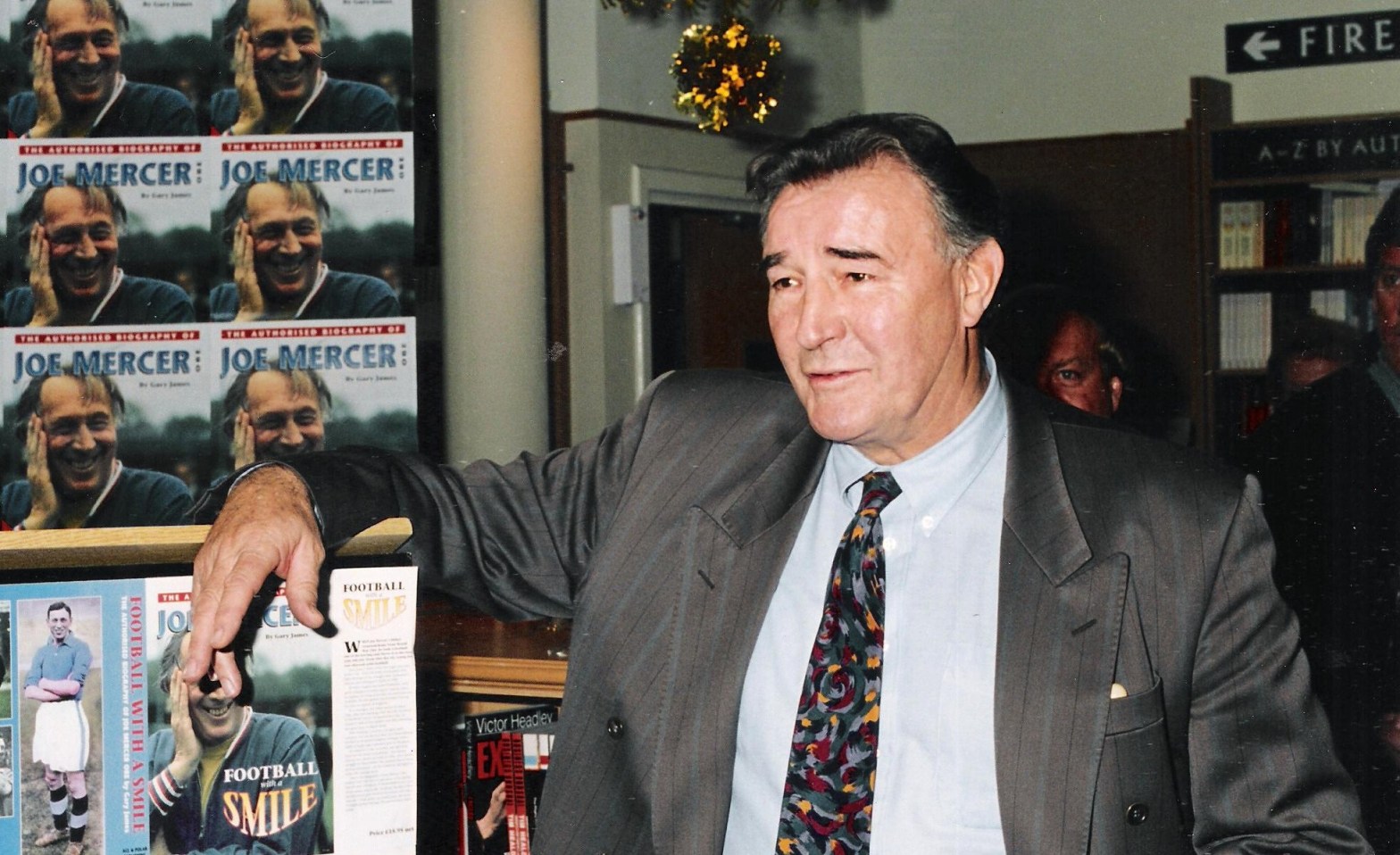
John Bond Interview – Part Four

Back in November 1995 I interviewed the former Manchester City manager John Bond. At the time I was researching my in-depth history of the club called Manchester The Greatest City (later updated as Manchester The City Years). 

I met John at his home and spent a good few hours with him chatting about the Blues and his career. I loved doing this interview and was always grateful for the time he gave me. He was extremely frank, open and honest – which delighted me because he was a great talker. He was also happy for me to share everything he said in the interview recording. I did end up quoting him extensively in the book (and in others I’ve produced) but, until publication on my blog, none of the interview had ever been heard by the wider public. 

This is part four of the interview. It’s about twenty minutes long and this is perhaps the most frank section of the entire recording. At the time we recorded this he was still somewhat upset at the way he’d been treated by City fans at the Bradford promotion game in 1989. I was one of the fans there who had not been happy with what he’d said on TV the night before and I ask him about it a little on here. Whenever I do an interview I’m never looking for soundbites or people to tell me the stories that they think I want to hear. I want the truth and to hear about their feelings. I try to ask them about moments that I remember as a fan but also the things that matter to me. So I wanted to know how he felt about City’s fans.

It upset me hearing how much he had been upset by the treatment he had received and – as you can hear in this clip – he also talks about feeling unwelcome at Maine Road (for various reasons, not simply fans). In 2002-03 I helped City with some of their plans for the end of Maine Road and I made sure that John Bond was on the guest list. I know he was reluctant about attending and had to be persuaded. City had this plan to parade a few legends around the pitch and I felt it would do John Bond some good to hear what the majority of fans actually felt about him. That final day at Maine Road he was given a fantastic ovation.

In a later interview he told me: “I was gobsmacked by their reaction!  When I came out and heard the cheering I was delighted.  I loved that reaction.  Afterwards I rushed home and told my family about the reception and how delighted I was with it. There were times during my management when I received fantastic support from the fans, and at Maine Road’s final game I was delighted with the ovation. I truly enjoyed that feeling when I walked around the pitch.  I’d like to thank the supporters for that reaction.”

So, when you’re listening to this section of the interview it’s important to remember that what happened in 2003 had allowed resolution to occur. He no longer felt so negatively about fans. His views in 1995 though should still be heard.

In this piece he also talks about Peter Swales, the City directors, why he left and so on. Again, his views are frank. I don’t necessarily agree with everything he said but much of what he said about the directors during his time should be heard. It adds context to what many of us always felt. As we recorded this in 1995 it’s also worth pointing out that Bond could see what perhaps those of us who supported City could not see entirely – that was the downward path the Blues were following and why. This interview occurred while City were still a Premier League side but listening to this provides some good indications of why things got worse for City as the decade progressed. 

Of course as this interview was recorded on my old cassette recorder the quality isn’t the best.

So, here exclusive to subscribers is the fourth part of my interview:

Subscribe to get access

If you would like to listen to the fourth part of this frank interview (and the other parts) and read all the in-depth articles on this site (including the entire Manchester A Football History book) then please subscribe. It works out about £1.67 a month if you take out an annual subscription (£20 per year, here) or £3 a month (below) if you’d like to sign up for a month at a time. Annual subscribers access everything since December 2020.

Subscribe to get access

If you would like to listen to the fourth part of this frank interview (and the other parts) and read all the in-depth articles on this site (including the entire Manchester A Football History book) then please subscribe. It works out about £1.67 a month if you take out an annual subscription (£20 per year, above) or £3 a month (here) if you’d like to sign up for a month at a time. Monthly subscribers access everything since 1 October 2022.

If you missed the other three parts then they can be accessed by selecting the John Bond tag below or by searching for his name.

John Bond Interview Part Two

There’s a lot to interest and perhaps surprise Manchester City fans here. This is the second part of my interview with John Bond from November 1995. When I interviewed him he was frank in his views and at times outspoken – and I loved every minute of our chat!

In this clip John talks about the controversial 1981 League Cup semi-final with Liverpool; the FA Cup final (first game) against Tottenham; the way City’s directors handled the draw with Spurs (this astounded me at the time of our interview); how certain directors treated him; and how he almost resigned in between the FA Cup final and its replay. 

As this was recorded in November 1995 it is important to remember that our comments about the ‘present day’ Manchester City refer to the club as it was at that time. Similarly, when we talk about the takeover we mean the 1993-94 takeover of the club. Listening again to this piece now I’m quite pleased that my own perception was fairly accurate.

There’s also some great comments about Norwich City which will please supporters of that club.

This is about 17 minutes long (the previous piece was a similar length too). So get yourself a brew, relax in your favourite chair and listen along.

Subscribe to get access

If you would like to listen to the second part of this frank interview and read all the in-depth articles on this site (including the entire Manchester A Football History book) then please subscribe. It works out about £1.67 a month if you take out an annual subscription (£20 per year, here) or £3 a month if you’d like to sign up for a month at a time (below). Annual subscribers access everything posted since December 2020.

Subscribe to get access

If you would like to listen to the second part of this frank interview and read all the in-depth articles on this site (including the entire Manchester A Football History book) then please subscribe. It works out about £1.67 a month if you take out an annual subscription (£20 per year, above) or £3 a month if you’d like to sign up for a month at a time (here). Monthly subscribers access everything posted since 1 October 2022.

Part three tomorrow.

90 Years Ago Today – John Bond

On this day (17 December) in 1932 John Bond was born. Back in November 1995 I interviewed the former Manchester City manager. At the time I was researching my in-depth history of the club called Manchester The Greatest City (later updated as Manchester The City Years).

I met John at his home and spent a good few hours with him chatting about the Blues and his career. I loved doing this interview and was always grateful for the time he gave me. He was quite frank, open and honest – which delighted me because he was a great talker. He was also happy for me to quote everything he said in the interview. I did end up quoting him extensively in the book (and in others I’ve produced) but none of the interview has ever been heard by the wider public.

Now, you can hear the opening 17 minutes of the interview (the rest will follow over the next few days). Here he talks about the steps taken by City to appoint him; the interview (and the directors involved in that notorious filmed interview for the City documentary in 1980-81); the signing of Tommy Hutchison, Bobby McDonald and Gerry Gow. As I said earlier, he is quite frank in his comments and that may surprise a few.

This audio recording of the first 17 minutes of the interview is available to subscribers of my blog whether annual or, for the first time, monthly. If you want to hear it then please subscribe below. If subscribers enjoy this piece then please let me know and I’ll post other audio recordings in the future.

Of course as this interview was recorded on my old cassette recorder the quality isn’t the best but I’m sure you’ll appreciate the exclusive nature of this.

Subscribe to get access

If you would like to listen to this frank interview and read the in-depth articles on this site (including the entire Manchester A Football History book) then please subscribe. It works out about £1.67 a month if you take out an annual subscription (£20 per year; here) or £3 a month if you’d like to sign up for a month at a time (below). Annual subscribers access everything posted since December 2020.

Subscribe to get access

If you would like to listen to this frank interview and read the in-depth articles on this site (including the entire Manchester A Football History book) then please subscribe. An annual subscription (£20 per year; above) or £3 a month if you’d like to sign up for a month at a time (here). Monthly subscribers access everything posted since 1 October 2022.

The second part of the interview will be available tomorrow.

I’ve also posted an obituary I wrote to John here: https://gjfootballarchive.com/2021/02/12/johnny-bond-johnny-bond-johnny-bond/

Managerial Merry Go Round

On this day (7th October) in 1997 Steve Coppell became Manchester City’s manager. Here’s the story of that period with quotes from exclusive interviews I have performed with Coppell’s assistant Phil Neal.

This article is available for subscribers…

Subscribe to get access

Read more of this content when you subscribe today. It costs £20 a year. Throughout your subscription you have full access to all content on this site. Do a few searches to see what’s available.

Subscribe to get access

Read more of this content when you subscribe today. You can subscribe at either £20 per year (above) or at £3 per month here (cancel any time). For those subscribing £3 per month you will be able to access all content from October 2022 onwards for as long as you are a subscriber. Those subscribing £20 a year have access to everything posted since December 2020.

On this day… Malcolm Allison joins Manchester City

On this day (July 20) in 1965 Malcolm Allison was formally interviewed by the Manchester City board to be manager Joe Mercer’s assistant. Mercer had wanted to bring Allison in since he took the job earlier in the month. Here is a feature I did on Allison back in January 2005.

I first interviewed Malcolm in 1991, and, using material from several conversations with him, and in 2005 I took the opportunity of a MCFC v Crystal Palace game to remind everyone of his significance. Today, for subscribers, I’m posting it here.

Subscribe to get access

Read this article and all other content when you subscribe today.

IN SEARCH OF THE BLUES – Johnny Hart (interviewed December 2004)

Johnny Hart joined City at the age of 16 in December 1944 and went on to make a total of 177 League and Cup appearances, scoring 73 goals.  A skilful inside-right, Hart later had a highly successful coaching career with the Blues, and a spell as manager in 1973.  Here’s an interview I did with him at City’s stadium shortly before Christmas 2004

Subscribe to get access

Read more of this content when you subscribe today.

MCFC Managers – MALCOLM ALLISON

Malcolm Allison gave Manchester City confidence and a will to win that few have ever equalled.  He was an exceptionally brilliant and confident coach – some would say the greatest the world has ever seen (probably Allison himself would say this!) – and working with Joe Mercer he helped the Blues achieve incredible success.

Subscribe to get access

Read more of this content when you subscribe today.

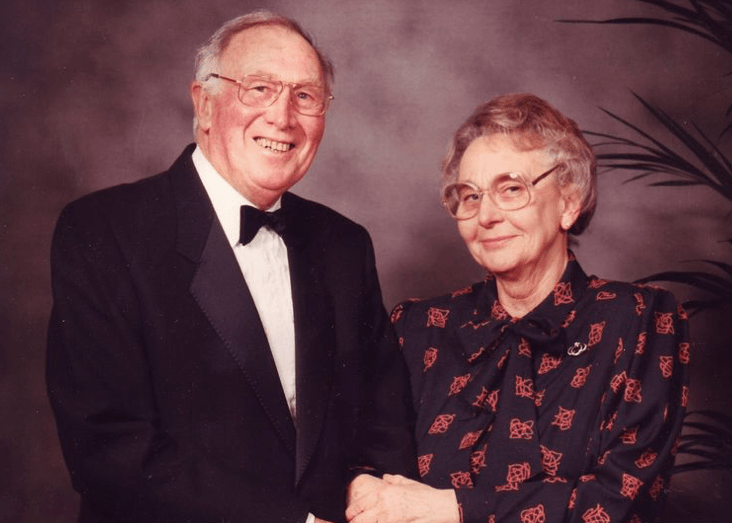
Norah Mercer: 11th March 1920 – 12th March 2013

On this day (11th March) in 1920 Norah Mercer was born and on 12th March 2013 she passed away. Here is an obituary I wrote for her in 2013:

A short while ago (this was written on 13 March 2013) I heard the news that Norah Mercer, the widow of former England captain and manager Joe Mercer, had died this morning.  She was 93 yesterday.  

I first met Norah in 1988 when I was researching for a book on the Manchester derby.  Joe had agreed to write an introduction to the book and I was invited to the Mercer home to talk with Joe.  Unfortunately, on the day the car my father and I were supposed to be travelling in had a few problems and we ended up using a white transit van to get to their home.

As we arrived at the end of their street we started to worry.  We were about to park a transit van outside the house of the greatest Manchester City manager of all time.  Not only that but we were about 45 minutes early.  We couldn’t pull up outside Joe Mercer’s house 45 minutes early and in a transit van!  We decided to park near the junction of the neighbouring road – where we could see the Mercer house – and wait in the van.

At the appropriate time we climbed out of the van, walked up the Mercer road and knocked on their door.  Joe came out with a big beaming smile and simply said “come in”, then Norah appeared from the kitchen wagging her finger at us and saying “you’ve been hiding in that van for 45 minutes!  No need for that you should have pulled up outside.”  From that moment on Norah made us feel welcome and in the 25 years since has been a wonderful friend.

Throughout her life Norah supported Joe wonderfully.  Today people often talk of footballers’ wives – often for the wrong reasons! – but back when Norah and Joe first became a couple it was unknown for a wife to become known by supporters.  However, Norah’s support for her husband was such they she played a marvellous part in every period of his career from the moment her father helped Joe get to Goodison Park in the early days of his career; through the highs and lows of an amazing playing career with Everton, Arsenal and England; on to managerial ups and downs at Sheffield United, Aston Villa, Manchester City, Coventry City and that great spell as England boss; and on to retirement, illness and so on.  Joe passed away on his 76th birthday in 1990 but Norah continued to show interest in football becoming a regular at Manchester City and a frequent visitor to Joe’s other clubs.

When Joe passed away in 1990 I asked Norah if I could write a biography of her husband.  Her response was typical: “Only if it’s not too much trouble for you.”  Too much trouble?  After what Joe had given football, and in particular my team Manchester City, I felt we all owed him something, but typical of Norah she wanted to make sure I wasn’t taking on too much, or doing it for the wrong reasons.

With Norah’s support – and also great assistance from her son David – I wrote the biography over the following three years but, most significantly, I also spent many days at Norah’s listening to her views on football and life, questioning her on odd snippets of information, marvelling at her photo collection, and generally enjoying every minute.  Typically my visits would include Norah insisting I had something to eat – I really didn’t want to intrude too much but soon realised that Norah was always such a welcoming figure.  She was also keen to meet my own family and my girlfriend (my wife since 1992) was as welcome as I was and became someone else looked after by Norah.  

On one occasion when I was researching Joe’s Aston Villa material Norah insisted I have a beer.  When she brought the drink in she nodded to my girlfriend and then gave me the tankard – Joe’s League Cup winning tankard from his days at Villa!  I was petrified that I was going to damage it.

Norah was born in Liverpool in 1920 and was the daughter of a popular grocer, Albert Dyson, on The Wirral.  Albert was a passionate Evertonian and had various contacts at the club.  As Albert’s business was based in Ellesmere Port inevitably he came into contact with a young Everton player called Joe Mercer.  Joe and another player were invited to the Dyson home for tea one day. The other player couldn’t come but Norah did meet Joe for the first time:  “Old cheeky face Mercer came!  At the time I was 11 and Joe was 17 and he treated me like a sister.”  Around six years later a relationship began to develop between the two of them and Norah became an intergral part of Joe’s life.

In March 1941 Joe and Norah became engaged and on 3rd September that year they married with Everton’s TG Jones the best man.  Norah explained to me fifty years later that the honeymoon was cut short by a day so that Joe could play for Everton:  “We left early Saturday and he played Saturday afternoon.  So that’s how our marriage started… with football!  And that’s how it went on.”

Norah was knowledgeable about football herself.  In fact some of Joe’s teammates teased him that Norah knew more about the game than he did!  She played her part in all the big moments of his career:  “Playing for Everton meant a great deal to us all because we were all Evertonians, but I suppose the greatest moment in his pre-war career came when he was selected to play for England.  He was at our house when it came through on the radio – no one ‘phoned you then to tell you you’d been selected.  

“He was delighted.  We all were.  It was such a honour to play for England.  It made us all so proud.  When he played at Hampden in one of his first internationals Joe’s mum came with me and my father to watch him.  That meant everything and Joe was named the Man of the Match (England won 2-1).” 

The couple were, of course, separated for significant periods during the war years.  It was a difficult time for all, but once the war was over it also looked as if Joe’s footballing career had come to an end.  Joe became a grocer like his father-in-law, but he often admitted it was a poor substitute for playing football.  Then a chance came to join Arsenal and arrangements were made for Joe to train on the Wirral and travel to Highbury for games.  Whenever possible Norah would travel, together with their young son David, to London for games.  She was, of course, present at all the landmark moments of Joe’s career with the Gunners:  “I went as often as possible, and of course we had David by then.  If I didn’t go to games I’d be waiting for him up here after the game.  He used to catch the 5.30pm from Euston and arrive back to The Wirral around 10.30.  We lived near the line then and I used to look out for the train.  Of course, Joe often fell asleep and would end up at the end of the line!  Once he said to a guard ‘why didn’t you wake me?’ and the guard said ‘because of what you did to my team today!’  Arsenal must have beaten his team.” 

Once Joe’s playing career ended he moved into management with Sheffield United, Aston Villa and then Manchester City.  As football management required a much closer presence the family moved whenever Joe’s career took a different course.  Norah, for her part, tried to ensure everything ran smoothly for Joe and David.  She also played her part as a welcoming aspect at each of the clubs.  In 2003 she told me: “I used to come to all the games of course, and both before and after the match would be with the wives of the directors, visiting officials, and even the referee’s wife in the Ladies Room.  We were all told who the referee’s wife was and we tried to make her feel welcome, although for some ladies it all depended on how well her husband had refereed the match!”

Norah supported Joe fully throughout his managerial career, especially during some difficult periods at Aston Villa and the final days at Manchester City. Norah, talking to me in 2003:  “He didn’t want to leave City but felt he had no choice.  He obviously wanted Malcolm to succeed and he did not blame him, but the new directors could have sorted it out properly.  Once the takeover had happened and the new directors came on board (1970-72) the club had changed.  It wasn’t really until Franny returned to the club (1993/4 season) that efforts were made to invite me and others back.  Of course Joe had passed away by then, but I was delighted to be asked to games.  That invite has carried on ever since and it is great to feel part of the club again.” 

Joe passed away in 1990 after suffering with Alzheimer’s.  Norah did all she could during that period to ensure Joe was comfortable and she insisted on looking after him, even during some very difficult days.

Norah continued to attend games at City from 1994 through to the present day.  She also came to the ground for other activities and functions over the years, including the unveiling of the Mercer mosaics in 2005.  That day she was accompanied by her son David, but sadly, a little over two years later he passed away after a struggle with cancer. Life must have been difficult once more for Norah.  

Away from football Norah tried to play a part in her local community.  For many, many years she worked in charity shops on The Wirral.  In fact, when I went to see her once when she was in her late 70s she told me that earlier that week a man had stolen a handbag from someone inside the shop and that Norah had chased after him.  Only losing him when he jumped on a waiting train at the railway station:  “if that train hadn’t been there I’d have caught him!”

On another occasion when she was approaching ninety she told me of her upset at being “made redundant!”  The charity had decided to stop using volunteers and had employed younger permanent staff instead.  I’m pretty certain that few permanent staff would have had the same level of dedication and determination that Norah had.

I once asked her about her family’s interest in football:  “It’s changed so much since Joe and I first met.  Throughout his career I supported him all the way.  To Joe football was the most important thing.  The people… the money… the grounds even change, but Joe used to say that the game itself doesn’t need to change.  Football is a great game and that’s what mattered to Joe.  I often joke that football was everything to Joe.    When he met me it was football then me.  When our son David was born it was football, David, then me.  When our granddaughter Susan was born it was football, Susan, David, then me!  Football was always number one and we all knew that.  Football was Joe’s life.

By 2009-10 I had become a little frustrated that the Mercer name was not often remembered outside of the clubs Joe had been involved with and so I decided to update and revise my biography of Joe, but first I asked Norah’s permission.  Just like twenty years earlier she said “Are you sure?  Will anybody be interested?  Don’t do it unless you feel it’s worthwhile.”  “Joe Mercer: Football With A Smile” came out in April 2010 and I made sure that the book explained Norah’s continued presence and interest in football – to me it’s a shared story.  It was the least she deserved.

In September 2009 I included an interview with Norah in the Manchester City match programme.  In that piece I asked her about present day City and ended the piece with a simple question: Looking to the future, who would you like to win the League?

Her response:  “After City you mean?  Well, the top four would have to be City, Everton, Arsenal and Liverpool, but apart from City as champions I’d best not say which order.”  In 2012 she got her wish and, most significantly, she was there when City defeated QPR to lift the title for the first time since Joe’s side had in 1968.

My thoughts are with her granddaughter Susan and the rest of her family.

Gary James

12th March 2013
On this day… John Benson & Manchester City

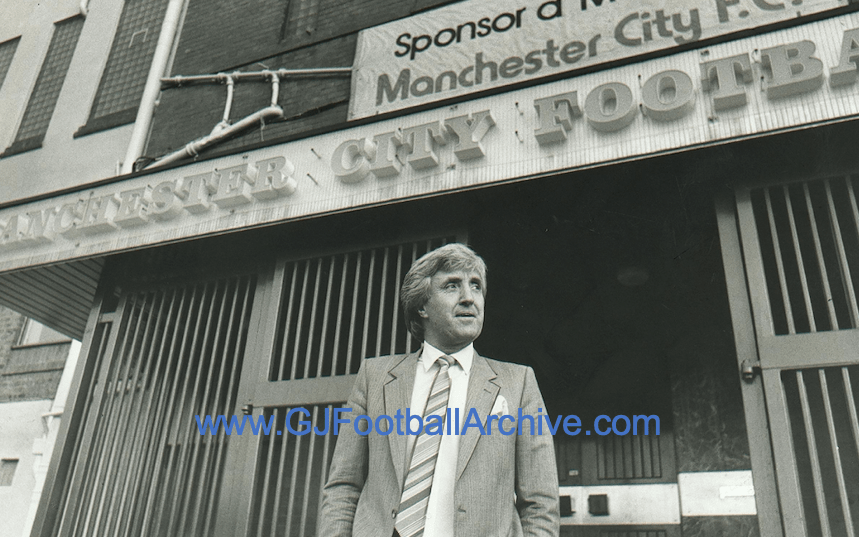
Sixty years ago today (February 21 1962) John Benson made his Manchester City League debut. He had joined the Blues at the age of 15 in July 1958 and went on to make 52 League and Cup appearances before being transferred to Torquay in 1964.  Spells at Bournemouth, Exeter and Norwich followed, before John moved into coaching.  In 1980 he returned to Manchester as assistant to manager John Bond.  

Sadly, John died on October 30 2010 at the age of 67.

A year Ago Today – Pep’s Record breakers

On this day (10th February) in 2021 Manchester City won 3-1 at Swansea in the FA Cup with goals from Kyle Walker (30’), Raheem Sterling (47’) and Gabriel Jesus (50’).

The victory meant that City became the first team to win 15 consecutive games (excluding penalty shootouts). This new record was added to the Blues other win record established in 2017: Most consecutive wins (including penalty shootouts): 20. For more information on these records see:

Consecutive Win Records – Facts or Fiction?

For more on games between City and Swansea see: https://gjfootballarchive.com/2021/02/10/swansea-and-city/

The win also meant that Pep had managed City to 200 victories during his time as manager. After the win he told the media: “I’m very pleased for the way they performed. All of them.

“Swansea is a strong side. They are a really strong team. You understand how many games they were unbeaten. We are in the next round. We are very pleased. The game takes more than 90 minutes. I would love to win after eight minutes. That’s why you have to be patient, control the strength points. In general we played a really good game.

“It shows how special these players are. And we think of the next one. I know we broke a record of all-time. Now it belongs to us and it will be broken for sure. Sport is like this. It means a lot. This is the toughest period. To do what we have done so far is quite remarkable. The important thing is the way we are playing, consistency and the next ones.

Subscribe to get access

If you would like to read the in-depth articles on this site (including the entire Manchester A Football History book) then please subscribe. It works out about £1.67 a month if you take out an annual subscription (£20 per year) or £3 a month if you’d like to sign up for a month at a time. Each subscriber gets full access to hundreds of articles posted so far and the others scheduled to be posted in the coming weeks.