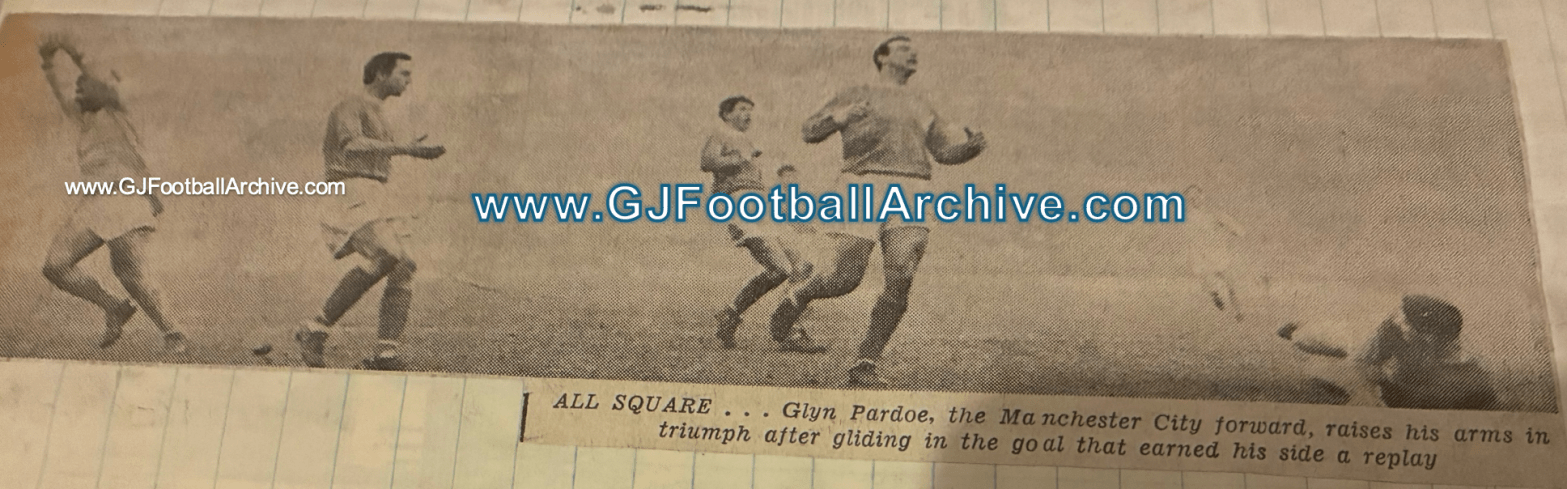
On this day (22 January) in 1966 Manchester City travelled to Blackpool for a FA Cup tie. The game ended 1-1 between the Second Division promotion hopefuls and the First Division side. In this photo Glyn Pardoe has scored City’s goal. Subscribers can find out more about this game below, plus read several contemporary match reports:
Subscribe to get access
Read more of this content when you subscribe today. It costs £3 per month (cancel any time) or you can sign up for a year at the discounted rate of £20 per year. Subscribers get access to everything posted to this site, including PDFs of Manchester A Football History and my first MCFC book too. Why not give it a go for a month and see what you think?
On this day (15 January) in 1966 Manchester City drew 0-0 with Preston at Maine Road but look at the kit City are wearing. This photo shows George Heslop (5) and Alan Oakes (6) in unusual colours for Maine Road. Subscribers can find out more about this kit and day below, plus read several contemporary match reports:
Subscribe to get access
Read more of this content when you subscribe today. It costs £3 per month (cancel any time) or you can sign up for a year at the discounted rate of £20 per year. Subscribers get access to everything posted to this site, including PDFs of Manchester A Football History and my first MCFC book too. Why not give it a go for a month and see what you think?
Back in 1938 Manchester City introduced a letters page in their match programme. The idea was for supporters to write in with suggestions they would like to see the club implement. It took some time before fans started writing in and here was the first letter the club published. It talked of how the club colours of pale blue and white didn’t offer much of a contrast and how the author preferred to see white and black or the 1934 cup final colours of maroon and white.
Over the years there were lots of suggestions of changing City’s traditional colours. In the late 1960s Malcolm Allison wanted to make the club’s red and black away colours their home colours. Imagine anyone making such a suggestion today!
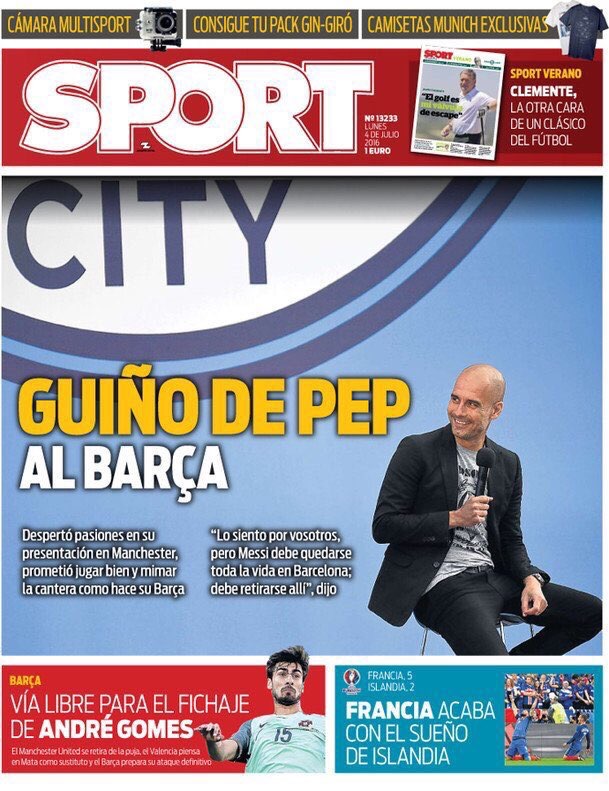
On this day (3 July) in 2016 the new Manchester City badge was officially launched at the Cityzens Weekend. It was also the formal official welcome for new manager Pep Guardiola. There was a surreal moment for me when I was asked to go on stage to be interviewed about the new badge.
I had been consulted by the club on the history of all of City’s badges, emblems and similar for about a year or so, and had performed a series of talks to fans throughout the consultation period.
This was the most detailed badge consultation had ever performed with fans at any club – sadly too many clubs impose a badge without listening to fans. Doing the talks as part of the consultation helped bring out the stories of each emblem and why it was significant – or not! Understanding why, for example, the red rose was introduced in 1972 following the takeover of the club by Joe Smith & Co. or how the 3 emblazoned lines had always been a part of City’s badge (apart from 1972 and the Swales years that followed) helped some determine what elements mattered most to them.
You can find out more about City’s badge history here:
In 2016 I was the warm up act for Pep so it’s a wonder anybody listened. It was a great, positive day for the club and for all of us there. The years since Pep’s arrival have been truly outstanding. We all had hope on this day in 2016 but who’d have thought it would have been as great as it has been?
On this day (April 29) in 1933 Manchester City and Everton played in the FA Cup final. It was a difficult day for Manchester’s team, who were defeated 3-0 by a team that contained the legendary Dixie Dean and former City great Tommy Johnson. You can watch highlights here:
These two teams became the first teams to wear numbered shirts in the FA Cup final. To mark this occasion here is an article on the history of numbered shirts…
This 1700 word article is available to subscribers to my website.
Subscribe to get access
Read more of this content when you subscribe today. It costs £20 a year of £3 per month and you then can access everything on the site. Have a search around and see the volume of content on here or try for a month.
It wasn’t worn that often and was captured in photos/film even less, but here’s Manchester City winning away at Tottenham on this day (10 February) in 1973, wearing a classic kit. It was royal blue with red & white diagonal stripe. The game ended in a 3-2 City win at Spurs with goals from Rodney Marsh and Francis Lee (2). You can watch it here:
If you want to know more on this season or this incredible decade for Manchester City Football Club then why not subscribe and read the following article and all others on the 1970s? You could even subscribe for a month and see what you think. The following 1,700 word article is on the 1972-73 season and is available to subscribers below. Enjoy!
Subscribe to get access – Monthly
Read more of this content when you subscribe today. It costs £3 per month (cancel anytime) to access everything posted since 1 October 2022 or there’s a special annual rate below which gives greater access and works out much cheaper.
Read more of this content when you subscribe today. It costs £3 per month (above) or £20 a year (here) to access everything posted since the site was created in December 2020. This special rate works out about £1.67 a week and gives access to everything posted, including PDFs of 3 of my books.
If you enjoy all the free material on my website and would like to support my research and keep this website going (but don’t want to subscribe) then why not make a one-time donation (or buy me a coffee). All support for my research is valued and welcome. It allows me to keep some free material available for all. Thanks.
Today’s article on the 1960s is free for anyone to read and tells the story of Manchester City signing Denis Law back on 15 March 1960. There’s also film here of his debut and a great colour film of City and Law that season (see below). City manager Les McDowall had been after signing Denis Law for many, many months before he finally signed the Scottish striker for a British record fee of £55,000 the day before the transfer deadline on 15 March 1960. It had been a tense negotiation. Law himself had expected to join Arsenal to link up with his Scottish colleague Tommy Docherty, however, Huddersfield were adamant that they could not sell Law for anything less than £55,000.
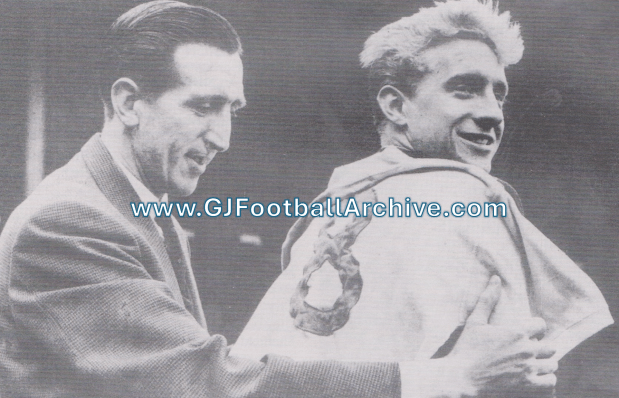
Ken Barnes welcomes Denis Law to Maine Road, 1960
It all came to a head at Leeds Road where Arsenal had sent coach Ron Greenwood to negotiate a good deal. At the same time City, represented by Les McDowall and Chairman Alan Douglas, were keen to sign the 20 year old Scotsman. The Gunners had only given Greenwood power to offer £25,000 plus David Herd, making a total of £50,000, whereas McDowall and Douglas were able to discuss the pros and cons of offering more. The discussions and negotiations went on while Law himself was playing Table Tennis in the games room. When the young player was summoned he quickly realised that his move to Arsenal was off and, after less than ten minutes, he agreed to join the Blues at a cost that was said to be three times his weight in gold.
Denis Law’s Manchester City debut 1960
Law made his debut a memorable one by scoring in the 4-3 defeat at Leeds on 19th March 1960. You can view Law’s first goal for City here:
I think the commentary was added some time after and that the commentary was done in a studio over the top. The commentator (is it Stuart Hall?) mentions City’s kit as being old gold and black but colour film of kit from that season shows City wearing yellow and maroon – as can be seen in this wonderful film from that same year which includes Tottenham v City from about 5 minutes in:
Eleven days after Law’s debut he scored again as City defeated West Ham 3-1. He made one other appearance, away at Chelsea, before the player became the subject of his first controversy at the Club. Law was selected to play for Scotland at Hampden Park on 9th April – the date of the vital home game with West Bromwich Albion – and the City management took the view that playing for your country was more important than playing for your club. This angered many supporters, who realised that a Law-less City would struggle and that relegation was still a strong possibility. The Blues were only two points above the relegation zone.
The controversy heightened when other clubs took a different view and refused to release players. The City Board then felt justified in asking the League for a postponement, but the League refused. In the programme for the game, the Board outlined their views and explained how the circumstance had occurred. The article ended by stressing that the situation of club V Country cannot be allowed to continue.
As expected, without Law the Blues were defeated 1-0.
You can find out more on Manchester City in the 1959-60 season by reading the following article on the season. This is available to subscribers.
Subscribe to get access
Read more of this content when you subscribe today. It costs £3 per month (cancel anytime) or sign up for a year at the discounted price of £20 per year (works out £1.67 per month). Subscribers access the 1000+ articles posted so far and the others scheduled during the life of your subscription.
If you enjoy all the free material on my website and would like to support my research and keep this website going (but don’t want to subscribe) then why not make a one-time donation (or buy me a coffee). All support for my research is valued and welcome. It allows me to keep some free material available for all. Thanks.
Merry Christmas. If you’re bored and wondering what to do (I know… unlikely), here’s an article for subscribers. Today I’m focusing on Manchester emblems and, in particular, those used by Manchester City over the years. City’s current badge has been worn on shirts since summer 2016 after first being revealed at Christmas 2015, but its roots go back decades with City developing a round badge by the 1930s.
Here for subscribers is a 1500 word piece on the development of badges at City and United. Enjoy!
Subscribe to get access
Read more of this content when you subscribe today. It costs £20 a year (works out about £1.67 a month) and you get access to everything on the site and help future research into Manchester’s football history.
On this day (5 October) in 1968 Manchester City wore Red & Black stripes for the first time. Malcolm Allison had suggested adopting AC Milan’s colours and City first wore them for their meeting at Everton on October 5th 1968. The game ended in a 2-0 defeat and the result brought a lot of complaints from fans about the use of the colours. However, due to a colour clash with Leicester, the new colours were worn in the 1969 FA Cup final. The club won that trophy and the kit soon entered City folklore as an important kit.
City chose to wear the new style for all the successful major finals that followed during Joe Mercer & Malcolm Allison’s time, including the club’s first European trophy in 1970. At one point Allison suggested making red and black the first choice kit.
There were however plenty of complaints about City adopting the colours. Take a look at an earlier post I made on those complaints here:
There’s a lot of furore this week about Manchester City’s decision to wear their new Oasis inspired kit instead of their home kit for their Champions League game with Inter Milan. Lots are talking about tradition, heritage and the like, so I thought I’d add a few words here that might have been overlooked or forgotten. So here goes…
Firstly, my position is clear that I’ve always been keen to see City wear home colours/blue for every fixture possible (whether home, away or at a neutral venue) but I’m a pragmatist and know that’s no longer likely. History and tradition does mean something but of course, when it comes to football, traditions change frequently. People may think City have only ever worn a particular colour at home or that the traditional away colours are red & black but these things are not true. Times change.
When it comes to wearing alternative kits at home it has been done more often than perhaps people realise. In fact the only decade when it hasn’t happened appears to be the 2010s – I say appeared because I haven’t got evidence of every home game in the 1890s and 1900s!
These last few days have caused some to recall the Middlesbrough game when David James went up front and the two Tottenham games at Maine Road in 80s/90s when the referee felt the kits were too close and City ended up changing. But there have been many other occasions. In fact it’s well over 100 years since City first chose to wear away colours/alternative strips at home when they didn’t need to!
The image above of Neil Young comes from the 1971 ECWC semi-final v Chelsea. Notice that Young is wearing City’s away colours.
Often when there was a clash of colours in a cup game City would wear their away strip. Games in the 1920s right through to 1970s saw the Blues don maroon, red/black and even scarlet at times at Maine Road.
Here’s another image from that Chelsea semi final:
1971 ECWC v Chelsea. Francis Lee. Photo by Alan Jubb
To the right you can see the North Stand under construction, as you can in the Young image.
Other games in living memory (not necessarily mine, but living memory for many older blues) include:
January 1971 – City v Wigan in FA Cup (red & black)
September 1970 – City v Bologna in Anglo-Italian Cup (red & black)
January 1968 – City v Reading in FA Cup (all maroon)
March 1966 – City v Everton in FA Cup (all maroon)
March 1966 – City v Leicester in FA Cup (all maroon)
March 1956 – City v Everton in FA Cup (maroon shirts, white shorts)
In earlier decades City often chose to wear an away shirt for cup ties where there was a clash. Prior to 1921 the FA rule was that home teams would have to change if there was a clash.
In March 1924 City chose to wear a kit they described as ‘Lucky scarlet’ for a FA Cup tie with Cardiff at Maine Road. So for well over 100 years City have often chosen to wear alternative kits at home instead of traditional blue when they didn’t need to.
Personally, I’d still prefer City to always wear blue no matter where they play, but that’s never going to happen anyway.
Incidentally, if you’d like to read more on the history of Maine Road, take a look at Farewell To Maine Road, which can be downloaded from this page:
If you enjoy all the free material on my website and would like to support my research and keep this website going (but don’t want to subscribe) then why not make a one-time donation (or buy me a coffee). All support for my research is valued and welcome. It allows me to keep some free material available for all. Thanks.






 Gary James' Football Archive