The 1890s: 1896-1897 Gillespie Arrives  

The series of features on Manchester City in the 1890s continues today with an article on Manchester City in 1896-97.

This series covers the final years of Ardwick, the birth of Manchester City and the Club’s first national success.

Subscribe to get access

Read more of this content when you subscribe today. It costs £3 per month (cancel anytime) or sign up a year at a time for the discounted annual fee of £20. This gives access to everything on the site, including PDFs of 3 of my books and various other articles, interviews and audio material. Each subscriber has access to all content posted during their subscription period too. Why not sign up for a month and see what you think?

More on the 1890s tomorrow. Why not subscribe and read this and all the other subscriber features?

The 1890s: 1895-1896 Test Match Special

The series of features on Manchester City in the 1890s continues today with a 1800 word article on Manchester City in 1895-96. An interesting season and one which started to pave the way for everything that followed while reminding those who ran the club that fans’ feelings always had to be considered!

This series covers the final years of Ardwick, the birth of Manchester City and the Club’s first national success.

Subscribe to get access

Read more of this content when you subscribe today. It costs £3 per month (cancel anytime) or sign up a year at a time for the discounted annual fee of £20. This gives access to everything on the site, including PDFs of 3 of my books and various other articles, interviews and audio material. Each subscriber has access to all content posted during their subscription period too. Why not sign up for a month and see what you think?

More on the 1890s tomorrow. Why not subscribe and read this and all the other subscriber features?

The 1890s: 1894-1895 Parlby’s City

The series of features on Manchester City in the 1890s continues today with a 2800 word article on Manchester City’s first season.

This series covers the final years of Ardwick, the birth of Manchester City and the Club’s first national success.

Subscribe to get access

Read more of this content when you subscribe today. It costs £3 per month (cancel anytime) or sign up a year at a time for the discounted annual fee of £20. This gives access to everything on the site, including PDFs of 3 of my books and various other articles, interviews and audio material. Each subscriber has access to all content posted during their subscription period too. Why not sign up for a month and see what you think?

More on the 1890s tomorrow. Why not subscribe and read this and all the other subscriber features?

The 1890s: 1893-1894 Ardwick’s Last

The series of features on Manchester City in the 1890s continues today with a 2000 word article on Ardwick’s last season in the Football League, 1893-94 and the birth of Manchester City.

Ever wondered how MCFC came into being and what happened to Ardwick AFC? Well, now’s your chance to find out. This series covers the final years of Ardwick and the birth of Manchester City.

Subscribe to get access

Read more of this content when you subscribe today. It costs £3 per month (cancel anytime) or sign up a year at a time for the discounted annual fee of £20. This gives access to everything on the site, including PDFs of 3 of my books and various other articles, interviews and audio material. Each subscriber has access to all content posted during their subscription period too. Why not sign up for a month and see what you think?

More on the 1890s tomorrow. Why not subscribe and read this and all the other subscriber features?

Manchester City Chants

I’ve posted a lot on this in the past but it’s always worth revisiting, especially as recent years have seen dozens of new chants established at Manchester City. Successful eras often bring new chants – and that’s definitely happened recently – but failing periods can also generate new supporter songs.

Chanting at football games is rarely documented correctly with many myths, rumours and stories developing over the years. This feature is designed to give a potted overview of the development of singing at City.

I explained about some of the chants in this talk I did a couple of years ago. If you’ve got time watch it:

Now, for subscribers is an 1800 word article on the history and development of chants at Manchester City:

Subscribe to get access

Read more of this content and everything on the site when you subscribe today.

If you want to know more on subscribing first have a read of this:

Manchester City Break-In

On this day (28 April) in 1903 it was reported that the Manchester City offices had been broken in to. Season tickets, stamps, keys and other articles were stolen (had this been the 1980s I’m sure some comedian would’ve claimed ‘thieves broke into MCFC and stole everything of value… police are looking for a sky blue carpet!’).

Here’s a brief cutting from the period. The punishment? The boys received six strokes each from the birch! In the 1970s Manchester United boss Tommy Docherty (and he wasn’t alone – City’s secretary Bernard Halford agreed with him) suggested that football hooligans should be brought on to the pitch at half time and birched in front of fans!

The 1890s: Manchester’s First National Success

On this day (April 22) in 1899 Manchester City became the first side to gain automatic promotion when they won the Second Division title after a 4-1 victory over Blackpool. Goals from Meredith (2), Gillespie and Ross gave the Blues the win.

A series of test matches, similar to play offs, had been utilised in previous seasons. The Blues were also the first of the Manchester teams ever to earn promotion and the football season ended with Manchester City as comfortable champions of the Second Division. This meant they were the first Manchester team to win a national League competition too. 

Near neighbours Glossop were also promoted that day. Here’s the final table:

Subscribers can read about the final game and other information from that season below:

Subscribe to get access

Read more of this content when you subscribe today. It costs £20 a year (here) to access everything since December 2020 or for £3 per month (below) you can access everything from 1 October 2020.

Subscribe to get access

Read more of this content when you subscribe today. It costs £20 a year (above) to access everything since December 2020 or for £3 per month (here) you can access everything from 1 October 2020. Why not join for a month and see what you think?

Hyde Road’s Last

On this day (2 April) in 1923 Hyde Road’s last victory saw Manchester City defeat Sunderland 1-0. It’s a great coincidence that Maine Road’s last victory was against the same club on 21/4/2003.

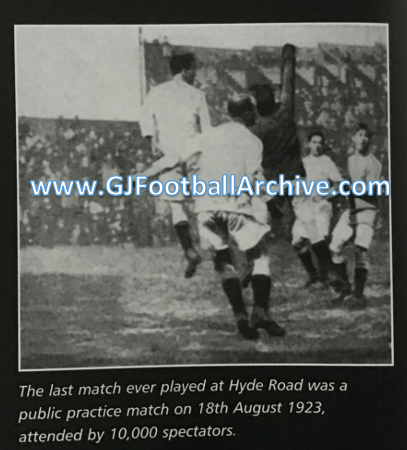
This was not the last match played at Hyde Road, that was a public practice match the following August.

Manchester City Main Stand Burns Down

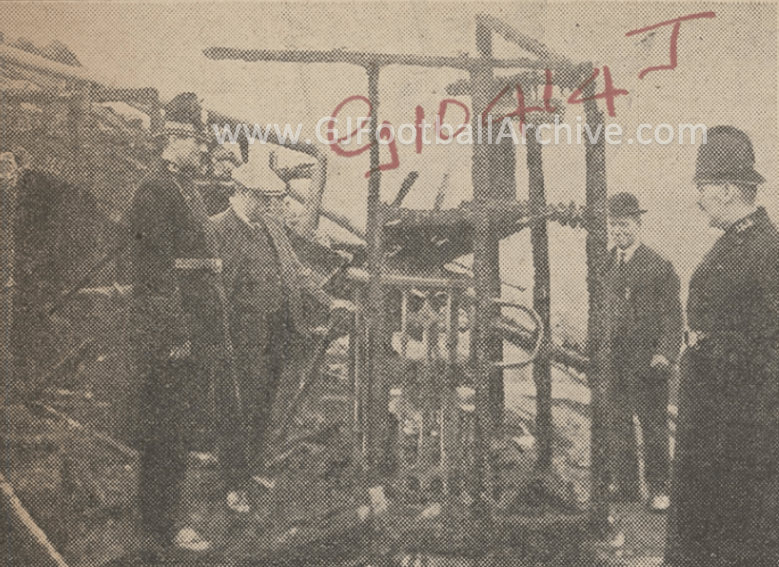
Only a few months after the King had visited Manchester City suffered a major blow when their Main Stand was destroyed by fire (6 November) 1920. Subscribers can read the story of this below (including the story of how City asked United if they could use Old Trafford temporarily which resulted in significant criticism of the Reds in national newspapers) but here’s a rare image that hasn’t been published in any Manchester City publication over the last century or so. It did appear in a contemporary newspaper. Notice the Ellison’s Rush Preventive turnstile that seems to have just about survived.

When City moved to Maine Road quite a few of these turnstiles were taken from Hyde Road and re-erected at Maine Road. In 2003 6 Ellisons turnstiles from the 1890s were still in place and in use during Maine Road’s final season.

In the years that followed the Hyde Rd fire there was a story that developed that the fire was the result of a Irish republican terrorist attack and that both Hyde Rd and Old Trafford were targets. The Old Trafford planned attack was foiled and has been written about in contemporary sources but Hyde Rd’s story cam much later. It doesn’t seem to be the case that the Hyde Rd fire was the result of terrorist activity – if there’s interest then maybe I’ll write the latest research on this in the coming months?

Subscribe to get access: Monthly

Read more of this content when you subscribe today. It costs £3 per month (cancel anytime) and monthly subscribers get access to everything posted since 1 October 2022 and throughout their subscription. Why not try for a month? There’s a special annual subscription for a discounted price and greater access (see below).

Subscribe to get access: Annual

Read more of this content when you subscribe today. It costs £20 per year (about £1.67) for this special, discounted annual rate. Annual subscribers get access to everything posted since December 2020 and throughout their subscription.

Nice Old Team Photo

Here’s a team photo of Manchester City, taken at Hyde Road, in 1900. It’s a typical squad pose in front of the old Hyde Road main stand which was destroyed by fire twenty years later. Notice the way the wooden wall of the stand was painted in City blue and white. People often talk about Hyde Road as if it was this dull, dismal ground but the stand here had only been erected a few years earlier and Joshua Parlby, Lawrence Furniss and the others behind the club made sure it was frequently painted blue and white (plus green) wherever possible.

Over the following twenty years City continued to invest in the ground but the site restricted the club’s growth and 40,000 crowds could not be accommodated particularly well. Often gates would be closed some way off capacity under the orders of the local police who tried to keep crowds back. Bennett Street and even Hyde Road itself were often overcrowded with fans hoping to get in.

There’s lots more on here about Hyde Road and City’s other grounds. Do a few searches and see what you find. Some is only for subscribers but much is available freely. It takes a lot of time, effort and money to research Manchester’s football history so if you want to support this work and get something back then please subscribe. Thanks.