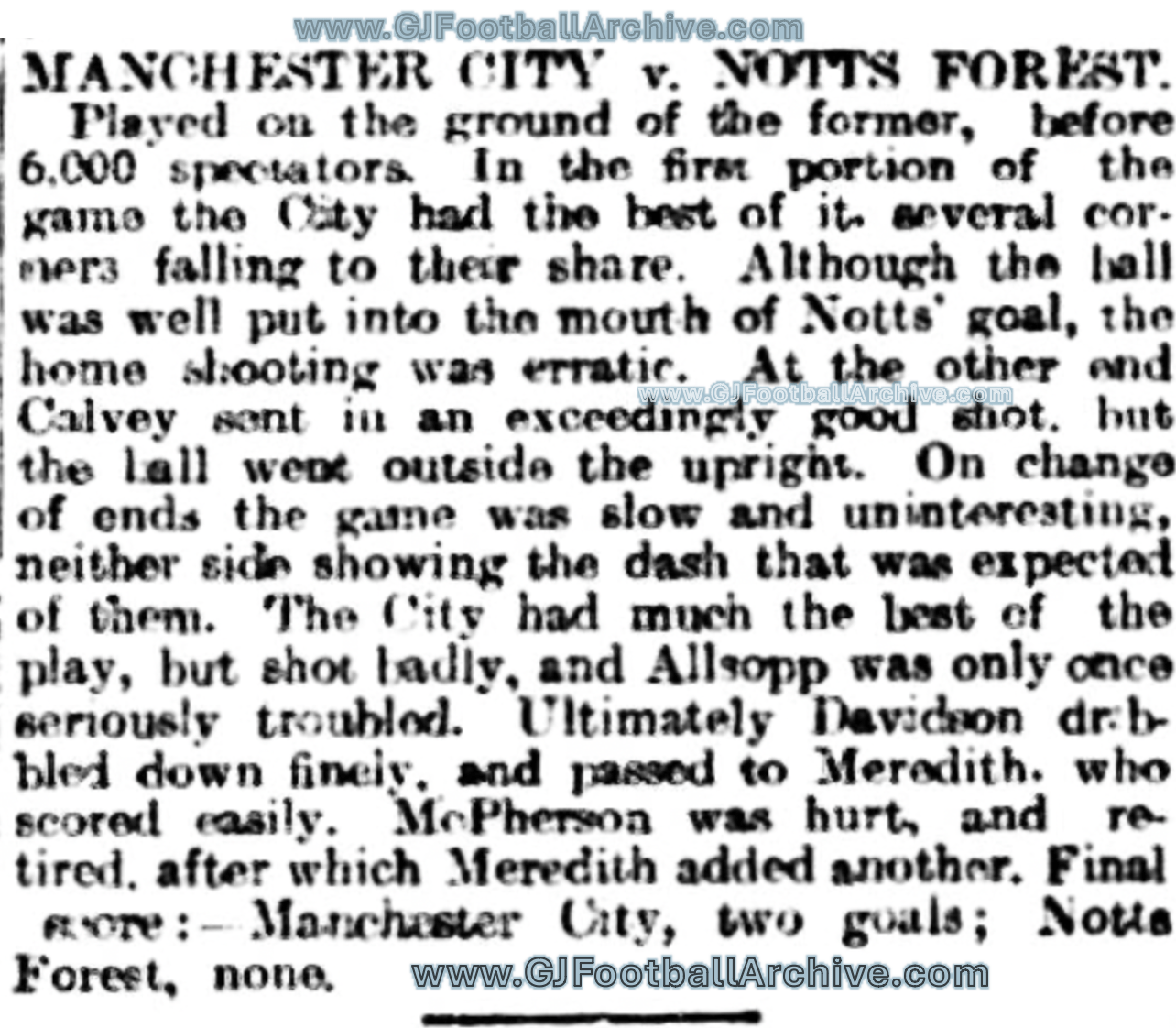
It’s City v Forest tonight (4 March 2026), so here’s a few snippets/features on the two clubs. The first game between them in Manchester was played on 9 April 1900 and ended in a 2-0 City win (see report). This was a First Division game (City became the first Manchester side to earn promotion when they won the Second Division title the previous season). Billy Meredith scored both goals.
Manchester City with the Second Division Shield, 1899
There are quite a few articles on Forest and City on here. Here are all the ones tagged Nottingham Forest:
Also, if you’d like to find out more on the early 1900s for Manchester City then why not start with this subscriber feature on the second half of the 1899-1900 season? It’s a 1300 word article:
Subscribe to get access
Read more of this content when you subscribe today. It costs £3 per month (cancel anytime) or sign up a year at a time for the discounted annual fee of £20. This gives access to everything on the site, including PDFs of 3 of my books and various other articles, interviews and audio material. Each subscriber has access to all content posted during their subscription period too. Why not sign up for a month and see what you think?
Continuing here: the story of Manchester City’s origins. Today’s feature is a 3,300+ word feature on the earliest known game, played in November 1880. Have a look elsewhere on the site for other content on this period.
Subscribe to get access
These articles will be available to subscribers to this site. It costs £3 per month (cancel any time) or sign up for a year for the discounted price of £20 per year (works out about £1.67 a month to access every article on this site). To date in excess of 1,500 articles/features have been posted including interviews, talks and more.
If you enjoy all the free material on my website and would like to support my research and keep this website going (but don’t want to subscribe) then why not make a one-time donation (or buy me a coffee). All support for my research is valued and welcome. It allows me to keep some free material available for all. Thanks.
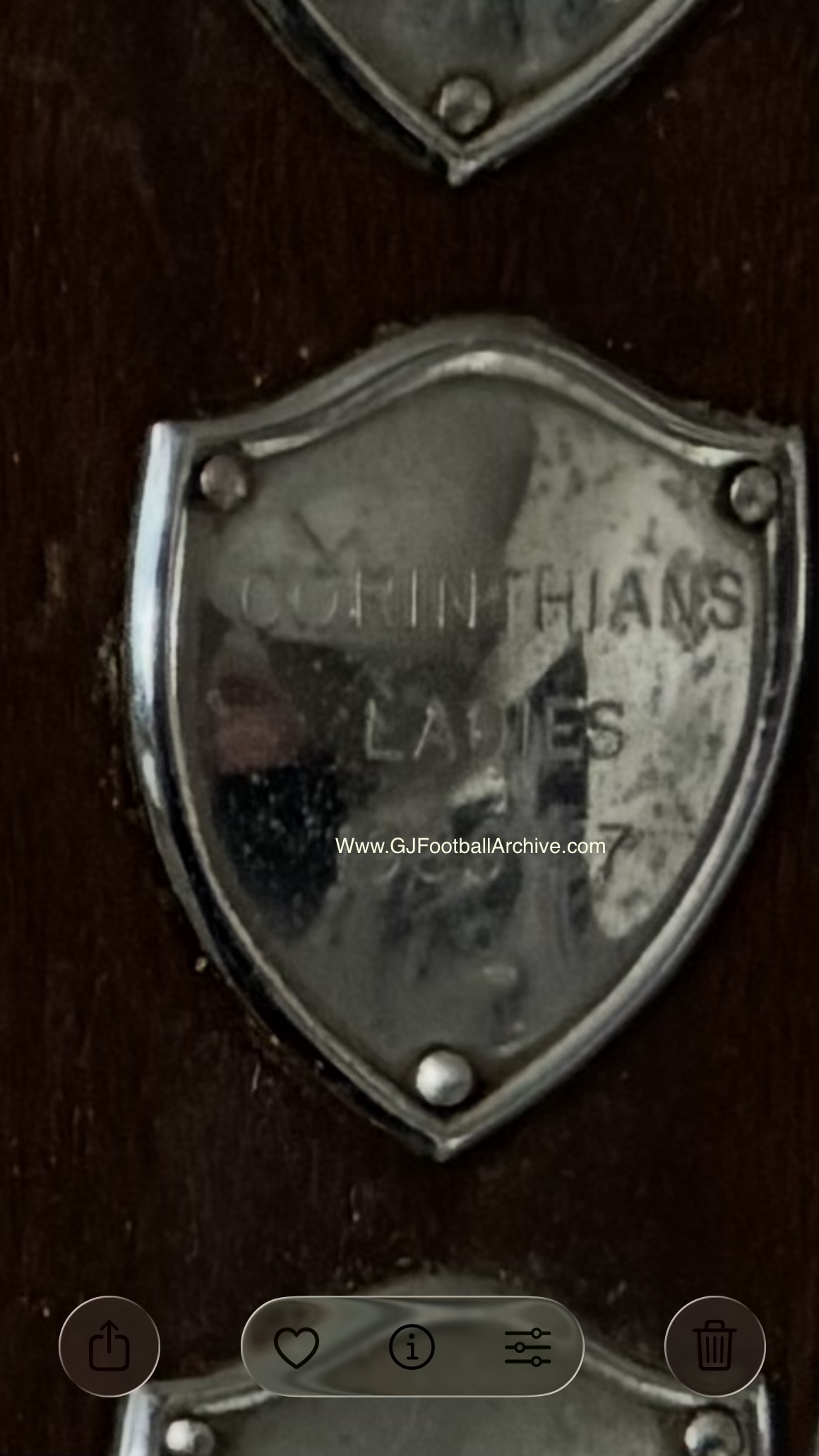
Had another enjoyable day today catching up with a couple of Manchester Corinthians Ladies FC players (2 of over 50 interviewed for the book). One had tracked down a couple of missing trophies won by the Corinthians – one of these was the first league title won by the club. More on this soon.
There’s plenty of articles and features on the Corinthians here of course. I’ve known some of the Corinthians for almost 40 years (my wife played with some former Corinthians) and both my brother and sister were taught by another at secondary school.
On 2 March 2021 Manchester City defeated Wolves 4-1, extending the Club’s unbeaten run to an outstanding 21 games in all competitions (it was widely reported at this time that no other Premier League team had managed more than four wins in a row so far in 2020-21!). In addition City had extended their unbeaten run to a club record equalling 28th game. Post-match Pep Guardiola rightly told Radio FiveLive: ‘In wintertime in England it’s hell and in that time we did something incredible. It’s more than remarkable.’
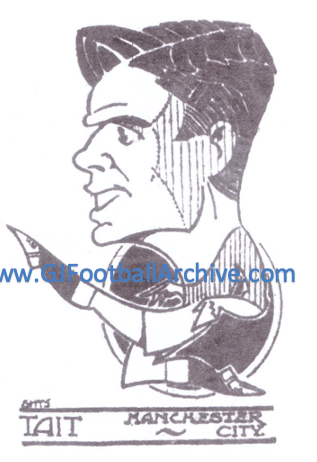
On this day (1 March 1930) Manchester City defeated Liverpool 4-3 at Maine Road with goals from Tommy Tait (2), Eric Brook and Tommy Johnson. This match at Maine Road was watched by 29,973. You can find out more on the 1929-30 season below in this piece for subscribers (see below). I hope you enjoy it. If you don’t subscribe then why not try it for a month (£3 per month or sign up for a year at a discounted £20 per year)?
Here’s the article:
Subscribe to get access
Read more of this content when you subscribe today. It costs £3 a month (cancel anytime) or sign up for a year at £20 per year. Subscribers have access to the 1000s of articles, features, interviews etc. posted so far and all those posted during your subscription.
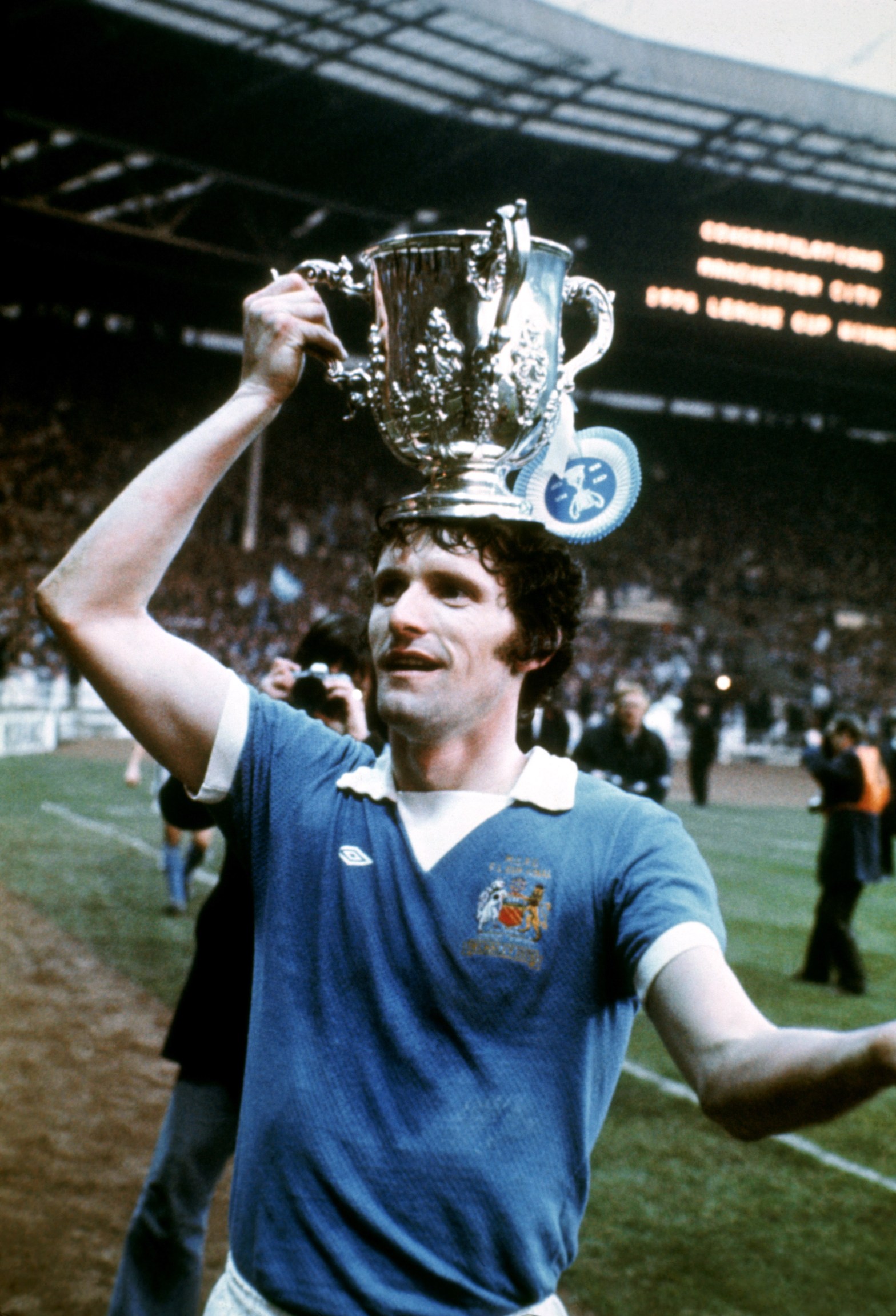
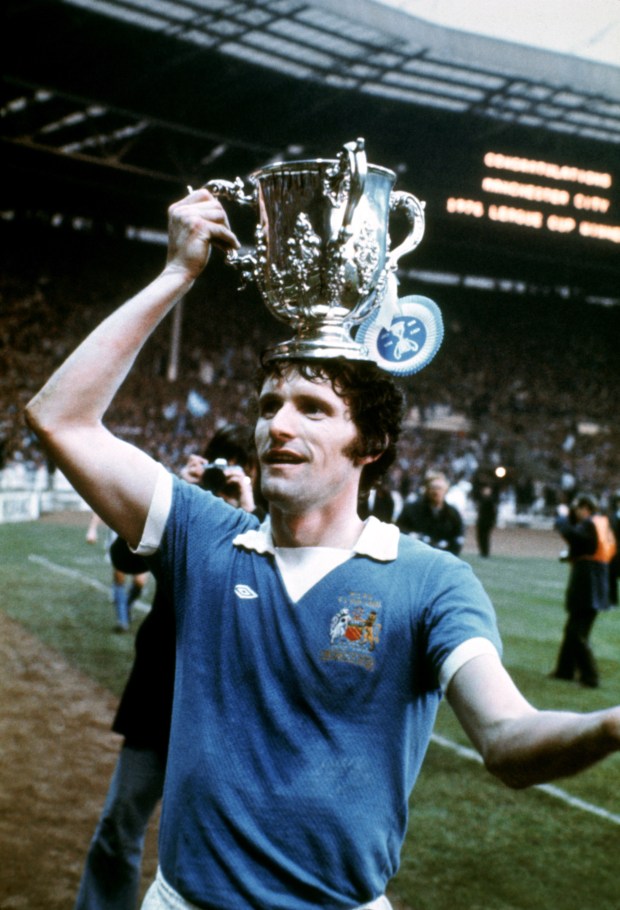
Manchester City travelled to Wembley for the League Cup final on this day (28 February) in 1976. Here’s a story of that day…
The huge demand for tickets had seen City secretary Bernard Halford take the unusual step of writing to all the other League clubs, apart from Newcastle of course, asking for any spare tickets from their allocations for the final. Many clubs obliged but still thousands of Blues were denied tickets.
Reaching Wembley was an extraordinary achievement considering the injuries (most notably Colin Bell) and suspensions, and demonstrated a wonderful team spirit that had been galvanised by manager Tony Book and captain Mike Doyle following the controversy surrounding former captain Rodney Marsh earlier in the season. Doyle told the media: ‘The success of this City is the complete team work – and individuals don’t count. I’m sorry Colin [Bell] hasn’t made it, but I’m damned sure it hasn’t weakened our chances, because we’ve proved it. We’ve been without him for three months and still reached Wembley.’
Significantly, every member of the side had already played at Wembley except youngsters Peter Barnes and Ged Keegan. When questioned whether those players would be the weak links Doyle said: ‘Peter is not only a tremendously talented player – he’s got his head screwed on the right way. He just isn’t the sort to get all worked up. In fact, I’ll bet that he could prove the biggest success of the whole match. He’s a natural. He does things superbly without having to think or worry. Keegan is in the same mould. He’ll feel at home, because he’s already one of the City first team pool. If he wasn’t something special, he wouldn’t be in it!’
The final began with both teams playing attractive football. Newcastle seemed to have the edge for a while, but a foul by Newcastle’s Keeley on Joe Royle brought an important free-kick. Hartford sent the ball to Royle, who headed the ball across the face of the goal. Barnes stormed in to fire a half-volley into the net to give City an eleventh minute lead.
Barnes, who would be announced as the PFA Young player of the Year that weekend, immediately ran off the pitch towards the stands in celebration.
Twenty-four minutes later Newcastle’s Macdonald sent in a low centre. Watson and Corrigan raced for it, but Newcastle’s Gowling managed to get to it first and stab home the equaliser.
The second half started with City determined to get an early goal – and they did! Years later Dennis Tueart explained: ‘The goal itself… [Donachie’s] going, I’ve gone to the far post, then come away from the far post because Tommy [Booth’s] gone there. But as I’ve checked back into the centre, I’d gone in too far, the ball’s gone over to Tommy. Tommy’s got half a head on it and knocked it back. It just went a wee bit behind me. Well, I’d always been fairly good at volleying right from an early age, and I’d scored a goal, probably it was the first or second game of the season, against Norwich. Which I think was technically a better goal, it flew in the net, overhead kick. I’d scored overhead kicks at school, I’d side volleyed which is slightly different, but timing and volleying had always been a strength, and it just came… Any balls that come to you as a forward, no matter which way they come to you, you just try and twist your body and get some kind of contact onto it. Because you know the general area where the goal is, and I connected pretty well, it went across and bounced in.
‘It was important because it was the 46th minute, just after half time, when we got ourselves back in front.’
Manchester City’s Mike Doyle celebrates with the League Cup (PAPhotos/Alamy)
Manager Tony Book, who became the first man to win the trophy as a player and as a manager, was delighted with City’s 2-1 win: ‘This was my greatest moment. It was a tremendous final and Tueart’s goal was something special… quite out of this world.’
On the Sunday, City returned home to an incredible tour of Manchester. It was a great day of celebration, and the final would be shown on ITV later that day. In the days before the League Cup was shown live on television, this gave those unable to get a ticket the chance to see the game for the first time.
Match Stats
28 February 1976
Manchester City 2 (Barnes & Tueart)) Newcastle United 1 (Gowling)
Attendance 100,000
If you enjoy all the free material on my website and would like to support my research and keep this website going (but don’t want to subscribe) then why not make a one-time donation (or buy me a coffee). All support for my research is valued and welcome. It allows me to keep some free material available for all. Thanks.
You can read more on the 1975-76 season with this 5,320 word article – a season which saw Tony Book guide the club to major success. If you want to know more on this incredible decade for Manchester City Football Club then why not subscribe and read it all? You could even subscribe for a month and see what you think. The following 5,320 word article is on the 1975-76 season and is available to subscribers below. Enjoy!
Subscribe to get access – Monthly
Read more of this content when you subscribe today. It costs £3 per month (cancel anytime) to access everything posted since 1 October 2022 or there’s a special annual rate below which gives greater access and works out much cheaper.
Read more of this content when you subscribe today. It costs £3 per month (above) or £20 a year (here) to access everything posted since the site was created in December 2020. This special rate works out about £1.67 a week and gives access to everything posted, including PDFs of 3 of my books.
If you enjoy all the free material on my website and would like to support my research and keep this website going (but don’t want to subscribe) then why not make a one-time donation (or buy me a coffee). All support for my research is valued and welcome. It allows me to keep some free material available for all. Thanks.
Manchester City’s 2-1 victory over West Ham on 27 February 2021 saw the Blues take the lead after 30 minutes, when a cross from Kevin De Bruyne was met perfectly by defender Ruben Dias. This was Dias’s first goal for City.
For a while it seemed like this would be a relatively straightforward win, but West Ham had several chances, and the Hammers were as defensive as you’d expect from a team managed by David Moyes. Just before the break they equalised via Antonio.
In the 68th minute a City corner led to John Stones netting City’s second and ultimately the winner.
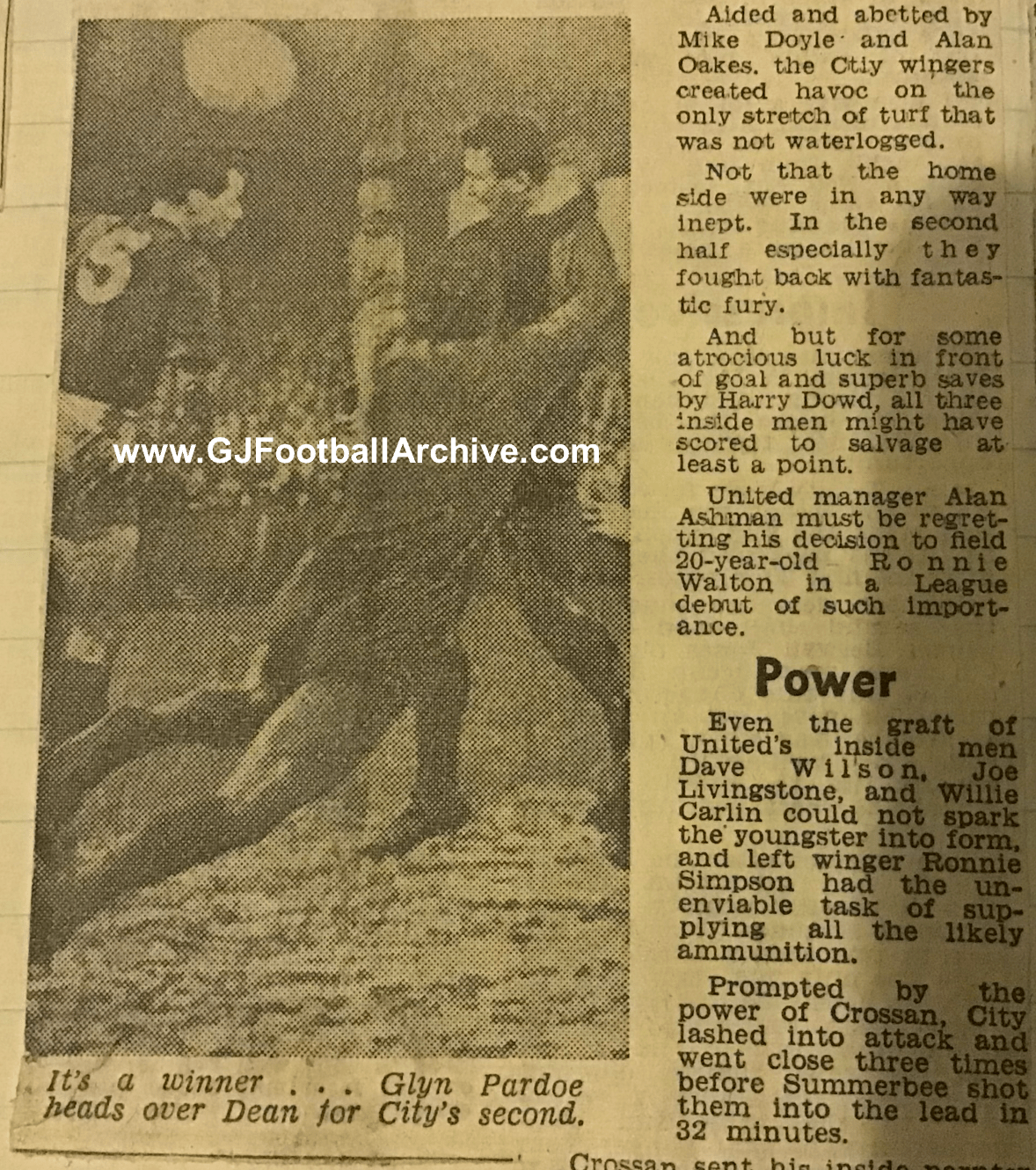
Today (26 February) in 1966 goals from Mike Summerbee and Glyn Pardoe gave City a 2-1 win at Carlisle. Were you there that day? If you were please feel free to add your comments. Here for subscribers is a contemporary match report from this game:
Subscribe to get access
Read more of this content when you subscribe today. It costs £3 per month (cancel anytime) or sign up for a year at a time at a discounted price of £20 per year. This gives access to every article, book, interview etc. posted to the site so far. Why not sign up for a month and see what you think?
You can find out more on Manchester City during the 1965-66 season by reading the following 4100 word article. As with most of the other features in this series it includes words from interviews I have performed with those who were there. This is a subscriber article (see below).
Subscribe to get access
Read more of this content when you subscribe today. It costs £3 per month (cancel anytime) or sign up for a year at the discounted price of £20 per year (works out £1.67 per month). Subscribers access the 1000+ articles posted so far and the others scheduled during the life of your subscription.
If you enjoy all the free material on my website and would like to support my research and keep this website going (but don’t want to subscribe) then why not make a one-time donation (or buy me a coffee). All support for my research is valued and welcome. It allows me to keep some free material available for all. Thanks.
Eighty years ago today (26 February 1946) Colin Bell was born. The above photo comes from Peter Barnes’ collection and was taken at Champneys where City were staying prior to the League Cup final in 1976. It was, of course, Colin’s 30th birthday. My thoughts and best wishes are with Colin’s family today.
Sadly Colin, recognised by most Manchester City fans as the greatest ever player for the club, passed away in January 2021.
I’ve interviewed Colin and written a lot about him over the years. A few posts are available (free to read) here for anyone who wants to learn more about Colin or remember some of his incredible achievements:
On This Day in 1977: Colin Bell’s Emotional Return
City 4 Newcastle United 0
Division One
26th December 1977
City Team: Corrigan, Clements, Donachie, Booth, Watson, Power (Bell), Barnes, Owen, Kidd, Hartford, Tueart
Attendance: 45,811
This match has entered Manchester folklore as one of those games you just had to experience to fully appreciate. All of those present that night from players, to fans, club officials to newspaper reporters, talk of this afternoon as one of football’s most emotional nights.
The story of Colin Bell and his injury had become one of football’s most discussed issues. The teatime BBC television news show Nationwide had profiled Colin’s tragic story and as a result the player received thousands of good luck messages from neutrals and ordinary non-footballing members of the public. They had been touched by his long, hard training schedules; his lonely runs through the streets of Moss Side and Rusholme; and by his absolute determination to return to full fitness. To them Colin’s story was incredible, to City and England supporters it was a deeply disappointing and tragic story.
Colin’s gruelling training regime ensured he forced his way into manager Tony Book’s thinking by December 1977, and on Boxing Day he was named as substitute for the visit of Newcastle. Anticipation was high as supporters believed this would be the day they would see their hero return to action.
Chairman Peter Swales rated Colin highly and shortly before his death in 1996 the former Chairman explained: “The supporters loved him. You can never kid supporters. They know great players. It’s no good a manager saying, ‘this is the best player we’ve ever had’. The supporters will know after a few weeks whether he really is the best. Bell was the best. No question.”
On the night itself Tony Book had planned to send Colin on as substitute for the final twenty minutes, but an injury to Paul Power meant the manager had to take decisive action. The supporters didn’t realise, but as the players were making their way into the dressing room for the interval, it was decided that Colin would play the second half. During the interval fans started to speculate as to when they would see their hero, with the majority believing he would come on for the final flourish, but then as the players came back out on to the pitch it was clear that Paul Power was missing and that Colin was coming on.
The stadium erupted and the fans on the Kippax terracing began to chant his name. It was a truly marvellous sight and the tremendous feeling of anticipation and excitement had never been felt midway through a match for any player before. It was the most amazing individual moment witnessed at the old ground. Dennis Tueart, a player on that day, remembers: “He came on at half time, and it was like World War Three. I’ve never known a noise like it in all my life! The crowd gave him a standing ovation and he hadn’t even touched the ball. I’ve never seen a guy work as hard to get back. The hours and hours he put in. The pain he went through… it was a phenomenal amount of work and he definitely deserved that ovation.”
For the player himself the day remained one of the most significant memories of his life when I interviewed him in 2005. “As I came down the tunnel I could hear a whisper go right round the ground. I knew that reception was for me alone. I was never an emotional player but that afternoon I got a big lump in my throat. I’ve been lucky to win cups and medals and play internationals, but of all my great football memories, that is the one that sticks in my mind.”
“The City crowd and I had this mutual respect really, and that standing ovation from over 40,000 people brought a lump to my throat for the only time in my career.”
The substitution totally transformed the atmosphere and the result. The game had been goalless, but the Blues tore into Newcastle as if they were playing in the most important game of all time. Dennis Tueart played superbly and scored a hat-trick, with Brian Kidd also scoring, to make it a convincing 4-0 win for the Blues. At one point Colin had a header which just sneaked over the bar, but the fairytale goal on his return did not arrive.
When I interviewed him years later a modest Colin felt he didn’t contribute a great deal: “I don’t think I touched the ball. It was ten men versus eleven, but the atmosphere got to our team and we ran away with it.”
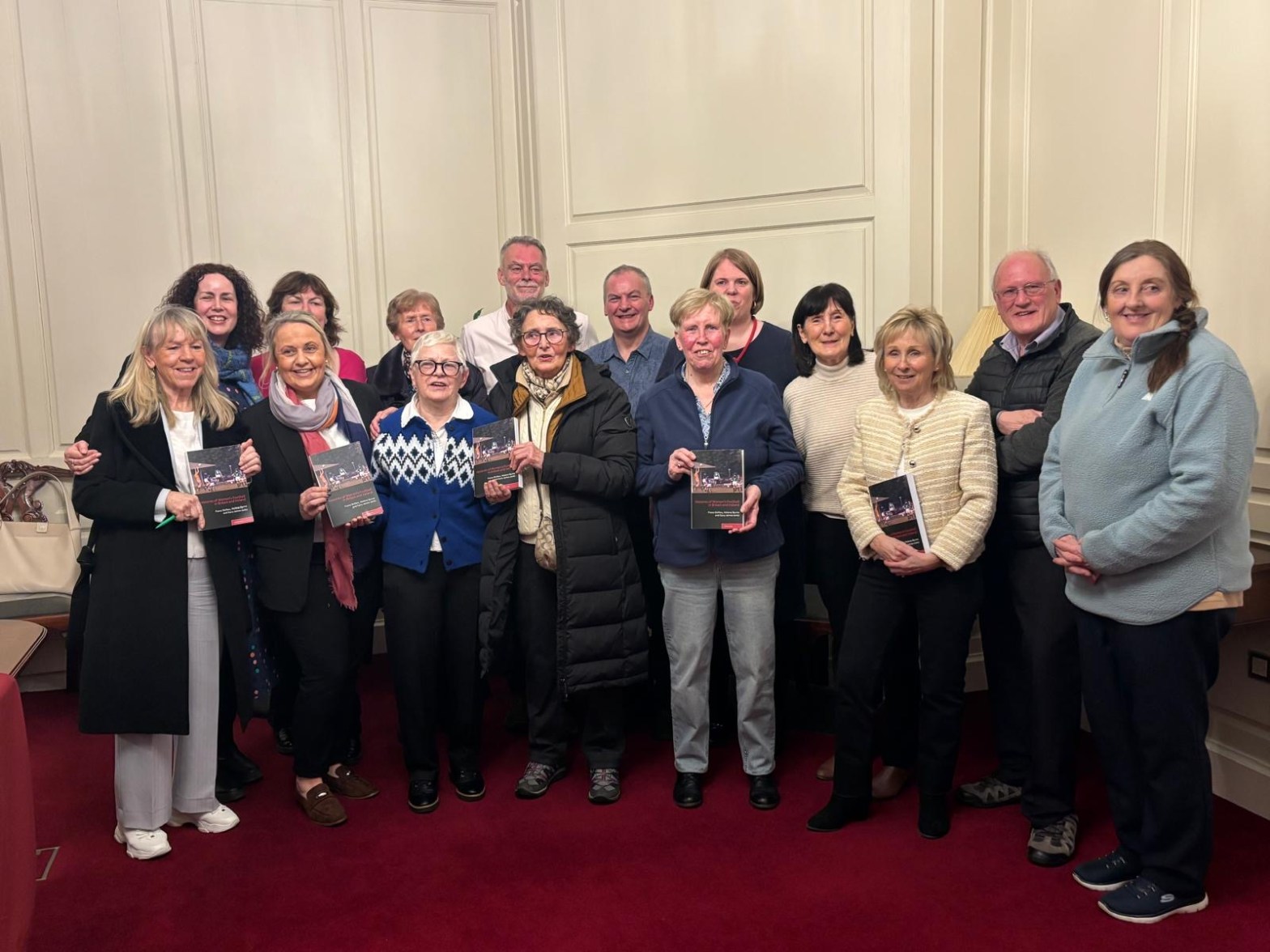
Last week I was at Boston College in Dublin for a special Ireland launch of ‘Histories of Women’s Football in Britain and Ireland’ – a book I’ve co-edited with Fiona Skillen & Helena Byrne. It was a great night enlivened by the wonderful stories of women who played football in Ireland during the 60s-90s. We were delighted with the support we received and were thrilled with the stories we heard. Thanks to Mike Cronin and all at Boston College for organising this. Special thanks too to Helena who was rightly determined to do something in Dublin.
The book is of course something I’m delighted with and we were blessed with so many wonderful writers who supplied content/chapters for the book. I wrote a chapter on the history of women’s football in Trafford – it often gets lumped into Manchester’s history but the chapter (as do most of the chapters in the book) demonstrates why every district, area, town, city and country needs its own focus. For too long people have assumed that what happens in one location happens in another, but this is not the case.
You can find out more on the book here or by visiting the Peter Lang (publisher) website:



 Gary James' Football Archive