This is Your Life Joe Mercer

Broadcast live on this day (25 March) in 1970 was the This is Your Life TV episode with Joe Mercer as the subject. Here are the details plus a special recording which supporters of all the clubs Joe was involved with could be interested in.

This Is Your Life was viewed at the time as significant recognition for a lifetime’s achievement. Only major stars and personalities were featured in those days, and the main idea would be that the subject of the programme would be surprised by the sudden appearance of presenter Eamonn Andrews and his ‘Big Red Book’. The subject would then be whisked away to a studio or other location where a variety of figures from the person’s life would be brought out to tell anecdotes and the like. The main part of the show would be broadcast live.

This is Your Life Joe Mercer 1970

Back in 1970 young Manchester City supporter John Stapleton was working on the series and he suggested they feature Joe Mercer as the topic of one show. John, who has gone on to be a prominent broadcaster with a well-regarded TV career was interviewed by me a few years back and we discussed the programme and John’s part in the idea of featuring Joe: ‘I did it purely for the benefit of me and my dad.  Eamon Andrews, the presenter, had of course a great interest in sport and I put the idea to him and the rest of the production team.  Together with Norah, Joe’s wife who in recent years I often sat with at games sharing her boiled sweets, we concocted a situation where Joe and Malcolm were in a London hotel before a trip to watch a European game in 1970. Malcolm disappeared – deliberately as part of the show though Joe didn’t know this – and Joe was called to reception urgently.  Eamon leaped out to do the big “This Is Your Life” reveal and Joe had no idea whatsoever. It was a great day for us all and Joe was thoroughly deserving of it as well.’

Joe was staying at a Hilton Hotel in London. As John described, He had been due to fly with Malcolm Allison to the continent to watch ECWC semi-final opponents Schalke but he had received a message to say the game was off. It was all a ruse of course. That night television viewers watched as Eamonn Andrews surprised Joe at the hotel reception desk: ‘Joe Mercer, former England playing star, now manager of Cup winning Manchester City, tonight. This Is Your Life!’

Eamon Andrews This is Your Life Joe Mercer 1970

At the start of the show the City team appeared. This had been an extremely busy time for the Blues. Over a 18 day period City had played two League games, the League Cup final, the second leg of the ECWC quarter-final with Coimbra and found time to work with television to honour their manager. This live show occurred on Wednesday 25 March and City were to face Derby in the League on 27th and Manchester United on 28th, plus they had to play the first leg of the ECWC semi-final with Schalke on 1st. It was incredible that a team would be involved in this at such a busy time but that’s the way it was.

This is Your Life Joe Mercer 1970 MCFC squad

As Joe explains in the show Malcolm Allison was nowhere to be seen. He had been staying with Joe at the hotel and the City manager commented: ‘I’m a great sleeper you see, and subconsciously I heard Malcolm getting up and I thought, oh, he’s going to the bathroom. I thought, well, he hasn’t come back, so he must be having a bath, and then I went back to sleep. I woke about ten and Malcolm had gone, but occasionally this happens – Malcolm disappears!’

Andrews explained that Allison had left early to watch the match which was still on. Joe was flabbergasted: ‘He’s left all his clothes! I’ve had to pack his bag as well!’

During the course of the show, Andrews informed Joe that Alf Ramsey had named the squad he was to take to the 1970 World Cup: ‘I know you haven’t had a chance to hear the news, but I’m going to tell it to you now, that two of your boys have been named by Alf for the World Cup – Francis Lee and Colin Bell. And two more in the twelve reserves – Mike Summerbee and Alan Oakes. Congratulations lads, and to the whole of the Manchester City.’

Joe was overjoyed.

Subscribers to this website are now in for a special treat as an audio of the entire episode has been preserved and can now be listened to here:

Subscribe to get access – Monthly

You can listen to this special recording of Joe Mercer, Eamon Andrews, Dixie Dean, Malcolm Allison, Stan Cullis, Stanley Matthews etc. by subscribing. It costs £3 per month (cancel anytime) to access everything posted since 1 Oct 2022 or there’s an annual option (below).

Subscribe to get access – Annual

You can listen to this special recording of Joe Mercer, Eamon Andrews, Dixie Dean, Malcolm Allison, Stan Cullis, Stanley Matthews etc. by subscribing. It costs £20 per year (cancel anytime) to access everything posted since the site began in December 2020, that includes history talks, videos, a couple of my books, hundreds of articles etc.

Joe appeared on several other This Is Your Life shows including in November 1988 when Tom Finney was the subject and in 1980 when Emlyn Hughes was. He also appeared on two for Matt Busby, one in 1958 and one in 1971 (which opened at Maine Road).

The Programme details for the Joe Mercer episode are:

  • Edition No: 274
  • Subject No: 276
  • Broadcast live: Wed 25 Mar 1970
  • Broadcast time: 7.00-7.30pm
  • Venue: Euston Road Studios
  • Series: 10
  • Edition: 18
  • Director: Margery Baker
  • Producer: Robert Tyrrell
  • City supporter and broadcaster John Stapleton worked on the show

The guests were:

  • Norah – wife
  • members of Manchester City FC team 
  • Francis Lee
  • Colin Bell
  • Mike Summerbee
  • Alan Oakes
  • Alan Percival
  • David – son
David & Joan Mercer, This is Your Life Joe Mercer 1970
  • Joan – daughter-in-law
  • Arthur – brother
  • Stan Cullis
Stan Cullis, This is Your Life Joe Mercer 1970
  • Billy Dixie Dean
Billy ‘Dixie’ Dean, This is Your Life Joe Mercer 1970
  • Jim Morris
  • Charles Palmer
  • Matt Busby
  • Frank Soo
  • Walley Barnes
  • Maurice Edelston
  • Bernard Joy
  • Roy White
  • George Hardwick
  • Raich Carter
  • Neil Franklin
  • Stanley Matthews
Stanley Matthews, This is Your Life Joe Mercer 1970

Filmed tributes:

  • Malcolm Allison
  • Susan – granddaughter
  • Albert Dyson – father-in-law

If you have enjoyed this article then why not subscribe (see above for details) for other material like this? If you don’t want to subscribe but would like to support the research into Manchester football by Gary James then it’s possible to donate below. All support is used to help perform further research that will be posted here for future generations. Thanks for the support.

If you enjoy all the free material on my website and would like to support my research and keep this website going (but don’t want to subscribe) then why not make a one-time donation (or buy me a coffee). All support for my research is valued and welcome. It allows me to keep some free material available for all. Thanks.

Choose an amount

£2.50
£5.00
£7.50

Or enter a custom amount

£

Your contribution is appreciated.

Donate

A Strange FA Cup Defeat!

On 27 January 2008 Manchester City were knocked out of the FA Cup at Sheffield United in unusual circumstances. It was a difficult time for the Blues and you can read about the game here:

Subscribe to get access

If you would like to view this longer article and everything else on this site then please subscribe. It works out about £1.67 a month if you take out an annual subscription (£20 per year, here) or £3 a month (below) if you’d like to sign up for a month at a time.

Subscribe to get access

If you would like to view this longer article and everything else on this site then please subscribe. It works out about £1.67 a month if you take out an annual subscription (£20 per year, above) or £3 a month (here) if you’d like to sign up for a month at a time. Why not sign up for a month, see what’s here and then cancel if you don’t think it’s appropriate for you?

Aguero’s 6th in 3

On this day (21 January) in 2020 Sergio Aguero scored his sixth goal in three games as Manchester City defeated Sheffield United 1-0 at Bramall Lane. You can watch highlights of the game below.

Aguero had come on as substitute to score the only goal. The goal was described as a ‘tap in’ from a Kevin de Bruyne cross towards the end of the second half, but the goalkeeper was close at hand. It had been a tight game but the win meant City means could strengthen their place in second place. The Blues had 51 points but were 13 behind leaders Liverpool.

https://www.mancity.com/citytv/match-highlights/2020/january/sheff-utd-v-city-extended-highlights-21-jan

Were you at this match? If you were why not leave your memory as a comment or email it to me for possible future use on this website?

Subscribe to get access

If you have enjoyed this free post and would like to support my research and writing then please subscribe. Annual subscribers (£20 per year, sign up here) get access to everything posted on the site including PDFs of 2 of my out of print books and archived content like my exclusive audio interviews with John Bond, Malcolm Allison etc. Not only that but you’ll be helping to support this site’s development.

Subscribe to get access

If you have enjoyed this free post and would like to support my research and writing then please subscribe. Monthly subscribers (£3 per month, cancel anytime and sign up here) get access to everything posted on the site since 1 October 2022. Not only that but you’ll be helping to support this site’s development.

Franny’s First

Tony Coleman was Manchester City’s regular penalty taker before Francis Lee. Lee later gained somewhat of a reputation at Manchester City for his penalties but it wasn’t until he’d been with the club for over three months that he netted his first at Maine Road.  On this day (20 January) in 1968 Coleman’s substitution meant that Lee’s first City penalty was scored V Sheffield United (see photo of the goal).

City won that game 3-0 and, of course, ended the season as League champions.

I was 3 months old then and doubt I was at this game (although my parents used to take me as a baby). Were you at this match? If you were why not leave your memory as a comment or email it to me for possible future use on this website?

On This Day: Bowles

Stan Bowles scored twice on his League debut as Manchester City beat Sheffield United 5-2 on this day (16 September) in 1967.  Three days earlier he also scored twice as the Blues defeated Leicester 4-0 in the League Cup – Bowles came on as substitute in his debut game.  Despite this tremendous start, Bowles never scored again for City and only made a total of 16 (plus 4 sub) appearances.

Joe Mercer OBE

On this day (13 July) in 1965 Joe Mercer became Manchester City manager. Until the successes of Pep Guardiola Joe remained City’s most successful boss. Back in 2004 I wrote the following piece for the Manchester City match programme which, for those Blues wondering who Joe was and why he was significant, may help to explain his importance to the club. Enjoy… it starts with the original introduction (and all references to Joe’s family etc, are from 2004 of course).

***

In Search of The Blues considers the life and career of a former City great who sadly is no longer with us, Joe Mercer OBE.  The reason we have decided to reflect on Joe’s life today is that last Monday (9th August 2004) marked the 90th anniversary of the birth of the former City & England manager.  Sadly Joe passed away on the same date in 1990 – his 76th birthday. Joe was City’s manager during the Club’s most successful period, and Gary James, author of “Football With A Smile: The Authorised Biography of Joe Mercer, OBE”, provides a commentary on Joe’s lifetime of achievements.

Why is Joe Mercer so important to this Club?

Joe breathed new life into a club that was struggling to survive.  During the early sixties City had reached a critical level – one director actually suggested the Blues should merge with United! – and Joe’s appointment was one which had to succeed.  Joe brought in a highly enthusiastic Malcolm Allison as his number two and between them they transformed City from a struggling sleeping giant into League Champions, FA Cup winners, League Cup victors and European Cup Winners’ Cup winners. 

The Blues became renowned for their positive approach and swashbuckling style and Joe encouraged everyone to enjoy life at Maine Road.

Without Joe’s arrival in July 1965 it’s very difficult to see how City’s fortunes could be resurrected.

How did his partnership with Malcolm Allison work?

There have been many theories over the years of how the two men worked together.  Many people focus on their contrasting styles – Malcolm the flamboyant one; Joe the fatherly figure – but during the 1990s Malcolm answered a similar question by stating:  “we made it work because we told each other the truth, and we never really fell out.  We had a great relationship.  I enjoyed it all and I think, like Joe, those first five years were the best ever for me.  I think that fortune favours the brave, and I think that sometimes you have to be fortunate where you work and who you work with.  I was very lucky when Joe got the City job, and took me there.  And we started right from the grass roots, right from the bottom and took them to the top.  That is real achievement!”

How does Joe compare to football’s other great managers?

In 1990 Bobby Charlton said he was one of football’s most important figures and added:  “Joe was a great, great person and we don’t say that about many people.  They don’t produce people like him very often.  He was a true great, along with the likes of Bill Shankly.”

Joe’s period as City manager coincided with a number of famous managerial careers – Shankly (Liverpool), Busby (United), Revie (Leeds), Nicholson (Spurs), Stein (Celtic) – and so comparisons should be easy, however each Club was at a different phase in development and it would be foolish to directly compare.  However, it is clear however that during 1967-8 City swept aside the great sides created by his contemporaries and that the Mercer-Allison side won many admirers across the Country because of the style of play and positive attitude.  

In addition to Joe’s time at City he did have some success away from Maine Road and, of course, he managed England for a brief but entertaining spell.

Why did Joe Leave?

Initially, because of Joe’s health problems at Villa, he had anticipated being at City for only a few years.  Naturally, Malcolm was keen to manage the Club in his own right but that didn’t seem possible while Joe was still at the Club.  In 1971 Malcolm was given the role of Team Manager but Joe’s position was less clear.  Power struggles in the Boardroom and various other issues placed Joe and Malcolm in different camps and, when an offer from Coventry came in 1972, Joe felt it was time to move on.  

What was Joe’s managerial record away from Maine Road like?

His first League management role was at Sheffield United.  The Blades were struggling when he arrived mid season and were relegated (1956), however during the course of the next couple of seasons he developed a good cup-fighting side and was offered the Arsenal manager’s job at one point. 

In December 1958 he became the Aston Villa manager and again created a good cup fighting side and brought the Villa Park club the Second Division Championship in 1960.  He also guided them to success in the 1961 League Cup and took them to the final again in 1963.

Sadly, problems at Villa during 1964 caused Joe health problems.  He went to see a doctor and according to Joe some years later:  “He told me ‘It’s either polio or a stroke.’ And as I was leaving the room he called me back and said ‘What about the fee?’  I turned and said ‘well, I must be a bloody bad risk then!”

At the time Joe was also managing the England under-23s and had even been tipped as England manager (August 1962) – that proves how highly Joe was thought of as a manager prior to his phenomenal success at City.

After City, Joe won a manager of the month award at Coventry and took on the role as England caretaker manager during 1974 for 7 games.  His first game in charge saw Kevin Keegan and Stan Bowles – a former player under Mercer at City – both score in a victory over Wales.  Joe was offered the job on a permanent basis but turned it down for health reasons:  “I had the most terrible sciatica.  I was almost a cripple with it.  I was offered the job but I didn’t feel fit enough.  It was as simple as that.”

Why did he join City in the first place?

After his health problems at Villa Joe missed the daily involvement with the game.  He started to report on games for newspapers but reporting was a poor substitute for management.  In 1965 when the City approach came it was a major gamble for all concerned.  Joe was not really fit enough to take on the role immediately and the Club had to think carefully about the appointment.  Joe didn’t think about it for long.  He was desperate to get back into the game and was determined to take on the job.  He recognised the potential at the Club – a year earlier he had stressed he wanted only to take on a job at a progressive, positive club.

His family was not as enthusiastic at first but his wife Norah knew he had to take it on:  “I married a footballer.  I realised he had to go back – it would have killed him hot to.”

Who was his first signing at City?

Ralph Brand, a Scottish international who had scored 128 goals in 207 games for Rangers, was the first signing but it was not a success.  Joe’s second signing was considerably more successful however, that was Mike Summerbee.

What did Joe achieve as a player?

As a player he had enormous success.  With his first club Everton he won the League Championship in 1939 – who knows what else Everton and Joe would have won had war not intervened – while his time at Arsenal saw him win two further Championships (one as captain) and the FA Cup.  He also captained the Gunners to the 1952 final where they were reduced to ten men for a significant part of their defeat by a strong Newcastle side. 

In 1986 when Arsenal celebrated their centenary they introduced many significant and famous players from their history on to the pitch.  According to Arsenal author Keith Fisher Joe Mercer received the biggest ovation of them all.

Joe also had a great England career, and captained the international side during crucial wartime morale boosting internationals.

His popularity was so high he even appeared on magazine covers.  

How is Joe remembered outside of Manchester?

Joe is remembered as a truly great player at both Everton and Arsenal.  Both sides recognise that his contribution to their history is immense while at a national level Joe is remembered as one of the Football League’s 100 legends.  

As a manager, Joe’s record at Aston Villa is not perhaps viewed as positively as it should be, however his time at Coventry (1972-1974) is remembered fondly.  As is his period as England manager.

In 1976 he was awarded the OBE for services to football.

Which team did he support as a boy?

As a boy growing up in Ellesmere Port, Joe was an Evertonian.  However he also had a soft spot for Nottingham Forest and, in particular, Tranmere Rovers as his father, Joe Mercer Snr, had played League football for both sides.  Sadly, he passed away while Joe was still a young boy, but Joe always retained a strong feeling for Tranmere.  In later life he became a regular attendee at Prenton Park.

Did he achieve any notable milestones during his playing and managerial career?

At the age of 35 in 1950 he was presented with the Football Writers’ Player of the Year trophy and continued to play top class football until injury forced him to retire at 39.  Naturally, there were all his trophy successes as a player.

By managing City to the FA Cup in 1969 he became the first man to win both the FA Cup and the League as a player and as a manager.  The first man to surpass this achievement was Arsenal’s George Graham who had actually been brought to England by Joe when he was Aston Villa manager.

In 1970, Joe managed City to the League Cup and ECWC double – this is recognised as the first major English/European trophy double although Leeds did win the Fairs Cup and League Cup (but some leading sides still boycotted this competition at the time) in 1968.

Since Joe passed away have his family retained their love of the Blues?

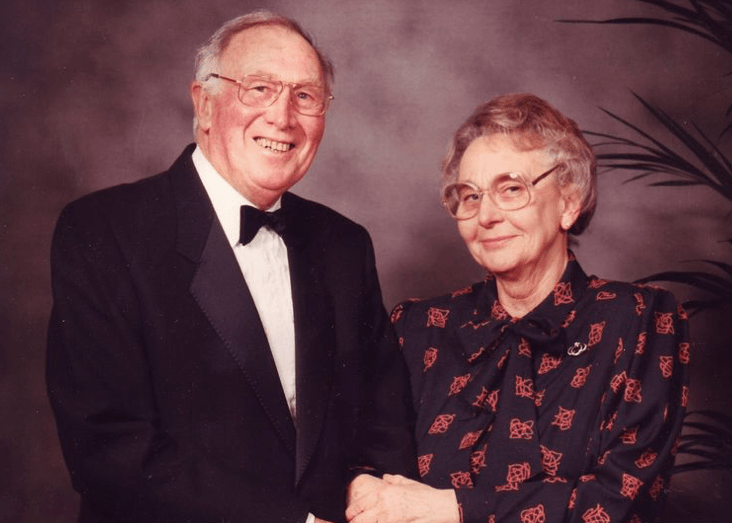
Definitely, Joe’s 84 year old widow Norah is a regular attendee – she came to the Lazio game last week and is determined to be here today.  She loves the Club and is a very popular presence on match day.  She has also been to the stadium for various other activities including last season’s Hall of Fame dinner and the official opening of the Manchester City Experience in April.

Norah has been part of City life since her husband first accepted the City job.  She is also a keen member of the Merseyside CSA.

Finally, how did Joe view the game during his later life?  Did he still love it with the passion he had as a boy?

Joe tried to keep focus on the game rather than activity off it.  During the 1980s, towards the end of his life, he was asked his views on the problems of the ‘modern game’ and gave a comment which is as relevant today as it was then:

“Football is a great game.  It is all about goals, goalmouth incidents, and end-to-end attacking football.  There is nothing wrong with the game; plenty wrong with managers, players, directors, legislators, and the media.  Football has been very kind to me and I really mustn’t complain so can I leave you with this thought – The object of playing any game is for enjoyment.  If you have enjoyed it and done your best you have won no matter what the result!”

Decisive Derbies – The First All-Manchester Semi-Final 1926

It was a typical season of highs and lows when City and United met in the first all-Manchester FA Cup semi-final, played on this date (27th March) in 1926.  Here I’ve delved into the archives to see what happened at Bramall Lane in 1926. Subscribers can read this article below:

Subscribe to get access – Annual

Read everything on the site when you subscribe today. Annual subscription is £20 or subscribe for a month at a time (below)

Subscribe to get access – Monthly

Monthly subscription is £3 per month (cancel anytime). Monthly subscribers access everything posted since 1 October 2022.

Today in 1976

On this day (20 March) in 1976 a penalty from Dennis Tueart and a goal each from Mike Doyle and Ged Keegan gave City victory by the odd goal in five against Wolves at Maine Road.  City ended the season eighth while Wolves were relegated alongside Burnley (their last appearance in the top flight until 2009-10) and Sheffield United.

Joe Mercer OBE

On Thursday a PFA plaque will be unveiled to honour a footballing legend. Joe Mercer was a hugely successful player with Everton, Arsenal and England and a trophy winning manager with Aston Villa and Manchester City. He also managed Sheffield United and Coventry City. He was acclaimed as a man who had put the fun back into English football during a spell as the England boss. He fully deserves this tribute and, if you can make it, please come along to the plaque unveiling. Back in 2004 I wrote the following piece for the Manchester City match programme which, for those Blues wondering why Joe was significant, may help to explain his importance to the club. Enjoy… it starts with the original introduction (and all references to Joe’s family etc, are from 2004 of course).

***

In Search of The Blues considers the life and career of a former City great who sadly is no longer with us, Joe Mercer OBE.  The reason we have decided to reflect on Joe’s life today is that last Monday (9th August 2004) marked the 90th anniversary of the birth of the former City & England manager.  Sadly Joe passed away on the same date in 1990 – his 76th birthday. Joe was City’s manager during the Club’s most successful period, and Gary James, author of “Football With A Smile: The Authorised Biography of Joe Mercer, OBE”, provides a commentary on Joe’s lifetime of achievements.

Why is Joe Mercer so important to this Club?

Joe breathed new life into a club that was struggling to survive.  During the early sixties City had reached a critical level – one director actually suggested the Blues should merge with United! – and Joe’s appointment was one which had to succeed.  Joe brought in a highly enthusiastic Malcolm Allison as his number two and between them they transformed City from a struggling sleeping giant into League Champions, FA Cup winners, League Cup victors and European Cup Winners’ Cup winners. 

The Blues became renowned for their positive approach and swashbuckling style and Joe encouraged everyone to enjoy life at Maine Road.

Without Joe’s arrival in July 1965 it’s very difficult to see how City’s fortunes could be resurrected.

How did his partnership with Malcolm Allison work?

There have been many theories over the years of how the two men worked together.  Many people focus on their contrasting styles – Malcolm the flamboyant one; Joe the fatherly figure – but during the 1990s Malcolm answered a similar question by stating:  “we made it work because we told each other the truth, and we never really fell out.  We had a great relationship.  I enjoyed it all and I think, like Joe, those first five years were the best ever for me.  I think that fortune favours the brave, and I think that sometimes you have to be fortunate where you work and who you work with.  I was very lucky when Joe got the City job, and took me there.  And we started right from the grass roots, right from the bottom and took them to the top.  That is real achievement!”

How does Joe compare to football’s other great managers?

In 1990 Bobby Charlton said he was one of football’s most important figures and added:  “Joe was a great, great person and we don’t say that about many people.  They don’t produce people like him very often.  He was a true great, along with the likes of Bill Shankly.”

Joe’s period as City manager coincided with a number of famous managerial careers – Shankly (Liverpool), Busby (United), Revie (Leeds), Nicholson (Spurs), Stein (Celtic) – and so comparisons should be easy, however each Club was at a different phase in development and it would be foolish to directly compare.  However, it is clear however that during 1967-8 City swept aside the great sides created by his contemporaries and that the Mercer-Allison side won many admirers across the Country because of the style of play and positive attitude.  

In addition to Joe’s time at City he did have some success away from Maine Road and, of course, he managed England for a brief but entertaining spell.

Why did Joe Leave?

Initially, because of Joe’s health problems at Villa, he had anticipated being at City for only a few years.  Naturally, Malcolm was keen to manage the Club in his own right but that didn’t seem possible while Joe was still at the Club.  In 1971 Malcolm was given the role of Team Manager but Joe’s position was less clear.  Power struggles in the Boardroom and various other issues placed Joe and Malcolm in different camps and, when an offer from Coventry came in 1972, Joe felt it was time to move on.  

What was Joe’s managerial record away from Maine Road like?

His first League management role was at Sheffield United.  The Blades were struggling when he arrived mid season and were relegated (1956), however during the course of the next couple of seasons he developed a good cup-fighting side and was offered the Arsenal manager’s job at one point. 

In December 1958 he became the Aston Villa manager and again created a good cup fighting side and brought the Villa Park club the Second Division Championship in 1960.  He also guided them to success in the 1961 League Cup and took them to the final again in 1963.

Sadly, problems at Villa during 1964 caused Joe health problems.  He went to see a doctor and according to Joe some years later:  “He told me ‘It’s either polio or a stroke.’ And as I was leaving the room he called me back and said ‘What about the fee?’  I turned and said ‘well, I must be a bloody bad risk then!”

At the time Joe was also managing the England under-23s and had even been tipped as England manager (August 1962) – that proves how highly Joe was thought of as a manager prior to his phenomenal success at City.

After City, Joe won a manager of the month award at Coventry and took on the role as England caretaker manager during 1974 for 7 games.  His first game in charge saw Kevin Keegan and Stan Bowles – a former player under Mercer at City – both score in a victory over Wales.  Joe was offered the job on a permanent basis but turned it down for health reasons:  “I had the most terrible sciatica.  I was almost a cripple with it.  I was offered the job but I didn’t feel fit enough.  It was as simple as that.”

Why did he join City in the first place?

After his health problems at Villa Joe missed the daily involvement with the game.  He started to report on games for newspapers but reporting was a poor substitute for management.  In 1965 when the City approach came it was a major gamble for all concerned.  Joe was not really fit enough to take on the role immediately and the Club had to think carefully about the appointment.  Joe didn’t think about it for long.  He was desperate to get back into the game and was determined to take on the job.  He recognised the potential at the Club – a year earlier he had stressed he wanted only to take on a job at a progressive, positive club.

His family was not as enthusiastic at first but his wife Norah knew he had to take it on:  “I married a footballer.  I realised he had to go back – it would have killed him hot to.”

Who was his first signing at City?

Ralph Brand, a Scottish international who had scored 128 goals in 207 games for Rangers, was the first signing but it was not a success.  Joe’s second signing was considerably more successful however, that was Mike Summerbee.

What did Joe achieve as a player?

As a player he had enormous success.  With his first club Everton he won the League Championship in 1939 – who knows what else Everton and Joe would have won had war not intervened – while his time at Arsenal saw him win two further Championships (one as captain) and the FA Cup.  He also captained the Gunners to the 1952 final where they were reduced to ten men for a significant part of their defeat by a strong Newcastle side. 

In 1986 when Arsenal celebrated their centenary they introduced many significant and famous players from their history on to the pitch.  According to Arsenal author Keith Fisher Joe Mercer received the biggest ovation of them all.

Joe also had a great England career, and captained the international side during crucial wartime morale boosting internationals.

His popularity was so high he even appeared on magazine covers.  

How is Joe remembered outside of Manchester?

Joe is remembered as a truly great player at both Everton and Arsenal.  Both sides recognise that his contribution to their history is immense while at a national level Joe is remembered as one of the Football League’s 100 legends.  

As a manager, Joe’s record at Aston Villa is not perhaps viewed as positively as it should be, however his time at Coventry (1972-1974) is remembered fondly.  As is his period as England manager.

In 1976 he was awarded the OBE for services to football.

Which team did he support as a boy?

As a boy growing up in Ellesmere Port, Joe was an Evertonian.  However he also had a soft spot for Nottingham Forest and, in particular, Tranmere Rovers as his father, Joe Mercer Snr, had played League football for both sides.  Sadly, he passed away while Joe was still a young boy, but Joe always retained a strong feeling for Tranmere.  In later life he became a regular attendee at Prenton Park.

Did he achieve any notable milestones during his playing and managerial career?

At the age of 35 in 1950 he was presented with the Football Writers’ Player of the Year trophy and continued to play top class football until injury forced him to retire at 39.  Naturally, there were all his trophy successes as a player.

By managing City to the FA Cup in 1969 he became the first man to win both the FA Cup and the League as a player and as a manager.  The first man to surpass this achievement was Arsenal’s George Graham who had actually been brought to England by Joe when he was Aston Villa manager.

In 1970, Joe managed City to the League Cup and ECWC double – this is recognised as the first major English/European trophy double although Leeds did win the Fairs Cup and League Cup (but some leading sides still boycotted this competition at the time) in 1968.

Since Joe passed away have his family retained their love of the Blues?

Definitely, Joe’s 84 year old widow Norah is a regular attendee – she came to the Lazio game last week and is determined to be here today.  She loves the Club and is a very popular presence on match day.  She has also been to the stadium for various other activities including last season’s Hall of Fame dinner and the official opening of the Manchester City Experience in April.

Norah has been part of City life since her husband first accepted the City job.  She is also a keen member of the Merseyside CSA.

Finally, how did Joe view the game during his later life?  Did he still love it with the passion he had as a boy?

Joe tried to keep focus on the game rather than activity off it.  During the 1980s, towards the end of his life, he was asked his views on the problems of the ‘modern game’ and gave a comment which is as relevant today as it was then:

“Football is a great game.  It is all about goals, goalmouth incidents, and end-to-end attacking football.  There is nothing wrong with the game; plenty wrong with managers, players, directors, legislators, and the media.  Football has been very kind to me and I really mustn’t complain so can I leave you with this thought – The object of playing any game is for enjoyment.  If you have enjoyed it and done your best you have won no matter what the result!”

Joe Mercer Plaque Unveiling – 18 November 1.30pm

Great news for those who, like me, like to see Joe Mercer recognised for his enormous contribution. There will be a blue plaque unveiled for Joe at Ellesmere Port (a town that meant so much to him throughout his life). I’ll be talking as will Susan Lea (Joe’s granddaughter), Graeme Sharp, Mike Summerbee and others. Peter Reid will do the formal unveiling. Further details below…

The unveiling will take place at 1.30pm on Thursday 18th November at Ellesmere Port Civic Centre, Civic Way, Ellesmere Port, CH65 0AZ. It will be great to see as many people there as possible. Please come along and help celebrate this wonderful player and manager.

Ellesmere Port was such an important place for Joe. He was born there; went to school there and continued to live there for years, even when he was a professional footballer and England international. He spent most of his life living on The Wirral and continued to visit the schools, clubs, and people of Ellesmere Port throughout. He even took the FA Cup back there when he won it at Arsenal and at Manchester City AND the European Cup Winners’ Cup when he managed to City to that success in 1970.

This unveiling deserves to be well attended because Joe achieved so much for the teams he was involved with. Ellesmere Port mattered to him and he mattered to us, so let’s celebrate his life.

Foreword to my first book. Thanks Joe for all you’ve done.