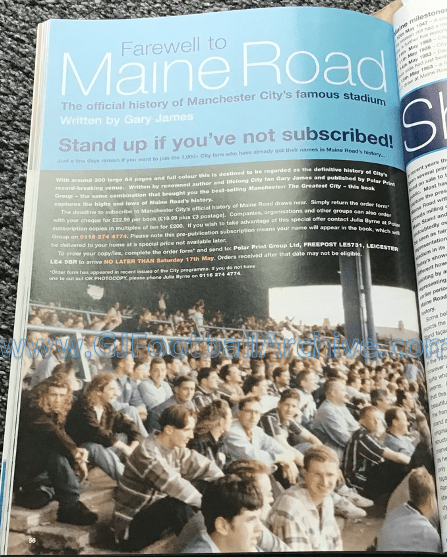
Farewell To Maine Road – Part Five

Here for subscribers is the fifth part of Farewell To Maine Road as planned. Subscribers to my website are able to download PDFs of the first four sections of my Farewell To Maine Road book (which retailed at £25) here. So if you’ve not yet had chance, take a look now. Enjoy!

Subscribe to get access – Monthly

If you would like to read the book and download a PDF of it then you can subscribe now at £3 per month or £20 a year. Monthly subscribers access everything posted to the site since 1 October 2022. All subscribers get everything else posted during their subscription too. You could always try a monthly subscription to see what you think (cancel any time).

Subscribe to get access – Annual

As well as Farewell To Maine Road annual subscribers get access to everything posted since the site was created in December 2020 (that’s 100s of articles, videos, history talks and PDFs of two other books: Manchester A Football History and my first book From Maine Men To Banana Citizens).

Next week I’ll be posting the next section of this 320 page, fully illustrated & detailed book for subscribers to enjoy.
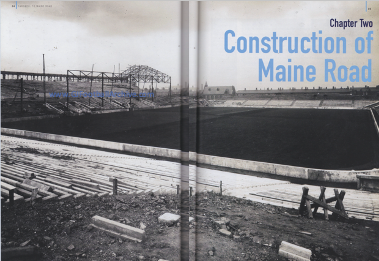
You can see the contents pages to see what’s included in this book, published in 2003, and read the Introduction here:

The book has been out of print since 2004 with every copy sold within about six months of publication. Since then I’ve been keen to bring it up to date with stories about the site and the Etihad but that’s not been possible as no publisher has been prepared to invest in the way that Polar Publishing did to ensure it was the right quality.

Copies occasionally appear in second hand book shops or at online retailers but these often sell for ridiculous sums of money. The last time I checked there was one for about £100 here:

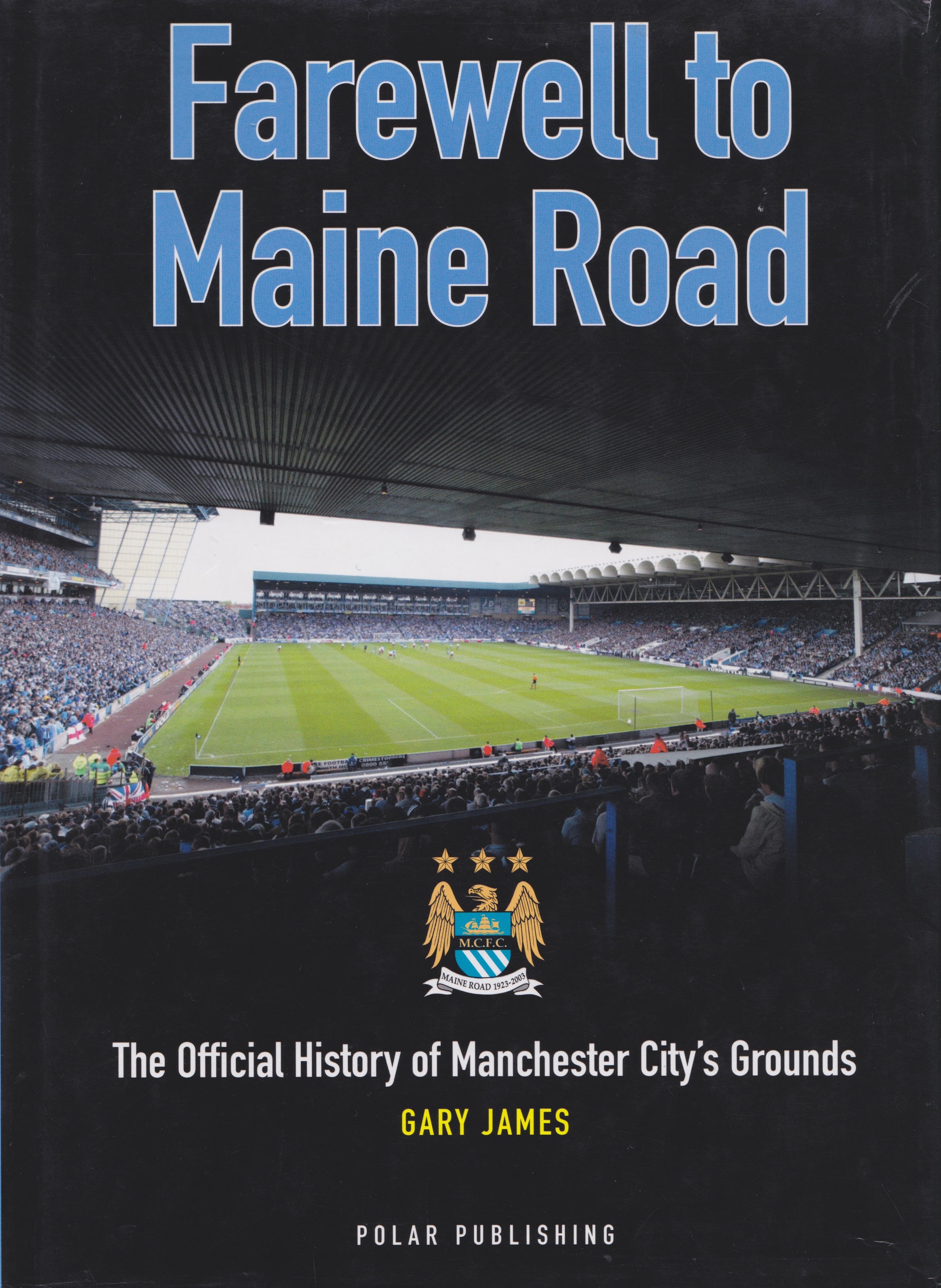
When it was published in 2003 apparently, I commented (though I can’t remember saying this, mind you it was 20 years ago): ‘On 320 beautifully illustrated A4 size pages this book tells the story of Maine Road from conception, right through to its final days as a sporting venue. With excellent photographs – including rare illustrations of the stadium during construction never previously published and images from every era – this has been a very interesting book to research, write and compile. I’ve also tried to ensure the views of ordinary fans are included, and some of the most powerful Maine Road moments are captured by the fans who saw them happen.’
In a review, Hugh Ryden wrote in King of the Kippax: ‘The architecture, the moving memories, the reproduction of rare photos and memorabilia and its extensive quotations, make FTMR a must.’

Another King of the Kippax regular Steve Worthington wrote: ‘Following on in the winning formula of his epic “Manchester The Greatest City”, the highly acclaimed author and Manchester City Football Club Historian Gary James has rolled up his sleeves once more and has produced yet another fabulous football book for all to treasure and enjoy. “Farewell to Maine Road” is not only a must for all Manchester City supporters, it is also an essential for all football fans who possess a genuine interest and passion for the history of our great British past time. It catalogues the birth, evolution and ultimate decline of what was once England’s premier and revolutionary provincial football stadium; Maine Road, Moss Side, Manchester M14. Soon to be demolished into oblivion, Maine Road is vividly remembered in all its former glory in this classic portal to the past. Beautifully written with the knowledge and passion you would expect from a lifelong Moss Side Pilgrim, the book provides a definitive literate and graphic illustration of Maine Road’s long and varied history. It contains a rich tapestry of previously unpublished photographs, one of which, a unique atmospheric shot of the famous ‘Ballet on Ice’ (a famous Manchester City V Spurs clash in the late sixties), is arguably worth the cost of the book on it’s own. Having consumed and digested every morsel of information contained within, it is difficult for me to imagine how much painstaking work and dedication it must take to produce and compile a book of such quality. Whilst they continue to produce triumphs such as this, the marriage of Gary James and Polar Publishing is truly one made in a Sky Blue Heaven. This 320-page masterpiece has pushed the boundaries of football publications to a new and higher level and has already prompted tears of nostalgia in my eyes. But don’t take my word for it, sign up a copy and see for yourself, you’ll not be disappointed.’

The publicity blurb said: ‘The only officially approved history of Maine Road is the perfect book for any supporter of City; Maine Road attendee; or general football enthusiast. 

‘The book details the history of the stadium focussing on its development, and on the key games and events which have made Maine Road such a famous and important venue. Using first hand accounts, as told by supporters, players, administrators, and the media this book has been written and designed to the same high quality used in the highly acclaimed Manchester: The Greatest City. With special features on all the big City matches, international games, FA Cup semi-finals, League Cup finals, Rugby finals, concerts, religious meetings, and even on United’s use of the stadium during the forties and for European Cup games in the fifties. In addition both City’s former ground Hyde Road and future venue the City of Manchester Stadium have been covered to provide the complete history of City’s three homes. 

‘As with earlier works by Gary James & Polar Publishing this book is destined to be regarded as the definitive history of Maine Road & Manchester City’s other grounds.’

My publisher, Julian Baskcomb, commented: ‘Gary James is the appropriate man to write this work after a lifetime’s research on the club and its stadium. As a boy Gary was a regular in the Platt Lane Stand; then at the age of 16 he bought his own season ticket for the Kippax Stand and has been a season ticket holder ever since. He is also a respected journalist with articles for a wide range of publications including The Times and has recently managed the development of Manchester City’s new museum.’
Maine Road 100 – Day 31

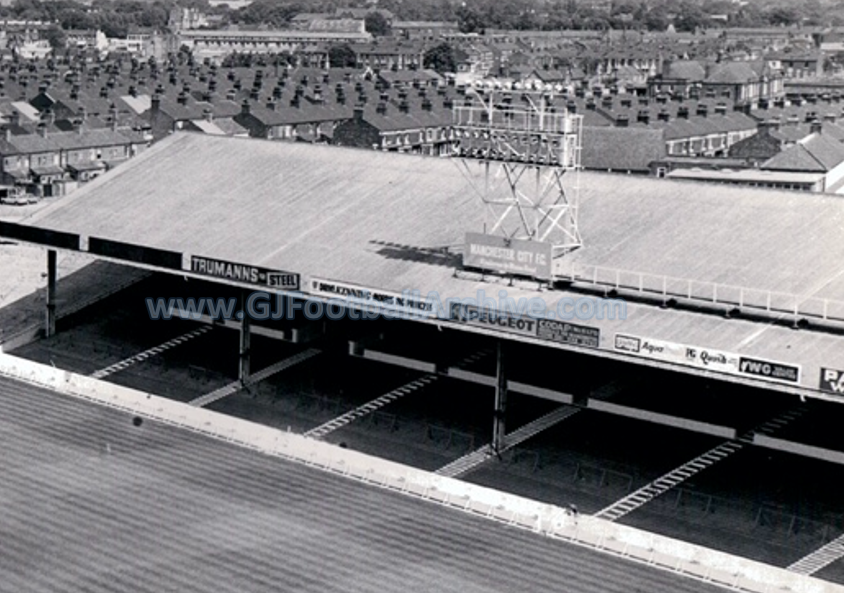
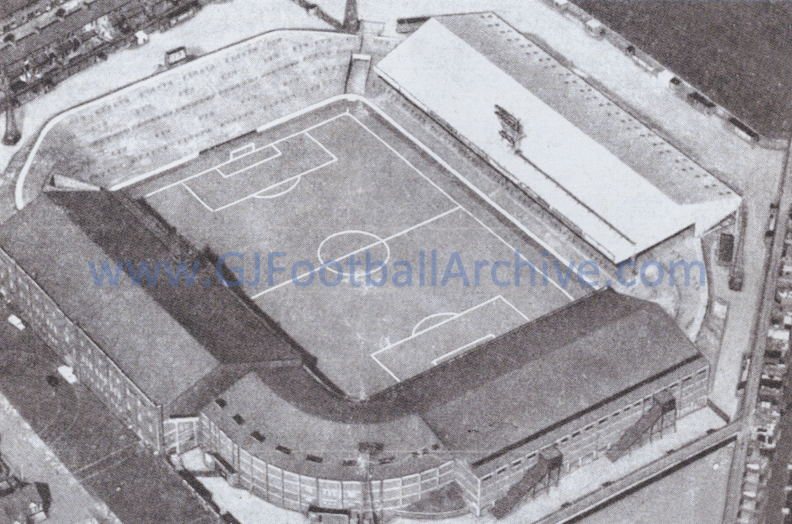
It’s day 31 of my posts counting down to the centenary of Maine Road’s opening game. Today – An aerial view, but what’s the year?

I’ll give the answer tomorrow but a few clues:

  • The North Stand had yet to be built
  • The central part of the Main Stand roof is the original one
  • The original floodlights are in the corners
  • The Welcome To Maine Road sign has not yet been erected

Most of the above have been discussed on previous Maine Road 100 days so have a look back and see if you can work out the year. Comment below with your guesses. Answer tomorrow. Thanks

Here’s a view from 1971 to compare with the above.

Maine Road aerial 1971 from Farewell To Maine Road

If you’d like to read more on the history of Maine Road, take a look at Farewell To Maine Road, which can be downloaded from this page:

Maine Road 100 – Day 30

It’s day 30 of my posts counting down to the centenary of Maine Road’s opening game. Today – The first time seats were installed on the Kippax. Anyone want to guess when this was? This was actually 62 years ago this week!

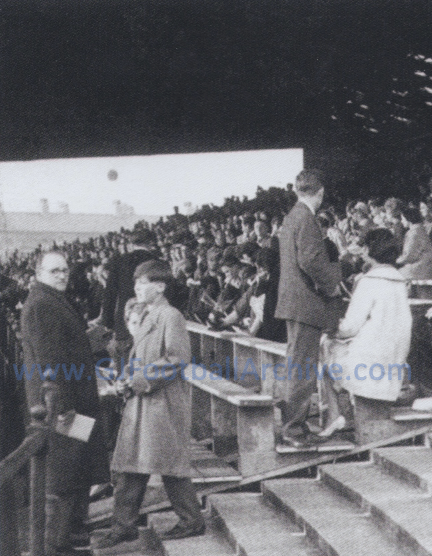
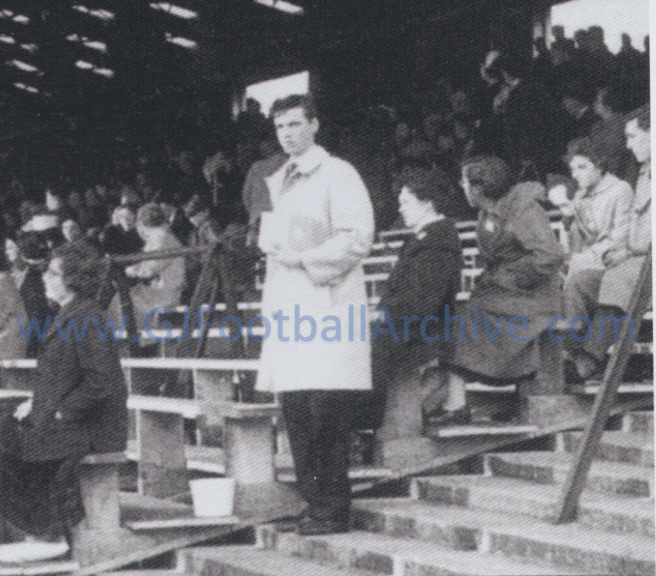
Maine Road staged one of the religious events where American evangelist Billy Graham came to preach to thousands in 1961. I cover the story in detail in Farewell To Maine Road but these images show that temporary seating was installed on the Kippax for the event, which took place between 29 May and 17 June 1961.

At this time there were no gates in the Kippax’ perimeter wall leading to the pitch and so special scaffolding steps were erected to allow attendees to climb over the wall and on to the pitch for blessings etc.

Were you at one of these religious events? If so leave your comments about the day below.

For those unfamiliar with Maine Road’s layout at the time, the photo was taken from about a third of the way up the Kippax between number & and 8 on this photo.

Maine Road aerial 1971 from Farewell To Maine Road

If you’d like to read more on the history of Maine Road, take a look at Farewell To Maine Road, which can be downloaded from this page:

Maine Road 100 – Day 22

For day 22 of my posts counting down to the centenary of Maine Road’s opening game I want to talk about the photographs of Iain SP Reid who captured this image of the burger sellers at Maine Road during the 1970s.

This photo and others in Iain’s collection were taken circa 1977. Iain believed that photography could improve lives. His work is full of joy. Sadly he died in 2000, leaving his fabulous archive of photographs filed away in boxes unseen until his family rediscovered them. He tried to capture images around Maine Road and at Old Trafford too, but he wasn’t interested particularly in match action. Instead he focused on the crowd, creating a wonderful collection.

“It was the way in which the football supporters of Manchester United and Manchester City used to dress and treat the whole match as if it were a carnival”
– Iain S. P. Reid

In August 1977 Iain was featured in a local newspaper and gave his views on what the project was. This makes interesting reading and for those who have seen any of his images it is worth pausing to have a read and a think about what he captured. This was for a Trafford based newspaper and so they focused on Old Trafford at times, but his comments about the Stretford End are as significant and would have been replicated by his thoughts on the Kippax etc.

If you appeared in this photo or in any of the others Iain took during this period then please get in touch with Paul Sorene and all involved at info@flashbak.com who are hoping to trace as many of the people on Iain’s photos as possible. You can look through this Facebook page of Iain’s work at:

https://www.facebook.com/media/set/?vanity=IainSPReidu0026amp;set=a.2606932862855473

I’m always passionate about the capturing and preservation of footballing images and stories. For me football simply isn’t about the players on the pitch but the thousands who dedicate significant time – and money – to supporting their club. If you’re a Blue or a Red who attended games around 1976-77 then take a look at Iain’s collection at

https://www.facebook.com/IainSPReid

For those unfamiliar with Maine Road the photo was taken from the street corner above and to the right of number two, looking towards the Development Association built into the external wall of the North Stand to the right of number 2.

Maine Road aerial 1971 from Farewell To Maine Road

If you’d like to read more on the history of Maine Road, take a look at Farewell To Maine Road, which can be downloaded from this page:

Maine Road 100 – Day 19

Welcome to Maine Road… It’s day 19 of my posts counting down to the centenary of Maine Road’s opening game. A photograph can bring back so many memories. Today’s is of a simple sign but it welcomed many to Manchester City’s ground for decades.

This was replaced by another version of the sign, which was then removed in 1994 when the Kippax Stand was demolished, but for much of the 1970s & 1980s this original sign was a popular part of Maine Road for many fans.

Kippax Stand c.1980

It sat proudly on a metal floodlight gantry on the roof of the Kippax in front of the original central lighting. In later years it was swamped by advertising and extensive roof lighting, once the corner pylons had gone.

Anyone running out from the players’ tunnel would see it straight in front of them. Like the This Is Anfield sign at Liverpool this was a recognisable feature proudly saying Manchester City and Welcome to Maine Road.

For those unfamiliar with Maine Road this photo may help locate where the sign was. You can see the Kippax roof central lighting tower above number 7. The sign was attached to that, opposite the players’ tunnel (number 1).

Maine Road aerial 1971 from Farewell To Maine Road

If you’d like to read more on the history of Maine Road, take a look at Farewell To Maine Road, which can be downloaded from this page:

Maine Road 100 – Day 9

Day 9 of my posts counting down to the centenary of Maine Road’s opening game. Today this grainy image highlights something that was, until the end of the Kippax in 1994, a regular part of the Maine Road match experience. If you look carefully you can see the tea urn being pushed around the ground. It’s currently in front of the Platt Lane Stand and I remember being in that stand as a young boy in the 1970s and desperately wanting something from the vendor. Chipmunk crisps, Waggon Wheels & TipTop orange drinks were three of the items I remember them selling.

Usually, we brought a flask to games (often broken in the excitement of a goal) and occasionally Dad would have enough money to let us go and get some crisps or something. For those who never experienced Maine Road or the tea urns, basically a couple of young matchday staff, usually lads, but sometimes girls, would push a tea urn around in front of the white wall that surrounded the pitch. Presumably they had filled the tea urn at some point early into the game and I guess older fans knew how long it took the tea urn to get from one end to the other. If you were at the wrong end of the Platt Lane Stand your brew may not have been as hot as you’d want.

The Platt Lane tea urn, early 1970s

I never had a hot drink from it, so I don’t know if the urn had hot water in so that they could add a tea bag, Nescafe or bit of Bovril to it or whether it was already made up. If it was maybe there were different drinks in multiple urns that I didn’t spot? Anyone here ever work one or know more about that? If you did please leave your comments, or if you’ve any other memories of Maine Road that you’d like to share.

If you’d like to read more on the history of Maine Road, take a look at Farewell To Maine Road, which can be downloaded from this page:

To help those unfamiliar with Maine Road locate the specific location of this post, the Platt Lane tea urn photographed is heading towards the number 3 on this plan.

Maine Road aerial 1971 from Farewell To Maine Road

Maine Road 100 – Day 6 Answer

Day 6 of my posts counting down to the centenary of Maine Road’s opening game asked you to name the year this aerial photo was taken. I gave a few clues which may help date this:

  • None of the temporary stands have yet been constructed in the corners
  • The MCFC lettering appears at the bottom section of the North Stand
  • The Souvenir Shop still appears to be operational and doesn’t look like it’s been turned into offices yet
  • Both the Platt Lane Stand and the Kippax have been replaced BUT what about the end panelling of the Kippax? Is that complete?

The answer is 1995.

If you’d like to read more on the history of Maine Road, take a look at Farewell To Maine Road, which can be downloaded from this page:

Maine Road 100 – Day 6

Day 6 of my posts counting down to the centenary of Maine Road’s opening game. Today it’s an aerial shot of Maine Road. Can you guess the year?

I’m a bit of a ground obsessive (as you may have guessed) and I spend much of my time seeking out images of football grounds (not just City’s) and trying to date them. It drives me crazy when I see something misdated…. Anyway, before I waffle on can you work out which year this was taken?

I’ll give the answer tomorrow but I always look for clues, so I’ll give you a few which may help date this:

  • None of the temporary stands have yet been constructed in the corners
  • The MCFC lettering appears at the bottom section of the North Stand
  • The Souvenir Shop still appears to be operational and doesn’t look like it’s been turned into offices yet
  • Both the Platt Lane Stand and the Kippax have been replaced BUT what about the end panelling of the Kippax? Is that complete?

I’ll give you the answer tomorrow.

If you’d like to read more on the history of Maine Road, take a look at Farewell To Maine Road, which can be downloaded from this page:

Maine Road 100 – Day 3

The third of my posts counting down to the centenary of Maine Road’s opening game. Today I’d like to talk about exploring the back rooms and cupboards of the old ground.

During the 2002-03 season while I was researching and writing Farewell To Maine Road, the official history of City’s grounds, I was allowed to wander around the old place for my research. Club photographer Ed Garvey often accompanied me and we’d open doors, look under seats and generally try to see things that would not always be immediately obvious on match day.

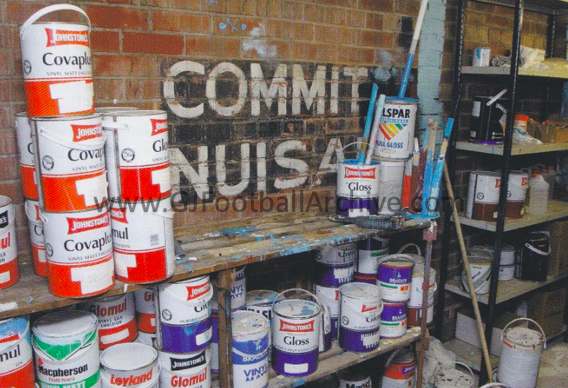
One day we were helped on to the ‘new’ Kippax roof – a scary experience! Other teams we explored the nooks and crannies of the stands. Then there was the time when a paint store room door was open. We popped our heads in and found this gem. This old ‘ghost sign’ saying ‘Commit No Nuisance’ had originally been on public view. That wall was the internal side of the large external wall that surrounded the Kippax terracing. Fans would congregate on the side we were on and the painted notice would warn them to ‘commit no nuisance’.

A few of these used to be positioned around the ground but by 2002-03 we’d assumed they’d all gone. This one survived because, at some point the club built a series of storerooms and additional toilets against this wall, trapping this specific sign for ever.

I wish we could have dismantled it and taken it for good to be re-erected at the new stadium but sadly that wasn’t possible for various reasons. At least we managed to take a photo of it and ensure a permanent record of it was kept for ever.

2023 marks the 100th anniversary of Maine Road’s first game and to commemorate this landmark moment I will be posting a different image or feature on the old stadium each day for 100 days. Day 100 will be the actual centenary of that historic first game.

If you’d like to read more on the history of Maine Road, take a look at Farewell To Maine Road, which can be downloaded from this page:

Commit No Nuisance. Photo by Ed Garvey

Sit Down Protest

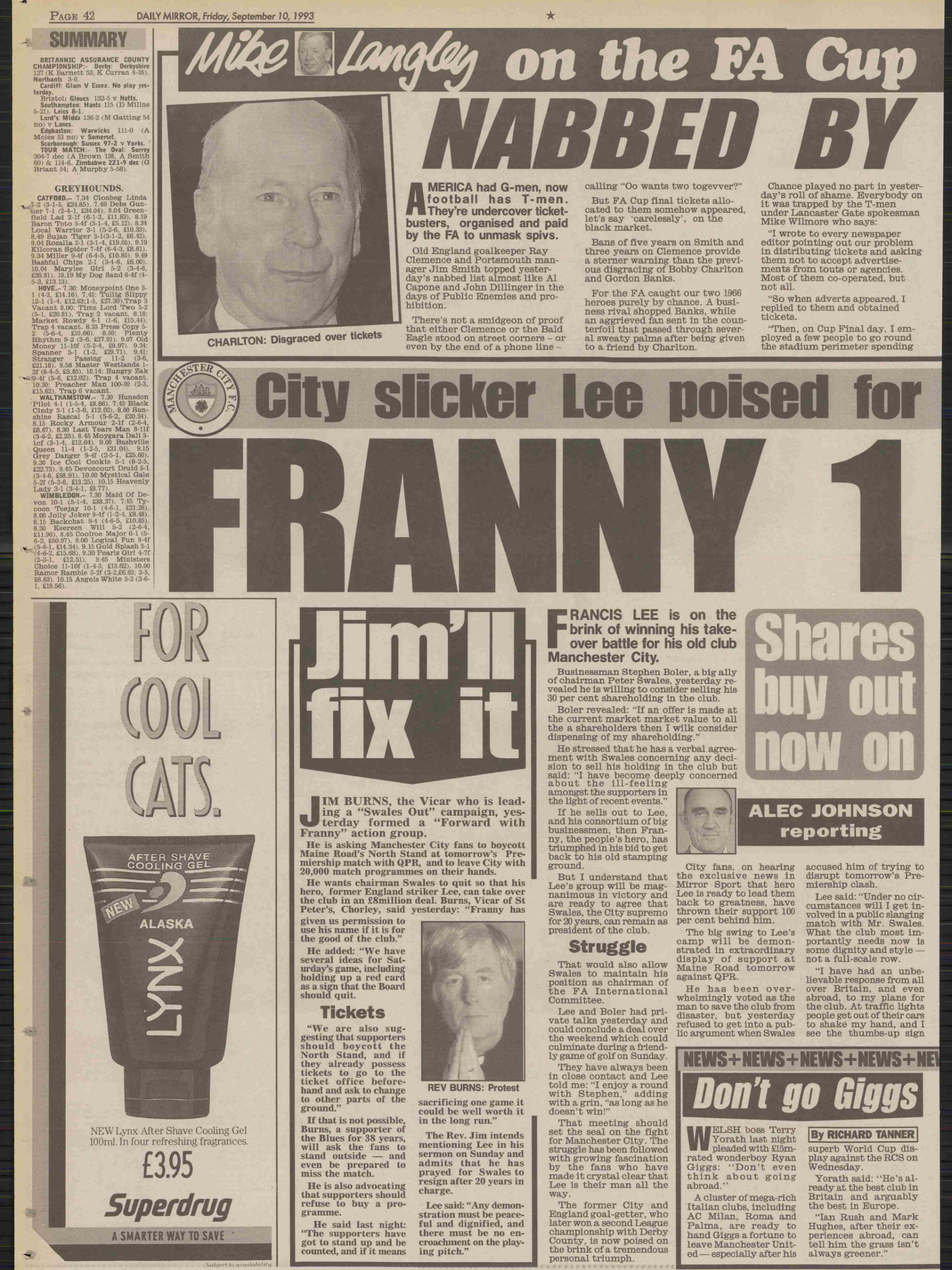
I was reminded earlier about the sit down protest against chairman Peter Swales by Manchester City fans in September 1993. Back then we used to protest a lot against Swales – in fact some of my recent research has shown that the earliest Swales Out demonstration I’ve found so far took place in 1979. They intensified over the years with 1993 being the peak. In September 1993 City’s hopes of replacing Swales as chairman increased with the news that Francis Lee was prepared to mount a takeover.

I’ll write more on this whole period soon but for the moment I wanted to highlight that one of the protests that took place during 1993-94 was a sit down protest on the Kippax. Emma Tamara Taylor took the photo of the protest and she kindly allowed me to use it alongside other great Maine Road images she’d taken in my book Farewell To Maine Road. Emma, of course, retains copyright for her photo and it cannot be reproduced without her permission.

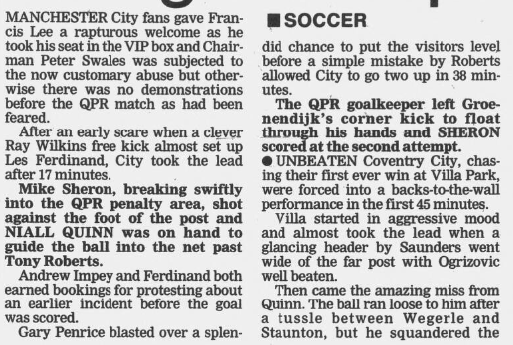
The photo was dated 11 September 1993 and I do remember well that this was a number of protests we staged though at the moment I can’t remember if this was against all-seater stadia or Peter Swales (I’ll go through my research notes over the coming weeks and will check it all out). There was also the candlelight protest on the Kippax too. The idea of these protests was that fans wanted to show their displeasure. Unfortunately protests on 11 September 1993 seemed to have passed the media by as this brief report shows:

Here’s a preview article from the Mirror which highlighted the role of the man who became known as the ‘Blue Vicar’, Jim Burns.

More on the protests, Swales out and so on in a few weeks time. Watch this space!

Subscribe to support this site

The idea of this website is to find a place for my 35 years + research into Manchester City and football across the region. By February 2023 over 800 posts (articles, interviews, talks, videos & 2 books) have been made that can be accessed by subscribers. Annual subscribers access everything posted; everything to be posted during your subscription and support my ongoing research into Manchester City and Manchester football. I am immensely grateful for that support. It costs £20 per year (about 5p a day) or there’s also a £3 per month option – see below. Thanks

Monthly Subscription

£3 per month (cancel anytime) and you get access to everything posted since 1 October 2022.