The 1920s: Ernest Mangnall

Continuing the series on Manchester City in the 1920s here’s a free to read 1300 word article on 1920s City (and 1900s United) manager Ernest Mangnall. Enjoy!

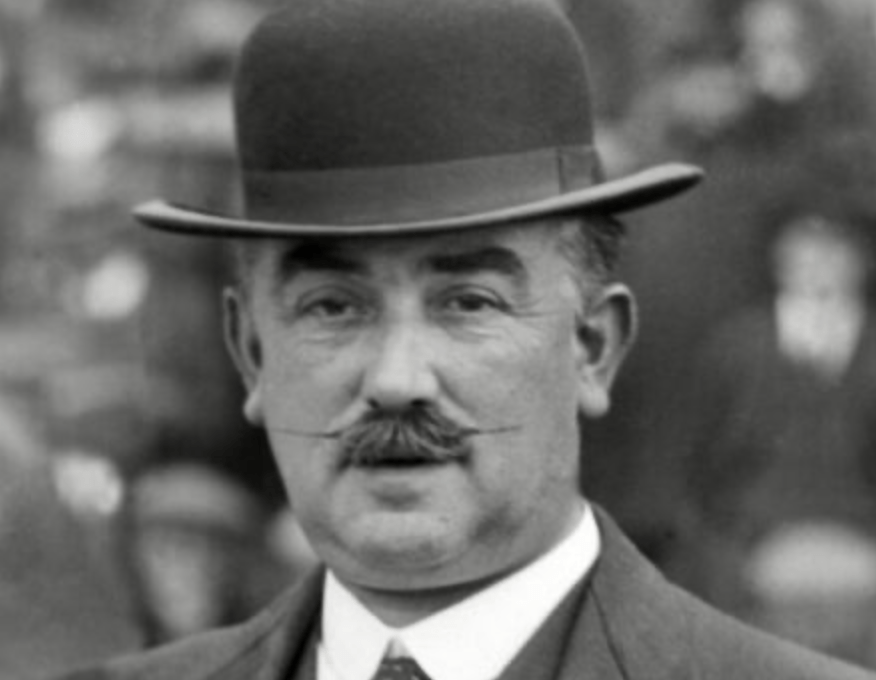
Although JAMES ERNEST MANGNALL is usually remembered as the first man to bring Manchester United trophy success – with a side containing the key members of City’s 1904 FA Cup triumph – he actually spent more years managing the Blues and saw City as the bigger club with more potential.  

People tend to focus on his successes at United but his commitment to the Blue cause and determination to move City to the best stadium in English football, are perhaps the most interesting aspects of his life.  His United successes are clearly significant moments in Manchester football, however City fans prefer to remember his Blue achievements.  

He joined City in 1912 but the most interesting aspect of his arrival is the way it was carried out.  Mangnall had been United’s leader since 1903 and had achieved so much that no one could ever have expected him to move.  As well as the trophy successes (promotion, two League titles and the FA Cup) he was also credited with being instrumental in United’s move from Clayton (where the Velodrome’s BMX track is today, close to the Etihad Stadium) to Old Trafford.  

City were still regarded as the region’s number one club despite the problems they had faced in the period 1905-1912, and they stunned the football world when they lured Mangnall away from the Reds.  Never before had a manager left a major club for its biggest rivals after so much success, but what made the story more of a sensation was the fact Mangnall had agreed to become City manager while still in office at Old Trafford, and that he had watched the Blues’ opening game at Notts County when he was supposed to be with United at Arsenal.  He actually remained in charge of United for the Manchester derby of 7th September 1912 at Old Trafford.  

Occasionally United historians dispute that Mangnall was officially their manager on the day of the derby but leading newspapers of the period, most notably the Umpire and the Daily Dispatch, are perfectly clear that he was officially in charge.  City won the Old Trafford match 1-0 despite being down to ten men for most of the game.  Mangnall, according to one report, was delighted with the City win despite, officially at least, still being a Red.  “United speeded their manager rejoicing with two points to his new club” read one article. 

The following Monday Mangnall moved into his Hyde Road office, and within a few weeks his side were looking like Championship contenders:  “Manchester City stand out boldly as the only first class team in the two divisions of the League, the Southern and the Scottish Leagues, with the highest possible points to their credit.  The Citizens of Manchester have earned every point in September.  Other clubs have remained undefeated, but they have not annexed the maximum marks.  Nine years have passed since Manchester City commenced a campaign in this stimulating style.”

The title didn’t arrive, however Mangnall did develop a decent-looking side by the time of the First World War – they missed the 1914-15 title by three points.  City were also proving a highly popular side to watch, so much so that the ground could hardly cope.  A notorious cup match with Sunderland in February 1913 had to be abandoned due to overcrowding.  Incredibly – and this is difficult to appreciate today – the team manager was also responsible for the management of the ground at this time, and so Mangnall was held responsible for all matters concerning safety and crowd control as well as picking the team and buying the players.  A reporter named Veteran accused Mangnall of spending too much time with the team and said:  “I am rather surprised at Mr. Mangnall being caught napping, but it may be that he has been away with the team and had had little to do with the home management.”

During the hostilities Mangnall kept the Club alive and brought some trophy success in the wartime tournaments that replaced the League.  

After the war, Mangnall’s side became very popular and he had to focus on ground issues as well as team matters.  With the Blues filling the 40,000 capacity on a regular basis, Mangnall regular had to face the press, the FA, the Football League, Manchester City Council, and the police to explain why chaotic scenes were being experienced game after game in the streets around the ground.  

In 1920 fire destroyed the Main Stand and exacerbated the problems Mangnall faced.  He approached his former club United about using Old Trafford, the ground he had been primarily responsible for, but they met his request with exorbitant terms that were ridiculed in the press.  Perhaps they still felt a little aggrieved about his departure almost a decade earlier?

Mangnall’s view was that City had to move from Hyde Road.  Its forty thousand capacity was far too small, and the manager worked with club officials, most notably another former City manager Lawrence Furniss, to plan the development of a new ground.  One with potential.

At the same time as the ground debates, Mangnall guided the Blues to second place in the League and their popularity increased further.

By the start of 1921-22 far too many people were missing out on watching Manchester’s favourite team.  That season he created plans for an “English Hampden” on the Moss Side/Rusholme border.  

In 1923 City moved to the 85,000 capacity Maine Road, and in Mangnall’s final season (1923-24) he almost managed to guide the Blues to the FA Cup Final.  With the 49 year old Billy Meredith back in Mangnall’s side, City were defeated by Newcastle.  That run was important as it perhaps demonstrated the reason why Mangnall had been determined to join the Blues back in 1912 for his City side attracted a few magnificent attendances including over 76,000 for a cup tie with Cardiff.  At the time this was the largest crowd for any footballing fixture played in Manchester including three FA Cup finals (1893, 1911 replay & 1915).  Mangnall knew all about City’s popularity and he must have felt a great deal of satisfaction at seeing such a large crowd in the stadium he had pushed for.

The following May his contract was not renewed, although It seems likely he chose to step down feeling that there was little more he could achieve at Maine Road.  After leaving the Blues he became a director of his home town team, Bolton, and was a significant figure within the PFA.  He died of a cerebral embolism in 1932 at St. Annes. 

In addition to his roles at Burnley – his first club as secretary, United, City, and Bolton, he was also recorded as the man responsible for founding the Central League and the Football Managers’ Association.  

Modern day football rarely remembers men like Mangnall, however his place in the history of Manchester must always remain a significant one.  He restored pride and passion to the Blues and was the key figure in City’s move to Maine Road.  That move enabled City to rediscover their ambition, drive, and natural position as one of England’s elite.

Football historians tend to focus on Mangnall’s United career but that does the man a great disservice.  He may have won trophies at Old Trafford but his entire career was packed with achievements.

Mangnall should always be remembered as the catalyst for City’s regeneration during a difficult period.  The fact that he walked out on United to take on the City challenge adds an angle that Blues love.  Mangnall was a great Blue.   

Subscribe to get access – Annual

Read more of this content when you subscribe today. It costs £20 a year to subscribe (it works out £1.67 a month) or £3 if you’d like to sign up a month at a time. Annual subscribers get full access for as long as you subscribe (you can always try it for a month). It’s worth bearing in mind that the 2010 Manchester A Football History cost £24.95 and all subscribers will be able to access all of that for as long as they are a subscriber (plus all the other stuff of course).

Subscribe to get access – Monthly

It costs £3 a month to subscribe a month at a time. Why not give it a try! Monthly subscribers get access to everything posted since 1 October 2022 for as long as you subscribe.

Manchester City 3 Aston Villa 1

On this day (30 August) in 1920 Aston Villa were defeated by Manchester City 3-1 with goals from Tommy Browell (2) and Billy Murphy. A crowd recorded as 40,000 at the time watched the match at Hyde Road.

For more on this season why not read the following 2,350 word subscriber article. If you subscribe (see below) I hope you enjoy it. If you are not currently a subscriber then why not try it for a month (£3 per month or sign up for a year at a discounted £20 per year)?

Here’s the article:

Subscribe to get access

Read more of this content when you subscribe today. It costs £3 a month (cancel anytime) or sign up for a year at £20 per year. Subscribers have access to the 1000s of articles, features, interviews etc. posted so far and all those posted during your subscription.

As well as subscriber pieces this series on the 1920s includes some free articles. Watch out for a daily post.

The 1920s: Little Dave

The new series on Manchester City in the 1920s continues today with a subscriber article on the 1924-25 season. If you subscribe (see below) I hope you enjoy it. If you are not currently a subscriber then why not try it for a month (£3 per month or sign up for a year at a discounted £20 per year)?

Here’s the article:

Subscribe to get access

Read more of this content when you subscribe today. It costs £3 a month (cancel anytime) or sign up for a year at £20 per year. Subscribers have access to the 1000s of articles, features, interviews etc. posted so far and all those posted during your subscription.

The 1920s: Building A New Stadium

The new series on Manchester City in the 1920s continues today with a 1,500 word subscriber article on the 1922-23 season. If you subscribe (see below) I hope you enjoy it. If you are not currently a subscriber then why not try it for a month (£3 per month or sign up for a year at a discounted £20 per year)?

Here’s the article:

Subscribe to get access

Read more of this content when you subscribe today. It costs £3 a month (cancel anytime) or sign up for a year at £20 per year. Subscribers have access to the 1000s of articles, features, interviews etc. posted so far and all those posted during your subscription.

As well as subscriber pieces this series on the 1920s includes some free articles. Watch out for a daily post.

The 1920s: A Neighbour In Need

The new series on Manchester City in the 1920s continues today with a 2,350 word subscriber article on the 1920-21 season. If you subscribe (see below) I hope you enjoy it. If you are not currently a subscriber then why not try it for a month (£3 per month or sign up for a year at a discounted £20 per year)?

Here’s the article:

Subscribe to get access

Read more of this content when you subscribe today. It costs £3 a month (cancel anytime) or sign up for a year at £20 per year. Subscribers have access to the 1000s of articles, features, interviews etc. posted so far and all those posted during your subscription.
As well as subscriber pieces this series on the 1920s includes some free articles. Watch out for a daily post.

The 1920s: The King’s Blues

A new series on Manchester City in the 1920s begins today with a 2,350 word subscriber article on the 1919-20 season. If you subscribe (see below) I hope you enjoy it. If you are not currently a subscriber then why not try it for a month (£3 per month or sign up for a year at a discounted £20 per year)?

Here’s the article:

Subscribe to get access

Read more of this content when you subscribe today. It costs £3 a month (cancel anytime) or sign up for a year at £20 per year. Subscribers have access to the 1000s of articles, features, interviews etc. posted so far and all those posted during your subscription.

As well as subscriber pieces this series on the 1920s includes some free articles. Watch out for a daily post.

Olympic Blues

As it’s an Olympic year how about a look at links between City and Olympic gold winning medallists? Here’s a piece focusing on Manchester City star Max Woosnam and Manuel Estiarte, a member of Pep’s staff.

This article is available to subscribers to my site. Subscribing costs £20 a year and subscribers have full access to everything posted on the site, including audio interviews with John Bond, Malcolm Allison, George Graham and others, plus the entire text of Manchester A Football History and a PDF of my first book From Maine Men to Banana Citizens. You can always try it out by subscribing £3 per month and cancel at any time. No matter whether you sign up for a year or a month at a time you get full access to everything for as long as you are a subscriber.

Anyway, here’s the article…

Subscribe to get access

Read more of this content when you subscribe today.

The 1900s: 1906-1907 Newbould’s New Boys

Continuing the series of features on Manchester City in the early 1900s! Today it’s a 3900 word article telling the story of 1906-07 when the FA ban continued to affect Manchester’s Blues. This story continues to be one of skullduggery (by other teams too!) and powerful figures seeking to limit opposition.

All of this sound familiar? Well, get a brew and start reading below if you’re a subscriber. Maybe read the last few days’ features first?

If you’re not a subscriber then why not sign up for a month and see what you think?

Subscribe to get access

Read more of this content when you subscribe today. It costs £3 per month (cancel anytime) or sign up a year at a time for the discounted annual fee of £20. This gives access to everything on the site, including PDFs of 3 of my books and various other articles, interviews and audio material. Each subscriber has access to all content posted during their subscription period too. Why not sign up for a month and see what you think?

More on the 1900s tomorrow. Why not subscribe and read this and all the other subscriber features?

Farewell To Maine Road – Part Five

I’m sure most readers will understand that due to commitments surrounding Wembley last week and the Champions League final today I am unable to post the fifth part of Farewell To Maine Road as planned. Instead the next section will be published next Friday or Saturday depending on a few factors. Subscribers to my website are able to download PDFs of the first four sections of my Farewell To Maine Road book (which retailed at £25) here though. So if you’ve not yet had chance, take a look now as you prepare for the Champions League final. Enjoy!

Subscribe to get access – Monthly

If you would like to read the book and download a PDF of it then you can subscribe now at £3 per month or £20 a year. Monthly subscribers access everything posted to the site since 1 October 2022. All subscribers get everything else posted during their subscription too. You could always try a monthly subscription to see what you think (cancel any time).

Subscribe to get access – Annual

As well as Farewell To Maine Road annual subscribers get access to everything posted since the site was created in December 2020 (that’s 100s of articles, videos, history talks and PDFs of two other books: Manchester A Football History and my first book From Maine Men To Banana Citizens).

Next week I’ll be posting the fifth section of this 320 page, fully illustrated & detailed book for subscribers to enjoy.

You can see the contents pages to see what’s included in this book, published in 2003, and read the Introduction here:

The book has been out of print since 2004 with every copy sold within about six months of publication. Since then I’ve been keen to bring it up to date with stories about the site and the Etihad but that’s not been possible as no publisher has been prepared to invest in the way that Polar Publishing did to ensure it was the right quality.

Copies occasionally appear in second hand book shops or at online retailers but these often sell for ridiculous sums of money. The last time I checked there was one for about £100 here:

When it was published in 2003 apparently, I commented (though I can’t remember saying this, mind you it was 20 years ago): ‘On 320 beautifully illustrated A4 size pages this book tells the story of Maine Road from conception, right through to its final days as a sporting venue. With excellent photographs – including rare illustrations of the stadium during construction never previously published and images from every era – this has been a very interesting book to research, write and compile. I’ve also tried to ensure the views of ordinary fans are included, and some of the most powerful Maine Road moments are captured by the fans who saw them happen.’

In a review, Hugh Ryden wrote in King of the Kippax: ‘The architecture, the moving memories, the reproduction of rare photos and memorabilia and its extensive quotations, make FTMR a must.’

Another King of the Kippax regular Steve Worthington wrote: ‘Following on in the winning formula of his epic “Manchester The Greatest City”, the highly acclaimed author and Manchester City Football Club Historian Gary James has rolled up his sleeves once more and has produced yet another fabulous football book for all to treasure and enjoy. “Farewell to Maine Road” is not only a must for all Manchester City supporters, it is also an essential for all football fans who possess a genuine interest and passion for the history of our great British past time. It catalogues the birth, evolution and ultimate decline of what was once England’s premier and revolutionary provincial football stadium; Maine Road, Moss Side, Manchester M14. Soon to be demolished into oblivion, Maine Road is vividly remembered in all its former glory in this classic portal to the past. Beautifully written with the knowledge and passion you would expect from a lifelong Moss Side Pilgrim, the book provides a definitive literate and graphic illustration of Maine Road’s long and varied history. It contains a rich tapestry of previously unpublished photographs, one of which, a unique atmospheric shot of the famous ‘Ballet on Ice’ (a famous Manchester City V Spurs clash in the late sixties), is arguably worth the cost of the book on it’s own. Having consumed and digested every morsel of information contained within, it is difficult for me to imagine how much painstaking work and dedication it must take to produce and compile a book of such quality. Whilst they continue to produce triumphs such as this, the marriage of Gary James and Polar Publishing is truly one made in a Sky Blue Heaven. This 320-page masterpiece has pushed the boundaries of football publications to a new and higher level and has already prompted tears of nostalgia in my eyes. But don’t take my word for it, sign up a copy and see for yourself, you’ll not be disappointed.’

The publicity blurb said: ‘The only officially approved history of Maine Road is the perfect book for any supporter of City; Maine Road attendee; or general football enthusiast. 

The book details the history of the stadium focussing on its development, and on the key games and events which have made Maine Road such a famous and important venue. Using first hand accounts, as told by supporters, players, administrators, and the media this book has been written and designed to the same high quality used in the highly acclaimed Manchester: The Greatest City. With special features on all the big City matches, international games, FA Cup semi-finals, League Cup finals, Rugby finals, concerts, religious meetings, and even on United’s use of the stadium during the forties and for European Cup games in the fifties. In addition both City’s former ground Hyde Road and future venue the City of Manchester Stadium have been covered to provide the complete history of City’s three homes. 

‘As with earlier works by Gary James & Polar Publishing this book is destined to be regarded as the definitive history of Maine Road & Manchester City’s other grounds.’

My publisher, Julian Baskcomb, commented: ‘Gary James is the appropriate man to write this work after a lifetime’s research on the club and its stadium. As a boy Gary was a regular in the Platt Lane Stand; then at the age of 16 he bought his own season ticket for the Kippax Stand and has been a season ticket holder ever since. He is also a respected journalist with articles for a wide range of publications including The Times and has recently managed the development of Manchester City’s new museum.’

Farewell To Maine Road – Part Four

Continuing from last week, subscribers to my website are able to download a PDF of the original Farewell To Maine Road book (which retailed at £25) in sections posted each week for the next few weeks. Today, we’ve got the fourth section. Enjoy!

Subscribe to get access – Monthly

If you would like to read the book and download a PDF of it then you can subscribe now at £3 per month or £20 a year. Monthly subscribers access everything posted to the site since 1 October 2022. All subscribers get everything else posted during their subscription too. You could always try a monthly subscription to see what you think (cancel any time).

Subscribe to get access – Annual

As well as Farewell To Maine Road annual subscribers get access to everything posted since the site was created in December 2020 (that’s 100s of articles, videos, history talks and PDFs of two other books: Manchester A Football History and my first book From Maine Men To Banana Citizens).

Next week I’ll be posting the fifth section of this 320 page, fully illustrated & detailed book for subscribers to enjoy.

You can see the contents pages to see what’s included in this book, published in 2003, and read the Introduction here:

The book has been out of print since 2004 with every copy sold within about six months of publication. Since then I’ve been keen to bring it up to date with stories about the site and the Etihad but that’s not been possible as no publisher has been prepared to invest in the way that Polar Publishing did to ensure it was the right quality.

Copies occasionally appear in second hand book shops or at online retailers but these often sell for ridiculous sums of money. The last time I checked there was one for about £100 here:

When it was published in 2003 apparently, I commented (though I can’t remember saying this, mind you it was 20 years ago): ‘On 320 beautifully illustrated A4 size pages this book tells the story of Maine Road from conception, right through to its final days as a sporting venue. With excellent photographs – including rare illustrations of the stadium during construction never previously published and images from every era – this has been a very interesting book to research, write and compile. I’ve also tried to ensure the views of ordinary fans are included, and some of the most powerful Maine Road moments are captured by the fans who saw them happen.’

In a review, Hugh Ryden wrote in King of the Kippax: ‘The architecture, the moving memories, the reproduction of rare photos and memorabilia and its extensive quotations, make FTMR a must.’

Another King of the Kippax regular Steve Worthington wrote: ‘Following on in the winning formula of his epic “Manchester The Greatest City”, the highly acclaimed author and Manchester City Football Club Historian Gary James has rolled up his sleeves once more and has produced yet another fabulous football book for all to treasure and enjoy. “Farewell to Maine Road” is not only a must for all Manchester City supporters, it is also an essential for all football fans who possess a genuine interest and passion for the history of our great British past time. It catalogues the birth, evolution and ultimate decline of what was once England’s premier and revolutionary provincial football stadium; Maine Road, Moss Side, Manchester M14. Soon to be demolished into oblivion, Maine Road is vividly remembered in all its former glory in this classic portal to the past. Beautifully written with the knowledge and passion you would expect from a lifelong Moss Side Pilgrim, the book provides a definitive literate and graphic illustration of Maine Road’s long and varied history. It contains a rich tapestry of previously unpublished photographs, one of which, a unique atmospheric shot of the famous ‘Ballet on Ice’ (a famous Manchester City V Spurs clash in the late sixties), is arguably worth the cost of the book on it’s own. Having consumed and digested every morsel of information contained within, it is difficult for me to imagine how much painstaking work and dedication it must take to produce and compile a book of such quality. Whilst they continue to produce triumphs such as this, the marriage of Gary James and Polar Publishing is truly one made in a Sky Blue Heaven. This 320-page masterpiece has pushed the boundaries of football publications to a new and higher level and has already prompted tears of nostalgia in my eyes. But don’t take my word for it, sign up a copy and see for yourself, you’ll not be disappointed.’

The publicity blurb said: ‘The only officially approved history of Maine Road is the perfect book for any supporter of City; Maine Road attendee; or general football enthusiast. 

The book details the history of the stadium focussing on its development, and on the key games and events which have made Maine Road such a famous and important venue. Using first hand accounts, as told by supporters, players, administrators, and the media this book has been written and designed to the same high quality used in the highly acclaimed Manchester: The Greatest City. With special features on all the big City matches, international games, FA Cup semi-finals, League Cup finals, Rugby finals, concerts, religious meetings, and even on United’s use of the stadium during the forties and for European Cup games in the fifties. In addition both City’s former ground Hyde Road and future venue the City of Manchester Stadium have been covered to provide the complete history of City’s three homes. 

‘As with earlier works by Gary James & Polar Publishing this book is destined to be regarded as the definitive history of Maine Road & Manchester City’s other grounds.’

My publisher, Julian Baskcomb, commented: ‘Gary James is the appropriate man to write this work after a lifetime’s research on the club and its stadium. As a boy Gary was a regular in the Platt Lane Stand; then at the age of 16 he bought his own season ticket for the Kippax Stand and has been a season ticket holder ever since. He is also a respected journalist with articles for a wide range of publications including The Times and has recently managed the development of Manchester City’s new museum.’