A week or so ago I announced that I’m working on a new Heritage Lottery Funded project seeking to capture the stories of women footballers who came from the Trafford borough or who women who played football at sites within Trafford. There are some excellent people in Trafford involved with the project and I’m delighted to be working with them. The project is part of a wider project connected with the Women’s Euros to be staged this summer (See below for details). This week the first interviews with former footballers connected with Trafford occurred and the stories they have told will help the project enormously. We need more though and, not only that, but fans can contribute too.
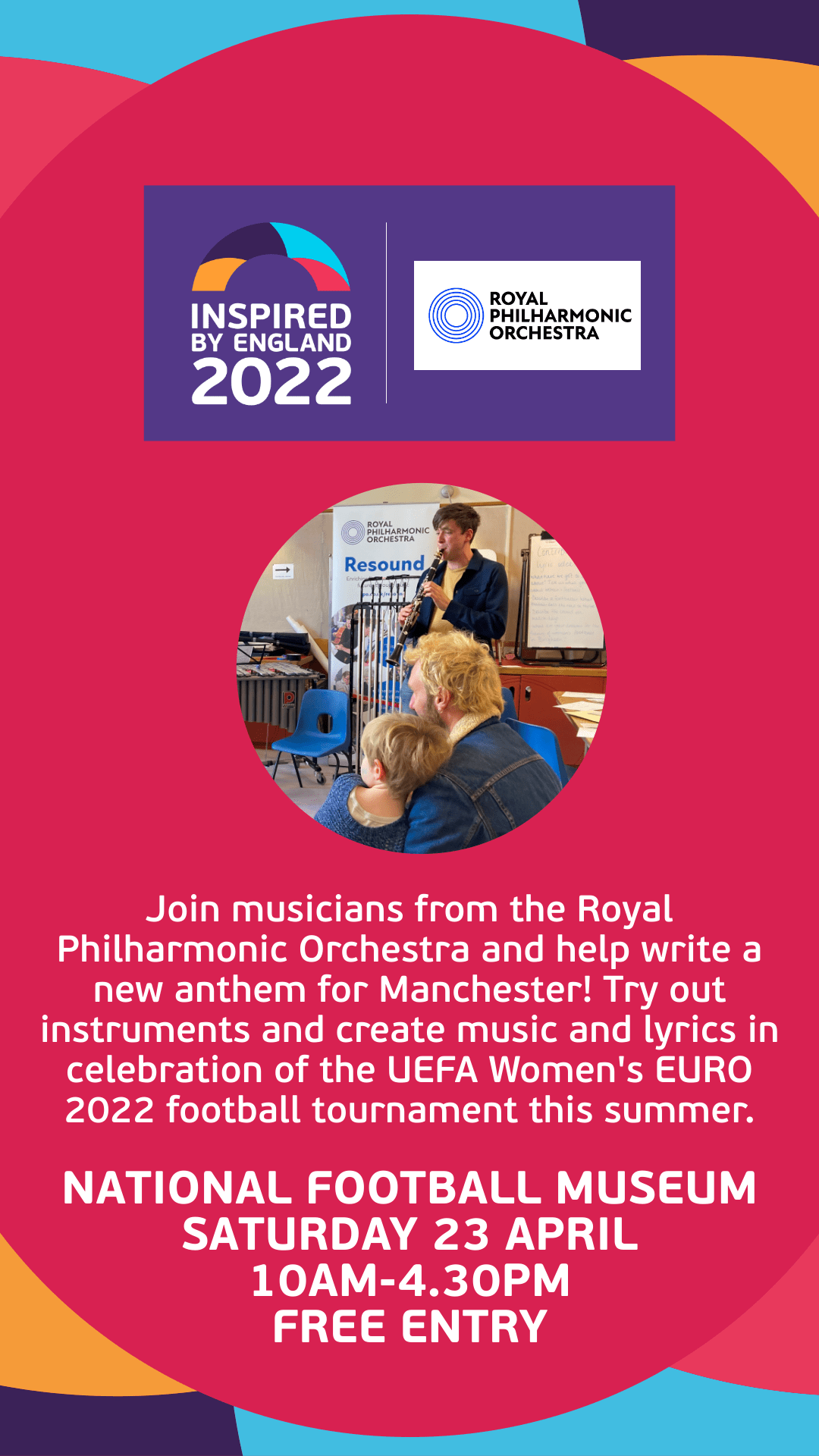
The above image provides details of an event at the National Football Museum which seeks to create a Women’s Euros footballing anthem for the Manchester region and the Royal Philarmonic Orchestra are keen to have input from fans, players and anyone with a strong interest in women’s football within the region. I know part of the event clashes with a MCFC men’s game but I’ve been assured that attendees can pop in for a time and won’t need to be there for the entire session. I’m not involved with the organisation or the main aspects of the day but I do intend popping in during the late morning if I can.
Alongside this, the call out to woman who have played football still stands and I’m keen to hear from Trafford women or women who played games in Trafford. Maybe you can help the project? We’re keen to capture your stories and memories. The details are:
In preparation for the Women’s Euros which will open at Old Trafford at the start of July Trafford Local Studies are keen to interview women who have played football. We are particularly keen on hearing the stories of women footballers from the borough or from women who played for teams within Trafford.
For those uncertain the Trafford borough covers a number of towns and areas including Altrincham, Bowden, Flixton, Irlam, Old Trafford, Sale, Stretford, Timperley, Trafford Park and Urmston. If you are a woman from the area and played football then please get in touch. Also, if you played either for or against a team from the Trafford area then we also want to hear your memories of that game.
The Trafford area has incredibly strong links to the history of women’s football. In 1921 a game between Dick, Kerr Ladies and Bath Ladies at Old Trafford was watched by over 30,000 and over the following century significant games were staged at White City, Stretford, Timperley and other venues in our borough. In fact on this day (7 April) in 1968 the renowned Manchester Corinthians played Kippax Ladies (from Yorkshire not Maine Road!) at the White City Stadium (see image above).
Over the last fifty years or so many prominent local teams have developed and played in the area such as Sale Hotel, Trafford, Redstar, Urmston and many others, while women from Trafford have played for prominent teams outside of the borough.
We are keen to hear the memories of women who have contributed to this rich history of women’s football in the area. If you are from Trafford or played for a team based in our borough then please get in touch. Your memories will help to develop our archive and ensure future generations are aware of the experiences of women footballers.
In addition, we are keen to locate objects, match programmes and memorabilia associated with women’s football, so if you have an item that you feel may help please get in touch.
If you would like to help then please email me via gary@GJFootballArchive.com
This project is part of a National Lottery Heritage funded progamme which seeks to bring this history into the light through a number of physical and virtual exhibitions, and to create a documentary record of the game at this moment, through oral history interviews with local players and fans and a contemporary collecting programme.
Here’s some background from earlier this year:
https://www.trafford.gov.uk/residents/news/articles/2022/20220114-History-of-women%27s-football-to-be-revealed-and-celebrated-by-UEFA-Women%27s-EURO-2022-Heritage-Programme.aspx




 Gary James' Football Archive