On this day (23 October) in 2011 Roberto Mancini’s Manchester City defeated Alex Ferguson’s Manchester United 6-1 in the Manchester Derby at Old Trafford. The City goals came from Mario Balotelli 22, 60; Sergio Aguero 69; Edin Dzeko 90, 90+3; and David Silva 90+1. United’s was scored by Darren Fletcher 81.
The City win equalled the record score in a Manchester derby – also set by City and also in a League derby at Old Trafford (in a season City also got relegated!). You can read about that one here:
If you enjoy all the free material on my website and would like to support my research and keep this website going (but don’t want to subscribe) then why not make a one-time donation (or buy me a coffee). All support for my research is valued and welcome. It allows me to keep some free material available for all. Thanks.
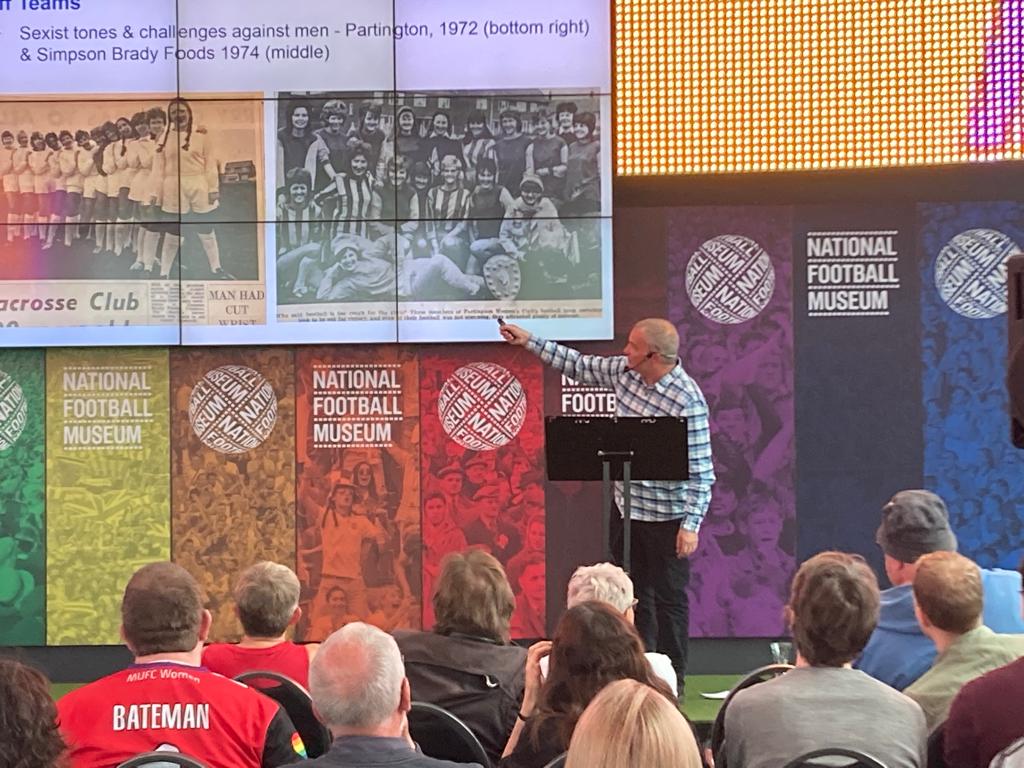
If you’re interested in women’s football or in football in Trafford or Manchester then get your self a brew, settle down and enjoy this video of my talk. It was part of my work on the #WEuro2022 Heritage Lottery funded project and my long standing project into the history of women’s football in Manchester. Here goes:
This talk on the history of women’s football was staged at the National Football Museum a few years back. The talk lasts about 47 mins. Enjoy!
The Trafford Archive website I mention during my talk is available here:
On this day (14 March) in 1990 the Manchester Evening News featured Bob Scott’s plans for Manchester’s 1996 Olympic Bid (remember this was not the first bid by the city either – there was an attempted bid for the 1992 Games). These articles make interesting reading now. Note also the involvement of Rick Parry – a man well known in football circles then and now (he later was one of the key figures behind football’s league restructuring).
I’ve included this as part of my feature on Manchester City in the 1990s as ultimately these Olympic bids led to the building of the City of Manchester Stadium (present day Etihad). Back in 1990 though the preferred site for a new stadium was in Trafford and Manchester City had held discussions even then on moving to the new stadium even though it would have meant City moving out of the City of Manchester.
Notice how the footballing activities were to be shared between City, United, Everton and Liverpool. Also, the velodrome is mentioned as the Tameside Velodrome but it is of course the one build near the present day Etihad.
This feature is part of my series on Manchester City in the 1990s and you can read about the opening months of 1990 below. This series of articles and features will run throughout March with indepth articles some days and smaller ‘on this day’ style posts on others. There will be flashbacks to great games, players and more. Every day in March will offer something to enjoy.
Subscribers will get access to everything, while some on this day material will be free for all to view.
If you want to know more on this incredible decade for Manchester City Football Club then why not subscribe and read it all? The following 1,300 word article on the end of the 1989-90 season is available to subscribers below. Enjoy!
Subscribe to get access – Monthly
Read more of this content when you subscribe today. It costs £3 per month (cancel anytime) to access everything posted since 1 October 2022 or there’s a special annual rate below which gives greater access and works out much cheaper.
Read more of this content when you subscribe today. It costs £3 per month (above) or £20 a year (here) to access everything posted since the site was created in December 2020. This special rate works out about £1.67 a week and gives access to everything posted, including PDFs of 3 of my books.
On this day (17 September) in 1910 Old Trafford staged its first Manchester derby and City were even awarded a penalty there too! The penalty was saved and the game ended in a 2-1 United win in front of a crowd estimated to be about 60,000. Here’s a brief match report from that day. Note also the preview for City’s next game at Hyde Road:
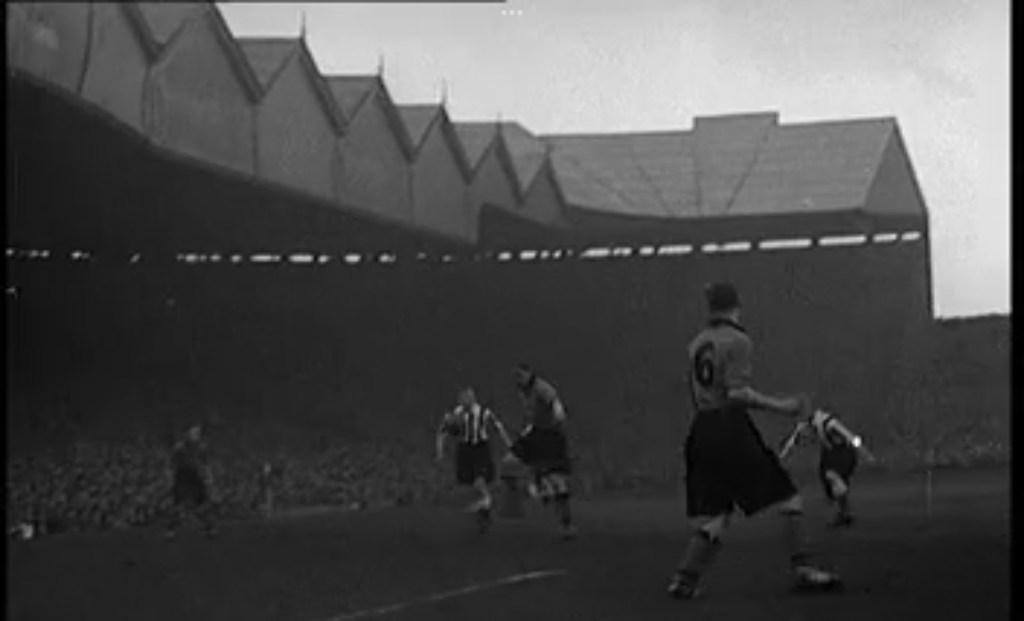
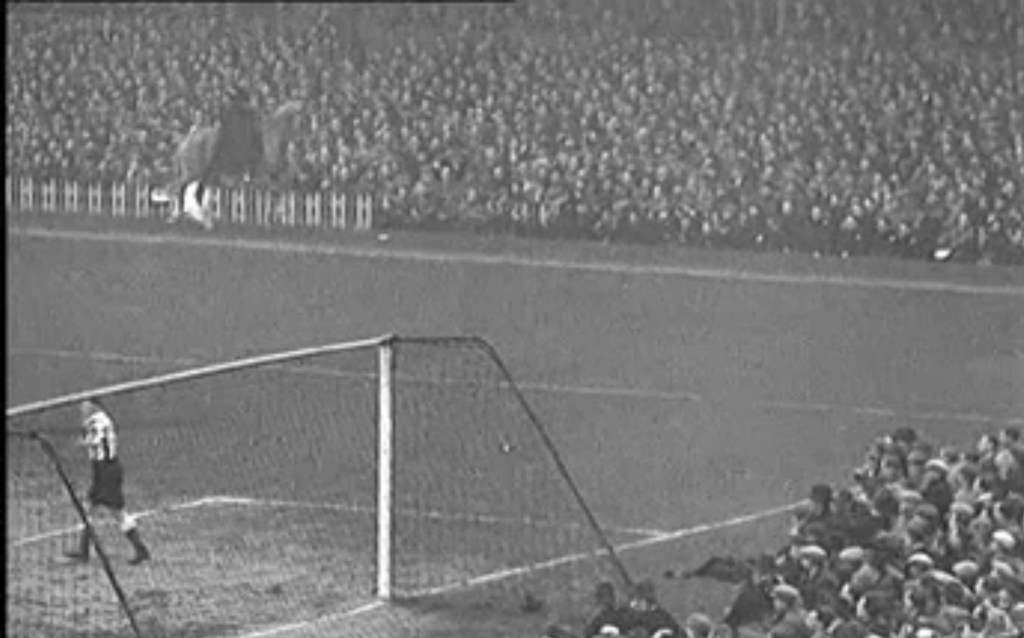
On this day in 1939 Old Trafford was packed like never before (or numbers wise since!) when Grimsby faced Wolves in the FA Cup semi final. It was the record crowd for the venue – I’m sure many people would expect United to have attracted the venue’s record crowd but that’s not true.
You can find out more and watch film from the game here:
On this day (30 October) in 1973 The second round League Cup tie between Manchester City and Walsall went to a second replay. City won the game 4-0 with a hat-trick for Francis Lee, but a pitiful crowd of 13,646 witnessed the match at Old Trafford. City fans didn’t mind playing a 2nd replay, but they did object to it being played at United’s ground.
Subscribe to get access
If you’d like to support my research then why not subscribe? Every subscription directly helps support my research and provides annual subscribers with access to everything posted on this site, including the entire Manchester A Football History and From Maine Men To Banana Citizens books, plus interviews, articles and more. I am not employed by anyone and all my research is self funded or comes from subscriptions to this site.
Read more of this content when you subscribe today. You can subscribe at either £20 per year (above) or at £3 per month here (cancel any time). For those subscribing £3 per month you will be able to access all content from October 2022 onwards for as long as you are a subscriber. Those subscribing £20 a year have access to everything posted since December 2020.
As we build up to the Manchester derby this weekend the usual questions of who represents Manchester best crops up, as does the ‘you’re not from Manchester’ argument. People also talk about Manchester history and so on, so I thought I’d write a few thoughts here to hopefully help anyone with their Manchester geography, history etc. Some fans will love this; some may hate it, but either way it’s all factual. Here goes….
On the question of history: The earliest recorded game for Manchester United (as Newton Heath) is in November 1880 (against Bolton Wanderer’s 2nd team) while the earliest recorded game for Manchester City (as St Mark’s West Gorton) was one week earlier than United’s game. Much is made of the 1878 formation date but that’s a bit of a red herring. There is no evidence of football participation by the Heathens until November 1880. From 1878 Newton Heath did play cricket and perform athletics. Similarly, St Mark’s are known to have played cricket from the 1860s but this does not mean the club should trace its history of football activity to 1867 (or any other date prior to 1880). I go into a lot more detail on all of this in The Emergence of Footballing Cultures: Manchester 1840-1919 but subscribers can also read the evidence & more via the following link:
Of course City was the first of the two clubs to take on the Manchester name, doing so in 1894. That year Newton Heath also tried to reform as Manchester but were prevented from doing so as there was already a Manchester FC in existence (the rugby club). Again you can read the evidence and facts in the Emergence of Footballing Cultures:
Also on the question of history… Manchester City were the first to find national success when they won the Second Division title in 1899 (also becoming the first Manchester side to earn promotion). City were also the first Manchester team to win a major trophy when they won the FA Cup in 1904. United were the first team to win the League with their first national success coming in 1908. United were the first to win a European trophy, winning the European Cup at Wembley in 1968, while City’s first European trophy (the European Cup Winners’ Cup) came in 1970 at Vienna. Both successes of course predate the first UEFA-tournament successes of Liverpool, Barcelona, Arsenal, Chelsea, Juventus and so many other perceived European giants (note: The Fairs Cup was not a UEFA tournament).
On representing the city of Manchester the point is often made, usually by City fans, that United ‘don’t come from Manchester’, so here’s a bit about geography: It is true that Old Trafford is not in the city of Manchester and that it’s in the borough of Trafford (not Salford as some say). United have been based there since 1910. Of course Trafford is within Greater Manchester, just as Bolton, Wigan, Rochdale, Stockport, Tameside and the city of Salford are. Prior to 1910 United played in Clayton and Newton Heath. At the time of their formation Newton Heath was not a part of Manchester. It was added to the city in 1890.
Similarly, West Gorton, where Manchester City was first founded as St Mark’s (West Gorton) was not part of the city of Manchester until 1890. Neither club was based in the city of Manchester at time of formation. City’s roots included various moves and name changes, with them settling in Ardwick in 1887. Ardwick had been incorporated into Manchester in 1838, meaning that from 1887 the Blues were based within the city of Manchester. The club moved to Maine Road in 1923 and their current home in 2003, both of which were within the city of Manchester by the time of the club’s move. Whichever way you look at it City have been based in the city of Manchester since 1887 while Newton Heath/United were based in the city of Manchester from 1890 to 1910. So for those who would like the maths that’s 135 years v 20 years.
In terms of first blood in the Manchester derby… Newton Heath beat Ardwick in the first derby in a first team competition that still counts today. That was the FA Cup in 1890-91 and you can read about that here:
Ultimately, all of these are merely bragging rights for particular views but I thought I’d post the facts because, all too often the facts get misreported and myths profligate.
Over the years there has been a lot of discussion on Denis Law and his backheeled goal for Manchester City v Manchester United at Old Trafford in April 1974. If you’re a Blue you tend to say it relegated United; if you’re a Red you tend to say ‘absolutely not! It made no difference.’ So, for this feature I decided to focus on the facts, emotion and mood of the era to paint an accurate picture of that day and the significance or not of that goal. Hopefully, Blues & Reds alike will gain a good understanding of it all. I include quotes from some of the interviews I’ve performed in the past. This article will be free to read until 27th September then it’s available to subscribers only. Here goes…
Subscribe to get access
If you have read this and enjoyed it then please subscribe and access more content like this. No one pays for my research and so please support my writing if you can. Subscribers get access to everything on here, including the entire Manchester A Football History book and my first book. It costs £20 a year (works out £1.67 per month).
If you’re interested in women’s football or in football in Trafford or Manchester then get your self a brew, settle down and enjoy this video of my talk before the big England-Northern Ireland match tonight. It’s part of my work on the #WEuro2022 Heritage Lottery funded project. Here goes:
This talk on the history of women’s football was staged at the National Football Museum on 1st July as part of my work on a consultancy basis with Trafford local archives. The talk lasts about 47 mins. Enjoy!
There will be a video of the panel discussion mentioned in this talk that will appear as a part 2 later. Maybe next week?
The Trafford Archive website I mention during my talk is available here:
Gary James considers a time when Burnley and City battled for the League
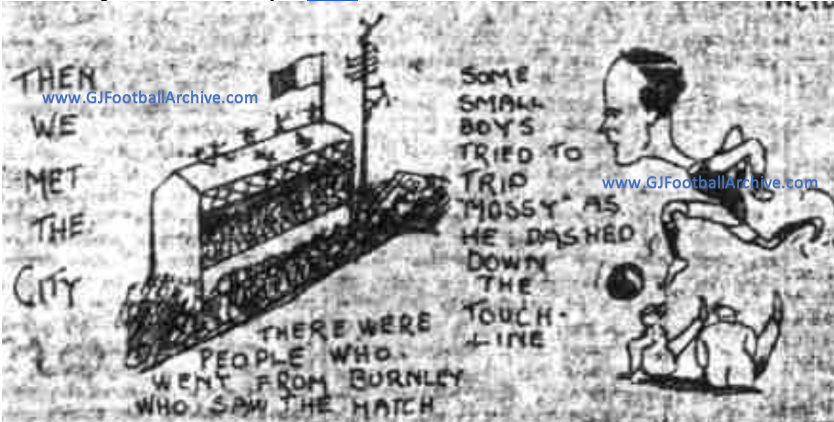
Today I’m taking a look back to 101 years ago today when, believe it or not, both City and Burnley were major rivals for the League title. People often assume today’s giants have always been the game’s powers but the evidence shows otherwise. Burnley, like City, have a history of success and, again like City, first appeared in the European Cup in the 1960s.
1920-21 seems – it is – an awful long time ago but it’s a crucial season in the development of both Burnley and City. It is one of those seasons that we really should remember for a variety of reasons, not least because it speeded up City’s desire to move stadium because of the huge crowds that wanted to see the Blues play.
Here for subscribers is a 1600 word piece on an extraordinary time in 1920-21:
Subscribe to get access
Read more of this content when you subscribe today. It costs £20 a year or sign up for a month at a time for £3 (cancel any time). Throughout your subscription you’ll have access to all the content on here. Search the site to see what’s available.




 Gary James' Football Archive