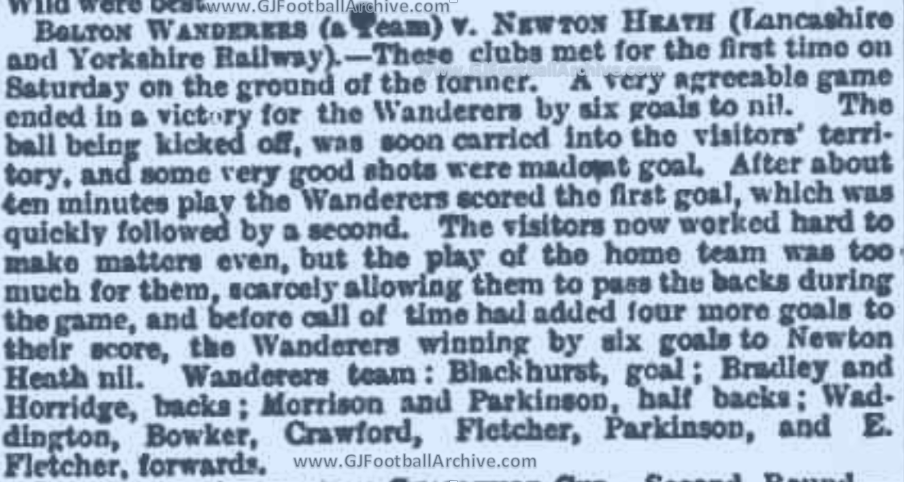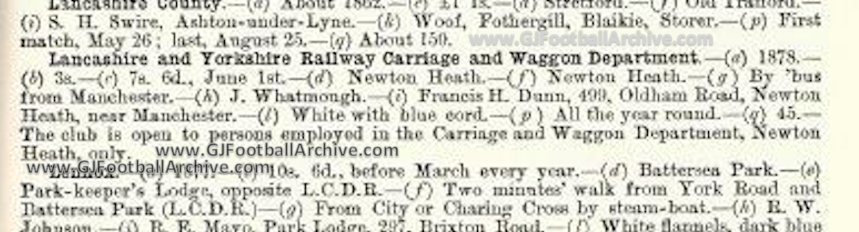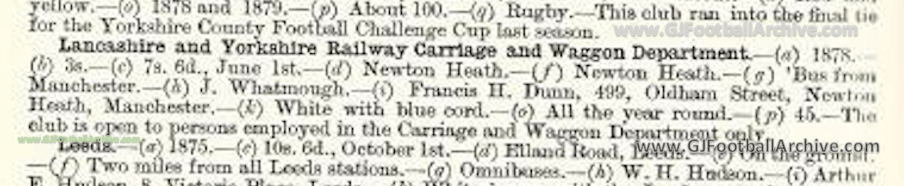
Today (3 November) is the anniversary of the first ever Manchester derby played in the Football League. The match between Manchester City and Newton Heath was played at City’s Hyde Road ground today in 1894. You can read the story of the game (with all the stats, background etc.) here:
Category Archives: Newton Heath
The Oldest Surviving Official MCFC Match Programme?
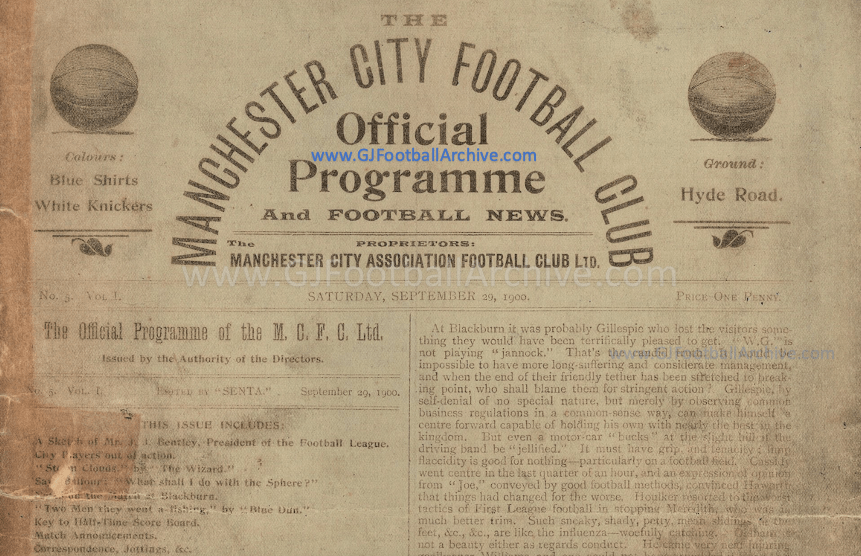
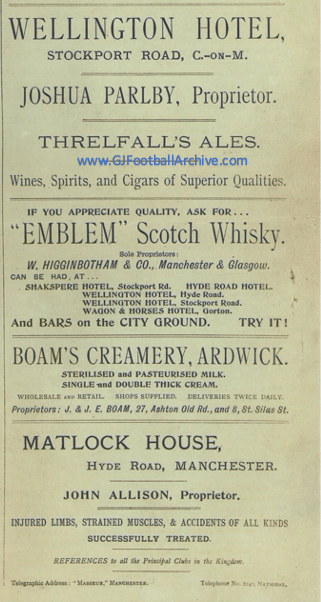
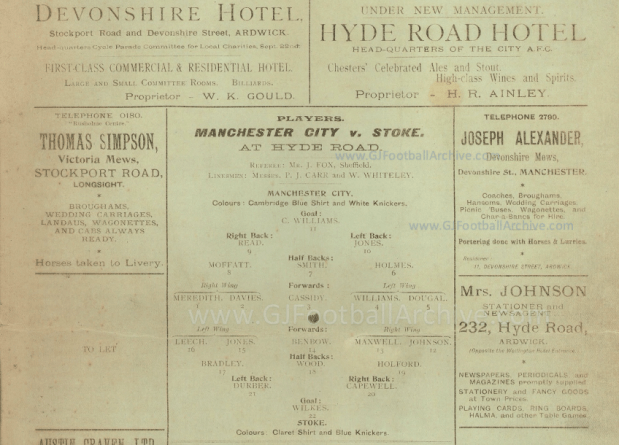
Recently I’ve been contacted by someone who had in their possession a couple of Manchester City match programmes from 123 years ago. These were from the first season the club did its own official match programme (there was an earlier joint effort between 2 rugby and 2 football clubs that was described as official from the 1890s – see below – but 1900-01 was the first for MCFC on their own). He sent me scans of them and one programme was produced for a match played on this day (29 September) in 1900. Here are some images and details from it.
This was a special game for City, though the programme was not produced because it was a special game. This was the fifth issue of the season and contained eight pages, like the others. The significance of the game however was that Arthur Balfour MP was a visitor that day. Balfour would become Prime Minister in 1902 and was still in that role when City won the FA Cup for the first time in 1904 (he wore a City rosette at the final!).
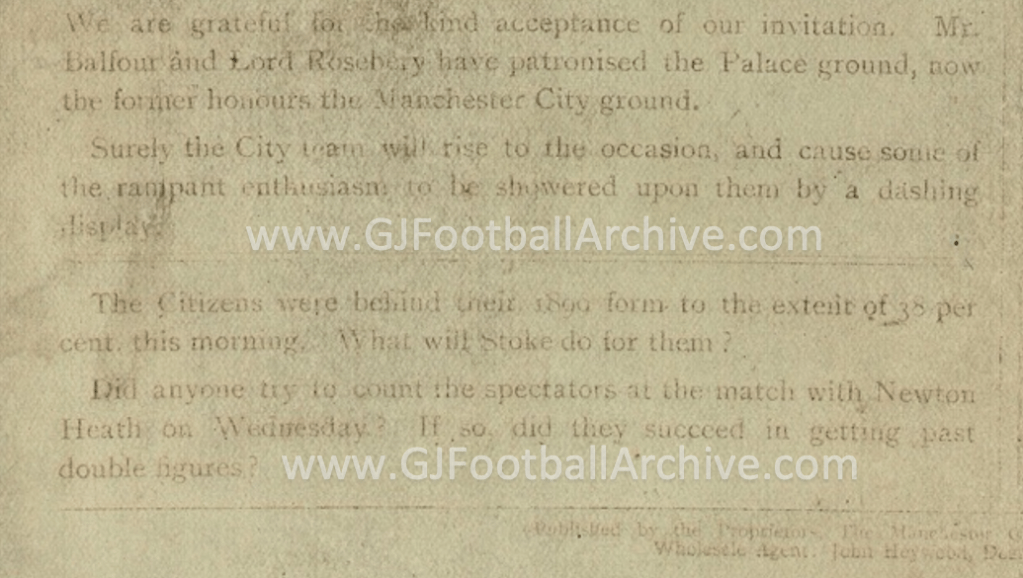
The back page talks about Balfour’s visit. Both the front and the back pages are quite difficult to read as they’ve faded. It is interesting that the club felt able to make light of Balfour’s lack of enthusiasm for ‘socker’ (yes, socker or soccer as we grew to call it, was an English word for association football before the Americans became recognised for their use of it). Balfour preferred golf (after the 1904 FA Cup final he called himself a football ‘ignoramous’. Bob Hulmes, who sent the programme scans to me, managed to transcribe the wording regarding Balfour:
Says Balfour: “What shall I do with the sphere?”
We have specially desired fine weather today as the Right Hon. Arthur James Balfour is due to make his first appearance on the Hyde Road Football enclosure this afternoon. Some little decoration will be made, for the most pleasing sight to the hon. gentleman will be a mighty crowd of enthusiastic well wishers. It is not often that we have a leader of the nation at such functions, and the occasion is historic as far as Manchester is concerned. No doubt our honoured guest wishes he had the opportunity to open a game of golf instead of socker but we are ready to excuse a “miskick” on this occasion. We are grateful for kind acceptance of our invitation. Mr Balfour and Lord Rosebery have patronised the Palace ground, now the former honours the Manchester City ground.
Surely the City Team will rise to the occasion and cause some of the rampant enthusiasm to be showered upon them by a dashing display.
It’s worth noting some of the advertisements. There’s one for Joseph Alexander’s coaches and carriages (the Alexander family business. Note: The Alexanders remained key members of City’s management/directorship/shareholding for most of the 120 years that followed!). There’s also the Wellington Hotel, Stockport Road, which was run by the ever popular City official Joshua Parlby, and the Matlock House Hydro – one of City director John Allison’s business.


The game was against Stoke and they are wearing their then home colours of ‘claret shirts and blue knickers’.
Bob also nudged me towards page 8 which included a wry comment about the previous Wednesday’s friendly at Newton Heath (United):
Did anyone try to count the spectators at the match with Newton Heath on Wednesday? If so, did they succeed in getting past double figures?
The official attendance was estimated by Newton Heath as 600 (I wonder if they had a mickey-take name along the lines of Emptyhad for United’s games at Bank Street?

Before the 1900-01 season there was an official match programme produced for both Newton Heath and Manchester City, alongside a couple of rugby clubs. It was first ‘mocked up’ in May 1898 but went into production for the 1898-1899 season. It continued into the 1900-01 season by which time City were producing their own official programme. Both programmes were in competition throughout that 1900-01 season.

Thanks to Bob Hulmes for allowing me to us images of his match programme. The programme belonged to Bob’s grandfather. He lived in Ardwick, near Hyde Road, and he followed City until his death in 1964. Bob found two programmes from 1900 lining a drawer when his grandfather died in 1964, which shows exactly how rare these images are. It’s a pure fluke in many ways that they survived and fortunately the family looked after them over the decades.
Manchester’s Two Join The League
Today (17 May) in 1892 at the Queens Hotel in Sunderland the Football League accepted two aspiring Manchester clubs into its competitions. Newton Heath applied and were accepted into the First Division and Ardwick applied and were accepted into the new Second Division of the League. Ardwick did not apply to join the top flight and it is believed the two Manchester clubs had an agreement not to go up against each other as in other votes two clubs from the same city had occasionally taken votes from each other. Had they gone head to head it may well have been that either one or no Manchester club would have gained admittance to the League.

1898: The First Ever Salford and Newton Heath Match Programme is Produced
On this day (9 May) in 1898 the first ever Newton Heath and Salford match programme was produced however all is not what it seems. This was actually a mock up of what a Manchester football programme could look like and was used to officially register the new publication. Everything in this issue was mocked up based on an Everton-Liverpool style programme. The company behind the Manchester programme was Merseyside based.

When the programme properly began the following football season it carried the details of not only Newton Heath and Salford but also Broughton Rangers and Manchester City.
One interesting image the original mock up contained was this scene from an Everton Liverpool game which it described as the finest picture of football ever published (hyperbole, hey?).

A League is Born
On this day (17 April) in 1888 the first meeting of the Football League was held in Manchester. The following report names the clubs accepted and the others who wanted to join the League. It has often been written in Manchester United related books that Newton Heath applied to join the League in 1888 but didn’t receive enough votes to be accepted. That is completely untrue as no one actually had to apply nor was a vote taken. Clubs were asked and some tried to push to get included but Newton Heath were neither asked nor were they pushing for acceptance either. Nor were Ardwick or Manchester Asoociation who, to be frank would’ve been the most famous Manchester club at this time.
Bolton Wanderers were the only team from present day Greater Manchester to be asked/selected for the first League season.


The plaque is positioned on the corner of Mosley Street and Market Street/Piccadilly in Manchester.
The Second Manchester Derby In The League – 1894-95
DERBY: 2
DATE 5th January 1895
DIVISION Two
VENUE Clayton
ATTENDANCE 12,000
NEWTON HEATH 4 (Clarkin 2, Donaldson, Smith)
MANCHESTER CITY 1 (Sharples)
Newton Heath: William DOUGLAS, John McCARTNEY, Fred ERENTZ, Harry STONES, James McNAUGHT, William STEWART, John CLARKIN, Robert DONALDSON, James DOW, Richard SMITH, James PETERS. Manager: Alf Albut
Manchester City: Charlie WILLIAMS, John WALKER, David ROBSON, Harry SMITH, Robert JONES, John McBRIDE, Billy MEREDITH, Pat FINNERHAN, Sandy ROWAN, William McREDDlE, James SHARPLES. Manager: Joshua Parlby
Subscribe to get access
See more of this content when you subscribe today.
Subscribe to get access
See more of this content when you subscribe today.
Happy Christmas
Merry Christmas to all. On this day (25 December) in 1896 Manchester City played their first competitive Christmas Day fixture. The game, staged within sight of the present day Etihad Stadium, was a derby match with Newton Heath (United). It was played at Bank Street, Clayton (behind the Velodrome and the current BMX site). It was a Manchester derby which ended in a Newton Heath victory.
The First Manchester Derby In The League – 1894
SEASON 1894-1895
DERBY: 1
DATE 3rd November 1894
DIVISION Two
VENUE Hyde Road
ATTENDANCE 14,000
MANCHESTER CITY 2 (Meredith 2)
NEWTON HEATH 5 (Smith 4, Clarkin)
Manchester City: George HUTCHINSON, Harry SMITH, John WALKER, George MANN, Joseph NASH, Fred DYER, Billy MEREDITH, Pat FINNERHAN, Sandy ROWAN, James SHARPLES, Bob MILARVIE. Manager: Joshua Parlby
Newton Heath: William DOUGLAS, John McCARTNEY, Fred ERENTZ, George PERRINS, James McNAUGHT, William DAVIDSON, John CLARKIN, Robert DONALDSON, James DOW, Richard SMITH, James PETERS. Manager: Alf Albut
BACKGROUND
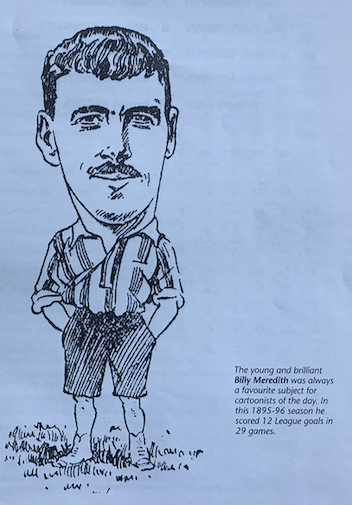
Both sides had joined the Football League in 1892 when Ardwick (Manchester City) entered the newly formed Second Division and Newton Heath (Manchester United) joined the enlarged First Division. At the end of this first season Newton Heath finished bottom of the First Division and Ardwick in fifth place in Division Two. Newton Heath survived in the top flight by succeeding in the Test matches that were used to decide promotion and relegation in the early years of the League. The 1893-94 season saw Ardwick finish 13th out of 15 teams in the Second Division, whereas Newton Heath were again bottom of the First Division. This time the Heathens were unsuccessful in the Test matches and were relegated, joining Ardwick in Division Two. During the close season Ardwick had been reformed as Manchester City and were determined to make an impact. A number of new players had been signed by City secretary Joshua Parlby, including William ‘Billy’ Meredith. The derby was to be Meredith’s home debut. Prior to the derby, City had won only four games out of eleven in the League, although they had scored thirty goals including four in their previous game – a 5-4 defeat at Newcastle United! Newton Heath had lost only once in the League at Burton, and so entered the match as very much the team in form.

BEFORE THE GAME
P W D L F A Pts
NH 7 3 3 1 17 11 9
CITY 11 4 1 6 30 30 9
MATCH VERDICT
This was the first ever League match between the Manchester clubs. It proved to be an exciting game of end to end attacking football leading to a conclusive victory for Newton Heath. Smith, Newton’s inside left was in irresistible form and set up derby history by scoring most goals in a single match. City were well beaten on the day, finding the Heathens’ defence and McNaught in particular, difficult to break down. Some consolation came from the goalscoring home debut of the legendary Billy Meredith, who was to give both clubs such wonderful service. For goal hero Smith this match marked the high point of a splendid first season for the club. His record four goals were part of 17 strikes in 29 games. During this season and the next, he remained a consistent marksman for the Heathens, but thereafter, lost form and his team place, before leaving the club in 1900. “The Umpire” sports newspaper of the day described the build-up to the first ever League derby and recorded the first derby goal as follows: “This League match was looked upon as the local Derby in Association football, and in spite of the dull and threatening weather the much-improved ground at Hyde Road presented an animated spectacle. When play started the weather was still dull, but the crowd rolled in fast, until probably over 10,000 were present. The City played towards the hotel end, and the sun coming out strongly was much against them early on. The excitement was intense as Meredith raced away and centred finely but the defence was equal to it and sternly repelled. At the other end the home side were not equally fortunate, as after Hutchinson had placed a beauty over the bar, Smith headed past him and opened the scoring for Newton after thirteen minutes play”.“The Umpire” then summarised the first ever League derby in the following terms: ”Although some allowance must be made on account of Smith (Harry) being hurt, it must be admitted that on the day the winners were the better team. Their combination was excellent and hardly a fault could be found with any of the players. Douglas made amends for his somewhat poor form of the previous week and, judging by the cheers with which he was greeted, he is still a great favourite on the Ardwick ground. All the backs played finely, but the highly finished display of McNaught is deserving of special mention. Dow played about his best game so far this season, one good feature being his unselfishness. Donaldson played as hard as ever, although he is not quite so unselfish as he might be. On the City side Hutchinson had little chance with any of the goals scored against him, albeit he gave one the appearance of being far from safe. Walker however, played very finely, but Dyer was by no means brilliant at half, in which position Mann was about the most conspicuous. The winning half-backs were clearly too good for the opposing forwards, but the play of the young Welsh player, Meredith and Finnerhan, was far superior to that of any other”.
Subscribe to get access
If you have enjoyed this piece then why not subscribe to gjfootballarchive.com? It costs £20 per year (about £1.67 per month). For that you get access to all existing content (over 600 articles and hundreds more to be posted over coming months) and a guaranteed minimum of 4 new articles exclusive for subscribers each month. You’ll also be supporting my research and writing. Thanks
Subscribe to get access
You can subscribe at either £20 per year (above) or at £3 per month here (cancel any time). For those subscribing £3 per month you will be able to access all content from October 2022 onwards for as long as you are a subscriber. Those subscribing £20 a year have access to everything posted since December 2020.
The Pride of Manchester?
As we build up to the Manchester derby this weekend the usual questions of who represents Manchester best crops up, as does the ‘you’re not from Manchester’ argument. People also talk about Manchester history and so on, so I thought I’d write a few thoughts here to hopefully help anyone with their Manchester geography, history etc. Some fans will love this; some may hate it, but either way it’s all factual. Here goes….
On the question of history: The earliest recorded game for Manchester United (as Newton Heath) is in November 1880 (against Bolton Wanderer’s 2nd team) while the earliest recorded game for Manchester City (as St Mark’s West Gorton) was one week earlier than United’s game. Much is made of the 1878 formation date but that’s a bit of a red herring. There is no evidence of football participation by the Heathens until November 1880. From 1878 Newton Heath did play cricket and perform athletics. Similarly, St Mark’s are known to have played cricket from the 1860s but this does not mean the club should trace its history of football activity to 1867 (or any other date prior to 1880). I go into a lot more detail on all of this in The Emergence of Footballing Cultures: Manchester 1840-1919 but subscribers can also read the evidence & more via the following link:
Of course City was the first of the two clubs to take on the Manchester name, doing so in 1894. That year Newton Heath also tried to reform as Manchester but were prevented from doing so as there was already a Manchester FC in existence (the rugby club). Again you can read the evidence and facts in the Emergence of Footballing Cultures:
Also on the question of history… Manchester City were the first to find national success when they won the Second Division title in 1899 (also becoming the first Manchester side to earn promotion). City were also the first Manchester team to win a major trophy when they won the FA Cup in 1904. United were the first team to win the League with their first national success coming in 1908. United were the first to win a European trophy, winning the European Cup at Wembley in 1968, while City’s first European trophy (the European Cup Winners’ Cup) came in 1970 at Vienna. Both successes of course predate the first UEFA-tournament successes of Liverpool, Barcelona, Arsenal, Chelsea, Juventus and so many other perceived European giants (note: The Fairs Cup was not a UEFA tournament).
On representing the city of Manchester the point is often made, usually by City fans, that United ‘don’t come from Manchester’, so here’s a bit about geography: It is true that Old Trafford is not in the city of Manchester and that it’s in the borough of Trafford (not Salford as some say). United have been based there since 1910. Of course Trafford is within Greater Manchester, just as Bolton, Wigan, Rochdale, Stockport, Tameside and the city of Salford are. Prior to 1910 United played in Clayton and Newton Heath. At the time of their formation Newton Heath was not a part of Manchester. It was added to the city in 1890.
Similarly, West Gorton, where Manchester City was first founded as St Mark’s (West Gorton) was not part of the city of Manchester until 1890. Neither club was based in the city of Manchester at time of formation. City’s roots included various moves and name changes, with them settling in Ardwick in 1887. Ardwick had been incorporated into Manchester in 1838, meaning that from 1887 the Blues were based within the city of Manchester. The club moved to Maine Road in 1923 and their current home in 2003, both of which were within the city of Manchester by the time of the club’s move. Whichever way you look at it City have been based in the city of Manchester since 1887 while Newton Heath/United were based in the city of Manchester from 1890 to 1910. So for those who would like the maths that’s 135 years v 20 years.
In terms of first blood in the Manchester derby… Newton Heath beat Ardwick in the first derby in a first team competition that still counts today. That was the FA Cup in 1890-91 and you can read about that here:
Ultimately, all of these are merely bragging rights for particular views but I thought I’d post the facts because, all too often the facts get misreported and myths profligate.
Manchester’s Football Origins
For well over a century football has been a crucial and popular aspect of Mancunian life. It’s been part of the city’s identity. So for today’s piece I’m taking a look at football’s early years. Here is a 1800 word overview of the major Manchester clubs that existed before today’s giants, followed by the origins of Newton Heath and St. Mark’s, who both played their earliest known games in November 1880.
This article is available to subscribers to my site.
Subscribe to get access
Read more of this content when you subscribe today. It costs £20 a year (or £3 per month if signing up a month at a time). Throughout your membership you have full access to everything on this site including interviews, recordings and PDFs of a couple of my books that have been long out of print. Why not sign up for a month and see what you think? I commit to 4 new lengthy articles per month, though in practice it’s been much more than that.