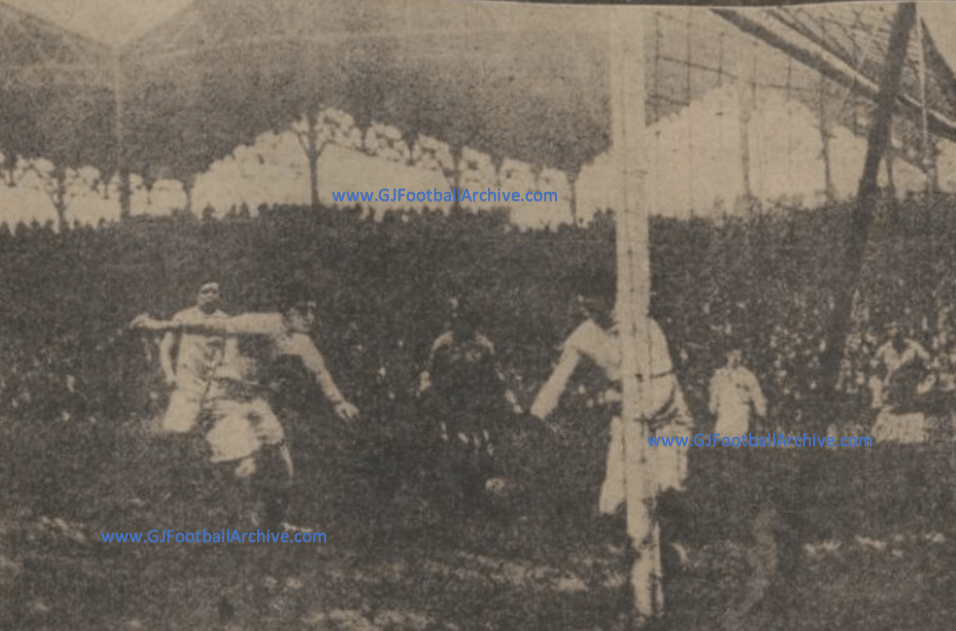
Here’s an image I found a few years back while researching Manchester City’s games against Liverpool. I know it’s a poor quality photo and so was unable to use it in the piece I was doing back then. However, I think it’s worth posting here to highlight that there are photos out there that appeared in newspapers of key games involving both clubs.
This photo shows City attacking the Liverpool goal at Hyde Road on Boxing Day 1913. The game ended 1-0 to City with Fred Howard the goalscorer. Howard had scored two goals against Liverpool the previous day (yes, Christmas Day) at Anfield as well.
If you enjoy all the free material on my website and would like to support my research and keep this website going (but don’t want to subscribe) then why not make a one-time donation (or buy me a coffee). All support for my research is valued and welcome. It allows me to keep some free material available for all. Thanks.
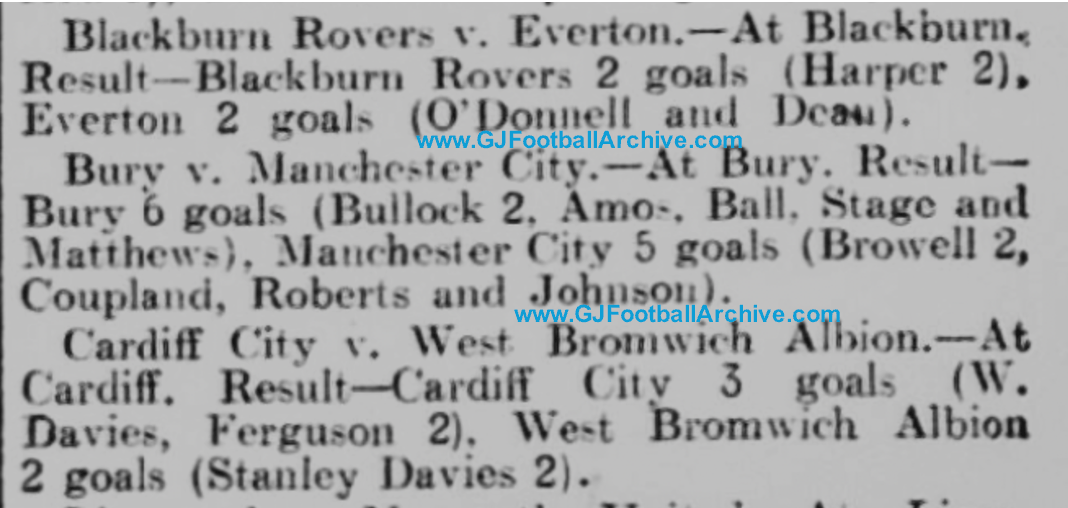
On Christmas Day 1925 Bury FC defeated Manchester City 6-5 in an extraordinary top flight game. This was the highest scoring Christmas Day game Manchester’s Blues ever played in. As this was over the Christmas period detailed match reports are rare but this cutting gives a brief idea of the scorers. On Boxing Day the two teams met again with Bury beating the Blues 2-0 at Maine Road before 50,168 (the Gigg Lane attendance had been 23,621)
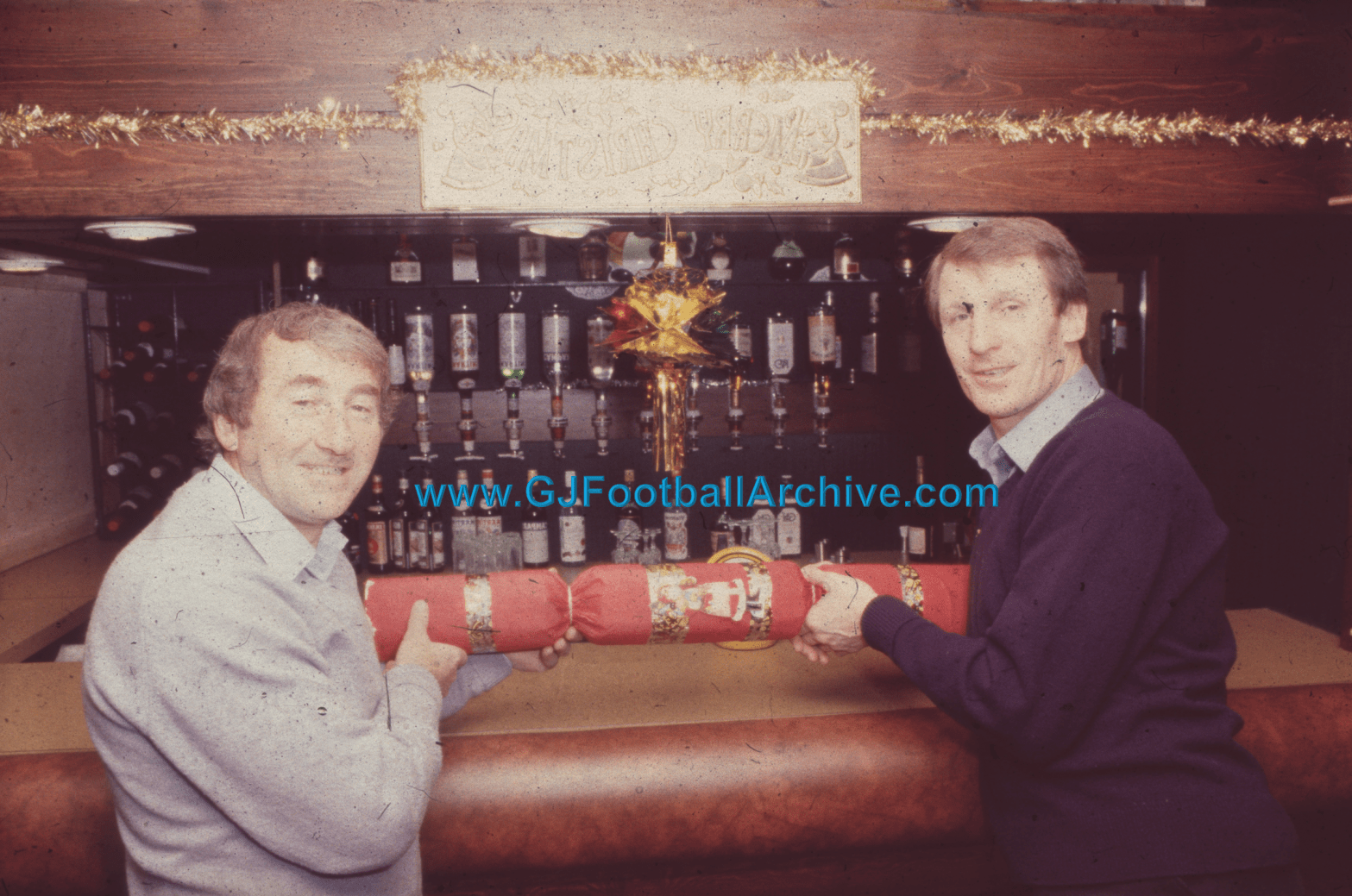
Here’s an image I’ve rediscovered in my collection of Manchester City manager Billy McNeill and his assistant Jimmy Frizzell. McNeill was City boss from 1983 until 1986 and was followed by Frizzell, who then remained at Maine Road in one capacity or another for many, many years. I liked Billy McNeill but was devastated when he chose to leave City for Aston Villa in 1986. Years later when I interviewed him he told me it had been a big mistake leaving Maine Road. He was right! Both City and Villa were relegated at the end of the 1986-87 season and I can’t help thinking Billy would have found success at City had he stayed.
It’s Christmas Day 1902 and these were the ticket prices for the big Manchester Derby match played at Clayton (the present day BMX site next to the velodrome). The game ended in a 1-1 draw. It’s so strange to think today that many of us would have headed off to a ground on Christmas Day in years gone by. Notice the seats that you could have at United – arm chairs! That’s right. It’s Christmas Day so I’ll hold off making any funny comments but imagine if Old Trafford advertised ‘arm chairs’.
Merry Christmas to all. I hope it’s a safe, comfortable and enjoyable few days for you all wherever you are.
On this day (23 December) in 1961 Neil Young scored his first League goal for Manchester City. It came in a 3-0 victory over Ipswich Town. The other scorers were Peter Dobing and Joe Hayes. Subscribers can read more on City’s 1961-62 season below. The Young photo here is from the start of the following decade of course! If you’d like to read the 1600 word article, plus all other articles on the site, then please subscribe. As with most of the other features in this series it includes words from interviews I have performed with those who were there.
Subscribe to get access
Read more of this content when you subscribe today. It costs £3 per month (cancel anytime) or sign up for a year at the discounted price of £20 per year (works out £1.67 per month). Subscribers access the 1000+ articles posted so far and the others scheduled during the life of your subscription.
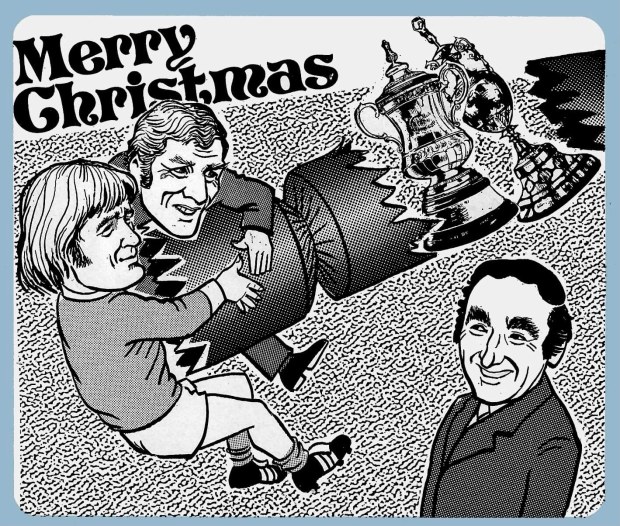
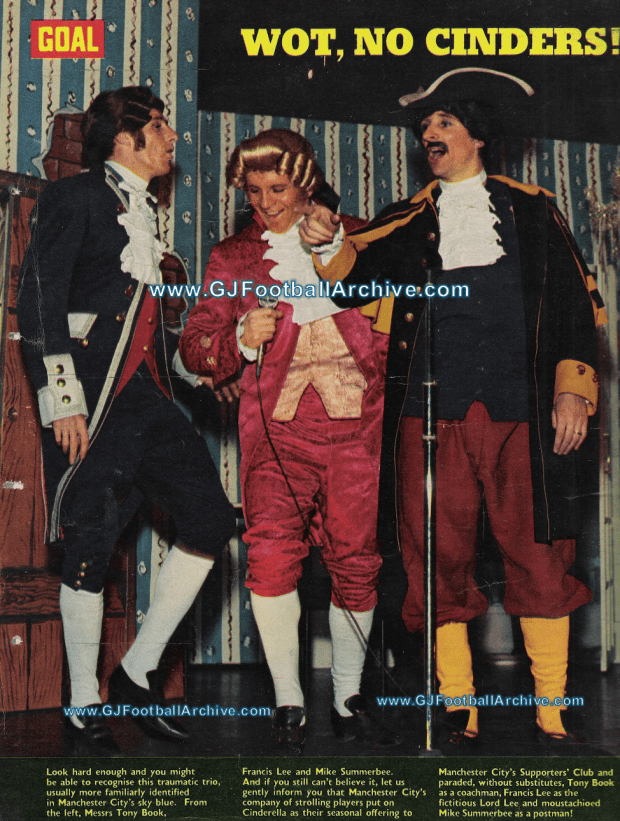
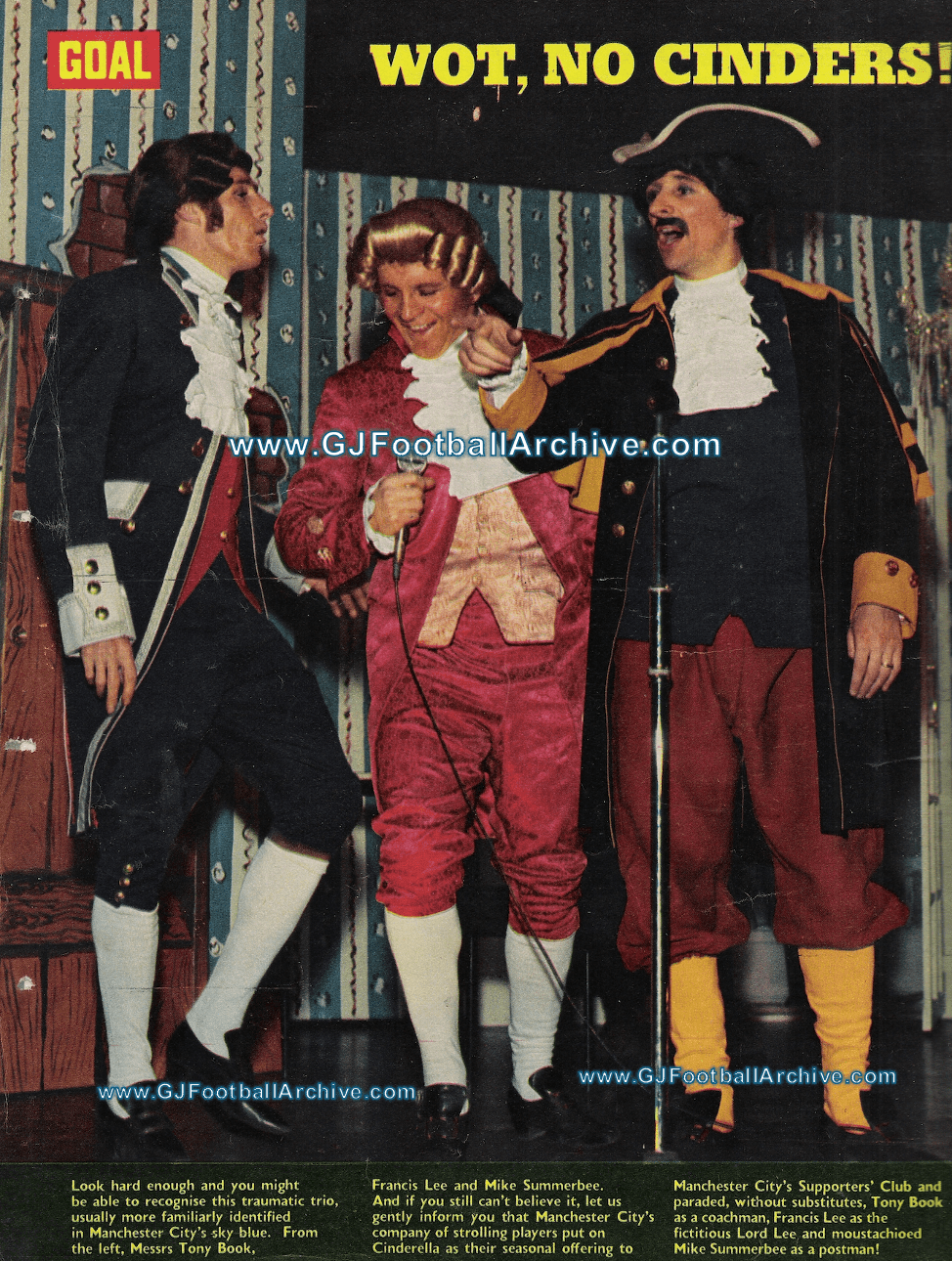
Happy Christmas! Here’s a great image of Tony Book, Francis Lee and Mike Summerbee participating in the annual pantomime at Manchester City. These were the days before Peter Swales took the panto theme too far and turned running the club into one great big pantomime.
City’s pantomimes involving star players took place for many, many years and became part of the regular Junior Blues calendar of events. This image was published in January 1971 and shows the three players in the 1970-71 Cinderella show at the City Social Club.
Forty years ago today (21 December in 1985) the humour of Manchester City fans was in evidence at Sheffield Wednesday. That day I was stood in the away section behind the goal and Wednesday led 3-1 at half time. City had taken the lead via Mark Lillis in the 13th minute but Wednesday had equalised a minute later (Thompson) then taken the lead (future Blue Gary Megson, 25 mins & Sterland 42 mins). It didn’t look like it was to be City’s day but City fans were in good spirit overall. As the players trudged off the guy running the PA system put on ‘Last Christmas’ by Wham. The song had been released the previous year. A few City fans began moving to the music and there was a bit of laughter. Then the music stopped on the PA as the announcer began reading out the half time scores. City fans immediately began booing.
Then the chant ‘We want Wham!’ started to boom out from the Leppings Lane End and the boos and chanting grew louder and louder. It was one of those surreal football moments. When he’d finished reading out the half times the PA announcer, still drowned out to some extent by our chant of ‘We want Wham!’ said: ‘And now, just for the Man City fans it’s back to Wham and Last Christmas!’
The away section cheered and then what had been a small group of fans bopping along to the song initially was now a significant part of the away section.
I don’t know who the PA announcer was but he certainly ‘got’ the mood of the day and helped create one of those odd, surreal football fan moments that rarely get reported.
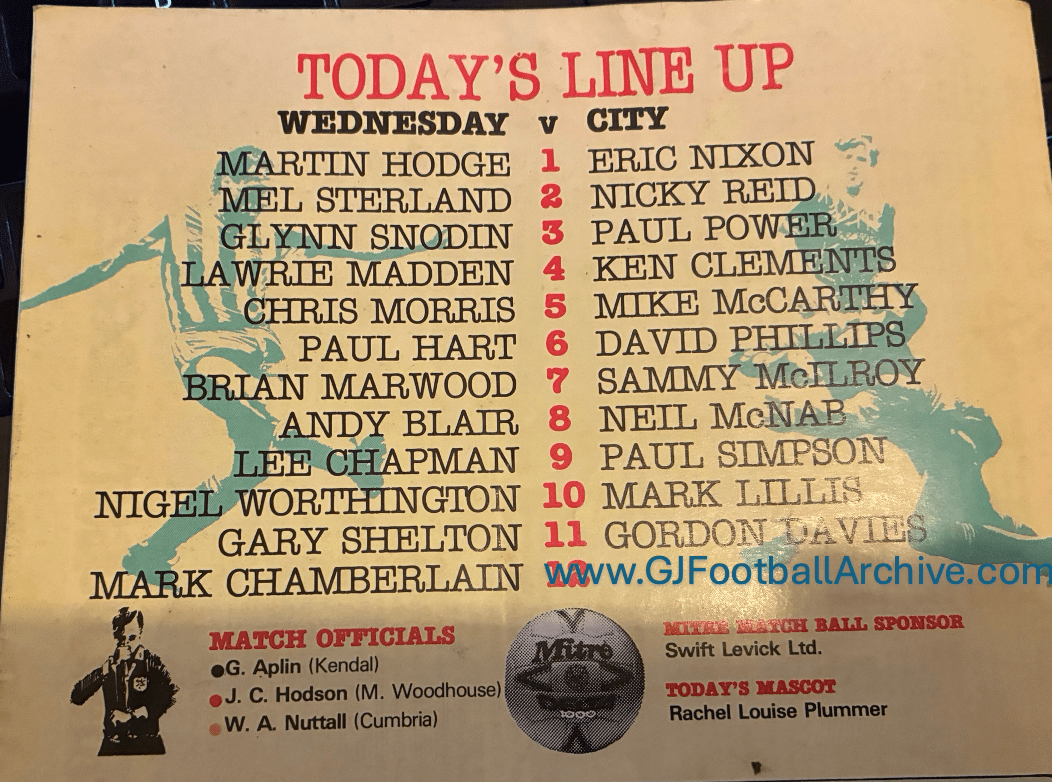
The game ended 3-2 to Wednesday after Neil McNab scored City’s second in the 66th minute before a Hillsborough crowd of 23,177. Here’s my programme from the game:
If you’d like to know more about Manchester City at this time, here’s a 2,500 word subscriber feature on the 1985-86 season. Enjoy!
Subscribe to get access – Monthly
Read more of this content when you subscribe today. It costs £3 per month (cancel anytime) to access everything posted since 1 October 2022 or there’s a special annual rate below which gives greater access and works out much cheaper.
Read more of this content when you subscribe today. It costs £3 per month (above) or £20 a year (here) to access everything posted since the site was created in December 2020. This special rate works out about £1.67 a week and gives access to everything posted, including PDFs of 3 of my books.
Uwe Rosler scored a memorable 17th minute penalty in Manchester City’s 2-0 victory over Middlesbrough on this day (20 December) in 1997. Paul Dickov netted the other goal. That was one of only six victories for the Blues that season as City headed towards Division Two and Boro towards the Premier League.
While you’re here, why not subscribe and read an indepth article on the 1997-98 season? The article is almost 9,500 words long – there’s so much to say! Some people write entire football club histories that are shorter than that. It’s available to subscribers, so why not subscribe and relive this season and an extraordinary decade? As with many other subscriber features it contains material from interviews I’ve performed with key figures from that time.
Here’s the 9500 word article on that season:
Subscribe to get access – Monthly
Read more of this content when you subscribe today. It costs £3 per month (cancel anytime) to access everything posted since 1 October 2022 or there’s a special annual rate below which gives greater access and works out much cheaper.
Read more of this content when you subscribe today. It costs £3 per month (above) or £20 a year (here) to access everything posted since the site was created in December 2020. This special rate works out about £1.67 a week and gives access to everything posted, including PDFs of 3 of my books.
If you enjoy all the free material on my website and would like to support my research and keep this website going (but don’t want to subscribe) then why not make a one-time donation (or buy me a coffee). All support for my research is valued and welcome. It allows me to keep some free material available for all. Thanks.
I’ve just seen the news about Åge Hareide. Manchester City’s first Norwegian player has died at the age of 72. I remember seeing ‘Oggy’, as we called him/chanted his name, when he first arrived.
Åge only managed 24 games for the Blues during an odd period for the club. He played from 1981 to 1982 and later managed Norway, Denmark and Iceland during an incredible 54 year career as player and manager. My thoughts are with his family and friends.
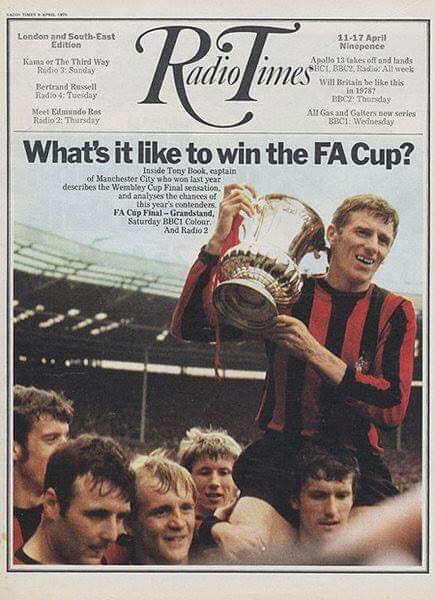
Here’s a nice cover from the Radio Times featuring Manchester City’s 1969 FA Cup winners. They defeated Leicester 1-0 thanks to a goal from prolific City scorer Neil Young.




 Gary James' Football Archive