Farewell To Maine Road – Part Two

Continuing from last week, subscribers to my website are able to download a PDF of the original Farewell To Maine Road book (which retailed at £25) in sections posted each week for the next few weeks. Today, we’ve got the second section. Enjoy!

Subscribe to get access – Monthly

If you would like to read the book and download a PDF of it then you can subscribe now at £3 per month or £20 a year. Monthly subscribers access everything posted to the site since 1 October 2022. All subscribers get everything else posted during their subscription too. You could always try a monthly subscription to see what you think (cancel any time).

Subscribe to get access – Annual

As well as Farewell To Maine Road annual subscribers get access to everything posted since the site was created in December 2020 (that’s 100s of articles, videos, history talks and PDFs of two other books: Manchester A Football History and my first book From Maine Men To Banana Citizens).

Next week I’ll be posting the third section of this 320 page, fully illustrated & detailed book for subscribers to enjoy.
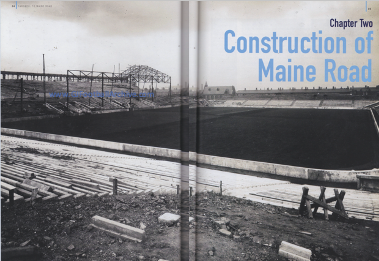
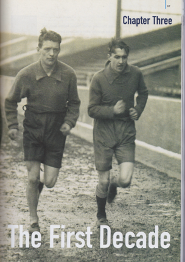
You can see the contents pages to see what’s included in this book, published in 2003, and read the Introduction here:

The book has been out of print since 2004 with every copy sold within about six months of publication. Since then I’ve been keen to bring it up to date with stories about the site and the Etihad but that’s not been possible as no publisher has been prepared to invest in the way that Polar Publishing did to ensure it was the right quality.

Copies occasionally appear in second hand book shops or at online retailers but these often sell for ridiculous sums of money. The last time I checked there was one for about £100 here:

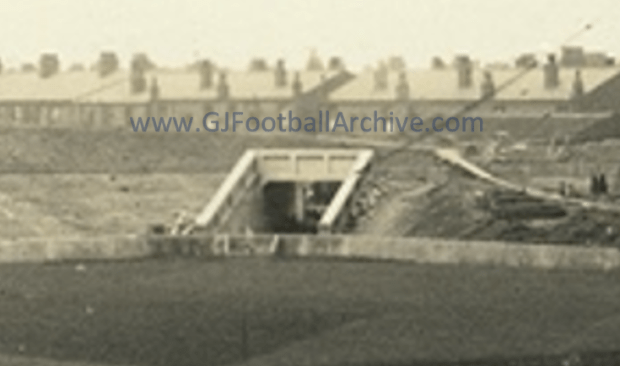
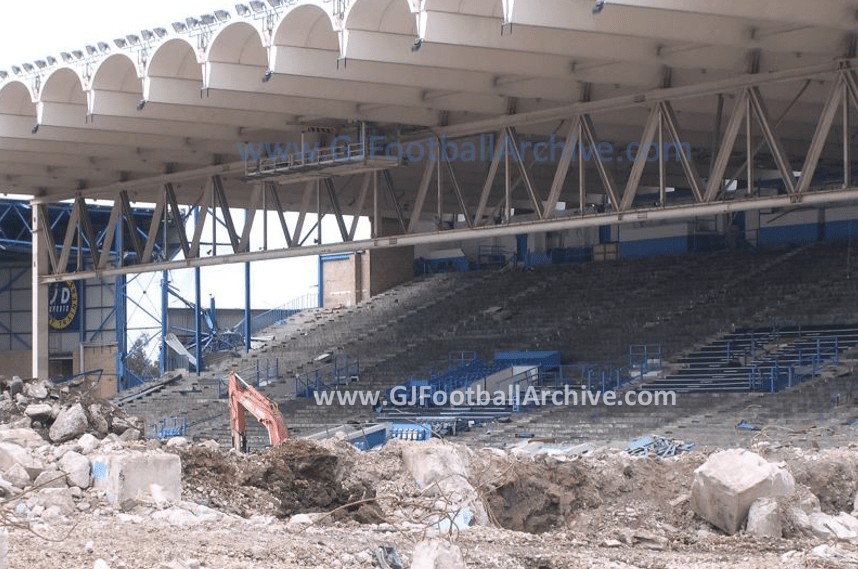
When it was published in 2003 apparently, I commented (though I can’t remember saying this, mind you it was 20 years ago): ‘On 320 beautifully illustrated A4 size pages this book tells the story of Maine Road from conception, right through to its final days as a sporting venue. With excellent photographs – including rare illustrations of the stadium during construction never previously published and images from every era – this has been a very interesting book to research, write and compile. I’ve also tried to ensure the views of ordinary fans are included, and some of the most powerful Maine Road moments are captured by the fans who saw them happen.’
In a review, Hugh Ryden wrote in King of the Kippax: ‘The architecture, the moving memories, the reproduction of rare photos and memorabilia and its extensive quotations, make FTMR a must.’

Another King of the Kippax regular Steve Worthington wrote: ‘Following on in the winning formula of his epic “Manchester The Greatest City”, the highly acclaimed author and Manchester City Football Club Historian Gary James has rolled up his sleeves once more and has produced yet another fabulous football book for all to treasure and enjoy. “Farewell to Maine Road” is not only a must for all Manchester City supporters, it is also an essential for all football fans who possess a genuine interest and passion for the history of our great British past time. It catalogues the birth, evolution and ultimate decline of what was once England’s premier and revolutionary provincial football stadium; Maine Road, Moss Side, Manchester M14. Soon to be demolished into oblivion, Maine Road is vividly remembered in all its former glory in this classic portal to the past. Beautifully written with the knowledge and passion you would expect from a lifelong Moss Side Pilgrim, the book provides a definitive literate and graphic illustration of Maine Road’s long and varied history. It contains a rich tapestry of previously unpublished photographs, one of which, a unique atmospheric shot of the famous ‘Ballet on Ice’ (a famous Manchester City V Spurs clash in the late sixties), is arguably worth the cost of the book on it’s own. Having consumed and digested every morsel of information contained within, it is difficult for me to imagine how much painstaking work and dedication it must take to produce and compile a book of such quality. Whilst they continue to produce triumphs such as this, the marriage of Gary James and Polar Publishing is truly one made in a Sky Blue Heaven. This 320-page masterpiece has pushed the boundaries of football publications to a new and higher level and has already prompted tears of nostalgia in my eyes. But don’t take my word for it, sign up a copy and see for yourself, you’ll not be disappointed.’

The publicity blurb said: ‘The only officially approved history of Maine Road is the perfect book for any supporter of City; Maine Road attendee; or general football enthusiast. 

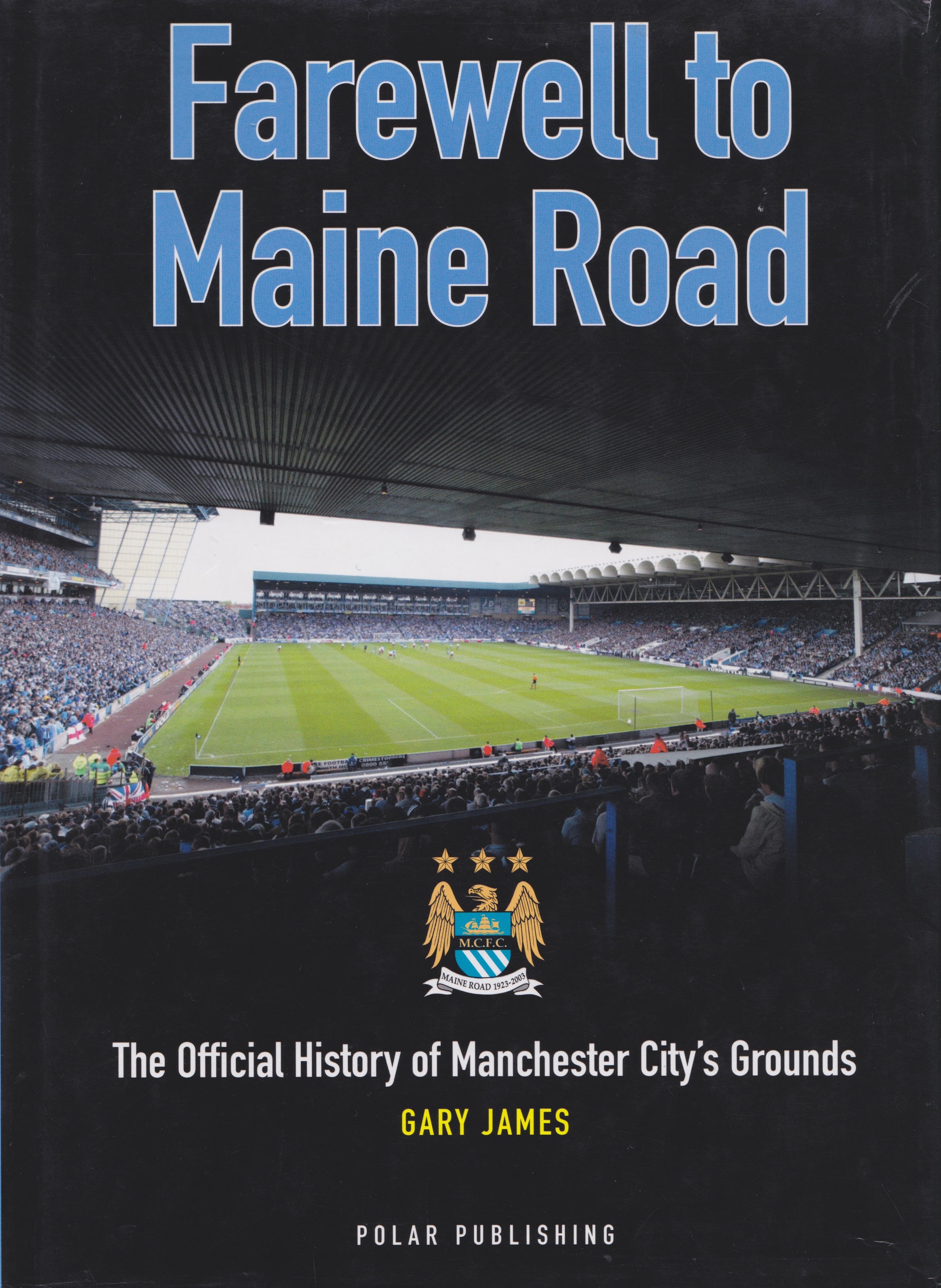
The book details the history of the stadium focussing on its development, and on the key games and events which have made Maine Road such a famous and important venue. Using first hand accounts, as told by supporters, players, administrators, and the media this book has been written and designed to the same high quality used in the highly acclaimed Manchester: The Greatest City. With special features on all the big City matches, international games, FA Cup semi-finals, League Cup finals, Rugby finals, concerts, religious meetings, and even on United’s use of the stadium during the forties and for European Cup games in the fifties. In addition both City’s former ground Hyde Road and future venue the City of Manchester Stadium have been covered to provide the complete history of City’s three homes. 

‘As with earlier works by Gary James & Polar Publishing this book is destined to be regarded as the definitive history of Maine Road & Manchester City’s other grounds.’

My publisher, Julian Baskcomb, commented: ‘Gary James is the appropriate man to write this work after a lifetime’s research on the club and its stadium. As a boy Gary was a regular in the Platt Lane Stand; then at the age of 16 he bought his own season ticket for the Kippax Stand and has been a season ticket holder ever since. He is also a respected journalist with articles for a wide range of publications including The Times and has recently managed the development of Manchester City’s new museum.’
Maine Road 100 – Day 3

The third of my posts counting down to the centenary of Maine Road’s opening game. Today I’d like to talk about exploring the back rooms and cupboards of the old ground.

During the 2002-03 season while I was researching and writing Farewell To Maine Road, the official history of City’s grounds, I was allowed to wander around the old place for my research. Club photographer Ed Garvey often accompanied me and we’d open doors, look under seats and generally try to see things that would not always be immediately obvious on match day.

One day we were helped on to the ‘new’ Kippax roof – a scary experience! Other teams we explored the nooks and crannies of the stands. Then there was the time when a paint store room door was open. We popped our heads in and found this gem. This old ‘ghost sign’ saying ‘Commit No Nuisance’ had originally been on public view. That wall was the internal side of the large external wall that surrounded the Kippax terracing. Fans would congregate on the side we were on and the painted notice would warn them to ‘commit no nuisance’.

A few of these used to be positioned around the ground but by 2002-03 we’d assumed they’d all gone. This one survived because, at some point the club built a series of storerooms and additional toilets against this wall, trapping this specific sign for ever.

I wish we could have dismantled it and taken it for good to be re-erected at the new stadium but sadly that wasn’t possible for various reasons. At least we managed to take a photo of it and ensure a permanent record of it was kept for ever.

2023 marks the 100th anniversary of Maine Road’s first game and to commemorate this landmark moment I will be posting a different image or feature on the old stadium each day for 100 days. Day 100 will be the actual centenary of that historic first game.

If you’d like to read more on the history of Maine Road, take a look at Farewell To Maine Road, which can be downloaded from this page:

Commit No Nuisance. Photo by Ed Garvey

Maine Road 100 – Day 2

The second of my articles counting down to the centenary of Maine Road’s opening game highlights some of the original aims of architect Charles Swain. This image shows the central staircase at the centre of the Main Stand top corridor. In its heyday this was a rather dramatic entry point to the seats. Daylight poured in through the large window and two smaller side windows. At 3pm on a typical match day the sun (okay, this is Manchester so maybe the light!) was directly behind the stand.

The top corridor of the Main Stand provided a more genteel atmosphere than other areas of the ground and when the stadium opened this corridor (below) included two tea rooms and plenty of space for City’s wealthier fans to mingle. The space may seem small by today’s standards but was significantly more impressive than most other venues of the era.

The original aims of architect Charles Swain are so clear. His background was in the design of theatres and cinemas and he wanted to give City attendees the same quality he gave theatre goers.

Maine Road’s Top Corridor. Photo by Ed Garvey

2023 marks the 100th anniversary of Maine Road’s first game and to commemorate this landmark moment I will be posting a different image or feature on the old stadium each day for the next 100 days. Day 100 will be the actual centenary of that historic first game.

If you’d like to read more on the history of Maine Road, take a look at Farewell To Maine Road, which can be downloaded from this page:

Maine Road’s Top Corridor staircase leading to the seats. Photo by Ed Garvey

You can find lots of material on Maine Road throughout this website. Some of it is only available to subscribers but there’s also a lot of free stuff on here. If you like what you see why not subscribe or if you just want to support the site then that’s great too.

If you enjoy all the free material on my website and would like to support my research and keep this website going (but don’t want to subscribe) then why not make a one-time donation (or buy me a coffee). All support for my research is valued and welcome. It allows me to keep some free material available for all. Thanks.

Choose an amount

£2.50
£5.00
£7.50

Or enter a custom amount

£

Your contribution is appreciated.

Donate

Spanish Trips

On this day (18 May) in 1952 Manchester City and Sevilla played each other for the first time.  I’m sure most City fans will remember the club’s UEFA Champions League meetings in  2015-16 and in 2022-23. Many will have attended those games but what about their first meeting in 1952? Is there anyone out there who attended that game? If there is please get in touch and tell me your story. Anyway, here for subscribers is a 1400 word article on City’s first trip to Spain…

Subscribe to get access – Annual

Read more of this content when you subscribe today. Subscribe here for £20 a year and get access to everything posted on the site since launching in December 2020. Subscribe below for £3 a month for access to everything since 1st October 2022. Whichever subscription you take out you will get access to everything for the full length of your subscription. Why not do £3 for a month to see what you think?

Subscribe to get access – Monthly

Read more of this content when you subscribe today. Subscribe above for £20 a year and get access to everything posted on the site since launching in December 2020. Subscribe here for £3 a month for access to everything since 1st October 2022. Whichever subscription you take out you will get access to everything for the full length of your subscription. Why not do £3 for a month to see what you think?

This Is How It Feels

Oh, what a night! Last night was one of the most incredible games of football I have seen. It’s certainly City’s best European performance at the Etihad and, from what I can remember, no European game at Maine Road has bettered it (older Blues may talk about the ECWC semi in 1970 – I was only a baby – but surely last night bettered that too?). I’d go further and say that in terms of overall performance, atmosphere and style, considering who City were playing, that that was the greatest City game of all time.

Pre match MCFC V Real Madrid waiting for the team

Obviously, we had the high drama of Agueroooooooo in 2012 but most of that game had been a frustrating mess of a match. Yesterday was brilliant, breathtaking and wonderful from the moment we got up yesterday through to leaving the stadium many, many minutes after the final whistle. The game was incredible – I don’t normally do superlatives so when I do I genuinely mean it.

There’s a certain amount of ‘completing the circle’ in City’s European journey – Alan Oakes captained City’s first European Cup game against Istanbul’s Fenerbahce in 1968, so the entire continental journey started there and this year the Blues have reached the final to be played in that city. It also felt appropriate that the man we’ve been singing about when we’ve sung our going to Istanbul chant these last few years was the man who scored twice. Ber-nar-do!

Players pre match MCFC V Real Madrid

I know we’ve been to a Champions League final before but this year it feels different. City have suffered at the hands of English clubs Liverpool, Spurs and Chelsea over the years in Europe and it never quite felt right. Playing continental royalty like Real Madrid and Bayern Munich and now Inter Milan takes it to a different level. This time it just feels right. Football can shock and it’s the unpredictability that makes it such a wonderful game, so nothing can be taken for granted at all.

Champions League at Porto

Many Blues have waited a long time for this. I was a toddler when City last won a major European trophy and I always dreamed of seeing City match or eclipse what Mercer’s men did in 1970. From Marsh’s debut to Pleat’s jig; ‘Look at his face’ to Tueart’s overhead; Beating AC Milan to Hutchison’s own goal; FA Youth Cup winners to Ball’s ‘hold the ball in the corner’; Bournemouth 3-3 to Morley’s Bradford goal; Reeves’ wonderful FAC goal to York away; 5-1 to 6-1; Bananas at Stoke to relegation at Stoke; FMC Final to Dickov’s rescue; Swales Out to Thaksin’s Albert Square singing; Kippax Last Stand to Etihad’s safe standing; Foe’s last goal at Maine Road to Aguerooooooooooo; Pearce’s good luck beanie to Bernardo’s cup; the invisible man to Emptyhad; James up front to Walker in nets… it’s been a long time!

The young Gary

As I said, I know we’ve been to a CL final before but, to paraphrase Barry Davies, ‘look at this season…. Just look at this season!’

Congratulations on reaching the final to Pep, the players, the management, the officials and, most importantly, those fans who have been to City’s lowest points and are now experiencing the highest. Rival fans will not agree unless they’ve experienced it themselves but multiple relegations are character building and make moments like this even more incredible than they already are.  You don’t need to experience a relegation to enjoy success, but if you’ve suffered relegations (I’ve been through five) and those dismal, dismal days then reaching points like these are heightened.    

Final moments MCFC V Real Madrid 2023

I’m sure there’ll be the usual negative voices about money. Show me a truly successful club who hasn’t spent! Not only that but City have beat Bayern and Real in this campaign (plus in the PL the usual collection of clubs that have been spending big for decades)… hardly poor relations. Hardly clubs with no history of success. These are European giants. Real Madrid have won more Champions League/European Cups than all English clubs put together. They are European aristocracy. Last night and this entire campaign so far has been a massive achievement for City, overcoming major obstacles and competing in a Premier League that in the last 12 years or so has seen more of the top clubs challenge and tighter points totals between 1st and 2nd than in previous decades.

It’s too early to celebrate and football can be cruel, but let’s ensure we all enjoy these moments. Malcolm Allison once said to me: ‘Celebrate every success as if it’s your first, because it could be your last.’ As a man who had been to the top and helped City win a European trophy I guess we should always remember his words. Hopefully, we’ll be celebrating on Sunday and then again next month.

Champions League Porto 2021
Champions League trophy at Porto 2021

Manchester’s Two Join The League

Today (17 May) in 1892 at the Queens Hotel in Sunderland the Football League accepted two aspiring Manchester clubs into its competitions. Newton Heath applied and were accepted into the First Division and Ardwick applied and were accepted into the new Second Division of the League. Ardwick did not apply to join the top flight and it is believed the two Manchester clubs had an agreement not to go up against each other as in other votes two clubs from the same city had occasionally taken votes from each other. Had they gone head to head it may well have been that either one or no Manchester club would have gained admittance to the League.

I’m Excited Tommy!

As a football historian I love days when history could be made and as a fan I get a bit giddy looking forward to what could be an absolutely incredible evening (and final few weeks of the season). Obviously, history is made every day, win or lose, but when you wake up on a day when there’s a possibility of reaching a major final; of facing the most successful European team of all time; and achieving something few other English teams have managed to achieve then you can’t help but get excited.

These last few days I’ve been writing and reading about a variety of footballing achievements in women’s football and the all-Manchester FA Cup final. I’ve written a couple of pieces for the FA Cup final programme and later today a prominent journalist who I respect will be interviewing me about the history of Manchester football but…. and it’s one I never thought I’d say… even the excitement of the first ever all-Manchester FA Cup final does not excite me as much as tonight’s Manchester City game when the Blues take on Real Madrid in the 2nd leg of the Champions League semi-final.

United fans will know how I feel. I well remember the days when they were reaching the latter stages of a major European competition and that took their focus, not the Manchester derby. My interest will change of course, after tonight (whatever happens) and this weekend when City could win the Premier League (I’m not counting any chickens here, I’m old enough to know how these things can go). I’ll be as excited as ever for an all-Manchester FA Cup final but for now, it’s Europe and Real Madrid that has given me a real buzz. I feel like the comedian Bobby Ball when he used to march on stage, pulling his braces saying to Tommy Cannon: ‘I’m excited, Tommy!’

Bobby Ball

Actually, Tommy’s killjoy responses remind me a bit of some of those critical journalists who always say ‘ah, but….’ ‘Ah, but nothing’ is my response at the moment. Let’s not forget that although the actual cash may seem small in today’s money, Nottingham Forest’s European successes came off the back of significant spending which, in today’s world, would probably have broken the Financial Fair Play rules. I’m not against what Forest achieved, far from it, and only mention it to highlight that truly successful clubs have usually seen massive investment, spending or significant debt established to fund major successes. Money has been the driving force in football since the 1800s.

Anyway, enough of that negativity. Let’s look forward to what could be a thrilling and memorable night in European competition. Football today is highly competitive, look at the Premier League where, in the last 3 seasons alone we’ve already had 2/3rds the winners they enjoyed during the entire decade of the 2000s. You can read more on how more competitive the top of the League actually is today than in past decades here:

Coming back to tonight…. It’s going to be a challenge; it’s going to be tough facing such a serial winner of this competition but with the wonderful coaching of Pep; the talented squad of stars; the backing of passionate fans; and a fair and appropriate level of refereeing it could be a truly great evening. I’m excited! I don’t care how they do it and a simple 1-0 win will be enough. ‘That’ll do for me, Tommy!’

You can read about the 2021 Champions League final here:

Managerial Change

On this day (16 May) in 1995 Brian Horton’s time as manager of Manchester City came to an end. It was a sad departure for a man who had brought entertaining, attack-minded football back to Maine Road.

Subscribers can read an interview I did with Brian a few years back here:

The 2000s: This Week 2004-05

Continuing the weekly series on Manchester City’s seasons from 1999-2000 through to 2008-09. Each week I’ll be publishing here the story of a different season of that remarkable ten-year period. Today we have a 2,200 word article on the 2004-05 season (below).

Subscribe to get access – Annual

This article is for subscribers to my website. It costs £20 a year to access everything on the site since creation in December 2020. That includes articles, history talks, videos, interviews & more. There’s also a monthly option below.

Subscribe to get access – Monthly

Monthly subscription costs £3 per month to access everything on the site since 1 October 2022 (cancel anytime). All subscribers access all new material until their subscription ends. Why not give it a try for a month?

Significant Praise is Due for Pep & City

Both the 2010s and the 2020s (already!) have been incredible decades for Manchester City with phenomenal success coming City’s way. Thanks to the astute management and coaching by Pep Guardiola and his staff, together with some extremely talented players, the Blues have been able to celebrate trophy successes on a regular basis. Pep deserves significant praise for what he has achieved and with the potential that City could win the Premier League next weekend it’s time to think back and consider what has been achieved in recent years.

Before I go on (I’ll explain more later) but it is important to spell out that while some in the media keep telling us that the League is less competitive now than ever before, it’s worth pausing to consider that in only the last 3 complete seasons we’ve had 2/3rds the number of title winners they had in the entire decade of the 2000s and half what they had in the 80s and 90s decades too! But, apparently, it’s less competitive now. Think about that as you read what follows please. Thanks.

These are incredibly special times and City fans are truly grateful. The Blues have a Champions League semi final 2nd leg on Wednesday; the prospect of a League title on Sunday and also have the FA Cup final to look forward to. If that’s anything like City’s first trip to the new Wembley in 2011 that will be a special day. No City fan I know are complacent or take anything for granted though and that’s important. As fans it’s important to act like the players and retain an hunger for further glory. City’s brilliant 1960s/70s coach Malcolm Allison once told me to ‘celebrate every success as if it’s your first’ because it’s important to retain the drive and determination.

It’s worth pausing at this stage in the season to reflect on the last decade or so to fully appreciate what the club has achieved. I’ve been doing a few decade comparisons recently, looking at dominant clubs each decade and the competitive nature of English football. I’ve taken each decade (starting with the first complete season, such as 1960-61 through to 1969-70), and looked at the successful teams of that era.

During season 2010-11 through to the end of 2019-20 City managed to win an incredible total of 11 major trophies – a phenomenal figure, especially when compared with the nearest rivals Chelsea who won seven major trophies during that time. No doubt critics will say ‘ah, but there’s less competition’ but that’s absolutely not true, certainly not in terms of our major domestic competitions. It keeps being drummed into us that there’s less competition but that’s really downplaying the achievements of those teams that have challenged.

Between 2010-11 and 2019-20 there were five different Premier League winners. That’s more top flight champions than in each of the previous three decades and the same as in the period 1970-71 to 1979-80 when many people talk of a relatively open title race. How many times do we hear people say ‘back in the 70s and 80s anyone could win the title.’ Well, that may have appeared true at the time but the truth is that only a small group of clubs actually did win it. Even in the 1930s there were only four different champions (Arsenal, Everton, Sunderland & City), although that was only nine complete seasons due to war.

The total number of different champions in each decade since the start of the 1960s is:

1960-61 to 1969-70: 7 (Spurs, Ipswich, Everton, Liverpool, United, City & Leeds)

1970-71 to 1979-80: 5 (Arsenal, Derby, Liverpool, Leeds & Nottm Forest)

1980-81 to 1989-90: 4 (Aston Villa, Liverpool, Everton & Arsenal)

1990-91 to 1999-00: 4 (Arsenal, Leeds, United & Blackburn)

2000-01 to 2009-10: 3 (United, Arsenal & Chelsea)

2010-11 to 2019-20: 5 (United, City, Chelsea, Leicester & Liverpool))

Most fans who were around in the 1990s and 2000s will remember that in both those decades the League seemed totally out of the grasp of most of clubs and that it was only because of the investment in Blackburn (1990s) and Chelsea (2000s) that the duopoly of Arsenal and United was broken. Similarly, the investment in City from 2008 allowed the Blues to challenge again and, to be frank, the same is true for Leicester though clearly on a smaller scale (remember Leicester’s own Financial Fair Play issues – Worth thinking about their example and those of Blackburn, City & Chelsea, plus of course United decades ago, Huddersfield in the 20s and many other clubs which prove that investment is often needed to help increase competition?).

Investing in squads obviously increases the chance of trophy success but it takes an awful lot more than simply buying players to generate major success and to sustain it for a decade or more. As a stark reminder those fans old enough will remember the late 1970s and early 80s when the former West Ham players Malcolm Allison and then John Bond had spells in charge at Maine Road. Both flamboyant characters were hugely talented coaches and they spent a lot of money during their time managing the Blues. But Allison’s side was described as the most expensive team ever assembled when it was embarrassed at Fourth Division Halifax while Bond’s side was unable to mount a serious challenge for the title (though he did manage to get to the FA Cup final with mostly Allison’s team in 1981).

There are plenty of examples, including this season, of teams that have spent an awful lot of money but have failed to achieve the success expected. Money helps but it doesn’t guarantee success.

Talented coaches challenge traditional thinking. They bring in fresh ideas and force rivals to adapt and re-evaluate their own way of doing things. They lift ordinary players into trophy winners and they take supremely talented players to the next level, making them all-time legends who can compete at the very highest levels of European and world football.

Pep Guardiola has achieved all of that and is absolutely the most talented coach working in English football today. He has brought his club sustained success while identifying and developing players to replace established City legends. Throughout his time at City he has kept the club focused and hungry for glory in a way that so few managers ever achieve. Alex Ferguson managed it at United but apart from him and, to a lesser extent, Arsene Wenger at Arsenal no manager has managed to achieve and sustain this at any English club for decades. Let’s not forget either that United borrowed heavily in the late 1980s to give Ferguson the funds to create the most expensive British squad ever assembled at the time. It took a few years and caused much friction with shareholders as the club borrowed more and more but ultimately it all paid off and the success that followed strengthened United’s position significantly – something that is happening at City, though City didn’t fund their success on borrowing, it was from investment (I still find it hard to accept that in any other business investment is good but in football it’s the enemy while borrowing & debt is something we should celebrate!).

In terms of finance, let’s pause to think of turnover and profitability. These have increased significantly for City since the investment in the club in 2008. Sponsorships have increased, attendances have increased, kit deals have increased etc. Some say that there’s something ‘dodgy’ about that. I don’t know the financial ins and outs of any club but I do know that when Alex Ferguson became manager of United there were United did not have the same level of sponsorship they had 15 years later. At United those first 15 years of Ferguson’s reign saw sponsorships increase, attendances increase, kit deals increase etc. exactly like the last 15 years at City. Trophy success, global TV audiences, capacity increases all lead to growth. A forensic financial expert would need to research this but it’s clear that these things happen when a team is successful. Each year we are told of the financial ‘bonus’ a lower tier club gets when it plays in the later stages of a major cup competition, or reaches the play offs. It’s not rocket science and those owners that invest in their clubs do so because they see a return or an increase in the value of their club…. Anyway, back to the competitive nature of football…

Looking at domestic cup competitions the 2010s also saw more different winners than the previous decade. During the seasons 2010-11 to 2019-20 there were eight clubs (Birmingham, Liverpool, Swansea, City, Chelsea, United, Wigan & Arsenal) who found success in the domestic cups as opposed to seven between 2000-01 and 2009-10 (Liverpool, Middlesbrough, Chelsea, United, Spurs, Arsenal & Portsmouth). Okay, so it’s only one extra club but it means that seven different clubs won major domestic trophies between 2001-09 and nine between 2010-11 to 2019-20 in total.

Whichever way you look at it the 2010s demonstrated a greater variety of English clubs finding major trophy success than the previous decade. We’re often being told that football is less competitive now than it was before but in terms of the game’s top domestic honours that’s not true. Obviously, there are disparities within football – most City fans experienced the negatives of that in the 1980s and 1990s – and those of us in Greater Manchester know only too well the plight of our neighbours Oldham, Rochdale and Bury. However, in terms of challenging for titles and domestic honours at the top of the pyramid the statistics prove that competition has been there throughout City’s modern era success. Every trophy has been a challenge and every success has been achieved through dedication and determination.

City fans have a lot to be thankful for and this last decade or so has been remarkable thanks to the endeavours of many, many people. Here’s a reminder of City’s major trophies during the last decade or so under each manager:

Roberto Mancini: Premier League (2012) & FA Cup (2011)

Manuel Pellegrini: Premier League (2014) & League Cup (2014 & 2016)

Pep Guardiola: Premier League (2018, 2019, 2021 & 2022), FA Cup (2019) & League Cup (2018, 2019, 2020 & 2021)

With a FA Cup final coming up, a mouth-watering Champions semi-final v Real Madrid and the rest of the League campaign to play, there’s a strong possibility the trophy honours can be added to soon.