100 Years Ago Today: Highest Christmas Day Score

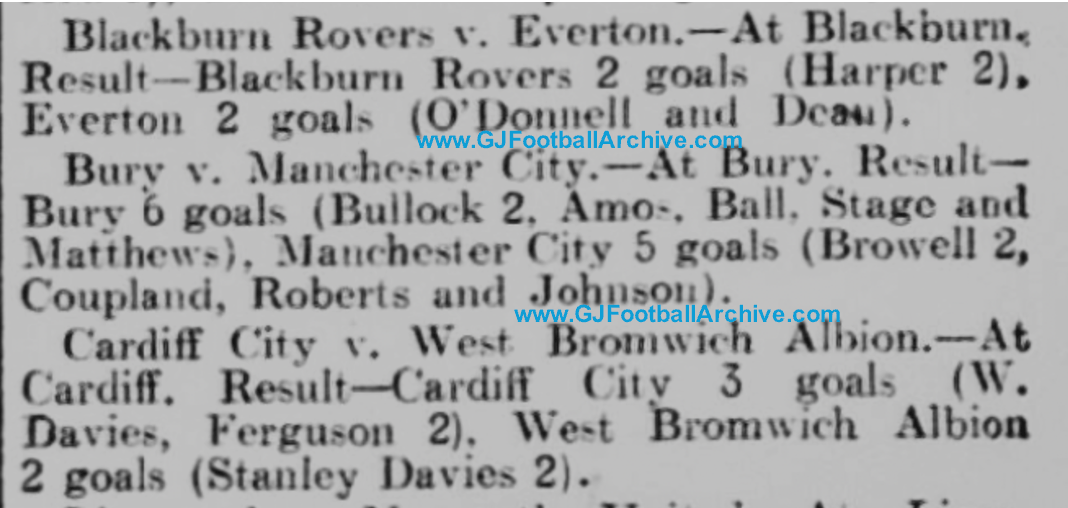
On Christmas Day 1925 Bury FC defeated Manchester City 6-5 in an extraordinary top flight game. This was the highest scoring Christmas Day game Manchester’s Blues ever played in. As this was over the Christmas period detailed match reports are rare but this cutting gives a brief idea of the scorers. On Boxing Day the two teams met again with Bury beating the Blues 2-0 at Maine Road before 50,168 (the Gigg Lane attendance had been 23,621)

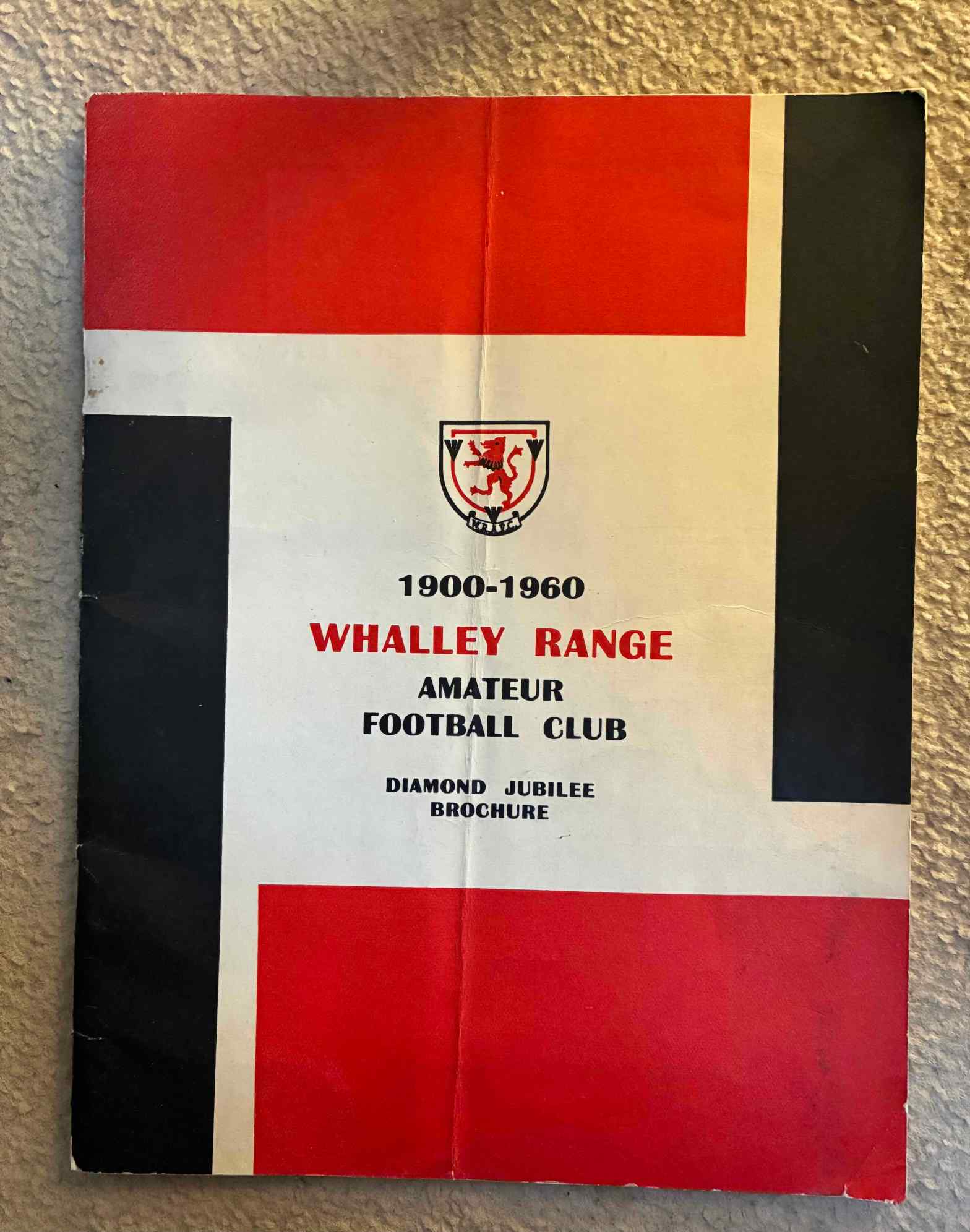
From My Collection… Whalley Range AFC

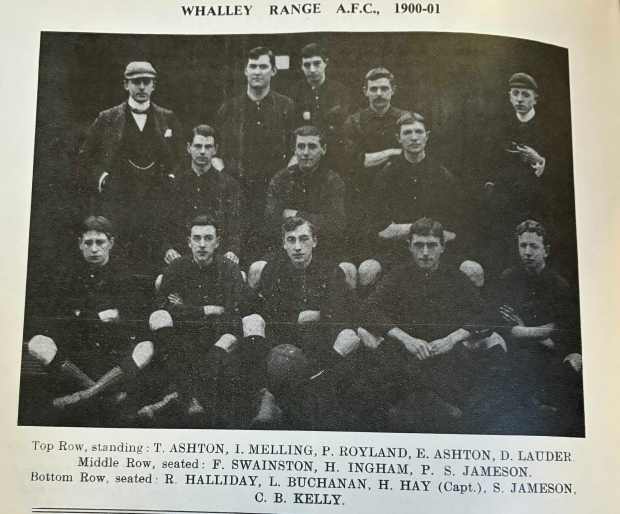
During my tidy-up of my writing space I’ve rediscovered items I’ve used in my research over the years and thought I’d post some on here. Today here are a couple of images taken of parts of the Whalley Range AFC Diamond Jubilee Booklet. First a team photo from 1900-01. Anybody related to any of these players?

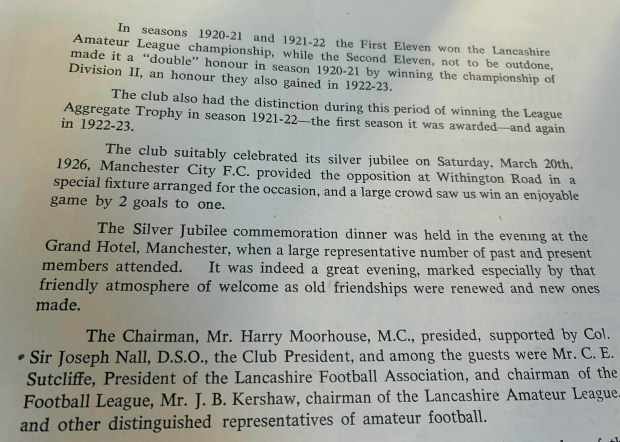
Next some text mentioning a game between Whalley Range and Manchester City:

I’ve checked the usually comprehensive records compiled by statistician Ray Goble (given to me shortly before his death) and there’s no mention of this game. I’ve also searched several newspapers looking for a report of it and haven’t yet found one (no doubt there’d be a report in a local newspaper in the Whalley Range area), proving that there are still many unknowns in City’s history.

If you enjoy all the free material on my website and would like to support my research and keep this website going (but don’t want to subscribe) then why not make a one-time donation (or buy me a coffee). All support for my research is valued and welcome. It allows me to keep some free material available for all. Thanks.

Choose an amount

£2.50
£5.00
£7.50

Or enter a custom amount

£

Your contribution is appreciated.

Donate

Huddersfield Town v Manchester City: Earliest Film

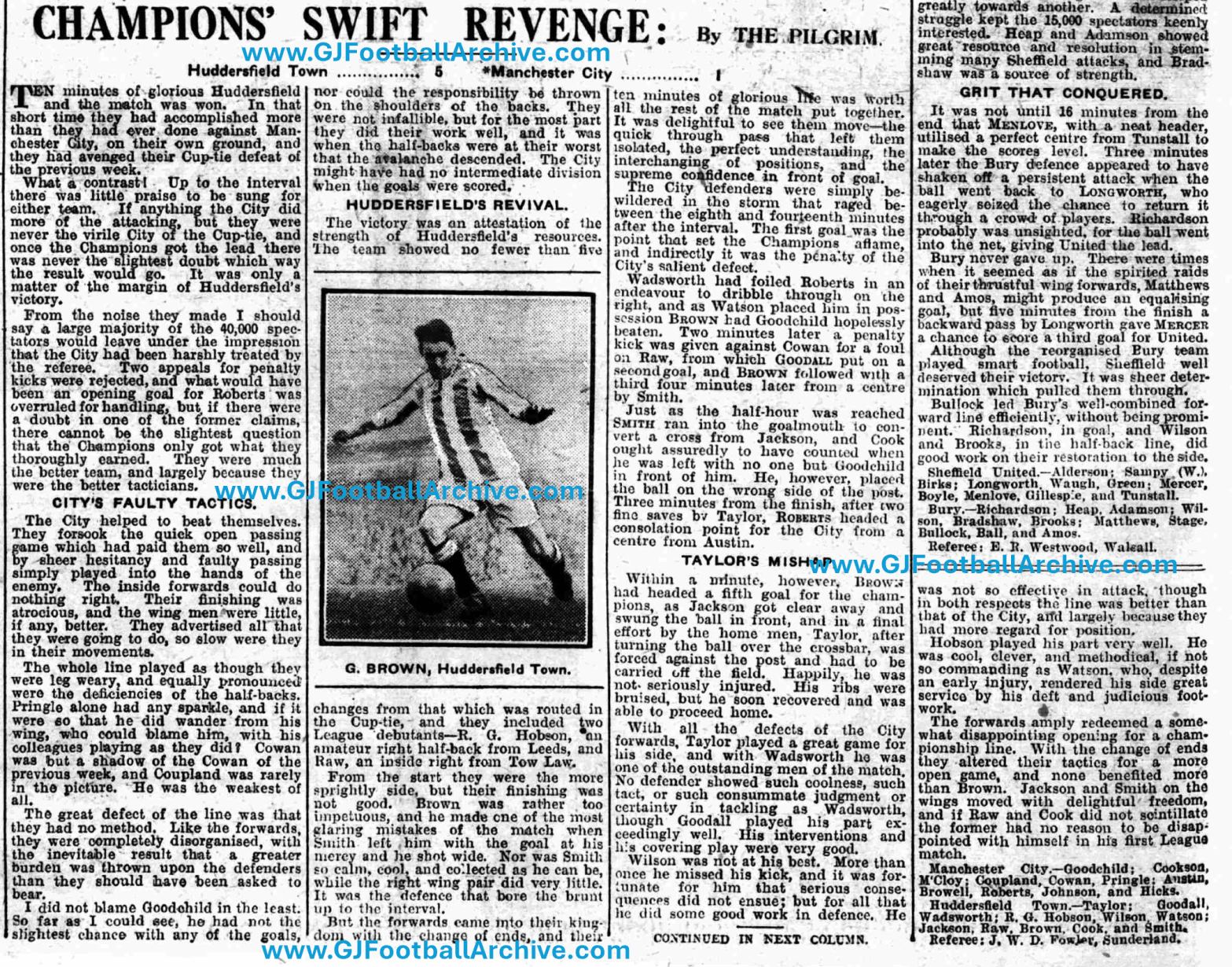
It’s Huddersfield v City tonight in the League Cup. These two teams have a long history of playing each other with some dramatic games and record breakers too. Here’s the earliest known film of them. It’s from a FA Cup tie almost 100 years ago and saw City defeat League Champions Huddersfield Town 4-0 in front of 74,799. Enjoy:

https://www.britishpathe.com/asset/51830/

You can see other games between the clubs on film here:

The 1920s: Manchester City 4 Everton 4

100 years ago today (19 September) Manchester City went a goal behind after three minutes to Everton (scored by Goodison legend William Ralph ‘Dixie’ Dean) and were losing 3-0 within 30 minutes. But this day would see a remarkable City fightback – down to ten men for most of the match too!

The fightback started when Tommy Browell made it 3-1 but Everton’s Kennedy netted again for the visitors. City’s Billy Austin went off injured (according to some reports) and, with no subs allowed, City went off for half-time 4-1 down on a miserably wet Manchester day. Some reports also suggest an Everton player went off during the second half and that City’s Sam Cookson was seriously injured and should have gone off but he stayed on the field, presumably to keep 10 City men there.

The second half began with City determined to challenge and Tommy Browell scored his and the Blues’ second after only two minutes of the second half. With twenty minutes to go the same man scored a header and then five minutes from time he scored the equaliser. The game ended 4-4.

If you’d like to know more about this season for Manchester City why not read the following 4,900 word subscriber article on the 1925-26 season. If you subscribe (see below) I hope you enjoy it. If you are not currently a subscriber then why not try it for a month (£3 per month or sign up for a year at a discounted £20 per year)?

Here’s the article:

Subscribe to get access

Read more of this content when you subscribe today. It costs £3 a month (cancel anytime) or sign up for a year at £20 per year. Subscribers have access to the 1000s of articles, features, interviews etc. posted so far and all those posted during your subscription.

The 1920s: First Maine Road Derby

100 years ago today (12 September) Manchester City and Manchester United met in the first Manchester Derby to be played at Maine Road (United had been in the second tier for the first couple of seasons of Maine Road’s existence). Here’s the background, report and stats from that game (this is all from the book I wrote with Steve Cawley called The Pride of Manchester – the history of the Manchester Derby). Enjoy!

MANCHESTER CITY 1 (Cowan)

MANCHESTER UNITED 1 (Rennox)

Manchester City: Jim MITCHELL, Sam COOKSON, Philip McCLOY, Sammy SHARP, Sam COWAN, Charlie PRINGLE, Billy AUSTIN, John (known as Jack) WARNER, Frank ROBERTS, Tom JOHNSON, George HICKS. Manager: David Ashworth

Manchester United: Alf STEWARD, Charlie MOORE, Jack SILCOCK, Ray BENNION, Frank BARSON, Frank MANN, Joe SPENCE, Thomas SMITH, Jimmy HANSON, Clatworthy ’Clat’ RENNOX, Frank MCPHERSON. Manager: John Chapman

BACKGROUND

United had spent three seasons in the Second Division and returned as runners-up to Leicester City. Some of the old faithfuls remained, notably Silcock and Spence, but inevitably team strengthening and transitions had occurred, in particular, with the acquisition of club captain Frank Barson. Signed in 1922 for the huge sum of £5,000, United promised Barson a pub if they were promoted within three years – and he just made it! A former blacksmith, Barson was an attacking centre-half of international standard but also carried a notorious reputation as a traditional ‘hard man’ who was quick to exact retribution if a team-mate was fouled. Another useful signing was Frank McPherson, a man with reputedly the hardest shot in football. The Reds made a quite promising start to the new campaign and had looked impressive in a 3-0 home victory against Aston Villa.

City’s playing squad had changed considerably since the last derby, while manager Ernest Mangnall who had joined the Blues from United in September 1912 and played such a major role in the development of both clubs had left City in May 1924, and was replaced by David Ashworth. Meredith had also finally retired in 1924, bowing out in an FA Cup semi-final against Newcastle, although he retained a connection through his son-in-law Charlie Pringle who now played for the Blues. A number of fresh signings had been made; Frank Roberts for £3,400, Billy Austin for£2,000 and Philip McCloy for £3,000. City also had great hopes that Sam Cowan, a centre-half signed from Doncaster Rovers in December 1924 would develop into a quality player. City had moved to their magnificent purpose-built stadium at Maine Road in August 1923 and had established a provincial record crowd of 76,166 in the stadium’s first season. Now, with the derby imminent, its capacity was viewed at a possible 85,000!

BEFORE THE GAME

            P          W         D          L           F          A          Pts

UNITED 4          1          1          2          5          4          3

CITY      3          1          0          2          3          4          2

MATCH VERDICT

The derby rivalry resumed in front of what was, at the time, City’s record League gate. City were deemed the better side in what was a rousing contest. Local born ‘keeper Alf Steward had an outstanding game keeping the lively City forwards at bay with a string of fine saves, before ’Clat’ Rennox then went down to the other end and gave the Reds the lead with a smart shot.

Sam Cowan capped a wonderful display by scoring the equaliser with a powerful far post header from a left wing corner (see photo). It was a fitting reward for Cowan, who besides being the man of the match, looked to be a player the Blues could build a future around.

“The Athletic News” reported on the resumption of the derby match after a four year break: ”The first meeting of the Manchester rivals after a lapse of four years brought the City club the largest League gate they have ever enjoyed. It was not so great as that recorded at the Cup-tie with Cardiff City in March 1924, when 76,166 spectators paid for admission, but over 62,000 people passed through the turnstiles, and, with ticket-holders, the attendance was officially returned at nearly 66,000. It was a magnificent spectacle and a game fought in a splendid spirit. That the City did not defeat their rivals was due primarily to the brilliant goal-keeping of Steward, a Manchester-born player, to whose rich promise the Athletic News referred last Monday.

It was fitting that on the only occasion he was beaten the success fell to Samuel Cowan, for these players were the outstanding figures in the contest. Cowan’s headwork was a feature of the match. More, he tackled with grim determination and effectiveness, and distributed the ball with discrimination and accuracy.

Cowan promises to be all that the City club expected when they brought him from Doncaster Rovers last season. He has all the physical requirements for a centre half-back, and, judging by his display in this match, he has the temperament for the big event. His equalising goal was a masterpiece in headwork and judgement”.

If you’d like to know more about this season for Manchester City why not read the following 4,900 word subscriber article on the 1925-26 season. If you subscribe (see below) I hope you enjoy it. If you are not currently a subscriber then why not try it for a month (£3 per month or sign up for a year at a discounted £20 per year)?

Here’s the article:

Subscribe to get access

Read more of this content when you subscribe today. It costs £3 a month (cancel anytime) or sign up for a year at £20 per year. Subscribers have access to the 1000s of articles, features, interviews etc. posted so far and all those posted during your subscription.
The 1920s: Peter Hodge

Continuing the series on Manchester City in the 1920s here’s a brief post on 1920s City manager Peter Hodge. Enjoy!

Peter Hodge

City Manager between: 26 April 1926 – 12 March 1932

Previously:  Former Leicester City manager.

Took Over From: Committee led by vice-chairman Albert Alexander snr.

Inherited: Sam Cowan, Tommy Johnson & Frank Roberts.

Players Brought In: Eric Brook & Fred Tilson.

Youngster Gave Debut To: Matt Busby

Players He Let Go/Sold:  Tommy Johnson in 1930, leading to widespread demonstrations and a boycott (crowds dropped by around 8,000 following the move). 

First Game: City 2 Leeds Utd 0 (City scorers Austin & Johnson), 27 April 1926, Division One, attendance 43,475 

Lows: Relegation five days and 2 games after taking over in 1926.

Last Game: Arsenal 1 City 0, 12 March 1932, FA Cup semi final at Villa Park,  attendance 50,337.  

Unusual Start:  It was agreed Hodge would become City manager in 1926 but would only take up the post after his current club Leicester ended their own season.  Their last game was on 24th April 1926 and he became City’s manager with 2 League games left the following Monday.  The Blues looked safe from relegation, but defeat at Newcastle saw City demoted (a point would have kept them up).

Similar End:  Hodge’s City career ended with defeat by a solitary goal in the dying seconds of the FA Cup semi-final with Arsenal in 1932.  The manager had already agreed to return to his previous club Leicester once City’s FA Cup campaign ended.

Season By Season Record:

League

1925-26 P 2 W 1      D 0      L 1      GF 4               GA 4   Pts 2

1926-27 P 42 W 22 D 10    L 10    GF 108          GA 61 Pts 54

1927-28 P 42 W 25 D 9      L 8      GF 100           GA 59 Pts 59

1928-29 P 42 W 18 D 9      L 15    GF 95             GA 86 Pts 45

1929-30 P 42 W 19 D 9      L 14    GF 91             GA 81 Pts 47

1930-31 P 42 W 18 D 10    L 14    GF 75             GA 70 Pts 46

1931-32 P 32 W 11 D 10    L 11    GF 70             GA 59 Pts 32

2 points for a win

FA Cup

1925-26 City competed in the FA Cup Final 2 days before he took over.

1926-27 P 1 W 0      D 0      L 1      GF 1   GA 4   Reached 3rd round

1927-28 P 3 W 2      D 0      L 1      GF 3   GA 2   Reached 5th round

1928-29 P 1 W 0      D 0      L 1      GF 1   GA 3   Reached 3rd round

1929-30 P 5 W 2      D 2      L 1      GF 18 GA 7   Reached 5th round

1930-31 P 1 W 0      D 0      L 1      GF 0   GA 3   Reached 3rd round

1931-32 P 5 W 4      D 0      L 1      GF 16 GA 7   Reached semi-final

TOTAL (League & cup fixtures)

P260   W122  D59     L79     GF  582         GA 446

Trophies Won: Second Division title 1927-28, the season after missing out on promotion by the tightest margin in the history of the game.

Followed By: City secretary Wilf Wild who went on to become a truly successful manager.

If you enjoy all the free material on my website and would like to support my research and keep this website going (but don’t want to subscribe) then why not make a one-time donation (or buy me a coffee). All support for my research is valued and welcome. It allows me to keep some free material available for all. Thanks.

Choose an amount

£2.50
£5.00
£7.50

Or enter a custom amount

£

Your contribution is appreciated.

Donate

Subscribe to get access – Annual

Read more of this content when you subscribe today. It costs £20 a year to subscribe (it works out £1.67 a month) or £3 if you’d like to sign up a month at a time. Annual subscribers get full access for as long as you subscribe (you can always try it for a month). It’s worth bearing in mind that the 2010 Manchester A Football History cost £24.95 and all subscribers will be able to access all of that for as long as they are a subscriber (plus all the other stuff of course).

Subscribe to get access – Monthly

It costs £3 a month to subscribe a month at a time. Why not give it a try! Monthly subscribers get access to everything posted since 1 October 2022 for as long as you subscribe.

The 1920s: Tommy Johnson

Continuing the series on Manchester City in the 1920s here’s a free to read 1100 word article on 1920s City (and 1930s Everton) star Tommy Johnson. Enjoy!

Tommy Johnson was a huge favourite with City supporters throughout his eleven year career with the Blues.  Their love affair with the Dalton-in-Furness born goalscorer was borne out of a tremendous appreciation of his contribution to the Blue cause.  They also recognised that despite the fame and adulation Johnson was from the same background as they were.  For much of his City life he lived in the Gorton area and was often seen in the pubs and clubs talking and mixing with supporters.

In an interview I did with him two decades ago, Johnson’s son Alan remembered his father being a familiar presence in Gorton: “My father was proud of being an ordinary bloke.  The players didn’t get paid large wages and life at times was tough, and I think most of his neighbours and friends understood that he really wasn’t any different from them.  After he’d left City and joined Everton he would sometimes bring Dixie Dean to Gorton and the two of them would sit in the Plough or one of the other pubs chatting away.  In fact Dixie became as well known in the pubs of Gorton as my Dad was!”

Around 1918 City full back Eli Fletcher spotted the promise of Dalton-In-Furness born Johnson when he saw him play.  He contacted the Blues and urged them to sign the exciting 17 year old.  Johnson joined the Blues in February 1919, and he immediately made an impression during that final season of wartime football.

Once the full League programme resumed in August 1919 Johnson had to wait for his opportunity to impress in the First Division.  His chance did not come until the following February, but when it did he scored both goals in City’s 2-0 defeat of Middlesbrough.  It wasn’t however until the 1922-3 season that the striker could be regarded as a regular.  That season he played 35 of City’s 42 League games and scored on 14 occasions.

In 1926 Johnson appeared in the FA Cup final and a few weeks later he made his England debut at inside left against Belgium in Antwerp.  He scored as England won 5-3.  A journalist of the period described him as: “an inside forward with a left foot shot few players have equalled and a penchant for the telling cross-field pass.”  

During 1926-7 Johnson broke the twenty goals a season barrier when he scored 25 in 38 League appearances, including a hat-trick in the 8-0 victory over Bradford on the final day of the season.  The following season he became recognised across the country as a major striker as he managed to score a Club record 38 goals in 39 League appearances.  Five of those goals came in one incredible match with Everton at Goodison when City defeated the home side 6-2.

Tommy Johnson’s record breaking 38th League goal of the season as drawn for the Liverpool Echo.

The following season was to be his last at Maine Road despite his role as the fans’ favourite.  There were plenty of magical moments from Johnson.  The Manchester derby of October 1929 saw one of Johnson’s most memorable performances.  According to the renowned Manchester journalist Ivan Sharpe writing in the Athletic News:  “Johnson should have been a fairly happy man.  He has the credit of making the match come to life.  It was going to pieces early in the second half when Moore thoughtlessly pulled up while appealing for off-side and Johnson – with his right foot – scored and set the game alight.”

The game with United ended in a 3-1 City victory but it also saw one of the more controversial moments of the season when the referee blew for full-time a good two minutes before time was actually up.  This was particularly galling for Johnson as he netted the ball after an amazing run just at the moment the whistle went.  Ivan Sharpe gave his entertaining thoughts on the incident in his match report:  “When Thomas CF Johnson was a boy he dreamed of playing for a First Division team, and like every youngster, of playing at centre-forward.

“On his night of nights he was playing against his own club’s deadly rivals, and over 100,000 eyes were riveted upon him as he darted through the defence – ‘Go on Johnson!’ – dodged this man and that man, drew out the goalkeeper, dribbled the ball round the other side’s last hope and with the roars of the delighted populace acclaiming his performance, rolled the ball through the untenanted goal.  I have not asked him, but I know it’s true, because every schoolboy gets those midnight, alone-I-did-it goals.

“But isn’t it a hard world?  The once-in-a-lifetime goal dribbled around the goalkeeper on the aforesaid deadly rivals’ very own ground all came true in this battle of Manchester, and the referee said the time had expired a moment before the ball had crossed the line!  And that’s not all.  Time had not expired.  My watch and every watch around me – plus the carefully compiled record I invariably keep of the minutes of the passing show – definitely established that the referee was two and a half minutes too soon.  And this is making no allowance whatever for lost time.

“How curious that the referee got in a muddle with his minutes on the day the clock goes back.  He provided the last ‘rows’ of summer!”

The following March, Johnson was transferred to Everton for £6,000.  The supporters were furious.  Petitions were written.  Demonstrations were made, and even a boycott of the Blues was threatened, but there was nothing the fans could do to actually stop the transfer.  City’s average attendance did drop by several thousand however.    

At Everton Johnson won the Second Division Championship and the FA Cup – beating City 3-0 in the final.  A spell at Liverpool followed before he became player-manager of Darwen.

In the late 1940s he became licensee of a pub in Gorton and attended Maine Road regularly.  He purchased his own season ticket for several years.  According to his son Alan, Tommy Johnson was a dedicated City fan:  “At Everton he had a lot of success – he won more trophies than he had in Manchester – but City remained his club.  In fact, after he’d left City he kept coming back to Maine Road and sometimes paid to stand on the Kippax side of the ground.  He was often recognised and was usually congratulated simply for being ‘Tosh’ Johnson!”

Johnson passed away in 1973 at the age of 71.  Four years later Manchester City Council named part of a new Moss Side housing development ‘Tommy Johnson Walk’ in his honour close to Maine Road.

If you enjoy all the free material on my website and would like to support my research and keep this website going (but don’t want to subscribe) then why not make a one-time donation (or buy me a coffee). All support for my research is valued and welcome. It allows me to keep some free material available for all. Thanks.

Choose an amount

£2.50
£5.00
£7.50

Or enter a custom amount

£

Your contribution is appreciated.

Donate

Subscribe to get access – Annual

Read more of this content when you subscribe today. It costs £20 a year to subscribe (it works out £1.67 a month) or £3 if you’d like to sign up a month at a time. Annual subscribers get full access for as long as you subscribe (you can always try it for a month). It’s worth bearing in mind that the 2010 Manchester A Football History cost £24.95 and all subscribers will be able to access all of that for as long as they are a subscriber (plus all the other stuff of course).

Subscribe to get access – Monthly

It costs £3 a month to subscribe a month at a time. Why not give it a try! Monthly subscribers get access to everything posted since 1 October 2022 for as long as you subscribe.

The 1920s: Wembley

The new series on Manchester City in the 1920s continues today with a 4,900 word subscriber article on the 1925-26 season. If you subscribe (see below) I hope you enjoy it. If you are not currently a subscriber then why not try it for a month (£3 per month or sign up for a year at a discounted £20 per year)?

Here’s the article:

Subscribe to get access

Read more of this content when you subscribe today. It costs £3 a month (cancel anytime) or sign up for a year at £20 per year. Subscribers have access to the 1000s of articles, features, interviews etc. posted so far and all those posted during your subscription.
Starting Tomorrow

Starting tomorrow a new series of articles and features on Manchester City in the 1920s. Some of these will be free to read by everyone while others will only be available to those who subscribe to the site on a monthly or annual basis. The 1920s was an important decade for Manchester’s Blues with title challenges, FA Cup finals and stadium moves.

If you’d like to know more about subscribing then see:

Albert Alexander (Junior): MCFC Chairman

Back in the late 1960s there was a popular Manchester City chairman whose family had been involved with the club since the very beginning of the club. That was Albert Alexander. Here’s a profile I wrote in 2012 on him. It’s about 900 words long and is free to read. Enjoy!

Albert Alexander was the second generation of the Alexander family to play a prominent role in the development and history of Manchester City.  His father, also Albert, had been involved with the Club from the 1890s and had held various positions including vice-chairman, and even manager for a spell in 1925-26.

Like his father, the younger Albert dedicated his life to the Blues.  Inevitably, he spent most of his boyhood watching the Club develop and, as he grew, he became more involved with behind the scenes work at the Club’s first home Hyde Road.  He was a member of the Ground Committee which performed crucial activities such as stewarding and ground maintenance.

Alexander also managed the Club’s A team and provided support in whatever way necessary to ensure the Blues succeeded.  He was more than happy to work through the ranks and take on any duty necessary.  His son Eric, who was Chairman in the early 1970s, remembers that his father had suffered during the First World War but that didn’t stop him from putting his energies into the Blues:  “He was a very good footballer and cricketer but he was gassed in the Great War and had to give it up.  It affected him throughout his life, although it’s fair to say he recovered enough to fulfil a happy normal life apart from playing of course. 

“He took up golf, but his love for football was such that he started the ‘A’ team at City.  He started it in 1921 and ran it through until 1963.  He enjoyed working with the youngsters and developing them.  He gained an awful lot of satisfaction from that, particularly when players like Matt Busby developed their skills and style as part of the ‘A’ team.”

Ultimately, after many years of loyal service Alexander became a City director.  This came after the Blues became aware that Manchester United were hoping he would join their board.  It is highly likely Alexander would have turned the Reds down, and it was appropriate that he became a director at Maine Road.  It was an honour he deserved for years of dedication to the City cause.

While director he felt the passion all fans feel for the Blues and he also felt the pain and worries during the Club’s struggles in the early Sixties.  He wanted better and, in 1965 as fans demonstrated following City’s lowest attended League game, he came out to face them and talk with them about his hopes and ambitions for the Club.  He apologised for City’s appalling decline.  It says much about his courage and the respect fans had for him that they dispersed.  It is doubtful whether any other director would have been respected in this manner at such a low point.

Understandably, Alexander who was City’s Chairman by this point wanted to see his side successful and later that summer he appointed Joe Mercer as manager.  It was a brave decision as Mercer had been out of work for a year and had suffered a stroke at Aston Villa.  Other names, such as former City hero Peter Doherty and Liverpool manager Bill Shankly, had been expected to be appointed by the media, so this move could easily have been seen negatively.

Alexander guided City through the successful years of the Mercer-Allison period and was probably the first Chairman to be hugely popular with fans.  Everyone seemed to love ‘Little Albert’ as Mercer dubbed him.

Many of City’s achievements during these years were dedicated to Alexander by Mercer, while journalist Bill Fryer commented in 1970:  “He is highly revered in the game and by the public, and I have no doubt good deals have been done for City out of Albert’s friendships because in reality the whole of football is a ‘club’.”

Sadly, despite the Chairman’s popularity, his final years saw him suffer at the hands of the 1970 takeover battle.  Alexander found out about the takeover when he received a knock on his door at breakfast one day.  It was a complete shock to him.

The takeover destroyed much that was good about City at this point, including the Mercer-Allison partnership.  However, it is rarely mentioned how the takeover affected Alexander, the man who had guided City with distinction through some dark days when no one else wanted to know.  He had taken the Club from the lowest point it had experienced since joining the League, to a position of strength with trophies galore.  Those bidding for control wanted the glory, Alexander’s motives were somewhat different – like all true fans he wanted City no matter what. 

Alexander stood down as Chairman and was made Life President – an honour first given to Lawrence Furniss seven decades earlier, proving the significance of this recognition.  Unfortunately, Alexander’s health was deteriorating by this point and he passed away soon after.

Manchester City owes a great deal to the dedication of Albert Alexander and the other members of his family.  The Alexanders helped guide the Blues from the 1890s through to the reign of Peter Swales, and in some ways on via the continuing involvement of Eric Alexander (still a regular attendee until his death in 2019).  Their contribution should never be forgotten.

If you enjoy all the free material on my website and would like to support my research and keep this website going (but don’t want to subscribe) then why not make a one-time donation (or buy me a coffee). All support for my research is valued and welcome. It allows me to keep some free material available for all. Thanks.

Choose an amount

£2.50
£5.00
£7.50

Or enter a custom amount

£

Your contribution is appreciated.

Donate

Subscribe to get access – Annual

Read more of this content when you subscribe today. It costs £20 a year to subscribe (it works out £1.67 a month) or £3 if you’d like to sign up a month at a time. Annual subscribers get full access for as long as you subscribe (you can always try it for a month). It’s worth bearing in mind that the 2010 Manchester A Football History cost £24.95 and all subscribers will be able to access all of that for as long as they are a subscriber (plus all the other stuff of course).

Subscribe to get access – Monthly

It costs £3 a month to subscribe a month at a time. Why not give it a try! Monthly subscribers get access to everything posted since 1 October 2022 for as long as you subscribe.