The 1920s: The King’s Blues

A new series on Manchester City in the 1920s begins today with a 2,350 word subscriber article on the 1919-20 season. If you subscribe (see below) I hope you enjoy it. If you are not currently a subscriber then why not try it for a month (£3 per month or sign up for a year at a discounted £20 per year)?

Here’s the article:

Subscribe to get access

Read more of this content when you subscribe today. It costs £3 a month (cancel anytime) or sign up for a year at £20 per year. Subscribers have access to the 1000s of articles, features, interviews etc. posted so far and all those posted during your subscription.

As well as subscriber pieces this series on the 1920s includes some free articles. Watch out for a daily post.

Which Club is ‘Manchester’?

Always a controversial question but back in the early 1900s there was only ever one answer and that was Manchester City who were often referred to as simply ‘Manchester’ in official publications for both City and their Manchester rivals. Here’s an image of the title section of the official programme which directly references ‘Manchester’ (meaning City) and Newton Heath.

Obviously, as there was no Manchester United then I guess it was inevitable that City would be known as Manchester to some. It just surprises me that an official publication for both clubs would use ‘Manchester’ so regularly. Presumably both clubs were happy with this. So if anyone asks ‘which club is Manchester? then the one both were happy to call Manchester must be in with a big shout!

On another topic… notice the opportunity to have your flask filled up at City’s headquarters, the Hyde Road Hotel, before the match? Imagine if that option was brought back at the Etihad!

Ardwick v Everton under Floodlights in 1890

It wasn’t the first game under floodlights for Ardwick (Manchester City’s predecessors) but it was a significant occasion when on Monday 10 March 1890 the club played Everton under lights at Hyde Road. This match report describes the game. Notice that not much is said about the lights themselves. That’s because it wasn’t the first occasion the club had played under lights in Manchester and those reading the report would be expected to know what Well’s patent lights were due to the features that had been written previously.

People often talk of the 1950s as being the birth of floodlit football but, of course, like many things in football’s history there had been firsts decades earlier.

On 14 October in 1953 the first game under floodlights at Maine Road took place, Manchester City 6 Hearts 3.  Here’s an article about that period and City’s first formal floodlighting system, including a photo from the actual game and another report.

Subscribe to get access

If you’d like to read this article then why not subscribe? The £20 annual subscription works out about £1.67 per month. Every subscription directly helps support my research and provides annual subscribers with access to everything posted on this site, including the entire Manchester A Football History and From Maine Men To Banana Citizens books, plus interviews, articles and more. I am not employed by anyone and all my research is self funded or comes from subscriptions to this site.

Cricket at Manchester City FC

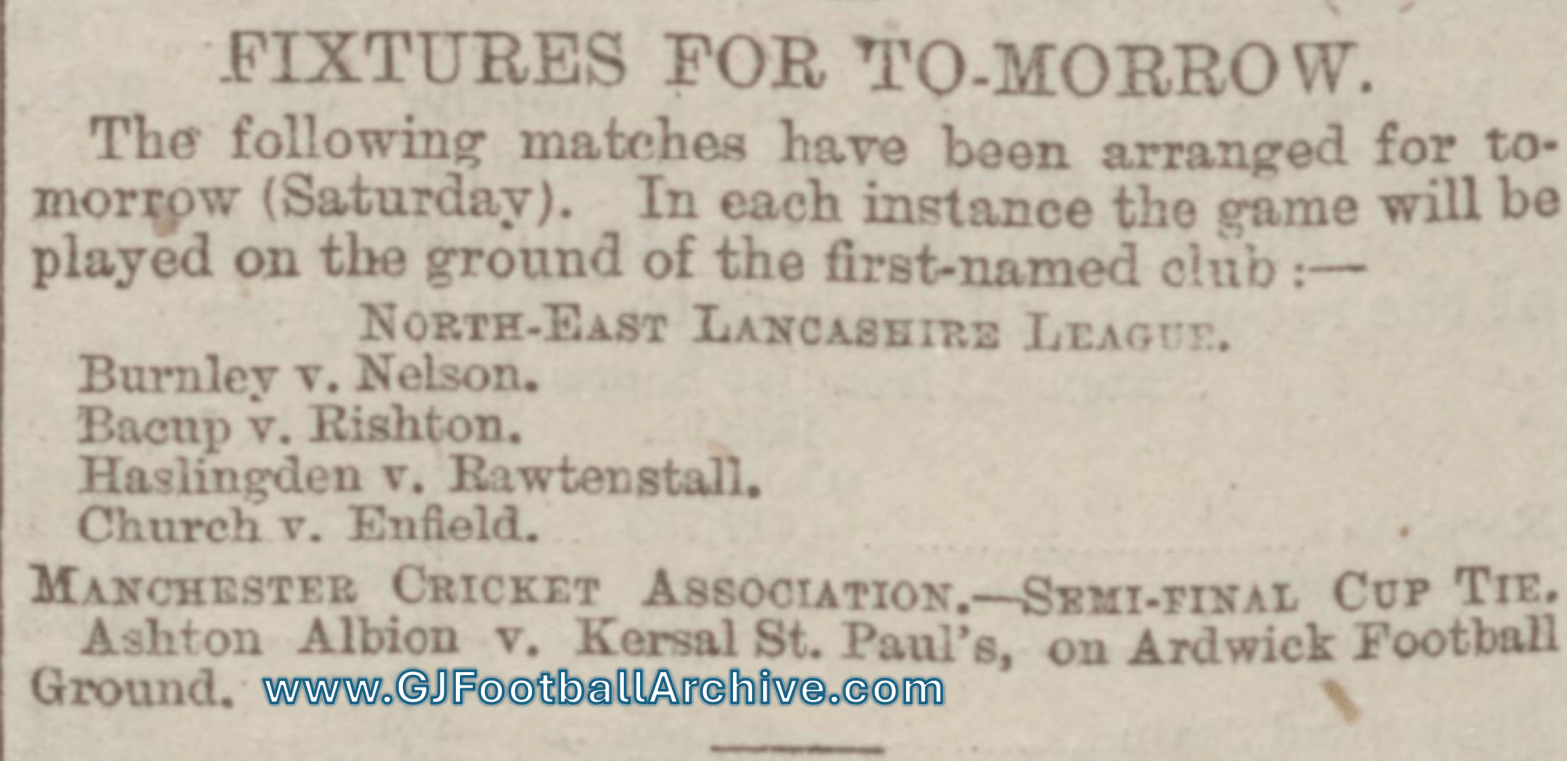
There have been games of cricket played by Manchester City over the years and there have been occasions when other sports, such as rugby and tennis, have been played at City’s grounds but it may surprise some to know that cricket has also been played at the club’s venues. Back on 24 July 1891 a Manchester newspaper listed this cricket fixture to be played at Hyde Road (at the time the ground of Ardwick AFC – City’s predecessor). It won’t have been the only cricket match there and the site had been known to stage bare knuckle boxing bouts years before the football ground was built there.

Hyde Road Crowd Image

I’ve included this in some of my books over the years and I think it’s a great crowd shot which leads to the odd question too. Take a close look at it. This is from 1912-13 season and shows a section of the crowd in the Main Stand paddock. There are definitely men, women and children in there, but is there also one of the earliest non-white faces to be seen at a home City game too? It’s difficult to tell but look at the complexion of the man above the word ‘archive’… We’ll never know sadly.

Fancy Advertising at City or Newton Heath?

Here’s an advert from the official Manchester City and Newton Heath match programme, published in September 1899. It demonstrates a period when football clubs looked to raise money however they could. Here ‘business men’ could advertise on almost any part of City’s Hyde Road ground or United’s Bank Street ground. I always find it funny when people try to claim that football has only become a ‘business’ in recent decades… Ever since the game became professional it has been a business and those owning clubs have looked at ways to increase income or profitability.

More on the 1899-1900 season elsewhere on the site. Why not search for features?

Albert Alexander (Junior): MCFC Chairman

Back in the late 1960s there was a popular Manchester City chairman whose family had been involved with the club since the very beginning of the club. That was Albert Alexander. Here’s a profile I wrote in 2012 on him. It’s about 900 words long and is free to read. Enjoy!

Albert Alexander was the second generation of the Alexander family to play a prominent role in the development and history of Manchester City.  His father, also Albert, had been involved with the Club from the 1890s and had held various positions including vice-chairman, and even manager for a spell in 1925-26.

Like his father, the younger Albert dedicated his life to the Blues.  Inevitably, he spent most of his boyhood watching the Club develop and, as he grew, he became more involved with behind the scenes work at the Club’s first home Hyde Road.  He was a member of the Ground Committee which performed crucial activities such as stewarding and ground maintenance.

Alexander also managed the Club’s A team and provided support in whatever way necessary to ensure the Blues succeeded.  He was more than happy to work through the ranks and take on any duty necessary.  His son Eric, who was Chairman in the early 1970s, remembers that his father had suffered during the First World War but that didn’t stop him from putting his energies into the Blues:  “He was a very good footballer and cricketer but he was gassed in the Great War and had to give it up.  It affected him throughout his life, although it’s fair to say he recovered enough to fulfil a happy normal life apart from playing of course. 

“He took up golf, but his love for football was such that he started the ‘A’ team at City.  He started it in 1921 and ran it through until 1963.  He enjoyed working with the youngsters and developing them.  He gained an awful lot of satisfaction from that, particularly when players like Matt Busby developed their skills and style as part of the ‘A’ team.”

Ultimately, after many years of loyal service Alexander became a City director.  This came after the Blues became aware that Manchester United were hoping he would join their board.  It is highly likely Alexander would have turned the Reds down, and it was appropriate that he became a director at Maine Road.  It was an honour he deserved for years of dedication to the City cause.

While director he felt the passion all fans feel for the Blues and he also felt the pain and worries during the Club’s struggles in the early Sixties.  He wanted better and, in 1965 as fans demonstrated following City’s lowest attended League game, he came out to face them and talk with them about his hopes and ambitions for the Club.  He apologised for City’s appalling decline.  It says much about his courage and the respect fans had for him that they dispersed.  It is doubtful whether any other director would have been respected in this manner at such a low point.

Understandably, Alexander who was City’s Chairman by this point wanted to see his side successful and later that summer he appointed Joe Mercer as manager.  It was a brave decision as Mercer had been out of work for a year and had suffered a stroke at Aston Villa.  Other names, such as former City hero Peter Doherty and Liverpool manager Bill Shankly, had been expected to be appointed by the media, so this move could easily have been seen negatively.

Alexander guided City through the successful years of the Mercer-Allison period and was probably the first Chairman to be hugely popular with fans.  Everyone seemed to love ‘Little Albert’ as Mercer dubbed him.

Many of City’s achievements during these years were dedicated to Alexander by Mercer, while journalist Bill Fryer commented in 1970:  “He is highly revered in the game and by the public, and I have no doubt good deals have been done for City out of Albert’s friendships because in reality the whole of football is a ‘club’.”

Sadly, despite the Chairman’s popularity, his final years saw him suffer at the hands of the 1970 takeover battle.  Alexander found out about the takeover when he received a knock on his door at breakfast one day.  It was a complete shock to him.

The takeover destroyed much that was good about City at this point, including the Mercer-Allison partnership.  However, it is rarely mentioned how the takeover affected Alexander, the man who had guided City with distinction through some dark days when no one else wanted to know.  He had taken the Club from the lowest point it had experienced since joining the League, to a position of strength with trophies galore.  Those bidding for control wanted the glory, Alexander’s motives were somewhat different – like all true fans he wanted City no matter what. 

Alexander stood down as Chairman and was made Life President – an honour first given to Lawrence Furniss seven decades earlier, proving the significance of this recognition.  Unfortunately, Alexander’s health was deteriorating by this point and he passed away soon after.

Manchester City owes a great deal to the dedication of Albert Alexander and the other members of his family.  The Alexanders helped guide the Blues from the 1890s through to the reign of Peter Swales, and in some ways on via the continuing involvement of Eric Alexander (still a regular attendee until his death in 2019).  Their contribution should never be forgotten.

If you enjoy all the free material on my website and would like to support my research and keep this website going (but don’t want to subscribe) then why not make a one-time donation (or buy me a coffee). All support for my research is valued and welcome. It allows me to keep some free material available for all. Thanks.

Choose an amount

£2.50
£5.00
£7.50

Or enter a custom amount

£

Your contribution is appreciated.

Donate

Subscribe to get access – Annual

Read more of this content when you subscribe today. It costs £20 a year to subscribe (it works out £1.67 a month) or £3 if you’d like to sign up a month at a time. Annual subscribers get full access for as long as you subscribe (you can always try it for a month). It’s worth bearing in mind that the 2010 Manchester A Football History cost £24.95 and all subscribers will be able to access all of that for as long as they are a subscriber (plus all the other stuff of course).

Subscribe to get access – Monthly

It costs £3 a month to subscribe a month at a time. Why not give it a try! Monthly subscribers get access to everything posted since 1 October 2022 for as long as you subscribe.

Hyde Road Image

On this day (9 December) in 1922 Manchester City defeated Blackburn Rovers 2-1 at Hyde Road. This action shot from the game shows Blackburn threatening the City goal. The stand in the background is the Popular Side at City’s former home 102 years ago today.

If you enjoy these daily snippets why not subscribe and access all the other great content on here. For details:

The First Top Flight Manchester Derby

On this day (1 December) in 1906 the first Manchester derby in Division One was played at City’s Hyde Road ground. This photo shows the crowd management scenes for what was described as Manchester’s biggest football day at the time. There had been derbies between City and Newton Heath in the Second Division, before City were promoted in 1899. There was no opportunity for the Blues and the Heathens to meet in the top flight. In 1902 financial difficulties at Newton Heath meant that club was being wound up. A new club called Manchester United was established in 1902 (as with (like Ardwick’s final days and the new club Manchester City, it’s more complicated than simply a name change) and they played in Division Two, until they earned promotion in 1906.

City won this derby 3-0 with goals from George Stewart (2) and Billy Lot Jones.

Crowd scenes on 1 December 1906 at Hyde Road. The first Manchester Derby in Division One (top flight)

If you want to know more about this season then here’s a 3900 word article telling the story of 1906-07 when the FA ban continued to affect Manchester’s Blues (you can read about that elsewhere on this site). This story continues to be one of skullduggery (by other teams too!) and powerful figures seeking to limit opposition.

All of this sound familiar? Well, get a brew and start reading below if you’re a subscriber. Maybe read the 1903-04, 1904-05 & 1905-06 features first?

If you’re not a subscriber then why not sign up for a month and see what you think?

Subscribe to get access

Read more of this content when you subscribe today. It costs £3 per month (cancel anytime) or sign up a year at a time for the discounted annual fee of £20. This gives access to everything on the site, including PDFs of 3 of my books and various other articles, interviews and audio material. Each subscriber has access to all content posted during their subscription period too. Why not sign up for a month and see what you think?

More on the 1900s tomorrow. Why not subscribe and read this and all the other subscriber features?

Newcastle v Manchester City: The Story So Far

City v Newcastle is one of the most enduring fixtures in English football. There have been cup finals, title deciders, dramatic games, shared heroes and so much more. The two clubs first met in the League in October 1893 (Ardwick/MCFC’s 2nd season in the League) and City’s record is:

CompetitionPlayedWonDrawnLost
League174713865
FA Cup12426
League Cup6312
European0000
Other0000

There have been lots of significant games in the League, FA Cup and League Cup. A League Cup final in 1976 saw them meet at Wembley when Peter Barnes and Dennis Tueart both scoring for the Blues.

Anyone remember being at Maine Road on the day City played away against Newcastle at Maine Road? That was in 1975. See:

101 years ago there was the last meeting at City’s famous old Hyde Road ground:

In 2012 a Newcastle v City game was crucial in the Blues’ title charge:

Elano’s wonder goal in 2007:

In 2021-22 there was a memorable City victory:

Most Blues of my age and above will remember where they were when our King returned to action on Boxing Day 1977. Here’s an interview I did with him a few years back when we talked about that special day:

When I was a teenager there was a second tier meeting that attracted a significant crowd for the period:

My Dad’s generation will remember the 1955 FA Cup final:

During 1956-57 there was a ‘game of the season’ in the FA Cup between the clubs:

My grandad’s generation would’ve remembered Billy Meredith’s last game:

Who remembers the title decider at Newcastle? Details:

There was a really odd thing a while back where a Newcastle paper claimed that their local team had first worn bar scarves at games. A few simple searches soon proved there were much earlier bar scarfs:

Some of the above are free to read and some are for subscribers only. Follow the link below if you want to find out more about subscribing:

If you enjoy all the free material on my website and would like to support my research and keep this website going (but don’t want to subscribe) then why not make a one-time donation (or buy me a coffee). All support for my research is valued and welcome. It allows me to keep some free material available for all. Thanks.

Choose an amount

£2.50
£5.00
£7.50

Or enter a custom amount

£

Your contribution is appreciated.

Donate