The answer to yesterday’s name the year question is….
Clues:
Both the Platt Lane Corner and Platt Lane Stand have been built (check previous days for that).
Neither the Kippax has been roofed nor floodlights erected.
There are few cars on the road
It’s a close season photo (goal posts are missing) but that year there was to be something bright erected in strategic locations around the ground
The year was 1953. This image was taken that close season, before the original floodlights were erected in each corner (used for the first time in October 1953).
If you’d like to read more on the history of Maine Road, take a look at Farewell To Maine Road, which can be downloaded from this page:
If you enjoy all the free material on my website and would like to support my research and keep this website going (but don’t want to subscribe) then why not make a one-time donation (or buy me a coffee). All support for my research is valued and welcome. It allows me to keep some free material available for all. Thanks.
Day 13 of my posts counting down to the centenary of Maine Road’s opening game. Today is another name that year. Have a look at this amazing photo of Maine Road and tell me when you think this was taken. I’ll give a few clues (below) and will post the answer tomorrow.
Clues:
Both the Platt Lane Corner and Platt Lane Stand have been built (check previous days for that).
Neither the Kippax has been roofed nor floodlights erected.
There are few cars on the road
It’s a close season photo (goal posts are missing) but that year there was to be something bright erected in strategic locations around the ground
So what year do you think it was? It’s a great image and shows the scale of the place in a way that some images do not. Amazing to think that the base of the Main Stand remained until demolition in 2003 and the Platt Lane roofs were there until that stand was demolished in 1993.
This image of it is from 1968 and for those unfamiliar with Maine Road this may help. Number 7 below is the large open terracing on the older photo while number 10 is the open terracing behind the goal. The Main Stand roof (1) had been altered in between these two images being taken but the Platt Lane roof (4) & (5) was the same construction.
Maine Road aerial 1971 from Farewell To Maine Road
If you’d like to read more on the history of Maine Road, take a look at Farewell To Maine Road, which can be downloaded from this page:
If you enjoy all the free material on my website and would like to support my research and keep this website going (but don’t want to subscribe) then why not make a one-time donation (or buy me a coffee). All support for my research is valued and welcome. It allows me to keep some free material available for all. Thanks.
As we now build up to the first all-Manchester FA Cup final and at a time when Manchester will, regardless of who wins, sweep up all the major domestic trophies, I think it’s worth pausing to think about the city’s earliest clubs. I’ve done lots of research over the years on Manchester’s football origins and published both books and articles about it. Some of these are free to download. So why not take a look at the following article which briefly tells the story of Hulme Athenaeum – the earliest known association football club in Manchester (and Lancashire for that matter!):
The article also talks about other Manchester clubs, most significantly Manchester AFC who paved the way for City & United.
Worth noting the stuff about John Nall – the Hulme secretary and a founder of Manchester AFC. That man is often forgotten but he remained involved with football from Hulme’s formation through to his death in the late 1890s. He was present at several key moments in the formative years of Manchester City and was a key figure behind the Manchester FA. His story needs to be remembered.
Some have suggested that Hulme played rugby not football and it is fair to say that as the rules of football were developing there were many variations across the country. However, both Nall and others I’ve researched believed they were playing association football and his direct and active involvement with both the Manchester FA & the Lancashire FA proves he knew what ‘football’ was. Hulme played association football.
If you enjoy all the free material on my website and would like to support my research and keep this website going (but don’t want to subscribe) then why not make a one-time donation (or buy me a coffee). All support for my research is valued and welcome. It allows me to keep some free material available for all. Thanks.
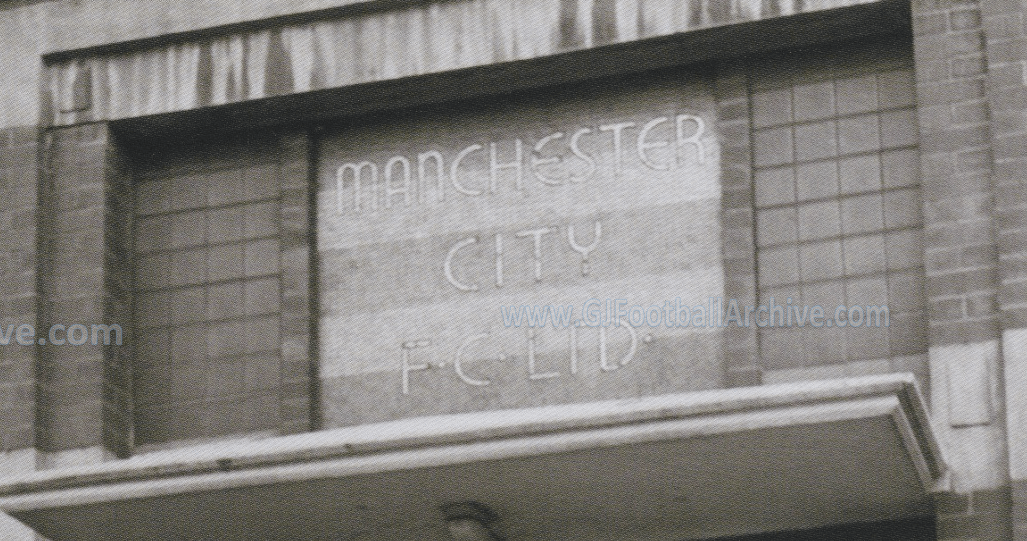
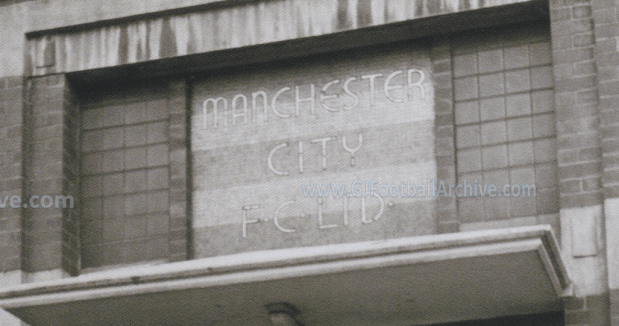
Day 12 of my posts counting down to the centenary of Maine Road’s opening game. Today is a simple photo of something that became lost after decades of proudly stating the club’s name – the central mosaic.
Created in 1923 for the new stadium the central mosaic was one of three created to proudly spell out the club’s name at their new home. I’ve written a lot about these and you can read more in the second chapter of Farewell To Maine Road (I talk about the people who made the mosaics there):
The central mosaic was proudly visible to all from 1923 through to the late 1970s when it was covered up by an advertising hoarding. I was told while researching the book that a refurbishment of the Main Stand saw an air conditioning unit get smashed through it, damaging it forever. You can see the advertising board in this photo:
I do know that during Maine Road’s demolition in 2004 part of the mosaic became visible briefly one day. How I wish we’d have been able to salvage it! If I get chance I’ll post that here, along with other demolition images, later in this series.
The central Mosaic at Maine Road, seen in 1968
This image of it is from 1968 and for those unfamiliar with Maine Road he specific location of the mosaic was above the main entrance of the Main Stand (the Main Stand is number 1 on this image) facing Maine Road itself.
Maine Road aerial 1971 from Farewell To Maine Road
If you’d like to read more on the history of Maine Road, take a look at Farewell To Maine Road, which can be downloaded from this page:
If you enjoy all the free material on my website and would like to support my research and keep this website going (but don’t want to subscribe) then why not make a one-time donation (or buy me a coffee). All support for my research is valued and welcome. It allows me to keep some free material available for all. Thanks.
Well, the Premier League is now over for another year and we know who the Champions are and who has qualified for Europe etc. so it’s time to look forward to the first ever all Manchester FA Cup final. There have been FA Cup finals between two teams from present day Greater Manchester before (the first one being City v Bolton in 1904) but this is the first to involve both Manchester clubs.
Prior to this year’s final, the closest Manchester City and Manchester United have got to playing each other in a Wembley FA Cup final were the FA Cup semi finals in 1926 and 2011. I wasn’t around in 1926 but I definitely was in 2011! So a couple of years ago I made this special audio recording talking about the years building up to the semi and the day itself from a Manchester City perspective. Many of you have listened to this already but if you haven’t then it tells the story of the 2011 FA Cup semi final and the years between 1976 and that moment in 2011 for City.
I include audio from interviews I did with a variety of people including Khaldoon, Peter Swales, Garry Cook, Brain Marwood and many others.
If you have heard it before then maybe you should listen again to remind yourself of how we all felt and why that game was so significant.
I include a few words from Roberto Mancini recorded in 2011 and at one point he talks about the view that was then being expressed that City were ‘trying’ to buy success (now they say City ‘have’ bought success!). His words are a reminder that City have been having that particular criticism thrown at them for over a decade! Oh well, I wonder how long those criticisms were laid at other clubs who had seen major investment which propelled them forward?
Anyway, get yourself a brew and be prepared to be transported back in time. Here’s the recording:
If you enjoy the recording then please let me know, comment or subscribe to the site. If you don’t fancy doing that then there’s also the option to make a welcome donation to keep this site going (see below). I’ve produced videos/talks like this highlighting key points in Manchester City’s footballing history which subscribers can watch too.
If you enjoy all the free material on my website and would like to support my research and keep this website going (but don’t want to subscribe) then why not make a one-time donation (or buy me a coffee). All support for my research is valued and welcome. It allows me to keep some free material available for all. Thanks.
Read more of this content when you subscribe today. It costs £20 a year to subscribe (it works out £1.67 a month) or £3 if you’d like to sign up a month at a time. Annual subscribers get full access for as long as you subscribe (you can always try it for a month). It’s worth bearing in mind that the 2010 Manchester A Football History cost £24.95 and all subscribers will be able to access all of that for as long as they are a subscriber (plus all the other stuff of course).
It costs £3 a month to subscribe a month at a time. Why not give it a try! Monthly subscribers get access to everything posted since 1 October 2022 for as long as you subscribe.
Day 11 of my posts counting down to the centenary of Maine Road’s opening game. Today follows on from yesterday’s post and shows the demolition of the original Platt Lane Stand.
I know the quality isn’t great but hopefully you can just make out the end of the concrete terracing and see how the 1935 roof was built over a wooden extension to the stand.
Have a look back at yesterday’s post to find out more.
To help those unfamiliar with Maine Road locate the specific location of this post, the Platt Lane Stand is the one where the number 4 & 5 are on this plan. The demolition photo was taken from near the number 6 looking towards the stand.
Maine Road aerial 1971 from Farewell To Maine Road
If you’d like to read more on the history of Maine Road, take a look at Farewell To Maine Road, which can be downloaded from this page:
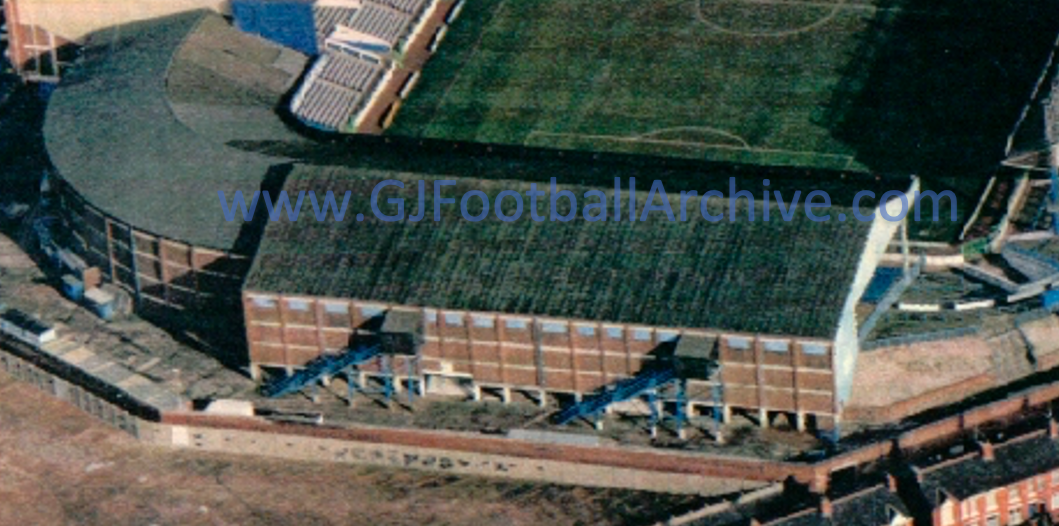
Day 10 of my posts counting down to the centenary of Maine Road’s opening game. Today the original Platt Lane Stand can be seen in this image, taken in 1991. The stand was initially a terraced stand and the original terracing built in 1923. 8 years later the corner (on the left of this image) was roofed, extended a little on wood and the terracing re-profiled for seats. Then, in 1935 the rest of the Platt Lane was roofed and extended on wood but this remained a standing terrace.
The Platt Lane’s development was the first two phases in a planned development which was supposed to see the Main Stand/Scoreboard End corner roofed around 1939, then the neighbouring terracing (later North Stand) roofed to match the Platt Lane by about 1945 and then within about five years the entire Popular Side/Kippax was to be extended and roofed.
Apart from Platt Lane, none of those developments occurred due to the war.
Platt Lane was seated in the 1960s (you can read more on that and all the plans for the stadium in Farewell To Maine Road) and this images shows the steps that were built at the back of the Platt Lane when it was extended. I remember as a young boy climbing up those to get to the benches we sat on occasionally and I was always scared I’d fall through the gaps.
To help those unfamiliar with Maine Road locate the specific location of this post, the Platt Lane Stand is the one where the number 4 & 5 are on this plan.
Maine Road aerial 1971 from Farewell To Maine Road
If you’d like to read more on the history of Maine Road, take a look at Farewell To Maine Road, which can be downloaded from this page:
If you enjoy all the free material on my website and would like to support my research and keep this website going (but don’t want to subscribe) then why not make a one-time donation (or buy me a coffee). All support for my research is valued and welcome. It allows me to keep some free material available for all. Thanks.
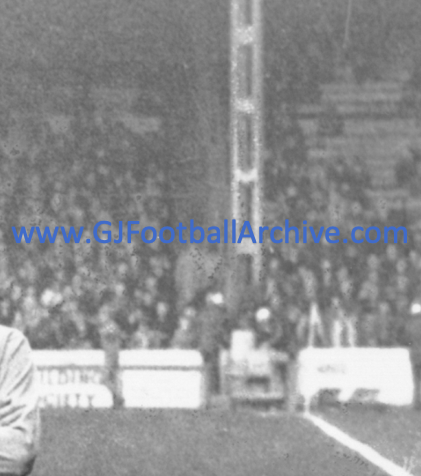
Day 9 of my posts counting down to the centenary of Maine Road’s opening game. Today this grainy image highlights something that was, until the end of the Kippax in 1994, a regular part of the Maine Road match experience. If you look carefully you can see the tea urn being pushed around the ground. It’s currently in front of the Platt Lane Stand and I remember being in that stand as a young boy in the 1970s and desperately wanting something from the vendor. Chipmunk crisps, Waggon Wheels & TipTop orange drinks were three of the items I remember them selling.
Usually, we brought a flask to games (often broken in the excitement of a goal) and occasionally Dad would have enough money to let us go and get some crisps or something. For those who never experienced Maine Road or the tea urns, basically a couple of young matchday staff, usually lads, but sometimes girls, would push a tea urn around in front of the white wall that surrounded the pitch. Presumably they had filled the tea urn at some point early into the game and I guess older fans knew how long it took the tea urn to get from one end to the other. If you were at the wrong end of the Platt Lane Stand your brew may not have been as hot as you’d want.
The Platt Lane tea urn, early 1970s
I never had a hot drink from it, so I don’t know if the urn had hot water in so that they could add a tea bag, Nescafe or bit of Bovril to it or whether it was already made up. If it was maybe there were different drinks in multiple urns that I didn’t spot? Anyone here ever work one or know more about that? If you did please leave your comments, or if you’ve any other memories of Maine Road that you’d like to share.
If you’d like to read more on the history of Maine Road, take a look at Farewell To Maine Road, which can be downloaded from this page:
To help those unfamiliar with Maine Road locate the specific location of this post, the Platt Lane tea urn photographed is heading towards the number 3 on this plan.
Maine Road aerial 1971 from Farewell To Maine Road
If you enjoy all the free material on my website and would like to support my research and keep this website going (but don’t want to subscribe) then why not make a one-time donation (or buy me a coffee). All support for my research is valued and welcome. It allows me to keep some free material available for all. Thanks.
Day 8 of my posts counting down to the centenary of Maine Road’s opening game. Today here’s an image of the Maine Road forecourt in the 1980s. So much to say on this. Notice the Granada TV vehicle and the newspaper adverts hung up for the Sunday Mirror and News of the World. There’s also the advert above the main entrance ‘cage’ – that was covering up the original central mosaic which I wish they’d been able to keep visible but an air conditioning unit was smashed through this at some point. So much for preserving the club’s history back then, hey?
The forecourt looked much the same as this from its opening through to later in the 80s, although there had already been a pebble dash render placed on the lower part of the main stand frontage. Later the decade more render would be place on sections of the front and then in the 1990s the whole stand was clad in metal.
There’s one of the floodlights (second set) showing and this is obviously pre-match as fans are mostly heading to the stands. Also, post match for many games in the 80s the forecourt would have housed a demo!
Those cars are heading towards the directors car park, past the stand, on the left.
This image was from a 1981 Manchester derby.
1981 City v United Maine Road
If you’d like to read more on the history of Maine Road, take a look at Farewell To Maine Road, which can be downloaded from this page:
To help those unfamiliar with Maine Road locate the specific location, the Main Stand is number 1 on this plan and its frontage faced Maine Road, the street running above the stand.
Maine Road aerial 1971 from Farewell To Maine Road
If you enjoy all the free material on my website and would like to support my research and keep this website going (but don’t want to subscribe) then why not make a one-time donation (or buy me a coffee). All support for my research is valued and welcome. It allows me to keep some free material available for all. Thanks.
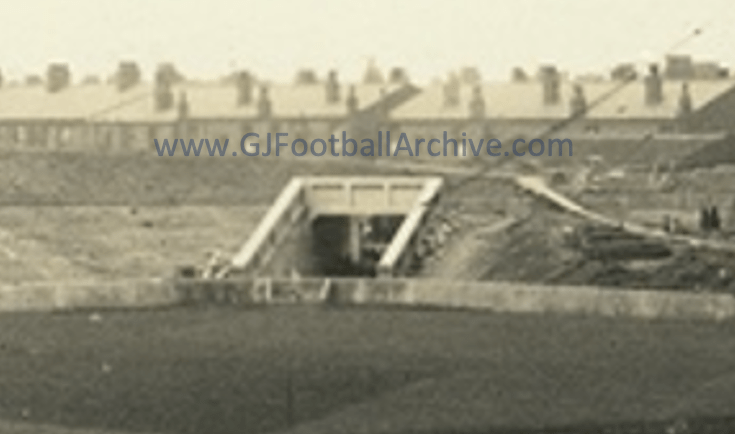
Day 7 of my posts counting down to the centenary of Maine Road’s opening game. Today it’s the story of the Platt Lane tunnel. Maine Road had four large corner tunnels, plus two in the Kippax and three (including the Players’ tunnel) in the Main Stand. The corner tunnels when built were all the same but the one in the Platt Lane/Main Stand corner was altered within 8 years of being built. Many people don’t realise this or know why, so here’s the story…
The tunnels were designed by architect Charles Swain to make access to and departure from the terracing easy after the problems Wembley experienced in its opening game. These huge tunnels became a feature of Maine Road for most of its existence but ground developments led to them all, apart from the Main Stand’s tunnels disappearing by the mid 1990s.
The first one to change was the Platt Lane/Main Stand corner tunnel.
In 1931 the club decided to enlarge Maine Road and they started with that corner. There was a demand for additional seating and so the club rebuilt the corner terracing. They built on top of what was already there by increasing the terracing rake to make it more appropriate for seating. They didn’t demolish the original corner, they built on top of it. This created a problem because the walls of the tunnel were now too low in parts, creating a potential safety issue. So the club raised and remodelled the tunnel walls a little. These are not great images but I hope they give you enough of a feel for how the tunnel was adapted.
The older image is during construction, with the other image showing the stand in 1981. That corner stand was extended a little on wooden steps, as was the rest of the stand when it was extended in 1935. The difference was that the rake of the terracing elsewhere in the stand was not changed.
Remodelled Platt Lane/Main Stand corner tunnel as seen in 1981
If you’d like to read more on the history of Maine Road, take a look at Farewell To Maine Road, which can be downloaded from this page:
If you enjoy all the free material on my website and would like to support my research and keep this website going (but don’t want to subscribe) then why not make a one-time donation (or buy me a coffee). All support for my research is valued and welcome. It allows me to keep some free material available for all. Thanks.






 Gary James' Football Archive