On this day (26 September) in 1998 Manchester City drew 2-2 with Northampton Town in ‘new’ Division Two (third tier). City goalscorers were Paul Dickov and Shaun Goater. Twice City had come back from being behind. This is the Manchester Evening News report of the game:
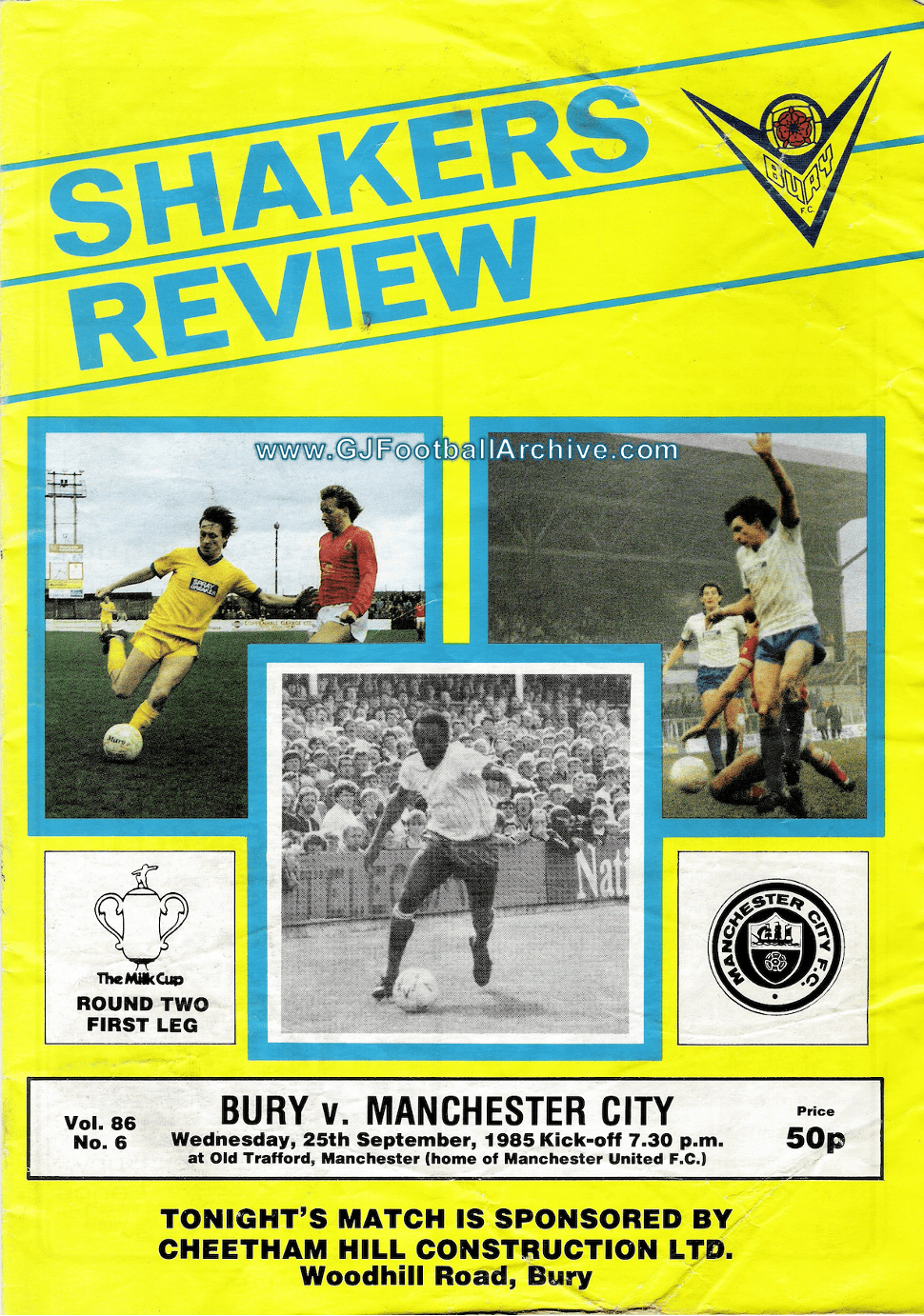
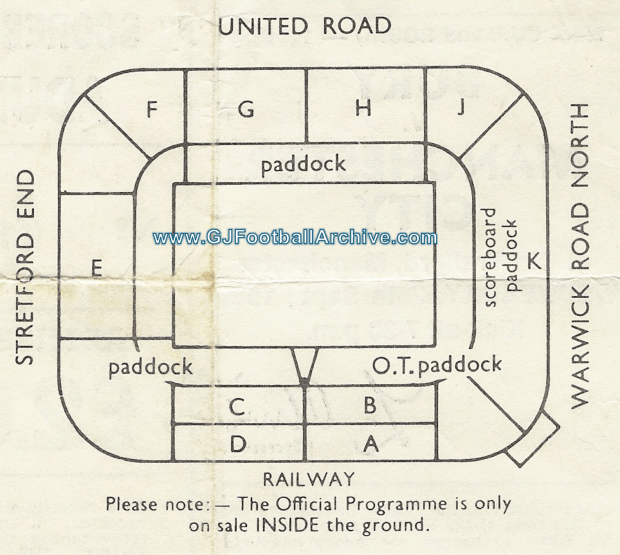
On this day (25 September) in 1985 Manchester City defeated Bury 2-1 at Old Trafford in the League Cup. The game was played at Manchester United’s ground as Bury hoped for a big attendance. In the end the crowd of 11,377 wasn’t that much more than Gigg Lane could hold. Many City fans had stayed away simply because the game was at Old Trafford! Here’s a plan of OT as it was back then from the back of my ticket for the game:
You can read more on this season for Manchester City below. This is a 2,500 word feature on the 1985-86 season. Enjoy!
Subscribe to get access – Monthly
Read more of this content when you subscribe today. It costs £3 per month (cancel anytime) to access everything posted since 1 October 2022 or there’s a special annual rate below which gives greater access and works out much cheaper.
Read more of this content when you subscribe today. It costs £3 per month (above) or £20 a year (here) to access everything posted since the site was created in December 2020. This special rate works out about £1.67 a week and gives access to everything posted, including PDFs of 3 of my books.
It’s Huddersfield v City tonight in the League Cup. These two teams have a long history of playing each other with some dramatic games and record breakers too. Here’s the earliest known film of them. It’s from a FA Cup tie almost 100 years ago and saw City defeat League Champions Huddersfield Town 4-0 in front of 74,799. Enjoy:
A remarkable game on this day (24 September) in 1927 ended with City beating Forest 5-4 at the City Ground, Nottingham. Manchester’s Blues had been winning 5-1 shortly into the second half before Forest started a fightback.
24 September 1927 MCFC 5 Nottingham Forest 4
You can read more on this season for if you subscribe (see below). I hope you enjoy it. If you are not currently a subscriber then why not try it for a month (£3 per month or sign up for a year at a discounted £20 per year)?
Here’s the article:
Subscribe to get access
Read more of this content when you subscribe today. It costs £3 a month (cancel anytime) or sign up for a year at £20 per year. Subscribers have access to the 1000s of articles, features, interviews etc. posted so far and all those posted during your subscription.
Ian Scott signed professional forms for Manchester City on this day (24 September) in 1985. You can find several articles that mention Ian throughout this website. Start looking here:
On this day (23 September 1989) bargain basement Manchester City defeated big spending Manchester United 5-1 in the Manchester Derby. It was a game that entered Mancunian folklore. These days beating United is a lot more commonplace than it was back then, so if you’d like to understand how and why this became an important, never to be forgotten day then read the following 1700 word article…
This is available to subscribers (see below):
Subscribe to get access
Read more of this content when you subscribe today.
Back in August 2014 I interviewed John Stapleton on his career and support of Manchester City. As part of my tribute to him, I’m posting it here as it was published eleven years ago. Hopefully it adds to the positive stories of him that have been appearing over the last few days. I always enjoyed meeting and chatting with John. Here’s the feature as published in August 2014:
John, you’re known today for ITV’s Good Morning Britain but your career started in local newspapers, with your early TV work coming on This Is Your Life. It was your idea to make Joe Mercer a subject for one show wasn’t it?
Yes it was. I did it purely for the benefit of me and my dad. Eamon Andrews, the presenter, had of course a great interest in sport and I put the idea to him and the rest of the production team. Together with Norah, Joe’s wife who in recent years I often sat with at games sharing her boiled sweets, we concocted a situation where Joe and Malcolm were in a London hotel before a trip to watch a European game in 1970. Malcolm disappeared – deliberately as part of the show though Joe didn’t know this – and Joe was called to reception urgently. Eamon leaped out to do the big ‘This Is Your Life’ reveal and Joe had no idea whatsoever. It was a great day for us all and Joe was thoroughly deserving of it as well.
My grandfather, who lived in Denton, was at the first game at Maine Road and attended matches at Hyde Road and now my son Nick is a regular, so we’ve had a good four generations of Blues so far. When I was about 7 I was taken to watch City play Blackpool, in the days when Stanley Matthews played for them of course, and I loved simply being at the ground. It felt like home and that was it really. I was hooked. We used to have to go on two buses and a tram to get there from where we lived in Saddleworth – it seemed such a long journey at the time, but it was always worth it. No matter what the result.
Can you remember who your first heroes were?
Well, my dad went to the 1955 FA Cup final and then the year after we watched the final against Birmingham on our television. So exciting, because televisions were new to most of us back then and to be able to live the drama of the game, and of course Bert Trautmann’s injury, live in your own home was amazing really. The world’s moved on so much, but the black & white set felt so modern at the time. It was then that my first real hero emerged – Dave Ewing. A wonderful, uncompromising defender and I remember him protecting Bert in those final minutes as best he could.
Did you ever meet Dave?
Sadly, no, but I did meet his son. I left Manchester when I was 21 to work in Fleet Street and so opportunities to bump into your heroes were few. I was also less able to get back to Manchester as often as I do now, and so I watched City in the south and travelled back as often as work and finance allowed. I have since met quite a few of my heroes from that period, people like Ken Barnes and of course his son Peter. Two great City legends. Ken was a wonderful rascal and very funny and Peter is a really nice guy. I’ve also got to know Mike Summerbee quite well – and bought several of his shirts over the years and they weren’t cheap! He came to our house a few years back and charmed my parents. For my father it was great to be in his company and I think we all cherished that day. Even my lawyer was talked in to buying some of Summerbee’s shirts.
How do you feel about attending games today?
It’s an absolute joy and the fan in me never goes away. For my son, living in London and under so much pressure from his peers to support Arsenal, the years before the takeover were difficult. Those that had experienced the glories of the fifties to seventies had good memories of success, but the younger generation who had never seen us lift a major trophy must have found it tough. But it was all character building and fortunately he can now experience the success that this club deserves. It means more if you’ve been through the thick and thin – and he certainly experienced the thin alongside me!
Alongside the Mercer-Allison era, today is the best we’ve ever known and, hopefully, will keep on getting better. We’ve waited a long time but it’s been worth it. I’ve no complaints about any aspect of City today and the club is as friendly as ever, if not more so in some respects. It gives me a real buzz every time I walk into the stadium, or meet a former player, or chat to a fellow Blue like you Gary. We all have a shared bond and recognise that what we’re experiencing now is truly exceptional – long may it last!
In the mid 1970s you came in to contact with City professionally via the Junior Blues rally. What do you remember of it?
It was held at Belle Vue and there were thousands of Junior Blues there. It was a great event and we had the full team on the stage, giving fans the chance to ask questions to the team and the management. Peter Swales had asked me to present it – for free I might add but it was a major honour to do it – and it was probably the first time any club had opened up in such a way. City were quite forward thinking in terms of the media and fan relations at the time. I was also involved with the BBC Nationwide series on City.
That was another landmark moment in football’s relationship with the media. What was your involvement?
I was a Nationwide presenter and we’d managed to get City to open their doors for the cameras. Reporter Kevin Cosgrove did most of the progress reports and I came in at the end of the series to do a big outside broadcast on the last day of the season. I did some pre-recorded interviews, including one with Franny Lee, and then I did all the links at the ground. It went out to the full BBC network and was very good for the club and, of course, the BBC.
There’s a chant “City Are Back!” we’ve been singing for years, but I now feel that the club I first supported is back. Is this true for you?
In many ways yes. I’ve been a good friend of present day FA boss Greg Dyke for years as we’ve worked together in TV. He was given a tour of the club and the new facilities by Brian Marwood and he told me that this really is a friendly and forward looking club. He was very impressed and it’s satisfying to know others are now recognising how special this club is.
Those facilities will help City develop talented young players in future years. It’s ironic really that people have been urging certain other clubs to spend, spend, spend recently, but we’ve been the ones tagged as the big spenders.
That’s going away now I believe. The evidence is clear and we had to spend to catch up, just like other teams have throughout history. We should never forget either that two of our greatest and most consistent players – Vincent Kompany and Pablo Zabaleta – arrived before the takeover. Kompany is a truly great leader and I’ve been fortunate to meet him and he is also a wonderful man. He is the perfect captain for this club, but we’re so fortunate to have so many brilliant players. Just think of David Silva… outstanding quality!
You’ve worked with Manchester United supporter Eamon Holmes in the past, did the two of you ever discuss football?
We’ve had some good banter over the years. Good craic! In fact I took him to two games. The first was when Beckham scored from a free kick at Maine Road. Eamon jumped up in the directors’ box and you can imagine how that went down. The second time he was booed into the ground by City fans!
Your own personal greatest game?
Obviously, the last game v QPR in 2011-12, but also the 6-1 against United at Old Trafford. I turned to Nick my son and said ‘savour this moment. No matter how long you live you’re unlikely to experience this feeling again.’ And of course, there’s the 1999 play-off final without which we may never have come back at all. What a transformation in 15 years – hopefully, there’s more to come.
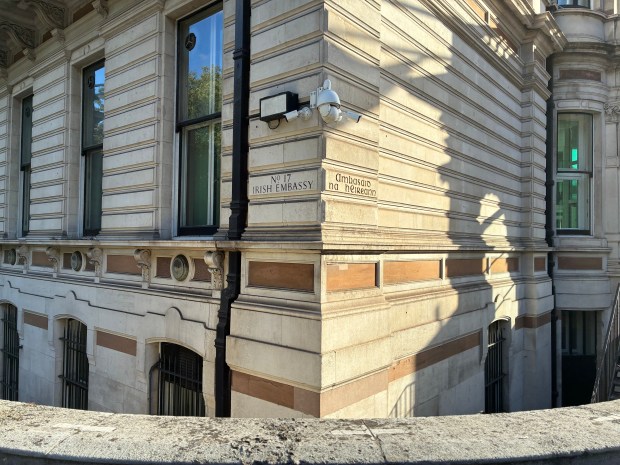
Last Monday was a special night when a book I’ve co-edited with Fiona Skillen and Helena Byrne was launched at the Embassy of Ireland in London. We were absolutely delighted with the evening and support we received from the Embassy. I’ve been fortunate to have my books launched in some pretty spectacular venues over the years, this was the first time any of my books have been launched at an embassy. In fact, it’s the first time I can recall ever being in an embassy.
The book we launched was ‘Histories of Women’s Football in Britain and Ireland’ and the launch was attended by academics, researchers, historians, practitioners, international footballers and many others who have helped us along the way. The whole event was hosted by the Embassy and we were delighted that Orla McBreen, the Deputy Head of Mission, was so interested in the book. Both Orla and the rest of the Embassy team, made us feel so welcome and Orla introduced us with a nice speech too. Thanks for that.
Orla said: ‘The book turns our attention to an area of history that has too often been overlooked. By tracing both regional and national developments, and by spotlighting the work of historians, heritage practitioners, artists, and documentary makers, this volume shows how academic research can travel beyond archives into public spaces, shaping attitudes, inspiring communities, and ensuring that the struggles and achievements of women in football are preserved.’
After Orla’s speech came a panel discussion between myself, Fiona and Helena and then we opened up the discussion to questions from the audience. Over 100 people attended and the whole event was a great success. It was wonderful to see so many former players and administrators there and to have key representatives from organisations such as the Irish FA (Northern Ireland) and the FA, as well as officials from the Embassy of Ireland of course.
I’d like to say special thanks to Helena Byrne who, on behalf of all the authors and editors, put so much effort into making this launch happen at the Embassy. I’d also like to thank everybody at the Embassy for their efforts and support. It really is appreciated and was a special night.
The book is the culmination of several years work and includes the following chapters (author names in brackets after each chapter):
Setting the Scene: The Origins Story of Women’s Football in Scotland (Richard McBrearty)
The First Tour of Women’s Association Football – 1881 (Stuart Gibbs)
Women’s Football in Wales, 1890–1950 (Craig Owen Jones)
‘Testimonial to Mrs Walter Scott’: A Brief History of Diana Scott (Alexander Jackson)
Excommunicating the Women’s Game: The English FA’s 1921 Ban Revisited (Dilwyn Porter)
The Media Framing of Women’s Football in Wales During the English FA’s 1921–1970 Ban (Beth G. Clarkson, Keith D. Parry, Rafaelle Nicholson and Alice Hunter)
‘Proving themselves no mean experts at the game’: Women’s Football in Scotland, 1914–1921 (Fiona Skillen)
The Development of Women’s Football in Trafford (Gary James)
A Hollow Victory: Exploring the Limited Impact of the Removal of Formal Restrictions on Women’s Football in Scotland on the Development of the Women’s Game in the 1970s and 1980s (Karen Fraser)
Surviving or Thriving? Women’s Football in 1970s Northern Ireland (Conor Heffernan)
The Development of Women’s Soccer in Dublin (Conor Curran)
The Trailblazers – Organised Women’s Football in the Interwar Period (Helge Faller)
The Dick, Kerr Ladies from Paris and Sydney: Globalisation the Image and Influence of British Women’s Football Overseas (Keith Rathbone)
Game Changer: Looking Back on the First UEFA Competition for Women (Helena Byrne)
Winning Working Women – the Story of Sweet F.A. (Paul Beeson)
The Representation of Women Within the Scottish Football Museum (Demi Boyd)
UEFA Women’s EURO 2022 Heritage Programme: A Case Study (Caterina Loriggio)
From Pitch to Screen – PurpleTV’s Documentary Films on Women in Scottish Football (Margot McCuaig)
The publishing blurb says: ‘This book brings together a range of researchers to explore the growth and development of the women’s game in Britain and Ireland. They are active across a diverse range of fields, from historians and heritage practitioners, to those from the arts such as playwrights and documentary directors. This edited collection draws together both regional and national studies to provide a more nuanced understanding of the history of the women’s game in Britain and Ireland than has been possible before. Chapters in this book explore new findings around the development of key teams, players, and organisations, and in doing so enrich the historiography of the game.
‘Often books on the history of football have taken a narrative approach focusing only on the research findings or ‘story’. This is of course important, but in this book the editors also wanted to reflect the ways in which research into the history of women’s football has been shared and explored within a range of spaces and communities. There is a huge untapped audience who want to engage with the history of the sport. By reflecting on previous arts/heritage-based projects we can explore new avenues regarding how academic research can be made accessible to the general public and in turn how arts/ heritage-based projects can inform academic research.’
The book has been published by academic publisher Peter Lang and is, inevitably, priced accordingly. If you’d like to read the book then I’d encourage you to ask your local library or archive to stock a copy. Thanks
On this day (21 September 1929) Manchester City defeated Everton 3-2 with goals from Bobby Marshall (2, photographed) and Fred Tilson at Goodison Park, watched by a crowd of 32,711. You can find out more on the 1929-30 season below in this piece for subscribers (see below). I hope you enjoy it. If you don’t subscribe then why not try it for a month (£3 per month or sign up for a year at a discounted £20 per year)?
Here’s the article:
Subscribe to get access
Read more of this content when you subscribe today. It costs £3 a month (cancel anytime) or sign up for a year at £20 per year. Subscribers have access to the 1000s of articles, features, interviews etc. posted so far and all those posted during your subscription.
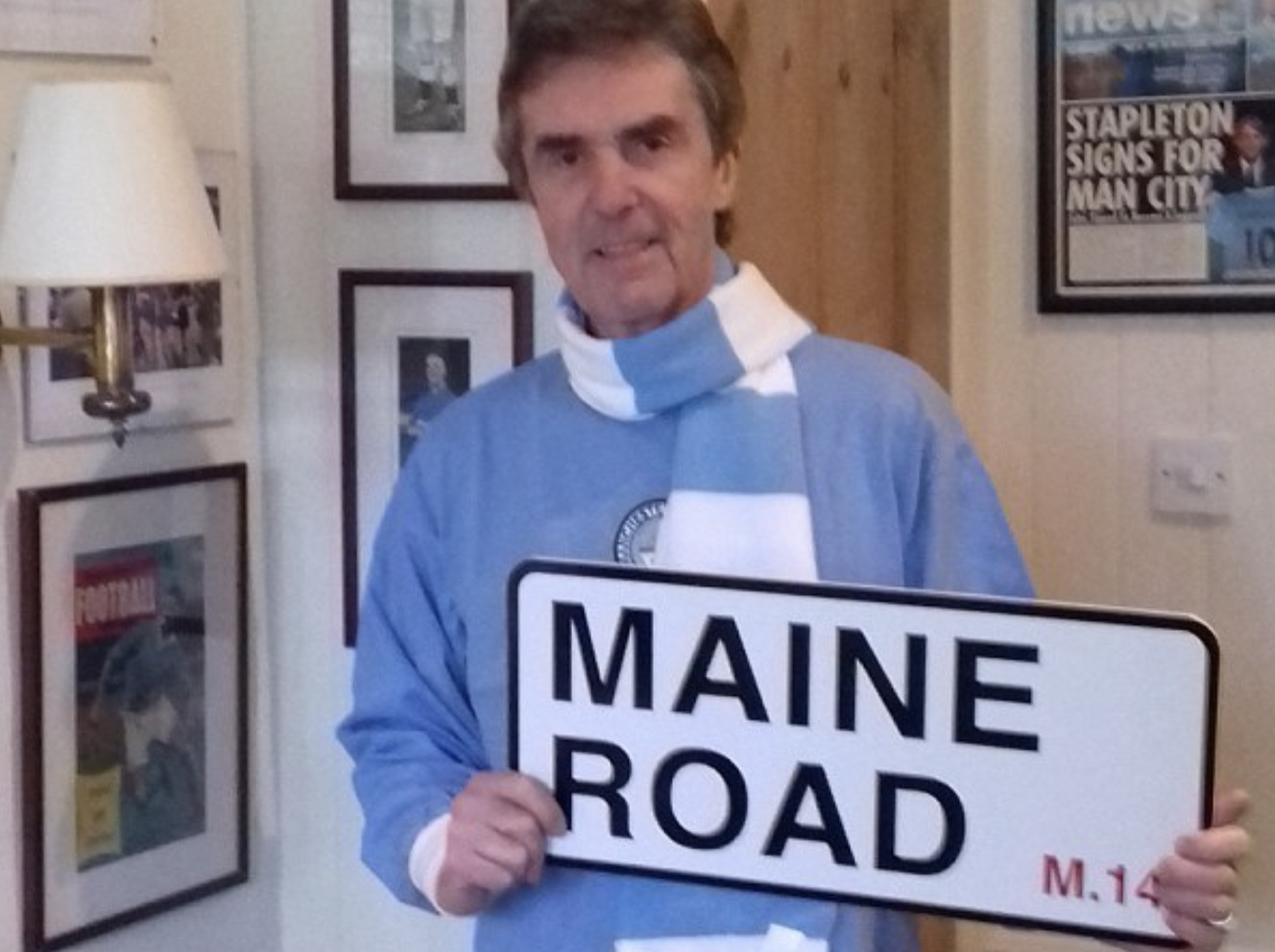
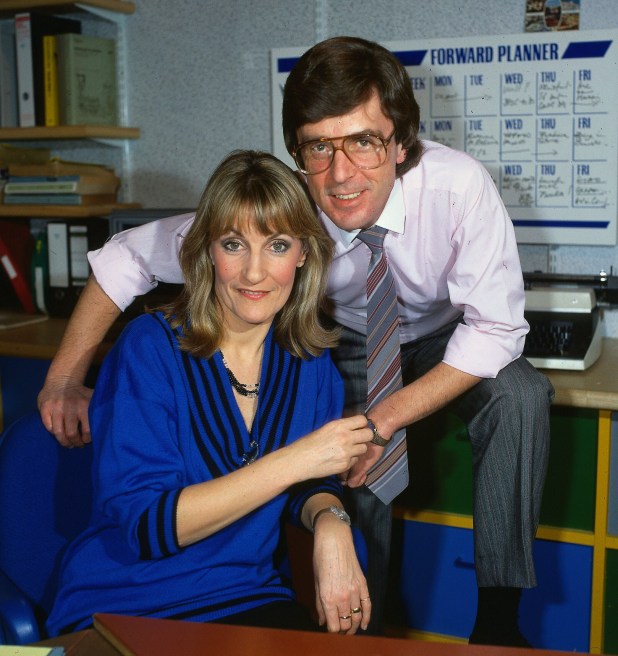
I’ve just seen the sad news that broadcaster John Stapleton has died. I’ve met, chatted with and interviewed John many times over the years and he has always been a nice, helpful, interesting and supportive man. My thoughts are with his son Nick and the rest of his family and close friends.








 Gary James' Football Archive