On this day (21st January) in 1967 the Blues played the Reds in the first Maine Road derby following City’s promotion in 1966. City had lost the Old Trafford derby 1-0 in September 1966 but had high hopes they could get something out of the return match.
The following article provides the background story to the Maine Road derby, a report, and film of the scenes around Maine Road that day (Mercer, Allison & Busby all appear; plus there’s film of fans outside the ground and then trying to climb into the Main Stand from the area behind the then still open Main Stand/Scoreboard End corner).
If you would like to view this article then please subscribe below. It works out about £1.67 a month if you take out an annual subscription (£20 per year) or £3 a month if you’d like to sign up for a month at a time. Each subscriber gets full access to the 500+ articles posted so far and the hundreds scheduled to be posted in the coming weeks.
Subscribe to get access
Read more of this content when you subscribe today.
I didn’t realise this was available but here’s film of a talk plus Q&A I did about the early history of football in Manchester. It’s of interest to anyone keen on the origins of football or any of the Manchester clubs… Indeed the social history of Manchester. It lasts about 55 minutes and was part of the promotional work connected with my book ‘The Emergence of Footballing Cultures: Manchester 1840-1919’, published by Manchester University Press.
Here’s the recording:
If you are interested in the book then that can be bought direct from Manchester University Press or via usual retailers, such as Amazon:
On this day (January 20) in 1900 the attendance stats (see image) seen here were published in various newspapers. Of course, as a historian who researches these sorts of things it does not surprise me at all that Manchester City were the best supported club at this stage. However, I can understand why some may have been surprised back then. City had only just been promoted for the first time the previous season.
In the end Manchester’s Blues ended the season as the third best supported club with an average of 16,000 (League champions Aston Villa attracted 19,825 and 5th placed Newcastle 16,725). City ended the season 7th in the top division.
For those wondering Newton Heath (Manchester United) averaged 6,225 and were the 16th best supported club. Liverpool averaged 11,325 and were 5th best supported club.
On this day (19th January) in 2010 it was the first leg of the all-Manchester League Cup semi final… Back in 1991, together with Steve Cawley, I published The Pride Of Manchester (the history of the Manchester Derby). Ever since then there’s been a desire to update the book to include recent seasons. A few years ago Steve and I did start the process of updating the book but, sadly, we could not find a publisher prepared to produce the book. So, as we’re about to see another League Cup semi-final between City and United, I’ve decided to post here the text we wrote for the 2009-10 League Cup semi-finals. Both legs are covered in this piece which is available to anyone who subscribes to this site (£3 per month or £20 per year – about £1.67 per month – for that subscribers get full access to all posts published so far plus all new posts for the period of their subscription).
Here goes…
Subscribe to get access
Read about the 2009-10 League Cup semi-final and all other content when you subscribe.
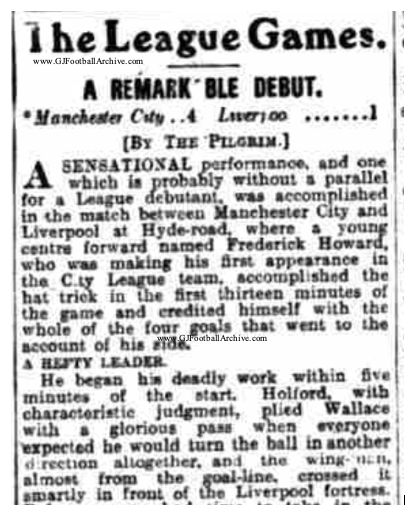
On this day (18th January) in 1913 Manchester City’s Fred Howard scored four goals on his debut against Liverpool at Hyde Road. I love the description of Howard in one report of this game: ‘Howard, a hefty individual who apparently does not believe in allowing the full backs free kicks, had pounced on the ball’. I think we’ve all seen a few ‘hefty individuals’ who did not ‘believe in allowing the full backs free kicks’ over the years!
A report also warns that Howard: ‘would do well to remember that he will not always be served as he was on this occasion. Nor will he have a much easier task’. I’m pretty sure Howard did not expect to score four goals in every game.
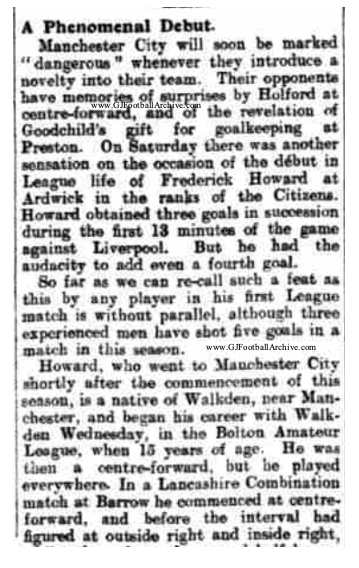
Howard, from Walkden, ended his City career after scoring 43 goals in 90 first team competitive games. Note in this article (below) the use of the nickname Citizens to describe the Blues. Maybe one day I’ll do a piece on club nicknames but I do know that many fans didn’t feel the word Citizens (or Cityzens as it is usually written these days at the club) had much to do with the club when City re-adopted it a few years back. It was certainly used a lot when talking of the club from 1894 through to perhaps the inter-war period.
Three of Howard’s goals came in a 13 minute spell as the Blues won 4-1. It was regarded as the greatest debut feat by any player at the time. Even now, over a century later, it’s hard to think of any player having a better debut.
Over the years plenty have talked of players scoring hat-tricks on debuts around the globe but how often do you hear of a player scoring four in the top flight of a major League against a team that is regarded as one of your main rivals? After this game Liverpool had dropped to 13th in the First Division, while City were fifth.
This was just a brief taster of the content in GJFootballArchive.com. If you would like to read the in-depth, longer articles (including the entire Manchester A Football History book) then please subscribe below. It works out about £1.67 a month if you take out an annual subscription (£20 per year) or £3 a month if you’d like to sign up for a month at a time. Each subscriber gets full access to the 500+ articles posted so far and the hundreds scheduled to be posted in the coming weeks.
Subscribe to get access
Sign up today to ensure you can access all the content on GJFootballArchive.com
This is week 31 of Historic Name That Ground. As always, please leave your comments in the comments area at the bottom of this website page. Do you recognise this ground? On Friday I’ll post the answer. Here are a few clues…
Can you name the ground featured in the image above? This is a 1950s photo of this ground which during that decade underwent some major changes. The ground remains a League venue today and Manchester City have played there in a prominent game. Much of the area will still be recognisable to those who visit the ground.
Post your answer below in the comments field and I’ll give the answer on Friday.
While you’re here why not subscribe to my site and you can then access every article, interview, audio recording etc. already posted and those that will be posted during your subscription. It costs £20 per year (about £1.67 a month) or you can sign up on a monthly basis at £3 per month (you can cancel at any time, so you could sign sign up for a month, access everything you want and then cancel). You can subscribe below:
Subscribe to get access
Read more of this content when you subscribe today.
On this day in 1981: The League Cup semi final! The 1981 League Cup semi-final has gone down in history as one of the absolute grudge moments between Manchester’s Blues and Liverpool’s Reds. People often think the two clubs have only been rivals in recent years but throughout the late 60s, 70s and early 80s games between the two clubs were viewed as major events.
This tie in 1981 is one that still angers many associated with Manchester City, including former players and officials. If you would like to read the story of the tie and the reasons why, then please subscribe to this blog.
If you would like to read the in-depth articles on this site, plus content such as the entire Manchester A Football History book, then please subscribe below. It works out about £1.67 a month if you take out an annual subscription (£20 per year) or £3 a month if you’d like to sign up for a month at a time. Each subscriber gets full access to the 500+ articles posted so far and the hundreds scheduled to be posted in the coming weeks.
Subscribe to get access
Read more of this content and everything else on GJFootballArchive.com when you subscribe today.
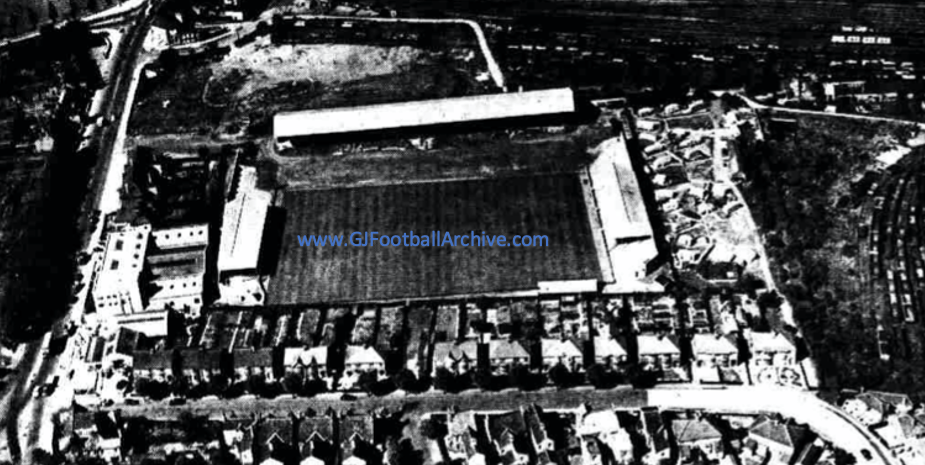
Did you recognise this ground? This is a 1920s photo of this ground which, at the time was fairly new. The ground remains a prominent venue today and has staged Premier League games. The curved road still exists, as does much of the housing. In fact even the stand that’s clear on this photo existed last time I went to this ground, though plans were made in recent years to replace it (work should have started and be progressing well but I’ve not checked). Here’s the answer…
It’s Crystal Palace’s Selhurst Park.
While you’re here why not subscribe to my site and you can then access every article, interview, audio recording etc. already posted and those that will be posted during your subscription. It costs £20 per year (about £1.67 a month) or you can sign up on a monthly basis at £3 per month (you can cancel at any time, so you could sign sign up for a month, access everything you want and then cancel). You can subscribe below:
Subscribe to get access
Read more of this content when you subscribe today.
I had planned to run ‘Historic Name That Ground’ only during the close season 2021 as in previous years, but it’s proving of interest so I’ll keep it going for a little while yet. If you have an old image of a ground that you think it’d be worth including in this weekly quiz then please get in touch. They don’t have to be from the 1900s to 1960s – even ground images from the 70s and 80s may prove a challenge to identify these days. You can email me at gary@GJFootballArchive.com Thanks.
It’s fitting we end this chronicle of the 20th century with last season. With typical City style, the Blues waited until the last year of the century to feature in one of the most dramatic and eventful seasons in the club’s history. Life in Division 2 was totally alien to the Blues, and understandably the media rated them as clear favourites for the Division 2 title. Supporters were uneasy, however. Promotion may have been a formality as far as the media were concerned but for City fans it was hoped for – even demanded – but not expected. Not by all at least. Nevertheless, there was a perverse excitement about the new season.
Subscribe to get access
Read more of this content when you subscribe today.
The latest ground to identify… Do you recognise this ground? On Friday I’ll post the answer. Here are a few clues…
Can you name the ground featured in the image above? This is a 1920s photo of this ground which, at the time was fairly new. The ground remains a prominent venue today and has staged Premier League games. The curved road still exists, as does much of the housing. In fact even the stand that’s clear on this photo existed last time I went to this ground, though plans were made in recent years to replace it (work should have started and be progressing well but I’ve not checked).
Post your answer below in the comments field and I’ll give the answer on Friday.
While you’re here why not subscribe to my site and you can then access every article, interview, audio recording etc. already posted and those that will be posted during your subscription. It costs £20 per year (about £1.67 a month) or you can sign up on a monthly basis at £3 per month (you can cancel at any time, so you could sign sign up for a month, access everything you want and then cancel). You can subscribe below:
Subscribe to get access
Read more of this content when you subscribe today.
I had planned to run ‘Historic Name That Ground’ only during the close season 2021 as in previous years, but it’s proving of interest so I’ll keep it going for a little while yet. If you have an old image of a ground that you think it’d be worth including in this weekly quiz then please get in touch. They don’t have to be from the 1900s to 1960s – even ground images from the 70s and 80s may prove a challenge to identify these days. You can email me at gary@GJFootballArchive.com Thanks.




 Gary James' Football Archive