COMPETITION WINNER: From Maine Road To The Etihad 100 Years Book

The winner of a copy of the new book on Maine Road and the Etihad has been drawn. It is Steve Doohan. Congratulations Steve. The publisher, Reach, will be posting it out soon.

The question was: Who was the architect of Maine Road when it was first built in 1923?

The answer was Charles Swain. We had dozens of correct answers so we’ll done to Steve.

As for the book…

I’m delighted to say I’m one of the co-authors on the new book which focuses on Maine Road and the Etihad stadia (the two most recent permanent homes of Manchester City).

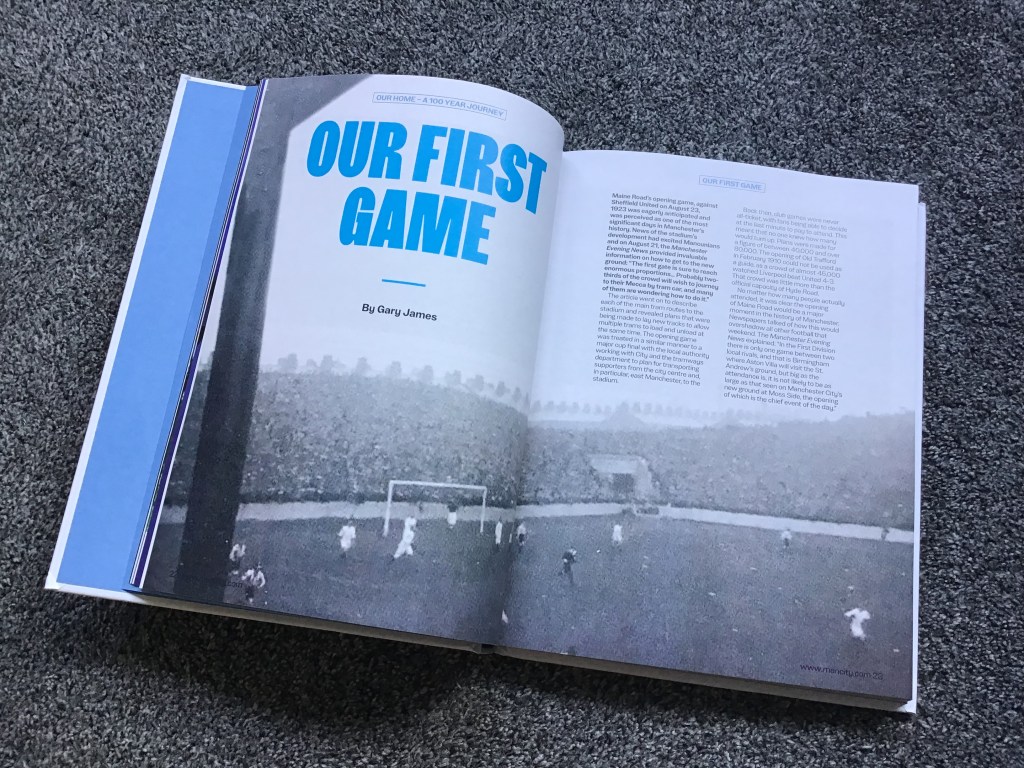
I’ve contributed the Introduction, the story of Maine Road’s first game and the 100 Maine Memories of Maine Road. I tried to make sure the 100 Maine Memories cover both the great and the unusual so, inevitably, Colin Bell is featured but so is the wonky North Stand scoreboard! If you attended Maine Road it will all make sense and if you didn’t it’ll give you a great feel for what life was like at the old place.

Please enter the competition and good luck with it.

While you’re here, why not subscribe to the website and unlock all the articles on here? See:

If you enjoy all the free material on my website and would like to support my research and keep this website going (but don’t want to subscribe) then why not make a one-time donation (or buy me a coffee). All support for my research is valued and welcome. It allows me to keep some free material available for all. Thanks.

Choose an amount

£2.50
£5.00
£7.50

Or enter a custom amount

£

Your contribution is appreciated.

Donate

Plaque Unveiling at 12

A Blue plaque and other tributes to the pioneering women’s football team Manchester Corinthians will be unveiled at noon today (6 October 2023) at the site of their formation, Fog Lane Park, Didsbury, Manchester. In attendance will be over 20 women who played for the club between 1949 and 1983 and representatives from the Football Association, Manchester Football Association, Manchester City Council, football fans, members of the public and former England international Kerry Davis.

I’ve talked about the women often and what they achieved but here are several interviews with a few of the women who played for Corinthians. This link includes filmed interviews we did with Gail Robertson, Jan Lyons and Lesley Wright (all Corinthians) plus there’s an interview with Jane Morley who played for United Ladies and went on to coach City Ladies too:

https://www.thefa.com/competitions/uefa-womens-euro-2022/heritage/trafford-heritage

And the last film on the following web page is of an interview with Margaret Shepherd and Margaret Whitworth. Enjoy:

https://www.thefa.com/competitions/uefa-womens-euro-2022/heritage/wigan-and-leigh-heritage

About Manchester Corinthian Ladies Football Club

Manchester Corinthian Ladies FC was an English football club founded in 1949 by Percy Ashley. He established the club because his daughter Doris wanted to play football but couldn’t find a team. At this time The FA ban on women’s football using FA affiliated grounds was in place (from 1921; lifted in 1970). During the inaugural seasons the Corinthians played friendlies and in small scale competitions in the UK, but during the mid to late 1950s they embarked on a series of European tours.

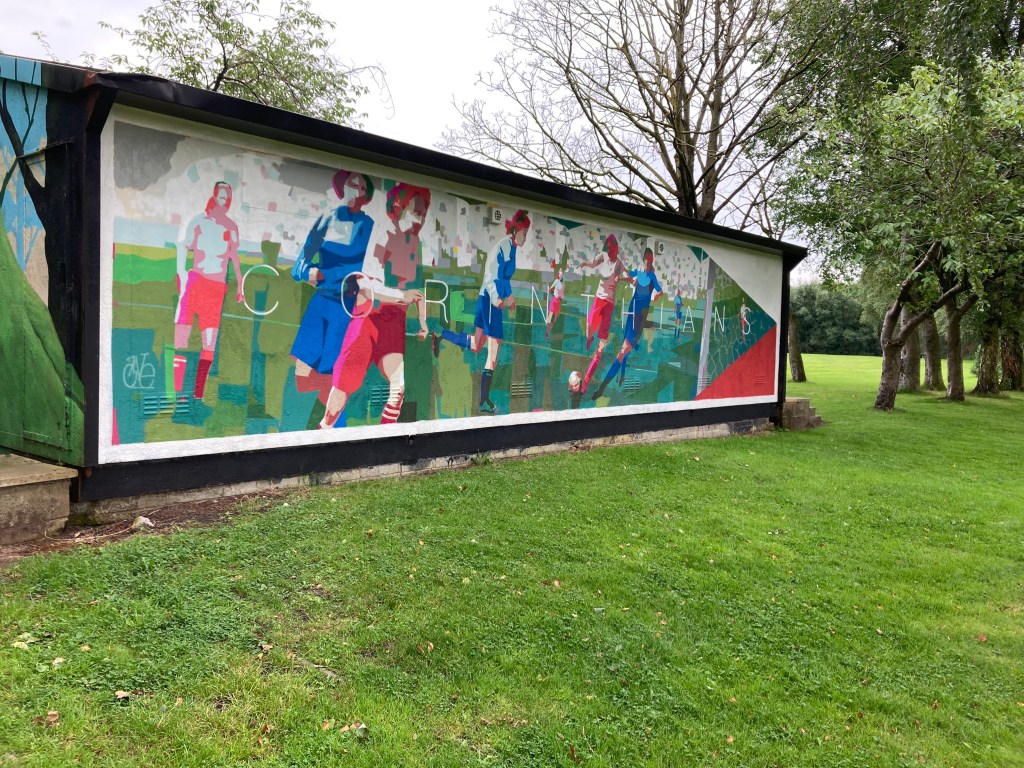
Manchester Corinthians mural by artist Gavin Renshaw

Their fame grew and they received invites to play across Europe, in Africa and in South America. Occasionally playing as an unofficial England side in tournaments (these were the days before there was an official England team), they found success often, becoming the most successful women’s team by some distance.

Under the management of Percy Ashley, followed by Gladys Aikin and then George Aikin, the Corinthians were important representatives of women’s football, both internationally and domestically, always contributing to the game’s growth and development.

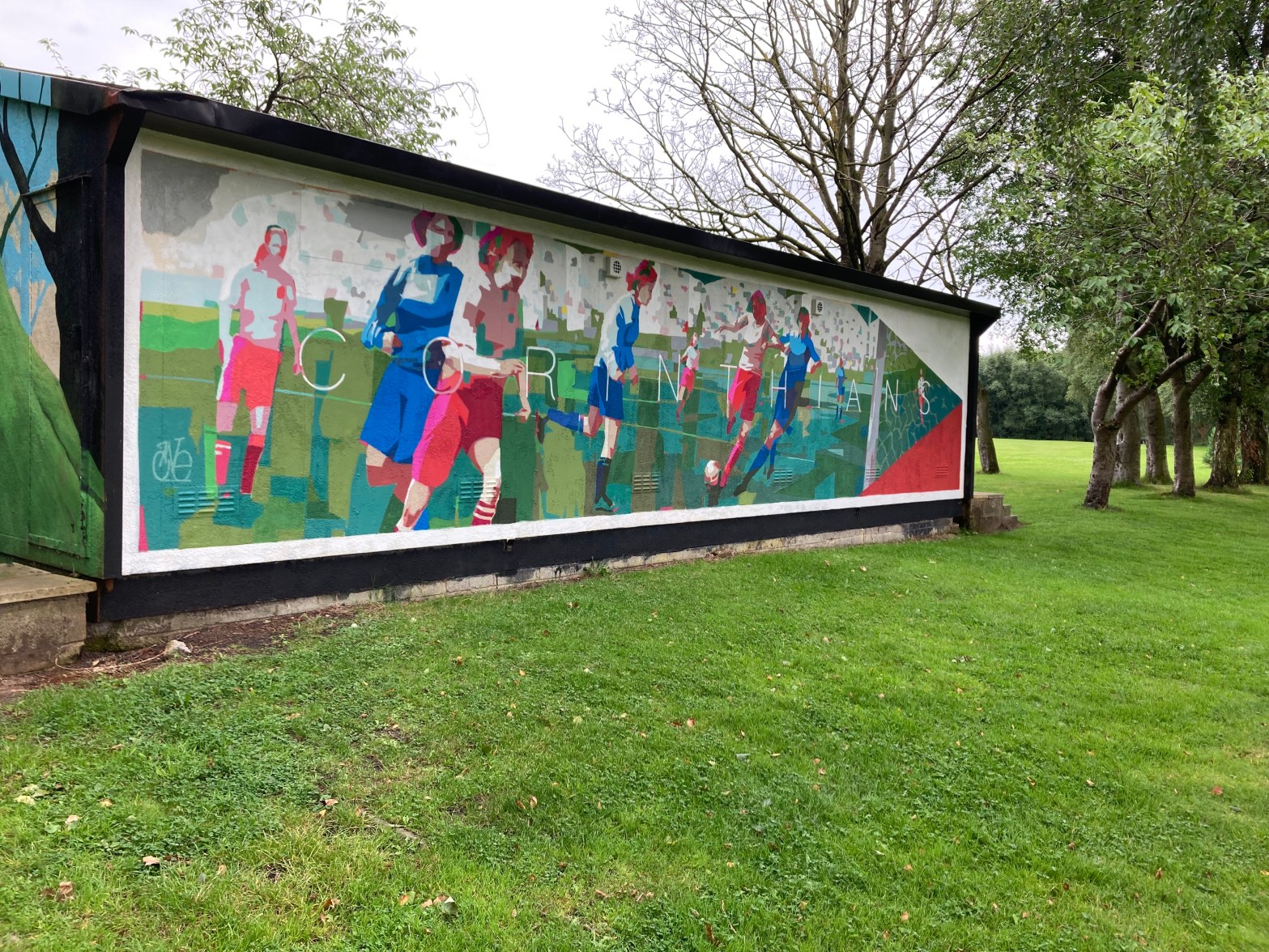
Washing in the duck pond, Manchester Corinthians by Artist Gavin Renshaw

Corinthians Interview & Franny Lee Tribute

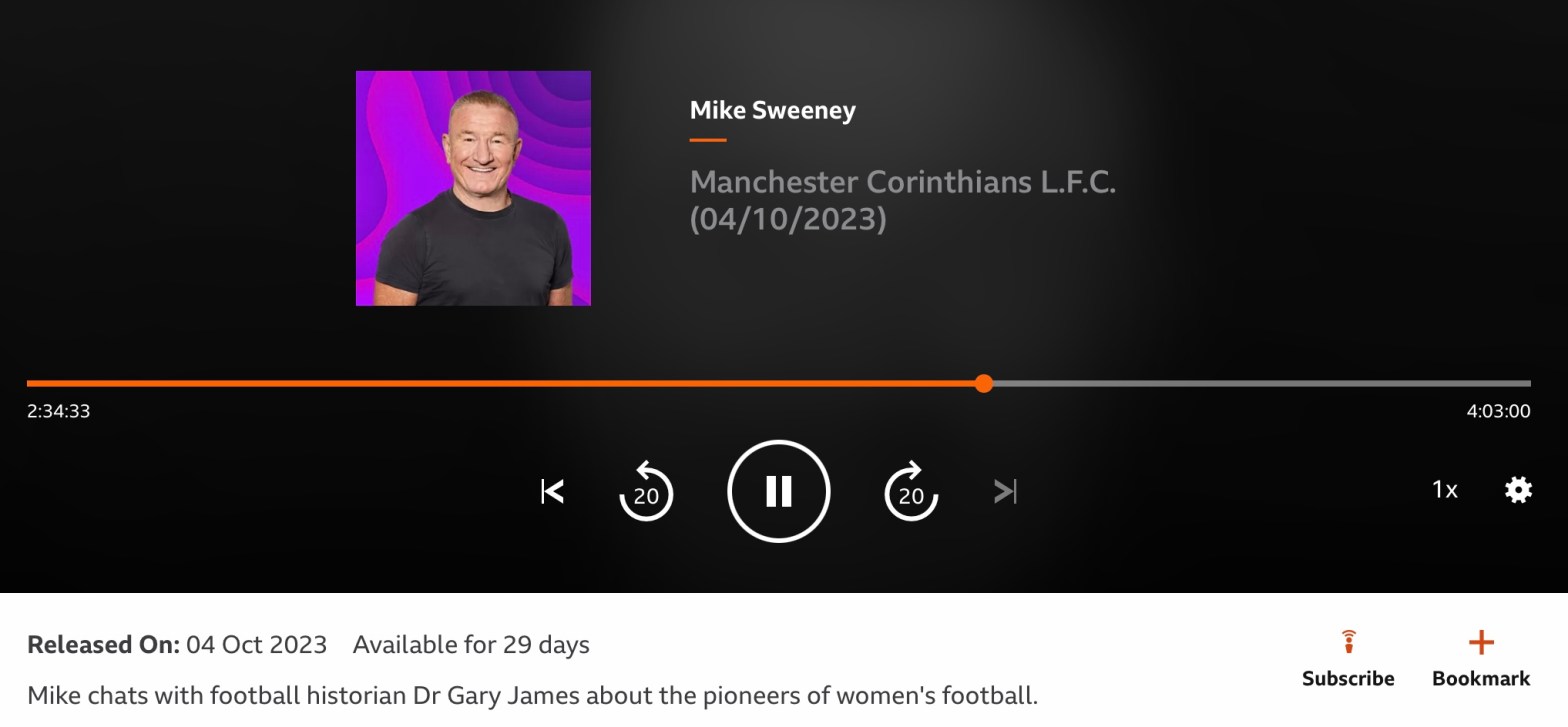
Part two of the interview with Mike Sweeney on Radio Manchester has aired today and at the end of it I say a few words about Francis Lee too. The interview was to discuss the Manchester Corinthians and can be heard here (it starts with Margaret Whitworth and Margaret Shepherd at 2 hours 30 minutes):

https://www.bbc.co.uk/sounds/play/p0gd2w4m

Plaque Unveiling Tomorrow!

PIONEERING WOMEN’S FOOTBALL TEAM TO BE RECOGNISED WITH A BLUE PLAQUE TOMORROW!

  • Manchester Corinthian Ladies Football Club to be recognised with a blue plaque
  • Unveiling will take place at Fog Lane Park, Didsbury, their home for over 20 years from formation in 1949
  • The plaque, two murals of the team and other tributes will be unveiled at the park tomorrow (Friday 6 October) at noon
  • The plaque and murals were funded by an appeal which included significant donations from the Football Association and Manchester City Council, alongside dozens of individual donations including one from the Dick, Kerr Ladies Foundation, demonstrating the great community of women’s football that existed in North West England
  • Over 20 players, including a 92 year old who joined the team at formation, will be in attendance

A Blue plaque and other tributes to the pioneering women’s football team Manchester Corinthians will be unveiled on Friday 6 October at noon at the site of their formation, Fog Lane Park, Didsbury, Manchester. In attendance will be over 20 women who played for the club between 1949 and 1983 and representatives from the Football Association, Manchester Football Association, Manchester City Council, football fans, members of the public and former England international Kerry Davis.

One of the former players in attendance will be 92 year old, Dorothy Alcock, who first joined the team at formation in 1949. Others present on the day participated in trophy winning tours across Europe and South America during the fifties, sixties and seventies.

The Corinthians raised significant amounts of money for charity during their existence while also promoting football and female endeavour at a time when participation in the sport was often frowned upon.

During the 1950s, playing as an unofficial England side, the Corinthians won a major European tournament in Germany and were supported on their travels by legendary Manchester City men’s goalkeeper Bert Trautmann.

In 1960 they found success in an unofficial ‘World Cup’ (officially the first ‘Torneo Internacional De Futbol Femenino’) in Venezuela as part of a significant tour of the West Indies and South America. Former player (outside right) Margaret Whitworth recalls: ‘We were treated like film stars. There were crowds everywhere we went. Playing in front of 56,000 was thrilling and the way women’s football was treated was so different to how it was back in England at the time. Here we had to play on park pitches or at other sports grounds, but there we played in major football stadiums.’

During the late 1960s the club’s management played a leading role in the creation of the Women’s Football Association. Both the Corinthians and their sister club the Nomads were founder members but their manager Gladys Aikin became a member of the governing body’s committee. By this time their determination was to see the growth of the game and lifting of all barriers.

The Corinthians continued to play and by the end of the 1970s they were frequently coached by the Manchester City 1956 FA Cup winner Dave Ewing at City’s Platt Lane training complex.

During the 1980s a ground move led to the club being renamed Woodley Ladies, and that club ceased to exist by the end of the decade. Many of the Corinthians from the late 1970s and 1980s became players with Manchester City’s women’s team during its inaugural season of 1988-89.

Today at least one former Corinthian, Lesley Wright, plays walking football at the highest level possible and continues to coach women’s football, continuing the Corinthian influence through to the modern day development of the sport.

The plaque and murals were funded by an appeal which included significant donations from the Football Association and Manchester City Council, alongside dozens of individual donations. The community group, the Friends of Fog Lane Park, have been instrumental in ensuring the Corinthians are remembered and that this aspect of the park’s life is properly recorded and acknowledged. The murals were designed and painted by artist Gavin Renshaw.

Manchester Corinthians mural by artist Gavin Renshaw
Washing in the duck pond, Manchester Corinthians by Artist Gavin Renshaw

About Manchester Corinthian Ladies Football Club

Manchester Corinthian Ladies FC was an English football club founded in 1949 by Percy Ashley. He established the club because his daughter Doris wanted to play football but couldn’t find a team. At this time The FA ban on women’s football using FA affiliated grounds was in place (from 1921; lifted in 1970). During the inaugural seasons the Corinthians played friendlies and in small scale competitions in the UK, but during the mid to late 1950s they embarked on a series of European tours.

Their fame grew and they received invites to play across Europe, in Africa and in South America. Occasionally playing as an unofficial England side in tournaments (these were the days before there was an official England team), they found success often, becoming the most successful women’s team by some distance.

Under the management of Percy Ashley, followed by Gladys Aikin and then George Aikin, the Corinthians were important representatives of women’s football, both internationally and domestically, always contributing to the game’s growth and development.

Manchester City Ship

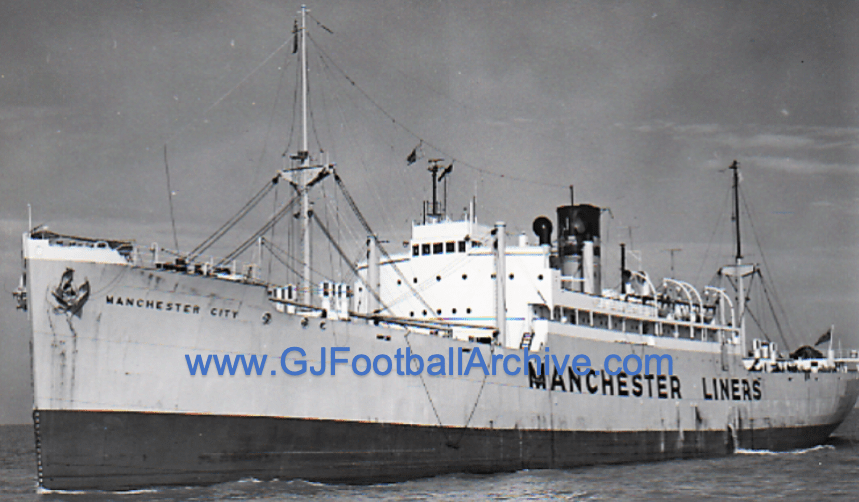
Today (5 October) in 1937 the Manchester City team visited the ship that had been named after them, following their title success earlier in the year. You can see more about this Scottish built ship here:

https://www.clydeships.co.uk/view.php?ref=2540

Radio Manchester Feature

Earlier today both BBC Radio Four’s Today programme and BBC Radio Manchester’s Mike Sweeney show featured interviews about the Manchester Corinthians and the blue plaque unveiling which will be happening this Friday at Fog Lane Park, Didsbury.

The Radio Four interview was with Margaret Whitworth (Whit) and Margaret Shepherd (Tiny) at 7.40 this morning and the Radio Manchester interview has been split into two parts. Part one was played today and begins with Whit & Tiny talking, which was recorded as part of that Radio 4 interview, then Mike Sweeney & I discuss the Corinthians and the club’s history.

The Radio Manchester feature starts at about 2 hours 34 in on this programme:

https://www.bbc.co.uk/sounds/play/p0gd2vdx

Part two is tomorrow but I’m not certain what time.

Good work Whit & Tiny and thanks to Mike Sweeney, who has a genuine love of football and was good at putting it into context/introducing it too. I think Mike first interviewed me at Piccadilly Radio back in the 1990s.

Tommy Booth Move

On this day (4 October) in 1981 Longserving Manchester City defender Tommy Booth moved to Preston North End. Tommy had made his City debut against Huddersfield Town (a) on 2 September 1968 in the League Cup with his League debut coming against Arsenal (h) on 9 October 1968. Joe Mercer once described the former Middleton Boys player as the ‘best footballing centre-half since Stan Cullis’ and Joe would know.

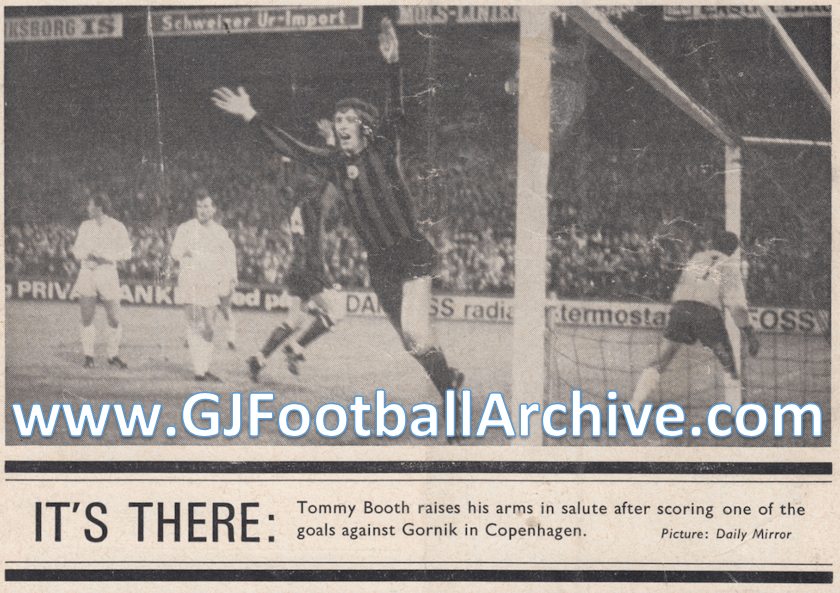
The image is of Tommy Booth scoring V Gornik in Copenhagen in 1971.

Corinthians’ Plaque Radio To Listen Out For

Tomorrow morning at about 7.40am Margaret Whitworth & Margaret Shepherd, two Manchester Corinthians, should be on BBC Radio 4’s Today programme talking about their experiences and the plaque unveiling. It would be great to hear them talk about their footballing experiences.

Earlier today I recorded a piece with Mike Sweeney for his BBC Radio Manchester show. That will either be played tomorrow morning or on Thursday, so again please listen out for it. Understandably, I was also asked about Francis Lee which may also make it on to the show.

Also, here’s a Manchester Evening News story on the Corinthians and the tributes to them. Thanks to Neal Keeling for your efforts.

https://www.manchestereveningnews.co.uk/news/greater-manchester-news/they-toured-globe-great-pride-27798317

Here’s another Neal Keeling article. This one on Francis Lee and I’m quoted a little bit too:

https://www.manchestereveningnews.co.uk/sport/football/football-news/francis-lee-tenacious-skilful-brave-27828769

Newcastle Thrashed

Manchester City defeated Newcastle United 6-1 eight years ago today (3 October 2015). It was a day when Sergio Aguero scored five and I remember being disappointed that he was substituted off – no City player has ever scored more than five in a competitive game that wasn’t abandoned! I had hoped that Sergio would become the first man to score six for the Blues (Yes, I know Denis Law scored 6 in a game but that was abandoned and wiped from the records). Anyone remember who scored the other City goal? See below for the answer.

You can see highlights of the Newcastle game here:

https://www.mancity.com/citytv/match-highlights/2015/october/city-v-newcastle-united-extended-highlights

The other City scorer that day was Kevin De Bruyne.

Francis Lee

It is with immense sadness that I write this but the news has now been announced that the former Bolton, Manchester City, Derby & England star Francis Lee has died. There are so many things to say but probably best if I post here a long profile of him that I’ve previously written:

A World Cup international for England, Francis Lee remains one of Manchester City’s most famous former players and one of the Club’s greatest heroes.

Early Life

Born in Westhoughton, on the edge of Bolton, Francis remembers that sport played a big part in his early life.  His father used to play a lot of football with him and encouraged him to develop his skills.  The young Francis would play any other sporting activity, but it was football which brought him to the attention of the local scouts.  

While training at Horwich Technical College an offer came from Bolton Wanderers:  “I went to college in Horwich but left to sign for Bolton.  The principal said I was stupid but my father, who had spent forty years working in a cotton mill doing something he didn’t like, said why not give it a crack.  He said I could always go back to college if I didn’t make the grade, and the idea was to give myself a year.  Within six months I thought I had a chance of making it.”

Francis’ new footballing career was about to develop at an incredible pace.  On Bonfire Night 1960, he made his debut at the age of 16 after only appearing in eight Central League matches.  The game was, co-incidentally, against Manchester City and Bolton won 3-1 with Francis marking a superb debut with a goal:  “I scored at exactly 3.15.  I know because there was a photo of me the next day, heading past Bert Trautmann with the time on the stand clock in the background.”

To score a debut goal against such a legendary goalkeeping figure was clearly something Francis could hardly have dreamed of six months earlier, and inevitably it was enough to keep the Westhoughton youngster in the side for the following five League games.  A further five games followed in 1961-62, and then the next season Francis found himself having a sustained run in the side making 23 League appearances and scoring twelve goals.  Four of those goals came from the penalty spot, including two in a game at West Bromwich Albion in September, and it’s fair to say Francis’ success from the penalty spot throughout his career helped to develop his name.  

Malcolm’s Bath

During January 1964 Francis played against Malcolm Allison’s Bath City in the FA Cup.  On a miserable and difficult pitch at non-League Bath Bolton were awarded a penalty.  Francis prepared to take the kick but as he did so he heard his own captain whisper to another Bolton player:  “He’s due to miss one, you know.”  Whether it was the conditions or the vote of ‘no confidence’ is unclear but the penalty was not one of Francis’ best.  It did, however, go into the net off the inside of the post.  It may not have been the perfect penalty, but it certainly made Bath’s Malcolm Allison notice the player, and it saved Bolton from an embarrassing defeat.  

The match went to a replay and the Trotters won the return 3-0 with Francis once again scoring from the penalty spot.  Francis’ approach to penalty taking is clear:  “You’ve got to want to take penalties to be good at it.  You’ve got to enjoy it.  The kick itself is the easy part.  Any player who can’t hit the corner of the goal from twelve yards shouldn’t be playing.  Nerve is the key.  Everyone said I blasted the ball, but I used to aim for the stanchion and hit the ball at three-quarter speed, pretending I was passing the ball fifty or sixty yards.  I would take a long run up to give the ‘keeper longer to think about it – it gave him less of an idea which side I was going to hit it.”

Time to Leave

Francis’ career at Bolton continued until October 1967.  By that time he had made a total of 210 League and cup appearances and netted 106 goals, and was clearly a man other sides were interested in.  Unfortunately, his final year had become a difficult one as far as his relationship with the club was concerned:  “It was enjoyable at Bolton, but frustrating.  I really wanted to get away from the age of 18 or 19 because I could see they were going nowhere.  The wages were poor and the club just wasn’t changing with the times on or off the field.  My contract was up in the June (1967) and they didn’t want to sell me, so I signed a monthly contract.  Bolton said they would never sell me and offered £150 a week to stay.  I was only on £30 at the time, but I knew the only chance to further my ambition was to leave.  By October I had served my contract, and the option, and virtually retired!  I hadn’t played football for about three weeks.  I just did a bit of training on my own.  Eventually, Bolton realised they had a rapidly depreciating asset.”

Manchester City were interested from the start.  Malcolm Allison remembered Francis from the Bath-Bolton match and, of course, he had played in the Bolton-City Second Division game in November 1965, but the Blues were not the only interested party.  Stoke made an offer; Wolves were very keen; and Bill Shankly at Liverpool had also been very interested, but in the end it was Joe Mercer and Malcolm Allison who got their man.  

At one point Mercer turned to the player and said:  “I hope you will sign.  We feel we’ve got the start of a good side.  We are just one player short, and we think you are that player.  The odd goal or two will turn us into a great team.”

But even after the main negotiations had been agreed the transfer still stuttered – the League refused to accept the registration at first.  Eventually Francis did sign, and his transfer did help turn City into a great side as Mercer predicted.  Within seven months of his arrival the Blues were League Champions for the first time since 1937.

Playing on the right, with Mike Summerbee as centre-forward, Francis scored sixteen League goals in 31 games and ended that Championship season as second highest goalscorer – only three short of Neil Young.  There had been many thrilling and memorable performances with famous victories over Tottenham, Manchester United, and the last day tussle with Newcastle all grabbing the headlines.  Francis was a key player in each of these games, but it’s fair to say he excelled throughout the season.  Prior to his arrival, City had lost five of the eleven games they had played, with Francis in the side that record improved considerably and they were worthy champions.  Mercer had been right, Francis was the last piece of the jigsaw.

Cup Success

Much was expected of the Blues at the start of the following season, but injury to Tony Book affected City more than anyone could have anticipated.  In addition, every side seemed to raise its game when it faced City making average opposition appear like world beaters.  Francis was moved into the number nine shirt for the second half of the season and, although league form remained mixed, City started to compete well in the FA Cup.  Francis: “Having murdered everybody in my first season, we floundered as soon as the next season started.  We thought we had a divine right to go out and thrash people.  Mike (Summerbee) didn’t start very well at centre-forward because opponents got wise to his style.  So they changed us.  I was perfectly happy, it didn’t matter where I played.  But I don’t think centre-forward was my best position.  I was happiest when I was supporting a big striker.”

“When I played for England, Geoff Hurst was the striker up front, and when City bought big Wyn Davies I scored 33 goals one season.  In my time at Maine Road there was talk of buying Joe Royle or John Toshack and I think if we had, my record would have been better.”

The 33 goals mentioned by Francis came in 1971-72 and remains the second highest total of goals scored in a League season by a Blue, but before that Francis played in three major finals for City.  The first, the FA Cup in 1969, saw City defeat Leicester 1-0 with a goal from Neil young:  “I was delighted to beat Leicester and win the cup, but I didn’t have the best preparation for the Final.  I’d been out since the semi with a leg strain, and though I was fit, I had missed a couple of weeks’ training.  I don’t think I played outstandingly, I just had an average game, which was a shame.”

Less than a year later Francis did play a major part in the League Cup success over West Bromwich Albion, and the ECWC win over Polish side Gornik Zabrze.  Writing in his autobiography in 1970 Francis felt the Gornik match had been tough at times:  “The result was better than we dared hope.  Secretly, I thought beforehand that Gornik were going to be really difficult, and that with Mike Summerbee out we could easily struggle unless we hit absolutely peak form.  After eleven minutes Neil Young snapped up a chance presented to him by a lapse on the part of Poland’s international ‘keeper Kostka, and two minutes from half-time I hit a penalty in via the ‘keeper’s legs.”

“Our rhythm was disturbed for a while when Doyle was carried off in the first half with a leg injury, but we seemed to be cantering to victory when the Poles surprisingly pulled back the score to 2-1 in the 69th minute.  The rain had started to bucket down, and even when they scored I felt our only chance of losing the game was if it was called off.  There was a real fear of this at one time, but Gornik obviously sensed they were back in with a chance because they tried to put the pressure on us.  Even their goal was diverted off George Heslop and I think Joe Corrigan would have saved but for this.”

“In the last few minutes I think Gornik got the message that we had been on top throughout the game and intended staying on top.  We certainly felt we were good winners.”

Derby Move

After Gornik, City were seen as one of football’s most glamorous sides and Francis, with his never say die, bustling style, was a firm favourite.  His goals in 1971-72 brought City within a point of the title, and then in 1974 the Blues reached Wembley again in the League Cup final.  Sadly, the game ended in defeat, and at the end of that season Francis was sold to Derby County:  “I didn’t want to leave, I felt I had a couple more good seasons in me but Tony Book (the manager) said he thought it would be better if I went.”

Francis moved to Derby County and, as if to prove City wrong, the entertaining forward helped his new club to the League title:  “I think City would have won the League that season if I’d stayed.  The season before I signed for Derby, they won four away games.  We won seven after I arrived and won the League.”

Of course, Francis’ success wasn’t only confined to club football. He was also a wonderful England forward, scoring ten goals in 27 international appearances between December 1968 and April 1972.  There are many who felt his international career should have continued for at least another year, however it is worth stressing that he appeared for England at a time when there were many, many quality attackers desperate to make an impression.  The England side of 1970, for example, is believed to be one of the strongest national sides of all time.  Francis himself believes the 1970 side was one of quality:  “I played three games in the 1970 World Cup finals and I felt we had a better side than in ’66.  The players who had won the Cup were more experienced and I think the fringe players were better.  If we hadn’t gone out to West Germany in extra-time in the quarters, I think we would have gone on to win it.  Brazil certainly didn’t fancy playing us.”

Retirement

In 1976 Francis retired.  His final game came on 24th April 1976 when he scored twice for Derby against Ipswich in the final two minutes – a perfect way to end a great career.

After football, Francis spent most of his time developing his business interests, most notably his toilet paper manufacturers, and horse racing training.  His business interests had started while he was still a Bolton player and helped make Francis a multi-millionaire. Inevitably there was often talk during the 1980s and early 90s that Francis would one day turn his attention back to City.  During 1993-94 the fans backed a campaign to help him take over the Club, and he went on to replace Peter Swales as Chairman.  Off the pitch, the structure of the Blues improved considerably, however on the pitch activities struggled.  

In 1998 Francis stepped down as Chairman.  After that time Francis continued to be a major shareholder and regular attendee at City.  It’s fair to say his time as Chairman did not bring the level of success everybody anticipated, but his time as a player certainly brought more rewards than any neutral could have predicted on the day he signed in October 1967.

Francis will always be remembered as one of Manchester City’s greatest international players, and a firm favourite with supporters.