An On This Day Always Worth Remembering

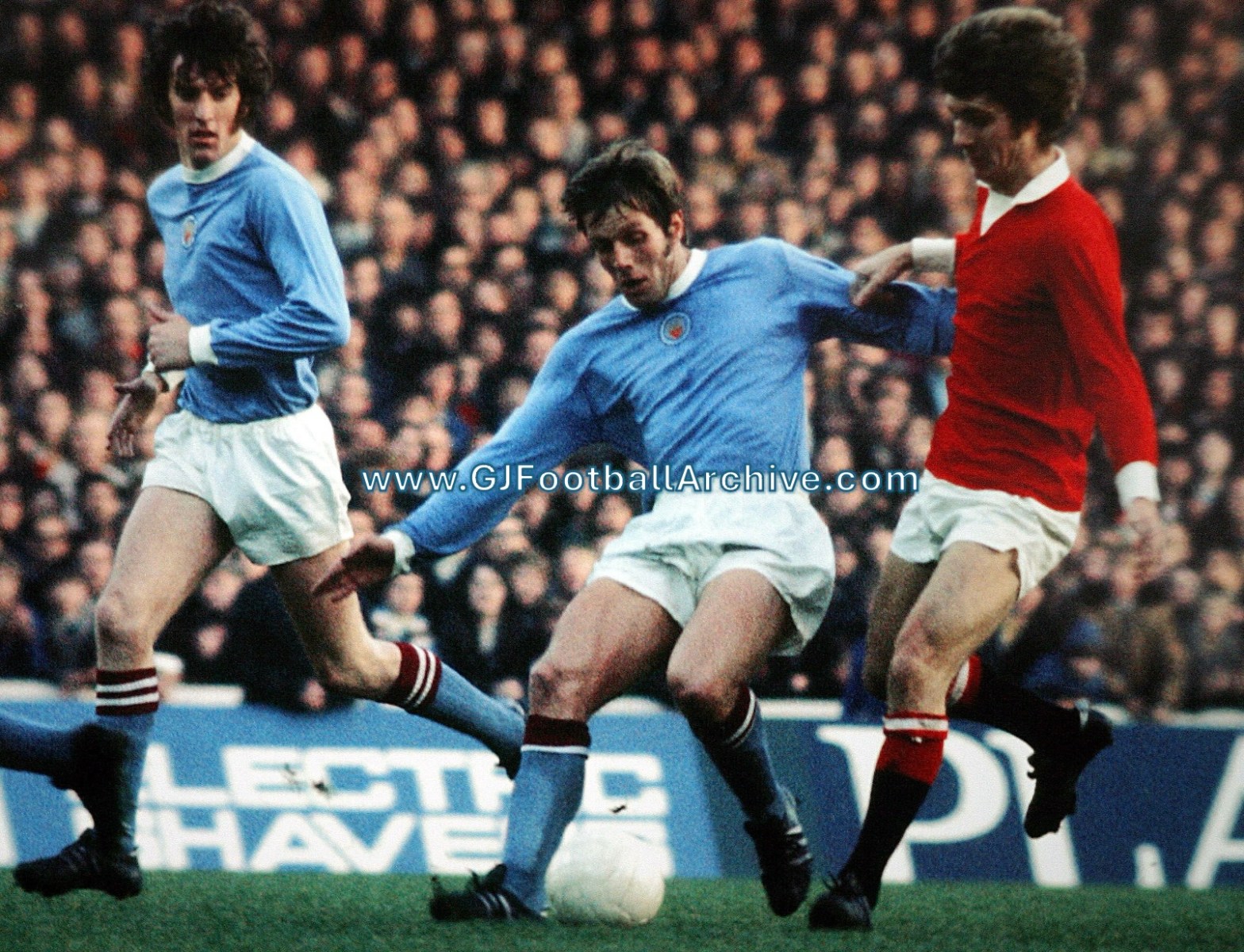
On this day (9 October) 59 years ago Manchester City signed Francis Lee. Here is a long profile of him that I’ve written, together with links to other stories and audio tributes to him too:

A World Cup international for England, Francis Lee remains one of Manchester City’s most famous former players and one of the Club’s greatest heroes.

Early Life

Born in Westhoughton, on the edge of Bolton, Francis remembers that sport played a big part in his early life.  His father used to play a lot of football with him and encouraged him to develop his skills.  The young Francis would play any other sporting activity, but it was football which brought him to the attention of the local scouts.  

While training at Horwich Technical College an offer came from Bolton Wanderers:  “I went to college in Horwich but left to sign for Bolton.  The principal said I was stupid but my father, who had spent forty years working in a cotton mill doing something he didn’t like, said why not give it a crack.  He said I could always go back to college if I didn’t make the grade, and the idea was to give myself a year.  Within six months I thought I had a chance of making it.”

Francis’ new footballing career was about to develop at an incredible pace.  On Bonfire Night 1960, he made his debut at the age of 16 after only appearing in eight Central League matches.  The game was, co-incidentally, against Manchester City and Bolton won 3-1 with Francis marking a superb debut with a goal:  “I scored at exactly 3.15.  I know because there was a photo of me the next day, heading past Bert Trautmann with the time on the stand clock in the background.”

To score a debut goal against such a legendary goalkeeping figure was clearly something Francis could hardly have dreamed of six months earlier, and inevitably it was enough to keep the Westhoughton youngster in the side for the following five League games.  A further five games followed in 1961-62, and then the next season Francis found himself having a sustained run in the side making 23 League appearances and scoring twelve goals.  Four of those goals came from the penalty spot, including two in a game at West Bromwich Albion in September, and it’s fair to say Francis’ success from the penalty spot throughout his career helped to develop his name.  

Malcolm’s Bath

During January 1964 Francis played against Malcolm Allison’s Bath City in the FA Cup.  On a miserable and difficult pitch at non-League Bath Bolton were awarded a penalty.  Francis prepared to take the kick but as he did so he heard his own captain whisper to another Bolton player:  “He’s due to miss one, you know.”  Whether it was the conditions or the vote of ‘no confidence’ is unclear but the penalty was not one of Francis’ best.  It did, however, go into the net off the inside of the post.  It may not have been the perfect penalty, but it certainly made Bath’s Malcolm Allison notice the player, and it saved Bolton from an embarrassing defeat.  

The match went to a replay and the Trotters won the return 3-0 with Francis once again scoring from the penalty spot.  Francis’ approach to penalty taking is clear:  “You’ve got to want to take penalties to be good at it.  You’ve got to enjoy it.  The kick itself is the easy part.  Any player who can’t hit the corner of the goal from twelve yards shouldn’t be playing.  Nerve is the key.  Everyone said I blasted the ball, but I used to aim for the stanchion and hit the ball at three-quarter speed, pretending I was passing the ball fifty or sixty yards.  I would take a long run up to give the ‘keeper longer to think about it – it gave him less of an idea which side I was going to hit it.”

Time to Leave

Francis’ career at Bolton continued until October 1967.  By that time he had made a total of 210 League and cup appearances and netted 106 goals, and was clearly a man other sides were interested in.  Unfortunately, his final year had become a difficult one as far as his relationship with the club was concerned:  “It was enjoyable at Bolton, but frustrating.  I really wanted to get away from the age of 18 or 19 because I could see they were going nowhere.  The wages were poor and the club just wasn’t changing with the times on or off the field.  My contract was up in the June (1967) and they didn’t want to sell me, so I signed a monthly contract.  Bolton said they would never sell me and offered £150 a week to stay.  I was only on £30 at the time, but I knew the only chance to further my ambition was to leave.  By October I had served my contract, and the option, and virtually retired!  I hadn’t played football for about three weeks.  I just did a bit of training on my own.  Eventually, Bolton realised they had a rapidly depreciating asset.”

Manchester City were interested from the start.  Malcolm Allison remembered Francis from the Bath-Bolton match and, of course, he had played in the Bolton-City Second Division game in November 1965, but the Blues were not the only interested party.  Stoke made an offer; Wolves were very keen; and Bill Shankly at Liverpool had also been very interested, but in the end it was Joe Mercer and Malcolm Allison who got their man.  

At one point Mercer turned to the player and said:  “I hope you will sign.  We feel we’ve got the start of a good side.  We are just one player short, and we think you are that player.  The odd goal or two will turn us into a great team.”

But even after the main negotiations had been agreed the transfer still stuttered – the League refused to accept the registration at first.  Eventually Francis did sign, and his transfer did help turn City into a great side as Mercer predicted.  Within seven months of his arrival the Blues were League Champions for the first time since 1937.

Playing on the right, with Mike Summerbee as centre-forward, Francis scored sixteen League goals in 31 games and ended that Championship season as second highest goalscorer – only three short of Neil Young.  There had been many thrilling and memorable performances with famous victories over Tottenham, Manchester United, and the last day tussle with Newcastle all grabbing the headlines.  Francis was a key player in each of these games, but it’s fair to say he excelled throughout the season.  Prior to his arrival, City had lost five of the eleven games they had played, with Francis in the side that record improved considerably and they were worthy champions.  Mercer had been right, Francis was the last piece of the jigsaw.

Cup Success

Much was expected of the Blues at the start of the following season, but injury to Tony Book affected City more than anyone could have anticipated.  In addition, every side seemed to raise its game when it faced City making average opposition appear like world beaters.  Francis was moved into the number nine shirt for the second half of the season and, although league form remained mixed, City started to compete well in the FA Cup.  Francis: “Having murdered everybody in my first season, we floundered as soon as the next season started.  We thought we had a divine right to go out and thrash people.  Mike (Summerbee) didn’t start very well at centre-forward because opponents got wise to his style.  So they changed us.  I was perfectly happy, it didn’t matter where I played.  But I don’t think centre-forward was my best position.  I was happiest when I was supporting a big striker.”

“When I played for England, Geoff Hurst was the striker up front, and when City bought big Wyn Davies I scored 33 goals one season.  In my time at Maine Road there was talk of buying Joe Royle or John Toshack and I think if we had, my record would have been better.”

The 33 goals mentioned by Francis came in 1971-72 and remains the second highest total of goals scored in a League season by a Blue, but before that Francis played in three major finals for City.  The first, the FA Cup in 1969, saw City defeat Leicester 1-0 with a goal from Neil young:  “I was delighted to beat Leicester and win the cup, but I didn’t have the best preparation for the Final.  I’d been out since the semi with a leg strain, and though I was fit, I had missed a couple of weeks’ training.  I don’t think I played outstandingly, I just had an average game, which was a shame.”

Less than a year later Francis did play a major part in the League Cup success over West Bromwich Albion, and the ECWC win over Polish side Gornik Zabrze.  Writing in his autobiography in 1970 Francis felt the Gornik match had been tough at times:  “The result was better than we dared hope.  Secretly, I thought beforehand that Gornik were going to be really difficult, and that with Mike Summerbee out we could easily struggle unless we hit absolutely peak form.  After eleven minutes Neil Young snapped up a chance presented to him by a lapse on the part of Poland’s international ‘keeper Kostka, and two minutes from half-time I hit a penalty in via the ‘keeper’s legs.”

“Our rhythm was disturbed for a while when Doyle was carried off in the first half with a leg injury, but we seemed to be cantering to victory when the Poles surprisingly pulled back the score to 2-1 in the 69th minute.  The rain had started to bucket down, and even when they scored I felt our only chance of losing the game was if it was called off.  There was a real fear of this at one time, but Gornik obviously sensed they were back in with a chance because they tried to put the pressure on us.  Even their goal was diverted off George Heslop and I think Joe Corrigan would have saved but for this.”

“In the last few minutes I think Gornik got the message that we had been on top throughout the game and intended staying on top.  We certainly felt we were good winners.”

Derby Move

After Gornik, City were seen as one of football’s most glamorous sides and Francis, with his never say die, bustling style, was a firm favourite.  His goals in 1971-72 brought City within a point of the title, and then in 1974 the Blues reached Wembley again in the League Cup final.  Sadly, the game ended in defeat, and at the end of that season Francis was sold to Derby County:  “I didn’t want to leave, I felt I had a couple more good seasons in me but Tony Book (the manager) said he thought it would be better if I went.”

Francis moved to Derby County and, as if to prove City wrong, the entertaining forward helped his new club to the League title:  “I think City would have won the League that season if I’d stayed.  The season before I signed for Derby, they won four away games.  We won seven after I arrived and won the League.”

Of course, Francis’ success wasn’t only confined to club football. He was also a wonderful England forward, scoring ten goals in 27 international appearances between December 1968 and April 1972.  There are many who felt his international career should have continued for at least another year, however it is worth stressing that he appeared for England at a time when there were many, many quality attackers desperate to make an impression.  The England side of 1970, for example, is believed to be one of the strongest national sides of all time.  Francis himself believes the 1970 side was one of quality:  “I played three games in the 1970 World Cup finals and I felt we had a better side than in ’66.  The players who had won the Cup were more experienced and I think the fringe players were better.  If we hadn’t gone out to West Germany in extra-time in the quarters, I think we would have gone on to win it.  Brazil certainly didn’t fancy playing us.”

Retirement

In 1976 Francis retired.  His final game came on 24th April 1976 when he scored twice for Derby against Ipswich in the final two minutes – a perfect way to end a great career.

After football, Francis spent most of his time developing his business interests, most notably his toilet paper manufacturers, and horse racing training.  His business interests had started while he was still a Bolton player and helped make Francis a multi-millionaire. Inevitably there was often talk during the 1980s and early 90s that Francis would one day turn his attention back to City.  During 1993-94 the fans backed a campaign to help him take over the Club, and he went on to replace Peter Swales as Chairman.  Off the pitch, the structure of the Blues improved considerably, however on the pitch activities struggled.  

In 1998 Francis stepped down as Chairman.  After that time Francis continued to be a major shareholder and regular attendee at City.  It’s fair to say his time as Chairman did not bring the level of success everybody anticipated, but his time as a player certainly brought more rewards than any neutral could have predicted on the day he signed in October 1967.

Francis will always be remembered as one of Manchester City’s greatest international players, and a firm favourite with supporters.

You can hear me and Mike Sweeney talk briefly about him here:

Here’s a tribute on the Blue Moon Podcast I did with David Mooney:

Francis Lee’s first MCFC penalty is remembered here:

Bobby Johnstone – Better than Carter, Doherty, Finney, Steele or Matthews?

On this day (22 September) in 1959 Manchester City’s Cup final hero Bobby Johnstone returned to his former club Hibernian after 50 goals in 137 first team appearances for the Blues. Here are a few details on him and a quote saying he was better than Stanley Matthews, Tom Finney & others. Enjoy…

At the start of that season there had been indications that 29 year old Johnstone was nearing the end of his Maine Road career.  He had made only 18 League appearances and scored four goals during the 1958-9 season and, although he was vital in a number of games, City were beginning to look to a future without him.  Les McDowall had already started looking at a nineteen year old striker playing for Huddersfield.  He appeared to offer a great deal, the only problem was the price.  City would have to pay a considerable amount to sign the young, exciting forward.  His name?  Denis Law. It would take McDowall some time to sign the youngster, but as the close season began he considered City’s strengths and weaknesses. City was in a period of transition.  Old campaigners like Johnstone were on their way out.  Indeed he left for a fee of £7,000 on this day in 1959.

Later Roy Warhurst, the City half-back signed from Birmingham during the 1957 close season, described the Scotsman as the greatest player he ever saw: ‘Johnstone was the greatest footballer I ever played with or against. I was 29 when I came to City and I’d seen all Britain’s best. But there was nobody to compare with Bobby, when he felt like turning it on. Not even Carter, Doherty, Finney, Billy Steele or Matthews. They couldn’t touch him.

‘My first game for City was a tour game in Holland. Bobby was brilliant. As the locals cheered him off the park I kept thinking “this is some great outfit I’ve joined.”  It was the greatest display I’ve seen from any player that night.’

It is widely known about Bobby’s goals in the 1955 & 1956 FA Cup finals but here’s a couple in a thrilling game v Newcastle in 1957. City lost 5-4 but it’s well worth watching for the drama of it all. Look out for the crowd scenes, especially the exaggerated acting by a lad after about 1min 25 seconds who spills his drink!

https://www.britishpathe.com/video/man-city-v-newcastle-aka-manchester-city-4-v-newca

Subscribe to get access

If you have enjoyed this then why not subscribe? I am not employed by anyone and subscribing to this site gives you access to the hundreds of articles, interviews, videos and other stuff, including two of my out of print books (Manchester A Football History and From Maine Men To Banana Citizens). It works out about £1.67 per month and you get a guaranteed 4 new articles every week (in truth it’s a lot more than that – have a look back at what’s been posted). If you do subscribe, thanks for helping fund research into football’s history.

Happy Birthday Alan Oakes (Interview Feature)

Happy birthday Alan Oakes, born on this day (7 September) in 1942. Alan has made more appearances for Manchester City than any other player but more significantly he’s an absolute gent. Here to commemorate his birthday is an interview I did with Alan.

This interview occurred in February 2005 and we discussed his life and career. This appears here as it was originally published.

Alan Oakes joined the Blues at the age of 15 in 1958 and made his first team debut in November 1959 when he was 17 years and 2 months.  He stayed at Maine Road until July 1976 by which time he had made a staggering 564 League appearances.  In February 2005 he was inducted into City’s Hall of Fame, and author Gary James met up with him to discuss his career.

To begin with let’s talk about your childhood, did you come from a sporting background?

We were all very sporty and my father and others played local football – nothing professional – and as a boy I’d play cricket in the summer and football in the winter.  The usual sort of thing – coats as goalposts – and I loved playing.  I progressed into the Mid-Cheshire Boys side and then one day I got the shock of my life when City’s scout Albert Kavanagh knocked on the door and asked me to join the groundstaff.  He’d watched me play at Broughton, Salford, and seemed to like what he saw.  I was astounded and delighted at the same time.  This was a dream moment.

Coming from a Cheshire village like Winsford in the 50s to a big city like Manchester must have been a bit daunting, how did you and your family feel about the move?

It was an opportunity I couldn’t miss.  Other teams showed interest but City meant so much to me.  I’d been to Maine Road a few times – I stood on the old Kippax before it had a roof – and loved the Club.  I wasn’t blinkered though because I also went to Maine Road to watch some of United’s first games in Europe.  Remember they used City’s ground because they didn’t have floodlights and a lot of Blues went to watch the European sides.

Clearly, you saw a wealth of talent during this period, but who were your heroes?

Ken Barnes was a brilliant player and by far the best in his position, and Bobby Johnstone had an amazing footballing brain.  They were great players to watch and later I was fortunate to play with Ken, but my boyhood hero was always Billy Wright from Wolves.  There was something special about Wolves.  They brought over several top European sides for friendlies – I guess they paved the way for the European Cup – and they won so many fans.  They were a great, entertaining side and Billy Wright was their star.  I was still a City fan, but I recognised the quality of Wright and Wolves.

Still only 17 you made your debut in a 1-1 draw with Chelsea, how did you feel about your performance?

I felt okay, but I gave away a penalty!  Fortunately for me Bert Trautmann – the greatest ever keeper – was in nets and he saved the day.  As a member of the groundstaff I’d clean Bert’s boots and even that felt like a great honour, so you can imagine how grateful I felt when he saved the penalty.  The Chelsea game was a one off – I think Ken Barnes was injured – and so it was a few weeks before my chance came again.  I felt a lot of satisfaction that I was in the reckoning though.  When I arrived at City there were 55 professionals and about five teams to progress through to reach the first team.

How did you find the management and coaching staff in those days?

They were all ex-City players and so that was important.  Fred Tilson and Laurie Barnett had played in the 30s finals and coached us, and manager Les McDowall had been a good player in his day.  Clearly the coaching techniques they used were not a patch on Malcolm Allison, but they did what was right for the period.  They also treated me well and looked after me.  I found it difficult adjusting to life in a big city.  I lived in digs for a while, and then moved back home and travelled by train and, eventually, car.  

By 1963 you were a regular but City were entering a difficult period, did that come across to you?

We had a lot of quality in the side but seemed to be conceding too many goals.  We knew we were struggling but we always gave it our best.  After we were relegated in ’63 Derek Kevan and Jimmy Murray arrived.  We were doing really well, then Jimmy did his cartilage in – that was a major blow – and we tailed off.  We missed promotion (6th place) and we couldn’t get it going again until Joe and Malcolm arrived in ’65.  

Although you were still relatively young, you were one of the more experienced players, how did the arrival of Mercer & Allison go down?

It was a great lift of course, but I know we were wary of Malcolm at first.  He had all these ideas and it seemed so different to what we were used to, but within a week or so he’d won everybody over.  The transformation by the two men was so fast – before we’d completed our pre-season games we were convinced we would win promotion.  We couldn’t wait to get started.  The confidence flowed and then Malcolm tackled our fitness.  Of course we won promotion easily, and then held our own in 1966-7.  Don’t forget we had faced a couple of big tests in those first two seasons – We took a strong Everton side to 2 replays in the FA Cup while we were still in Division Two and narrowly lost to Revie’s Leeds the following year.  We lost 1-0 to Leeds with a Jack Charlton goal that should have been disallowed.  So we came away from those games confident we could face any side.  There was nothing for us to fear.

Of course, the Championship followed in ’68 and all the other successes of that great period, which one means most to you?

The Championship and European successes were both very important.  This is a difficult one really, but because I was there during the dark days, I think the most important one had to be the promotion in 1966.  My reason is that without that none of the rest would have followed.  Joe and Malcolm didn’t just get us promoted, they first stopped the rot.  We were going downhill fast and they stopped that, changed gear and pushed us forward quickly, and it wasn’t done with negative play.  A lot of teams pack the defence and try to ensure they don’t lose, we always went out to win and never contemplated holding out for a point.

Throughout your City career people commented that you were a quiet, unassuming, perhaps shy player, was that fair?

I think I was a good professional.  I used to simply get on with it.  I was dedicated and tried to give everything for the Club.  I believe I was a good, honest pro.  If I was asked to do an interview, I’d do it, but I never sought the headlines.  Media coverage was not as it is today, so it was easier in many ways, but I would do it when needed.  More than anything I wanted to make sure my role on the pitch spoke for me.  

By 1973 the Mercer-Allison partnership had ended and some of the other players started to move on, did you contemplate leaving?

Never.  You were worried that you’d be dropped or the next one out, but I never thought about choosing to leave.  Why would anyone want to leave the best club in the country?  I remember thinking that somebody would take my place and that I had to keep performing at the highest level.  In some ways I liked to push myself by thinking of all the people who could take my place, but I never, ever thought about leaving until after the League Cup final of 1976.

The team had changed significantly by 1976, and you were clearly one of the elder statesmen of the team, how did you find that period?

I enjoyed it all, and I remember playing a few games with Peter Barnes in front of me.  I loved that.  He was such a gifted player and it was great for me to play behind someone that exciting at that stage in my career and in his.  I know this came a couple of years after I’d moved on, but it irritated me when Peter Barnes was sold because I believe he could have helped City to real success.  He was the sort of player you built a team around.

While I’m thinking about this, I also believe Mike Summerbee and Francis Lee were sold far too early.  Francis had so much more left in him – he proved that at Derby – and so the break up of the Mercer-Allison team came too rapid.

In July 1976 you moved to Chester, why did you make the move?

I’d had a great season.  I’d played 39 League games and won the League Cup and so there was no pressure to leave, but I did think that I may have blocked some other gifted players coming through.  I was also aware that I’d be 34 when the new season starts and that I may not be up to it in the way I would normally expect.  Chester City were just up the road and for me it was a nice move.  I do remember thinking ‘what have I done?’ because I’d gone from a First Division palace to play at Third Division grounds, but the move was a good one.  Looking back though I was perhaps wrong to leave when I did.  My advice to any player now is to remain playing at the highest level for as long as you physically can.  Those days are precious and should not be cut short.  

I also missed Maine Road a lot when I left and I miss it even more now.  I regret the fact City have left that ground.

At Chester you moved into management, was this something you’d always wanted?

It was part of the attraction of joining Chester that I could become player-manager and I think in the six years I was there we had a great time.  Success is different for a team like Chester, it’s all about survival and so I had to do a lot of work in the transfer market.  I had another ex-City star, Cliff Sear, with me and we worked well together, and I loved every minute at Sealand Road.  Often I’d be trying to negotiate good transfer fees and working hard to sell a couple of players to keep us afloat, and so I got satisfaction from that when it all came right.  I still got a lot of satisfaction from playing as well, so it was a perfect role.

Ian Rush was one of your players.  Is it true he almost came to City?

Yes it is.  Whenever anybody with talent was due to leave Chester I would want them to move to a bigger, better club.  I still love City and so I wanted Rushie to go to Maine Road.  We were having a great cup run and Tony Book and Malcolm Allison came to watch him.  Rush scored twice and I met up with Tony and Malcolm afterwards.  Tony was keen to sign him but Malcolm didn’t rate him for some reason and it all collapsed.  He later went to Liverpool and the rest is history, but I wanted him to go to Maine Road and I wish that deal had occurred.  Of course, you never know how these things would have worked out.

Did you ever consider moving into a higher division as a manager?

Definitely – with City!  It must have been 1983 because I know Billy McNeill was given the job in the end, but I applied for the City job.  I desperately wanted the role because I loved the Club and because I believed I knew exactly what the Club needed.  I’d also served what I thought was a good apprenticeship – six years at Chester taught me a great deal about survival and transfer negotiations.  I knew City had financial problems and that someone with the right experience was needed – the last thing the Club could cope with was someone who needed to spend – and so I felt I was ideal for the role.  Don’t forget what I’d experienced as a player at Maine Road as well.  Most importantly, I understood the Club and all about Manchester football fans and their expectations and needs.   This remains the greatest club in my eyes.

I got an interview at Peter Swales’ house.  A few directors were there and I thought I gave a very good interview.  Unfortunately, I didn’t get the job.  I still wonder what might have happened.

Moving on to today, your son Michael has become a Premier League goalkeeper, is this something you’ve encouraged?

I didn’t push him but I did encourage him.  It’s a great game to be a part of and I love the fact he’s involved.  Joe Corrigan helped him a lot when he was young and so I’m grateful for that, and when he joined Aston Villa I was delighted.  Now he’s at Wolves and I do try to watch him but I find it very difficult.  I’m always in two minds as to whether I want the ball to be at his end of the field or not.  If Wolves are attacking I know he’s safe, but I also know he can’t demonstrate his abilities.  If Wolves are on the defensive I want him to have to make a great save but I’m also worried he’s going to be caught out.  I think he’s doing really well though.  

I once replaced Bert Trautmann in nets – it was against West Ham and he was sent off, so I deputised.  I can’t remember much about it now, but I don’t think Michael would have learnt much if he’d seen it!

Finally, you have made a total of 672 first team appearances for City (including 3 Charity Shield games), how did you feel when you first broke Bert Trautmann’s appearance record?

I was a little bit sad that I took the record off Bert because to me there was no finer ‘keeper and player for the Club, but obviously I felt pleased to have the record.  Personally, I’m looking forward to the day when the record’s beaten.  I know it will take a lot to beat but I hope somebody does it, and if the person who beats it has the same sort of career and enjoyment at City that I have had then he will have had a fantastic career.  This is a great club with terrific fans and I have enjoyed every minute of my time with the Club.

Bidding War Between MCFC And Villa!

On this day (25 August) in 1981 Manchester City and Aston Villa were in a bidding war to sign Trevor Francis.

I know in recent years City have been criticised by some in the media for both high spending and for not spending more than they deem a player is worth (what a crazy world it is when a potential purchasing team is criticised for not wanting to spend what a selling club want when there are no other clubs interested in buying that player at that price!) but in 1981 the desire to sign Francis meant they were prepared to spend big if necessary.

A bidding war is always in the best interests of the selling club and occasionally a friendly word with a journalist or another club can create a bidding war even if there really isn’t much interest from a club. Thinking back I can’t remember Villa seriously going after Francis but this Daily Mirror report suggests they were interested.

It wasn’t long of course before City got their man.

Notice the brief mention of Peter Barnes at the bottom of that cutting? If you want to know more then obviously I recommend The Peter Barnes Authorised Biography (use tabs/menu to find out more).

Weaver

On this day (8 August) in 1998 Nicky Weaver made his Manchester City debut at home to Blackpool.  City won their first match in the third tier of English football 3-0.  The attendance was 32,134.

Subscribe to get access

Read more of this content when you subscribe today.

David James

On this day (1 August) in 1970 former Manchester City and England goalkeeper David James was born in Welwyn. Here for subscribers is a profile of James:

Subscribe to get access

Read more of this content when you subscribe today.

Jeremy Monga signs for Manchester City on five-year deal

Manchester City have announced a new signing. Here’s the press release: Manchester City is delighted to announce the signing of Jeremy Monga.

The highly rated 17-year-old winger joins the Club after emerging as one of the brightest young talents in English football, having already gained significant first team experience despite his age.

The England youth international, who joins from Leicester City, has signed a five-year deal that will keep him at the Etihad Stadium until the summer of 2031.

Born in Coventry, Monga joined Leicester City’s Academy at Under-9 level and progressed rapidly through the ranks. His outstanding performances at youth level saw him become the youngest scorer in Premier League 2 history at the time of his goal against Aston Villa in November 2024.

He went on to earn opportunities with Leicester’s Development Squad before breaking into the first team while still only 15 years old. Monga made history in April 2025 when he became Leicester’s second-youngest appearance maker and the second-youngest Premier League debutant in history after appearing against Newcastle United.

Monga arrives at the Club having already made 37 senior appearances for Leicester City, including seven in the Premier League.

On signing for City, Monga said: “When I became aware that Manchester City were interested, I knew instantly this was the right choice for me.

“For any young footballer, to become part of this amazing club is a dream come true. This has been the best club in England over the past 10 years. And it has also handed opportunities to players from the Academy like Phil Foden and Nico O’Reilly which shows that the pathway is there.

“It is a privilege to be here, and I’m delighted to have joined.”

Director of Football Hugo Viana added: “Jeremy is an exciting player who has already made huge strides in his young career.

“We were already very aware of him as a Club and we have seen his ability first-hand from his time at Leicester. At 17-years-old we feel he is only going to continue to improve and that this is the correct next step in his career.

“We look forward to supporting him on every step in his journey.”

Denis Law Signs for Manchester City

65 years ago today 15 March 1960) Huddersfield Town’s Denis Law signed for Manchester City for £55,000 – £10,000 more than the previous British transfer record fee.

Here for subscribers is an overview of that transfer plus footage from Law’s debut and other material.

Subscribe to get access

If you would like to read this and all the in-depth articles on this site (including the entire Manchester A Football History book and the audio interview with John Bond) then please subscribe. It works out about £1.67 a month if you take out an annual subscription (£20 per year) or £3 a month if you’d like to sign up for a month at a time. Each subscriber gets full access to everything posted so far and everything scheduled during your subscription.

Glyn Pardoe and the 1970 League Cup Final

On this day (March 7) in 1970 Manchester City defeated West Bromwich Albion 2-1 in the League Cup final. City’s goalscorers were both grandfathers of modern day player Tommy Doyle (currently on loan to Birmingham from Wolves). They were Glyn Pardoe and Mike Doyle. Sadly both men have since passed away. As you can see below I interviewed Glyn a few times over the years, including one of my first ever interviews back in the early 1990s (it was for my biography of Joe Mercer and Glyn was a wonderful, welcoming man).

Janice Monk (former City Store), Glyn Pardoe and Steve Mackenzie at the launch of Manchester The City Years

This photo is of Glyn with Janice Monk and Steve Mackenzie at one of my book launches. Back in January 2004 I interview Glyn for my then regular Manchester City match programme series In Search of the Blues. Here is that interview as it was written up for the programme:

Glyn Pardoe holds the record for the youngest player to make his debut with the Blues.  At the age of 15 years and 314 days he played in City’s 11th April 1962 meeting with Birmingham City.  He went on to play throughout City’s glorious late sixties period and made a total of 374 (plus 2 as substitute) appearances.

Gary James, author of Farewell To Maine Road, caught up with Glyn to discuss his playing career and his present day activities.

Let’s start with your role today, I’m sure many of our readers will have heard you on local radio this season.  Can you explain your role?

I work with Ian Cheeseman, Jimmy Wagg and the others at GMR to provide my views on what’s happening on the pitch.  Part of that is actually sat next to Ian summarising, and part of it is after the match when I am one of the guys talking to callers and generally talking about City.  It’s a great role and I love chatting to fans.  Ian and Jimmy are nice lads as well, and the great thing for me is that I enjoy it.  I love listening to supporters giving their views and I like to stress that the game is still all about opinions.  It doesn’t matter what else changes, football is a great game to talk about.

How did it all come about?

You have to go back to the eighties when I was still working for the Club.  Back then Ian Cheeseman was doing the Club videos of each game, while I was working with the Reserves and the Youth teams.  I was asked to give my opinions of each first team game for the Club videos, and so I’d work with the Reserves in the morning, then head off up to the old commentary gantry at Maine Road for the first team.  

Eventually that stopped of course, but then a few months ago I got a call from Ian.  Totally out of the blue really… I didn’t ever consider I could do the same thing on radio.  Ian asked if I could help for one game, so I did, then afterwards they kept asking me back.  

Did you find it difficult?

At first it was hard, although I don’t think any of that came across.  Unlike the old days of working on the video, I was not too familiar with every one of the first team squad, so it took some time to work out the characteristics of each player.  I also have a day job of course – it’s security reception work – so that had to be taken in to consideration.  Nevertheless, it has been a great experience and I do enjoy doing it.

Going back to your early career, making your debut at such an early age must have been a shock?

Well you’d think so, and I’m sure it was, but I did actually get to find out a few days before, so that helped.  If I’d have found out on the morning I don’t know how I’d have coped.  I don’t think I ever thought about my age.  I’m sure others did, but to me it was just a great opportunity.

Your debut came against Birmingham in 1962.  Do you remember much about the game?

Not really, except we lost 4-1 at home and I was up against a tough centre-half called Trevor Smith.  I wore the number nine shirt for that game – I later played in almost every position!  I don’t think I did a great deal, but I know I kept my place for the next 3 games.

These were not particularly good days as far as fans were concerned, but how did it feel to be a player during those first few years of your career?

The great side of the 1950s had disintegrated really.  We still had a few of the players in the side like Trautmann and Hayes, but the rest of the side was mainly youngsters finding their feet.  It was difficult because there was a general air of despondency.  We’d go to places like Blackburn and expect to win.  We’d take the lead, but end up losing 4-1 (1st May 1963) and I think that said it all.  We didn’t know how to win matches.  At the time I knew nothing else really, but when you do start to find success you suddenly realise how bleak the atmosphere inside the Club had been just a couple of seasons earlier.

Because you made your debut at such an early age did you think ‘this is it, I’ve made it’?

Not a chance!  They’d never have allowed me to think like that anyway.  I remember playing on the Saturday, and then walking up to the ground on the Monday and having to knock to be allowed in.  As far as everybody was concerned I was a Reserve – or even a youth player I suppose – not a first teamer.  You never actually ‘made it’ until you were a first team regular and even then you could never be complacent.  Even when we were winning all the trophies there was a very real fear that your contract would not be renewed.  I remember worrying each summer, thinking that I’d be forced to move on.  

In those days the Club had total control and as a player you were simply glad to be there.  We’ve gone to the other extreme now, but for me I don’t think I ever felt I’d made it.  Even when we were the most successful side in the Country.

How do you feel the mid-sixties transformation of the Club’s fortunes came about?

Joe Mercer and Malcolm Allison came in.  That’s it really.  I remember when the Club was at its lowest and we had no hope, ambition, or direction and as a player you really worried about where we were heading and who the new guy might be.  I was still only about 18 and had no idea how it would all pan out of course.  Then Joe arrived, followed by Malcolm, and everything started to improve.  Training improved considerably and so you started to realise how football could be improved and enjoyed.

What were your first impressions of Mercer & Allison?

Joe was a very respectable figure.  We knew what he’d achieved as a player and he had a great approach.  He was quiet but very supportive.  A real calming influence.  Lovely.  

My first impression of Malcolm – remember I was still only a lad – was that he was very loud.  He liked to shout a lot!  Naturally, I got used to that, but at first it was a bit of a shock.  Malcolm was a terrific coach and we all learnt so much from him.  He was fantastic once you got to know him, and together they both turned us into a great side.

In the 1965-6 promotion season I only missed the opening game, so it was their arrival which made me a regular first teamer.  I’d had good runs before that of course, but once they arrived I hardly missed a match, and enjoyed the successes.

The 1970 League Cup Final saw you score the winning goal 12 minutes into extra-time – presumably a great moment?

Fantastic!  It’s always a great feeling when you score, but when you score in a cup final it’s tremendous.  A truly great memory.

Not too long after that you suffered with a serious leg injury sustained in the Manchester derby.  Did you realise how bad it was at the time?

I knew very little at the time.  It was the December 1970 game at Old Trafford and there was a collision between me and George Best.  Apparently I broke my leg and an artery was trapped, but I have no memory of what followed.  I’ve been told that I was within twenty minutes of losing my leg.  They had decided that removing my leg would save my life, but fortunately the operation they eventually did meant that my leg was saved as well.  I was in a daze for at least four or five hours and really have no idea of the worry my family and friends went through.  

You were only 24 when the injury occurred, and it was a long struggle back to fitness after that wasn’t it?

I missed the rest of that season, all the next, and didn’t play again in the first team until November 1972.  Even then my appearances were limited.  I managed 32 League appearances during 1973-4 and played in the League Cup Final with Wolves, but my career was really over.  

Even now I still haven’t got full movement back, but I do feel fortunate that I am still alive and I still have my leg.

Personally, considering your age at the time I feel the blow you suffered was equal if not greater than the tragedy suffered by Paul Lake and by Colin Bell.  Presumably you regard it as your worst moment?

I don’t like thinking about worst moments.  Football was all about enjoyment to me.  I feel very lucky to have been in such a successful side, and to play during a great period.  Not many people are given the opportunity in the first place, so it all has to be great.

Which players were you closest with during your career?

Alan Oakes is my cousin of course, so I’d been playing with him since I was very young.  The two of us, plus Mike Doyle and Colin Bell were known as the Big Four because we were always together.  We played golf a lot and so were always seen together, but the whole of the playing staff was close in those days.  We had a great team spirit.

After your playing days finished you continued to work with the Club.  Did you enjoy that period?

I worked with the youth sides, and winning the Youth Cup against United in 1986 was a great moment.  The lads had so much enthusiasm – Paul Moulden, Paul Lake, Steve Redmond, Andy Hinchcliffe, Ian Brightwell and the others.  That gave me great satisfaction but people forget that we came close to winning it again three years later.  Watford beat us in the final, but that side contained players like Neil Lennon, Ged Taggart and Ashley Ward.  To think that so many of the players from those two sides went on to play international football or make a name for themselves at other clubs makes you appreciate the quality we had at the time.  Those kids had ability, and it brought me and the others a lot of satisfaction.

Finally, how did the fans treat you during your time at the Club?

Always great.  They were very supportive – even when we were struggling at the start of my career.  They gave me fantastic treatment throughout my career, and I still enjoy meeting and talking with them today. 

Here’s film of that 1970 final:

A reminder that you can still watch my 1 hour plus talk on Manchester City crowds, support, chants and Maine Road here. It’s free to watch:

I’m keen to hear thoughts on the idea of doing other talks like this for subscribers to my site. If you’re interested then please get in touch and let me know what you’d like me to talk on. I have quite a few ideas I’m keen to do and am also open to suggestions. Thanks.

If you enjoy the talk then please subscribe to my site. I am a self employed historian and spend all my working week writing, researching and publishing my work. I am not an employee of any organisation (I know some think I’m employed by a football club but I’m not an employee of any club). I am independent of any organisation and care passionately about the quality and accuracy of my work. 

A limited amount of content will always be free for anyone to read but those subscribing will have access to everything on this site for as long as they subscribe. For subscribers I guarantee to post a minimum of 4 articles alongside adding material from my archives each month (in practice it’s been much more than this!). To subscribe costs £3 a month or £20 a year (a reminder that the 2010 edition of Manchester A Football History cost £24.95 when published and is now out of print but available to subscribers as a downloadable pdf as part of their subscription.).

If you’re uncertain whether to subscribe or not then why not subscribe for a month at £3 and see if you’re getting value for money. The £20 annual subscription works out about £1.67 a month for a guaranteed 4 new articles per month and access to everything else posted in the archive.

You can subscribe here:

Subscribe to get access

Read everything on this website when you subscribe today.

80 Years Ago Today: Colin Bell Was Born

Eighty years ago today (26 February 1946) Colin Bell was born. The above photo comes from Peter Barnes’ collection and was taken at Champneys where City were staying prior to the League Cup final in 1976. It was, of course, Colin’s 30th birthday. My thoughts and best wishes are with Colin’s family today.

Sadly Colin, recognised by most Manchester City fans as the greatest ever player for the club, passed away in January 2021.

I’ve interviewed Colin and written a lot about him over the years. A few posts are available (free to read) here for anyone who wants to learn more about Colin or remember some of his incredible achievements:

Colin Bell Interview/Tribute

1977-78 Colin Bell’s Contribution To The Central League Title

Colin Bell 1946-2021

On This Day in 1977: Colin Bell’s Emotional Return

City 4 Newcastle United 0

Division One

26th December 1977

City Team: Corrigan, Clements, Donachie, Booth, Watson, Power (Bell), Barnes, Owen, Kidd, Hartford, Tueart

Attendance: 45,811

This match has entered Manchester folklore as one of those games you just had to experience to fully appreciate.  All of those present that night from players, to fans, club officials to newspaper reporters, talk of this afternoon as one of football’s most emotional nights.

The story of Colin Bell and his injury had become one of football’s most discussed issues.  The teatime BBC television news show Nationwide had profiled Colin’s tragic story and as a result the player received thousands of good luck messages from neutrals and ordinary non-footballing members of the public.  They had been touched by his long, hard training schedules; his lonely runs through the streets of Moss Side and Rusholme; and by his absolute determination to return to full fitness.  To them Colin’s story was incredible, to City and England supporters it was a deeply disappointing and tragic story.  

Colin’s gruelling training regime ensured he forced his way into manager Tony Book’s thinking by December 1977, and on Boxing Day he was named as substitute for the visit of Newcastle.  Anticipation was high as supporters believed this would be the day they would see their hero return to action.  

Chairman Peter Swales rated Colin highly and shortly before his death in 1996 the former Chairman explained:  “The supporters loved him.  You can never kid supporters.  They know great players.  It’s no good a manager saying, ‘this is the best player we’ve ever had’.  The supporters will know after a few weeks whether he really is the best.  Bell was the best.  No question.”

On the night itself Tony Book had planned to send Colin on as substitute for the final twenty minutes, but an injury to Paul Power meant the manager had to take decisive action.  The supporters didn’t realise, but as the players were making their way into the dressing room for the interval, it was decided that Colin would play the second half.  During the interval fans started to speculate as to when they would see their hero, with the majority believing he would come on for the final flourish, but then as the players came back out on to the pitch it was clear that Paul Power was missing and that Colin was coming on.  

The stadium erupted and the fans on the Kippax terracing began to chant his name.  It was a truly marvellous sight and the tremendous feeling of anticipation and excitement had never been felt midway through a match for any player before.  It was the most amazing individual moment witnessed at the old ground.  Dennis Tueart, a player on that day, remembers:  “He came on at half time, and it was like World War Three.  I’ve never known a noise like it in all my life!  The crowd gave him a standing ovation and he hadn’t even touched the ball.  I’ve never seen a guy work as hard to get back.  The hours and hours he put in.  The pain he went through…  it was a phenomenal amount of work and he definitely deserved that ovation.”

For the player himself the day remained one of the most significant memories of his life when I interviewed him in 2005.  “As I came down the tunnel I could hear a whisper go right round the ground.  I knew that reception was for me alone.  I was never an emotional player but that afternoon I got a big lump in my throat.  I’ve been lucky to win cups and medals and play internationals, but of all my great football memories, that is the one that sticks in my mind.”

“The City crowd and I had this mutual respect really, and that standing ovation from over 40,000 people brought a lump to my throat for the only time in my career.”

The substitution totally transformed the atmosphere and the result.  The game had been goalless, but the Blues tore into Newcastle as if they were playing in the most important game of all time.  Dennis Tueart played superbly and scored a hat-trick, with Brian Kidd also scoring, to make it a convincing 4-0 win for the Blues.  At one point Colin had a header which just sneaked over the bar, but the fairytale goal on his return did not arrive.

When I interviewed him years later a modest Colin felt he didn’t contribute a great deal:  “I don’t think I touched the ball.  It was ten men versus eleven, but the atmosphere got to our team and we ran away with it.”

26th December 2021, 9:47 am 0 boosts 0 favorites

https://gjfootballarchive.com/2020/12/28/in-search-of-the-blues-colin-bell-mbe-interviewed-in-january-2005/