Today (27 November) is the anniversary of the women’s team’s first game. It was payed at Boundary Park in 1988 and saw Oldham Athletic Ladies face Manchester City Ladies. I was there as my girlfriend, now wife, was playing. She scored two goals in the club’s 4-1 victory. Subscribers can read a 2,200 word long read on this historic first game. Enjoy!
Subscribe to get access
Read more of this content when you subscribe today. It costs £3 per month or £20 a year. This special annual rate works out about £1.67 a week and gives access to everything posted, including PDFs of 3 of my books.
If you enjoy all the free material on my website and would like to support my research and keep this website going (but don’t want to subscribe) then why not make a one-time donation (or buy me a coffee). All support for my research is valued and welcome. It allows me to keep some free material available for all. Thanks.
On this day (25 November) in 1988 the South Manchester Reporter featured Manchester City’s new women’s team for the first time. City’s Football in the Community scheme via Neil Mather had set up the team and staged some training/selection sessions and, when this news article appeared, the women were about to face Oldham Athletic in their first ever fixture.
You can read all about those early days and the history of the club elsewhere on this site and in my book Manchester City Women: An Oral History.
Here’s another subscriber post from my book ‘The Emergence of Footballing Cultures: Manchester 1840-1919’. It tells the story of men’s football in Manchester and today’s section is the tenth chapter of the book (a 7,400 word section). This is another topical one as it focuses on a Manchester footballing scandal, namely United’s match fixing scandal. Fans of both Manchester’s League teams should find something in it for them while those not familiar with the scandal at United will be able to read the facts, not the fiction.
Subscribing costs £3 per month (cancel anytime) or you could sign up for a year at the discounted price of £20 per year. Every subscriber gets access to everything posted on the site.
Subscribe to get access
Read more of this content when you subscribe today.
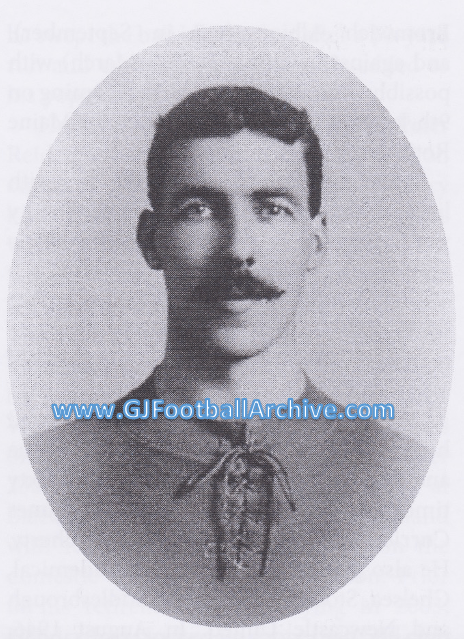
On this day (17 November) in 1915 former Manchester City, Oldham Athletic and Hyde forward Frank Hesham was killed in action in Belgium (often reported as northern France at the time of his death). The Gorton born player was on City’s books for 5 years during the late 1890s.Here’s a profile of his life and career:
Frank Hesham began his football career at St Francis (the well-known Catholic monastery and related school in Gorton) before joining City in November 1896. He made his debut at Newcastle United in February 1897. Sadly, the game ended in a 3-0 defeat and Hesham was unable to establish himself in the team.
In total he only made three first team appearances for the Blues and one reserve game over a period of about five years.
Brief spells at Crewe and Accrington followed before he signed for Stoke in May 1904. 17 Stoke appearances followed before he moved to Leyton Orient, returning north to join Oldham in August 1907.
He made his Oldham debut in a 3-0 victory over Hull City on 28 September 1907 and it finally looked as if he’d found the right club. He stayed at Boundary Park for a couple of years, playing 29 first team games before joining Preston North End in 1909.
The move to Preston was not a success and two months later he joined Croydon Common in the Southern League where he scored 27 in 55 appearances. Another return north came – he clearly had reasons for wanting to alternate between southern and northern clubs so frequently which have yet to be identified – and he joined Hyde.
Hesham also played for Newton Heath Albion but was working as a clerk in Manchester when war broke out.
Gunner 53546 Hesham, who had pre-war service with the 4th Volunteer Battalion of the Manchester Regiment (time-served), enlisted in the Royal Garrison Artillery (RGA) on 18 November 1914 and was subsequently sent for basic training. After leaving Number 2 Depot, Gosport, Gnr Hesham was posted to 21 Siege Battery RGA and landed in the French port of Boulogne on 25 May 1915. On 29 September 1915, Hesham was granted short leave before returning to his unit on 3 October 1915 – just two weeks before the Second Battle of Ypres. On 17 November 1915, Gnr Hesham was killed in action and subsequently buried at La Clytte Military Cemetery, located 8km south-west of Ypres. He left a widow and a 14 year-old son who lived in Longsight, Manchester.
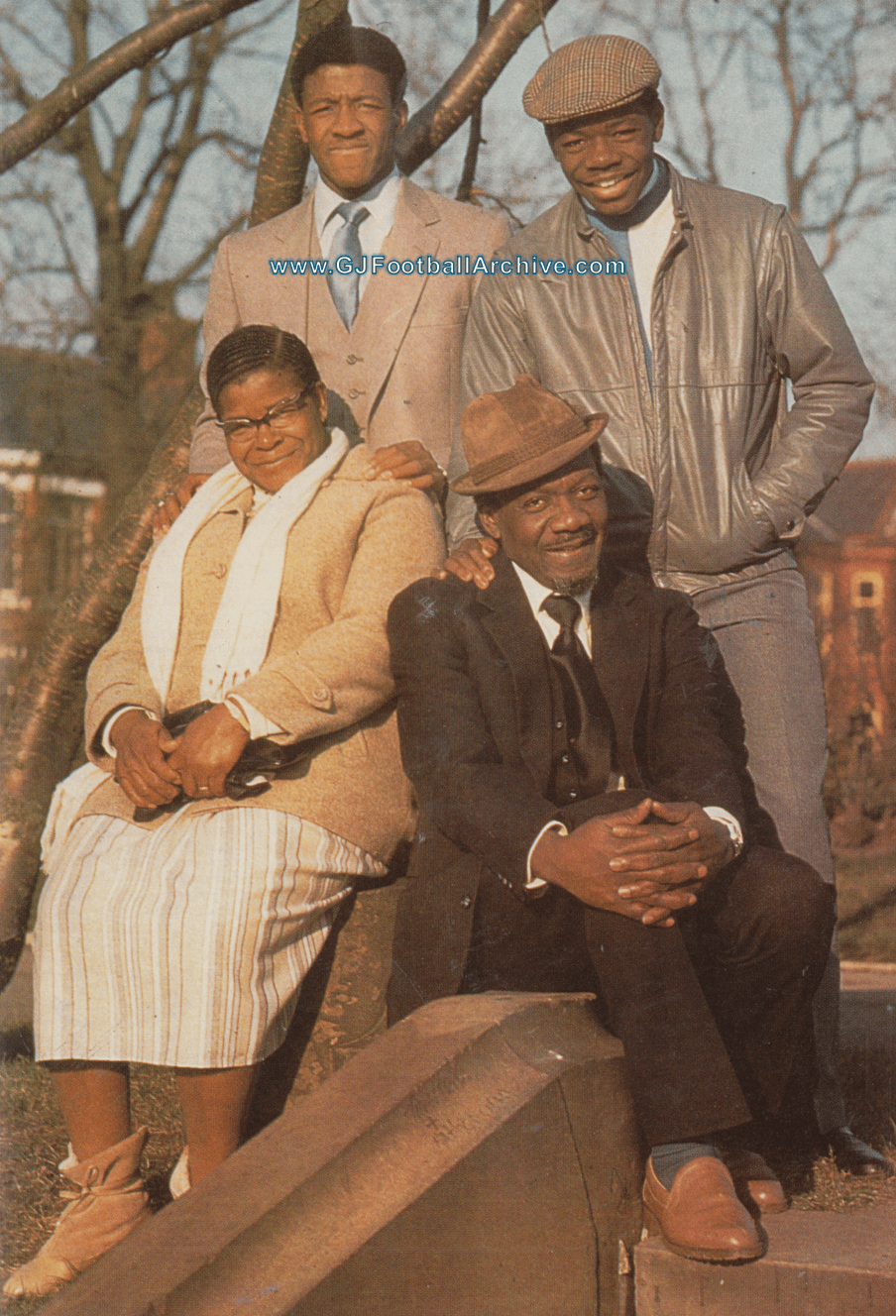
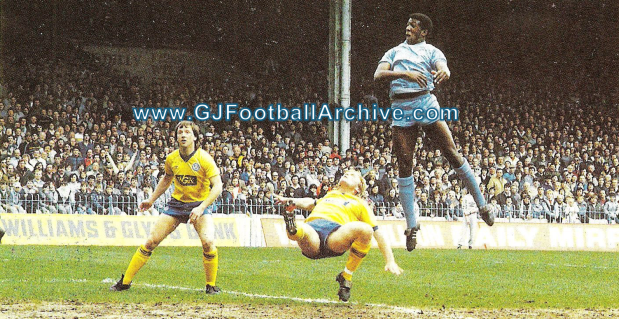
Yesterday came the news of Darren Beckford’s death at the age of 59. I wanted to pay a full and proper tribute to him but have only really had the chance today. Darren (seen in 1985 in the main photo taken by John Peters with his parents Val and Dudley and his brother Jason) was a supremely talented forward who attended Burnage High School before joining Manchester City as an apprentice on 16 April 1984. Less than four months later he was deservedly given a professional contract (1 August 1984) and on 20 October that year he made his first team debut, coming on as substitute for Gordon Smith in a 2-1 defeat at Middlesbrough. A fortnight later he came on again (for Graham Baker) in a goalless game at Brighton and on 8 April 1985 he made his first start in a 2-1 defeat at home to Leeds at Maine Road (John Peters photo below).
When I interviewed Darren’s brother Jason a few years back we talked about the Beckfords early sporting interests: ‘Darren and I were mad about any sport as kids – football, cricket, basketball… anything that had a ball really. Back then we just played and played and because Darren’s a couple of years older than me I always seemed to play with him and his mates, not my age group. We played in the street for hours and, I guess where we were different to some of the other lads is that we stayed out for ages after they’d all gone in.’
I asked Jason about the brothers’ footballing support: ‘You tend to get your first interest from your parents. If they take you to a club it becomes part of you, but my parents weren’t really football people. My dad loved his sport but he was more into cricket. Me and Darren loved football but we didn’t get chance to go and didn’t really have any allegiance until we signed schoolboy forms with City. It was just the way it was. We loved playing football but didn’t get the chance to watch it.’
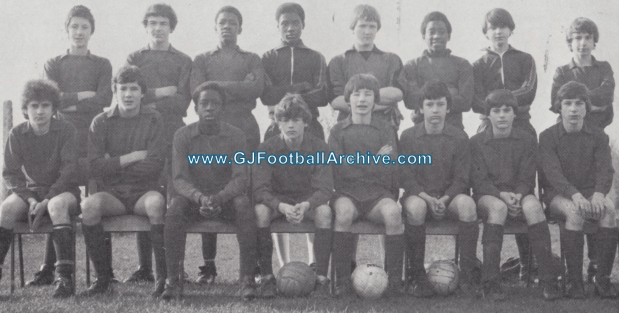
Darren excelled at sport and he represented his city playing football for Manchester Boys (14 year old Darren can be seen in the Manchester Boys lineup on the image below: back row, 3rd from left) and also represented the North West at basketball. In fact he had to make a tough decision as to which sport he focused on and, fortunately for us, he chose football. He made eight England under-15 appearances at soccer and excelled as a youth player with the Blues too.
There was a period where his goalscoring for the youth team gained a few headlines, and made many City fans notice his talent. He netted three hat-tricks in four FA Youth Cup ties during 1984-85 and twice that season he netted four goals in an A team match. Inevitably, he was leading scorer for both the Reserves and City’s A team that season. The following season he scored 24 goals for A team. For all of us who attended first team, reserve or youth games back then the name Darren Beckford was regularly being spoken. I remember desperately wanting him to have a sustained run in the first team but the difficulties of this era meant those chances came few and far between. Darren never got the run of games that some of us felt he deserved to allow him to adjust to the demands of the League. Worth remembering that these were difficult days for City with the team he debuted in being desperate for promotion from the second tier, then 1985-1987 fighting for survival in the top tier. Not necessarily the best place for an attack-minded player to get his grounding.
During the 1984-85 season Tottenham had contacted City about buying Darren and his teammate Paul Moulden. Put across as a ‘name your price’ offer, City rejected the bid. We were all relieved. We saw these guys, Paul Simpson, and the others we knew were developing in the youth team as ‘our’ team. I was a similar age to them all and I was a teenager standing on the Kippax supporting the team. Whenever a player from the youth team made their debut they tended to be either my age or slightly older/younger and, because of that, I always felt they were like me (except they could play football!). Darren was, to use a modern expression, ‘one of our own’, as was Paul Moulden, Paul Simpson and those that followed like David White, Paul Lake and Ian Brightwell. It always felt, to me at least, that our future needed these young players and if City ever sold them it would be a foolish act. These guys were tipped for greatness and Darren was already within the England system, going to Lilleshall and in the youth squad.
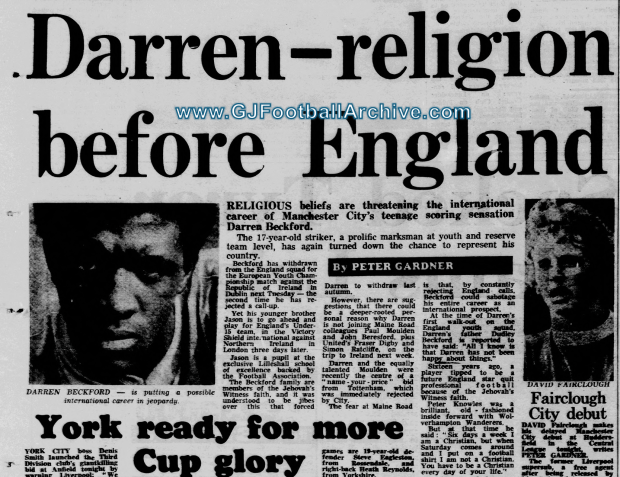
In February 1985 Darren made the headlines when he withdrew from the England Youth squad. Religious reasons were cited at the time. It seemed to shock many but others respected his decision.
In 1986-87 Darren was again top scorer in the reserve team with 11 goals. His last first team game for City came on 24 January 1987, a goalless draw at Wimbledon which also Paul Lake’s first team debut.
A spell on loan at Bury came in October 1985, where he gained some valuable experience and on 26 March 1987 he went on loan at Port Vale. The loan went well and on 25 June 1987 they made the move permanent, bringing to an end his Manchester City career. Darren’s most successful spell of his career came at Port Vale where he was signed permanently for a modest £15,000—a fee raised in part by fans doing bucket collections! He established himself as an electric and dominant striker, helping the club secure promotion to the Second Division via the play-offs in 1989 and finished as Port Vale’s top scorer for four consecutive seasons. In total, he scored 81 goals in 214 appearances for the club. This included a memorable goal in the FA Cup against City. I was there at Vale Park that day (this was the year we were convinced City’s name was on the cup. How wrong we were!). You can see his equaliser on this video (after about two minutes) but there’s also a great defensive moment from him earlier, plus the highlights are well worth watching to get a feel for how we all felt that day, plus to see Darren’s goal (top of the net and a good celebration).
A move to Norwich City followed (£925,000 – Vale’s record sale at the time) but he suffered with injuries while there. The main highlight of his time at Carrow Road was a crucial hat-trick against Everton that preserved Norwich’s top-flight status during the 1991–92 season.
On 24 March 1993 Darren was sold to Premier League side Oldham Athletic for £300,000, where he scored some vital top-flight goals for the Latics. He recorded 17 goals in 52 appearances before a severe hamstring injury halted his momentum and led to his release in 1996.
After leaving Oldham, he moved north to Scottish club Heart of Midlothian, where he helped them reach the 1996 Scottish League Cup final, scoring twice during his stay. A succession of brief, short-term spells at a variety of clubs including Fulham, Rushden & Diamonds, Preston North End, Walsall and Total Network Solutions followed before he retired in 1998.
The news of Darren’s death yesterday was an absolute shock and my thoughts remain with his family, friends and of course Jason. I think it’s worth ending this piece with the words from Once A Blue, the Manchester City Former Players Association. They commented on his death: ‘We are truly devastated at the news that one of our own, Darren Beckford, has sadly passed away at the age of 59. Raised in Ancoats and Longsight, Darren was a product of Manchester City’s youth system and made his senior debut against Middlesbrough in October 1984.
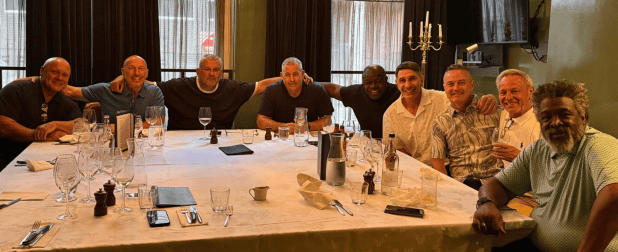
‘An athletic striker with a keen eye for goal, he played 12 times for the Blues before continuing his career at Port Vale, Norwich City and Oldham Athletic, among others. He made a total of 324 appearances as a professional footballer, accruing a tally of 100 goals. Darren’s younger brother Jason followed in his footsteps, playing for City between 1987 and 1991. The pair attended the Etihad together earlier this season to watch City v Norwich and both enjoyed this year’s Once A Blue Man City summertime catch-up in Manchester city centre (See image from Once A Blue below).
‘Jason would like to express his gratitude to the staff at The Christie NHS Foundation Trust for all their care and compassion, and would also like to thank Maggie’s Centres Manchester for providing invaluable advice and support to the Beckford family. On behalf of everyone at Once A Blue, may we offer our heartfelt condolences to Darren’s friends, family and team-mates as they come to terms with this huge loss. Rest in peace, Daz. You will never be forgotten Once a Blue, Always a Blue’
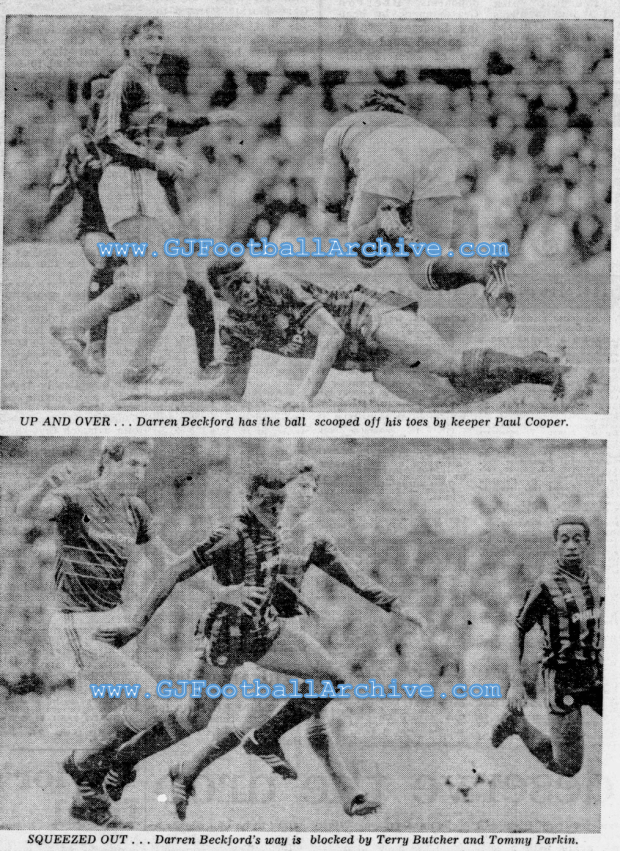
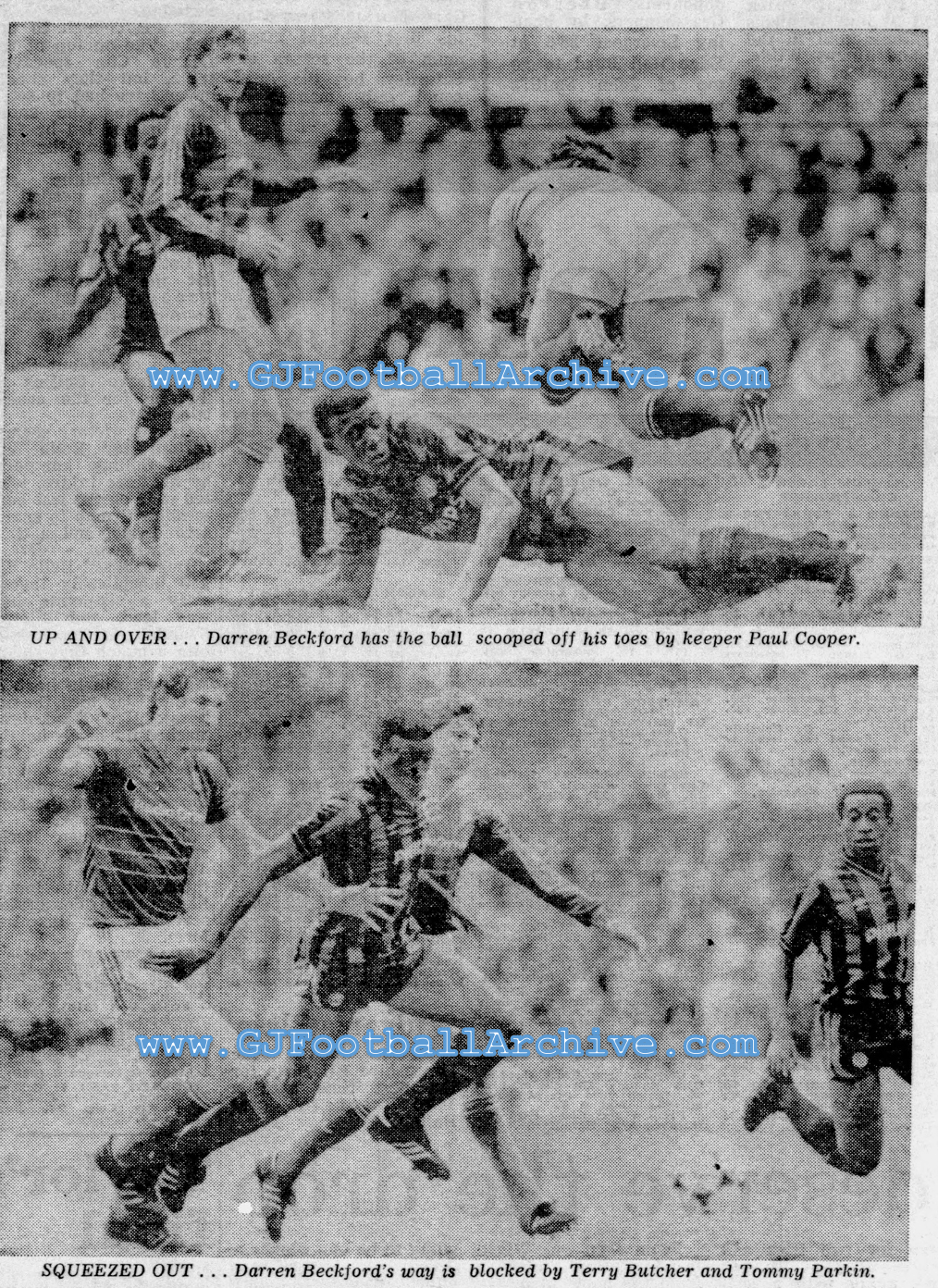
Darren Beckford in action, April 1985 Ipswich 0 City 0
I’ve just heard the news of Darren Beckford’s passing at the age of 59. Darren played for a variety of clubs but began his career with Manchester City and spent four years at Oldham Athletic. he also had two spells at Bury. My thoughts are with his family, friends and of course his brother Jason.
Darren was born on 12 May 1967 and became a forward with City, making his debut as substiture iv Middlesbrough in October 1984. His full debut came at Leeds on 8 April 1985.
In total he made 12 appearances in City’s first team. He joined Oldham in March 1993 and was with them until February 1997.
Throughout his time at City he was much loved by fans who hoped that he’d get a decent run in the first team. In the reserves and youth teams his skills were clear but some of the managerial change and player churn at City meant his first team chances were limited.
Of course Darren’s most successful spell of his career came at Port Vale. Signed permanently for £15,000—a fee raised in part by fans doing bucket collections—he established himself as an electric and dominant striker. He helped the club secure promotion to the Second Division via the play-offs in 1989 and finished as Port Vale’s top scorer for four consecutive seasons. In total, he bagged 81 goals in 214 appearances for the club.
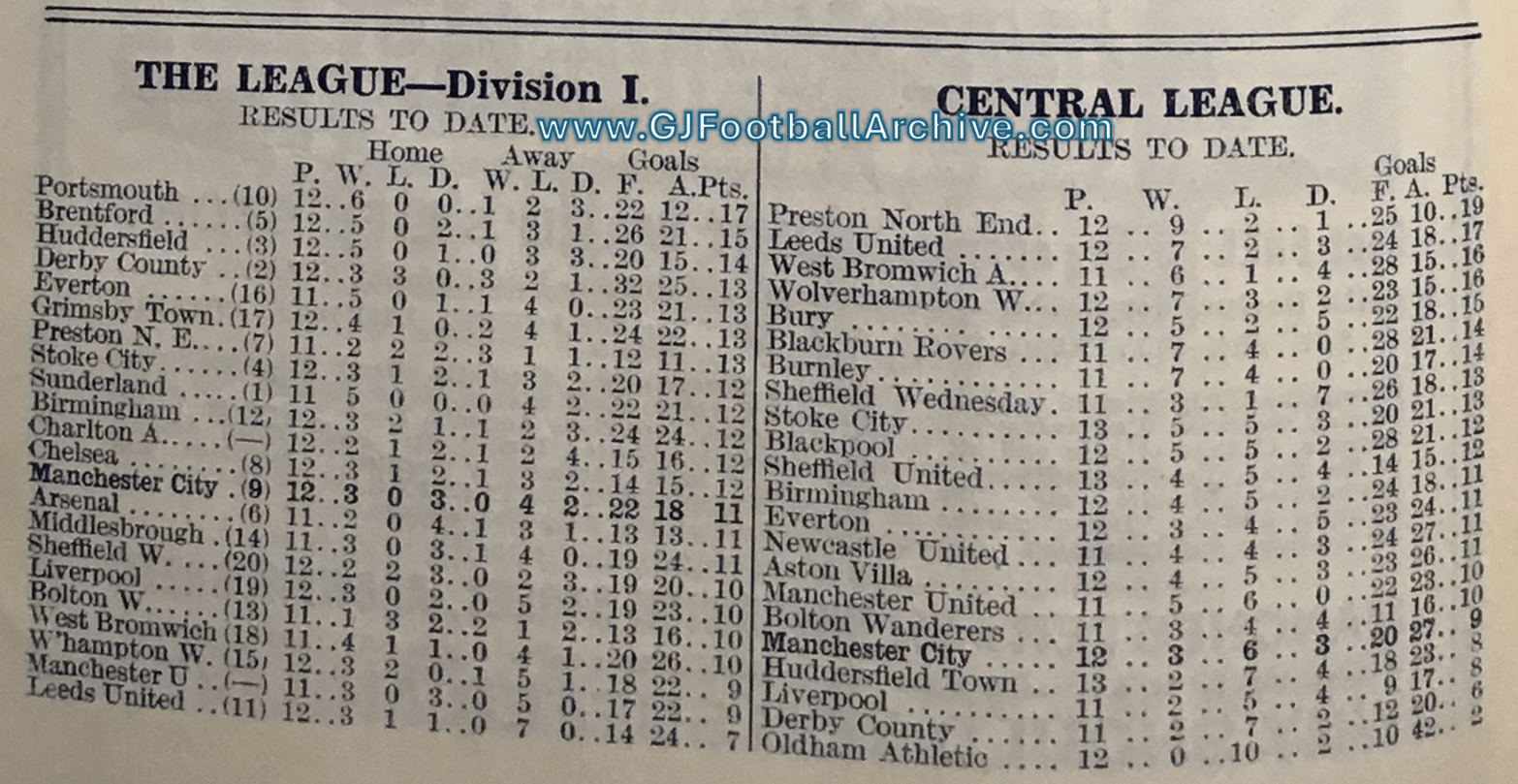
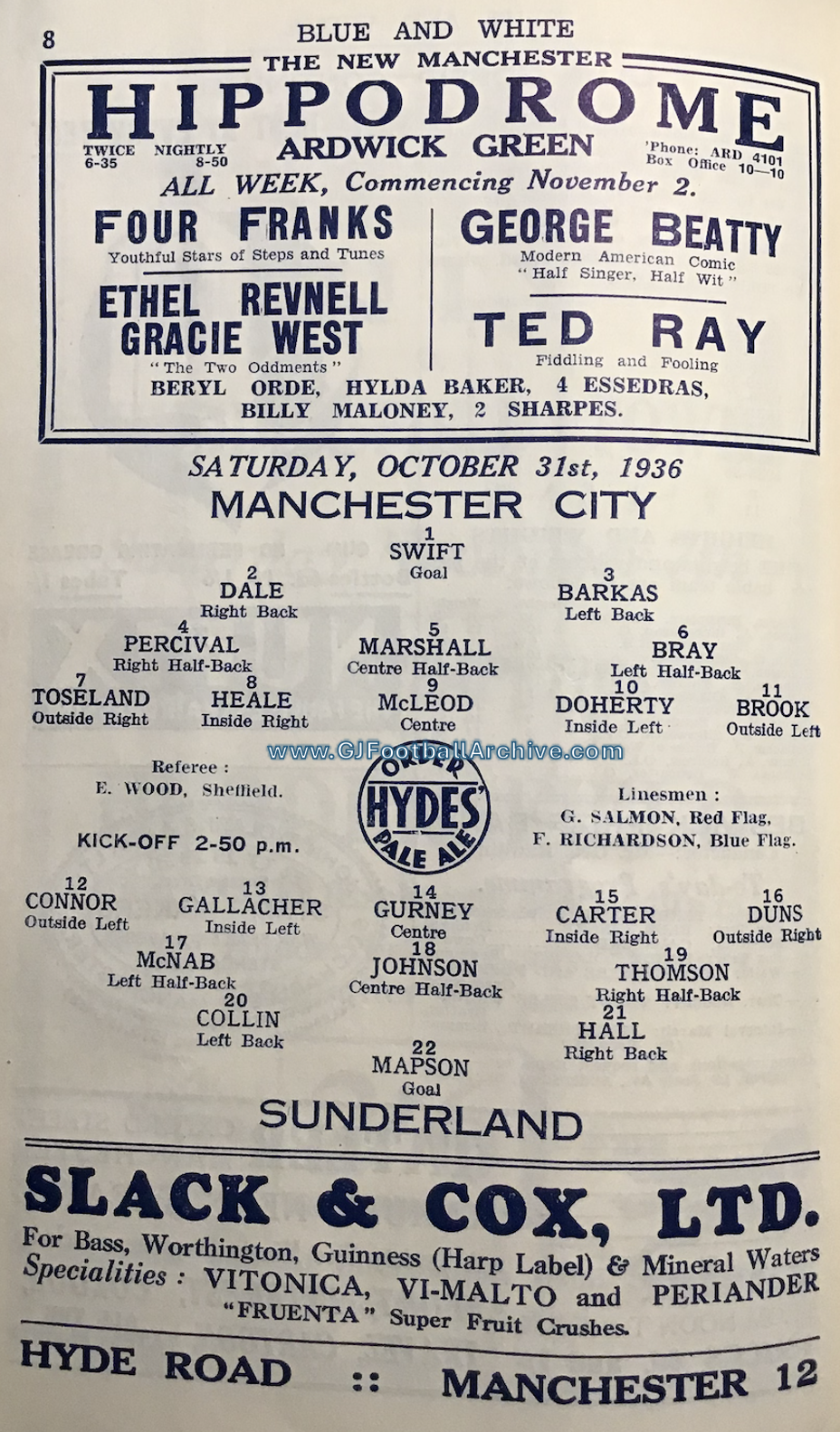
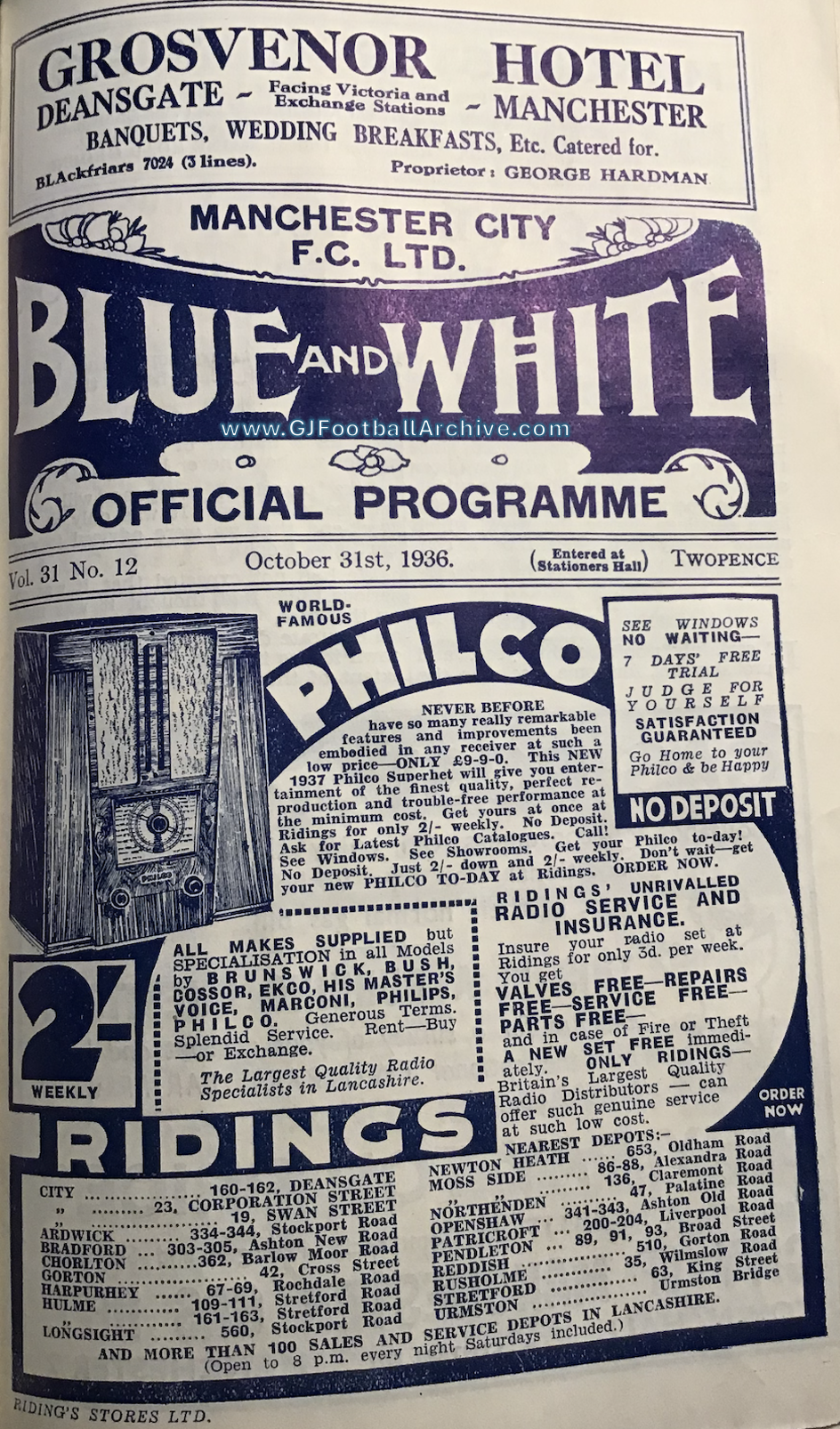
90 years ago today (31 October) a crowd of 38,444 watched Manchester City lose 4-2 at home to Sunderland. Here’s the League table from before that game. Notice the clubs at the top and spread throughout the top flight: always worth remembering that football clubs that claim to be today’s giants were not always the game’s elite. Arsenal, for example, didn’t start winning trophies until the 1930s, whereas City, Villa, Newcastle and Everton had won their first trophies decades earlier (and each were the best supported teams in the League multiple times before Arsenal, United and Liverpool achieved that accolade). Here’s the cover and team sheet page of the programme for this game. Look at the adverts too – any one fancy going to see Ted Ray and Hylda Baker after the match?
My series on Manchester City in the 1930s continues with a 2,500 word subscriber article on the 1936-37 season. If you subscribe (see below) I hope you enjoy it. If you don’t subscribe then why not try it for a month (£3 per month or sign up for a year at a discounted £20 per year)?
Here’s the article:
Subscribe to get access
Read more of this content when you subscribe today. It costs £3 a month (cancel anytime) or sign up for a year at £20 per year. Subscribers have access to the 1000s of articles, features, interviews etc. posted so far and all those posted during your subscription.
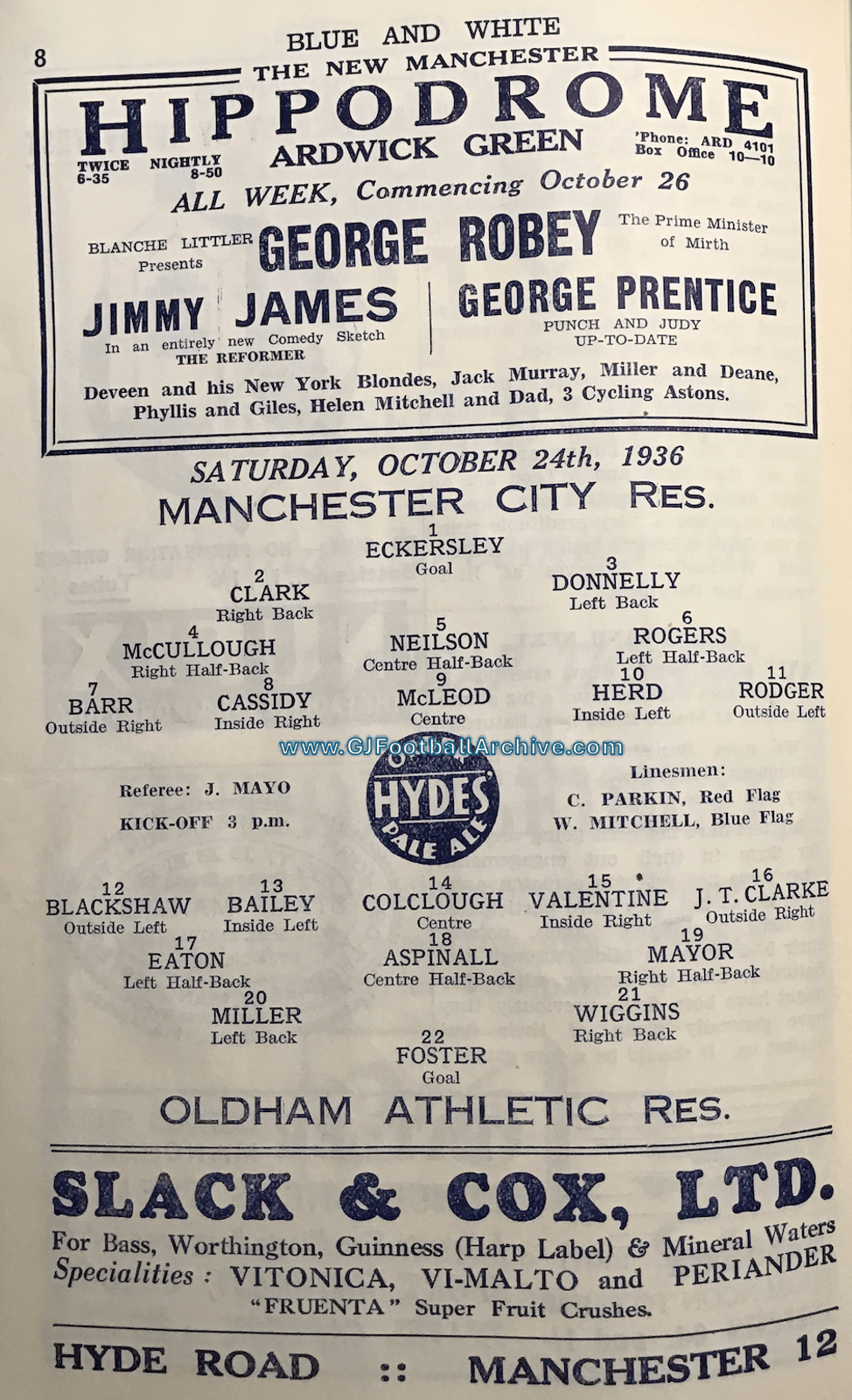
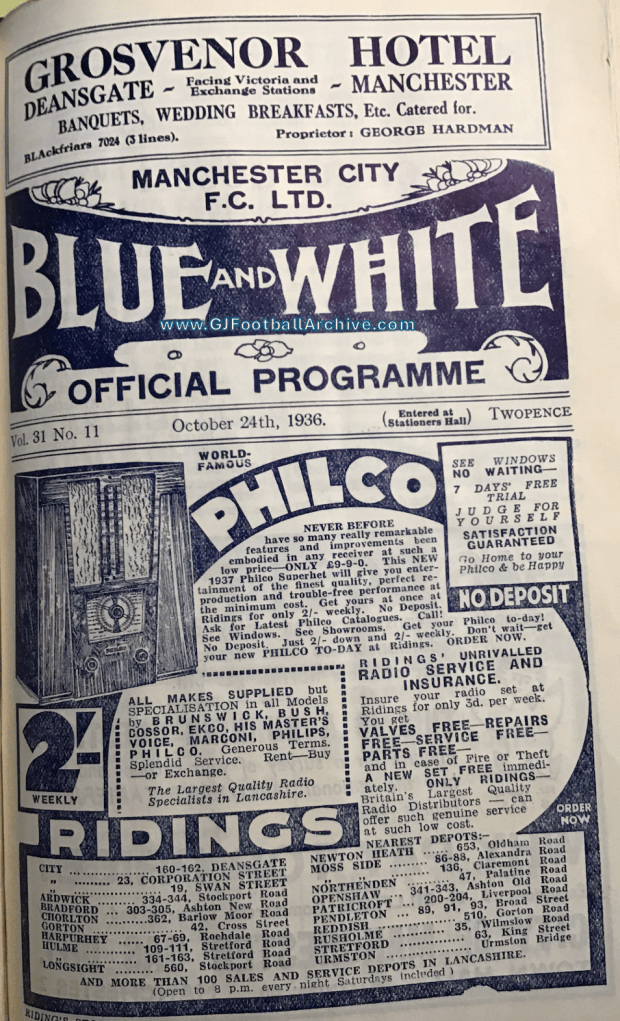
90 years ago today (24 October) Manchester City reserves defeated Oldham Athletic reserves 3-0 at Maine Road. Here’s the cover and team sheet page of the programme for this game. Look at the adverts too – any one fancy going to see George Robey and Jimmy James after the match?
My series on Manchester City in the 1930s continues with a 2,500 word subscriber article on the 1936-37 season. If you subscribe (see below) I hope you enjoy it. If you don’t subscribe then why not try it for a month (£3 per month or sign up for a year at a discounted £20 per year)?
Here’s the article:
Subscribe to get access
Read more of this content when you subscribe today. It costs £3 a month (cancel anytime) or sign up for a year at £20 per year. Subscribers have access to the 1000s of articles, features, interviews etc. posted so far and all those posted during your subscription.
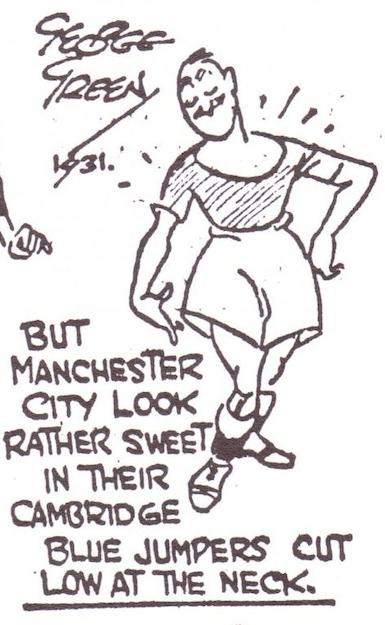
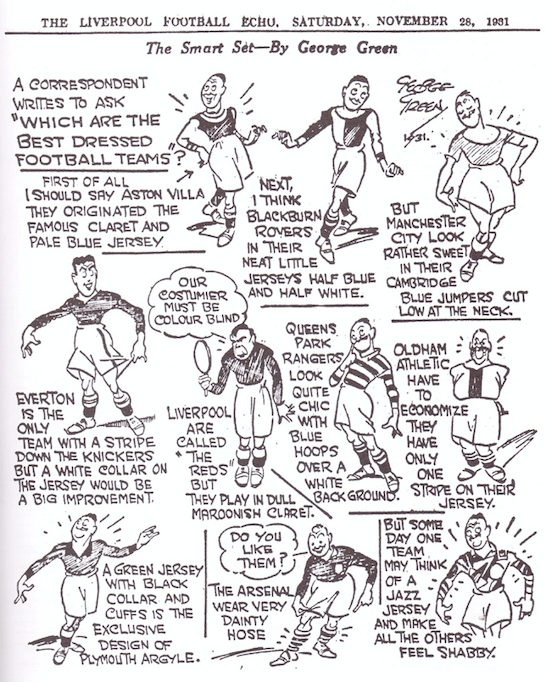
On 28 November 1931 the Liverpool Echo published this George Green cartoon of the kits worn by several leading clubs of the period. I thought I’d post it here to show how these things were often portrayed in the newspapers of the day. Thanks.
While you’re here I’d like to thank you for taking the time and trouble to visit my website. I have been researching and writing about Manchester football for a long time (no wonder I’m going grey!) with my first book published in 1989. I am not employed by anyone and I do not have sponsorship either and so I’ve set up this website to help share my 32 years plus writing and research. The intention is to develop the archive and to provide access to as much of my material as possible over the coming weeks, months & years. Subscribers can already access hundreds of articles/posts including the entire Manchester A Football History book and various audio interviews (including John Bond, Malcolm Allison & George Graham).
It costs £20 a year (it works out £1.67 a month) or £3 if you’d like to sign up a month at a time to get full access for as long as you subscribe. Thanks for the support, Gary.
Subscribe to get access to the entire site
Read the in-depth content when you subscribe today.
If you enjoy all the free material on my website and would like to support my research and keep this website going (but don’t want to subscribe) then why not make a one-time donation (or buy me a coffee). All support for my research is valued and welcome. It allows me to keep some free material available for all. Thanks.
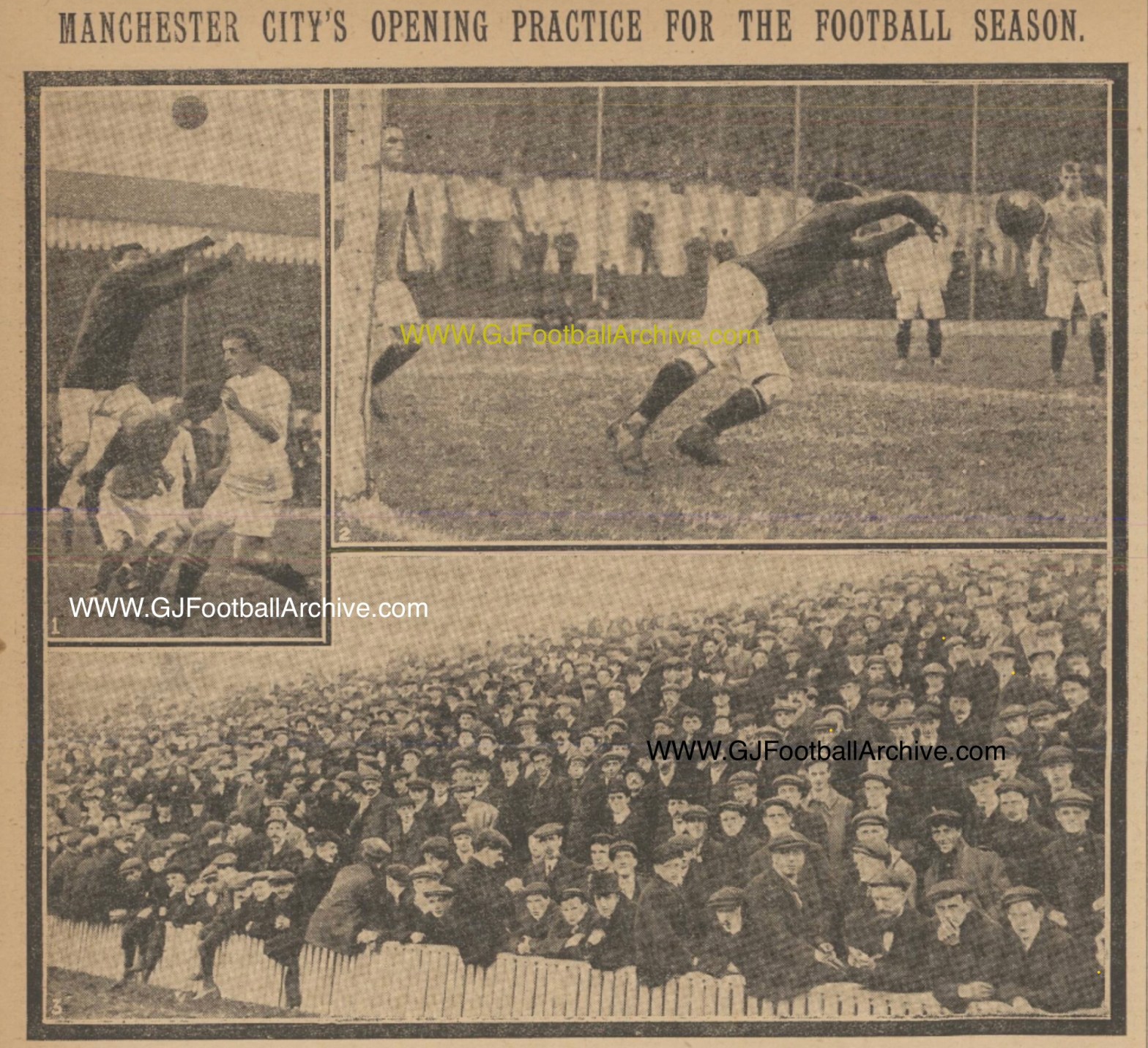
Here’s a great cutting from the Daily Mirror from 23 August 1909 showing City fans at Hyde Road for the public practice match that season. really atmospheric. The other images show first choice ‘keeper Walter Smith in action. THe 1909-10 season was a good one for City and you can read a review of that season below.
This is an article on the 1909-10 season when the Blues returned to the First Division as champions after a one season absence. If you’re a subscriber you can read this below.
If you’re not a subscriber then why not sign up for a month and see what you think?
Subscribe to get access
Read more of this content when you subscribe today. It costs £3 per month (cancel anytime) or sign up a year at a time for the discounted annual fee of £20. This gives access to everything on the site, including PDFs of 3 of my books and various other articles, interviews and audio material. Each subscriber has access to all content posted during their subscription period too. Why not sign up for a month and see what you think?