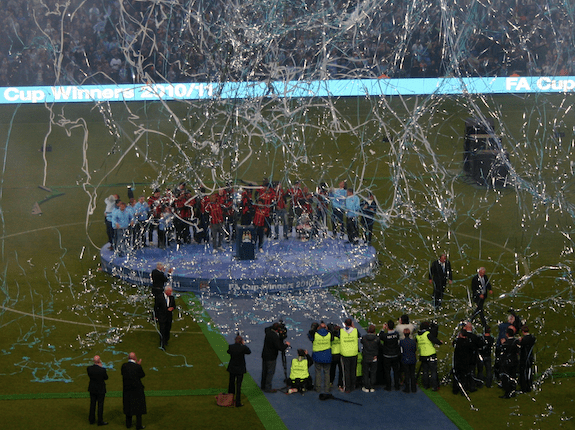
Significant Praise is Due for Pep & City

Both the 2010s and the 2020s (already!) have been incredible decades for Manchester City with phenomenal success coming City’s way. Thanks to the astute management and coaching by Pep Guardiola and his staff, together with some extremely talented players, the Blues have been able to celebrate trophy successes on a regular basis. Pep deserves significant praise for what he has achieved and with the potential that City could win the Premier League next weekend it’s time to think back and consider what has been achieved in recent years.

Before I go on (I’ll explain more later) but it is important to spell out that while some in the media keep telling us that the League is less competitive now than ever before, it’s worth pausing to consider that in only the last 3 complete seasons we’ve had 2/3rds the number of title winners they had in the entire decade of the 2000s and half what they had in the 80s and 90s decades too! But, apparently, it’s less competitive now. Think about that as you read what follows please. Thanks.

These are incredibly special times and City fans are truly grateful. The Blues have a Champions League semi final 2nd leg on Wednesday; the prospect of a League title on Sunday and also have the FA Cup final to look forward to. If that’s anything like City’s first trip to the new Wembley in 2011 that will be a special day. No City fan I know are complacent or take anything for granted though and that’s important. As fans it’s important to act like the players and retain an hunger for further glory. City’s brilliant 1960s/70s coach Malcolm Allison once told me to ‘celebrate every success as if it’s your first’ because it’s important to retain the drive and determination.

It’s worth pausing at this stage in the season to reflect on the last decade or so to fully appreciate what the club has achieved. I’ve been doing a few decade comparisons recently, looking at dominant clubs each decade and the competitive nature of English football. I’ve taken each decade (starting with the first complete season, such as 1960-61 through to 1969-70), and looked at the successful teams of that era.

During season 2010-11 through to the end of 2019-20 City managed to win an incredible total of 11 major trophies – a phenomenal figure, especially when compared with the nearest rivals Chelsea who won seven major trophies during that time. No doubt critics will say ‘ah, but there’s less competition’ but that’s absolutely not true, certainly not in terms of our major domestic competitions. It keeps being drummed into us that there’s less competition but that’s really downplaying the achievements of those teams that have challenged.

Between 2010-11 and 2019-20 there were five different Premier League winners. That’s more top flight champions than in each of the previous three decades and the same as in the period 1970-71 to 1979-80 when many people talk of a relatively open title race. How many times do we hear people say ‘back in the 70s and 80s anyone could win the title.’ Well, that may have appeared true at the time but the truth is that only a small group of clubs actually did win it. Even in the 1930s there were only four different champions (Arsenal, Everton, Sunderland & City), although that was only nine complete seasons due to war.

The total number of different champions in each decade since the start of the 1960s is:

1960-61 to 1969-70: 7 (Spurs, Ipswich, Everton, Liverpool, United, City & Leeds)

1970-71 to 1979-80: 5 (Arsenal, Derby, Liverpool, Leeds & Nottm Forest)

1980-81 to 1989-90: 4 (Aston Villa, Liverpool, Everton & Arsenal)

1990-91 to 1999-00: 4 (Arsenal, Leeds, United & Blackburn)

2000-01 to 2009-10: 3 (United, Arsenal & Chelsea)

2010-11 to 2019-20: 5 (United, City, Chelsea, Leicester & Liverpool))

Most fans who were around in the 1990s and 2000s will remember that in both those decades the League seemed totally out of the grasp of most of clubs and that it was only because of the investment in Blackburn (1990s) and Chelsea (2000s) that the duopoly of Arsenal and United was broken. Similarly, the investment in City from 2008 allowed the Blues to challenge again and, to be frank, the same is true for Leicester though clearly on a smaller scale (remember Leicester’s own Financial Fair Play issues – Worth thinking about their example and those of Blackburn, City & Chelsea, plus of course United decades ago, Huddersfield in the 20s and many other clubs which prove that investment is often needed to help increase competition?).

Investing in squads obviously increases the chance of trophy success but it takes an awful lot more than simply buying players to generate major success and to sustain it for a decade or more. As a stark reminder those fans old enough will remember the late 1970s and early 80s when the former West Ham players Malcolm Allison and then John Bond had spells in charge at Maine Road. Both flamboyant characters were hugely talented coaches and they spent a lot of money during their time managing the Blues. But Allison’s side was described as the most expensive team ever assembled when it was embarrassed at Fourth Division Halifax while Bond’s side was unable to mount a serious challenge for the title (though he did manage to get to the FA Cup final with mostly Allison’s team in 1981).

There are plenty of examples, including this season, of teams that have spent an awful lot of money but have failed to achieve the success expected. Money helps but it doesn’t guarantee success.

Talented coaches challenge traditional thinking. They bring in fresh ideas and force rivals to adapt and re-evaluate their own way of doing things. They lift ordinary players into trophy winners and they take supremely talented players to the next level, making them all-time legends who can compete at the very highest levels of European and world football.

Pep Guardiola has achieved all of that and is absolutely the most talented coach working in English football today. He has brought his club sustained success while identifying and developing players to replace established City legends. Throughout his time at City he has kept the club focused and hungry for glory in a way that so few managers ever achieve. Alex Ferguson managed it at United but apart from him and, to a lesser extent, Arsene Wenger at Arsenal no manager has managed to achieve and sustain this at any English club for decades. Let’s not forget either that United borrowed heavily in the late 1980s to give Ferguson the funds to create the most expensive British squad ever assembled at the time. It took a few years and caused much friction with shareholders as the club borrowed more and more but ultimately it all paid off and the success that followed strengthened United’s position significantly – something that is happening at City, though City didn’t fund their success on borrowing, it was from investment (I still find it hard to accept that in any other business investment is good but in football it’s the enemy while borrowing & debt is something we should celebrate!).

In terms of finance, let’s pause to think of turnover and profitability. These have increased significantly for City since the investment in the club in 2008. Sponsorships have increased, attendances have increased, kit deals have increased etc. Some say that there’s something ‘dodgy’ about that. I don’t know the financial ins and outs of any club but I do know that when Alex Ferguson became manager of United there were United did not have the same level of sponsorship they had 15 years later. At United those first 15 years of Ferguson’s reign saw sponsorships increase, attendances increase, kit deals increase etc. exactly like the last 15 years at City. Trophy success, global TV audiences, capacity increases all lead to growth. A forensic financial expert would need to research this but it’s clear that these things happen when a team is successful. Each year we are told of the financial ‘bonus’ a lower tier club gets when it plays in the later stages of a major cup competition, or reaches the play offs. It’s not rocket science and those owners that invest in their clubs do so because they see a return or an increase in the value of their club…. Anyway, back to the competitive nature of football…

Looking at domestic cup competitions the 2010s also saw more different winners than the previous decade. During the seasons 2010-11 to 2019-20 there were eight clubs (Birmingham, Liverpool, Swansea, City, Chelsea, United, Wigan & Arsenal) who found success in the domestic cups as opposed to seven between 2000-01 and 2009-10 (Liverpool, Middlesbrough, Chelsea, United, Spurs, Arsenal & Portsmouth). Okay, so it’s only one extra club but it means that seven different clubs won major domestic trophies between 2001-09 and nine between 2010-11 to 2019-20 in total.

Whichever way you look at it the 2010s demonstrated a greater variety of English clubs finding major trophy success than the previous decade. We’re often being told that football is less competitive now than it was before but in terms of the game’s top domestic honours that’s not true. Obviously, there are disparities within football – most City fans experienced the negatives of that in the 1980s and 1990s – and those of us in Greater Manchester know only too well the plight of our neighbours Oldham, Rochdale and Bury. However, in terms of challenging for titles and domestic honours at the top of the pyramid the statistics prove that competition has been there throughout City’s modern era success. Every trophy has been a challenge and every success has been achieved through dedication and determination.

City fans have a lot to be thankful for and this last decade or so has been remarkable thanks to the endeavours of many, many people. Here’s a reminder of City’s major trophies during the last decade or so under each manager:

Roberto Mancini: Premier League (2012) & FA Cup (2011)

Manuel Pellegrini: Premier League (2014) & League Cup (2014 & 2016)

Pep Guardiola: Premier League (2018, 2019, 2021 & 2022), FA Cup (2019) & League Cup (2018, 2019, 2020 & 2021)

With a FA Cup final coming up, a mouth-watering Champions semi-final v Real Madrid and the rest of the League campaign to play, there’s a strong possibility the trophy honours can be added to soon.

Programme Article

I was quite pleased with my MCFC V WHU programme article the other night (3 May). The article challenged the perception that City’s triumphs in recent years are somehow less significant than others as City have ‘bought success’. I feel quite strongly about that, so the article compares past decades to see if the last decade or so has been more competitive at the top of the League. Subscribers can see the full article below but here’s a taster:


Subscribe to get access – Monthly

Read more of this content when you subscribe today. It costs £3 a month (cancel anytime) or £20 a year (below)

Subscribe to get access – Annual

Read more of this content when you subscribe today. Annual subscribers access everything (books, articles, videos, talks, interviews etc) since the site was created in December 2020. Monthly

Restored 2011: The All-Manchester FA Cup Semi Final

The closest Manchester City and Manchester United have got to playing each other in a Wembley FA Cup final were FA Cup semi finals in 1926 and 2011. I wasn’t around in 1926 but I definitely was in 2011. So a couple of years ago I made this special audio recording talking about the years building up to the semi and the day itself.

Restored 2011: The All-Manchester FA Cup Semi Final is a special 1 hour audio recording looks at the game and the years between the 1976 League Cup success and the FA Cup glory of 2011. The 2011 semi-final was a crucial step in City’s journey since the 2008 takeover and I felt it was vital to do a special marking this.

So what’s in this special recording? Well, I’ve included exclusive material from interviews and recordings I’ve done over the years with Garry Cook, Brian Marwood, Roberto Mancini, Peter Barnes and Peter Swales.  Why Swales? Well, have a listen and you’ll hear why. Basically though I’m trying to set the tone for why the 2011 FA Cup semi final victory and overcoming Manchester United was so significant.

On Mancini… I include a few words from him recorded in 2011 and at one point he talks about the view that was then being expressed that City were ‘trying’ to buy success (now they say City ‘have’ bought success!). His words are a reminder that City have been having that particular criticism thrown at them for over a decade! Oh well, I wonder how long those criticisms were laid at other clubs who had seen major investment which propelled them forward?

Anyway, get yourself a brew and be prepared to be transported back in time. Here’s the recording:

If you enjoy the recording then please let me know, comment or subscribe to the site. I’ve produced videos/talks like this highlighting key points in Manchester City’s footballing history which subscribers can watch. 

Subscribe to get access – Annual

Read more of this content when you subscribe today. It costs £20 a year to subscribe (it works out £1.67 a month) or £3 if you’d like to sign up a month at a time. Annual subscribers get full access for as long as you subscribe (you can always try it for a month). It’s worth bearing in mind that the 2010 Manchester A Football History cost £24.95 and all subscribers will be able to access all of that for as long as they are a subscriber (plus all the other stuff of course).

Subscribe to get access – Monthly

It costs £3 a month to subscribe a month at a time. Why not give it a try! Monthly subscribers get access to everything posted since 1 October 2022 for as long as you subscribe.

Match Stats for the 2011 FA Cup Semi-final

City 1-0 United (HT 0-0)

Yaya Toure 52

City: 25 Hart 04 Kompany (yellow card), 05 Zabaleta (yellow card), 13 Kolarov, 19 Lescott, 11 Johnson (Wright-Phillips 79), 18 Barry, 21 Silva (Vieira 86), 34 De Jong (yellow card), 42 Y Toure, 45 Balotelli (yellow card). Substitutes 12 Taylor, 38 Boyata, 07 Milner, 08 Wright-Phillips, 24 Vieira, 10 Dzeko, 27 Jo

United: 01 Van der Sar, 03 Evra, 05 Ferdinand, 15 Vidic, 22 O’Shea (Fabio Da Silva 84), 13 Park Ji-Sung, 16 Carrick, 17 Nani, 18 Scholes (red card), 25 Valencia (Hernandez 65), 09 Berbatov (Anderson 74). Substitutes 29 Kuszczak, 12 Smalling, 20 Fabio Da Silva, 08 Anderson, 28 Gibson, 07 Owen, 14 Hernandez

Referee: Dean

Attendance: 86,549

If you enjoy all the free material on my website and would like to support my research and keep this website going (but don’t want to subscribe) then why not make a one-time donation (or buy me a coffee). All support for my research is valued and welcome. It allows me to keep some free material available for all. Thanks.

Choose an amount

£2.50
£5.00
£7.50

Or enter a custom amount

£

Your contribution is appreciated.

Donate

Remembering 2011

In the build up to the FA Cup semi final this weekend why not have a listen to my special 1 hour audio recording commemorating an earlier important FA Cup semi final?

This audio recording was made to commemorate the tenth anniversary of Manchester City’s FA Cup semi final victory over Manchester United at Wembley (April 16 2011). It looks at the years between the 1976 League Cup success and the FA Cup glory of 2011. The 2011 semi-final was a crucial step in City’s journey since the 2008 takeover and I felt it was vital to do a special marking this.

So what’s in this special recording? Well, I’ve included exclusive material from interviews and recordings I’ve done over the years with Garry Cook, Brian Marwood, Roberto Mancini, Peter Barnes and Peter Swales.  Why Swales? Well, have a listen and you’ll hear why. Basically though I’m trying to set the tone for why the 2011 FA Cup semi final victory was so significant.

On Mancini… I include a few words from him recorded in 2011 and at one point he talks about the view that was then being expressed that City were ‘trying’ to buy success (now they say City ‘have’ bought success!). His words are a reminder that City have been having that particular criticism thrown at them for well over a decade!

Anyway, get yourself a brew and be prepared to be transported back in time. Here’s the recording:

If you enjoy the recording then please let me know, comment or subscribe to the site. Subscribers get access to videos of talks I’ve done highlighting key points in Manchester City’s footballing history. It costs £20 a year to subscribe (it works out £1.67 a month) or £3 if you’d like to sign up a month at a time to get full access for as long as you subscribe (you can always try it for a month). It’s worth bearing in mind that the 2010 Manchester A Football History cost £24.95 and that, together with my first book published in 1989 are free to download for all annual subscribers. You can subscribe below. If you don’t fancy subscribing but do want to support this site, my research or have enjoyed the audio recording then why not donate? See below. Thanks.

Subscribe to get access to the full site -Annual

£20 per year to access everything since the site was created in December 2020.

Subscribe to get access to the full site -Monthly

£3 per month to access everything posted since 1 October 2022

If you enjoy all the free material on my website and would like to support my research and keep this website going (but don’t want to subscribe) then why not make a one-time donation (or buy me a coffee). All support for my research is valued and welcome. It allows me to keep some free material available for all. Thanks.

Choose an amount

£2.50
£5.00
£7.50

Or enter a custom amount

£

Your contribution is appreciated.

Donate

City, Negative Media, Khaldoon and Stoke 2010

I’m going to talk about a period when I got totally riled by the way Manchester City was being covered by some in the media. This was this month in 2010 when considerable negative coverage was thrown City’s way. At that time I was interviewing several key figures at City and the following piece includes quotes from one of several interviews I did with City chair Khaldoon Al Mubarak. I asked him about the negativity that seemed to be building in the media towards the club and its ‘trigger-happy’ leader (ridiculous then, even more ridiculous now!). It angered me that some of those talking had not spent any time interviewing those in charge at City yet they were freely talking as if they knew them inside out. This is a free read and is well worth taking a moment to read.

The Blues were only defeated in three of their final 15 League games of the 2009-10 season and were managed by Roberto Mancini, who had replaced Mark Hughes at Christmas.  City faced Stoke City three times in February – twice in the FA Cup and once in the League.  The first FA Cup meeting on 13 February ended in a 1-1 draw, as did the League meeting three days later. 

Stoke had scored in the 72nd minute of the League game, before Gareth Barry saved City’s blushes with an 85th minute equaliser.  The draw lifted the Blues to fourth place.  During the post-match interviews one journalist asked Mancini about an incident in the game.  The Italian claimed he had not seen it, but another journalist said:  “You’re learning fast.”  Mancini replied:  “Thank you.  I have been ­watching ­Coronation Street.”

The following Sunday, 21 February, presumably after worrying about the situation with Coronation Street’s Gail and her missing husband Joe (whose body had just bobbed to the surface of Lake Windermere), Mancini guided City to a goalless draw against Liverpool.  The result was satisfactory but some journalists claimed the manager was likely to lose his job at the season’s end.  Paul Wilson wrote an article on Jose Mourinho for The Observer which suggested that the former Chelsea manager could be arriving at either Liverpool or City at the end of the season.  In his Guardian report Paul McCarra referred indirectly to the rumour:  “These clubs have high expectations and Mancini has the added worry of trying to retain his job.” 

Some supporters saw reports like these as a validation of the rumours that continued to circulate.  This contributed to a feeling of anxiety.  No matter what was said the rumours were believed.  When City travelled to Stoke for the FA Cup replay on 24 February the home fans teased Mancini and City supporters with the chant of “You’re getting sacked in the morning.”  This is fairly normal banter when a side is facing a struggling competitor but the Blues actually lay in fifth place, with a game in hand over most sides, and of course Mancini was only two months into his managerial reign.  The chants were premature but when the Stoke-City replay ended in a 3-1 home win, others suggested this would be the final straw for City’s Chairman.  The fact was, however, City’s owner and other executives were not looking to make a change.  There was no intention whatsoever to remove Mancini.

In his match report journalist Joe Lovejoy commented:  “Mancini’s claims after the game that his team had ‘played very well and dictated for 80 minutes’ will cut no ice with demanding employers who had so little patience with Mark Hughes.”

Chairman Khaldoon found the constant speculation about Mancini’s future baffling:  “It’s extremely frustrating.  I read the ‘papers and see this ‘trigger-happy City’.  Trigger-happy City based on what?  Based on twenty managers fired in our first 18 months?  No, this is based on one change.  Absolutely one change of an individual that we hadn’t even selected to start with, but we had stuck with him.  So where does this trigger-happy City come from? 

“From day one I have always stated that we would be patient and we have been that way.  I cannot see a single contradiction of anything I or ‘we’ – the team we have put in place – have said since starting out.  Not a single one.   We said what we would do and we’ve done it – from A to Z.”

As most Blues will recognise, the media negativity towards City has increased at times and has rarely matched the feeling of the fans or the club’s leaders. We’ve come to expect it but in February 2010 it seemed so new.

Subscribe to get access

If you have enjoyed this free post and would like to support my research and writing then please subscribe. Annual subscribers (£20 per year, sign up here) get access to everything posted on the site including PDFs of 2 of my out of print books and archived content like my exclusive audio interviews with John Bond, Malcolm Allison etc. Not only that but you’ll be helping to support this site’s development.

Subscribe to get access

If you have enjoyed this free post and would like to support my research and writing then please subscribe. Monthly subscribers (£3 per month, cancel anytime and sign up here) get access to everything posted on the site since 1 October 2022. Not only that but you’ll be helping to support this site’s development.

Eleven Years On: 2011 FA Cup

Had we all been allowed to attend matches last season I would have marked the tenth anniversary of Manchester City’s 2011 FA Cup success with a programme feature. Sadly, Covid prevented that and now, a year on, I want to commemorate the eleventh anniversary of that FA Cup success. How time flies!

There are so many angles to that first major success of the modern era for Manchester City and it is impossible to cover them all here. Elsewhere on this website I talk about the 2011 FA Cup run, especially that semi-final win over Manchester United. If you’ve not heard it have a listen to this:

Today I’ll focus on the final itself…

This is a subscriber article. It costs £3 a month to subscribe OR take out an annual subscription at £20 (works out about £1.67 a month). All subscribers get full access to everything throughout their subscription.

Subscribe to get access

Read more of this content when you subscribe today.

The Title Race Moves To Newcastle

On May 6 2012 the Premier League title race was to see Manchester City away at Newcastle. The Blues had two games left to play – away at Newcastle and at home to QPR – and inevitably the focus on both Manchester sides was hight. The global audience for the Manchester derby had been huge and that game had swung the advantage City’s way. Both Manchester sides had the same number of points but the Blues had the better goal average.

The Blues felt they could do win their first top flight title since 1968 with captain Vincent Kompany leading the way on the pitch:  “If we in at Newcastle we will win the title.  Sir Alex said that, so it must be right.  He has far more experience than me.”

Here for subscribers to the site is the story of what happened at Newcastle:

Subscribe to get access – Annual

Read more of this content and everything else on the site when you subscribe. It costs £20 a year (about £1.67 a month) or £3 to pay a month at a time (below). You get access to all content posted so far including the entire Manchester A Football History.

Subscribe to get access – Monthly

Read more of this content and everything else on the site when you subscribe. It costs £3 to pay a month at a time (cancel anytime).

Decisive Derbies: April 30, 2012

It was one of the most important Manchester derby matches of all time. Second placed City, who were still searching for their first League title since 1968, were to face League leaders United at the Etihad Stadium in a crucial game. United led the table by three points but City’s goalscoring exploits in recent games had swung goal difference back the Blues’ way. With two games left after the derby a victory for United would almost end City’s chance of winning the title, while a City victory would put the Blues in the driving seat.  

Here for subscribers to my site is the story of this monumental derby game.

Subscribe to get access

Subscribers get access to this and over 300 other articles, including audio recordings of interviews with John Bond, Malcolm Allison and George Graham and the entire Manchester A Football History. It costs £20 per year (works out about £1.67 a month).

The 2011 All-Manchester FA Cup Semi Final: 1 Hour Special Audio

It’s FA Cup week AND Manchester Derby week, so the time seems right to post this special 1 hour long audio I produced last year on Manchester City’s FA Cup semi final victory over Manchester United at Wembley on April 16 2011. This recording looks at the game and the years between the 1976 League Cup success and the FA Cup glory of 2011. The 2011 semi-final was a crucial step in City’s journey since the 2008 takeover and I felt it was vital to do a special marking this.

So what’s in this special recording? Well, I’ve included exclusive material from interviews and recordings I’ve done over the years with Garry Cook, Brian Marwood, Roberto Mancini, Peter Barnes and Peter Swales.  Why Swales? Well, have a listen and you’ll hear why. Basically though I’m trying to set the tone for why the 2011 FA Cup semi final victory and overcoming Manchester United was so significant.

On Mancini… I include a few words from him recorded in 2011 and at one point he talks about the view that was then being expressed that City were ‘trying’ to buy success (now they say City ‘have’ bought success!). His words are a reminder that City have been having that particular criticism thrown at them for over a decade! Oh well, I wonder how long those criticisms were laid at other clubs who had seen major investment which propelled them forward?

Anyway, get yourself a brew and be prepared to be transported back in time. Here’s the recording:

If you enjoy the recording then please let me know, comment or subscribe to the site. If it’s of interest then, over the coming months and years, I’ll produce others like this highlighting key points in Manchester City – and Manchester’s – footballing history. It costs £20 a year to subscribe (it works out £1.67 a month) or £3 if you’d like to sign up a month at a time to get full access for as long as you subscribe (you can always try it for a month). It’s worth bearing in mind that the 2010 Manchester A Football History cost £24.95 and all subscribers will be able to access all of that for as long as they are a subscriber (plus all the other stuff of course). You can subscribe below.

Subscribe to get access to the full site

£20 per year to access everything

Match Stats for the 2011 FA Cup Semi-final

City 1-0 United (HT 0-0)

Yaya Toure 52

City: 25 Hart 04 Kompany (yellow card), 05 Zabaleta (yellow card), 13 Kolarov, 19 Lescott, 11 Johnson (Wright-Phillips 79), 18 Barry, 21 Silva (Vieira 86), 34 De Jong (yellow card), 42 Y Toure, 45 Balotelli (yellow card). Substitutes 12 Taylor, 38 Boyata, 07 Milner, 08 Wright-Phillips, 24 Vieira, 10 Dzeko, 27 Jo

United: 01 Van der Sar, 03 Evra, 05 Ferdinand, 15 Vidic, 22 O’Shea (Fabio Da Silva 84), 13 Park Ji-Sung, 16 Carrick, 17 Nani, 18 Scholes (red card), 25 Valencia (Hernandez 65), 09 Berbatov (Anderson 74). Substitutes 29 Kuszczak, 12 Smalling, 20 Fabio Da Silva, 08 Anderson, 28 Gibson, 07 Owen, 14 Hernandez

Referee: Dean

Attendance: 86,549

Eleven Year Ago Today – Dzeko’s First Goal!

On this day (30 January) in 2011 Roberto Mancini’s Manchester City team faced Notts County in the FA Cup. Edin Dzeko’s first City goal came on this day too!

In the build-up to the Notts County tie much was made of the fact that County were the world’s oldest League team and that they were facing the world’s richest club – as usual ignoring the hard fact that it was City’s owner that was wealthy not the club itself. Who’d have thought then that ten years later we’d still be hearing this same old claptrap!

Television, in particular, liked to build up the David and Goliath aspect to it.  For neutrals it added to the interest perhaps, but for the Blues it continued to give a false impression of the stage they were at in their development.  

Subscribe to get access

If you would like to read the rest of this piece and everything else on this site then please subscribe. It works out about £1.67 a month if you take out an annual subscription (£20 per year) or £3 a month if you’d like to sign up for a month at a time. Why not sign up for a month, see what’s here and then cancel if you don’t think it’s appropriate for you? Each subscriber gets full access to the 500+ articles posted so far and the hundreds scheduled to be posted in the coming weeks.