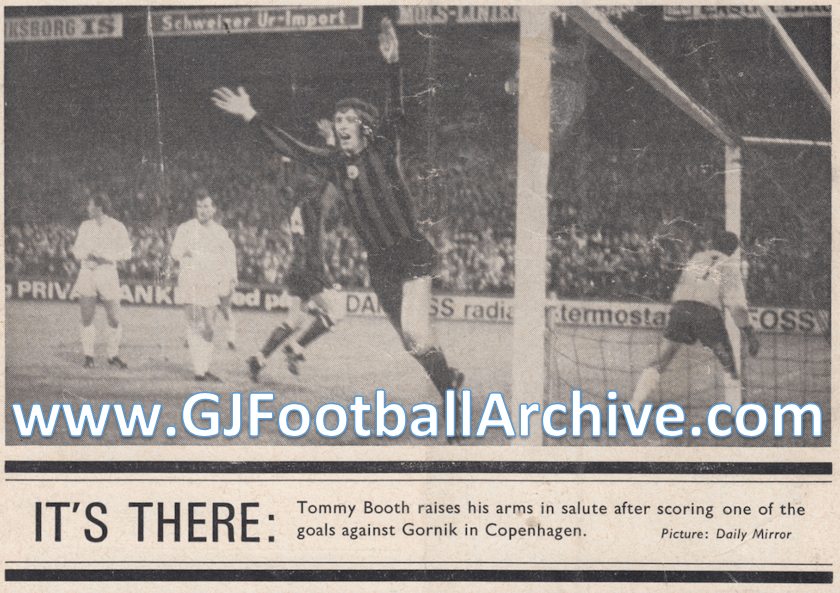
On this day (22 March) 1969 Manchester City and Everton met in the FA Cup semi-final at Villa Park. Here for subscribers is the story of that day, including material from interviews I have performed with some of the key people (such as Tommy Booth). Enjoy!
Subscribe to get access – Annual
To read this and all the other in-depth articles please subscribe. It works out about £1.67 a month if you take out an annual subscription (£20 per year) or £3 a month if you’d like to sign up for a month at a time (see below). Annual subscribers get full access to everything posted since December 2020 and the hundreds scheduled to be posted during their subscription.
To read this and all the other in-depth articles please subscribe. It’s £3 a month (cancel anytime). Monthly subscribers get full access to everything posted since 1 October 2022 and everything scheduled to be posted during their subscription.
I’d like to thank you for taking the time and trouble to visit my website. I have been researching and writing about Manchester football since the 1980s. I am not employed by anyone and I do not have sponsorship either and so I’ve set up this website to help share my 32 years plus writing and research.
The intention is to develop the archive and to provide access to as much of my material as possible over the coming weeks, months & years. Subscribers can already access hundreds of articles/posts including PDFs of a couple of books and exclusive audio interviews, talks etc.
It costs £20 a year (it works out £1.67 a month) or £3 if you’d like to sign up a month at a time to get full access for as long as you subscribe. If you’d like to check whether it’s value for money, have a search through content before subscribing – or even subscribe for a month, access what you want and then cancel!
On this day (11 March) in 1980 Kevin Reeves became the fourth player to be transferred for a million pounds or more (Manchester City had been responsible for 50% of those) when he signed for City. I have interviewed many of the people involved in that deal and you can read quotes from some of those involved (Reeves, Allison & Steve Daley) in my article.
Subscribe to get access – Annual
Read more of this content when you subscribe today. It costs £20 a year or £3 per month (see below). Annual subscribers get full access to everything on the site.
Read more of this content when you subscribe today. It costs £20 a year (above) or £3 per month. Monthly subscribers get full access to everything posted on the site since 1 October 2022.
Today (7 March) in 1979 Manchester City faced top German side Borussia Mönchengladbach in the first leg of the UEFA Cup quarter-final at Maine Road.
There was a 39,005 crowd present and the City team was: Corrigan; Donachie, Power, Reid, Watson, Booth, Channon, Viljoen, Kidd, Hartford & Barnes.
Believe it or not (this may surprise a modern audience but leading clubs often did what I’m about to say) Liverpool, in particular Bob Paisley, had spent considerable time helping the Blues prepare for this match by providing vital information on the West German side.
Liverpool had faced Mönchengladbach on five occasions, the most famous was the 1977 European Cup final and the most recent being in the 1978 European Cup semi-final. Paisley told City that the game would be tough, and outlined the players to watch. He also suggested that Dave Watson and Tommy Booth might be the key men in City’s side as the Germans seemed to lack ability to attack the ball in the air.
While City had Liverpool doing all they could to help there was someone who was becoming a bit of a thorn in the side of Malcolm Allison. That was hypnotist Romark. Romark had previously ‘cursed’ Allison while the City man had been manager of Crystal Palace (a really interesting story which I covered in my biography of Peter Barnes, published in 2021).
The hypnotist had offered to help Allison but Big Mal was having none of it. The following year Romark helped Halifax Town defeat City in the FA Cup! If only Allison had not angered the hypnotist all those years ago. Maybe life would’ve been so different for City!
The first leg saw Malcolm Allison, who had returned to the Blues in January as the self-styled ‘coaching overlord’, perform one of his many shock moves when Nicky Reid was thrust in to the spotlight at the age of 18 for his debut. Allison selected him to mark Allan Simonsen. It was an amazing selection at the time, but Reid did enough to justify Allison’s bold move.
Nicky Reid
Mike Channon, who was rumoured to be unhappy at the Club, managed to give the Blues a 1-0 lead. Unfortunately, the highly disciplined Mönchengladbach kept the pressure on and managed to snatch an equaliser and the often vital away goal.
The second leg of the tie took place 13 days later, on 20 March 1979 watched by around 30,000. The City team was: Corrigan; Donachie, Power, Viljoen, Watson, Booth, Channon, Reid (Deyna), Henry, Hartford & Barnes
Nicky Reid retained his place for the second leg (but still didn’t make his League debut until eleven days later when he scored against Ipswich). He was clearly a talented player but his arrival in the heat of European competition without even making an appearance in the League did raise many questions about the way Malcolm Allison was influencing things. Reid went on to captain the Blues to the FA Youth Cup final the following May, and was voted City’s young player of the year.
Malcolm Allison made yet another surprise selection as Tony Henry – another reserve who up to that point had only featured in two League game (once being substituted by Kenny Clements, once coming on for Asa Hartford) – was included while experienced European campaigners Deyna, Bell, and Kidd were left on the bench with Paul Futcher.
It was not a good night at all for City and having so much experience on the bench seemed baffling to fans, the media and also most of the players. City were very much the underdogs throughout and were losing 3-0 when, late on, Reid was substituted by Deyna. The experienced Pole provided City’s only goal of the match, but it was too late and City were out of Europe.
Kenny Clements explained to me when I interviewed him years later: “I broke my leg a few weeks after Milan so that made life a bit difficult for me, but the big problem was the return of Malcolm Allison. I know he was a great coach first time at City, but second time he really did ruin everything. All the older players told me it’d be great having him back, and then when he was back they all admitted they were wrong. I think he’d become too hung up on new ideas that he forgot about the basics. I remember he used to give us homework. He’d tell us to go home and write “I must win” or “I will win” a thousand times, then the next day he’d ask us if we’d done it.
“I always used to say ‘yeah’, but some of the younger, more impressionable lads would produce their lists and some would even write out twice as many lines! He insisted we drank coffee before a game to keep us alert, and brought in lots of motivational people. It didn’t motivate me I’m afraid!
“By the time of the next UEFA match (Mönchengladbach) I was fit but didn’t start, and then for the second leg both Brian Kidd and I had to sit it out while Nicky Reid made his debut marking one of the greatest players of all time. When we were two goals down Kiddo threw his shirt at Allison in anger.”
For many connected with City Mönchengladbach became the game that would be quoted when they discussed how things had changed following Allison’s return. Tony Book had developed a good team with a nice blend of young up-and-coming talent, like Peter Barnes (who was still only 21 but an exciting England winger), with the older experienced internationals like Dave Watson, Brian Kidd, Asa Hartford. Book’s team had been runners up to Liverpool in 1977 and had impressed with many great individual victories since then, especially that Milan victory of course, but the return of Malcolm Allison changed the dynamics at the club.
Ah well! Without that I guess City wouldn’t have what they have today, but for those of us who lived through the 70s to the present, it was the return of Allison that started the process of transforming City from regular challenging giant into a club that had lost its way. The 1978-79 Mönchengladbach games are a reminder of what we were, what we lost, but also of what we have now. Let’s ensure we enjoy the present because, as Allison once said to me: “Celebrate every success as if it’s your first, because it could be your last!”
When City walked out to face Mönchengladbach in the quarter final none of us, especially Allison, expected it would be our last European tie for 25 years! To read about the significance and facts of City’s European heritage (there are a few points that may surprise fans of certain other clubs) then take a look at another post:
Progressing to a European quarter-final is always a significant milestone that needs to be celebrated. No one ever takes this sort of achievement for granted even though it is something that Manchester City has managed frequently in recent years. Back in the 1960s and 1970s, despite major success in England, reaching a European quarter-final was a bit of a rarity. So, as today is the anniversary of City’s first ever European quarter-final (4 March), I’ve written this feature looking at the first time the Blues reached a UEFA organised tournament’s quarter-final. That was in 1969-70.
This article is available to subscribers below (you can subscribe now and access this and all the other content on my site):
Subscribe to get access
Read more of this content when you subscribe today.
Malcolm Allison’s bold prediction of how great City’s victory will be is ridiculed as the Blues are heavily defeated by a Steve Coppell inspired United. City are a well-beaten side while United win at a canter with Andy Ritchie comfortably netting the third twenty minutes from time.
In recent years many night games played across football have seen light shows. Manchester City have established a few of these at the Etihad Stadium too. The spectacle has proved popular, particularly with young supporters who are perhaps experiencing a night match for the first time. For today’s subscriber piece I have written a 2000 word article on the history of pre-match entertainment at Manchester City. There are mentions of the St Joseph’s Industrial School and Beswick Prize Bands, various DJs, athletic challenges, Norman Wisdom, Frank Sidebottom & more. Enjoy:
Subscribe to get access – Annual
Read more of this content when you subscribe today. It costs £20 a year (less than 6p a day) to access everything posted since the site went live in December 2020 (books, interviews, videos, history talks etc.) and throughout your period of subscription. Or you can subscribe a month at a time for £3 (cancel anytime; see below)
Monthly subscribers have access to everything posted since 1 October 2022 (books, interviews, videos, history talks etc.) and throughout your period of subscription. It costs £3 per month (cancel anytime)
On a day when there’s a controversial refereeing decision in a Manchester Derby here’s a reminder that today is the anniversary (14 January 1981) of a notorious refereeing error in a Manchester City Liverpool League Cup semi-final. You can read about that elsewhere on the site. the anniversary though has given me the impetus to post this 9,000+ word article on the 1980-81 season. This was a remarkable season and you can read it below:
Subscribe to get access
This 9,000+ article is for subscribers only. You can subscribe at £20 a year (here) or £3 per month (below). Annual subscribers access everything posted since December 2020 and monthly subscribers access everything since 1 October 2022.
This 9,000+ article is for subscribers only. You can subscribe at £20 a year (above) or £3 per month (here). Annual subscribers access everything posted since December 2020 and monthly subscribers access everything since 1 October 2022.
On this day (9 December) in 1967 a remarkable game took place at Maine Road that became known as the Ballet On Ice. Manchester United supporter Bobby Greenroyd watched the game on Match of the Day and wrote to City afterwards: “I am a regular Manchester United fan, but after Saturday’s game your next home gate will be increased by one.” High praise, particularly as United themselves were on the verge of European Cup glory.
Why and how did this happen and which leading MCFC figure sneaked out to buy a bag of chips while the club celebrated its 1968 League title success? Here for subscribers is an article that explains all….
Subscribe to get access – Annual
Read this and everything else on the site when you subscribe today. It costs £20 a year or £3 per month (see below). Annual subscribers get access to everything posted since December 2020 plus all material during the subscription.
Read this and everything else on the site when you subscribe today. It costs £20 a year (see above) or £3 per month. Monthly subscribers get access to everything posted since 1st October 2022 plus all material during the subscription. Why not give it a go for a month?
Today’s the day (27 October) in 1965 when Malcolm Allison won a significant bet with Pat Crerand about attendances at Manchester City. The Blues had drawn 0-0 with Norwich at Maine Road, ensuring City were top of Division Two and looking like promotional hopefuls. A crowd of 34,091 watched the match and Allison was delighted with that figure. The attendance had won him ten pounds off Manchester United’s Paddy Crerand who had told the City coach that City were a ‘dying club’ and bet him the Blues would never get a crowd above 30,000 at Maine Road again! Later that season 63,034 watched City play Everton – an attendance greater than any domestic crowd at Old Trafford that season. Allison had the last laugh of course!
Subscribe to get access
If you’ve enjoyed this then why not subscribe? Every subscription directly helps support my research and provides each annual subscriber with access to everything posted on this site, including the entire Manchester A Football History and From Maine Men To Banana Citizens books, plus interviews, articles and more. I am not employed by anyone and all my research is self funded or comes from subscriptions to this site.
You can subscribe at either £20 per year (above) or at £3 per month here (cancel any time). For those subscribing £3 per month you will be able to access all content from October 2022 onwards for as long as you are a subscriber. Those subscribing £20 a year have access to everything posted since December 2020.
On this day in 1968 Manchester City wore Red & Black stripes for the first time. Malcolm Allison had suggested adopting AC Milan’s colours and City first wore them for their meeting at Everton on October 5th 1968. Sadly, City were defeated 2-0 at Goodison and the colour change wasn’t popular with fans at first. However, due to a colour clash with Leicester, the new colours were worn in the 1969 FA Cup final. The club won that trophy and the kit soon entered City folklore as an important kit.
City chose to wear the new style for all the successful major finals that followed during Joe Mercer & Malcolm Allison’s time, including the club’s first European trophy in 1970. At one point Allison suggested making red and black the first choice kit.
There were however plenty of complaints about City adopting the colours. Take a look at an earlier post I made on those complaints here: