Maine Road 100 – Day 27

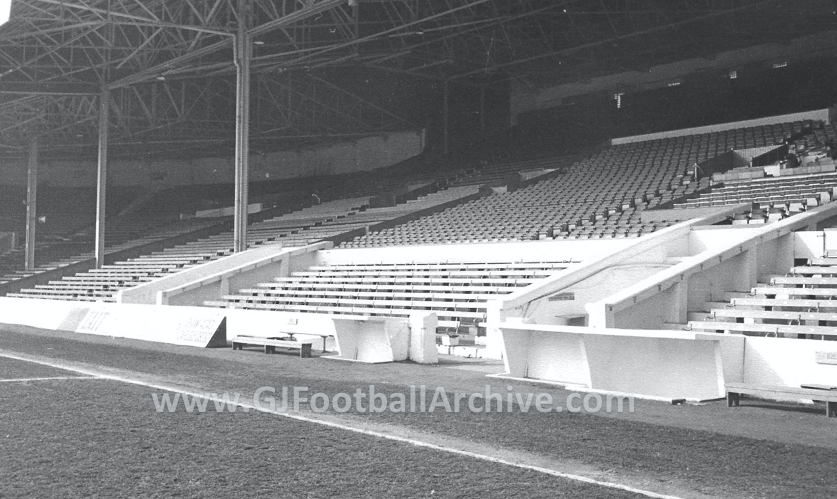
It’s day 27 of my posts counting down to the centenary of Maine Road’s opening game. Today – the wooden benches! Many a fan’s first experience of Maine Road was sitting on the benches in the old Platt Lane Stand.

These images may bring back a few memories. The Platt Lane benches were painted maroon and yellow for many years – I’m not certain if they were originally that colour. Older fans may know the answer but if they were maybe it was because they were installed at a time, the early 1960s, when those two colours had been used as City’s second choice kit?

Maroon is City’s traditional away colour but in 1959 a yellow shirt with maroon cuffs and V was used. If there was a link then that was not obvious by the time my Dad was taking me on to the Platt Lane as a young boy.

For me it seemed so odd, but then again the new North Stand had grey seats, and back in 1923 much of Maine Road was painted green. So I suppose there was never much logic around football grounds.

City used to paint on to the seats whether they were for season ticket holders, ‘invalids’ (obviously the wording back then, not today’s wording!) or if they were just numbered you could either sit there if it was an unreserved seating game or the number would match a ticket holder.
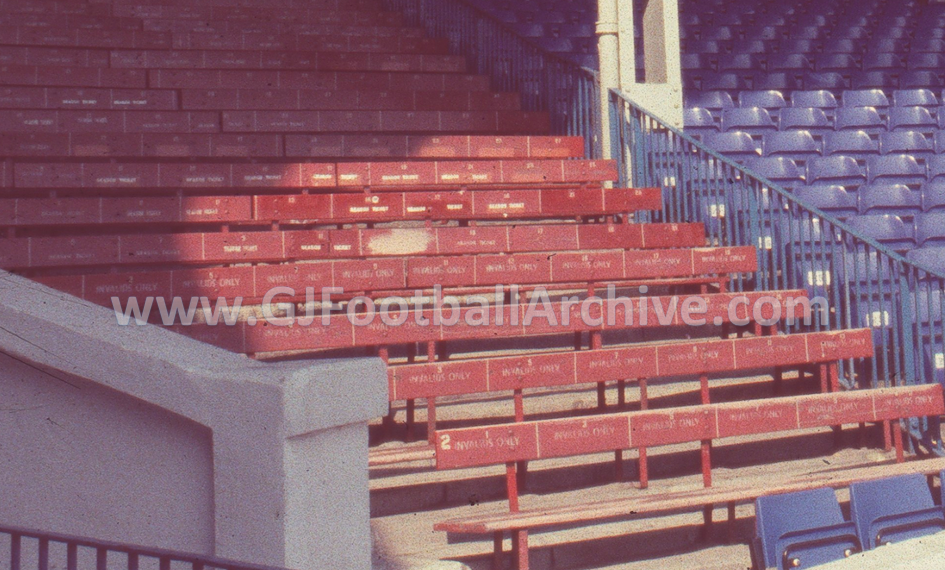
Platt Lane corner benches – note the wording on the seats. Some say season ticket; some ‘invalid’ and some are numbered/unreserved.

Most of the benches lasted about 40 years, but some were destroyed when Leeds United fans visited in November 1990 and were replaced for the stand’s final season or so with blue plastic seats. The stand was demolished in 1992.

November 1990: Jimmy Frizzell inspects the damage after Leeds fans smashed up some of the Platt Lane benches.

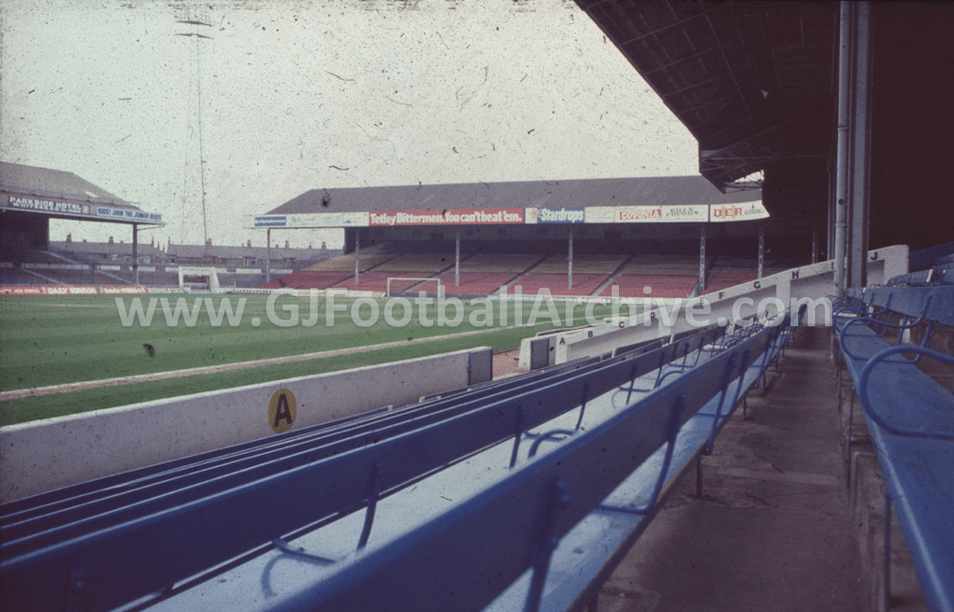
The Main Stand also had benches for much of its existence. These were painted blue and in some cases had arm rests. They had been part of the original build in 1923 and were replaced in phases during the 1970s and 1980s.

The Main Stand’s benches with the Platt Lane Stand’s maroon and yellow benches in the background

For those unfamiliar with Maine Road this photo may help. This shows the original Platt Lane Stand corner (number 3) where the maroon seating with ‘invalid’ wording image was taken. The benches damaged by Leeds fans were near the front of the stand under number 5. The Main Stand bench image is taken to the left of number 2 looking towards the floodlight near 5 and 6.

Maine Road aerial 1971 from Farewell To Maine Road

If you’d like to read more on the history of Maine Road, take a look at Farewell To Maine Road, which can be downloaded from this page:

If you enjoy all the free material on my website and would like to support my research and keep this website going (but don’t want to subscribe) then why not make a one-time donation (or buy me a coffee). All support for my research is valued and welcome. It allows me to keep some free material available for all. Thanks.

Choose an amount

£2.50
£5.00
£7.50

Or enter a custom amount

£

Your contribution is appreciated.

Donate
Maine Road 100 – Day 26

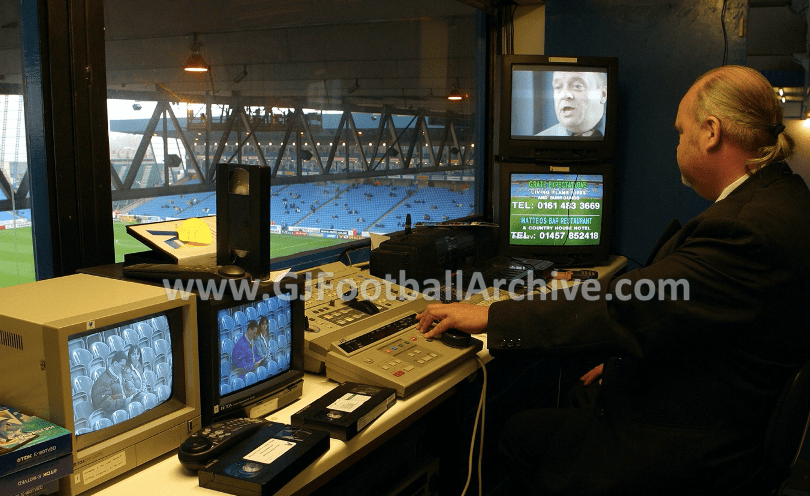
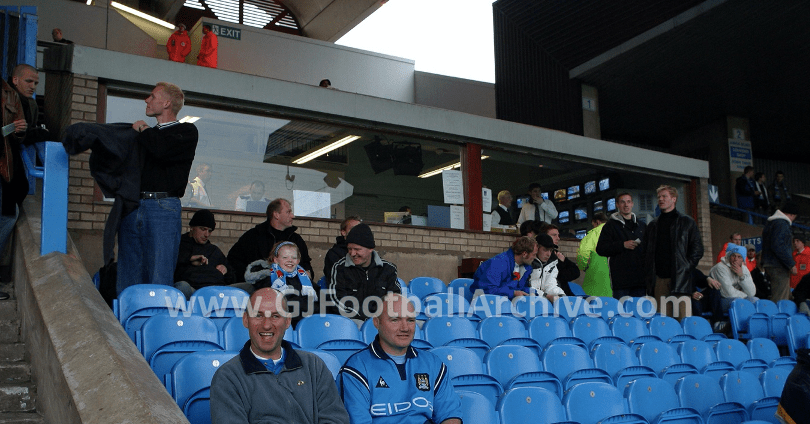
It’s day 26 of my posts counting down to the centenary of Maine Road’s opening game. Today – the Control Room. It’s something few ever went in but it was an important part of the stadium’s last couple of decades.

It was erected behind the block between the Main Stand and the North Stand. This was an uncovered section of seats until 1982.

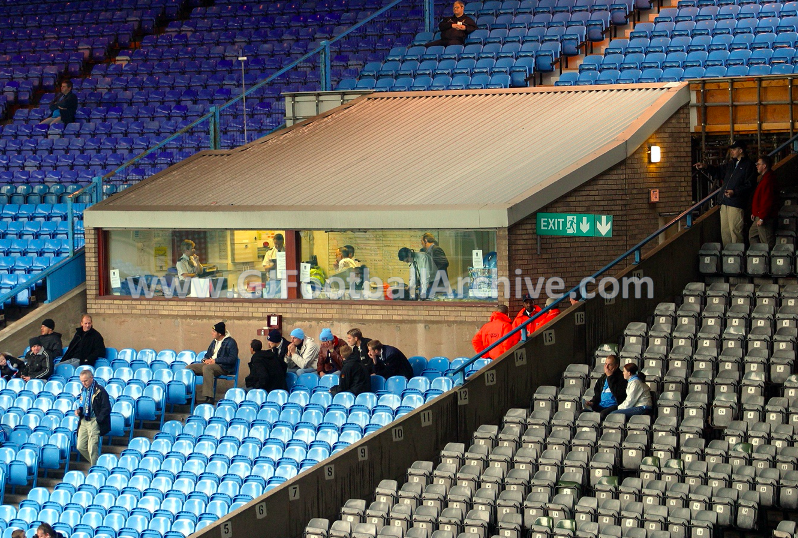
The control room housed the screens monitoring crowd behaviour and the match commander would be sat in there with other staff, police etc. watching the crowd. These images show the control room as it looked during Maine Road’s final season. It had been expanded by then and these photos were taken by Ed Garvey, club photographer, for my book Farewell To Maine Road (though we didn’t use them all).

Photo by Ed Garvey

You’ll notice in the following photo that one of the temporary stands had been constructed behind the control box to cope with demand for tickets. This stand was erected on scaffolding and was squeezed in above the control box and next to the Maine Stand. I never sat in that temporary stand, though I was often in the block below the control room (when it was uncovered it was the cheapest seats in the stadium and I was there when Bobby McDonald went in nets in 1982.

Photo by Ed Garvey
Photo by Ed Garvey

For those unfamiliar with Maine Road this photo may help. This shows number 2, the uncovered section, before it was seated. The control room was roughly to the left of the North Stand roof.

Maine Road aerial 1971 from Farewell To Maine Road

If you’d like to read more on the history of Maine Road, take a look at Farewell To Maine Road, which can be downloaded from this page:

If you enjoy all the free material on my website and would like to support my research and keep this website going (but don’t want to subscribe) then why not make a one-time donation (or buy me a coffee). All support for my research is valued and welcome. It allows me to keep some free material available for all. Thanks.

Choose an amount

£2.50
£5.00
£7.50

Or enter a custom amount

£

Your contribution is appreciated.

Donate
Maine Road 100 – Day 25

It’s day 25 of my posts counting down to the centenary of Maine Road’s opening game. Today – the Maine Road cage!

For years the front of the Main Stand at Maine Road was a simple doorway above a set of stairs. There was nothing particularly remarkable about it, although there was a wonderful mosaic above the entrance. However, by the early 1970s vandalism was taking its toll and the doorway was perceived as being particularly vulnerable. Whether it was or not is open to debate but the decision was taken in the 1970s to solve the problem by erecting a cage around the main entrance. These images of John Bond and John Benson show the cage as it looked in 1983.

John Bond, 1983

The ‘Sponsor a Match’ sign covers the original central mosaic. You can read about that here:

When City fans demonstrated during the 1980s and beyond the cage doors would be closed and locked to prevent fans from getting in to the offices, though they didn’t always manage it in time as this image shows:

Mirrorpix photo

In this image below John Benson and John Bond are stood in front of the players’ entrance which, at this time, was not within the cage (a later development changed that). I find it remarkable that the door for the players to go through was seen as being less important and that the players would not be protected.

John Benson and john Bond, 1983

For those unfamiliar with Maine Road this photo may help. The main entrance was on the Maine Road side of the Main Stand, above number 1.

Maine Road aerial 1971 from Farewell To Maine Road

If you’d like to read more on the history of Maine Road, take a look at Farewell To Maine Road, which can be downloaded from this page:

If you enjoy all the free material on my website and would like to support my research and keep this website going (but don’t want to subscribe) then why not make a one-time donation (or buy me a coffee). All support for my research is valued and welcome. It allows me to keep some free material available for all. Thanks.

Choose an amount

£2.50
£5.00
£7.50

Or enter a custom amount

£

Your contribution is appreciated.

Donate

Maine Road 100 – Day 24

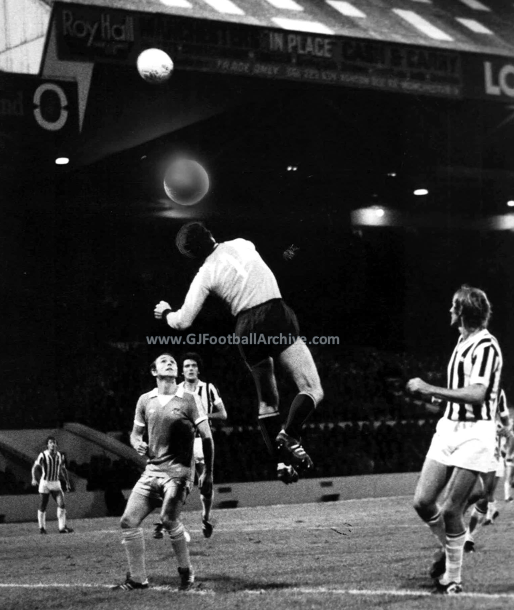
It’s day 24 of my posts counting down to the centenary of Maine Road’s opening game. With many Manchester City fans currently in Istanbul getting ready for tonight’s final I thought I’d post another Maine Road image with a European theme. Today’s feature is on this image of City facing Juventus in 1976.

That night Brian Kidd scored the only goal in City’s 1-0 UEFA Cup victory, played on 15 September. But, look at the photo closely and you’ll see there are two balls! Why? Well, often in the days of black and white press photos newspapers wouldn’t quite get the shot they wanted. They’d sometime tippex on, or even cut and stick a ball on an action photo to create either a more dramatic image, or simply to ensure they could fit the image on the space available.

Modern technology has made it easier to ‘move’ the ball to a more convenient place, but it has also allowed photos to be taken quickly and in bursts. Also, once colour photography was used in national newspapers any cutting and pasting or tippexing seemed too obvious. Although this added ball definitely looks fake so I’m not certain any reader would have been fooled.

I’ve seen plenty of images like this over the years and I find them both fascinating and frustrating. I’d like the true image to be shown, but I also am intrigued as to how they felt they made the image better. For those wondering the City player is Dennis Tueart and the stand in the background is the Main Stand.

For those unfamiliar with Maine Road this photo may help. The roof shown is to the left of number 1 below – you can see the bit where it drops down to the next level. The tunnel is the one on the far left of the Main Stand below where the roof line changes. City were attacking the Platt Lane (stand is numbered 4 & 5) in the image.

Maine Road aerial 1971 from Farewell To Maine Road

If you’d like to read more on the history of Maine Road, take a look at Farewell To Maine Road, which can be downloaded from this page:

If you enjoy all the free material on my website and would like to support my research and keep this website going (but don’t want to subscribe) then why not make a one-time donation (or buy me a coffee). All support for my research is valued and welcome. It allows me to keep some free material available for all. Thanks.

Choose an amount

£2.50
£5.00
£7.50

Or enter a custom amount

£

Your contribution is appreciated.

Donate

Maine Road 100 – Day 20

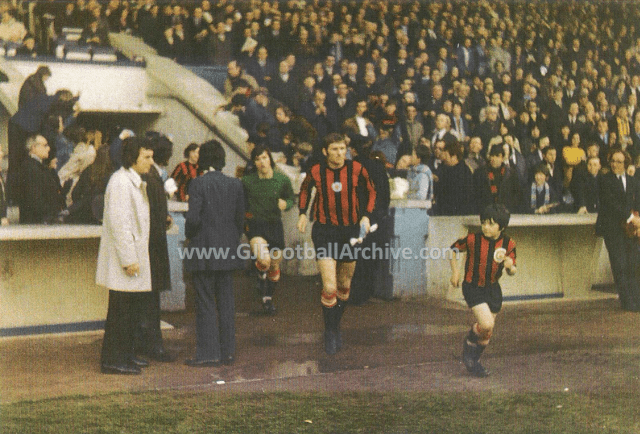
It’s day 20 of my posts counting down to the centenary of Maine Road’s opening game and today’s feature is on the original Maine Road dug outs. Nowadays the playing staff areas take up considerable space wither side of the tunnel at most stadia but for most of Maine Road’s existence there were two concrete bunkers dug out for the manager, physio and maybe one other to sit on. When substitutes were allowed in the 1960s then the sub would also sit there. Inevitably they were cramped and gave an extremely poor view of the game. Basically, the manager would be looking out at leg level.

The main image shows that the City dug out (on the right) had been extended by the time this image was taken in the 1970s. The away dug out (left of the tunnel) is the original size.

City’s dugouts – which actually were dug out – were built at some point after the main construction of the stadium but I’m not exactly certain when. This image from 1926 shows that small benches were originally positioned/built either side of the tunnel.

1926 City v Fulham, Maine Road. Jimmy McMullan with the ball.

The concrete dugout lasted into the 1970s when more modern bus shelter style ‘dugouts’ (but not ‘dug out’) were erected. This image shows the home bus shelter style dugout in 1983 with manager John Benson. The man with the perm hidden mostly by John Benson is comedian Eddie Large. Physio Roy Bailey is the man closest to the camera.

Mirrorpix photo

Even then the originals remained for some time before being demolished when parts of the white wall were rebuilt. I think they’d been fairly redundant for years though. I have photos of them being used at times during the 1960s and 1970s but this image from the 1950s shows they were empty on many matchdays.

1971 ECWC v Chelsea. Tony Book and mascot Paul Todd. Photo by Alan Jubb

The above image is of the same dugouts in 1971. I tend to think that by this time they were only used if it was a wet day as they provided a little bit of shelter. Notice the bar scarfs in the crowd – blue & white; red & black and one that’s blue & white with a thinner maroon bar too.

For decades, the manager’s dugouts weren’t the only ‘dugouts’ at the ground as there were also similar arrangements for the police and/or St John Ambulance personnel in Maine Road’s corners. These seemed to be in use into the 1960s as this image shows. Look carefully to the right of the player on the right and you can see two police or St John’s Ambulance staff in a corner dug out near the Kippax. This image is from the early 1960s.

These also disappeared when parts of the white wall were rebuilt and gates added in the corners.

For those unfamiliar with Maine Road this photo may help locate the player dugouts. You can’t really see them but one was positioned in the white wall in front of number 1 and one to the left as we look of the central tunnel next to 1.

Maine Road aerial 1971 from Farewell To Maine Road

If you’d like to read more on the history of Maine Road, take a look at Farewell To Maine Road, which can be downloaded from this page:

If you enjoy all the free material on my website and would like to support my research and keep this website going (but don’t want to subscribe) then why not make a one-time donation (or buy me a coffee). All support for my research is valued and welcome. It allows me to keep some free material available for all. Thanks.

Choose an amount

£2.50
£5.00
£7.50

Or enter a custom amount

£

Your contribution is appreciated.

Donate

Maine Road 100 – Day 18

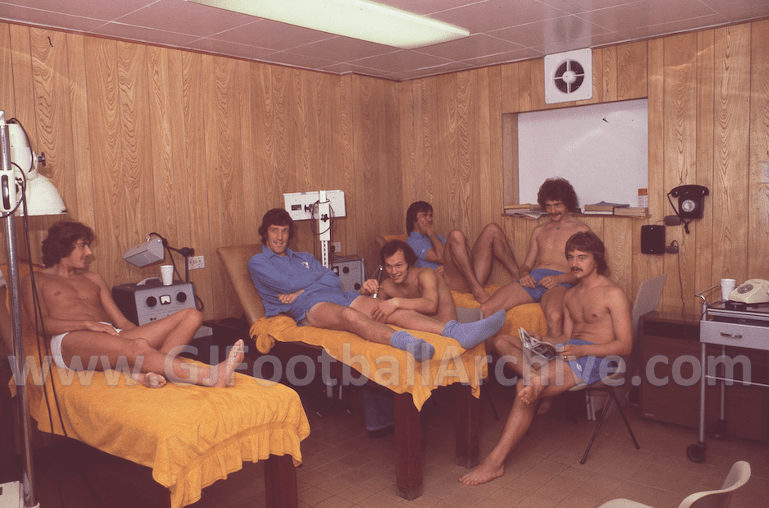
The 1970s Maine Road treatment room… It’s day 18 of my posts counting down to the centenary of Maine Road’s opening game. A photograph can say so much about the era.

This photo shows the treatment room at Maine Road with physio Roy Bailey working on Tommy Booth’s leg. On the bed to the left is Gary Owen and the other players are Dave Watson (on bed to the right either hiding his face or making a secret gesture with his fingers!), Kenny Clements and Tony Henry (with magazine).

What else can we spot? The telephone on the wall (and one on the trolley) and the ‘modern’ equipment. The closed off window, which shows that this room backed on to the main external frontage of the stadium. Years earlier that window would have been glazed with small glass blocks like the others were. There’s the fake wood panelling popular in the 70s – maybe Peter Swales got a job lot from somewhere and had the boardroom, offices and other spaces fitted out in it – the tiled ceiling and the wall heater. All very 1970s.

I’m pretty certain the equivalent facilities at the Etihad & CFA are somewhat more extensive than this but, at the time, City did claim they were ahead of most rivals in this area. Obviously, Roy Bailey would be able to talk more about support (or lack of it) from above, while the players could also talk about how they were treated overall.

For those unfamiliar with Maine Road this photo may help locate where the photo was taken from. It was taken in a room inside the Main Stand, in the lower level, somewhere behind and to the left of number 1.

Maine Road aerial 1971 from Farewell To Maine Road

If you’d like to read more on the history of Maine Road, take a look at Farewell To Maine Road, which can be downloaded from this page:

If you enjoy all the free material on my website and would like to support my research and keep this website going (but don’t want to subscribe) then why not make a one-time donation (or buy me a coffee). All support for my research is valued and welcome. It allows me to keep some free material available for all. Thanks.

Choose an amount

£2.50
£5.00
£7.50

Or enter a custom amount

£

Your contribution is appreciated.

Donate
Maine Road 100 – Day 15

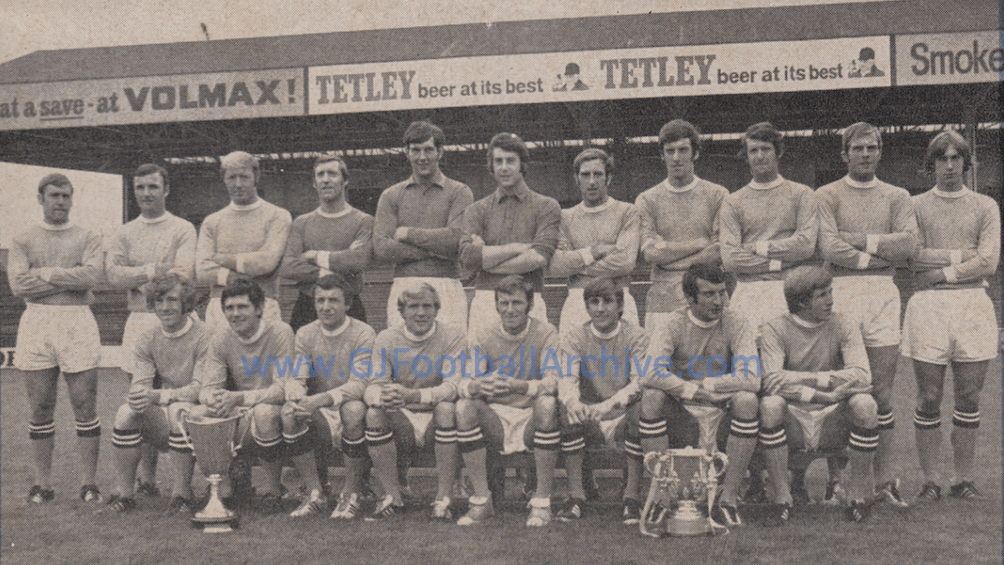
With a European final coming for City later this month it seems appropriate to include an image of a major European trophy at Maine Road for day 15 of my posts counting down to the centenary of Maine Road’s opening game. This team photo is from 1970 and shows the Manchester City team in front of the Platt Lane Stand with both the League Cup and the European Cup Winners’ Cup (at the time UEFA’s 2nd most significant competition).

I know we’re often told that City have no European history but they did actually win a major UEFA trophy before many teams that are today regarded as major European clubs, such as Liverpool, Juventus and even Barcelona. Barcelona had won the Fairs Cup but this was not a UEFA tournament and its entry rules were not always about where you finished in the League, for example the initial idea was to invite cities to play in the competition and the cities of Barcelona and London (a composite team) competed.

In 1970 City’s Mike Doyle joked that wining the League Cup (which brought a Fairs Cup place) was City’s way to ‘keep United out of Europe’ as the competition had a rule that a city could only be represented by one club if two were in qualifying positions…. it was often confusing!

For those unfamiliar with Maine Road this photo may help locate where the photo was taken from. It was taken on the pitch in front of the Maine Stand (number 1) at an angle looking towards the Platt lane Stand end (number 5).

Maine Road aerial 1971 from Farewell To Maine Road

If you’d like to read more on the history of Maine Road, take a look at Farewell To Maine Road, which can be downloaded from this page:

If you enjoy all the free material on my website and would like to support my research and keep this website going (but don’t want to subscribe) then why not make a one-time donation (or buy me a coffee). All support for my research is valued and welcome. It allows me to keep some free material available for all. Thanks.

Choose an amount

£2.50
£5.00
£7.50

Or enter a custom amount

£

Your contribution is appreciated.

Donate
Maine Road 100 – Day 14

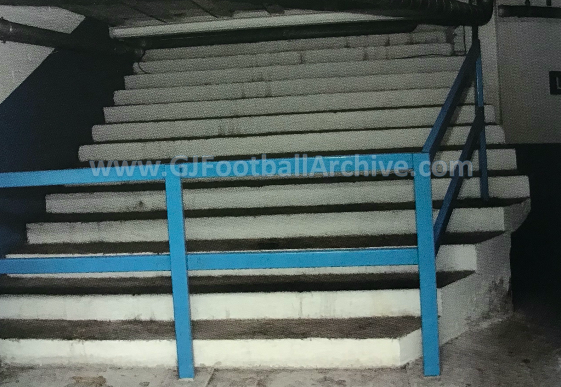
Day 14 of my posts counting down to the centenary of Maine Road’s opening game… I mentioned on a previous day how during 2002-03 I managed to wander around the stadium often exploring what the stadium had hidden away. Sometimes I’d wander with club photographer Ed Garvey but mostly I’d just go on a search myself. One day while exploring the Main Stand I spotted this staircase to nowhere.

It intrigued me quite a bit and then one game I happened to walk through here pre-match and fans were sat on the steps reading the programme and having a drink. The steps clearly once went somewhere (if you can’t tell via this photo there is a ceiling stretching across the concourse and over the steps. The steps go up to it but there’s no way through.

I started to ask people and show people this photo, which I’d taken during the week. Eventually former club employee Roger Reade, who has fulfilled a variety of roles over the years but is probably best known for his work with the Junior Blues, explained that when the club developed its hospitality functions in the 1980s the staircase was blocked off and an executive suite built above it. So that’s that. An original 1923 staircase that by the late 1980s was redundant. Incidentally, it’s not the only redundant staircase by this time and I’ll perhaps talk about one at the Kippax later this year.

For those unfamiliar with Maine Road this may help locate the staircase to nowhere. It was in the public concourse area of the Main Stand, roughly behind the Main Stand tunnel to the right of number 3 on the photo below.

Maine Road aerial 1971 from Farewell To Maine Road
Stair case to nowhere Main Stand, photographed by Gary James in 2002

If you’d like to read more on the history of Maine Road, take a look at Farewell To Maine Road, which can be downloaded from this page:

If you enjoy all the free material on my website and would like to support my research and keep this website going (but don’t want to subscribe) then why not make a one-time donation (or buy me a coffee). All support for my research is valued and welcome. It allows me to keep some free material available for all. Thanks.

Choose an amount

£2.50
£5.00
£7.50

Or enter a custom amount

£

Your contribution is appreciated.

Donate

Maine Road 100 – Day 8

Day 8 of my posts counting down to the centenary of Maine Road’s opening game. Today here’s an image of the Maine Road forecourt in the 1980s. So much to say on this. Notice the Granada TV vehicle and the newspaper adverts hung up for the Sunday Mirror and News of the World. There’s also the advert above the main entrance ‘cage’ – that was covering up the original central mosaic which I wish they’d been able to keep visible but an air conditioning unit was smashed through this at some point. So much for preserving the club’s history back then, hey?

The forecourt looked much the same as this from its opening through to later in the 80s, although there had already been a pebble dash render placed on the lower part of the main stand frontage. Later the decade more render would be place on sections of the front and then in the 1990s the whole stand was clad in metal.

There’s one of the floodlights (second set) showing and this is obviously pre-match as fans are mostly heading to the stands. Also, post match for many games in the 80s the forecourt would have housed a demo!

Those cars are heading towards the directors car park, past the stand, on the left.

This image was from a 1981 Manchester derby.

1981 City v United Maine Road

If you’d like to read more on the history of Maine Road, take a look at Farewell To Maine Road, which can be downloaded from this page:

To help those unfamiliar with Maine Road locate the specific location, the Main Stand is number 1 on this plan and its frontage faced Maine Road, the street running above the stand.

Maine Road aerial 1971 from Farewell To Maine Road

If you enjoy all the free material on my website and would like to support my research and keep this website going (but don’t want to subscribe) then why not make a one-time donation (or buy me a coffee). All support for my research is valued and welcome. It allows me to keep some free material available for all. Thanks.

Choose an amount

£2.50
£5.00
£7.50

Or enter a custom amount

£

Your contribution is appreciated.

Donate