The Birth of a Manchester City Chant

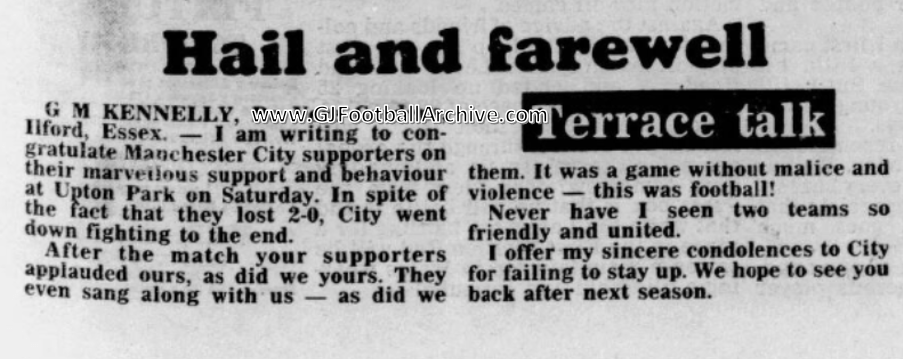
Manchester City meeting Ipswich this weekend is a nice reminder that a fixture between the two almost 50 years ago made an enormous contribution to the birth of a City chant. That chant is still sung today and is known as either the Viking Call or ‘The Best Team In The Land…’

Chanting at football games is rarely documented correctly with many myths, rumours and stories developing over the years. Te following feature is designed to give a potted overview of the development of singing at City and tells the story and part Ipswich played in it:

Now, for subscribers is an 1800 word article on the history and development of chants at Manchester City:

Subscribe to get access

Read more of this content and everything on the site when you subscribe today.

69,463 watch MCFC and Burnley in Division Two But Attendances Understated

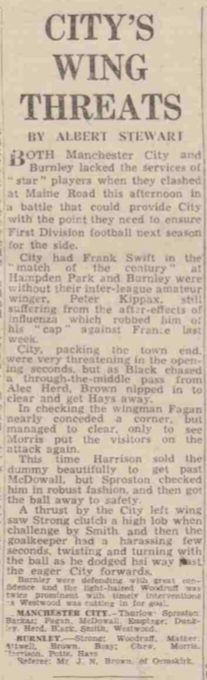
On 10 May in 1947 a solitary goal from Alec Herd against Burnley was enough to give Manchester City promotion.  The attendance for this Second Division game was recorded by the media at the time as 67,672 but official records reviewed almost sixty years later showed that City actually recorded the attendance as 69,463.

Typically, the attendance figures City used to give the media for League games through to the 1960s tended to exclude season tickets. So the Blues’ management would give the figure of tickets or pay on the gate admission for the game but exclude season ticket holders. Back in 1946-47 City had around 1,800 season ticket holders and almost every League attendance back then is understated by that amount.

FA Cup games were the actual attendances as these were always sold game by game.

As this practice of excluding all season ticket holders continued for many, many decades at Maine Road attendance figures for League games are usually understated (they were often understated in the 1970s & 1980s as well but for different reasons and back then Peter Swales, Bernard Halford and the others involved in calculating attendances would deny any discrepancy despite many fans, fanzines and others challenging them often).

For comparison purposes it’s worth looking at the attendances of the Division One champions in 1947 to see how the Blues compared. This attendance against Burnley was almost 17,000 higher than Division One champions Liverpool’s highest crowd that season (52,512 v Wolves in December) and the Merseyside Reds nearest home game to City’s Burnley match was watched by 48,800 and that was Liverpool v Manchester United (May 3). Liverpool did average 45,732 that season, whereas City averaged 39,283 but they were a Second Division club.

The City-Burnley crowd was the Second Division’s record at the time and it was higher than every First Division crowd since the 1937-38 season (The Second Division record is now held by Tottenham v Southampton which had 70,302 in 1949-50).

Film of City v Burnley does exist but it’s in a most unlikely place. It was actually filmed as part of a Mancunian Films drama called Cup Tie Honeymoon. The company was run by a Manchester City fan who made this film, which starred Sandy Powell and Pat Phoenix (under her original name of Pilkington). A football game is crucial to the plot and scenes were filmed at Maine Road and interspersed with real action from the City-Burnley game to add credibility.

Myself and Will McTaggart have shown these scenes in our Boys In Blue film shows which have been staged at the Dancehouse and Cornerhouse in Manchester over the last decade. Maybe I’ll explain more about the film and those talks another day.

Subscribe to get access

You can access all of the content on this site, including the in-depth articles, audio recordings/interviews and entire content of my Manchester A Football History book by subscribing. It costs £20 a year (about £1.67 a month) and you have full access throughout your subscription. You can also give it a try by signing up for £3 a month (again full access throughout your membership). Thanks Gary.
Manchester City Chants

I’ve posted a lot on this in the past but it’s always worth revisiting, especially as recent years have seen dozens of new chants established at Manchester City. Successful eras often bring new chants – and that’s definitely happened recently – but failing periods can also generate new supporter songs.

Chanting at football games is rarely documented correctly with many myths, rumours and stories developing over the years. This feature is designed to give a potted overview of the development of singing at City.

I explained about some of the chants in this talk I did a couple of years ago. If you’ve got time watch it:

Now, for subscribers is an 1800 word article on the history and development of chants at Manchester City:

Subscribe to get access

Read more of this content and everything on the site when you subscribe today.

If you want to know more on subscribing first have a read of this:

Title Winners: City or Arsenal?

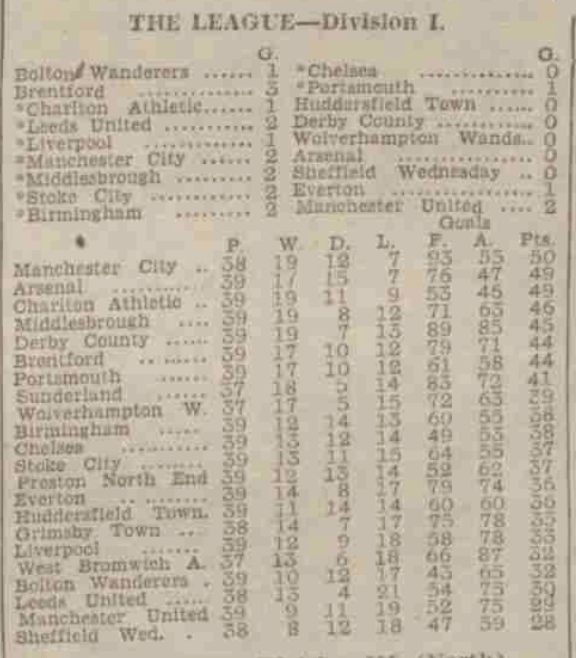
On this day (10 April) in 1937 a game viewed as being the title decider saw City defeat championship rivals Arsenal 2-0.  The game, played in front of a Maine Road crowd of 74,918 (still not the highest for a City-Arsenal fixture at Maine Road) swung the advantage to City and ultimately the title came to Manchester.   One point on the attendance… Back then City used to announce the crowd as being number of tickets specifically sold for that game, plus those that paid on the day, i.e. the figures did NOT include any season ticket holder. As the Blues had a couple of thousand season ticket holders then the attendance is known to have been at least 76,000, but an accurate figure does not exist (only those we know turned up and paid on the day or bought a ticket specifically for that game).

You can read more about the game here:

The 1990s: Season Ticket Sales

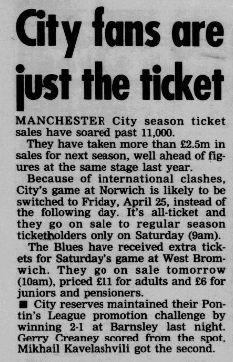
The series of features covering Manchester City in the 1990s continues today with this reminder of the loyalty of fans. This cutting is from today (8 April) in 1997 and highlights that season ticket sales had increased to 11,000 at this stage of the season. In those days there wasn’t a cut off but there were different pricing structures, so if you bought early you’d get the best benefit.

11,000 is far from the final tally (City had more than double that number of season ticket holders and actually capped it due to segregation and ticket sales needs for FA cup games etc.), but it does show that even though this was a particularly dark period for the club fans would commit month many, many weeks before knowing which division the club would play in the following season.

While you’re here why not read a 4,900 word long article on the 1996-97 season? It’s available to subscribers, so why not subscribe and relive this season and an extraordinary decade? As with all these 1990s subscriber features it contains material from interviews I’ve performed with key figures from that time, including Phil Neal who talks about Steve Coppell’s shock resignation.

Here’s the 4900 word article on that season:

Subscribe to get access – Monthly

Read more of this content when you subscribe today. It costs £3 per month (cancel anytime) to access everything posted since 1 October 2022 or there’s a special annual rate below which gives greater access and works out much cheaper.

Subscribe to get access – Annual

Read more of this content when you subscribe today. It costs £3 per month (above) or £20 a year (here) to access everything posted since the site was created in December 2020. This special rate works out about £1.67 a week and gives access to everything posted, including PDFs of 3 of my books.

This series of articles and features will run throughout March with indepth articles some days and smaller ‘on this day’ style posts on others. There will be flashbacks to great games, players and more. Every day in March will offer something to enjoy.

Subscribers will get access to everything, while some on this day material will be free for all to view.

If you want to know more on this incredible decade for Manchester City Football Club then why not subscribe and read it all? If you’d like to know more about subscribing then see:

The 1990s: The Super League!

The series of features covering Manchester City in the 1990s continues today with this reminder of the days when the creation of a Super League was leaked to the press. The Super League eventually became the Premier League and the key clubs behind the move were Arsenal, Tottenham, Liverpool, Everton and Manchester United. Much of the coverage from this period in 1991 focused on these clubs wanting to exert greater control on football’s finances, i.e. to carve up the game’s riches for the biggest clubs of the era. These cuttings are all from the start of April 1991.

Back then the Football League had four divisions and voting rights were equal for all clubs in the top two divisions (the ‘full members’ of the League, hence the Full Members Cup). The bottom two divisions were classed as associate members and they still had voting rights which many in the top division objected to. They felt the clubs outside the top flight should not control the League’s finances and direction.

It wasn’t the first time the establishment of a Super League had been discussed (usually it involved the idea of bringing leading Scottish clubs into a British league system) but it does appear to be the first time the leading clubs in the top division wanted to limit the influence of the others.

You can see from these articles who the leading architects were and how fans reacted. This piece quotes Frank Horrocks from the MCFC Supporters Club. Many of his concerns have proved to be true in the 30+ years that have followed:

All these years on there have been multiple attempts by certain clubs to limit the opportunities for others and create an environment where they can prosper without necessarily investing. Many of the financial issues between the rich and the rest in football that people talk of today were created as a result of the greed of several clubs in the early 1990s.

For Manchester City the 1990-91 season saw a shock managerial departure could have disrupted the club but ultimately they finished 5th, 3 points ahead of Manchester United. Here’s a 2,700 word article on that season:

Subscribe to get access – Monthly

Read more of this content when you subscribe today. It costs £3 per month (cancel anytime) to access everything posted since 1 October 2022 or there’s a special annual rate below which gives greater access and works out much cheaper.

Subscribe to get access – Annual

Read more of this content when you subscribe today. It costs £3 per month (above) or £20 a year (here) to access everything posted since the site was created in December 2020. This special rate works out about £1.67 a week and gives access to everything posted, including PDFs of 3 of my books.

This series of articles and features will run throughout March with indepth articles some days and smaller ‘on this day’ style posts on others. There will be flashbacks to great games, players and more. Every day in March will offer something to enjoy.

Subscribers will get access to everything, while some on this day material will be free for all to view.

If you want to know more on this incredible decade for Manchester City Football Club then why not subscribe and read it all? If you’d like to know more about subscribing then see:

The 1990s: Crowd Records

Today’s feature in the series covering Manchester City in the 1990s is a reminder of crowd related activities in the 1998-99 season. It was City’s only ever season in the third tier and they were met with capacity crowds throughout the season. These newspaper cuttings are from today (29 March) in 1999 and follow City’s game at Reading on 27th.

The match made the front page of the local paper in Reading. There was no crowd trouble or anything but the remarkable scenes of a full house at Reading made the news. Have a read of these to remember those days when the loyalty of City’s support was often the story.

Here’s an actual report of the game too (from the Reading perspective):

While you’re here, why not read the following 8000 word article? It’s available to subscribers, so why not subscribe and relive this extraordinary season? As with all these 1990s subscriber features it contains material from interviews I’ve performed with key figures from that time.

Here’s the 4900 word article on that season:

Subscribe to get access – Monthly

Read more of this content when you subscribe today. It costs £3 per month (cancel anytime) to access everything posted since 1 October 2022 or there’s a special annual rate below which gives greater access and works out much cheaper.

Subscribe to get access – Annual

Read more of this content when you subscribe today. It costs £3 per month (above) or £20 a year (here) to access everything posted since the site was created in December 2020. This special rate works out about £1.67 a week and gives access to everything posted, including PDFs of 3 of my books.

This series of articles and features will run throughout March with indepth articles some days and smaller ‘on this day’ style posts on others. There will be flashbacks to great games, players and more. Every day in March will offer something to enjoy.

Subscribers will get access to everything, while some on this day material will be free for all to view.

If you want to know more on this incredible decade for Manchester City Football Club then why not subscribe and read it all? If you’d like to know more about subscribing then see:

The 1990s: Fire in the North Stand

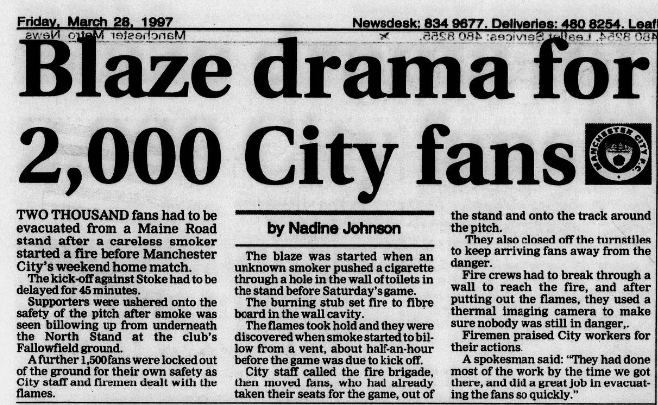
The series of features covering Manchester City in the 1990s continues today with this reminder of a day when fans had to be evacuated from Maine Road’s North Stand due to a fire. I remember the day well – I was sat at the opposite end – and it did seem a little worrying for a time. I remember seeing some smoke coming out of the stand. This cutting is from today (28 March) in 1997 and highlights the day of the fire (previous weekend).

The article claims the fire was started because a fan had pushed a cigarette into a cavity which set fire to materials behind the wall. I don’t think I ever knew this at the time (the rumour was that a chip fryer or burger stand had overheated in some way) but reading this all these years later is a little chilling. In 1985 the cause of the Bradford fire was believed to be a stray cigarette going through a whole and setting waste material under the stand on fire.

Unlike at Bradford the North Stand fire was soon extinguished and City’s game was delayed but played. Nevertheless, reading that brief report now does make you think of what could have happened.

This was not the first time a stand at Manchester City experienced a fire of course. Elsewhere on this site you can read about the Hyde Road fire.

While you’re here why not read a 4,900 word long article on the 1996-97 season? It’s available to subscribers, so why not subscribe and relive this season and an extraordinary decade? As with all these 1990s subscriber features it contains material from interviews I’ve performed with key figures from that time, including Phil Neal who talks about Steve Coppell’s shock resignation.

Here’s the 4900 word article on that season:

Subscribe to get access – Monthly

Read more of this content when you subscribe today. It costs £3 per month (cancel anytime) to access everything posted since 1 October 2022 or there’s a special annual rate below which gives greater access and works out much cheaper.

Subscribe to get access – Annual

Read more of this content when you subscribe today. It costs £3 per month (above) or £20 a year (here) to access everything posted since the site was created in December 2020. This special rate works out about £1.67 a week and gives access to everything posted, including PDFs of 3 of my books.

This series of articles and features will run throughout March with indepth articles some days and smaller ‘on this day’ style posts on others. There will be flashbacks to great games, players and more. Every day in March will offer something to enjoy.

Subscribers will get access to everything, while some on this day material will be free for all to view.

If you want to know more on this incredible decade for Manchester City Football Club then why not subscribe and read it all? If you’d like to know more about subscribing then see:

The 1990s: 1998-1999 The Fightback

The series of articles covering Manchester City in the 1990s continues today with an indepth article on the 1998-99 season – yes, that season! It saw the Blues reach their all-time low before an incredible fight back. It’s City’s one and only season at that level. The article is almost 8,000 words long. It’s available to subscribers, so why not subscribe and relive this extraordinary season? As with all these 1990s subscriber features it contains material from interviews I’ve performed with key figures from that time.

Here’s the 4900 word article on that season:

Subscribe to get access – Monthly

Read more of this content when you subscribe today. It costs £3 per month (cancel anytime) to access everything posted since 1 October 2022 or there’s a special annual rate below which gives greater access and works out much cheaper.

Subscribe to get access – Annual

Read more of this content when you subscribe today. It costs £3 per month (above) or £20 a year (here) to access everything posted since the site was created in December 2020. This special rate works out about £1.67 a week and gives access to everything posted, including PDFs of 3 of my books.

This series of articles and features will run throughout March with indepth articles some days and smaller ‘on this day’ style posts on others. There will be flashbacks to great games, players and more. Every day in March will offer something to enjoy.

Subscribers will get access to everything, while some on this day material will be free for all to view.

If you want to know more on this incredible decade for Manchester City Football Club then why not subscribe and read it all? If you’d like to know more about subscribing then see:

The 1990s: The Derby at Maine Road AND Old Trafford

The series of articles covering Manchester City in the 1990s continues today with a reminder of the Manchester Derby played on this day (20 March) in 1993. The match ended in a 1-1 draw (City were leading 1-0 before Cantona equalised). Here’s City scorer Niall Quinn’s view of the game:

The game was the first derby at Maine Road in the Premier League that had been established that season and United would go on to win the title, so this draw was viewed as a significant result for City at the time. The attendance was 37,136 which was an absolute sellout. The new Umbro Stand (Platt Lane) had opened that month.

There were issues about ticket touts and capacity, leading to MUFC showing the match at Old Trafford too. 10,000 were reported to have watch the game there. Here are some cuttings about that.

Here’s a 3,200 word article on that full season from a Manchester City perspective:

Subscribe to get access – Monthly

Read more of this content when you subscribe today. It costs £3 per month (cancel anytime) to access everything posted since 1 October 2022 or there’s a special annual rate below which gives greater access and works out much cheaper.

Subscribe to get access – Annual

Read more of this content when you subscribe today. It costs £3 per month (above) or £20 a year (here) to access everything posted since the site was created in December 2020. This special rate works out about £1.67 a week and gives access to everything posted, including PDFs of 3 of my books.

This series of articles and features will run throughout March with indepth articles some days and smaller ‘on this day’ style posts on others. There will be flashbacks to great games, players and more. Every day in March will offer something to enjoy.

Subscribers will get access to everything, while some on this day material will be free for all to view.

If you want to know more on this incredible decade for Manchester City Football Club then why not subscribe and read it all? If you’d like to know more about subscribing then see: