On this day (28 March) in 1964 legendary Bert Trautmann played his last competitive first team game for Manchester City. At the time he was the Blues’ record appearance holder with a total of 545 first team appearances. Sadly his final game ended in a 2-0 League defeat at Preston and the great man was beaten with a penalty scored by former Manchester United forward Alex Dawson. Brian Godfrey was the last player to score against Trautmann while he was a City first team player.
Interestingly the Guardian match report of the game mentions Trautmann a couple of times. Once when he accidentally kicked an opposition player and the other time it said that ‘Trautmann wears well and delighted the crowd with several fine saves.’ The Preston fans must have given him the kind of respect he deserved.
If you enjoy all the free material on my website and would like to support my research and keep this website going (but don’t want to subscribe) then why not make a one-time donation (or buy me a coffee). All support for my research is valued and welcome. It allows me to keep some free material available for all. Thanks.
100 years ago today (27 March 1926) the first all-Manchester FA Cup semi final occurred. You can see film of that game here and subscribers can read about the match below. Here’s the film from Bramall Lane:
Read everything on the site when you subscribe today. Monthly subscription is £3 per month (cancel anytime). Monthly subscribers access everything posted since 1 October 2022. Alternatively, sign up for a year at a time for the special discounted annual subscription of £20 for access to everything posted since the site’s creation in 2020.
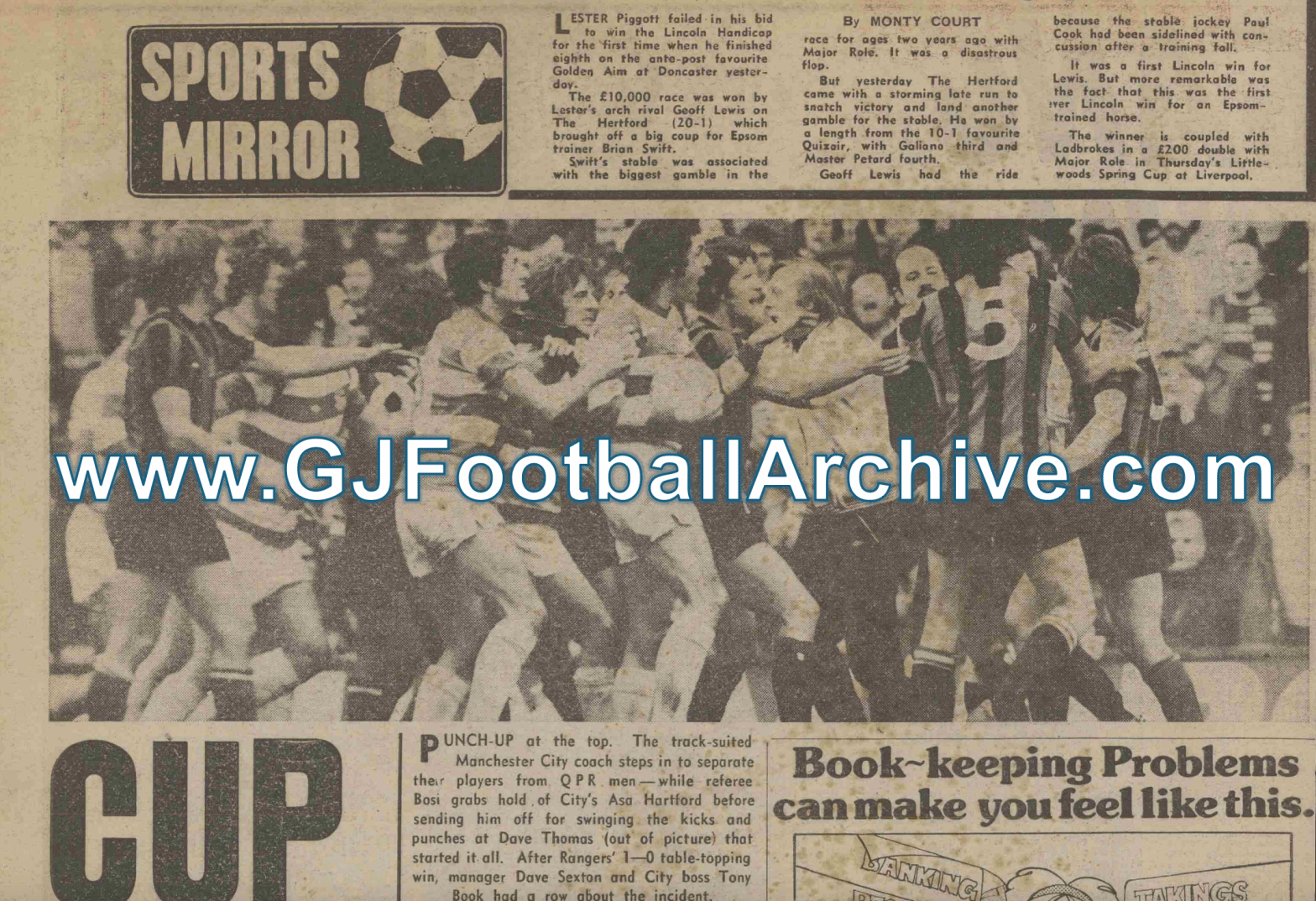
A hugely controversial away game at QPR on this day (27 March) in 1976 brought unsavoury headlines. Manchester City lost 1-0 to an 81st minute goal to the League leaders but that wasn’t the real issue this day, it was the extremely negative way the London club played. This all led to a controversial incident following an Asa Hartford tackle. The Belfast Newsletter reported: ‘The already tattered disciplinary reputation of the League leaders took another knock in the game with Manchester City at Loftus Road… In the 75th minute City’s Asa Hartford went in to tackle with foot held high, and Wolverhampton referee Terry Bosi immediately whistled for a foul. He was talking to Hartford when Thomas, not concerned in the original incident, ran a dozen yards to attack the City player from behind and pull his hair. Hartford retaliated with a blow, and within seconds other players were involved.’
Hartford was sent off much to the dismay of City fans, staff and most neutral journalists. The Sunday Express reported: ‘Don Masson kicked Hartford and Dave Thomas aimed a punch… the Rangers pair were lucky to escape without even a booking.’
After the game the rival managers, Tony Book and Dave Sexton, publicly argued in front of journalists about the physical nature of QPR and Hartford’s sending off.
The suspension of Hartford and an injury to Dave Watson led to selection issues for the away game at Stoke the following Friday. In the end a magnificent performance from youngster Paul Power was rightly praised in a goalless draw seen as a positive result in the circumstances.
Five days later a third successive away game saw City lose 2-1 to Bobby Robson’s Ipswich Town. Ipswich opened the scoring four minutes before half time, with Ged Keegan equalising in the 47th minute. Eleven minutes later Ipswich scored their winner and their pressure from then on disrupted every opportunity City had to search for an equaliser.
One point from three games led to Tony Book taking a decision that would excite the Maine Road faithful: Colin Bell was to return for the following game.
You can read more on the 1975-76 season with this 5,320 word article – a season which saw Tony Book guide the club to major success. If you want to know more on this incredible decade for Manchester City Football Club then why not subscribe and read it all? You could even subscribe for a month and see what you think. The following 5,320 word article is on the 1975-76 season and is available to subscribers below. Enjoy!
Subscribe to get access – Monthly
Read more of this content when you subscribe today. It costs £3 per month (cancel anytime) to access everything posted since 1 October 2022 or there’s a special annual rate below which gives greater access and works out much cheaper.
Read more of this content when you subscribe today. It costs £3 per month (above) or £20 a year (here) to access everything posted since the site was created in December 2020. This special rate works out about £1.67 a week and gives access to everything posted, including PDFs of 3 of my books.
If you enjoy all the free material on my website and would like to support my research and keep this website going (but don’t want to subscribe) then why not make a one-time donation (or buy me a coffee). All support for my research is valued and welcome. It allows me to keep some free material available for all. Thanks.
If you enjoy all the free material on my website and would like to support my research and keep this website going (but don’t want to subscribe) then why not make a one-time donation (or buy me a coffee). All support for my research is valued and welcome. It allows me to keep some free material available for all. Thanks.
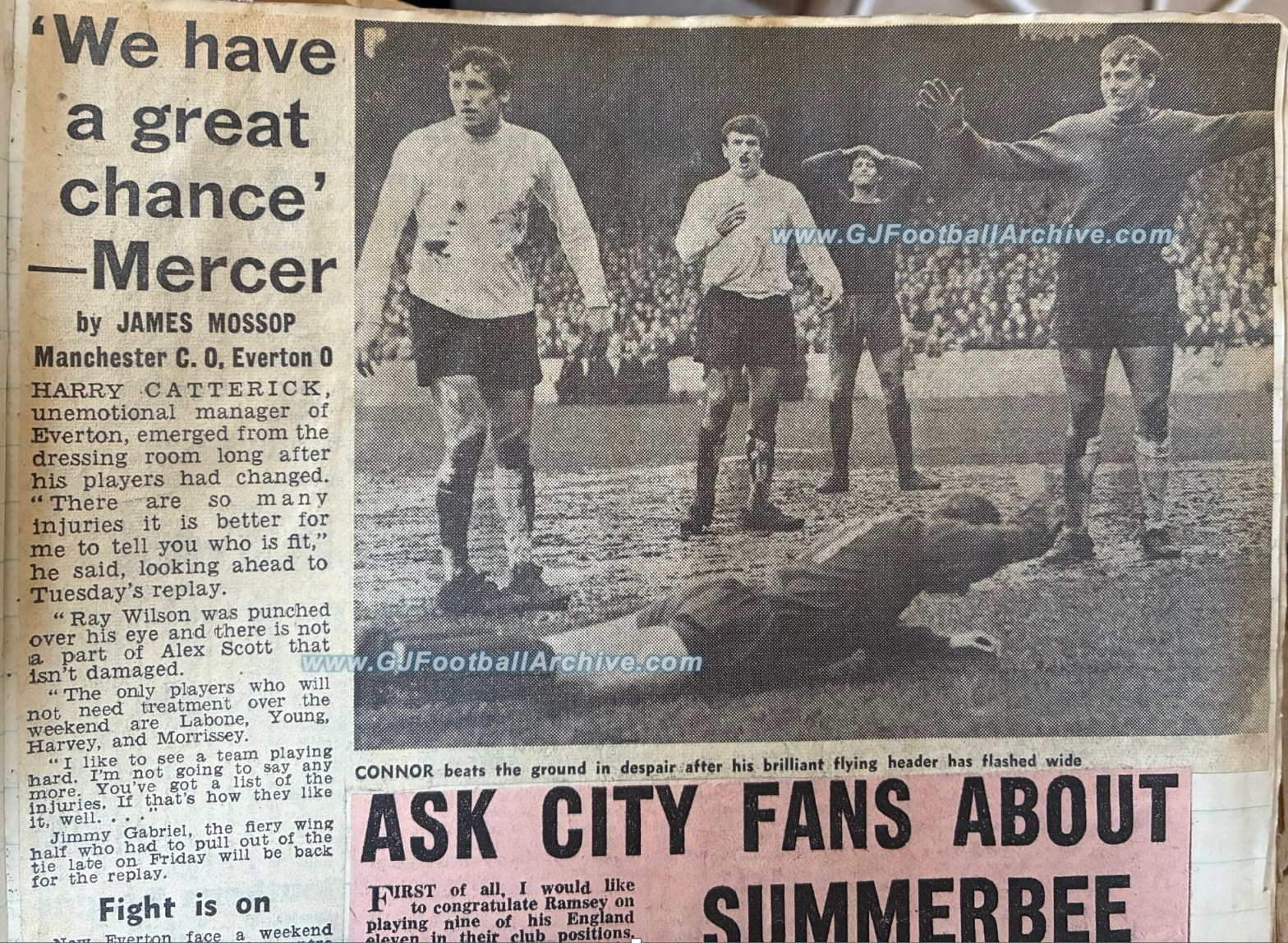
60 years ago today (26 March 1966) 63,034 watched a goalless FA Cup quarter final at Maine Road between Everton and Manchester City. It was a day that ultimately brought a lot of attention City’s way and City ‘keeper Harry Dowd was the star man according to some journalists. Here for subscribers are match reports and details of that day:
Subscribe to get access
Read more of this content when you subscribe today. It costs £3 per month (cancel anytime) or sign up at a discounted £20 per year. Every subscriber gets access to the 1000s of articles already posted and those posted throughout your subscription. This includes the full Manchester A Football History and my first City book published in 1989
If you enjoy all the free material on my website and would like to support my research and keep this website going (but don’t want to subscribe) then why not make a one-time donation (or buy me a coffee). All support for my research is valued and welcome. It allows me to keep some free material available for all. Thanks.
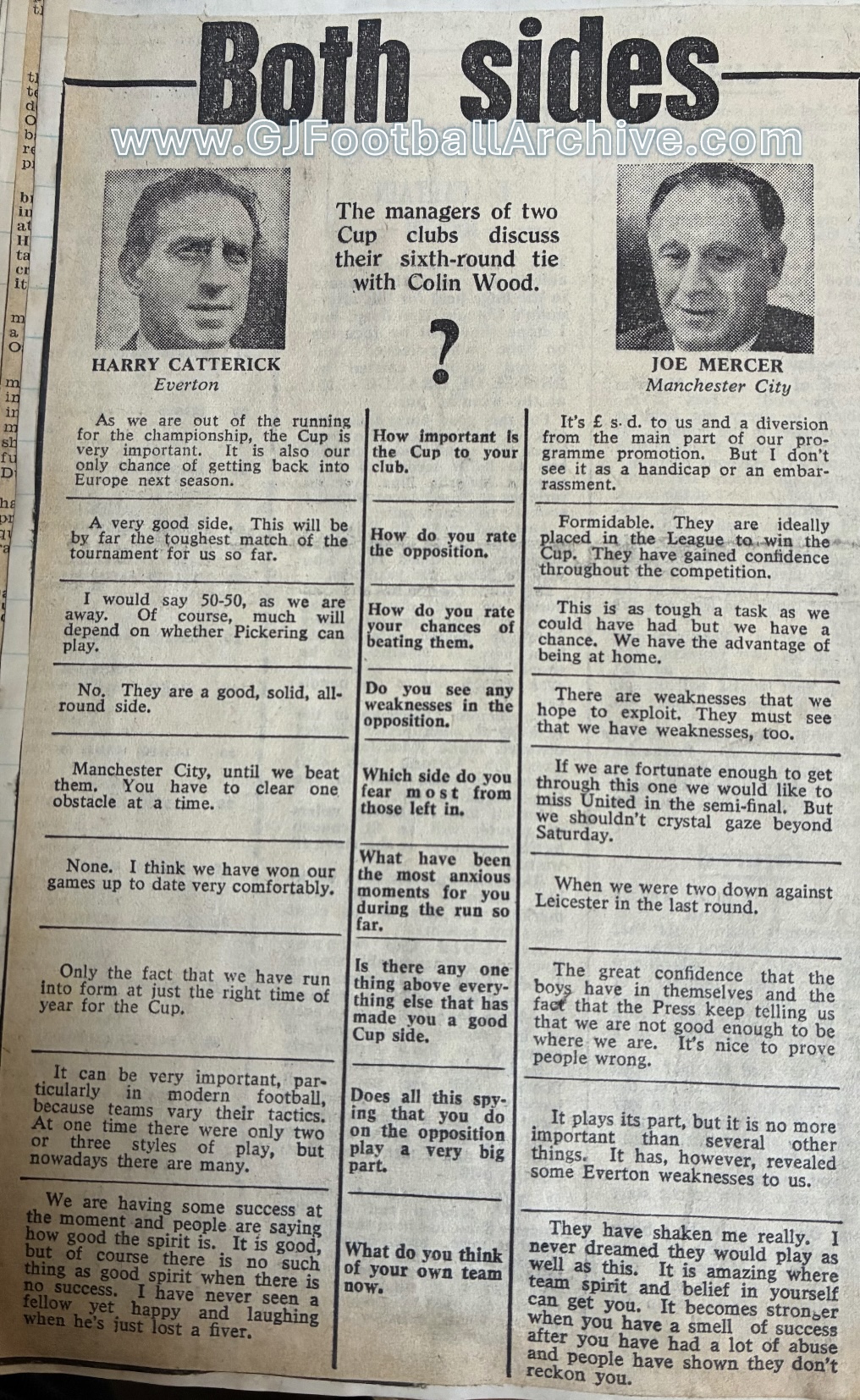
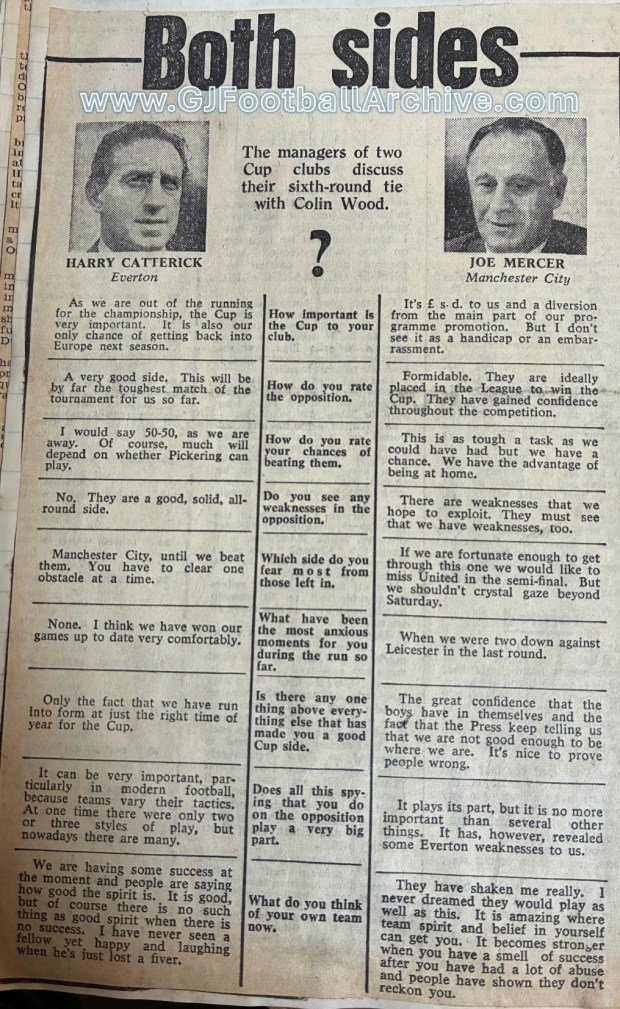
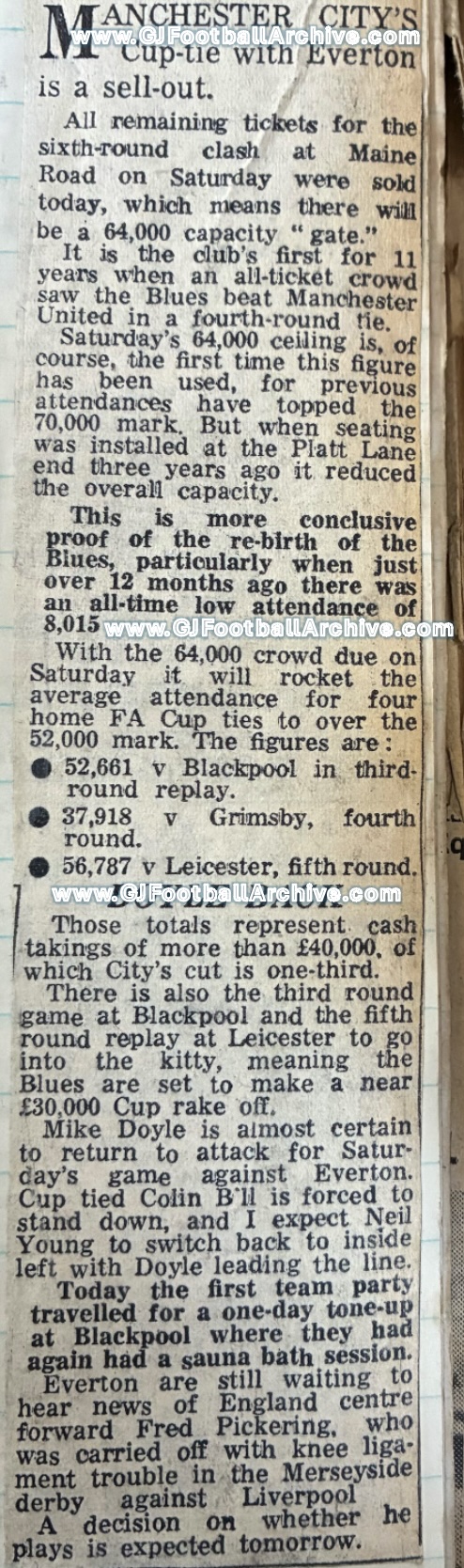
60 years ago Manchester City and Everton were due to meet in the following day’s FA Cup quarter final (to be played on 26 March – more on that tomorrow). City were a Second Division team that season and were managed by former Evertonian Joe Mercer. Everton had finished the previous season fourth and had participated in the Fairs Cup during 1965-66. They were managed by Harry Catterick. Their views on their teams and opponents make interesting reading for fans of both City and Everton. Sadly, I don’t know which newspaper this is from. It’s in a scrapbook on the entire 1965-66 season I have.
If you enjoy all the free material on my website and would like to support my research and keep this website going (but don’t want to subscribe) then why not make a one-time donation (or buy me a coffee). All support for my research is valued and welcome. It allows me to keep some free material available for all. Thanks.
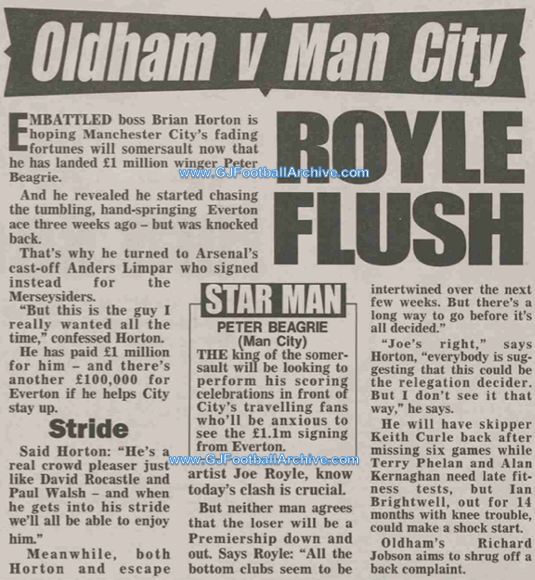
On this day (24 March) in 1994 Peter Beagrie signed for Manchester City from Everton and soon established himself as a hero. With his trademark somersaulting goal celebrations Beagrie scored 5 goals in 58 (plus 7 as substitute) appearances, but his contribution to the exciting style of play enjoyed under Brian Horton was much more impressive than those statistics suggest.
Beagrie’s debut came in a goalless game v Oldham the following Saturday.
If you enjoy all the free material on my website and would like to support my research and keep this website going (but don’t want to subscribe) then why not make a one-time donation (or buy me a coffee). All support for my research is valued and welcome. It allows me to keep some free material available for all. Thanks.
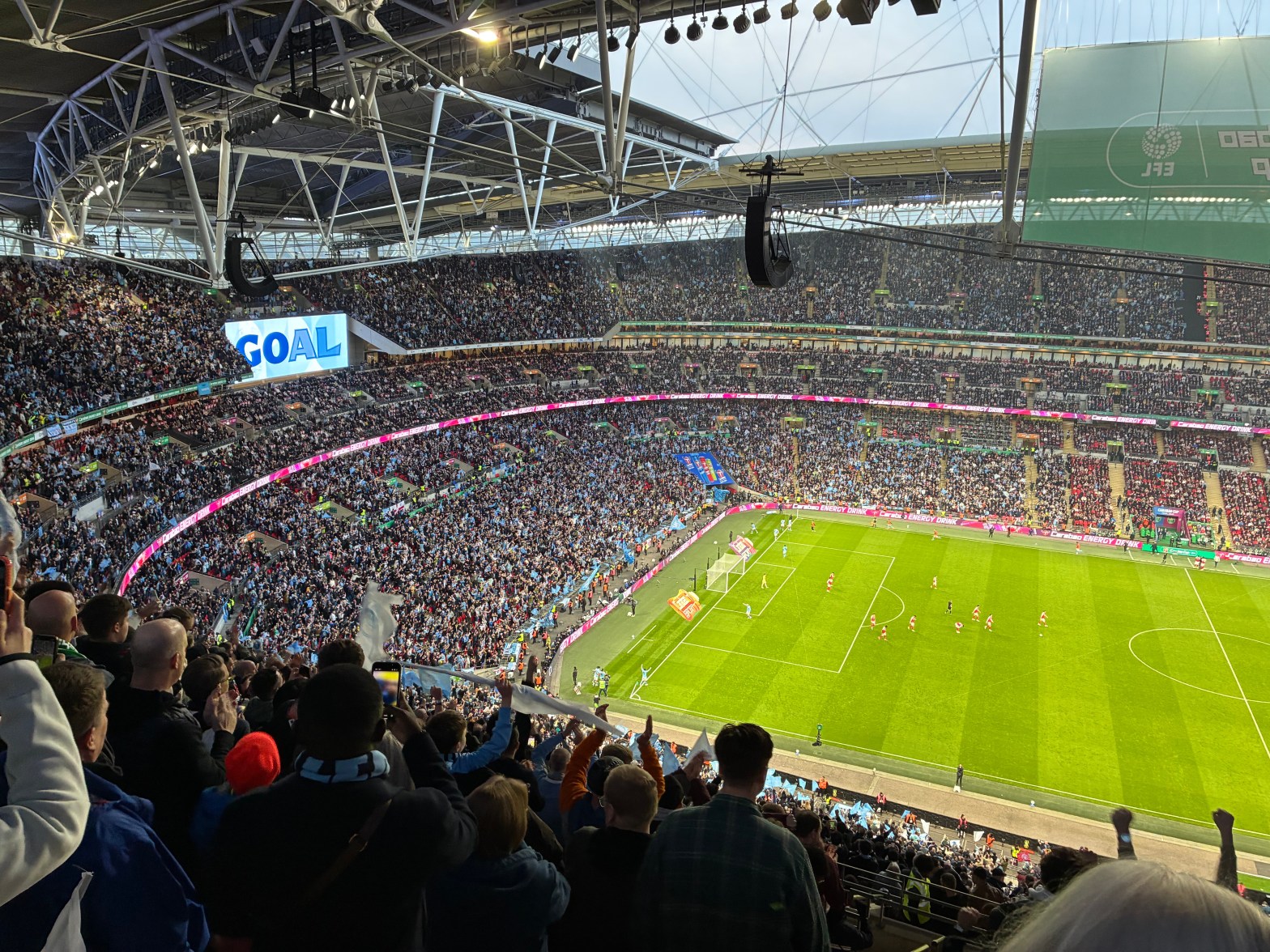
Congratulations to Manchester City on winning the League Cup last night (22 March 2026). It was, once again, great to be there and clashes between the top two are always special. Years ago the former Manchester City trophy winning assistant manager (and later manager) Malcolm Allison was in a reflective mood when he told me: ‘Celebrate every success as if it’s your first, because it could be your last.’ It’s always stuck with me because so often we see people make assumptions about trophy success and then it’s taken away. Allison definitely experienced that, so I guess what I’m saying is… Celebrate every trophy; every moment; every player etc.
Yesterday’s success was thoroughly deserved. I was nervous in that first half when it looked like Arsenal had control for key stages, but then the second half demonstrated quite clearly how City as a team can deliver. Having our 21st birthday boy Nico O’Reilly score two goals added to the occasion and allowed a few headlines to be created. Listening to his BBC R5L interview on the way back from Wembley suggested that Nico would certainly be celebrating that success last night.
So much has already been written about the final so I don’t need to add much here. I absolutely loved the win and enjoyed the wider experience of Wembley. It’s changed a lot since my first visit (1986 Full Member’s Cup – 40th anniversary today!) and even since the 2011 FA Cup semi & final. We didn’t have a Greggs or shopping centre at our end back then!
In the 1900s when City first started making trips to Cup Finals and the 1920s when they first went to Wembley newspapers would often carry stories of how the train companies and Wembley organisers would change the food on offer depending on where the clubs were from. The 1904 final at Crystal Palace between City and Bolton brought stories published on the number of pies ordered being significantly higher than some other years because of the volume of northern fans. Southern fans, it reported, preferred sandwiches. I’d love to see if we could find similar details today – was Greggs busier last year because Newcastle were there for example?
Anyway…. If you support City enjoy the success. It was absolutely deserved and a great occasion again.
60 years ago this week (March 1966) Manchester City announced that their FA Cup quarter final was a 63,000 sell out. Why is this significant? Because the attendance was larger than any domestic crowd at Old Trafford that season, but why is that significant? Because at the start of the season United’s Pat Crerand bet City assistant manager Malcolm Allison that City would never get more than 30,000 for a game again! I interviewed Malcolm back in 1993 when we talked about this and he also mentioned it in he biography. The story…
Basically, Allison was sat at United’s League championship celebration and became somewhat frustrated by the glorification of United that night. While Joe Mercer took a diplomatic approach, afterall it was United’s celebration dinner, Allison decided to speak out. He told Matt Busby’s son Sandy that his dad had a twenty year start but ‘I’ll pass him in three’ and then Allison claimed he got into a discussion with Crerand about ‘little City’ compared to United. Allison claimed Crerand made a £10 bet with him that City would never again get 30,000+ in Maine Road.
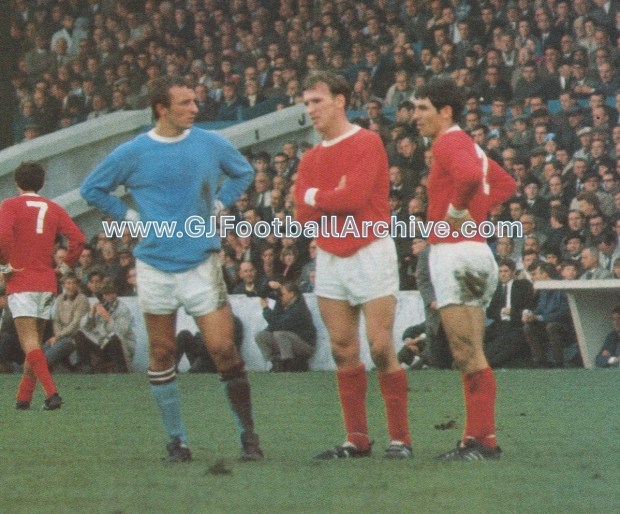
A pause in the action (September 1967 Manchester derby) gives Summerbee Crerand and Dunne an opportunity to debate the action so far (Image: The Pride of Manchester, 1991)
On a Wednesday night in October (27/10/65) City attracted 34,091 for the visit of Norwich in the Second Division. Allison told me he couldn’t remember whether he ever got his £10 but he did laugh a great deal when I told him that United’s attendance the previous Saturday was 32,716 for the top flight visit of Fulham.
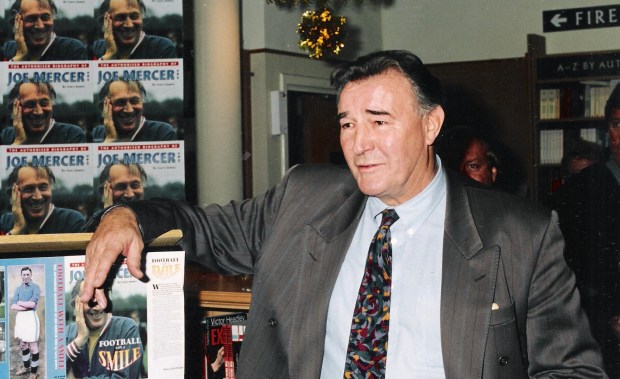
Malcolm Allison at the launch of Gary James’ Football With A Smile: The Authorised Biography of Joe Mercer, OBE in December 1993. Note Francis Lee appearing behind Allison.
What was even more remarkable was that the City-Everton FAC tie on 26 March 1966 was watched by 63,034 and that was higher than any domestic crowd at United that season. Allison laughed again when we discussed that briefly. As a comparison, United attracted 58,161 for their League game with Liverpool (lowest home League attendance 23,039 v Aston Villa) and they did get 60,433 for their FAC Cup quarter-final replay with Preston. Plus United managed to better all these attendances with 64,035 for their European Cup quarter-final with Benfica.
I did an earlier interview with Allison that can be listened to here:
If you’re new to this website there’s lots more like this elsewhere on the site. Some is available for subscribers and some is available for all. If you’d like to subscribe then see see ‘How To Subscribe’ lower down. If not why not help keep it going and support the research too:
If you enjoy all the free material on my website and would like to support my research and keep this website going (but don’t want to subscribe) then why not make a one-time donation (or buy me a coffee). All support for my research is valued and welcome. It allows me to keep some free material available for all. Thanks.
Forty years ago today (22 March 1986) Manchester United hosted Manchester City in the 108th League derby between the teams. The fixture was the first of two high profile games for the Blues in consecutive days with the other game coming on Sunday at Wembley. See this story for news of that Wembley final:
Here for subscribers are the match stats, background, match report, film and other details from the 1986 Old Trafford derby:
Subscribe to get access
To access this please subscribe. It works out about £1.67 a month if you take out an annual subscription (£20 per year) or £3 a month if you’d like to sign up for a month at a time. Each subscriber gets full access to everything posted so far and those scheduled during your subscription.
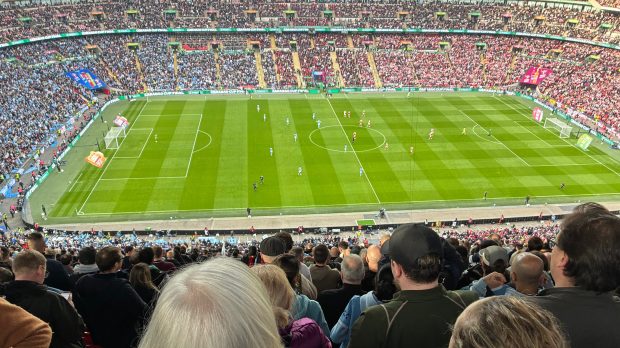
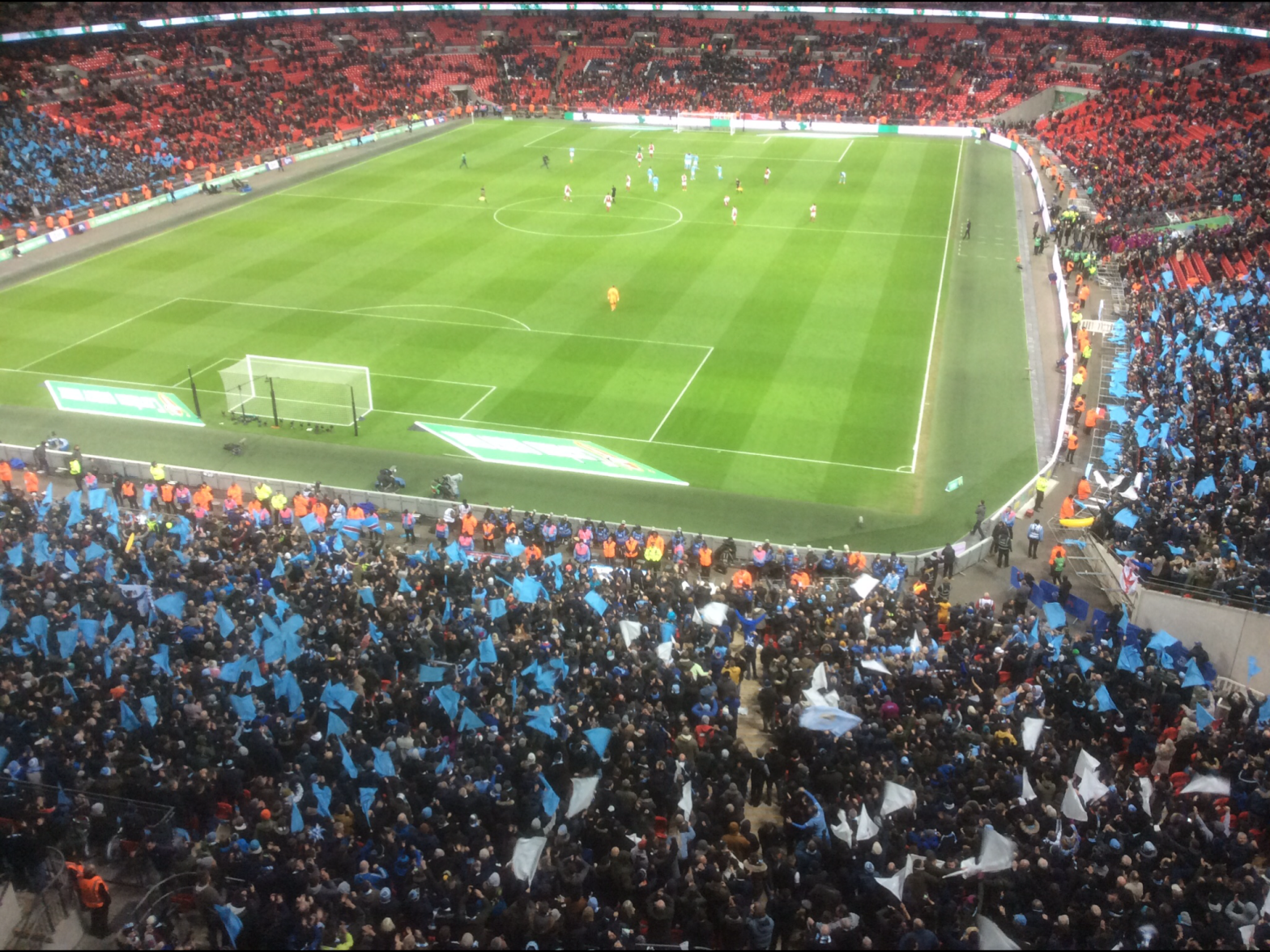
I’m looking forward to today’s League Cup final at Wembley today. Safe travels to all making the journey. Here’s a reminder of the last time City and Arsenal met in the League Cup final. This photo is of the final minutes, captured by me, looking towards the Arsenal end. This was 2018 and City won 3-0.