It’s Derby Day! I know we don’t need anything to get us pumped up for this game but if you want to know a bit about the history of this fixture of would like to relive past games, here are links to articles/posts/videos on my site about past games…
Over the last week or so a few people have asked about my website/archive and why I’ve done it. I appreciate the interest and I’d like to thank everyone who has supported my work over the decades. I’d also like to explain why I’m doing this; what the archive consists of and how often it is added to. If you’re intrigued read on…
First – why? For some time people have been asking me when I’d be doing my own blog and over the years I’ve always been pleased with the responses to my guest appearances on podcasts, vlogs and blogs. The feedback has been excellent but I’ve always had so much more to say. I care passionately about ensuring football’s history is properly researched & recorded and feel there’s always a place for detailed, quality research.
The idea of creating this blog and archive came because I wanted to create new content, based on the research I’ve performed over the decades, while also setting up an archive of my past work. Much of my writing is now out of print and it matters enormously to me that books like Manchester A Football History should be available (subscribers now have access to the full 2010 edition of this book which retailed at £24.95). My first book ‘From Maine Men to Banana Citizens’ (published in 1989) is also available for free as a download to all those who subscribe, as are several audio interviews I have performed over the years (including Malcolm Allison, John Bond – a truly frank interview! and George Graham).
I am a self employed historian and spend all my working week writing, researching and publishing my work. I am not an employee of any organisation (I know some think I’m employed by a football club but I’m not an employee nor am I an official club historian of any club). I am independent of any organisation and care passionately about the quality and accuracy of my work. As so much of this is out of print I am keen to create this archive for my work and add to it as time goes by.
Next – what? So what is my football archive? It is a place where over 500 posts/articles/features have been posted so far. These include new material, written and audio interviews, profiles, past articles, book sections and more (like the oldest known surviving footage of MCFC’s women’s team). Some of this material was written some time ago or is based on interviews performed many years ago (including interviews with players who have since died). Most of the material posted so far is connected with Manchester City but there are articles of interest to Manchester United and other teams, including England. Further articles on Manchester’s clubs will follow.
Some articles are free to download but most of the material is available to subscribers only. As mentioned earlier, my research and writing is something I strive hard to ensure is of quality. No one employs me (though I have done project work with Manchester City, Manchester United, Liverpool and Leicester City over the decades – some paid, some not) but my commitment to those who read my work is that I will always seek to maintain the highest standards. I am eternally grateful to those who purchase my books or subscribe to my work. That keeps me going forward and helps fund future projects.
To see what articles have already been published go to the search page (using the links under the banner at the top of this page) and either search on a key word or have a look at the categories listed there.
Next – when? As I said before there are over 500 posts/articles live and this will increase significantly over the coming months. It is my intention that over time my biography of Joe Mercer and other books, such as Farewell To Maine Road, will also be available in this archive. I’m keen to hear from subscribers which books, articles, interviews they’d like access to here. I want this to develop into a community of readers whose views absolutely matter.
A limited amount of content will always be free for anyone to read but those subscribing will have access to everything on this site for as long as they subscribe. For subscribers I guarantee to post a minimum of 4 articles alongside adding material from my archives each month (in practice it’s been much more than this!). To subscribe costs £3 a month or £20 a year (a reminder that the 2010 edition of Manchester A Football History cost £24.95 when published and is now out of print but available to subscribers as a downloadable pdf as part of their subscription.).
If you’re uncertain whether to subscribe or not then why not subscribe for a month at £3 and see if you’re getting value for money. The £20 annual subscription works out about £1.67 a month for a guaranteed 4 new articles per month and access to everything else posted in the archive.
Thanks for reading this. If you’d like to subscribe then please do so below. I really appreciate the support and I promise I’ll continue to add content that informs, entertains and has been researched to the highest standards.
Best wishes, Gary
£3 per month or £20 per year for full access to all posts and the archive.
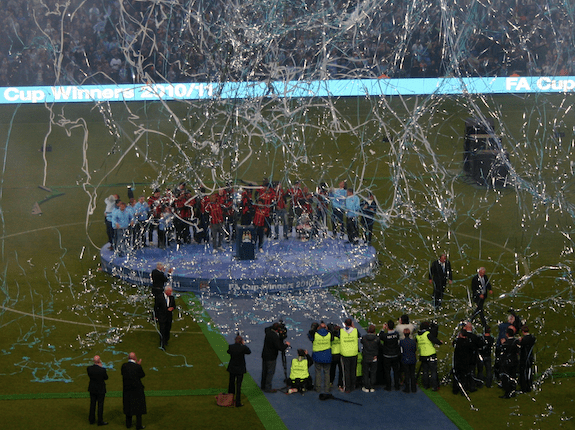
It’s FA Cup week AND Manchester Derby week, so the time seems right to post this special 1 hour long audio I produced last year on Manchester City’s FA Cup semi final victory over Manchester United at Wembley on April 16 2011. This recording looks at the game and the years between the 1976 League Cup success and the FA Cup glory of 2011. The 2011 semi-final was a crucial step in City’s journey since the 2008 takeover and I felt it was vital to do a special marking this.
So what’s in this special recording? Well, I’ve included exclusive material from interviews and recordings I’ve done over the years with Garry Cook, Brian Marwood, Roberto Mancini, Peter Barnes and Peter Swales. Why Swales? Well, have a listen and you’ll hear why. Basically though I’m trying to set the tone for why the 2011 FA Cup semi final victory and overcoming Manchester United was so significant.
On Mancini… I include a few words from him recorded in 2011 and at one point he talks about the view that was then being expressed that City were ‘trying’ to buy success (now they say City ‘have’ bought success!). His words are a reminder that City have been having that particular criticism thrown at them for over a decade! Oh well, I wonder how long those criticisms were laid at other clubs who had seen major investment which propelled them forward?
Anyway, get yourself a brew and be prepared to be transported back in time. Here’s the recording:
If you enjoy the recording then please let me know, comment or subscribe to the site. If it’s of interest then, over the coming months and years, I’ll produce others like this highlighting key points in Manchester City – and Manchester’s – footballing history. It costs £20 a year to subscribe (it works out £1.67 a month) or £3 if you’d like to sign up a month at a time to get full access for as long as you subscribe (you can always try it for a month). It’s worth bearing in mind that the 2010 Manchester A Football History cost £24.95 and all subscribers will be able to access all of that for as long as they are a subscriber (plus all the other stuff of course). You can subscribe below.
At the start of December 2021 together with Geoff Matthews I staged a talk at Hebden Bridge on the FA ban of women’s football. It was a wonderful night and lots of attendees asked about the future and what they could do to help promote the stories of the women who played at a time when the FA tried to kill female participation in the sport. Well, today I want to talk about recognising the Manchester Corinthians.
As part of my longstanding project into female participation and involvement in football in Manchester I have been researching a variety of teams, including the original Manchester United and Manchester City teams, and these will form part of a book that I will eventually produce (it’ll be a while before I can develop this in the way I want). The book will be of a similar scope to my Manchester A Football History on men’s football.
Margaret Shepherd and Margaret Whitworth with me prior to the Hebden Bridge event
One of the key teams in Manchester’s football history is Manchester Corinthian Ladies. The team existed from the 1940s into the 1980s (some of their story appears in my book on Manchester City Women as several of their late 1970s players played for City in its inaugural season).
A lot has been written on the Corinthians (see the section on women’s football on this site for a few examples) but not nearly enough, plus there are some inaccuracies out there that need to be corrected. Basically, this team possessed a talented group of players who toured Europe and South America promoting football, female endeavour and Manchester.
I talked quite a bit about Corinthians at Hebden Bridge and we were fortunate to have three Corinthians as guests that night. Margaret Whitworth, Margaret Shepherd and Lesley Wright between them covered every season of the club’s life from the 1950s through to its demise (maybe next time we’ll get one of the players from the 1940s too).
What became clear was that we need to recognise these players further. on the night I mentioned my idea of having a plaque erected for the Corinthians in a significant/related location in Manchester. Several members of the audience thought this was a wonderful idea and asked if they could support the wider promotion of the Corinthians.
Previously I’d written an article in the Manchester City men’s match programme about the Corinthians and highlighted my desire to get a plaque erected about their achievements.
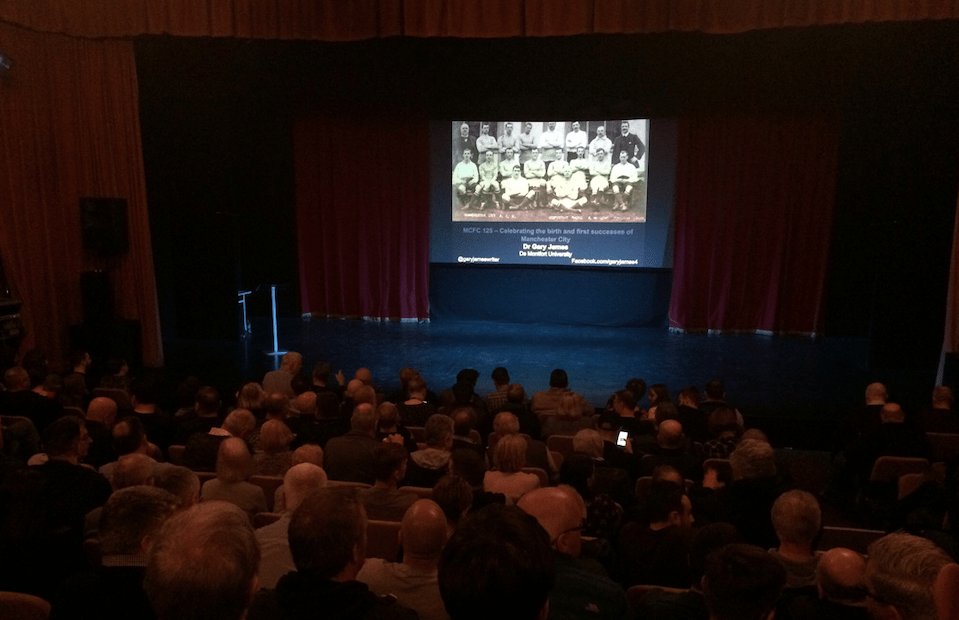
The talk at Hebden Bridge
Since that night I have written to appropriate people at Manchester City Council about the Corinthians and the idea, suggesting a location and asking what we need to do. I’m still awaiting a reply sadly but I will be pursuing this again soon. If possible it would be great if anyone who can help make this happen gets in touch.
Those present at Hebden Bridge – and anyone else reading this – can help by raising the topic with Manchester City Council or any other body you feel can help. Manchester has plaques connected with men’s football but nothing highlighting the incredible achievements of its female footballers. Those women represented Manchester and England in a positive manner and won trophies in South America for example before either men’s club represented the city there. They also won a significant European competition before either men’s team yet their achievements are not recognised by the city.
With the women’s Euros being in England (and various sites in Greater Manchester) this year I would love to do talks and other events in Manchester celebrating the Corinthians and Manchester’s other teams. The event at Hebden Bridge was free to attend and was made possible by the support of a locally based business. We felt it was vital we made this free to attend to spread the word.
If anyone runs a key Manchester venue and would like a Corinthians celebration event then please get in touch. The more we can do to promote their story the better. In 2024 I will be publishing the Authorised History of the club and you can read about that here:
Thanks for reading this. If you would like to find out more about the Corinthians then follow the tabs on this site or use the search function. If you’d like to know more about the FA Ban then you can download for free an article I’ve recently co-written here:
Copies of my book on Manchester City Women are still available. This tells the history of City Women via the voices of the women (and some men) involved. The book has been heralded as a model for oral histories by the Oral History Society.
Here’s a link you can follow to order a signed copy of the City Women book:
Watch this space for more on the Corinthians and women’s football over the coming months. Thanks – now use the tabs and search to learn more on women’s football in Manchester. Ta!
On this day (February 3) in 1990 Manchester City and Manchester United drew 1-1 at Old Trafford. The derby became remembered as the ‘Wellied It!’ derby. Here is the story of that day with quotes from an interview I did with Ian Brightwell a few years ago. He explains how the ‘Wellied It!’ phrase came about and why he said it. Enjoy….
Howard Kendall’s City arrived at Old Trafford for the return derby match on February 3 1990. So much had changed since September when Mel Machin’s City had defeated Alex Ferguson’s United 5-1 and so the game was always going to be a difficult one to call. As the Blues were now supposedly a better side it is true to say most City fans eagerly awaited this particular match. Disappointingly, United only gave City 600 seats and 4,500 terrace tickets, although even that was considerably more than in the years that followed. The eventual attendance was only 40,274 in a stadium holding a minimum of 48,000, as many disenchanted United fans stayed away.
Although there were noticeable gaps in the United sections, the paddock in front of the Main Stand appeared full of City supporters. They were later joined by Blues evacuated from the Stretford End and estimates from impartial observers suggested there were around 12,000 City fans in the 40,000 crowd.
The match was the 100th meeting in the First Division and commenced with City tearing into the Reds as they had in September. The Blues were actually two points better off than United in the League and the difference in position prompted City fans to chant “Fergie in” to annoy the home contingent… Football humour, hey?
Squandering some early chances, City looked the more composed overall but when Clarke missed a sitter some fans still muttered about Everton rejects (it had been a thing ever since Howard Kendall’s arrival and transfer of several former Evertonians to Maine Road). It wasn’t just the Evertonians who should have given City the lead; Ian Brightwell was also guilty of a shocking miss when, with Leighton off his line, the youngster feebly lobbed the ball wide. Don’t worry, he made up for it!
Against the run of play it was actually United who took the lead when Clayton Blackmore was gifted a free header. Fortunately, within five minutes Mark Ward found Brightwell who, from fully 25 yards out, blasted a stunning shot past Leighton for the equaliser. Afterwards the delighted player explained exactly how he’d scored by succinctly telling the media: “I just wellied it!” In May 2010 he remembered how the expression came about: “We totally outplayed them, but Clayton Blackmore scored even though we’d had most of the chances. I had a chance in the first half, but that’s a different story. Once they went a goal ahead you’d normally think it’s going to be difficult, but we still had a lot of chances and I felt we’d still do it. I remember that the ball was out on the right and Mark Ward sort of half-crossed it. It came to me and I’ll never forget this – I heard Steve Redmond on the half way line shout: “Bob…” I’d best not say his exact words, but let’s just say he wanted me to have a go in his strong scouse accent! It was on my left foot, which isn’t my strongest, but I did what Reddo said. It went in the top corner!
“I ran off and jumped about twenty feet in the air – or at least that’s how it looks on the photos. I remember the noise because back then the away fans used to get about 10,000 tickets at Old Trafford and it was phenomenal.
“When we came to do the post-match TV interview I was asked the usual stuff and then was asked about the goal. So I told him what I just told you, being careful not to say what Reddo actually shouted! Just as I was doing it, someone walked past and we had to do the interview again. But then the same happened again. So we had to do it a third time. By this point I thought I had to say it in a different way – inexperience I guess. I didn’t need to, but I ended up saying: ‘the ball came out to me and I just wellied it!’ It’s true I did, but now it’s the phrase that people remember. It summed it up nicely, but it wasn’t what I’d meant to say.”
The match should have brought a City victory, but everyone seemed satisfied with a point. You can watch highlights of the game here:
This is a free taster of the content on my website. If you have enjoyed it why not subscribe? It costs £20 a year (£1.67 per month) or £3 per month if paying a month at a time. You can always sign up for a month and see what you think. Cancel anytime. There are over 500 articles/interviews on the site, including exclusive audio interviews I have performed over the years with Malcolm Allison, John Bond & others. You also get the ability to download PDFs of my entire Manchester A Football History book for free – and my first ever book (published in 1989). You can subscriber here:
Recently this card was shown to me. It’s a memorial card commemorating Manchester United’s victory over Blackpool in the FA Cup final. The football funeral card business was huge at one point and, in the days of football half-half friendship scarves, was a somewhat macabre way of providing a souvenir of a game. I’ve written a lot on these in recent years and here’s an article I posted a short while ago:
It’s great to see the 1948 card pictured above and it adds to the view that these continued into the 1950s. People have written that the trend for doing football memorial cards died out after World War One but in my article I explain how it continued for decades. It was also a prominent activity with a variety of people profiting from it. Manchester was one of a number of centres for the activity and cards were printed in the city for distribution at games across England.
Together with Fiona Skillen, Helena Byrne and John Carrier I have co-authored an article on women’s football and the impact of the 1921 #FABan. The reason we wrote this academic article was to highlight that too often we assume that what happened in England is what happened across Great Britain and Ireland. It isn’t and in this piece you can read an overview of each nation and what occurred. The article is open access/free to read here:
I hope you enjoy that. We do see this article as a means of highlighting the differences and we see this as a call for more detailed research, properly triangulated, to ensure we uncover the true development of women’s football across England, Scotland, Wales, Northern Ireland and Ireland. No book has yet been published that comes anywhere close to telling the development of women’s football across each of these nations with some making assumptions that are simply not valid across each nation. Our article cannot cover everything but I hope it gives a taster for the topic.
Special thanks to Glasgow Caledonian University for making this open access. It really is appreciated.
It is worth reading the piece (well, it’s free so you may as well have a look!) to see what happened in your part of the UK and Ireland. For those with a Greater Manchester interest you’ll see mention of Manchester United, Bolton Wanderers, Manchester Corinthians and Manchester Ladies. Some interesting stuff on crowds. Also, if you’re a fan of Stoke City, Manchester City, Manchester United, Oldham Athletic or Everton you can see what happened to their former player Jimmy Broad when he tried to train a women’s football team in the 1950s!
I have written other academic articles on women’s football but these tend to be behind a publisher’s paywall. If you have access via a library or university here’s one that may be of interest:
On this day (29th January) in 1955 –goals from Joe Hayes and Don Revie give Manchester City a 2-0 victory over Manchester United in the FAC in front of 74,723. Here’s the story and film of that game (some great footage here!).
Subscribe to get access
If you would like to read this and the blog’s other in-depth, longer articles (including the entire Manchester A Football History book) then please subscribe below. It works out about £1.67 a month if you take out an annual subscription (£20 per year) or £3 a month if you’d like to sign up for a month at a time. Each subscriber gets full access to the 500+ articles posted so far and the hundreds scheduled to be posted in the coming weeks.
On this day (24th January) in 1970 Manchester City and Manchester United met for the fourth of five meetings that season. This game was in the FA Cup and the following article tells the story of that game and includes highlights of the match.
If you would like to view this article then please subscribe below. It works out about £1.67 a month if you take out an annual subscription (£20 per year) or £3 a month if you’d like to sign up for a month at a time. Each subscriber gets full access to the 500+ articles posted so far and the hundreds scheduled to be posted in the coming months.
Subscribe to get access
Read more of this content when you subscribe today.
Score United 1 City 6, Attendance 48,657 Old Trafford
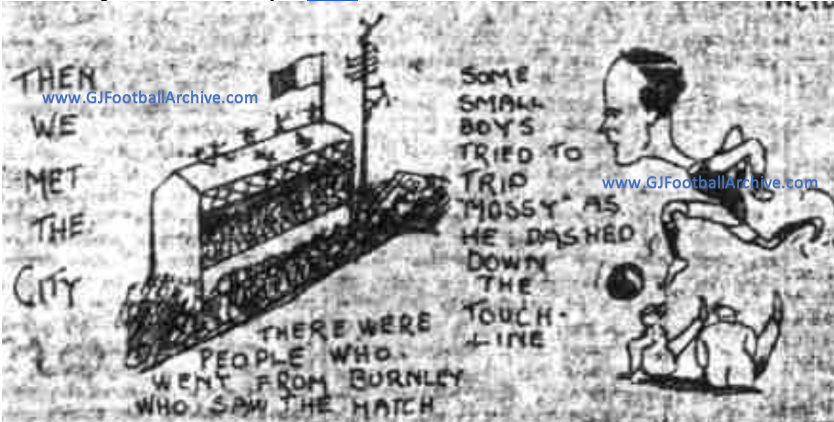
Inconsistency had dogged the Blues throughout the season and had already left them in a perilous state in the bottom half of the table. They had only collected 18 points from 26 matches, while United had collected 28 from 24 games. What made matters worse for City was the fact that they had been without a manager since the departure of David Ashworth in November. Instead of appointing a new man, the Board decided to do the job themselves with chairman Albert Alexander snr taking the leading role.
Subscribe to get access
Read more of this content when you subscribe today.