Score United 1 City 6, Attendance 48,657 Old Trafford
Inconsistency had dogged the Blues throughout the season and had already left them in a perilous state in the bottom half of the table. They had only collected 18 points from 26 matches, while United had collected 28 from 24 games. What made matters worse for City was the fact that they had been without a manager since the departure of David Ashworth in November. Instead of appointing a new man, the Board decided to do the job themselves with chairman Albert Alexander snr taking the leading role.
Subscribe to get access
Read more of this content when you subscribe today.
On this day (21st January) in 1967 the Blues played the Reds in the first Maine Road derby following City’s promotion in 1966. City had lost the Old Trafford derby 1-0 in September 1966 but had high hopes they could get something out of the return match.
The following article provides the background story to the Maine Road derby, a report, and film of the scenes around Maine Road that day (Mercer, Allison & Busby all appear; plus there’s film of fans outside the ground and then trying to climb into the Main Stand from the area behind the then still open Main Stand/Scoreboard End corner).
If you would like to view this article then please subscribe below. It works out about £1.67 a month if you take out an annual subscription (£20 per year) or £3 a month if you’d like to sign up for a month at a time. Each subscriber gets full access to the 500+ articles posted so far and the hundreds scheduled to be posted in the coming weeks.
Subscribe to get access
Read more of this content when you subscribe today.
On this day (19th January) in 2010 it was the first leg of the all-Manchester League Cup semi final… Back in 1991, together with Steve Cawley, I published The Pride Of Manchester (the history of the Manchester Derby). Ever since then there’s been a desire to update the book to include recent seasons. A few years ago Steve and I did start the process of updating the book but, sadly, we could not find a publisher prepared to produce the book. So, as we’re about to see another League Cup semi-final between City and United, I’ve decided to post here the text we wrote for the 2009-10 League Cup semi-finals. Both legs are covered in this piece which is available to anyone who subscribes to this site (£3 per month or £20 per year – about £1.67 per month – for that subscribers get full access to all posts published so far plus all new posts for the period of their subscription).
Here goes…
Subscribe to get access
Read about the 2009-10 League Cup semi-final and all other content when you subscribe.
It is believed the memorial card seen here was printed to mark Manchester United’s 2-0 victory over Manchester City on December 28 1912. Cards like these were popular at most high profile games and in Manchester there was a significant industry behind football funeral cards.
They seem a bit macabre today in our half-half friendship version of professional football but back then cards were used to highlight games frequently. I’ve written and talked a lot on this over the years.
Here for subscribers I’d like to provide an overview of the industry, how it existed, what activities were carried out and provide a potted history of the funeral card business. This is about 3,500 words, so get yourself a brew and settle down to read…
Subscribe to get access
Read more of this and everything else on the site when you subscribe. It costs £20 a year or £3 a month to subscribe and you can access exclusive interviews, articles and more.
I’ve always liked this cartoon since finding it during research back in 1989. It represents a game played on Boxing Day between Manchester City and Newton Heath (who later reformed as Manchester United in 1902). Manchester’s Blues won the match 4-0 and the cartoon was captioned ‘Climbing the Golden Stairs’. That caption referred to a promotion challenge.
At the season’s end City were promoted as Second Division champions, becoming the first Manchester side ever to gain promotion and the first to win a national competition of course. Newton Heath finished fourth in the Second Division while near neighbours Glossop were promoted in second place behind City.
Search the archive to read more about 1898-99 and about some classic derby matches too.
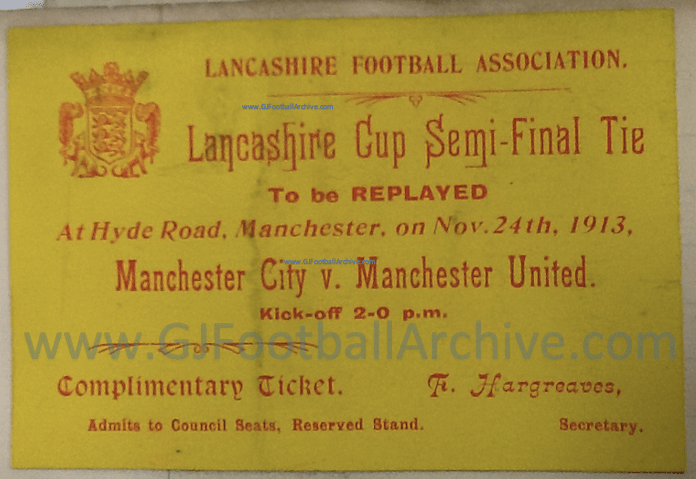
A ticket that may interest a few MCFC & MUFC collectors. This is for the Lancashire Cup semi final replay between City and United played at Hyde Road on this day (November 24) in 1913. Both the initial semi final and the replay were played at Hyde Road with the first game ending in a 1-1 drawn before approximately 8,000. The replay was watched by 12,000 and ended in a United 2-0 win.
Back in 1881-82 the two teams that would eventually become Manchester City and Manchester United met for the first time with the first fixture occurring on this sate (12th November 1881). To mark this anniversary here’s a free article on the first two derby matches. Both were friendlies of course!
The First Time
Back in 1881-82 the two teams that would eventually become Manchester City and Manchester United met for the first time. This was only a year after the first reported games played by the clubs, then known as St Mark’s (MCFC) and Newton Heath (MUFC). The first St Mark’s game to make it into print was against Macclesfield Baptists on 12th November 1880 while Newton Heath’s earliest known game came seven days later against Bolton Wanderers’ 2nd team.
On the anniversary weekend of St. Mark’s first reported game, 12th November 1881, Newton Heath and West Gorton (St Mark’s) met for the first time. The game, played at North Road, Newton Heath, attracted an attendance of around 3,000 (according to details recorded many years later – I’m dubious about the number but we have nothing contemporary that’s accurate so we’ll go with that).
The ‘Heathens’, who went on to become Manchester United in 1902, defeated West Gorton (St. Mark’s) 3-0 in what was described as a ‘pleasant game’. I wonder what the reporter would make of 21st Century derby matches! Two goals were scored in the first half, one being an own goal by one of West Gorton’s ‘backs’. It is not reported who scored the goal, all the ‘Ashton Reporter’ match report says is that the player was “attempting to stop a shot by E. Thomas”.
One of the significant aspects of the way this game was reported which has created some confusion over the years concerns the St. Mark’s name. It was recorded as West Gorton (St. Mark’s) as opposed to St.Mark’s (West Gorton) and that change has caused some to suggest that the church were unhappy in some way with the club. There was a suggestion that the club was attracting players from outside of the parish and that was an issue, but none of this now appears to be correct. The church appeared to be happy with the way the side was developing and, if anything, the selection of Kirkmanshulme Cricket ground actually meant the team were playing fairly close to the St. Mark’s rectory. The move potentially increased the opportunity for spreading the church’s work and that may be why the person sending in the match reports to the local newspaper changed the emphasis.
The Return Match
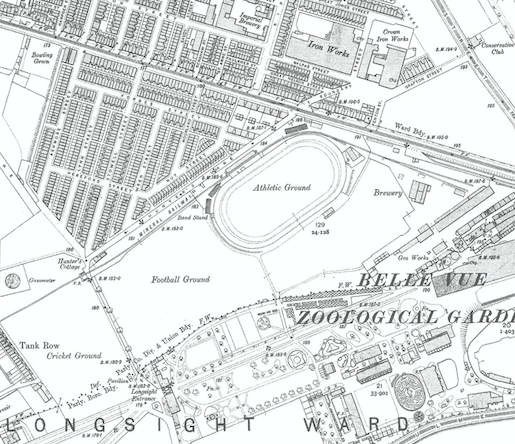
The return match took place at the Kirkmanshulme Cricket ground (West Gorton’s home) on 4th March 1882. On the image above this is the cricket ground to the right of Tank Row (and left of Belle Vue Zoo).
West Gorton (St Mark’s) gained revenge for the 3-0 defeat in their first encounter, as they overturned Newton Heath 2-1. The Gortonians had managed to take the lead, via Charles Beastow, as early as the eighth minute, and then had to hold off the Heathens who had been awarded a couple of consecutive corners. The second actually lead to West Gorton’s second goal. James Collinge obtained possession in front of the West Gorton goal then proceeded to run the full length of the pitch, before sending the ball flying between the Heathens’ posts amid loud cheering.
The score remained 2-0 until late in the game when, according to reports, the Heathens baffled the home ‘keeper Edward Kitchen by performing several good passes before the ball entered the goal. Exactly how baffled Kitchen was we don’t know, but we do know that this game was well attended.
Years later the attendance that day was reported as ‘around 5,000’, although it would be unfair and ridiculous to suggest that this was the actual attendance. It seems incredible that around a sixth of Gorton’s population would have been able to attend a game which, at that point, was not regarded as a ‘derby’ or an important fixture whatsoever. Nevertheless. it does provide an indication that football in West Gorton was becoming popular.
Subscribe to access everything else
This has been a sample of the material on http://www.GJFootballArchive.com If you would like to read all the in-depth articles (including the entire Manchester A Football History book and the audio interview with John Bond) then please subscribe. It works out about £1.67 a month if you take out an annual subscription (£20 per year) or £3 a month if you’d like to sign up for a month at a time. Each subscriber gets full access to the hundreds of articles posted so far and the hundreds scheduled to be posted in the coming weeks.
On this day (July 11) in 1990 Howard Kendall signed Neil Pointon for Manchester City from Everton. He went on to make a total of 86 appearances over a two year spell with the Blues. Here’s an interview I did with Neil in April 2005. I met him at his home to talk about his career and life, including that Manchester derby and his tackle on Ryan Giggs.
This interview is available to subscribers to this website below. If you are interested in subscribing: It costs £20 per year (works out about £1.67 a month) or you can pay a month at a time (£3 per month) and still access everything for as long as you are a member. The archive now contains around 400 articles/posts including the entire contents of 2 of my books: you can download PDFs of the 2010 edition of Manchester A Football History and my very first book From Maine Men To Banana Citizens. There are also archive audio interviews with John Bond, Malcolm Allison and George Graham.
Subscribe to get access
Read more of this content when you subscribe today.
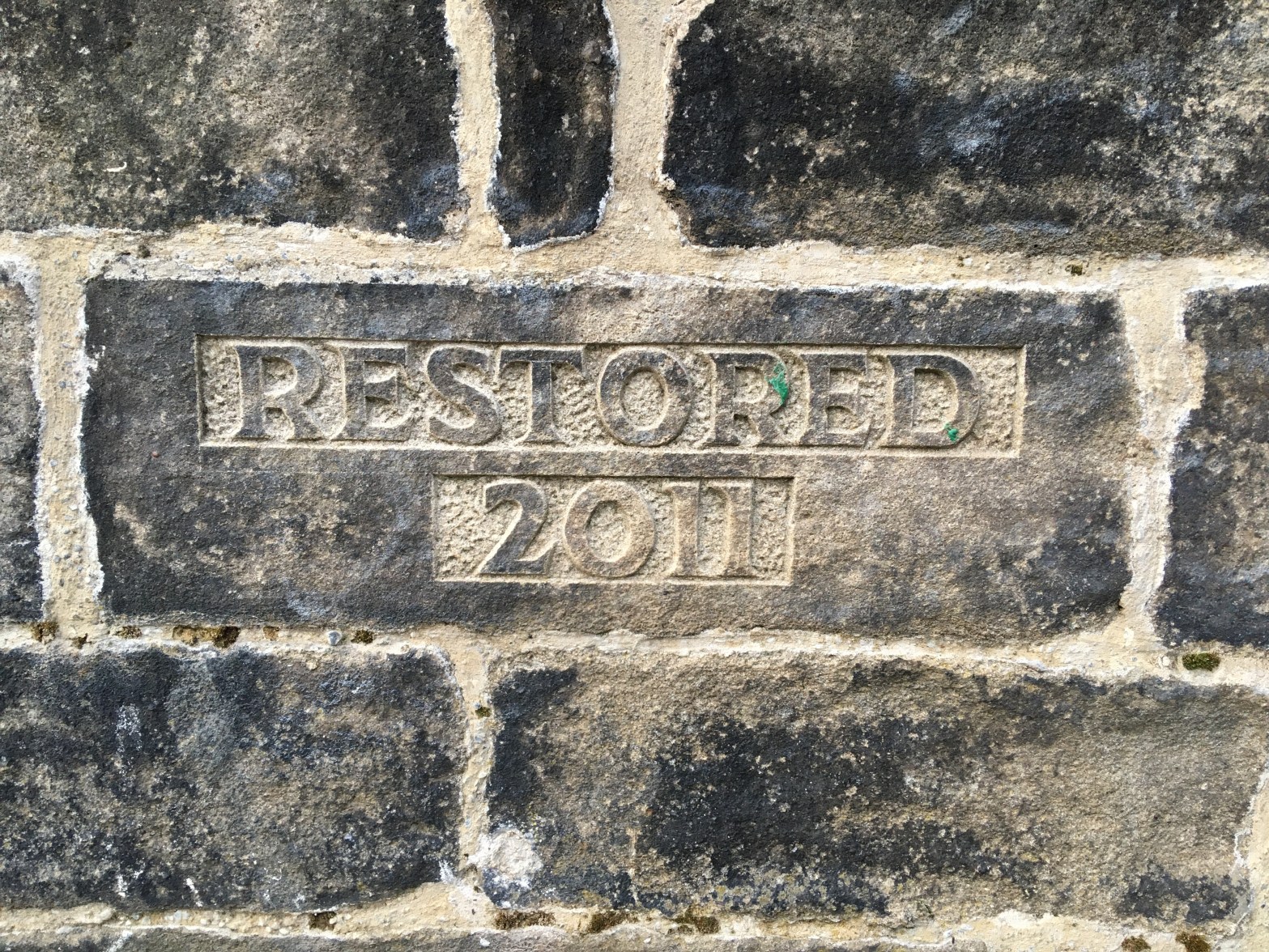
To commemorate the tenth anniversary of Manchester City’s FA Cup semi final victory over Manchester United at Wembley (April 16 2011) I’ve produced Restored 2011: The All-Manchester FA Cup Semi Final. This special 1 hour audio recording looks at the game and the years between the 1976 League Cup success and the FA Cup glory of 2011. The 2011 semi-final was a crucial step in City’s journey since the 2008 takeover and I felt it was vital to do a special marking this.
Following last night’s Champions League victory for City (May 4th – City beat PSG to reach the Champions League final) this will now be free to listen to until May 12th. After that date, as with audio recordings with John Bond, Malcolm Allison and George Graham (and hundreds of articles), it will only be available to subscribers to the site. So, if you don’t subscribe, have a listen now while you can.
So what’s in this special recording? Well, I’ve included exclusive material from interviews and recordings I’ve done over the years with Garry Cook, Brian Marwood, Roberto Mancini, Peter Barnes and Peter Swales. Why Swales? Well, have a listen and you’ll hear why. Basically though I’m trying to set the tone for why the 2011 FA Cup semi final victory and overcoming Manchester United was so significant.
On Mancini… I include a few words from him recorded in 2011 and at one point he talks about the view that was then being expressed that City were ‘trying’ to buy success (now they say City ‘have’ bought success!). His words are a reminder that City have been having that particular criticism thrown at them for over a decade! Oh well, I wonder how long those criticisms were laid at other clubs who had seen major investment which propelled them forward?
Anyway, get yourself a brew and be prepared to be transported back in time. Here’s the recording:
If you enjoy the recording then please let me know, comment or subscribe to the site. If it’s of interest then, over the coming months and years, I’ll produce others like this highlighting key points in Manchester City – and Manchester’s – footballing history. It costs £20 a year to subscribe (it works out £1.67 a month) or £3 if you’d like to sign up a month at a time to get full access for as long as you subscribe (you can always try it for a month). It’s worth bearing in mind that the 2010 Manchester A Football History cost £24.95 and all subscribers will be able to access all of that for as long as they are a subscriber (plus all the other stuff of course). You can subscribe below.




 Gary James' Football Archive