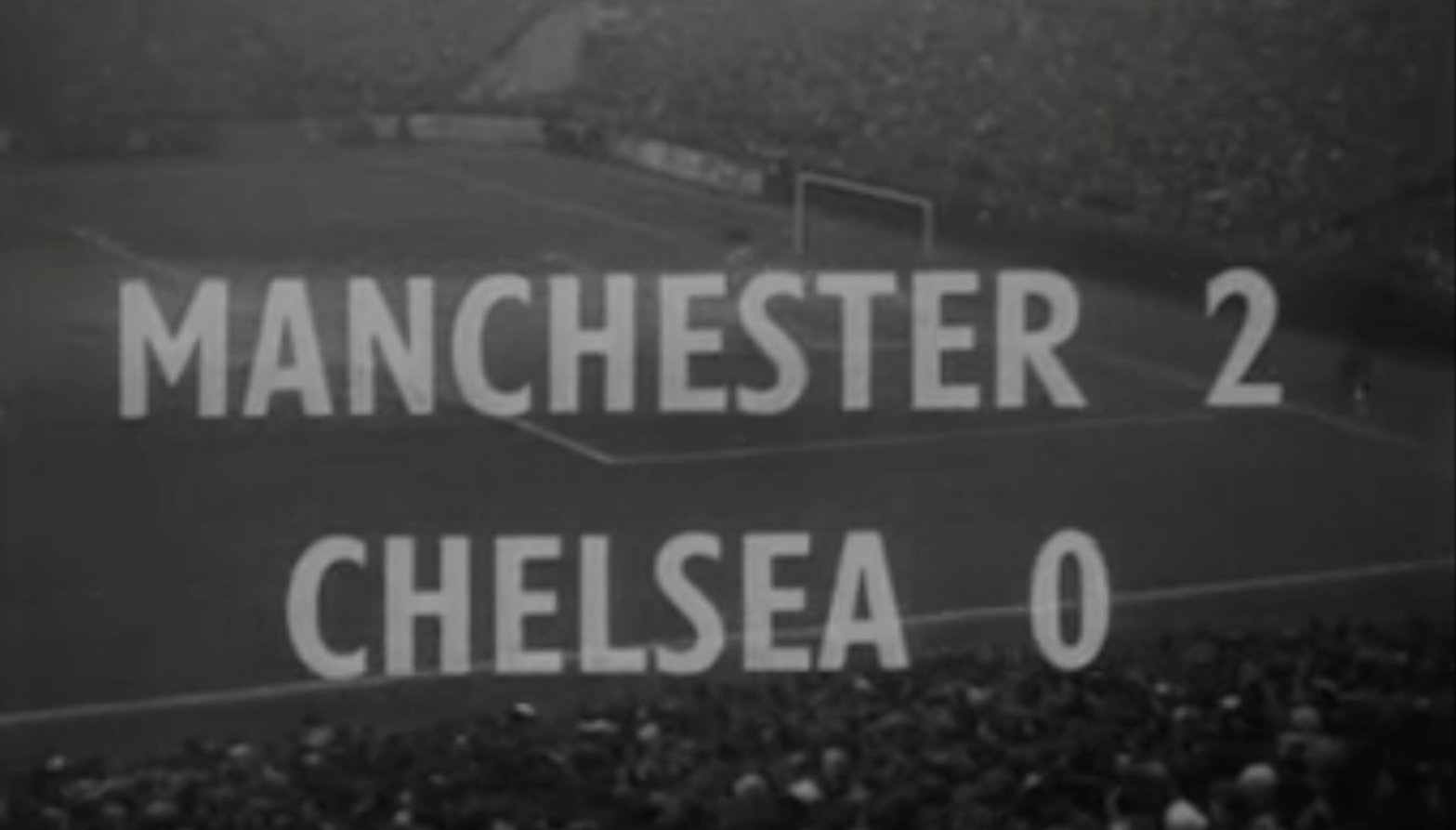
City v Chelsea today (4 January 2026 at 5.30pm). This has been an important fixture over the decades with European semi finals played between the sides decades ago for example. Many of these are featured on this website, so why not have a search around. Here’s a link to all articles tagged Chelsea on here: https://gjfootballarchive.com/tag/chelsea/
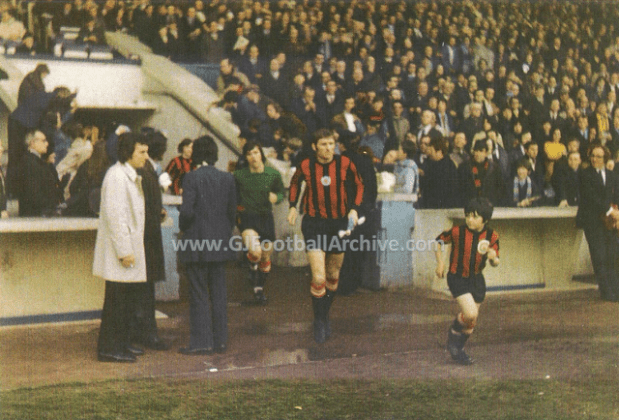
1971 ECWC v Chelsea. Tony Book and mascot Paul Todd. Photo by Alan Jubb
If you enjoy all the free material on my website and would like to support my research and keep this website going (but don’t want to subscribe) then why not make a one-time donation (or buy me a coffee). All support for my research is valued and welcome. It allows me to keep some free material available for all. Thanks.
Here’s film from this day (4 January) in 1958 when Manchester City visited West Bromwich Albion for a FA Cup tie. The game, played at the Hawthorns, was watched by 49,669. Joe Hayes scored for City… I won’t mention the result but it’s well worth watching these rare images of a game from that season.
To find out more on this period in football then why not read my series on Manchester City in the 1950s. Here’s a 2,200 word article on the 1957-58 season. Enjoy!
This is a subscriber article and you can read it by subscribing below.
Subscribe to get access
Read more of this content when you subscribe today. It costs £3 per month or you can subscriber for the discounted annual rate of £20 per year. Each subscriber gets access to everything posted so far, including PDFs of a couple of my books.
Today (3 January) in 1994: After 39 minutes Manchester City’s game with Ipswich Town was abandoned with the Blues winning 2-0. The scorers were Vonk and Ingebrigtsen – his only League goal for the Blues was expunged from the records as a result!
The referee David Elleray angered the City players, especially Tony Coton, by abandoning the tie due to a waterlogged pitch. The pitch had been appalling at the kick-off and perhaps the game should not have commenced. Naturally, it was a big disappointment at the time.
I was at this abandoned game in the ‘new’ Platt Lane Stand. Were you also at Maine Road that day? If so why not leave your memory as a comment or email it to me for possible future use on this website?
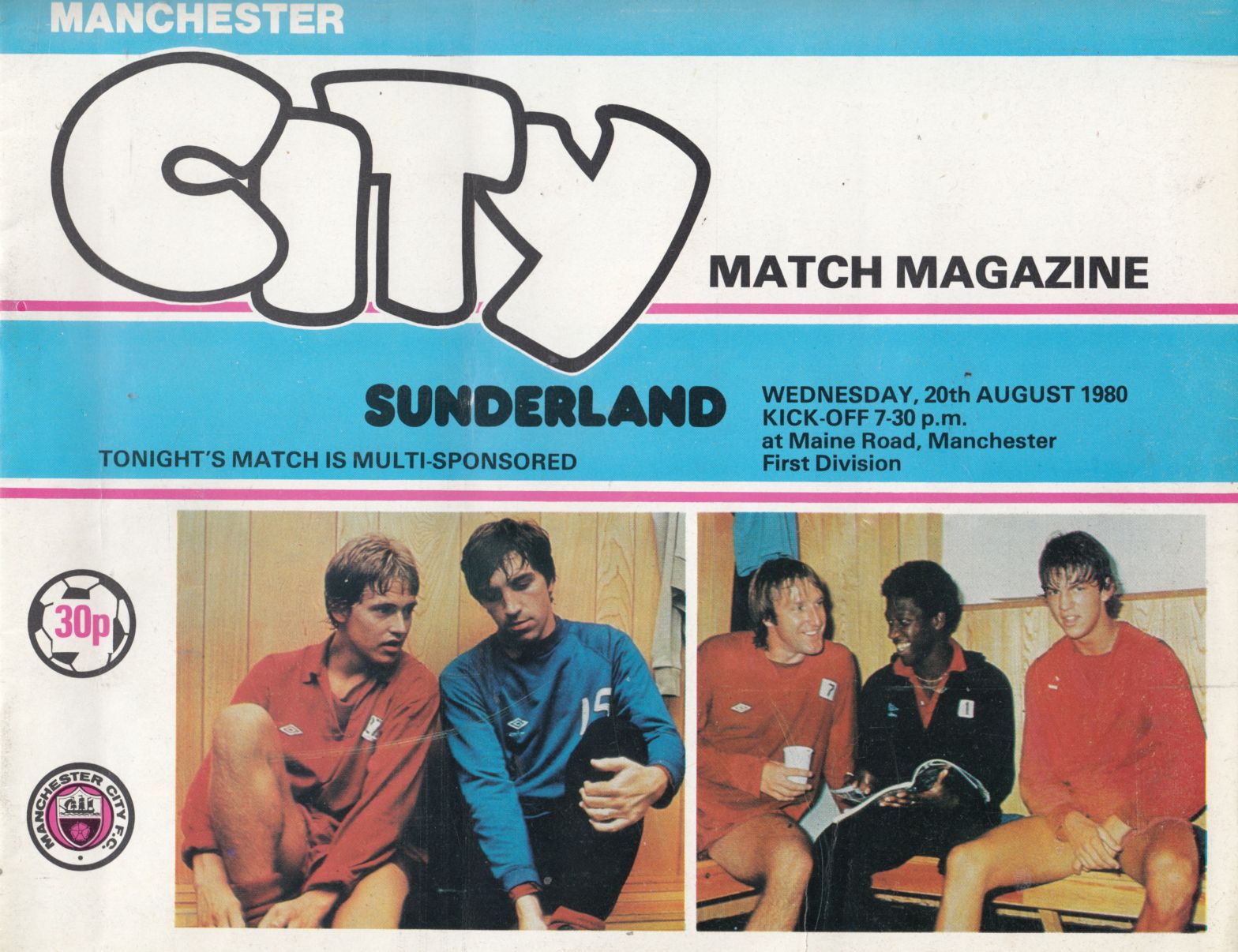
It’s Sunderland v Manchester City tonight (1 January 2025). There are plenty of features on my website about games & stories connecting these clubs. Here’s a link to some of them: https://gjfootballarchive.com/?s=Sunderland
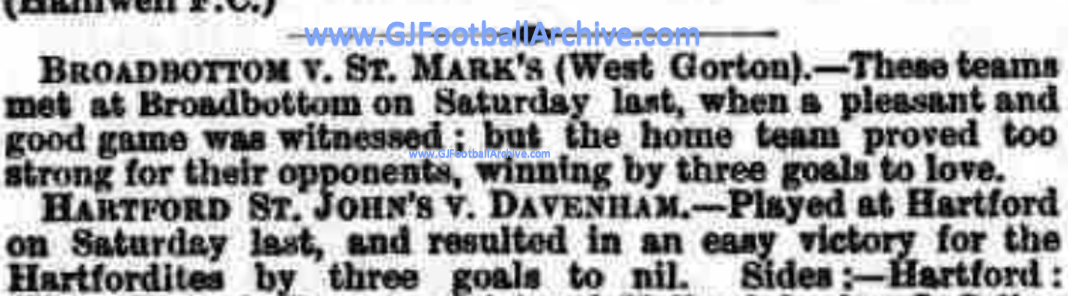
Not quite MCFC but it was Broadbottom 3 St Mark’s (West Gorton) 0 on this day (31 December) in 1881. St Mark’s was a precursor to City (see elsewhere on the site for details). The fact that Gorton only managed to field nine players appears to be the reason why the match was so one sided especially as, only two months later, the home fixture between the two clubs ended 3-0 in West Gorton’s favour. It is fair to say however that the St. Mark’s men were rather inconsistent! For the record here’s the team:
St Mark’s did eventually evolve into Manchester City (through various other changes) of course!
If you enjoy all the free material on my website and would like to support my research and keep this website going (but don’t want to subscribe) then why not make a one-time donation (or buy me a coffee). All support for my research is valued and welcome. It allows me to keep some free material available for all. Thanks.
On this day (30 December) in 1996 Frank Clark became the Manchester City manager. These were odd days for the Blues. There’s more on Frank Clark elsewhere on the site, such as:
Here’s an odd item from my collection. It’s a compliment slip by a Star Press (the ‘champion printers’) which lists the players in Manchester City’s 1967-68 title winning team. There are a couple of spelling mistakes. See if you can spot them. One side of the compliments slip shows the League Champions and the other side looks like this:
I’m not certain if there was a close connection between Manchester City and Star Press at this time.
You can find out more about the 1967-68 season by reading the following subscriber article. If you’d like to read this 7,600 word article (yes, 7,600 words on one season!), plus all other articles on the site, then please subscribe (see below). As with most of the other seasonal features it includes words from interviews I have performed with those who were there.
Subscribe to get access
Read more of this content when you subscribe today. It costs £3 per month (cancel anytime) or sign up for a year at the discounted price of £20 per year (works out £1.67 per month). Subscribers access the 1000+ articles posted so far and the others scheduled during the life of your subscription.
If you enjoy all the free material on my website and would like to support my research and keep this website going (but don’t want to subscribe) then why not make a one-time donation (or buy me a coffee). All support for my research is valued and welcome. It allows me to keep some free material available for all. Thanks.
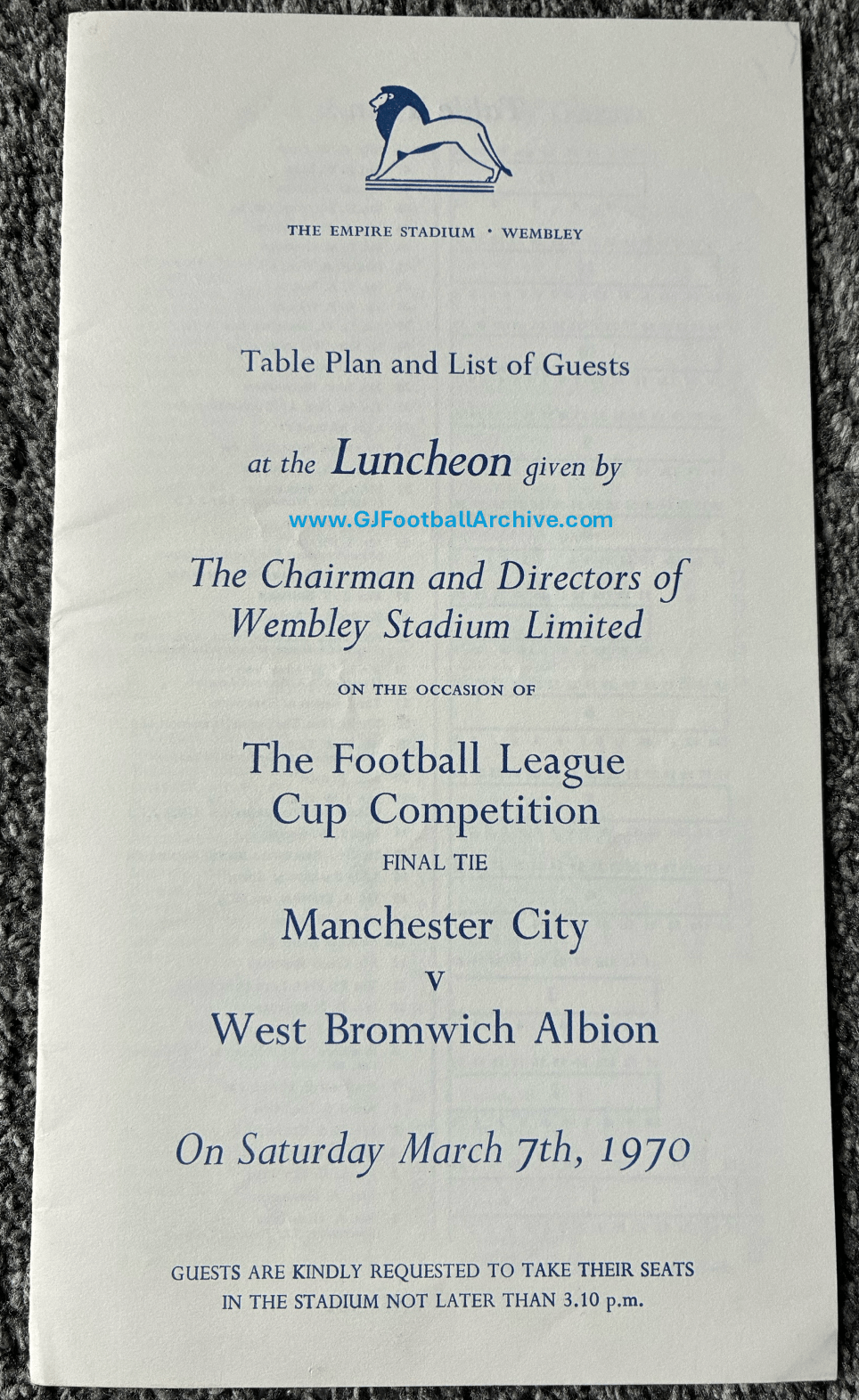
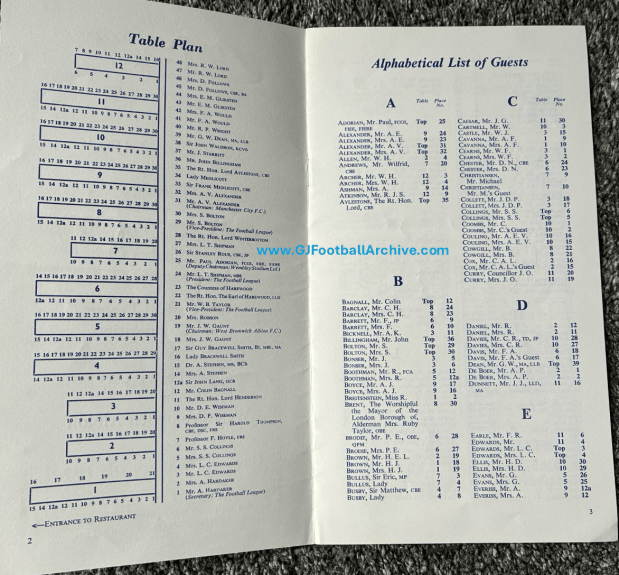
Ever wondered who the official guests were for major games like the League Cup final? Here’s an item from my collection showing the guest lists and tables for the 1970 League Cup final which featured West Bromwich Albion and Manchester City. One of the guests was Manchester United manager and former City player Matt Busby. Here’s the full list:
If you want to know more on the incredible 1960s & 1970s for Manchester City Football Club then why not subscribe and read it all? Have a search through what’s been posted and see what you want to read, watch and remember. The following 5,600 word article on the successes of 1970 is available to subscribers below. Enjoy!
Subscribe to get access – Monthly
Read more of this content when you subscribe today. It costs £3 per month (cancel anytime) to access everything posted since 1 October 2022 or there’s a special annual rate below which gives greater access and works out much cheaper.
Read more of this content when you subscribe today. It costs £3 per month (above) or £20 a year (here) to access everything posted since the site was created in December 2020. This special rate works out about £1.67 a week and gives access to everything posted, including PDFs of 3 of my books.
If you enjoy all the free material on my website and would like to support my research and keep this website going (but don’t want to subscribe) then why not make a one-time donation (or buy me a coffee). All support for my research is valued and welcome. It allows me to keep some free material available for all. Thanks.
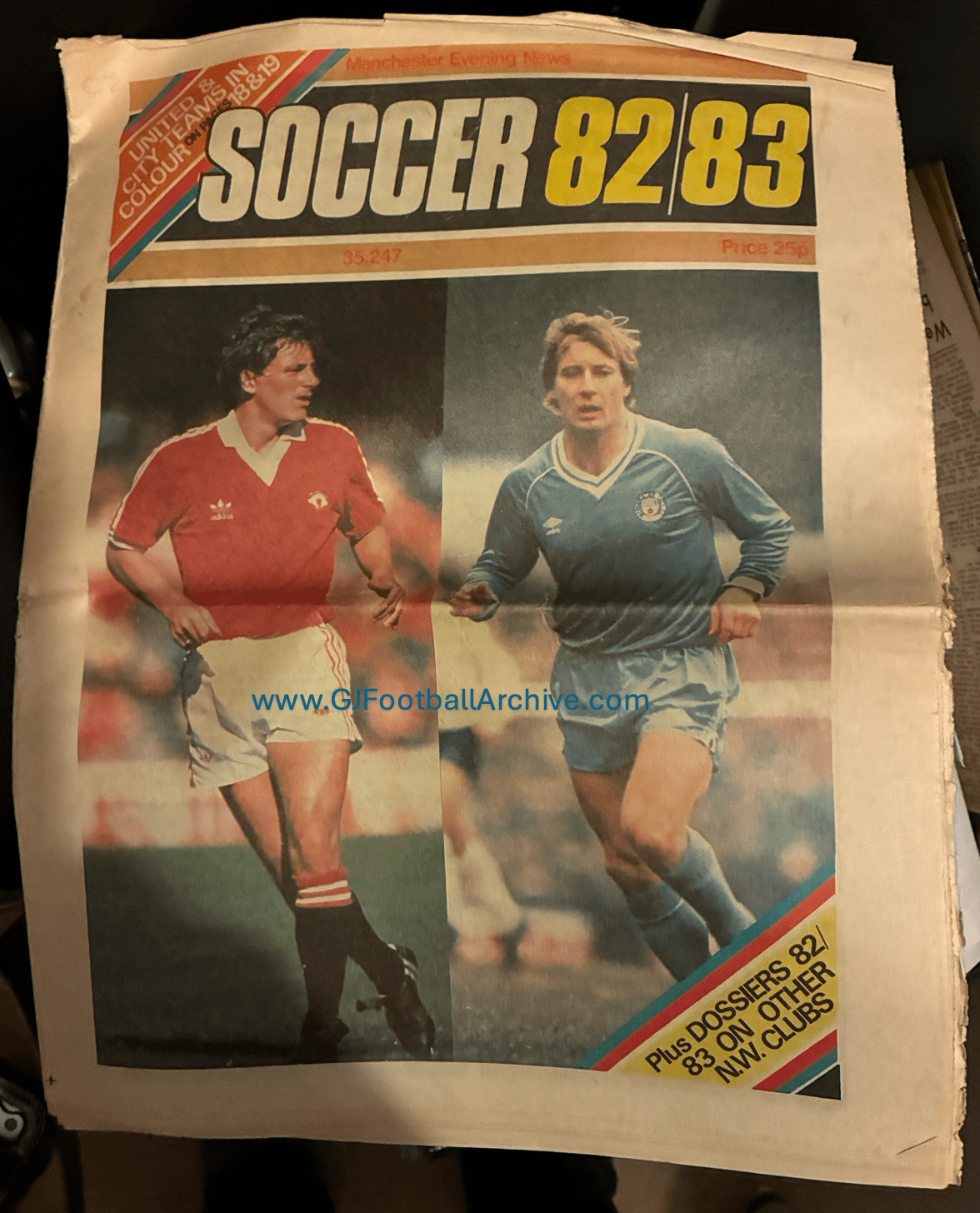
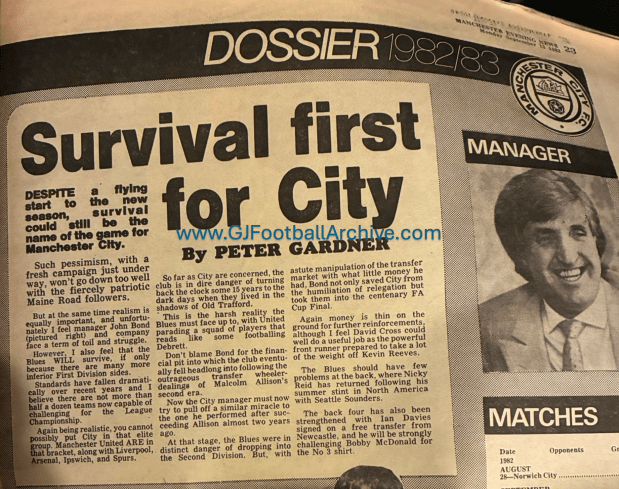
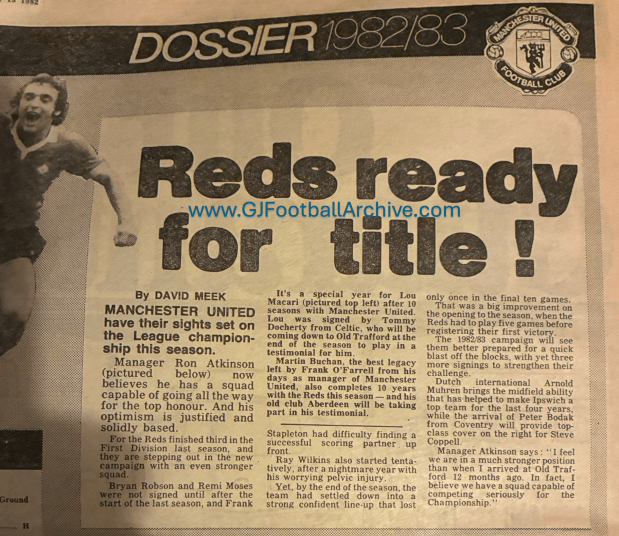
Here’s a few images from the 1982-83 football special publication produced at the start of the season by the Manchester Evening News. Back then the newspaper tended to produce a preview for the season each year. David Meek (United) and Peter Gardner (City) would write features on the two local top flight teams and then there’d also be features on Oldham, Bolton, Stockport and Rochdale. Both Meek and Gardner would also predict what the season would be like for United and City. Typically, Meek would say that the new season was likley to be the one that ‘finally’ brought the League title back to Old Trafford while Gardner would often try to be upbeat about City’s chances in some way. In 1982 Gardner took a different approach though and basically said it would be a difficult season – he was right! – but Meek stuck to the usual approach and said that 1982-83 could be the year the League title returned to Old Trafford for the first time since 1967 (City had won it in 1968).
United didn’t win the title for another decade and if you’d like to know exactly what happened to City, you can read all about the 1982-83 season for the Blues in this 3,500 word subscriber feature. Enjoy (well, if you know the outcome of this season you can enjoy this memory refresh while reflecting on the modern day successes of the Blues!).
Subscribe to get access – Monthly
Read more of this content when you subscribe today. It costs £3 per month (cancel anytime) to access everything posted since 1 October 2022 or there’s a special annual rate below which gives greater access and works out much cheaper.
Read more of this content when you subscribe today. It costs £3 per month (above) or £20 a year (here) to access everything posted since the site was created in December 2020. This special rate works out about £1.67 a week and gives access to everything posted, including PDFs of 3 of my books.
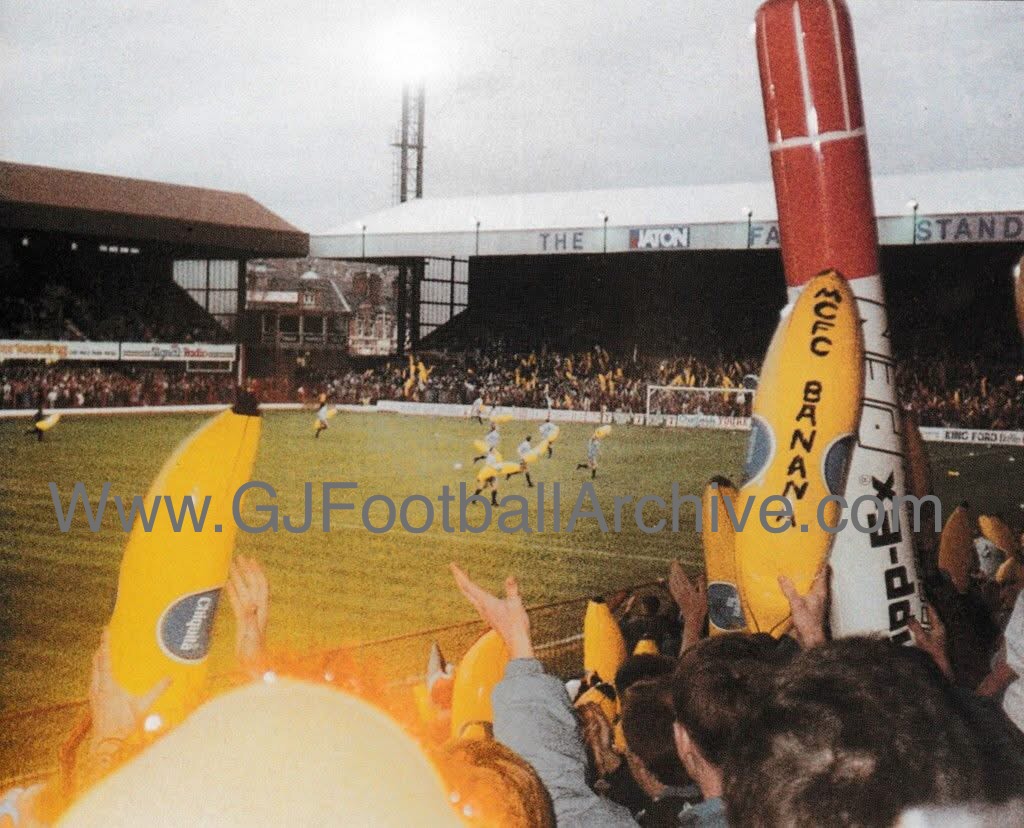
Two items of interest here both connected with a Boxing Day game. First, Heidi’s photo taken at Stoke in 1988. We travelled down and she took quite a few photos that day but this one was always the special one. It’s been used in a few of my books.
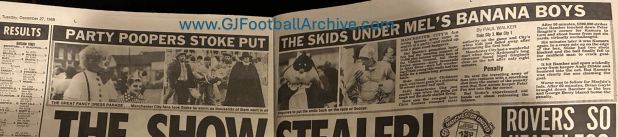
Next, here’s a newspaper cutting from the same day at Christmas 1988. It shows the Boxing Day fancy dress game at Stoke which saw over 12,000 Manchester City fans fill half the stadium. As I mentioned earlier, I was there that day and there were some surreal sights. I won’t mention the score (you can see that from the report!) but this was one of those crazy days when fans injected humour. There was some coverage but not a great deal. My own photos from that day have appeared in a few of my books and when I get chance to dig them out I’ll aim to post some on this site.








 Gary James' Football Archive