The 1990s: 1996-1997 Further Managerial Changes

The series of articles covering Manchester City in the 1990s continues today with an indepth article on the 1996-97 season. If you don’t know what happened then brace yourself! The article is almost 4,900 words long. It’s available to subscribers, so why not subscribe and relive this season and an extraordinary decade? As with all these 1990s subscriber features it contains material from interviews I’ve performed with key figures from that time, including Phil Neal who talks about Steve Coppell’s shock resignation.

Here’s the 4900 word article on that season:

Subscribe to get access – Monthly

Read more of this content when you subscribe today. It costs £3 per month (cancel anytime) to access everything posted since 1 October 2022 or there’s a special annual rate below which gives greater access and works out much cheaper.

Subscribe to get access – Annual

Read more of this content when you subscribe today. It costs £3 per month (above) or £20 a year (here) to access everything posted since the site was created in December 2020. This special rate works out about £1.67 a week and gives access to everything posted, including PDFs of 3 of my books.

This series of articles and features will run throughout March with indepth articles some days and smaller ‘on this day’ style posts on others. There will be flashbacks to great games, players and more. Every day in March will offer something to enjoy.

Subscribers will get access to everything, while some on this day material will be free for all to view.

If you want to know more on this incredible decade for Manchester City Football Club then why not subscribe and read it all? If you’d like to know more about subscribing then see:

The 1990s: Rosler Winner

The series of articles covering Manchester City in the 1990s continues with a game against near neighbours Oldham Athletic on this day (8 March) in 1997. The Blues had been unbeaten in 8 consecutive League games since the arrival of Frank Clark in December. There had also been 2 victories in the FA Cup during that time (plus a frustratingly controversial 1-0 defeat at home to Middlesbrough) and so Clark was actually restoring some positivity to the club after a dismal start of the season had seen two permanent managers (Alan Ball and Steve Coppell) precede Clark. There were also temporary managerial spells by Asa Hartford and Phil Neal which lasted longer than Coppell’s permanent role! I’ll save all of that for another day! In the meantime more on the game with Oldham…

The match was watched by 30,729 – the third highest crowd of the day and only about 8,000 less than title challengers Arsenal (the best crowd of the day). Not bad for a second tier team that was struggling overall!

Uwe Rosler scored the only goal of the game but was booked afterwards for an over enthusiastic celebration. Oldham boss Neil Warnock wasn’t happy, claiming the goal should not have been allowed. Oh the days before VAR and the ability of both managers to be absolutely certain that what they say is the truth (wait a minute… VAR hasn’t resolved that even when the cameras prove the truth!). Here’s the match report….

For more on the 1990s why not subscribe and see everything I’m posting? You can start with this 1,300 word article on the end of the 1989-90 season. It is available to subscribers below. Enjoy!

Subscribe to get access – Monthly

Read more of this content when you subscribe today. It costs £3 per month (cancel anytime) to access everything posted since 1 October 2022 or there’s a special annual rate below which gives greater access and works out much cheaper.

Subscribe to get access – Annual

Read more of this content when you subscribe today. It costs £3 per month (above) or £20 a year (here) to access everything posted since the site was created in December 2020. This special rate works out about £1.67 a week and gives access to everything posted, including PDFs of 3 of my books.

If you’d like to know more about subscribing then see:

Starting Tomorrow: The 1990s

A new series of articles starts tomorrow on Manchester City in the 1990s. There will be a seasonal journey through a truly important decade when Manchester City began the decade hoping to challenge for the Premier League. People often forget how things changed that decade. A giant of a club at the start of the decade and one that the whole football world recognised as being part of English football’s aristocracy. By the end of the decade it was the loyalty of fans that most recognised the club for.

Those that claim City has ‘no history’ may learn something about a decade that is often highlighted for its failings but which actually had some wonderful, incredible, positive moments too. This series of features will show how that decade actually went and will hopefully help to explain why the narrative of ‘third tier club that got lucky’ is so wrong! For the entire month of March there will be features to make every Blue proud, while also recognising the true nature of football – some times it’s great being a fan and sometimes it’s awful. That’s football!

Re-live the highs and lows of the 1990s decade from tomorrow onwards.

If you’d like to read everything in this series then please subscribe. Details below:

Manchester City in the 1990s

Following on from the series of articles and features on the 1970s and 1980s over the last few months a new series on Manchester City in the 1990s will be starting in March. As with the 1970s & 1980s there will be different content posted each day from indepth articles on each of the seasons through to on this day reminders of games, players and more.

Some of the material will be available for subscribers only and some will be free for anyone to read. If you’d like to know how to subscribe and read all the incredible content on here then see:

Feel free to send in ideas or areas that you’d like me to discuss on 1990s Manchester City. I’m always open to adapting stories or content based on feedback. Thanks for reading.

Coppell: 33 Days

On this day (8 November) in 1996 Manchester City manager Steve Coppell resigned after only 33 days in the job. This contemporary article explains that he was suffering with stress:

So much different from the start of his reign:

Ball Out!

On this day (26 August) in 1996 the reign of Alan Ball as Manchester City boss finally and thankfully came to an end. It was by some way the worst managerial period of the last fifty years at the club (and that’s saying something!).

Three games into the new season he resigned. He should have gone at least a year earlier!

City would’ve been better with Bobby Ball as manager!

Bobby Ball

Maine Road 100 – Day 55

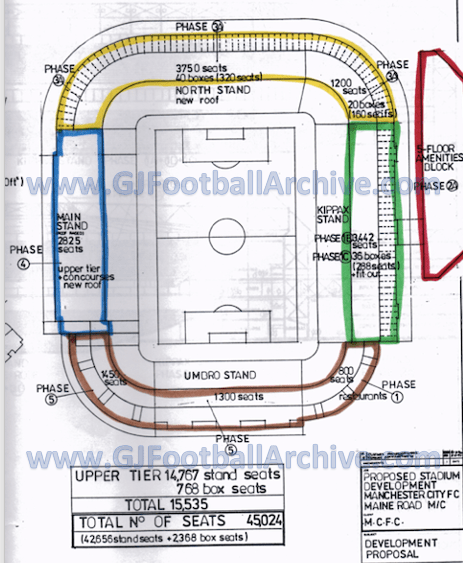
Day 55 of my posts counting down to the centenary of Maine Road’s opening game is a follow on from one from a few days ago. I posted a 1994 plan of what might have been in terms of Maine Road’s development and here’s more on that plan.

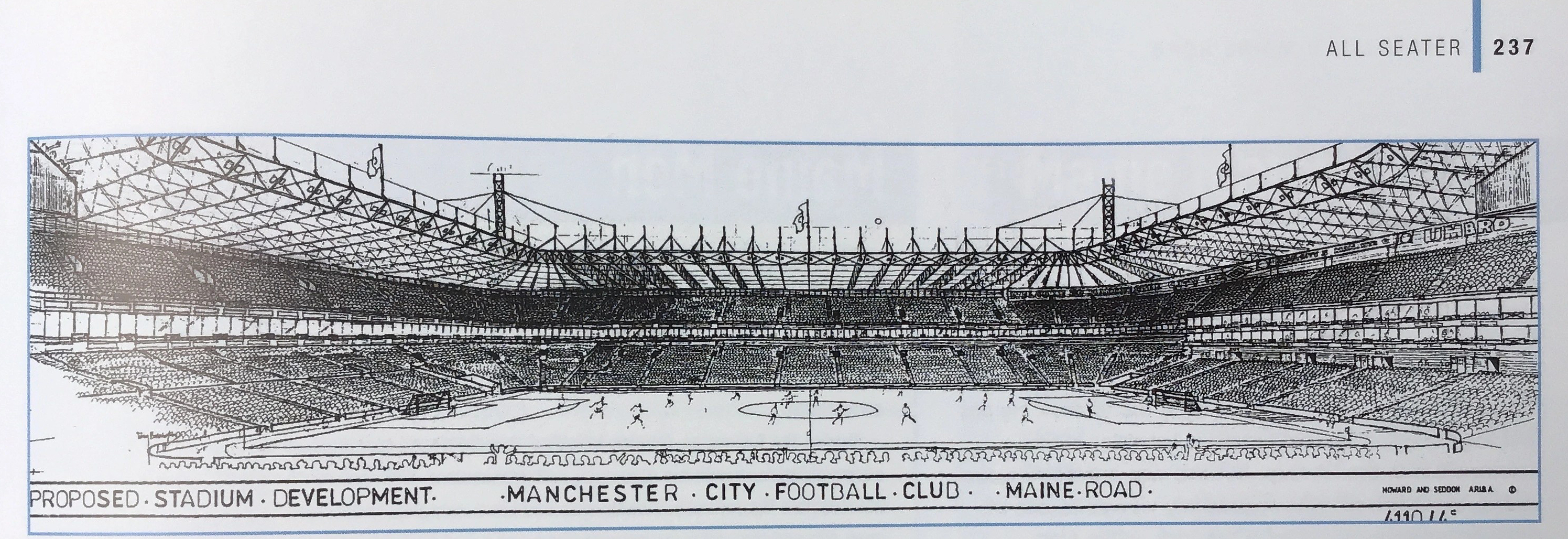
This image is of how the entire stadium was supposed to look. To explain the colour image looks towards the stadium from above the Kippax car park. The North Stand is on the right and the Platt Lane on the left. The black and white image is from the other side of the ground, looking towards the Kippax from the Main Stand.

1990s Maine Rd redevelopment plans as seen in Farewell To Maine Road

You can see from the black and white image that the plan was to replicate the general look of the new Kippax (being planned at this stage – this was January 1994 and the old Kippax was still standing) around the ground. The North Stand was to have a second tier added and hospitality boxes between the levels, like the new Kippax. The Platt Lane was to have a second tier added above the two lines of existing hospitality boxes.

The Main Stand would have part of the seating chopped away and a new second tier added.

To facilitate all of this some houses were to be bought and demolished on the streets immediately behind the North Stand and the Kippax/Platt Lane corner.

The new Kippax was the first phase of the development but Manchester’s bids for the Olympics changed thinking. Couple that with relegation in 1996 and the wholesale redevelopment of Maine Road was postponed after the Kippax opened and then dropped completely.

As mentioned previously, Lee’s plans would have seen the new Kippax followed by a phased development of each of the other three stands. These images might give an indication of how it would have progressed.

This 1971 aerial image shows the proximity of the housing on Thornton Road (bottom left, near number 6) and behind the North Stand (number 10). They were planned to be demolished in Lee’s 1994 plan.

Maine Road aerial 1971 from Farewell To Maine Road

If you’d like to read more on the history of Maine Road, take a look at Farewell To Maine Road, which can be downloaded from this page:

Maine Road 100 – Day 49

For day 49 of my posts counting down to the centenary of Maine Road’s opening game I’ve posted this plan of what might have been. These were developed in January 1994 shortly after Francis Lee became chairman.

The Kippax needed to be replaced and the plans by former chairman Peter Swales and his supporting directors had been to bolt plastic seats on to the lower part of the original Kippax terracing with a reprofiled second tier behind. Lee ripped up those plans and within days had created a plan which would see the entire ground extended, not simply the building of a new Kippax.

The new Kippax was the first phase of that development but Manchester’s bids for the Olympics changed thinking. Couple that with relegation in 1996 and the wholesale redevelopment of Maine Road was postponed and then dropped completely.

Lee’s plans would have seen the new Kippax followed by a phased development of each of the other three stands. I haven’t got chance to work through every step here but these images might give an indication of how it would have progressed.


1990s Maine Rd redevelopment plans as seen in Farewell To Maine Road

Here’s an aerial photo of the ground in 1995 with the Kippax nearing completion:

If you’d like to read more on the history of Maine Road, take a look at Farewell To Maine Road, which can be downloaded from this page:

Greenacre Debut and Horlock’s First Goal

Today (22 February) in 1997 forward Chris Greenacre made his debut for Manchester City when he came on as substitute for Paul Dickov in the 3-0 victory over Swindon Town. The game also saw the first City goal of Kevin Horlock’s career. You can see that and other highlights here:

City’s scorers were Horlock, Uwe Rosler and Nicky Summerbee.

Managerial Merry-Go-Round

Due to the general downward trajectory of Manchester City during the late 1990s the 1996-97 season often gets overlooked but it is important to remember that, even in the darkest of seasons, there can be positive moments, experiences and wonderful performances by talented players. Even at the bleakest of times a young fan may be experiencing their club for the first time and, no doubt, in 1996-97 the magic of watching Manchester City for the first time was experienced by Blues who, as adults today have enjoyed some of the greatest football ever seen. Today (25 January) is the anniversary of one positive moment in the dreadful 1996-97 season: City’s FA Cup victory over Brentford. You can read about that game and the season’s FA Cup run below.

Subscribe to get access – Annual

Read more of this content when you subscribe today. It costs £20 a year or £3 per month (see below). Annual subscribers get access to all content posted since December 2020 plus everything posted during their subscription.

Subscribe to get access – Monthly

Read more of this content when you subscribe today. It costs £20 a year (see above) or £3 per month. Monthly subscribers get access to all content posted since 1 October 2022 plus everything posted during their subscription. Cancel anytime. So why not try it for a month?