Maine Road 100 – Day 29

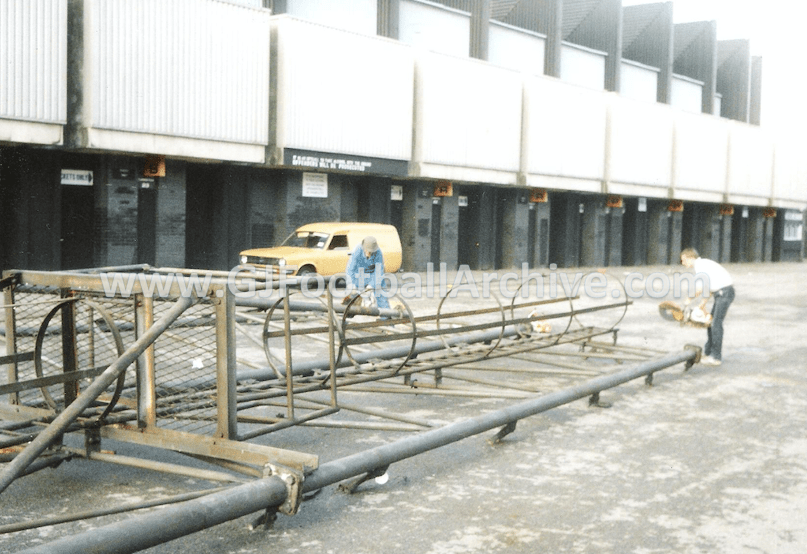
It’s day 29 of my posts counting down to the centenary of Maine Road’s opening game. Today – it’s a simple photo of the floodlights being dismantled in 1990.

Crosland Ward senior just happened to have his camera with him while at Maine Road one day and caught sight of the floodlights being dismantled. He took several photos that day (I’m sure I have others somewhere) and asked the men dismantling the lights if they were okay with him taking the photos. This was in 1990.

These were the second set of lights at the ground and these were the ones that could be seen for miles around. I remember getting on the 53 at Belle Vue and seeing the lights from the top deck straight away.

The lights were replaced roof roof lights on the Main Stand and Kippax roofs. You can see a couple of the floodlights on these images from the late 1970s/early 1980s.

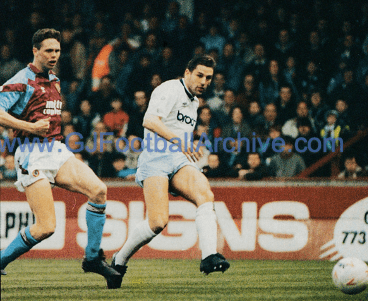
1981 City v United Maine Road
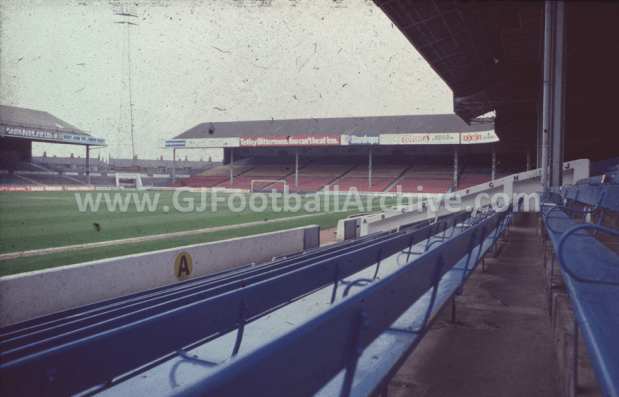
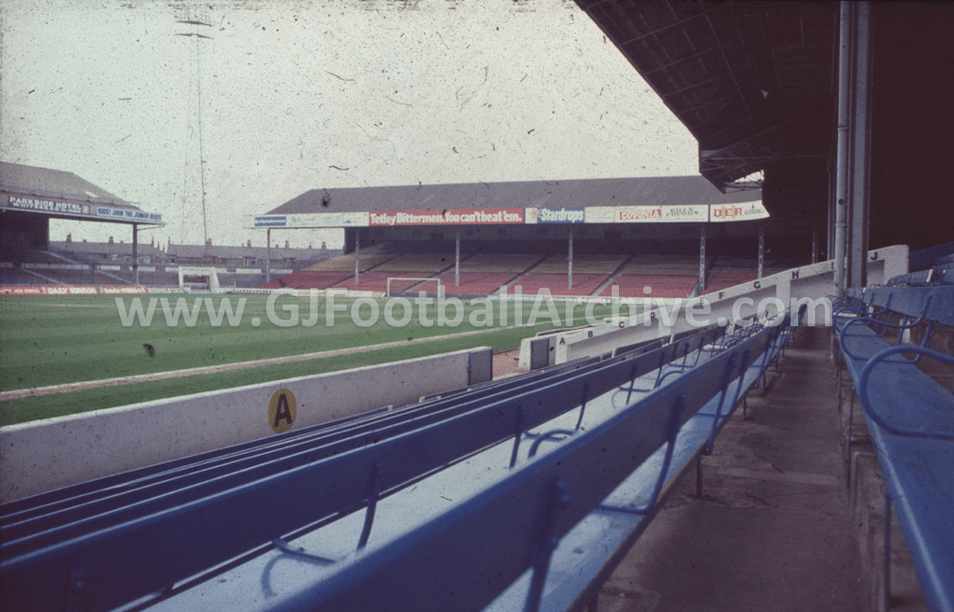
The Main Stand’s benches with the Platt Lane Stand’s maroon and yellow benches in the background
1990 Floodlight being dismantled behind the North Stand. Photo by Crosland Ward senior.

The floodlight being dismantled is the one that stood in between the North Stand and Kippax on this 1971 photo (near number 9) and the men are dismantling it behind the North Stand (number 10).

Maine Road aerial 1971 from Farewell To Maine Road

If you’d like to read more on the history of Maine Road, take a look at Farewell To Maine Road, which can be downloaded from this page:

If you enjoy all the free material on my website and would like to support my research and keep this website going (but don’t want to subscribe) then why not make a one-time donation (or buy me a coffee). All support for my research is valued and welcome. It allows me to keep some free material available for all. Thanks.

Choose an amount

£2.50
£5.00
£7.50

Or enter a custom amount

£

Your contribution is appreciated.

Donate
Maine Road 100 – Day 27

It’s day 27 of my posts counting down to the centenary of Maine Road’s opening game. Today – the wooden benches! Many a fan’s first experience of Maine Road was sitting on the benches in the old Platt Lane Stand.

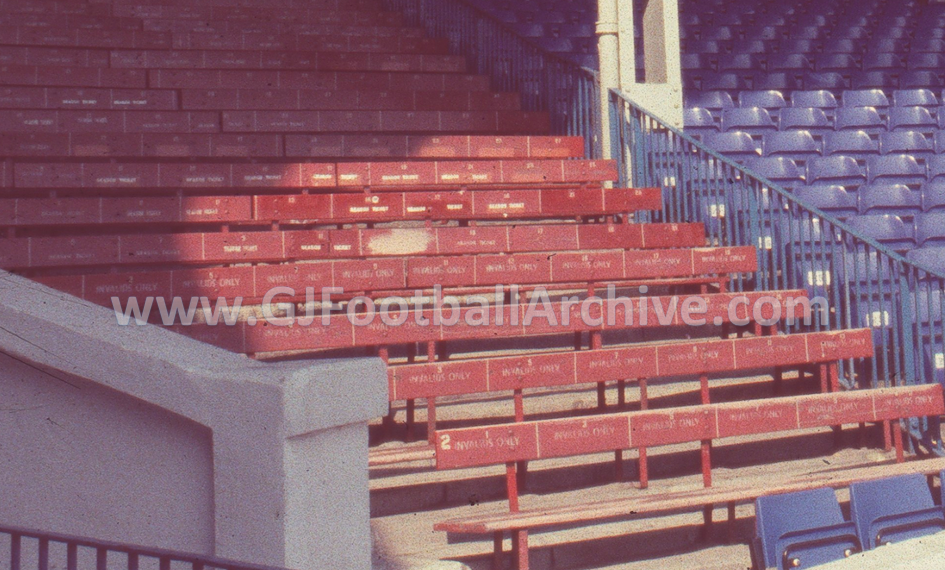
These images may bring back a few memories. The Platt Lane benches were painted maroon and yellow for many years – I’m not certain if they were originally that colour. Older fans may know the answer but if they were maybe it was because they were installed at a time, the early 1960s, when those two colours had been used as City’s second choice kit?

Maroon is City’s traditional away colour but in 1959 a yellow shirt with maroon cuffs and V was used. If there was a link then that was not obvious by the time my Dad was taking me on to the Platt Lane as a young boy.

For me it seemed so odd, but then again the new North Stand had grey seats, and back in 1923 much of Maine Road was painted green. So I suppose there was never much logic around football grounds.

City used to paint on to the seats whether they were for season ticket holders, ‘invalids’ (obviously the wording back then, not today’s wording!) or if they were just numbered you could either sit there if it was an unreserved seating game or the number would match a ticket holder.

Platt Lane corner benches – note the wording on the seats. Some say season ticket; some ‘invalid’ and some are numbered/unreserved.

Most of the benches lasted about 40 years, but some were destroyed when Leeds United fans visited in November 1990 and were replaced for the stand’s final season or so with blue plastic seats. The stand was demolished in 1992.

November 1990: Jimmy Frizzell inspects the damage after Leeds fans smashed up some of the Platt Lane benches.

The Main Stand also had benches for much of its existence. These were painted blue and in some cases had arm rests. They had been part of the original build in 1923 and were replaced in phases during the 1970s and 1980s.

The Main Stand’s benches with the Platt Lane Stand’s maroon and yellow benches in the background

For those unfamiliar with Maine Road this photo may help. This shows the original Platt Lane Stand corner (number 3) where the maroon seating with ‘invalid’ wording image was taken. The benches damaged by Leeds fans were near the front of the stand under number 5. The Main Stand bench image is taken to the left of number 2 looking towards the floodlight near 5 and 6.

Maine Road aerial 1971 from Farewell To Maine Road

If you’d like to read more on the history of Maine Road, take a look at Farewell To Maine Road, which can be downloaded from this page:

If you enjoy all the free material on my website and would like to support my research and keep this website going (but don’t want to subscribe) then why not make a one-time donation (or buy me a coffee). All support for my research is valued and welcome. It allows me to keep some free material available for all. Thanks.

Choose an amount

£2.50
£5.00
£7.50

Or enter a custom amount

£

Your contribution is appreciated.

Donate

White Hot

On this day (23 April) in 1991 a marvellous 5-1 win at Villa Park for Manchester City saw David White become the first City player since the war to score four in an away game. You can watch highlights here:

David White outpacing Comyn & McGrath for his second goal v Aston Villa, 23/4/1991

Niall Quinn Wears The Gloves

Today (20 April) in 1991 Niall Quinn scored and went into the nets. It was a remarkable game and day and you can read all about it here:

City 2 Derby County 1

Football League Division One

20 April 1991

Goalscorers: White, Quinn

City Team: Coton, Hill, Pointon, Heath, Hendry, Redmond, White, Brennan, Quinn, Harper, Ward (Reid)

Attendance 24,037

Subscribe to get access – Annual

Read more of this content when you subscribe today. Annual subscribers gets access to every book, video, interview, talk, article etc. posted since the website went live in December 2020. It costs £20 a year (about £1.67 a week). There’s also a monthly option below.

Subscribe to get access – Monthly

Monthly subscribers get access to everything posted since 1 October 2022 and can cancel anytime. All subscribers also get access to everything posted during their subscription so why not give it a try for a month? Monthly subscription is £3.

Vinnie Jones 5 Second Yellow!

On this day (19 January) in 1991 Mark Ward scored twice as Howard Kendall’s Manchester City defeated Sheffield United 2-0 before 25,741 at Maine Road. However, the game opened with the visitors’ Vinnie Jones getting booked after just 5 seconds play! He was later sent off too. You can see highlights (and Jones’ tackle) here:

I was sat in the Main Stand that day. Were you also at this match? If you were why not leave your memory as a comment or email it to me for possible future use on this website?

The 1st and Latest Women’s Manchester Derby in the League

Tomorrow is the latest Manchester derby in the Women’s Super League. There’s a long history of competition between teams representing the women of Manchester City and Manchester United. City’s team has been in existence continually since November 1988 when Donna Haynes and Heidi Ward both scored two goals in their first game (v Oldham Athletic at Boundary Park).

I was at the City Ladies (as they were then known) first game and I was also at their first league derby in September 1990 when City defeated United 4-3. It was a fantastic day, watched by around 150 people.

City’s goals came from Rhoda Taylor (8 min), Rachel O’Shaughnessy (43 mins), Jenny Newton (50 mins) and Lesley Peters. City’s manager Neil Mather told me as part of my research for the Manchester City Women book: ‘United were the top side, you know, and beating them was so good for morale. The men’s team were a good side in the early 90s when City Ladies carried on developing, you know. This was the Howard Kendall era, and City had top five finishes. City were one of the top five or six teams in the country at the time, so it was fabulous for women’s football to have Man City, you know.’

Helen Hempenstall played for City that day and she described her memory of the day for my book: I remember when we played United (30/9/90) and Neil (Helen’s boyfriend, now husband) and all his mates came to watch us. There were a lot of people there that day. United had a decent team then. It was always a difficult game against United. They had a right-winger… We never got on. Every time we played each other we were at each other all the way through the game. Me and Carol Woodall were having a go at her. The referee told Lesley Wright “Tell both your full backs to shut their mouths otherwise they’ll both be off!” We just didn’t get along and before every game I thought I’ll get in their first. ‘I’m having her.’ Neil Mather still talks about it.

‘I think Lesley Wright kept the team together. She kept it all tight at the back. I played at the back with her and I learnt a lot from her. Because I was next to her I knew how important she was. If I missed something she always got it. She always encouraged me and kept shouting ‘different class, different class’. You learn from the people around you and I listened to her. Before every game she came to speak to me. She’d put her arm around me and reassure me. She’d tell me not to worry about anything. Most of the time travelling to away games I’d go with Lesley in the car. We used to have a laugh. I remember one day we were travelling to an away game some distance away and we stopped for petrol and all got out. I lit up a fag and everyone else jumped back in the car screaming! I didn’t even think! When we got to the ground they all told Neil Mather and I think he worried that he could’ve lost half his team. At another game I was sat in the middle and as we got out the person before me slammed the door back. It hit my head and I had a big lump for the game.’

The story of that game and of the first 30 years or so of City Women’s existence can be read in my book on the club. It’s called Manchester City Women: An Oral History and is basically the women telling their stories of playing for the club and how they got into football, plus statistics covering the journey from friendlies in 1988-89 through to competition and the modern day successes.

You can buy the book via this link (every copy is signed by me):

Coventry Defeated

On this day (6 October) in 1966 Niall Quinn was born and on this day in 1990 he scored for Manchester City in a 2-0 win against Coventry. Alan Harper scored the other goal. You can watch them both here:

Subscribe to get access

If you’ve enjoyed this then why not subscribe? Every subscription directly helps support my research and provides the subscriber with access to everything posted on this site, including the entire Manchester A Football History and From Maine Men To Banana Citizens books, plus interviews, articles and more. I am not employed by anyone and all my research is self funded or comes from subscriptions to this site.

Subscribe to get access

Read more of this content when you subscribe today. You can subscribe at either £20 per year (above) or at £3 per month here (cancel any time). For those subscribing £3 per month you will be able to access all content from October 2022 onwards for as long as you are a subscriber. Those subscribing £20 a year have access to everything posted since December 2020.

Manchester City in the Early 1990s

We hear so much about the Premier League era and how the game has changed, so for today’s feature I’ve decided to take a look at the early 1990s and the birth of the Premier League. It’s almost thirty years since the structure of league football changed forever and during that time some clubs have benefitted from the new structure and others have found life difficult. City have experienced both extremes of course.

The narrative that we often hear about the Blues’ journey over the last thirty years is that they’ve gone from a struggling club to a hugely successful one and, while it is true City are highly successful today and that the Blues entered their lowest ever point in the late 1990s, it is wrong to assume that the position the club found itself in by 1999 was typical of the club’s full history. 

So, here for subscribers, I’m taking a look back at the early 1990s and remind ourselves where the Blues were; who their rivals were; and the state of football at that time:

Subscribe to get access

Read more of this content when you subscribe today. It costs £3 per month (cancel anytime) or £20 a year. Throughout your subscription you can access ALL content on this site. Have a search to see what’s included.

IN SEARCH OF THE BLUES – Neil Pointon (interviewed in April 2005)

On this day (July 11) in 1990 Howard Kendall signed Neil Pointon for Manchester City from Everton. He went on to make a total of 86 appearances over a two year spell with the Blues.  Here’s an interview I did with Neil in April 2005. I met him at his home to talk about his career and life, including that Manchester derby and his tackle on Ryan Giggs.

This interview is available to subscribers to this website below. If you are interested in subscribing: It costs £20 per year (works out about £1.67 a month) or you can pay a month at a time (£3 per month) and still access everything for as long as you are a member. The archive now contains around 400 articles/posts including the entire contents of 2 of my books: you can download PDFs of the 2010 edition of Manchester A Football History and my very first book From Maine Men To Banana Citizens. There are also archive audio interviews with John Bond, Malcolm Allison and George Graham.

Subscribe to get access

Read more of this content when you subscribe today.