The new series of features on Manchester City in the 1910s continues today with a 2800 word article on the 1912-13 season – A season which saw United’s most successful manager (at the time) walk out on the Reds to become City’s manager (he believed that City, with the larger pulling power, was a more ambitious club). If you’re a subscriber you can read all about that and the rest of the season below. If you’re not a subscriber then why not sign up for a month and see what you think?
Subscribe to get access
Read more of this content when you subscribe today. It costs £3 per month (cancel anytime) or sign up a year at a time for the discounted annual fee of £20. This gives access to everything on the site, including PDFs of 3 of my books and various other articles, interviews and audio material. Each subscriber has access to all content posted during their subscription period too. Why not sign up for a month and see what you think?
Starting tomorrow a new series of articles and features on Manchester City in the 1910s. Most decades in the history of the club are already featured on this site but the seasonal review of the 1910s is not complete. Over the next week or so every season of that decade will be covered here. The 1910s is a decade that’s often overlooked but it did include title challenges; record attendances; and much more. It was also a decade that saw war lead to the suspension of the Football League BUT – and this is important – football did continue with crowds gathering at games across Manchester (and the nation) throughout the war.
If you’d like to know more about subscribing then see:
I’ve posted this before but it’s always worth another look. It is believed the memorial card seen here was printed to mark Manchester United’s 2-0 victory over Manchester City on December 28 1912. Cards like these were popular at most high profile games and in Manchester there was a significant industry behind football funeral cards.
They seem a bit macabre today in our half-half friendship version of professional football but back then cards were used to highlight games frequently. I’ve written and talked a lot on this over the years.
Here for subscribers I’d like to provide an overview of the industry, how it existed, what activities were carried out and provide a potted history of the funeral card business. This is about 3,500 words, so get yourself a brew and settle down to read…
Subscribe to get access
Read more of this and everything else on the site when you subscribe. It costs £20 a year or £3 a month to subscribe and you can access exclusive interviews, articles and more.
I’ve researched a lot on the history of Manchester’s prominent clubs and so I know how the history of those teams has often been incorrectly reported. So, I’m just going to post this and make no further comment today. This is an article from October 1912 which talks of Manchester City as Manchester’s oldest football club. You can find out all about the history of Manchester’s clubs in my academic book ‘The Emergence of Footballing Cultures: Manchester 1840-1919’ if you’re interested.
Continuing the series on Manchester City in the 1920s here’s a free to read 1300 word article on 1920s City (and 1900s United) manager Ernest Mangnall. Enjoy!
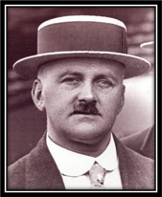
Although JAMES ERNEST MANGNALL is usually remembered as the first man to bring Manchester United trophy success – with a side containing the key members of City’s 1904 FA Cup triumph – he actually spent more years managing the Blues and saw City as the bigger club with more potential.
People tend to focus on his successes at United but his commitment to the Blue cause and determination to move City to the best stadium in English football, are perhaps the most interesting aspects of his life. His United successes are clearly significant moments in Manchester football, however City fans prefer to remember his Blue achievements.
He joined City in 1912 but the most interesting aspect of his arrival is the way it was carried out. Mangnall had been United’s leader since 1903 and had achieved so much that no one could ever have expected him to move. As well as the trophy successes (promotion, two League titles and the FA Cup) he was also credited with being instrumental in United’s move from Clayton (where the Velodrome’s BMX track is today, close to the Etihad Stadium) to Old Trafford.
City were still regarded as the region’s number one club despite the problems they had faced in the period 1905-1912, and they stunned the football world when they lured Mangnall away from the Reds. Never before had a manager left a major club for its biggest rivals after so much success, but what made the story more of a sensation was the fact Mangnall had agreed to become City manager while still in office at Old Trafford, and that he had watched the Blues’ opening game at Notts County when he was supposed to be with United at Arsenal. He actually remained in charge of United for the Manchester derby of 7th September 1912 at Old Trafford.
Occasionally United historians dispute that Mangnall was officially their manager on the day of the derby but leading newspapers of the period, most notably the Umpire and the Daily Dispatch, are perfectly clear that he was officially in charge. City won the Old Trafford match 1-0 despite being down to ten men for most of the game. Mangnall, according to one report, was delighted with the City win despite, officially at least, still being a Red. “United speeded their manager rejoicing with two points to his new club” read one article.
The following Monday Mangnall moved into his Hyde Road office, and within a few weeks his side were looking like Championship contenders: “Manchester City stand out boldly as the only first class team in the two divisions of the League, the Southern and the Scottish Leagues, with the highest possible points to their credit. The Citizens of Manchester have earned every point in September. Other clubs have remained undefeated, but they have not annexed the maximum marks. Nine years have passed since Manchester City commenced a campaign in this stimulating style.”
The title didn’t arrive, however Mangnall did develop a decent-looking side by the time of the First World War – they missed the 1914-15 title by three points. City were also proving a highly popular side to watch, so much so that the ground could hardly cope. A notorious cup match with Sunderland in February 1913 had to be abandoned due to overcrowding. Incredibly – and this is difficult to appreciate today – the team manager was also responsible for the management of the ground at this time, and so Mangnall was held responsible for all matters concerning safety and crowd control as well as picking the team and buying the players. A reporter named Veteran accused Mangnall of spending too much time with the team and said: “I am rather surprised at Mr. Mangnall being caught napping, but it may be that he has been away with the team and had had little to do with the home management.”
During the hostilities Mangnall kept the Club alive and brought some trophy success in the wartime tournaments that replaced the League.
After the war, Mangnall’s side became very popular and he had to focus on ground issues as well as team matters. With the Blues filling the 40,000 capacity on a regular basis, Mangnall regular had to face the press, the FA, the Football League, Manchester City Council, and the police to explain why chaotic scenes were being experienced game after game in the streets around the ground.
In 1920 fire destroyed the Main Stand and exacerbated the problems Mangnall faced. He approached his former club United about using Old Trafford, the ground he had been primarily responsible for, but they met his request with exorbitant terms that were ridiculed in the press. Perhaps they still felt a little aggrieved about his departure almost a decade earlier?
Mangnall’s view was that City had to move from Hyde Road. Its forty thousand capacity was far too small, and the manager worked with club officials, most notably another former City manager Lawrence Furniss, to plan the development of a new ground. One with potential.
At the same time as the ground debates, Mangnall guided the Blues to second place in the League and their popularity increased further.
By the start of 1921-22 far too many people were missing out on watching Manchester’s favourite team. That season he created plans for an “English Hampden” on the Moss Side/Rusholme border.
In 1923 City moved to the 85,000 capacity Maine Road, and in Mangnall’s final season (1923-24) he almost managed to guide the Blues to the FA Cup Final. With the 49 year old Billy Meredith back in Mangnall’s side, City were defeated by Newcastle. That run was important as it perhaps demonstrated the reason why Mangnall had been determined to join the Blues back in 1912 for his City side attracted a few magnificent attendances including over 76,000 for a cup tie with Cardiff. At the time this was the largest crowd for any footballing fixture played in Manchester including three FA Cup finals (1893, 1911 replay & 1915). Mangnall knew all about City’s popularity and he must have felt a great deal of satisfaction at seeing such a large crowd in the stadium he had pushed for.
The following May his contract was not renewed, although It seems likely he chose to step down feeling that there was little more he could achieve at Maine Road. After leaving the Blues he became a director of his home town team, Bolton, and was a significant figure within the PFA. He died of a cerebral embolism in 1932 at St. Annes.
In addition to his roles at Burnley – his first club as secretary, United, City, and Bolton, he was also recorded as the man responsible for founding the Central League and the Football Managers’ Association.
Modern day football rarely remembers men like Mangnall, however his place in the history of Manchester must always remain a significant one. He restored pride and passion to the Blues and was the key figure in City’s move to Maine Road. That move enabled City to rediscover their ambition, drive, and natural position as one of England’s elite.
Football historians tend to focus on Mangnall’s United career but that does the man a great disservice. He may have won trophies at Old Trafford but his entire career was packed with achievements.
Mangnall should always be remembered as the catalyst for City’s regeneration during a difficult period. The fact that he walked out on United to take on the City challenge adds an angle that Blues love. Mangnall was a great Blue.
If you enjoy all the free material on my website and would like to support my research and keep this website going (but don’t want to subscribe) then why not make a one-time donation (or buy me a coffee). All support for my research is valued and welcome. It allows me to keep some free material available for all. Thanks.
Read more of this content when you subscribe today. It costs £20 a year to subscribe (it works out £1.67 a month) or £3 if you’d like to sign up a month at a time. Annual subscribers get full access for as long as you subscribe (you can always try it for a month). It’s worth bearing in mind that the 2010 Manchester A Football History cost £24.95 and all subscribers will be able to access all of that for as long as they are a subscriber (plus all the other stuff of course).
It costs £3 a month to subscribe a month at a time. Why not give it a try! Monthly subscribers get access to everything posted since 1 October 2022 for as long as you subscribe.
I’ve included this in some of my books over the years and I think it’s a great crowd shot which leads to the odd question too. Take a close look at it. This is from 1912-13 season and shows a section of the crowd in the Main Stand paddock. There are definitely men, women and children in there, but is there also one of the earliest non-white faces to be seen at a home City game too? It’s difficult to tell but look at the complexion of the man above the word ‘archive’… We’ll never know sadly.
Happy Valentine’s Day! Way back in 1911 Manchester City signed a player from Forfar Athletic with the name Valentine. He was born in May 1889, not 14 February as maybe some would expect. He joined City on 5 July 1911 but only made 22 first team appearances in defence before signing for Oldham Athletic on 31 May 1913 (£50 transfer fee). Sadly he only managed one League appearance at Oldham.
A year later he was on his way to Leeds City. War ultimately limited his opportunities and he later played for Southend in 1921 before joining Abertillery in July 1922.
When he signed for City he was expected to be a significant member of the team but it didn’t quite work out like that. His debut was against Oldham on 7 October 1911 and he did play in a goalless Manchester derby. I first wrote about him in The Pride of Manchester, the history of the Manchester derby I co-wrote with Steve Cawley.
If you enjoy all the free material on my website and would like to support my research and keep this website going (but don’t want to subscribe) then why not make a one-time donation (or buy me a coffee). All support for my research is valued and welcome. It allows me to keep some free material available for all. Thanks.
On this day (30 October) in 1916 the death of Manchester City defender Pat McGuire was reported in the Manchester Evening News (image) and the Athletic News. McGuire’s story is a tragic one as he was killed in battle but his wife had previously been told of his death several months earlier. Understandably there was a lot of confusion on the battle field but imagine being told your husband had been killed and then a short while later told he’s alive and then only a few weeks after that being told for the second time that he has been killed.
The report in the Athletic News read:
‘It was with very deep regret that news was received at Grimsby on Saturday of the death in action in France of Lance-Corporal P. M’Guire [sic], of the Manchester Regiment, the brilliant young full-back of the Manchester City club, who played for Grimsby Town throughout last season. Last winter he played better football than at any period of his career, and Grimsby regarded him as the best defender who had worn their livery for a decade. He was clear-headed, resourceful, and a master of defensive tactics. Now he has given his life in the greatest of all causes. That something had befallen him had been feared for three weeks past, as Mr. Hickson did not receive any acknowledgement of the letters and parcels of comfort which he and his wife make a practice of dispatching regularly to the “boys” at the front. On Saturday came the sad official news that M’Guire was no more.‘
McGuire joined City from Hurst on 18 Aug 1912 and made his debut v Chelsea (a) 1.3.1913
Former City historian John Maddocks wrote this about him:
Pat McGuire was a full-back who was used mainly as an understudy to the regular backs in the years immediately before WW1, Bill Henry and Eli Fletcher, and as these two were consistent players Pat rarely got a look in. He joined the armed forces for the duration and guested for Grimsby Town, making 31 appearances and scoring six goals. Sadly he was killed in action in October 1916.
Appearances: 15 in the League (plus at least 85 in the reserves)
The story is an incredible one and the following website tells it much better than I can here:
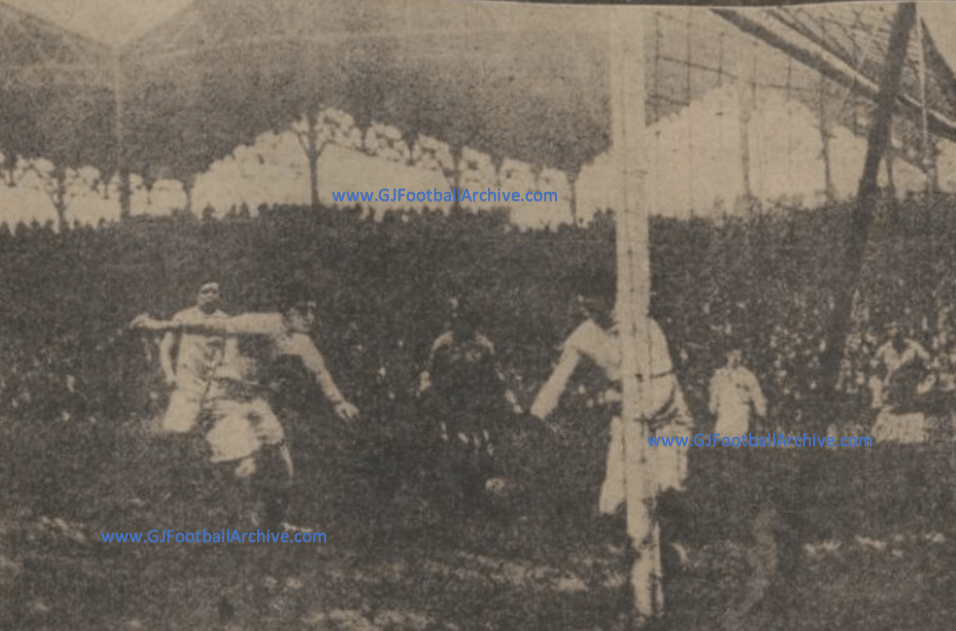
Rare action images from Hyde Road taken on this day (October 12) in 1912 as Manchester City were defeated 1-0 at home to Newcastle before a capacity 40,000 crowd.
If you enjoy all the free material on my website and would like to support my research and keep this website going (but don’t want to subscribe) then why not make a one-time donation (or buy me a coffee). All support for my research is valued and welcome. It allows me to keep some free material available for all. Thanks.
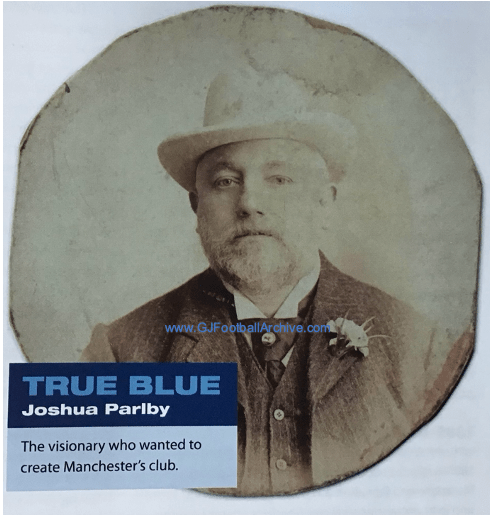
Continuing the weekly series of ‘True Blue’ figures associated with the early years of Manchester City, here’s an article on Joshua Parlby who was the visionary who was the main figure behind the creation of Manchester City. He was also a former Stoke footballer and committeeman. As an appetizer for my forthcoming talk (1 March – see below). You can find out why this man was such an important figure in Manchester City history below:
Subscribe to get access – Annual
Read more of this content when you subscribe today. Annual subscribers can access all the articles, talks, books and interviews posted since December 2020 for an annual subscription of £20 (works out about £1.67 per month). There’s also a monthly subscription (see below).
Monthly subscribers can access all the articles, talks, books and interviews posted since 1 October 2022 for a monthly subscription of £3 (cancel any time).
There will be another ‘True Blue’ featured next Monday. Use the tag ‘True Blues’ to find other profiles in this series. If you want to join my free online talk concerning Parlby and City see:
The full series of True Blue profiles will feature:
Lawrence Furniss, John Allison, Joshua Parlby, Walter Chew, William Sumner, Tom Maley, St Mark’s community leaders, Billy Meredith, John Chapman, William Beastow and James Moores.


 Gary James' Football Archive