
On April 24 1937 Manchester City won the Football League for the first time. Here, for subscribers, is the story of that game and the way the club celebrated…
Subscribe to get access
Read more of this content when you subscribe today.
Football writing, thoughts and more by Gary James
On April 24 1937 Manchester City won the Football League for the first time. Here, for subscribers, is the story of that game and the way the club celebrated…
Read more of this content when you subscribe today.
St. George’s Day always marks the anniversary of Manchester City’s first FA Cup success. In fact the 1904 FA Cup win was the first major trophy success by any of the Manchester teams and has been recognised as the point when Manchester became a footballing city.
I’ve written about this often (including academic papers. See: https://gjfootballarchive.com/2021/01/11/fa-cup-success-football-infrastructure-and-the-establishment-of-manchesters-footballing-identity-free-download-for-limited-period/ ) and feel that every Mancunian should recognise the significance of this moment.
Subscribers to my site can read the following article highlighting the key people, moments and fan related material from that success:
To read this and access the other in-depth articles please subscribe. It works out about £1.67 a month if you take out an annual subscription (£20 per year) or £3 a month if you’d like to sign up for a month at a time. Each subscriber gets full access to the 280+ articles posted so far and the hundreds scheduled to be posted in the coming weeks.
“Not a little of the success the City club has achieved is due to the indefatigable labours of the secretary, Mr T.E. Maley, who came to Manchester three years ago, when the City were in the Second Division. He brought to his duties valuable experience gained with the famous Celtic club, and he has had the benefit of being a player, a club official, a legislator, and a selector. His splendid services to the City are reflected in the position they at present occupy – the holders of the English Cup – the most coveted of football prizes, and one of the leading clubs in the League.”The Manchester Evening Chronicle, 12 November 1904
This season became Manchester’s first major trophy-winning season. It established the city’s trophy-winning heritage and it helped transform Manchester from a rugby playing city to a footballing one. Every Mancunian needs to know the story of this season. The following 10,000 word article tells the story of that season.
If you would like to read the full article and other pieces like this then please subscribe below. It works out about £1.67 a month if you take out an annual subscription (£20 per year) or £3 a month if you’d like to sign up for a month at a time. Each subscriber gets full access to the hundreds of articles posted so far and the hundreds scheduled to be posted in the coming months.
Read more of this content when you subscribe today.
On April 22 1972 title challenging Manchester City’s final game of the season ended in a 2-0 victory over Derby County. Goals from Francis Lee and Rodney Marsh. Attendance 55,023. The Blues finished their season top of the League BUT…
Subscribers to my site can read what happened next in this piece which includes quotes from Rodney Marsh, Malcolm Allison & Eric Alexander from my exclusive interviews with them.
Read more of this content when you subscribe today.
During 2002-03 the focus for many Manchester City fans was Maine Road’s final season, especially the final month or so of the season.
With every game at the stadium a sell-out – only the size of the away support varied – supporters were desperate for the final season to see the old venue at its best. They also wanted a few memorable results in those final weeks.
Ultimately, the best Maine Road match of the final weeks came on April 21 2003 when a goal from Robbie Fowler and two from Marc-Vivien Foe brought a 3-0 win over Sunderland. The game became significant as it was to be the last City victory at the old stadium and Foe’s 80th minute goal was the last scored there by a City man.
Pre-match Sunderland presented the Blues with a rose bowl commemorating their final visit to the stadium. Significantly, the time span between their first appearance at Maine Road and their last was greater than any other visiting club. Co-incidentally City’s last victory at Hyde Road was also against Sunderland in April. You can read about that game here:
21/4/2003 MCFC 3 Sunderland 0, Attendance 34,357
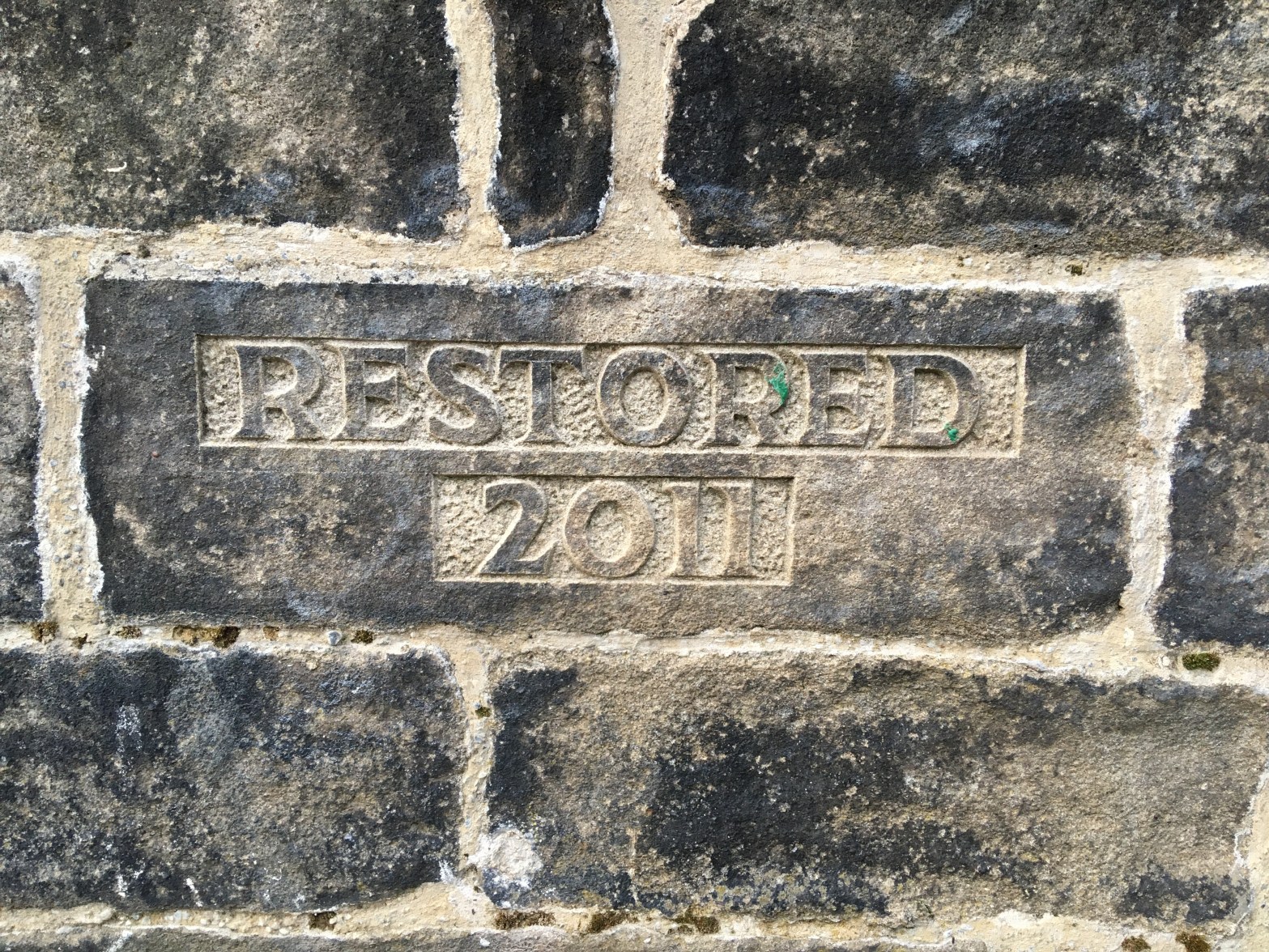
To commemorate the tenth anniversary of Manchester City’s FA Cup semi final victory over Manchester United at Wembley (April 16 2011) I’ve produced Restored 2011: The All-Manchester FA Cup Semi Final. This special 1 hour audio recording looks at the game and the years between the 1976 League Cup success and the FA Cup glory of 2011. The 2011 semi-final was a crucial step in City’s journey since the 2008 takeover and I felt it was vital to do a special marking this.
Following last night’s Champions League victory for City (May 4th – City beat PSG to reach the Champions League final) this will now be free to listen to until May 12th. After that date, as with audio recordings with John Bond, Malcolm Allison and George Graham (and hundreds of articles), it will only be available to subscribers to the site. So, if you don’t subscribe, have a listen now while you can.
So what’s in this special recording? Well, I’ve included exclusive material from interviews and recordings I’ve done over the years with Garry Cook, Brian Marwood, Roberto Mancini, Peter Barnes and Peter Swales. Why Swales? Well, have a listen and you’ll hear why. Basically though I’m trying to set the tone for why the 2011 FA Cup semi final victory and overcoming Manchester United was so significant.
On Mancini… I include a few words from him recorded in 2011 and at one point he talks about the view that was then being expressed that City were ‘trying’ to buy success (now they say City ‘have’ bought success!). His words are a reminder that City have been having that particular criticism thrown at them for over a decade! Oh well, I wonder how long those criticisms were laid at other clubs who had seen major investment which propelled them forward?
Anyway, get yourself a brew and be prepared to be transported back in time. Here’s the recording:
If you enjoy the recording then please let me know, comment or subscribe to the site. If it’s of interest then, over the coming months and years, I’ll produce others like this highlighting key points in Manchester City – and Manchester’s – footballing history. It costs £20 a year to subscribe (it works out £1.67 a month) or £3 if you’d like to sign up a month at a time to get full access for as long as you subscribe (you can always try it for a month). It’s worth bearing in mind that the 2010 Manchester A Football History cost £24.95 and all subscribers will be able to access all of that for as long as they are a subscriber (plus all the other stuff of course). You can subscribe below.
£20 per year to access everything
Match Stats for the 2011 FA Cup Semi-final
City 1-0 United (HT 0-0)
Yaya Toure 52
City: 25 Hart 04 Kompany (yellow card), 05 Zabaleta (yellow card), 13 Kolarov, 19 Lescott, 11 Johnson (Wright-Phillips 79), 18 Barry, 21 Silva (Vieira 86), 34 De Jong (yellow card), 42 Y Toure, 45 Balotelli (yellow card). Substitutes 12 Taylor, 38 Boyata, 07 Milner, 08 Wright-Phillips, 24 Vieira, 10 Dzeko, 27 Jo
United: 01 Van der Sar, 03 Evra, 05 Ferdinand, 15 Vidic, 22 O’Shea (Fabio Da Silva 84), 13 Park Ji-Sung, 16 Carrick, 17 Nani, 18 Scholes (red card), 25 Valencia (Hernandez 65), 09 Berbatov (Anderson 74). Substitutes 29 Kuszczak, 12 Smalling, 20 Fabio Da Silva, 08 Anderson, 28 Gibson, 07 Owen, 14 Hernandez
Referee: Dean
Attendance: 86,549
Free for all readers tomorrow… A one hour long special audio recording featuring interviews and audio recordings I have made over the years with Peter Swales, Garry Cook, Peter Barnes, Brian Marwood and Roberto Mancini.
Watch this space!
On this day (April 13) in 2014 Manchester City’s women’s team played its first competitive game after the relaunch. It was a FA Cup tie against Reading played at the Regional Athletics Arena.
Here for subscribers is a section of Manchester City Women: An Ora History discussing that opening game:
Read this and have access to the rest of the site throughout your subscription. £20 per year (works out about £1.67 a week).
If you would like to buy Manchester City Women: An Oral History copies are available direct from me (I’ll sign them) via:
On April 12 1894 a meeting was held to formally establish Manchester City AFC.
Dates and the story around the establishment of the club often get incorrectly recorded, so here for subscribers is the story of the demise of Ardwick and establishment of Manchester City with all the key dates…
Read more of this article and access the rest of the site when you subscribe
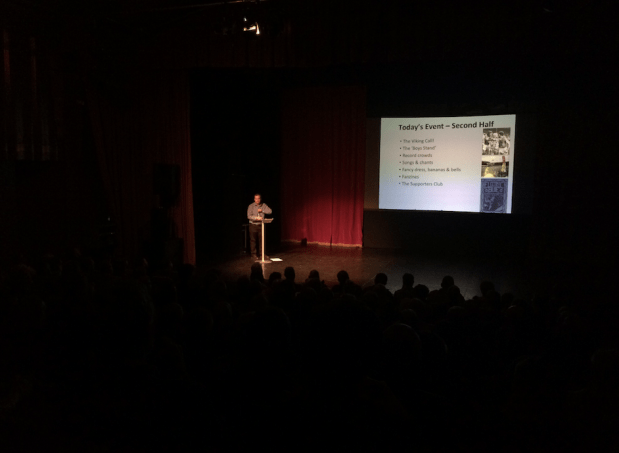
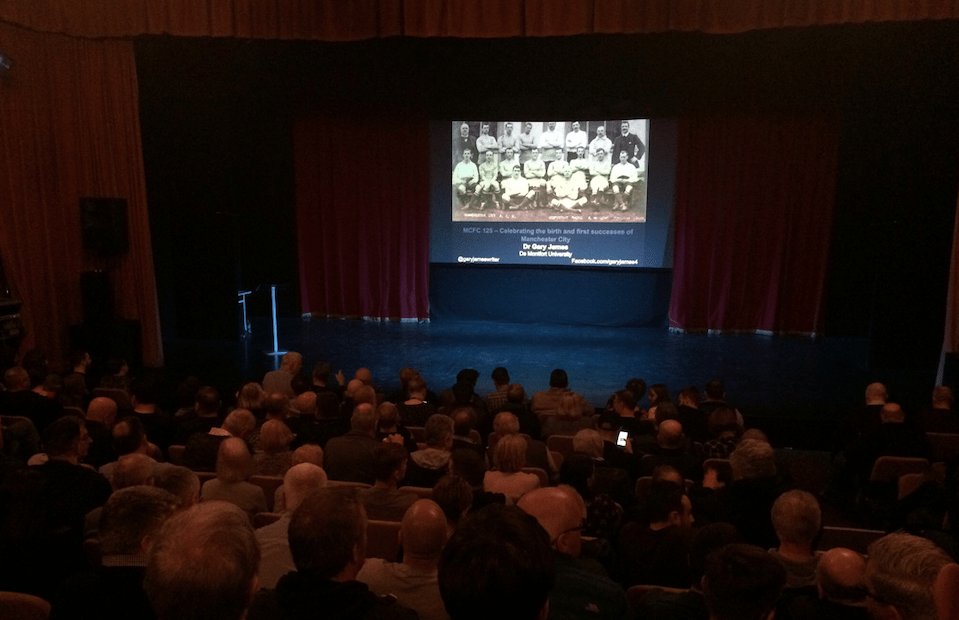
How time flies? Two years ago today (April 11 2019) I staged an event at the Dancehouse in central Manchester to commemorate the 125th anniversary of Manchester City. We had a packed audience for the event and I intended to stage at least one event like this every year (then Covid happened!).
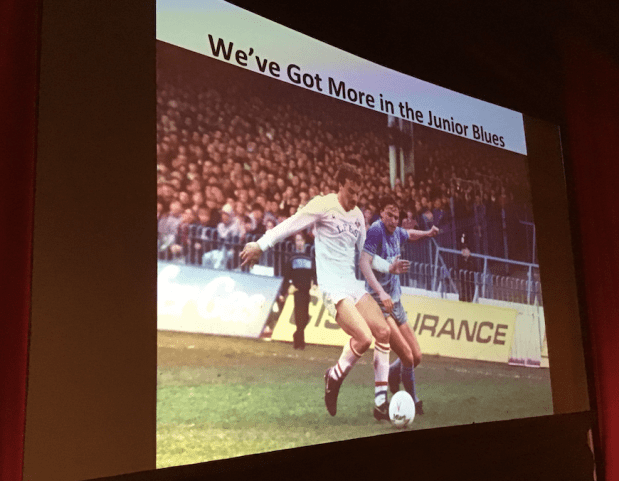
In 2019 I managed three special events at the Dancehouse connected with Manchester City’s history. In June there was the most recent showing of The Boys In Blue (my collaboration with the North West Film Archive at Manchester Metropolitan University) which provided exclusive films of the club from 1905 through to the modern era.
In September there was the launch of Manchester City Women: An Oral History (you can buy that book here: https://gjfootballarchive.com/shop/ ). This was a celebration of the history of the women’s club with guests from every era of the club’s history including many founding players and also England international Karen Bardsley.
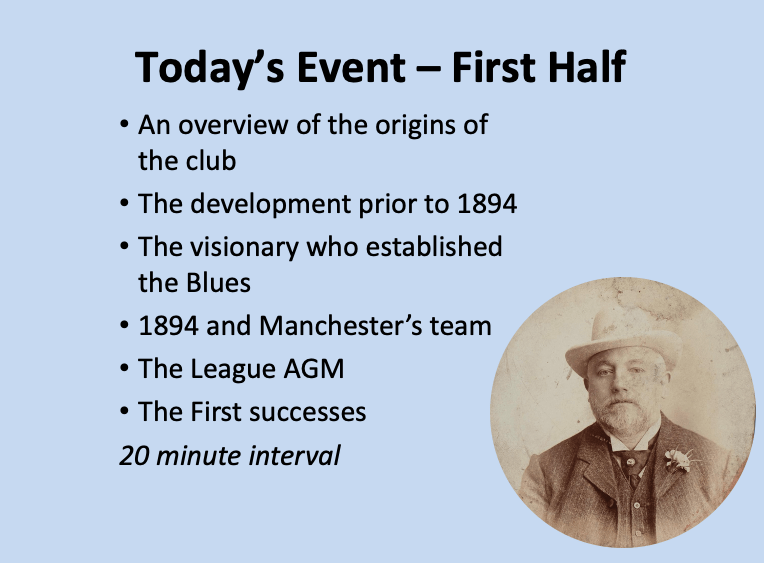
I had hoped to stage events in 2020 and 2021 but back in April 2019 there was the commemoration of the 125th anniversary of the club’s birth as Manchester City. The talk of course went back further and discussed the 1870s and 1880s where I hoped to kill off a few myths (I’m still trying to kill off some of these myths. See: https://gjfootballarchive.com/2021/03/09/the-origins-of-manchester-city-facts-not-fiction/ for details!).
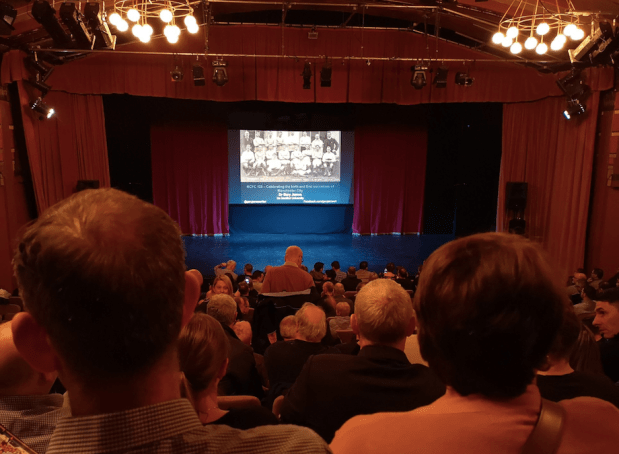
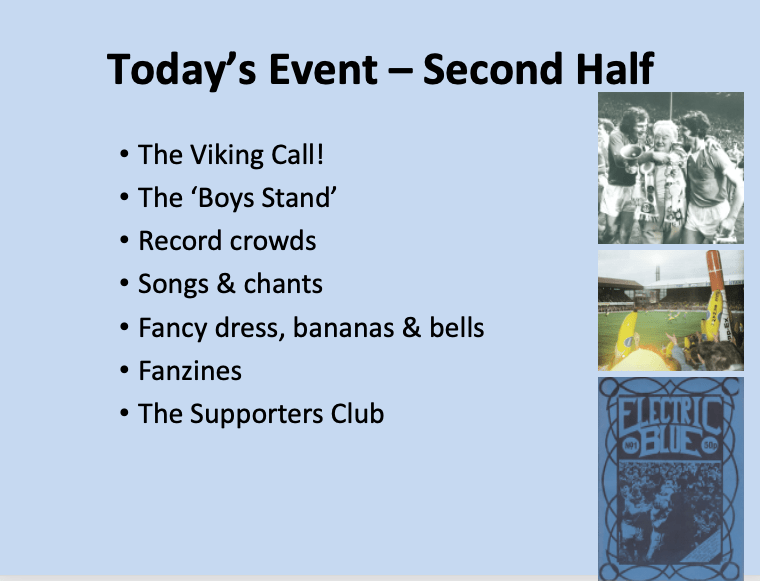
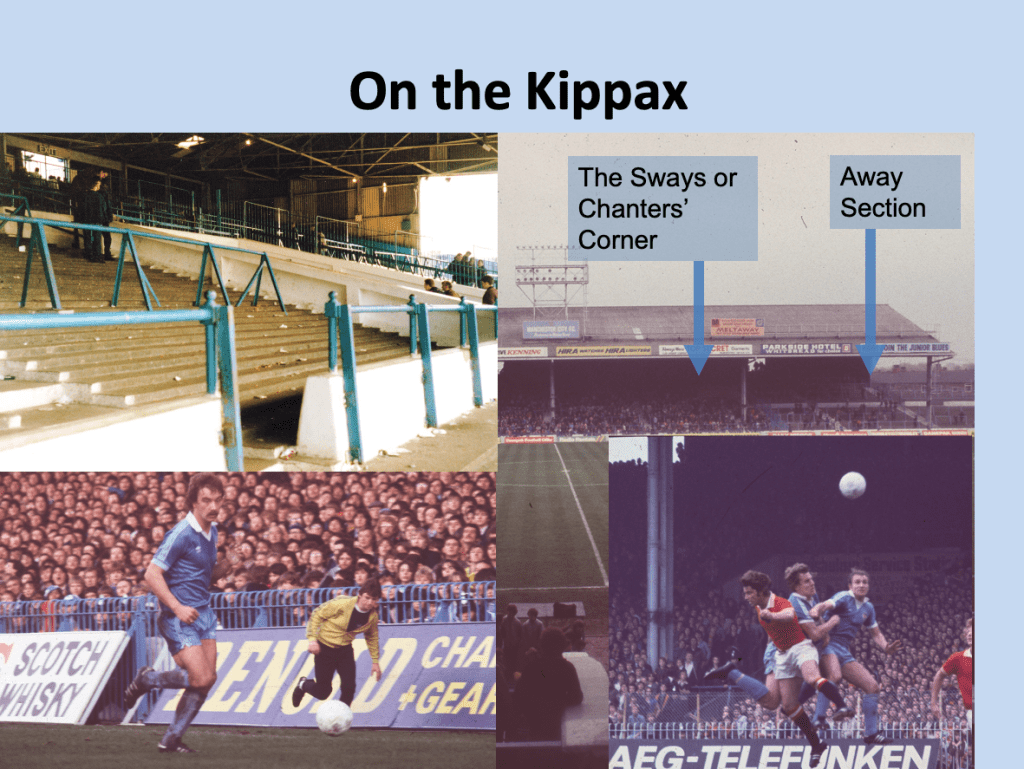
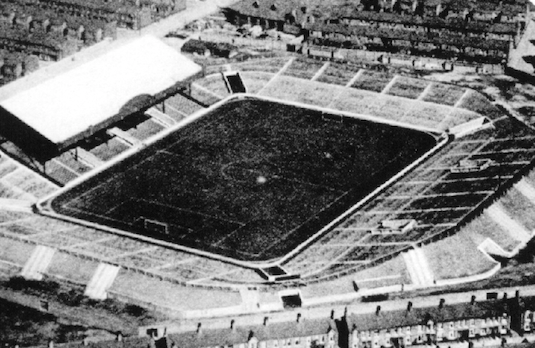
The presentation didn’t just dwell on the formative years of the club as I covered stories connected with Maine Road, fans and more. The following images are slides from that day and give an indication of what was covered.





 Gary James' Football Archive