‘Where do you want your statue?’

In November 2020 I was delighted to be one of the speakers at a blue plaque unveiling for former Manchester City boss Joe Mercer in his home town of Ellesmere Port. It set me off thinking about permanent tributes to footballers and so for this article I’m taking a look at the tributes already made and questioning what else could be developed.

This is a subscriber article. It costs £3 a month to subscribe OR take out an annual subscription at £20 (works out about £1.67 a month). All subscribers get full access to everything throughout their subscription.

Subscribe to get access

Read more of this content when you subscribe today.

Norah Mercer: 11th March 1920 – 12th March 2013

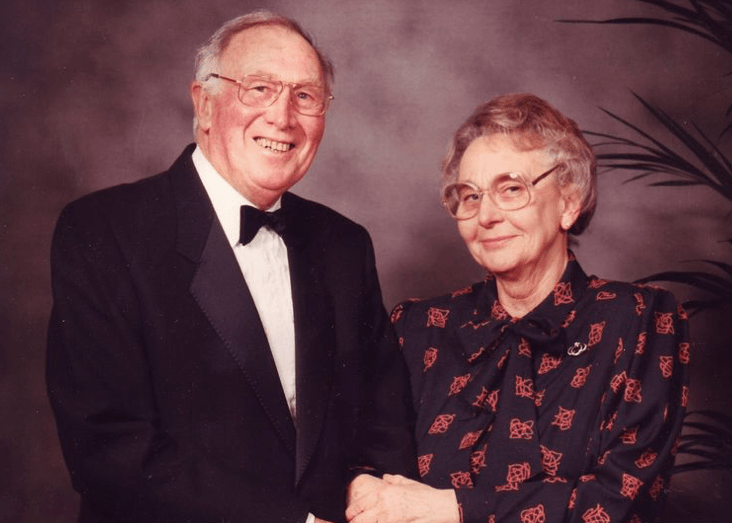
On this day (11th March) in 1920 Norah Mercer was born and on 12th March 2013 she passed away. Here is an obituary I wrote for her in 2013:

A short while ago (this was written on 13 March 2013) I heard the news that Norah Mercer, the widow of former England captain and manager Joe Mercer, had died this morning.  She was 93 yesterday.  

I first met Norah in 1988 when I was researching for a book on the Manchester derby.  Joe had agreed to write an introduction to the book and I was invited to the Mercer home to talk with Joe.  Unfortunately, on the day the car my father and I were supposed to be travelling in had a few problems and we ended up using a white transit van to get to their home.

As we arrived at the end of their street we started to worry.  We were about to park a transit van outside the house of the greatest Manchester City manager of all time.  Not only that but we were about 45 minutes early.  We couldn’t pull up outside Joe Mercer’s house 45 minutes early and in a transit van!  We decided to park near the junction of the neighbouring road – where we could see the Mercer house – and wait in the van.

At the appropriate time we climbed out of the van, walked up the Mercer road and knocked on their door.  Joe came out with a big beaming smile and simply said “come in”, then Norah appeared from the kitchen wagging her finger at us and saying “you’ve been hiding in that van for 45 minutes!  No need for that you should have pulled up outside.”  From that moment on Norah made us feel welcome and in the 25 years since has been a wonderful friend.

Throughout her life Norah supported Joe wonderfully.  Today people often talk of footballers’ wives – often for the wrong reasons! – but back when Norah and Joe first became a couple it was unknown for a wife to become known by supporters.  However, Norah’s support for her husband was such they she played a marvellous part in every period of his career from the moment her father helped Joe get to Goodison Park in the early days of his career; through the highs and lows of an amazing playing career with Everton, Arsenal and England; on to managerial ups and downs at Sheffield United, Aston Villa, Manchester City, Coventry City and that great spell as England boss; and on to retirement, illness and so on.  Joe passed away on his 76th birthday in 1990 but Norah continued to show interest in football becoming a regular at Manchester City and a frequent visitor to Joe’s other clubs.

When Joe passed away in 1990 I asked Norah if I could write a biography of her husband.  Her response was typical: “Only if it’s not too much trouble for you.”  Too much trouble?  After what Joe had given football, and in particular my team Manchester City, I felt we all owed him something, but typical of Norah she wanted to make sure I wasn’t taking on too much, or doing it for the wrong reasons.

With Norah’s support – and also great assistance from her son David – I wrote the biography over the following three years but, most significantly, I also spent many days at Norah’s listening to her views on football and life, questioning her on odd snippets of information, marvelling at her photo collection, and generally enjoying every minute.  Typically my visits would include Norah insisting I had something to eat – I really didn’t want to intrude too much but soon realised that Norah was always such a welcoming figure.  She was also keen to meet my own family and my girlfriend (my wife since 1992) was as welcome as I was and became someone else looked after by Norah.  

On one occasion when I was researching Joe’s Aston Villa material Norah insisted I have a beer.  When she brought the drink in she nodded to my girlfriend and then gave me the tankard – Joe’s League Cup winning tankard from his days at Villa!  I was petrified that I was going to damage it.

Norah was born in Liverpool in 1920 and was the daughter of a popular grocer, Albert Dyson, on The Wirral.  Albert was a passionate Evertonian and had various contacts at the club.  As Albert’s business was based in Ellesmere Port inevitably he came into contact with a young Everton player called Joe Mercer.  Joe and another player were invited to the Dyson home for tea one day. The other player couldn’t come but Norah did meet Joe for the first time:  “Old cheeky face Mercer came!  At the time I was 11 and Joe was 17 and he treated me like a sister.”  Around six years later a relationship began to develop between the two of them and Norah became an intergral part of Joe’s life.

In March 1941 Joe and Norah became engaged and on 3rd September that year they married with Everton’s TG Jones the best man.  Norah explained to me fifty years later that the honeymoon was cut short by a day so that Joe could play for Everton:  “We left early Saturday and he played Saturday afternoon.  So that’s how our marriage started… with football!  And that’s how it went on.”

Norah was knowledgeable about football herself.  In fact some of Joe’s teammates teased him that Norah knew more about the game than he did!  She played her part in all the big moments of his career:  “Playing for Everton meant a great deal to us all because we were all Evertonians, but I suppose the greatest moment in his pre-war career came when he was selected to play for England.  He was at our house when it came through on the radio – no one ‘phoned you then to tell you you’d been selected.  

“He was delighted.  We all were.  It was such a honour to play for England.  It made us all so proud.  When he played at Hampden in one of his first internationals Joe’s mum came with me and my father to watch him.  That meant everything and Joe was named the Man of the Match (England won 2-1).” 

The couple were, of course, separated for significant periods during the war years.  It was a difficult time for all, but once the war was over it also looked as if Joe’s footballing career had come to an end.  Joe became a grocer like his father-in-law, but he often admitted it was a poor substitute for playing football.  Then a chance came to join Arsenal and arrangements were made for Joe to train on the Wirral and travel to Highbury for games.  Whenever possible Norah would travel, together with their young son David, to London for games.  She was, of course, present at all the landmark moments of Joe’s career with the Gunners:  “I went as often as possible, and of course we had David by then.  If I didn’t go to games I’d be waiting for him up here after the game.  He used to catch the 5.30pm from Euston and arrive back to The Wirral around 10.30.  We lived near the line then and I used to look out for the train.  Of course, Joe often fell asleep and would end up at the end of the line!  Once he said to a guard ‘why didn’t you wake me?’ and the guard said ‘because of what you did to my team today!’  Arsenal must have beaten his team.” 

Once Joe’s playing career ended he moved into management with Sheffield United, Aston Villa and then Manchester City.  As football management required a much closer presence the family moved whenever Joe’s career took a different course.  Norah, for her part, tried to ensure everything ran smoothly for Joe and David.  She also played her part as a welcoming aspect at each of the clubs.  In 2003 she told me: “I used to come to all the games of course, and both before and after the match would be with the wives of the directors, visiting officials, and even the referee’s wife in the Ladies Room.  We were all told who the referee’s wife was and we tried to make her feel welcome, although for some ladies it all depended on how well her husband had refereed the match!”

Norah supported Joe fully throughout his managerial career, especially during some difficult periods at Aston Villa and the final days at Manchester City. Norah, talking to me in 2003:  “He didn’t want to leave City but felt he had no choice.  He obviously wanted Malcolm to succeed and he did not blame him, but the new directors could have sorted it out properly.  Once the takeover had happened and the new directors came on board (1970-72) the club had changed.  It wasn’t really until Franny returned to the club (1993/4 season) that efforts were made to invite me and others back.  Of course Joe had passed away by then, but I was delighted to be asked to games.  That invite has carried on ever since and it is great to feel part of the club again.” 

Joe passed away in 1990 after suffering with Alzheimer’s.  Norah did all she could during that period to ensure Joe was comfortable and she insisted on looking after him, even during some very difficult days.

Norah continued to attend games at City from 1994 through to the present day.  She also came to the ground for other activities and functions over the years, including the unveiling of the Mercer mosaics in 2005.  That day she was accompanied by her son David, but sadly, a little over two years later he passed away after a struggle with cancer. Life must have been difficult once more for Norah.  

Away from football Norah tried to play a part in her local community.  For many, many years she worked in charity shops on The Wirral.  In fact, when I went to see her once when she was in her late 70s she told me that earlier that week a man had stolen a handbag from someone inside the shop and that Norah had chased after him.  Only losing him when he jumped on a waiting train at the railway station:  “if that train hadn’t been there I’d have caught him!”

On another occasion when she was approaching ninety she told me of her upset at being “made redundant!”  The charity had decided to stop using volunteers and had employed younger permanent staff instead.  I’m pretty certain that few permanent staff would have had the same level of dedication and determination that Norah had.

I once asked her about her family’s interest in football:  “It’s changed so much since Joe and I first met.  Throughout his career I supported him all the way.  To Joe football was the most important thing.  The people… the money… the grounds even change, but Joe used to say that the game itself doesn’t need to change.  Football is a great game and that’s what mattered to Joe.  I often joke that football was everything to Joe.    When he met me it was football then me.  When our son David was born it was football, David, then me.  When our granddaughter Susan was born it was football, Susan, David, then me!  Football was always number one and we all knew that.  Football was Joe’s life.

By 2009-10 I had become a little frustrated that the Mercer name was not often remembered outside of the clubs Joe had been involved with and so I decided to update and revise my biography of Joe, but first I asked Norah’s permission.  Just like twenty years earlier she said “Are you sure?  Will anybody be interested?  Don’t do it unless you feel it’s worthwhile.”  “Joe Mercer: Football With A Smile” came out in April 2010 and I made sure that the book explained Norah’s continued presence and interest in football – to me it’s a shared story.  It was the least she deserved.

In September 2009 I included an interview with Norah in the Manchester City match programme.  In that piece I asked her about present day City and ended the piece with a simple question: Looking to the future, who would you like to win the League?

Her response:  “After City you mean?  Well, the top four would have to be City, Everton, Arsenal and Liverpool, but apart from City as champions I’d best not say which order.”  In 2012 she got her wish and, most significantly, she was there when City defeated QPR to lift the title for the first time since Joe’s side had in 1968.

My thoughts are with her granddaughter Susan and the rest of her family.

Gary James

12th March 2013

On This Day – The Story And Film of A Maine Road Manchester Derby

On this day (21st January) in 1967 the Blues played the Reds in the first Maine Road derby following City’s promotion in 1966. City had lost the Old Trafford derby 1-0 in September 1966 but had high hopes they could get something out of the return match.

The following article provides the background story to the Maine Road derby, a report, and film of the scenes around Maine Road that day (Mercer, Allison & Busby all appear; plus there’s film of fans outside the ground and then trying to climb into the Main Stand from the area behind the then still open Main Stand/Scoreboard End corner).

If you would like to view this article then please subscribe below. It works out about £1.67 a month if you take out an annual subscription (£20 per year) or £3 a month if you’d like to sign up for a month at a time. Each subscriber gets full access to the 500+ articles posted so far and the hundreds scheduled to be posted in the coming weeks.

Subscribe to get access

Read more of this content when you subscribe today.

Joe Mercer Book Launch Video 1993

Back in 1993 my biography of Joe Mercer was published for the first time. We staged a book launch in the centre of Manchester attended by various footballers and friends of the Mercers. Myself, Norah Mercer, Malcolm Allison, Mike Summerbee and Francis Lee all spoke at the launch which was ably compered by broadcaster James H Reeve. Here’s a trailer the speeches for subscribers to the si

Subscribe to get access

You can view this and all other content on the site if you subscribe. It’s £3 per month or £20 per year.

Joe Mercer OBE

On Thursday a PFA plaque will be unveiled to honour a footballing legend. Joe Mercer was a hugely successful player with Everton, Arsenal and England and a trophy winning manager with Aston Villa and Manchester City. He also managed Sheffield United and Coventry City. He was acclaimed as a man who had put the fun back into English football during a spell as the England boss. He fully deserves this tribute and, if you can make it, please come along to the plaque unveiling. Back in 2004 I wrote the following piece for the Manchester City match programme which, for those Blues wondering why Joe was significant, may help to explain his importance to the club. Enjoy… it starts with the original introduction (and all references to Joe’s family etc, are from 2004 of course).

***

In Search of The Blues considers the life and career of a former City great who sadly is no longer with us, Joe Mercer OBE.  The reason we have decided to reflect on Joe’s life today is that last Monday (9th August 2004) marked the 90th anniversary of the birth of the former City & England manager.  Sadly Joe passed away on the same date in 1990 – his 76th birthday. Joe was City’s manager during the Club’s most successful period, and Gary James, author of “Football With A Smile: The Authorised Biography of Joe Mercer, OBE”, provides a commentary on Joe’s lifetime of achievements.

Why is Joe Mercer so important to this Club?

Joe breathed new life into a club that was struggling to survive.  During the early sixties City had reached a critical level – one director actually suggested the Blues should merge with United! – and Joe’s appointment was one which had to succeed.  Joe brought in a highly enthusiastic Malcolm Allison as his number two and between them they transformed City from a struggling sleeping giant into League Champions, FA Cup winners, League Cup victors and European Cup Winners’ Cup winners. 

The Blues became renowned for their positive approach and swashbuckling style and Joe encouraged everyone to enjoy life at Maine Road.

Without Joe’s arrival in July 1965 it’s very difficult to see how City’s fortunes could be resurrected.

How did his partnership with Malcolm Allison work?

There have been many theories over the years of how the two men worked together.  Many people focus on their contrasting styles – Malcolm the flamboyant one; Joe the fatherly figure – but during the 1990s Malcolm answered a similar question by stating:  “we made it work because we told each other the truth, and we never really fell out.  We had a great relationship.  I enjoyed it all and I think, like Joe, those first five years were the best ever for me.  I think that fortune favours the brave, and I think that sometimes you have to be fortunate where you work and who you work with.  I was very lucky when Joe got the City job, and took me there.  And we started right from the grass roots, right from the bottom and took them to the top.  That is real achievement!”

How does Joe compare to football’s other great managers?

In 1990 Bobby Charlton said he was one of football’s most important figures and added:  “Joe was a great, great person and we don’t say that about many people.  They don’t produce people like him very often.  He was a true great, along with the likes of Bill Shankly.”

Joe’s period as City manager coincided with a number of famous managerial careers – Shankly (Liverpool), Busby (United), Revie (Leeds), Nicholson (Spurs), Stein (Celtic) – and so comparisons should be easy, however each Club was at a different phase in development and it would be foolish to directly compare.  However, it is clear however that during 1967-8 City swept aside the great sides created by his contemporaries and that the Mercer-Allison side won many admirers across the Country because of the style of play and positive attitude.  

In addition to Joe’s time at City he did have some success away from Maine Road and, of course, he managed England for a brief but entertaining spell.

Why did Joe Leave?

Initially, because of Joe’s health problems at Villa, he had anticipated being at City for only a few years.  Naturally, Malcolm was keen to manage the Club in his own right but that didn’t seem possible while Joe was still at the Club.  In 1971 Malcolm was given the role of Team Manager but Joe’s position was less clear.  Power struggles in the Boardroom and various other issues placed Joe and Malcolm in different camps and, when an offer from Coventry came in 1972, Joe felt it was time to move on.  

What was Joe’s managerial record away from Maine Road like?

His first League management role was at Sheffield United.  The Blades were struggling when he arrived mid season and were relegated (1956), however during the course of the next couple of seasons he developed a good cup-fighting side and was offered the Arsenal manager’s job at one point. 

In December 1958 he became the Aston Villa manager and again created a good cup fighting side and brought the Villa Park club the Second Division Championship in 1960.  He also guided them to success in the 1961 League Cup and took them to the final again in 1963.

Sadly, problems at Villa during 1964 caused Joe health problems.  He went to see a doctor and according to Joe some years later:  “He told me ‘It’s either polio or a stroke.’ And as I was leaving the room he called me back and said ‘What about the fee?’  I turned and said ‘well, I must be a bloody bad risk then!”

At the time Joe was also managing the England under-23s and had even been tipped as England manager (August 1962) – that proves how highly Joe was thought of as a manager prior to his phenomenal success at City.

After City, Joe won a manager of the month award at Coventry and took on the role as England caretaker manager during 1974 for 7 games.  His first game in charge saw Kevin Keegan and Stan Bowles – a former player under Mercer at City – both score in a victory over Wales.  Joe was offered the job on a permanent basis but turned it down for health reasons:  “I had the most terrible sciatica.  I was almost a cripple with it.  I was offered the job but I didn’t feel fit enough.  It was as simple as that.”

Why did he join City in the first place?

After his health problems at Villa Joe missed the daily involvement with the game.  He started to report on games for newspapers but reporting was a poor substitute for management.  In 1965 when the City approach came it was a major gamble for all concerned.  Joe was not really fit enough to take on the role immediately and the Club had to think carefully about the appointment.  Joe didn’t think about it for long.  He was desperate to get back into the game and was determined to take on the job.  He recognised the potential at the Club – a year earlier he had stressed he wanted only to take on a job at a progressive, positive club.

His family was not as enthusiastic at first but his wife Norah knew he had to take it on:  “I married a footballer.  I realised he had to go back – it would have killed him hot to.”

Who was his first signing at City?

Ralph Brand, a Scottish international who had scored 128 goals in 207 games for Rangers, was the first signing but it was not a success.  Joe’s second signing was considerably more successful however, that was Mike Summerbee.

What did Joe achieve as a player?

As a player he had enormous success.  With his first club Everton he won the League Championship in 1939 – who knows what else Everton and Joe would have won had war not intervened – while his time at Arsenal saw him win two further Championships (one as captain) and the FA Cup.  He also captained the Gunners to the 1952 final where they were reduced to ten men for a significant part of their defeat by a strong Newcastle side. 

In 1986 when Arsenal celebrated their centenary they introduced many significant and famous players from their history on to the pitch.  According to Arsenal author Keith Fisher Joe Mercer received the biggest ovation of them all.

Joe also had a great England career, and captained the international side during crucial wartime morale boosting internationals.

His popularity was so high he even appeared on magazine covers.  

How is Joe remembered outside of Manchester?

Joe is remembered as a truly great player at both Everton and Arsenal.  Both sides recognise that his contribution to their history is immense while at a national level Joe is remembered as one of the Football League’s 100 legends.  

As a manager, Joe’s record at Aston Villa is not perhaps viewed as positively as it should be, however his time at Coventry (1972-1974) is remembered fondly.  As is his period as England manager.

In 1976 he was awarded the OBE for services to football.

Which team did he support as a boy?

As a boy growing up in Ellesmere Port, Joe was an Evertonian.  However he also had a soft spot for Nottingham Forest and, in particular, Tranmere Rovers as his father, Joe Mercer Snr, had played League football for both sides.  Sadly, he passed away while Joe was still a young boy, but Joe always retained a strong feeling for Tranmere.  In later life he became a regular attendee at Prenton Park.

Did he achieve any notable milestones during his playing and managerial career?

At the age of 35 in 1950 he was presented with the Football Writers’ Player of the Year trophy and continued to play top class football until injury forced him to retire at 39.  Naturally, there were all his trophy successes as a player.

By managing City to the FA Cup in 1969 he became the first man to win both the FA Cup and the League as a player and as a manager.  The first man to surpass this achievement was Arsenal’s George Graham who had actually been brought to England by Joe when he was Aston Villa manager.

In 1970, Joe managed City to the League Cup and ECWC double – this is recognised as the first major English/European trophy double although Leeds did win the Fairs Cup and League Cup (but some leading sides still boycotted this competition at the time) in 1968.

Since Joe passed away have his family retained their love of the Blues?

Definitely, Joe’s 84 year old widow Norah is a regular attendee – she came to the Lazio game last week and is determined to be here today.  She loves the Club and is a very popular presence on match day.  She has also been to the stadium for various other activities including last season’s Hall of Fame dinner and the official opening of the Manchester City Experience in April.

Norah has been part of City life since her husband first accepted the City job.  She is also a keen member of the Merseyside CSA.

Finally, how did Joe view the game during his later life?  Did he still love it with the passion he had as a boy?

Joe tried to keep focus on the game rather than activity off it.  During the 1980s, towards the end of his life, he was asked his views on the problems of the ‘modern game’ and gave a comment which is as relevant today as it was then:

“Football is a great game.  It is all about goals, goalmouth incidents, and end-to-end attacking football.  There is nothing wrong with the game; plenty wrong with managers, players, directors, legislators, and the media.  Football has been very kind to me and I really mustn’t complain so can I leave you with this thought – The object of playing any game is for enjoyment.  If you have enjoyed it and done your best you have won no matter what the result!”

Joe Mercer Plaque Unveiling – 18 November 1.30pm

Great news for those who, like me, like to see Joe Mercer recognised for his enormous contribution. There will be a blue plaque unveiled for Joe at Ellesmere Port (a town that meant so much to him throughout his life). I’ll be talking as will Susan Lea (Joe’s granddaughter), Graeme Sharp, Mike Summerbee and others. Peter Reid will do the formal unveiling. Further details below…

The unveiling will take place at 1.30pm on Thursday 18th November at Ellesmere Port Civic Centre, Civic Way, Ellesmere Port, CH65 0AZ. It will be great to see as many people there as possible. Please come along and help celebrate this wonderful player and manager.

Ellesmere Port was such an important place for Joe. He was born there; went to school there and continued to live there for years, even when he was a professional footballer and England international. He spent most of his life living on The Wirral and continued to visit the schools, clubs, and people of Ellesmere Port throughout. He even took the FA Cup back there when he won it at Arsenal and at Manchester City AND the European Cup Winners’ Cup when he managed to City to that success in 1970.

This unveiling deserves to be well attended because Joe achieved so much for the teams he was involved with. Ellesmere Port mattered to him and he mattered to us, so let’s celebrate his life.

Foreword to my first book. Thanks Joe for all you’ve done.

Allison for England

As it had still been possible for either Manchester City or Manchester United to win the League on the final day of the 1967-68 season, the Championship trophy was left at the home of the reigning champions United.

City won the League at Newcastle while United lost 2-1 to struggling Sunderland.

You can read about that final day of the season here:

https://gjfootballarchive.com/2021/05/11/manchester-city-win-the-league/

At United the Championship trophy vanished at some point during that day.  The Daily Express reporter Alan Thompson set off on a mission to track it down.  He started questioning the Old Trafford staff:  “Secretary Les Olive was under the impression that a League official had taken it earlier in the week, Matt Busby was not at all sure what had happened to it, and for a minute or two it was lost until a member of the female staff admitted that it had been locked up ‘in the vault’.  You are at liberty to allow full rein to your imaginations in concluding exactly where the ‘vault’ is at Old Trafford.  But the centre of the boardroom table, where the League Championship Cup has stood proudly for the last 12 months was occupied by five shillings worth of flowers.  Sit down the City fan who says symbolic.”

City still needed the trophy to be presented (Joe Mercer had offered to walk all the way from the Newcastle game to Old Trafford to collect it if he had to!) and so a friendly against Bury was hastily arranged for the Tuesday (May 14 1968) following the Newcastle game to enable the Championship trophy to be presented. 

If the destination of the title was not obvious during the season, the trophy would be presented at the League’s annual dinner but as City would be on tour in America, the League agreed to present it at Maine Road.  The presentation took place before the Bury game with Tony Book and the rest of the players going on a lap of honour before Mercer was handed the trophy to lift above his head.  The crowd roared with delight and then witnessed a 4-2 victory.

Bury’s two goals were scored by Bobby Owen who, two months later signed for the Blues.

The game was noteworthy for it also included an appearance by Malcolm Allison.  For much of the game he’d sat, wearing his familiar red tracksuit then, with about ten minutes left he substituted George Heslop and entered the field himself wearing the number 8 shirt.  This caused a little confusion as Colin Bell remained on the pitch with the same number but nobody complained, after all it was a night to enjoy especially when Allison threw himself into the game.  He forced a great save from Neil Ramsbottom, the Bury ‘keeper, and had a goal disallowed.  The City supporters chanted ‘Allison for England’, and even called for Mercer to take to the field. 

George Graham Interview – March 1993

On this day (30th March) in 1993 I travelled to Arsenal’s old stadium, Highbury, to interview the Arsenal manager George Graham, not about the Gunners’ form that season but about his former boss – and Arsenal legend – Joe Mercer.

Joe was the Aston Villa manager who brought George to England many, many years before George had found fame as a footballer and Joe had taken Manchester City to their first European honour. Joe did win the League Cup as Aston Villa boss, but these were not great days for the former Everton and Arsenal playing legend, but he did always feel responsible for bringing George to England (and loved the success he brought Arsenal).

My interview with George had been arranged for Tuesday 30th March 1993 some time in advance but then Arsenal’s FA Cup semi-final with Tottenham was scheduled for the following Sunday at Wembley (a highly unusual occurrence at the time!). I expected to get a call cancelling the interview but instead George decided to go ahead with it.

On the day I parked up outside Highbury quite early but as I pulled up I saw George leave the stadium and jump into a car. I was early, so wasn’t too worried. Then I remembered the FA Cup semi-final and assumed that George would be busy with plans. I expected to be told when I entered the marble hall at Highbury that the meeting would be off.

When I spoke with the reception staff they told me to take a seat. They said that George had been called away and so could be a few minutes late (which he was). I was relieved because I’d been convinced he would cancel (it’s happened often with other busy managers).

I sat in reception thinking about the chat and then, a few minutes after we were due to meet, George walked in. He spoke with the receptionist and then came towards me, hand out, saying ‘I’m George Graham’ (I remember thinking ‘I know’ but I did love the fact that he introduced himself). He took me up to his impressive office at Highbury – no other offices at any ground I had been to at that time could match the quality and status of that room.

We then did the interview. It’s not my best – I think I was overawed by the situation – but I was appreciative of George’s time. During the interview Stewart Houston, his assistant, popped in to check something with George (I turned off my recorder) and George ushered him away, telling him that he was busy. Again, I loved this – other managers have sometimes disappeared and not come back but for George he’d set this time aside to see me and chat about Joe Mercer and that’s what he was doing.

Arsenal beat Spurs that weekend so, I suppose, George knew what he was doing but I do remember watching that game on TV thinking that if Arsenal lose I’d never be able to tell anyone that George had spent time being pestered about Joe Mercer when he should’ve been preparing for Tottenham!

If you subscribe to this site you can hear the interview below. I have been researching and writing for a long time and my Joe Mercer book was my third (first published in 1993). I am not employed by anyone and I do not have sponsorship either and so I’ve set up this website to help share my 32 years plus writing and research. The intention is to develop the archive and to provide access to as much of my material as possible over the coming weeks, months & years. Subscribers can already access over 280 articles/posts including the entire Manchester A Football History book and audio interviews with Malcolm Allison and John Bond.

It costs £20 a year (it works out £1.67 a month) or £3 if you’d like to sign up a month at a time to get full access for as long as you subscribe.

Anyway, here’s the George Graham interview:

Subscribe to Listen

To listen please subscribe. Each subscriber gets full access to the 290+ articles posted so far and the hundreds scheduled to be posted in the coming weeks.

An update hardback edition of my Joe Mercer biography can be bought here:

Shop

An Interview About Joe Mercer

I was interviewed on 17th February 2021 about the great Joe Mercer for the ‘esk podcast’ – an Everton podcast. I talk about meeting Joe; about writing his biography; about Joe’s time at Everton, Arsenal, Manchester City and so on. I also tell the story of Norah Mercer insisting that Bobby Charlton phones me to apologize (it was somewhat of a shock at the time)! We also discussed Everton and City in preparation for their game that night (17th February 2021). No matter who you support it’s well worth listening to.

The podcast can be accessed here:

While you’re here why not see what else has been posted on City and Everton: https://gjfootballarchive.com/tag/everton/

You can access other esk podcasts here: https://shows.acast.com/the-esk-podcasts

You can also check out the new guest blog by Noel Bayley on ticket collecting here:

https://gjfootballarchive.com/category/guest-blog/

Subscribe to get access

If you would like to read all the in-depth articles (including the entire Manchester A Football History book) then please subscribe below. It works out about £1.67 a month if you take out an annual subscription (£20 per year) or £3 a month if you’d like to sign up for a month at a time. Each subscriber gets full access to the 230+ articles posted so far and the hundreds scheduled to be posted in the coming weeks.

The 200th Post – Joe Mercer

I’ve posted 199 separate articles to this website so far and so, for my 200th post, I felt it was about time I paid tribute to the former Manchester City and England manager Joe Mercer for his influence on my writing.

Joe, as most reading this will be aware, was the most successful City manager of all time prior to the recent successes of Pep Guardiola. He remains the only City manager to bring a major European trophy to the club (though hopefully that will change soon!).

When I began writing my first book in 1987 my co-author told me he had been helped during his research into Nottingham Forest by Joe (Joe’s father played for Forest) and he felt that, if the book progressed as planned, Joe would possibly agree to write the foreword to our book. Sadly my co-author Keith Mellor died during the research phase of the book and the entire project looked in jeopardy.

After a while, Keith’s wife contacted me to urge me to continue with the book and she also gave me Joe Mercer’s address, suggesting I should write to him about the book.

I wrote to Joe and told him about the book Keith and I had been compiling (it was a pictorial history of City) and asked if Joe would be interested. I received a phone call from Norah, Joe’s wife, and she invited me over to meet Joe.

At that time I was about 19 and did not have a car and so I asked Norah if I could bring my dad – a passionate City fan.  She of course said yes and we made arrangements.

Unfortunately, on the day of our visit, my dad’s car broke down and, knowing we could not let the Mercers down, we quickly arranged to borrow the only vehicle available to us – a white battered and bruised transit-style van.  We drove to the Wirral and arrived at the Mercers’ street about 45 minutes early, so we parked up around the corner about 100 yards from their home.  We had decided that we could not pull up outside a former England manager’s house in a white works van, and we believed we were hidden.

When we were due to arrive, we climbed out of the van, walked the 100 yards or so and knocked on the door.  Immediately Joe, with that huge great grin of his, was in front of us.  His Cheshire smile welcomed us in.  He did not ask our names, he just asked us in.  Within seconds Norah popped out of the kitchen and said:  ‘You’ve been very naughty, haven’t you?  You’ve been hiding in that van for the last 45 minutes!’  We all laughed and, as we were guided into their house, my dad and I explained about the breakdown and so on.  Joe, being Joe, asked if he could do anything.  Could he arrange a lift for us, or help get the car repaired.  It was immediately clear to me that Joe Mercer was a wonderful man and his wife Norah was a terrific woman.

Can you imagine if we’d have said yes to Joe helping us? What would our neighbours back in Manchester say if we’d have turned up with Joe Mercer in the hope the footballing legend could get dad’s car fixed?

We spent a good couple of hours with Joe and Norah that day and Joe even offered to let us stay to watch the football on television.  We had to return to Manchester, but it had been a wonderful afternoon.

The highlight in many ways was Joe taking us in to a room where he kept his scrapbooks and memorabilia. The ball from the 1950 FAC final was there and he brought it over to show us. It was an incredible experience and Joe was so interested in my book plans. He agreed to write the foreword – an incredible gesture – and his words in my first ever book remain by far the best part of that publication.

I saw Joe several times after that, with perhaps my fondest meeting coming the day after Arsenal had defeated Liverpool in 1989 to win the League title.  The former Arsenal man was particularly lively that day and spent some time talking about the Gunners, George Graham, and even his own time training at Anfield. It was superb and I remember Norah telling us: ‘George has been on the ‘phone.’ It felt like we were part of something special and when Norah talked of George she just assumed we’d know straight away it was the Arsenal manager and not another George from down the road.

It’s worth pointing out here that George Graham had been brought to England by Joe when he was the Aston Villa manager and so that 1989 Arsenal title success meant a great deal to Joe. A success for his former club and by a former pupil of his. Of course, the fact Joe was a proud Evertonian helped too! I was delighted for Joe and, while at this time in my football supporting life I would ordinarily have preferred Liverpool to have beaten Arsenal that all changed that weekend. The joy and excitement the Mercers demonstrated for Arsenal was clear and I realised just how much the Gunners meant to Joe.

After the delays and various other issues, my first book came out in April 1989 (why we didn’t wait until June I don’t know!) and the trip in May to the Mercers had been to give Joe a couple of copies. They offered to pay – I couldn’t believe it.

Foreword to From Maine Men To Banana Citizens (Published April 1989)

By that time I had already started work on my second book and I also knew that I wanted to write something specifically about Joe. I reasoned with myself that Joe’s book would wait until after my second book The Pride of Manchester was complete. The Pride of Manchester was a history of the Manchester derby co-written with Steve Cawley. Steve & I were quite fortunate in that, thanks to the connection with Joe, we also managed to ask Matt Busby to write a foreword too. To have the two men who were, by some way, at that time the two most successful managers of the Manchester clubs write our foreword and introduction was incredible. We were eternally grateful.

Foreword to The Pride Of Manchester (published September 1991)

The Pride of Manchester was due out in August 1990 and then I planned to get working on a book on Joe Mercer’s years at Manchester City. Unfortunately, technical issues meant that the Pride of Manchester was to be delayed by a few months and, as the new football season would mean at least one derby match would be played before the book came out, we decided to delay it a full year and include the 1990-91 season. That would also mean my Joe Mercer idea would have to wait.

Sadly, the last time I last saw Joe was on 31 May 1990 when I went through the wording of his contribution to The Pride Of Manchester.  Joe had been suffering with Alzheimer’s for sometime and by this stage it had clearly developed significantly. I realised that day that Norah must have been under tremendous pressure, yet somehow she got on with looking after Joe.  It must have been extremely difficult for her but, as she had proved throughout her life with Joe, Joe’s happiness was vitally important to her.

On Thursday 9 August 1990 the suffering ended.  Joe was celebrating his seventy-sixth birthday with his family.  He relaxed in his armchair after an enjoyable day and then passed away peacefully.

Over the months and years that followed I continued to visit Norah as often as I could. My idea of writing a book on his time at City still floated around in my head but I was disappointed that I hadn’t managed to publish it before his death. The delay to The Pride Of Manchester really upset me but I knew that it couldn’t have been helped.

When the time was right I visited Norah and mentioned the book idea. Norah, being as wonderful as ever, said: ‘Only do it if you want to. Don’t do it for me or for Joe. Don’t go to all that trouble unless you want to for you.’ She was pleased that I wanted to do it but genuinely did not want me to go to any trouble. I told her it would be a honour and she told me she would help however she could.

Over the next couple of years I spent a lot of time at Norah’s. Often Joe & Norah’s son David would arrive – another wonderful member of the family – and he used to laugh about ‘the old fella’ while Norah would tell me wonderful stories of how she met ‘Cheeky face Mercer!’

It was a wonderful period and Norah used to always bring out the sandwiches or a bowl of Scouse for me and my girlfriend. One day I arrived at her house and she insisted on pouring me a beer. As she brought it in she whispered to my girlfriend ‘watch his reaction’ and then she handed me a silver tankard. I looked at it and it was the 1961 League Cup Final tankard Joe had been given for guiding Villa to success. Inside was my beer! I tried to persuade her to put the beer into a regular glass but she insisted. It was the first (and so far only) time I have drunk from a major footballing award.

Early into my research for the book I realised that a book simply on Joe’s time at City wouldn’t do him justice. No matter how significant that period was for City or in my life as a fan, it was still only a small fraction of what he had achieved in his life. I soon decided that if I was to write a book on Joe it had to be his full biography. My publisher Julian Baskcomb – always keen on creating quality books – encouraged me to write the full story no matter how many words.

In the end the book was published in December 1993 and contained approximately 110,000 words (almost double the standard biography size at that time) and hundred of photographs from every stage of Joe’s life. A few weeks before it was published I gave David Mercer a full copy of the text to read. I’d agreed with him and Norah that they’d see the text shortly before it was published and, if there was anything significant, I’d change it.

David phoned me within 24 hours of receiving the text and had read every word. He phoned me and told me that I had captured his father perfectly. He became somewhat emotional when we discussed the book and, for the first time ever, I felt my writing mattered. I knew that I’d been fortunate in being able to write about a truly wonderful and marvellous man, and that the support of Norah & David had made this a great experience for me.

All these years on Joe Mercer, OBE: Football With A Smile remains the book I am most proud of; the book I enjoyed writing the most; and the book that I always want to aspire to with my new material. I remain ever grateful to Joe, Norah, David and the family for allowing me the opportunity to first meet Joe and then to write the book. I updated it in 2010, adding material from various parts of his life.

The updated book is still available – see:

Shop

I continued to meet Norah over the years. David would usually pop in while I was there and we’d chat about ordinary things. Occasionally, Norah would say things like: ‘I told Jimmy about the book last week’ and I’d be thinking ‘Jimmy?’ then she’d say something else and it’d be obvious it was Jimmy Hill. Once during my research I arrived at her house and she told me ‘I phoned George and told him he must talk to you about Joe. Here’s his number.’ I was handed a piece of paper with Norah’s writing on reading: ‘George Graham’ and then his direct office number at Highbury. I contacted George and he set up an interview for me in his office.

The week before we launched Joe’s biography I was sat at home one evening when my telephone rang. I answered it. The voice on the other end said: ‘Hello Gary? It’s Bobby Charlton here. I’m sorry I can’t come to the launch. I’ll be in Kuala Lumpur then. I called Norah to tell her but she told me I must call you to apologise, so I’m really sorry I can’t make it. Is that okay?’

Me: ‘Er, yes. Thanks for letting me know.’

I came off the ‘phone and couldn’t get it out of my head that Norah had ‘told’ Bobby Charlton to call me and apologise. Even more impressive is the fact that he did! Norah was brilliant but if she told you to do something you did it, no matter who you were!

Around the time of City’s move to their current stadium I became involved in a few projects at the club on a freelance basis. One was setting up the initial museum and another was the erection of the Mercer mosaics on Joe Mercer Way. I won’t go into all the discussions and stories connected with that here, but one of the areas that I contributed to was the selection of the images for mosaic artist Mark Kennedy to recreate as mosaics. I spoke with Norah about the options and showed her a few I’d shortlisted that I’d used in the book.

We agreed that one had to show Joe lifting a trophy at City – the League Championship was chosen – and the other ended up a view of Joe from the back looking out towards the Kippax from the Maine Road tunnel. Although I loved that photo (it came from Norah’s collection and became a major image in my book) I wasn’t certain Norah would like a back view of Joe. I was wrong. As soon as she saw it she said ‘That’s it! That’s Joe! Look at his bandy legs! There’s no mistaking those legs.’

When we did the reveal Norah and David came of course and Norah thanked Mark Kennedy for capturing Joe so superbly, although she did say to him ‘That one with the trophy is okay; but this one with his bandy legs… that’s Joe!’

Mark Kennedy, Norah & David Mercer with ‘bandy legs’ Mercer mosaic
When everybody else had gone, Norah asked me if she could see the mosaic from a distance, as the fans would on match day walking down Joe Mercer Way

Sadly, in the years that followed first David and then Norah have died. Both were wonderful people who supported my work and trusted me to tell Joe’s story. They demonstrated what a wonderful family they were and – to me this is extremely significant – their warmth matched Joe’s. I don’t think it’s any coincidence that throughout Joe’s time at City and for the following decades City were often described as ‘the friendliest club’. Joe set the tone and direction for the club. He was a great ambassador for Manchester City (and the other clubs he was involved with).

Joe helped establish the Manchester City that many City fans fell in love with.

Fancy Reading More Like This?

If you would like to read everything else on this site then please subscribe. I’m not employed by anyone and do not take advertising on this site, so every subscription directly helps my research and writing. It works out about £1.67 a month if you take out an annual subscription (£20 per year) or £3 a month if you’d like to sign up for a month at a time. Why not sign up for a month, see what’s here and then cancel if you don’t think it’s appropriate for you? Each subscriber gets full access to the 200+ articles posted so far and the hundreds scheduled to be posted in the coming weeks. The entire Manchester A Football History is being posted by the end of February 2021, so subscribers will get all of that too!