It’s Christmas Day 1902 and these were the ticket prices for the big Manchester Derby match played at Clayton (the present day BMX site next to the velodrome). The game ended in a 1-1 draw. It’s so strange to think today that many of us would have headed off to a ground on Christmas Day in years gone by. Notice the seats that you could have at United – arm chairs! That’s right. It’s Christmas Day so I’ll hold off making any funny comments but imagine if Old Trafford advertised ‘arm chairs’.
Merry Christmas to all. I hope it’s a safe, comfortable and enjoyable few days for you all wherever you are.
If you’d like to read more on this season, then here’s a 1,500 word article on the 1950-51 season. Enjoy!
This is a subscriber article and you can read it by subscribing below.
Subscribe to get access
Read more of this content when you subscribe today. It costs £3 per month or you can subscriber for the discounted annual rate of £20 per year. Each subscriber gets access to everything posted so far, including PDFs of a couple of my books.
I’ve been sorting out my writing area and have been going through my collection. I’ll post a few odd bits on here over the coming weeks but I spotted this earlier today and thought I’d get this posted straight away. It’s the first issue of King of the Kippax and I remember buying it when it first came out in 1988. I’d previously bought Blueprint, which had included material from Dave and Sue Wallace (the editors of King of the Kippax), and used to eagerly look for any new fanzine back then. This copy remains part of my collection and probably will do for as long as I have a collection.
Dave and Sue created something special with this fanzine and who would have thought that decades later they would still be producing it. I missed the deadline for the last print edition of King of the Kippax sadly, but here’s something I wrote back in 2013 when there was a series of football anniversaries. I hope it gives a feel of how I felt about fanzines and the role of King of the Kippax over the decades.
It’s a season of footballing anniversaries this year (2013). The FA celebrates 150 years, the Football League 125 and King of the Kippax an amazing 25 years. Of these three anniversaries KK is inevitably getting the least focus but in many ways its significance to football, or at least our team, has been greater during its first 25 years than the FA’s first 25.
The FA did little to support football in Manchester for decades and it wasn’t until Manchester’s clubs started to take the FA Cup seriously that the organisation began to matter. But even then the FA did its upmost to prevent our professional clubs from challenging properly. In 1904 when City became Manchester’s first FA Cup winners how did the FA react? They decided we must be doing something illegal and sent auditors to the club to determine if we had ‘bought’ success. Okay, so they found a few irregularities with a transfer from Glossop, but for the following year or so they relentlessly pursued our club (and to be fair did something similar with Newton Heath, who became United, and with Glossop). Ultimately, we received a devastating punishment and the club could have died. I won’t go on about how unjust all of this was – City were no worse than most sides the difference being that the FA was determined to catch us out! – but if you do want to read an account of it dig out my latest book “Manchester The City Years”.
Despite all of this the FA Cup actually gave City our first success and we should ensure we celebrate 23 April 1904 (the date of the final) every year – make St George’s Day City’s day!
The Football League was more supportive of City during those early years, but prior to 1892 the League had no involvement from either Manchester side despite the League holding its first meeting in Manchester. Our celebrations of the League should really come in 4 years’ time when it’ll be 125 years since City (as Ardwick) joined the League. Although it’s worth pointing out that Ardwick and Manchester City were two separate organisations – and stressed as such at the time – and even existed alongside each other for a short while (personally though, I see MCFC as a continuation of Ardwick in spirit if not in legal terms). From 1892 to 2002 (when City last competed in the Football League) the Football League was central to City’s life. The competition became City’s lifeblood as far as competition was concerned.
What about KK? Well, unlike the other two KK was significant to City and City fans from the start. It was born in an era when fans had much to say but little opportunity to be heard. Alongside the other fanzines born in the late 1980s KK gave us a voice and a shared understanding of what the issues at City and in football were. Before the fanzines our only real outlet was the Piccadilly Radio phone-in on Saturdays which came in to its own during the time James H Reeve was at the helm. We had no forums, blogs, tweets etc. We didn’t have phone-in shows on national radio or fan columns in newspapers. We didn’t have interaction with the club, other than via supporters clubs meetings which some fans saw as being too weak to challenge the club on key issues (I won’t get into all of that here, but it’s worth noting that some fans did feel the Supporters Club was too close to Peter Swales and, as he was often the cause of fan concerns, that caused some issues).
We did also have the Pink postbag in the Saturday sports paper, sadly no longer with us. Unfortunately, journalists on the paper in the late 80s would contact the club to get their views before publishing a controversial or critical letter (this happened with one from me in 1987 which presented evidence about an issue that mattered to fans but was ultimately swept under the carpet). Censorship and club propaganda was an issue at a time when the game was dying and fans were being treated appallingly.
King of the Kippax helped to give us a voice and helped highlight the issues. Staff at City would be sent out to buy the fanzine in its early days, while others would do all they could to limit the fanzine’s opportunity to question what was going on – proving the significance of the fanzine. I don’t want to get too giddy about what KK and the other fanzines achieved but it is important that we all understand what has been achieved. It’s a bit like the electoral system – people fought hard to get the vote in the face of adversity but today we take it all for granted. We think it’s always been like this. Now with social media it would be easy to forget what KK and the other fanzines have achieved. Many fanzines have stopped being produced, which makes it all the more important to celebrate KK’s 25th anniversary and to congratulate Dave, Sue and all the contributors over the years for what they’ve achieved. I still read KK from cover to cover and find all the regular contributors interesting. I don’t always agree with everything I read but, I guess, that’s always been the point. KK has promoted debate and encouraged fans to think about issues, and that’s how it should be.
I hope King Of The Kippax continues to provide a powerful outlet for fans for years to come. It’s important that we remember that before the fanzines we didn’t have a voice. Thanks Dave & Sue, and the others, for all you’ve done and continue to do for us.
If you enjoy all the free material on my website and would like to support my research and keep this website going (but don’t want to subscribe) then why not make a one-time donation (or buy me a coffee). All support for my research is valued and welcome. It allows me to keep some free material available for all. Thanks.
Here’s film of Blackburn Rovers v Manchester City from this day (18 November) in 1950: https://www.youtube.com/watch?v=aX5BjwHhKPs I won’t mention the score! Ray Haddington scored for City though.
If you’d like to read more on this season, then here’s a 1,500 word article on the 1950-51 season. Enjoy!
This is a subscriber article and you can read it by subscribing below.
Subscribe to get access
Read more of this content when you subscribe today. It costs £3 per month or you can subscriber for the discounted annual rate of £20 per year. Each subscriber gets access to everything posted so far, including PDFs of a couple of my books.
It’s worth reminding ourseleves of this game from 12 November 2023 when Manchester City drew 4-4 at Chelsea. It was heralded as a great game by the media but for fans of the teams involved they tend to feel like opportunities lost or maybe great comebacks depending on which side you support. Immediately after the game in 2023 I was asked when City’s previous 4-4 draw was and I spent a few minutes thinking ‘I’ve never seen one before involving City, or have I?’ So, I then started to scour the material in my collection and was somewhat surprised to find it was against Grimsby in September 1950! Certainly many, many years before I was born.
My favourite goal in that match at Chelsea was the one Haaland scored with his er… um… er… shorts area. The City scorers were: Haaland (25 minutes pen, 47 minutes), Akanji (45+1 minutes), Rodri (86 minutes) and for Chelsea (including two City old boys): Thiago Silva (29 minutes), Sterling (37 minutes), Jackson (67 minutes), Palmer (90+5minutes pen).
Incredibly that game wasn’t the first time City had drawn 4-4 at Chelsea and, coincidentally I’d tweeted about this before the 2023 match. I never expected history to repeat itself. You can read about the earlier match via the link below. Incidentally, the game was in 1936-37 and City won the title that year – as they did in 2023-24!
If you enjoy all the free material on my website and would like to support my research and keep this website going (but don’t want to subscribe) then why not make a one-time donation (or buy me a coffee). All support for my research is valued and welcome. It allows me to keep some free material available for all. Thanks.
David White signed professional forms for Manchester City on this day (30 October) in 1985. You can find several articles that mention David throughout this website. Start looking here:
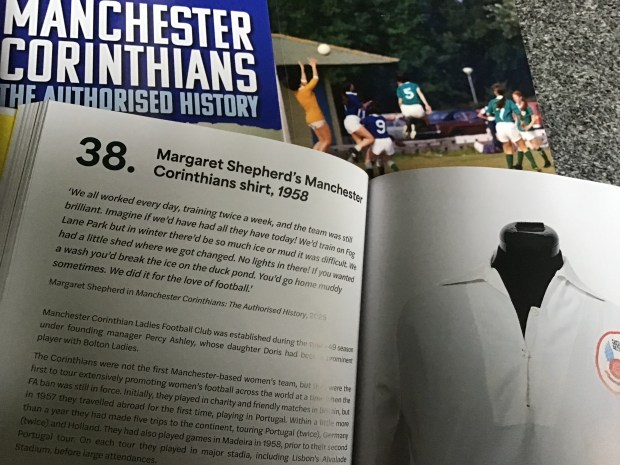
I’m delighted to say that in addition to Manchester Corinthians: The Authorised History (published at the start of the year, see below) and Histories of Women’s Football in Britain and Ireland (published last month) I’ve written a feature for another book which mentions the Corinthians. The book tells the story of football (focusing on England) in 100 objects. I’ve written a few of the features for this National Football Museum book (alongside Marek, Alex & Wiebke from the museum) and one of these is on Margaret Shepherd’s Corinthians shirt. The shirt is currently on display at the museum too.
This feature, together with mentions by myself and others in the Histories book and the Authorised History, helps spread the word about these remarkable women.
Some of you are aware of my obsession to document and promote the history of women’s football in Manchester over the last decade, but for those uncertain I’d like to post a few links and bits of information here on the remarkable stories of the Manchester Corinthians who, before the men’s teams of City & United, found international success.
Some of the Friends of Fog Lane Park at the last meeting before the Corinthians plaque unveiling
Dorothy Alcock, Manchester Corinthian from formation in 1949
Margaret Whitworth with the Manchester Corinthians blue plaque
Washing in the duck pond, Manchester Corinthians by Artist Gavin Renshaw
Some of the trophies won by the Manchester Corinthians
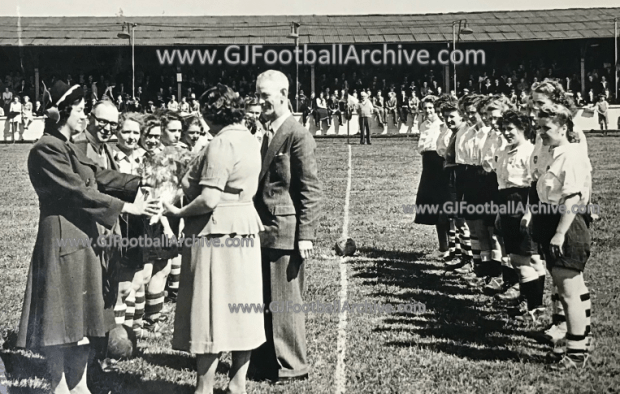
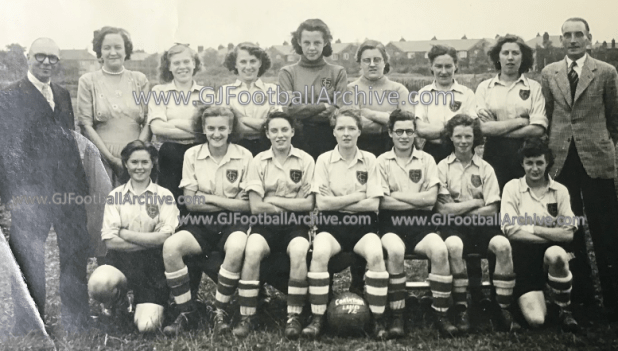
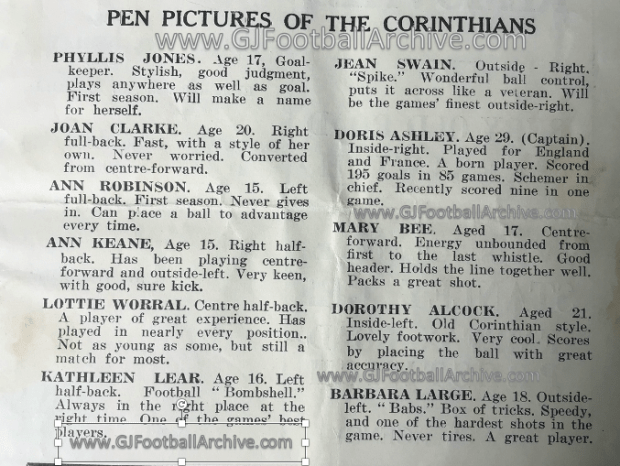
Over the last decade I’ve been interviewing women who played football in Manchester, or for Manchester based teams, during the 1940s to modern years. This includes Maureen Charlton, Dorothy Allcock and Flo Cloake (who played in the 1940s & 50s) and players like Steph Houghton, Karen Bardsley and Jill Scott (who of course played in more recent times). For me the stories of all are inspiring but it is those who played for the Corinthians that I’m most keen to promote at the moment. These women played prominent roles in football’s development and some are still contributing significantly today.
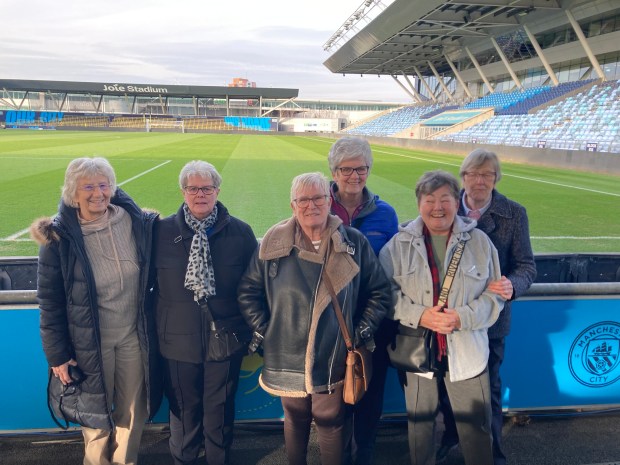
In 2021 the blue plaque appeal was launched to recognise the Corinthians and elsewhere on my site you can read about the success of that and the unveiling in 2023. In addition in December 2024 I staged a reunion where over 90 attended (most Corinthians with some in their 90s). You can watch scenes from that here:
I gave a speech explaining why the Corinthians matter that day:
There were some wonderful words from Margaret Shepherd which I am truly grateful for. Margaret has been one of the key figures promoting the club’s endeavours and she certainly inspired me during my research:
We’ve also inspired Imprint Films to put together this 18 minute overview of the Corinthians’ story, including interviews with some of the players:
Of course there is the book too and I’m absolutely delighted with this from Matt Williams, a longlist judge for the William Hill Sports Book of the Year 2025 award. He has posted the following video about the Manchester Corinthians book as his ‘What are we reading this week?’ post on social media. It really does please me and demonstrates why I’ve been so keen to get the Corinthians story out there. The book hasn’t won any prize but the comments mean a lot to me.
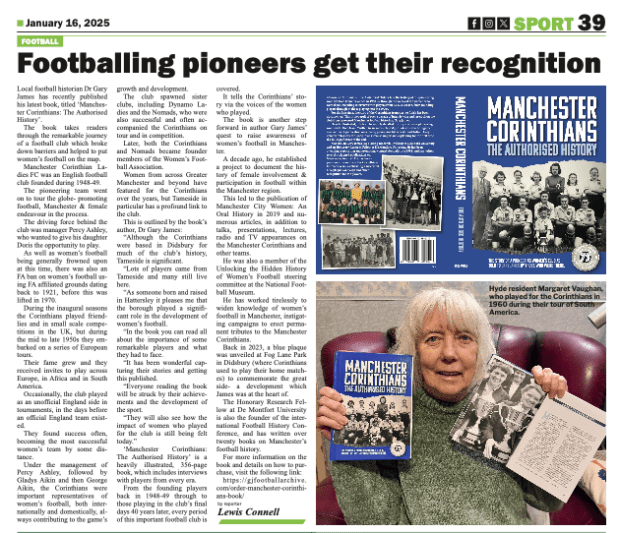
For those interested Manchester Corinthians: The Authorised History is a must for anyone interested in Manchester or women’s football and consists of 356 pages. Getting it into Manchester bookshops, particularly Waterstones, is proving difficult so if there’s anyone reading this who can help please get in touch. We can organise events if that helps?
Thanks to everyone who has helped so far to promote the Corinthians and their stories. We still need to bang the drum so please do all you can to spread the word on this remarkable team. If you need more info then there’s lots on this website, just search Corinthians. There’s also the books of course….
The Authorised History is illustrated throughout and you can order it now for £25 (including UK postage and packaging). I’ll sign all copies ordered direct from me below.
If you live outside the UK then please contact for details of additional postage costs.
You do not need to have a PayPal account to order – use the ‘Pay with PayPal’ button above and it will give you the option to pay by credit/debit card without creating a PayPal account.
UK ONLY – Manchester Corinthians: The Authorised History
The story of a pioneering women’s club as told to Gary James by those who were there. This will be published in late December 2024. This is UK only at £25 (incl UK postage and packaging). Outside UK contact for additional postage costs.
This map shows the Maine Road area, where Manchester City’s former ground was, before any of the terraced housing was built. The dark blue shape I’ve placed on the map is approximately where the stadium was built. Maine Road was initially known as Dog Kennel Lane and was renamed in stages as terraced housing was built on it. The lane originally had a bend where the current Maine Road ends and the old lane veered off towards modern day Princess Parkway.
I explain a lot more about this in Farewell To Maine Road and in the Big Book of City. In the MCFC match programme a few years back I explained:
Maine Road itself was a relatively insignificant street in 1923, but in the previous century the road had the name ‘Dog Kennel Lane’ and it had for many decades been a fairly significant but meandering route south of the city. The street was renamed in stages when the area was developed during the late 1800s. For years the reason Maine Road was picked was not clear, but in 2009 I discovered the truth.
The Maine Road name came indirectly from the US State of Maine but this was a compromise. The following newspaper article explains: ‘Dog Kennel Lane took its name from the kennel where hounds were kept. It stood on the right-hand side at the bend about a thousand yards from Moss Lane, opposite to the road which tracked off to the left and led to Demesne Farm. The common name of this lane is so common and unattractive that when the Temperance Company bought the Trafford land they asked the local board to change the name to Demesne Road, and the subject was compromised by calling it Maine Road out of compliment to the Temperance principles of the petitioners.’
The idea of the Temperance movement was to discourage people from drinking alcohol. On 2 June 1851 the State of Maine passed the first recognised prohibition law, and two years later the United Kingdom Alliance was founded in Manchester, pledging to badger Parliament to outlaw liquor in England.
The ‘Temperance Company’ mentioned in the article was actually part of the movement and had bought some land at the top of Dog Kennel Lane – this area is close to the junction with Moss Lane East. They wanted to create a better standard of living and within that area they erected buildings in keeping with their approach to life, such as the Temperance Billiard Hall. However, the ‘Dog Kennel Lane’ name was clearly an issue and so the selection of the name ‘Maine Road’ was made. So the name Maine Road refers to the US State and the part that Maine played in the Temperance movement.
An early 20th century interpretation of an older map, showing modern streets (dotted) with the original roads.
If you’d like to read more on the history of Maine Road, take a look at Farewell To Maine Road, which can be downloaded from this page:
If you enjoy all the free material on my website and would like to support my research and keep this website going (but don’t want to subscribe) then why not make a one-time donation (or buy me a coffee). All support for my research is valued and welcome. It allows me to keep some free material available for all. Thanks.
It’s hard to believe but today marks two years since an amazing day when Manchester came together, along with a wonderful community of former footballers, to recognise the pioneering women’s team the Manchester Corinthians. It was an incredible day made possible with the support of so many individuals, groups and community leaders. So often we highlight issues, problems or moments where communities separate or fail but the long running campaign to bring recognition to the Corinthians has seen so many come together for something extremely positive.
Personally, I was touched by the support received for this campaign I’d established several years ago. The plaque unveiling was the biggest visible sign that it was succeeding with huge TV audiences tuning in. One news broadcast alone featuring the Corinthians’ plaque unveiling had 2.7 million live viewers. Add to that downloads and all the news features experienced on TV and radio that day and the number rockets significantly. There were also newspaper articles and more.
The aim, back in 2019 when I first raised the idea of erecting permanent tributes publicly in an article I wrote, had been to bring recognition and wider public awareness to the exploits of these remarkable footballers. The media coverage certainly did that and also other Corinthians came forward who had seen the coverage.
I’d particularly like to pay tribute to Jam Williams-Thomas from ITV Granada who promised me he’d ensure Granada Reports would have a camera crew there many, many months before the exact date had been finalised. That support was vital. In the end David Chisnall came from Granada Reports and did a wonderful feature on the plaque and recognising the Corinthians. Thanks to you, Jam and all at Granada Reports. It really helped (there are links to some of the TV coverage at the bottom of this article).
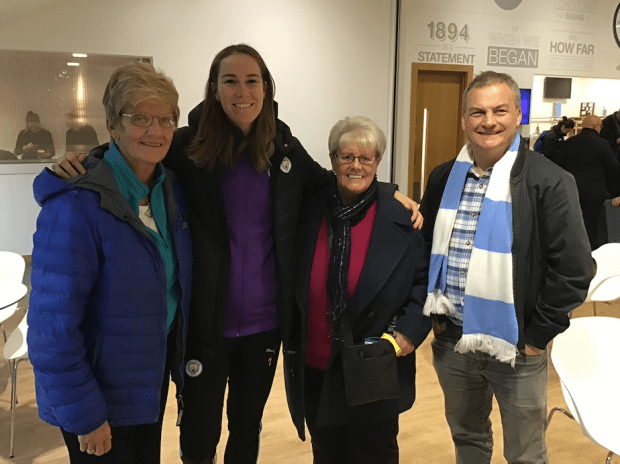
2019 was the year when the campaign received a lot of support. Back then I contacted many key Manchester and national institutions with the concept. Manchester City FC immediately supported the idea and that year several Corinthians, plus myself, were invited to City to attend a WSL game, where they met England international Karen Bardsley and England women manager Phil Neville. The Blues also included features in their match programme and on their website on the history of the Corinthians.
Margaret Whitworth, Karen Bardsley, Margaret Shepherd & Gary James. Several Corinthians were guests of Manchester City for a WSL game.
They’ve continued to support and promote the Corinthians’ story ever since. I don’t know how many millions read their website today but again, like the national news coverage, this level of readership is significant. I’m not daft enough to think everyone reading the stories or watching the news will want to know more about the Corinthians, but if just 1% do then that in itself is an incredible number of people who previously may not have known or understood how the Corinthians toured the globe promoting Manchester, football and female endeavour.
Simon Mullock at the Sunday Mirror helped with an excellent feature too back in the early days. That support from a national tabloid was so important in widening the news and soon, in general conversation, people were mentioning the Corinthians and their achievements. I loved that! We were getting somewhere and Simon, together with later features by renowned journalists focusing on women’s football in other newspapers, was a big part of that.
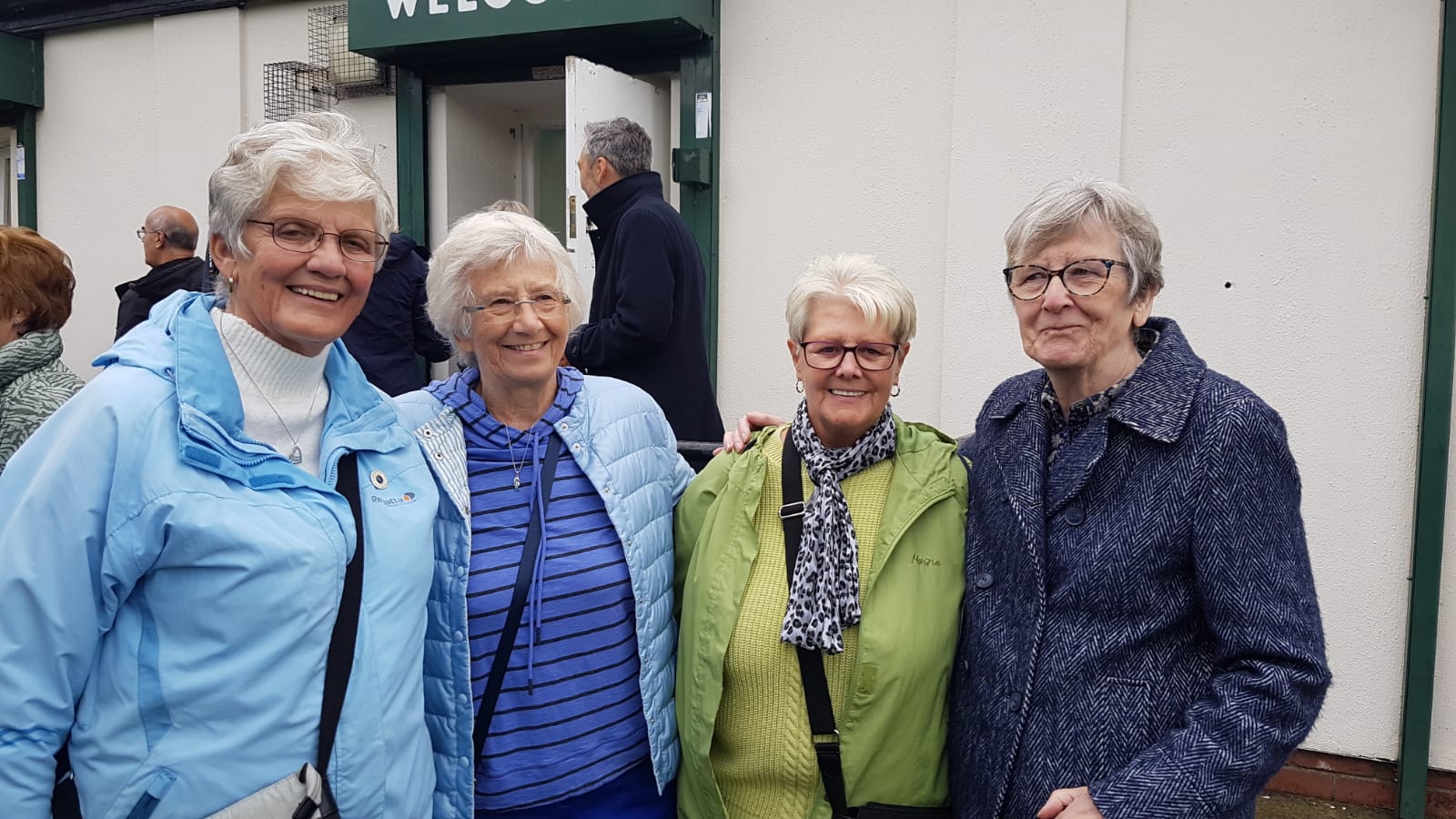
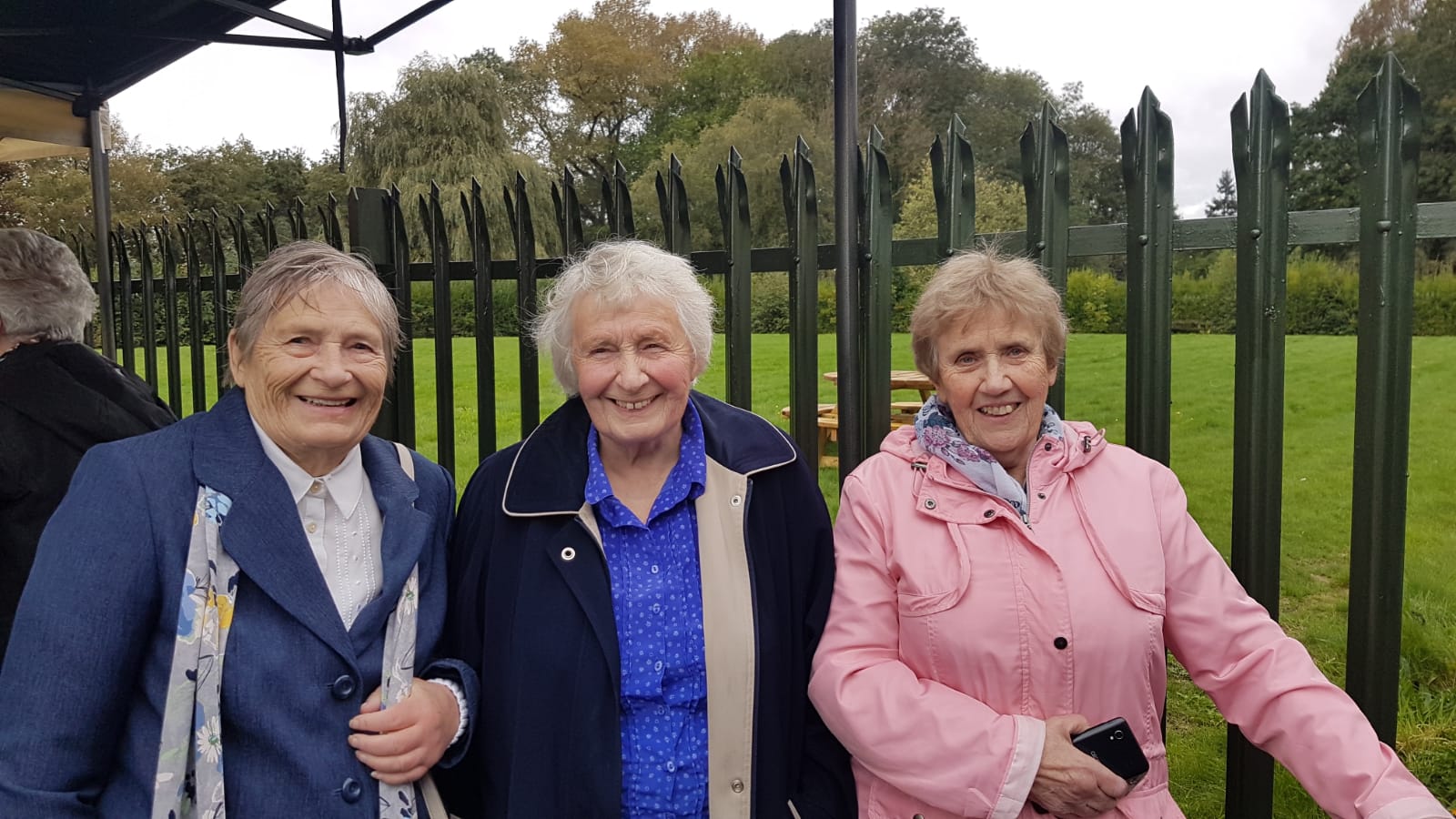
Another major supporter since the start has been the Manchester FA’s Colin Bridgford. Again in 2019 we met up to talk about what we could do to promote the Corinthians’ story and I wrote several articles for the Manchester FA’s website. That support was important and helped raise the profile of what we were trying to achieve. We also arranged a meeting with Manchester FA staff and several of the Corinthians, including Margaret Whitworth, Margaret Shepherd and Jan Lyons – three of the Corinthian stalwarts who have worked tirelessly to rightly highlight the story of their team. Plans were put in place to do other activities with the Manchester FA but sadly Covid hit and plans had to be abandoned. Colin and his team did, of course, support the plaque unveiling last October.
The FA have helped too. In fact they have not only helped promote the story but also provided significant funding to ensure permanent tributes could be made. My connection with Rachel Pavlou at The FA came via Caterina Loriggio. Cat led a major project in partnership with the Women’s Euros the other year and I acted as the Heritage Lead for Trafford Council. Via the UEFA & FA project a series of activities were established in each host city/borough and the Corinthians inevitably became part of that. I performed interviews with several Corinthians (borrowing some of their trophies and kit too for an exhibition) in Trafford and others were interviewed at Wigan & Leigh. These were filmed and are still available here:
When I discussed the idea of erecting permanent tributes with Rachel she immediately offered funds and other support to ensure the Corinthians were recognised. The FA and Cat also approved the wording for the plaque. For me this had to recognise all the Corinthians, not one person or individual moments (I knew we could pay appropriate tribute to all of that via the book I’ve been working on for several years, which will be published this summer).
The FA were not the only ones to get involved of course as the campaign brought together a wide range of people… as with every project like this there are many, unsung heroes who work tirelessly without seeking or receiving financial reward. In that category are the Friends of Fog Lane Park. They deserve immense praise, especially Pamela & Alice and the others who attended various meetings along the way and performed many tasks that made the unveiling day such a success.
Some of the Friends of Fog Lane Park at the last meeting before the Corinthians plaque unveiling
I’d been introduced to the Friends by Manchester City Council and MCRActive, in particular Paul Hulme. Jan Lyons and I had met Paul at an early meeting we’d arranged. We’d hoped there would be support from the Council and sure enough Paul was interested, particularly when Jan told some of the Corinthians’ story. Her words and experiences brought it all to life and demonstrated perfectly why we needed to get this story out there. Paul immediately set up a meeting with the Friends of Fog Lane Park and other council officials and employees.
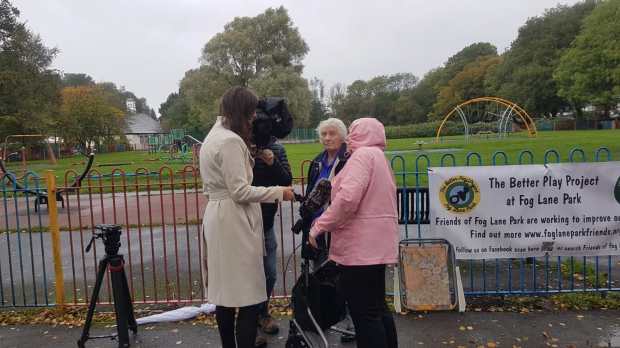
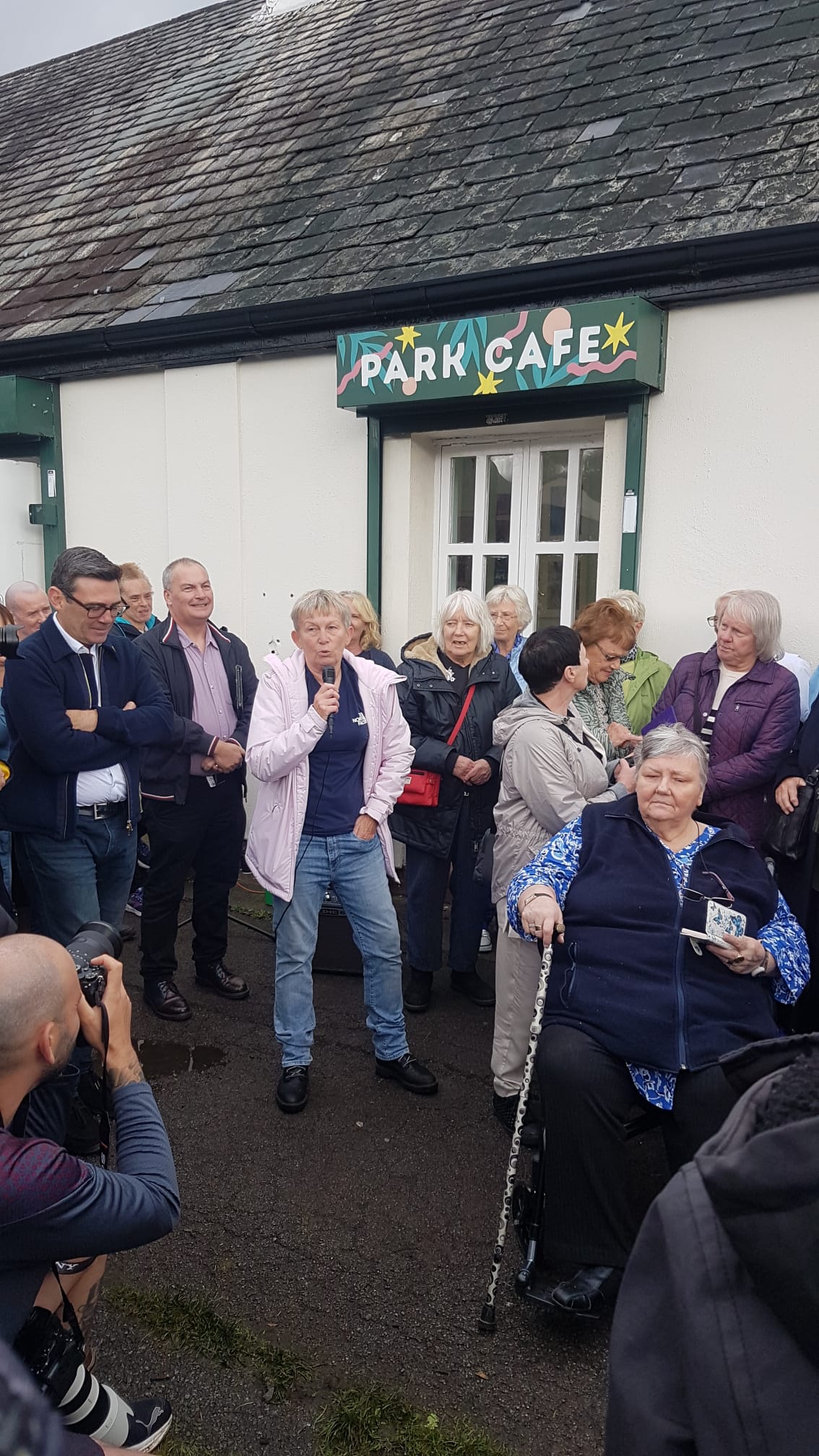
At that meeting in the Fog Lane Park Café me, Margaret Whitworth, Margaret Shepherd and Jan Lyons, explained about the Corinthians with the former players telling their stories while the Friends were enthralled. I put it all into context in terms of the wider football and Manchester stories, then explained about the attempts to raise public awareness and how we wanted to get a Blue Plaque erected. We agreed that the Blue Plaque appeal would be established in the name of the Friends of Fog Lane Park – they had a dedicated committee of passionate individuals and the opportunity to publicly recognise the Corinthians in the park that had been their home for over two decades was wonderful.
One of the Friends of Fog Lane Park meetings where we discussed the erecting of permanent tributes, 20 May 2022
Those who donated to the appeal to erect permanent tributes to the Corinthians were: Pam Barnes, Dan Mooney, Adam Turgoose, ‘Ben’, ‘Jean J’, Jonathan Kaye, Megan Riley, Helena Byrne, Dawn Burrows, Clare Wilkins, Linda Foley, Debbie Enever, John Carrier, Jacqui McAssey, Michael Cottam, Karen Phanco, David Hoyle, Daniel Rubin, Heidi James, Gary James and the Dick, Kerr Ladies Foundation. There were a couple of anonymous donations too. It was gratifying that many of those listed were not from Manchester but were connected with women’s football in other parts of the world. That was wonderful to see. It was also fantastic that via Gail Newsham the Dick, Kerr Ladies Foundation supported the campaign with a significant donation too, proving what a great community of women’s football enthusiasts and researchers we have.
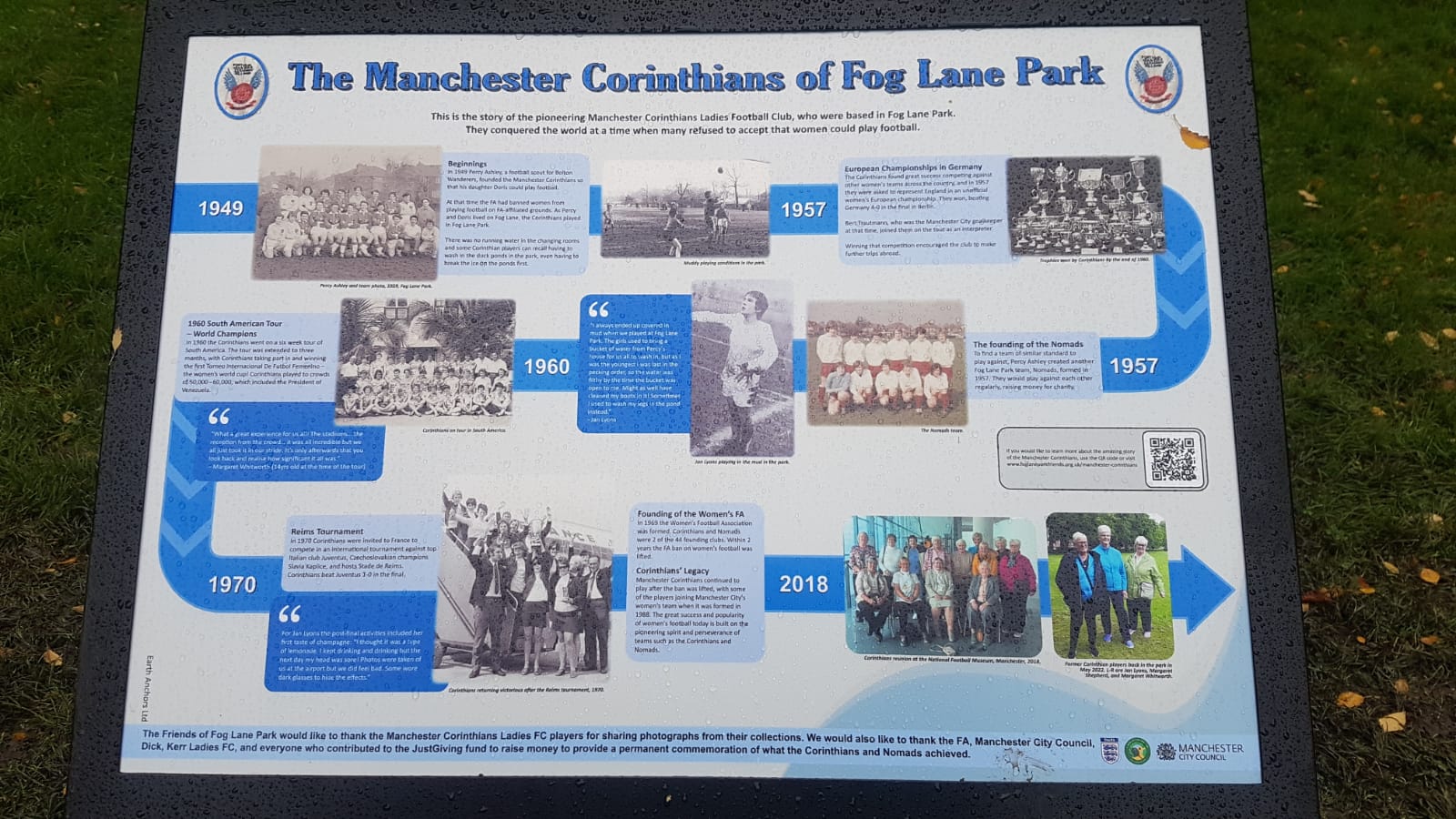
The Friends of Fog Lane Park managed to get matching funds from Manchester City Council too and the Friends had some wonderful ideas to really improve the park and tributes further. As well as the hoped for plaque and a lectern providing a Corinthians’ timeline, the Friends organised for some of the funds raised via the appeal and The FA to be spent on two impressive murals painted by artist Gavin Renshaw and for a handout to be produced for park visitors on the Corinthians. Now everybody who visits the park gets to see wonderful artwork (on a former graffiti covered building), the plaque, a lectern, an information board inside the café and the leaflet. All of this is helping get the story out there again and, for those young girls and boys kicking a ball around the park, is inspiring.
In the weeks building up to the unveiling day the Friends spent considerable time and effort tidying up the park, arranging some of the logistics, erecting the plaque itself, overseeing the mural work, organising sandwiches, baking cakes and more. It was a real community effort and all deserve thanking again.
Various media companies helped promote the plaque appeal with myself, Friends of Fog Lane Park, Margaret Whitworth, Margaret Shepherd, Jan Lyons and other Corinthians being interviewed on a fairly regular basis. Contacts I had with various stations helped enormously (you know who you are – thanks for your support) and brought airtime we couldn’t have managed with cold calls.
When it came to the plaque itself another who helped was Mark Metcalf. Mark had instigated footballing plaques at various locations and I’d been fortunate to be involved with a couple. Mark provided contacts with plaque manufacturers and helped ensure we got a decent price too.
There was also a wonderful night in Hebden Bridge in December 2021 where several Corinthians were interviewed publicly and I gave a talk on the history of women’s football. At the end of that event I announced publicly for the first time the campaign to erect a blue plaque and that brought significant interest from the people of West Yorkshire. Local businessman Geoff Matthews had funded the talk and event and that support was wonderful too.
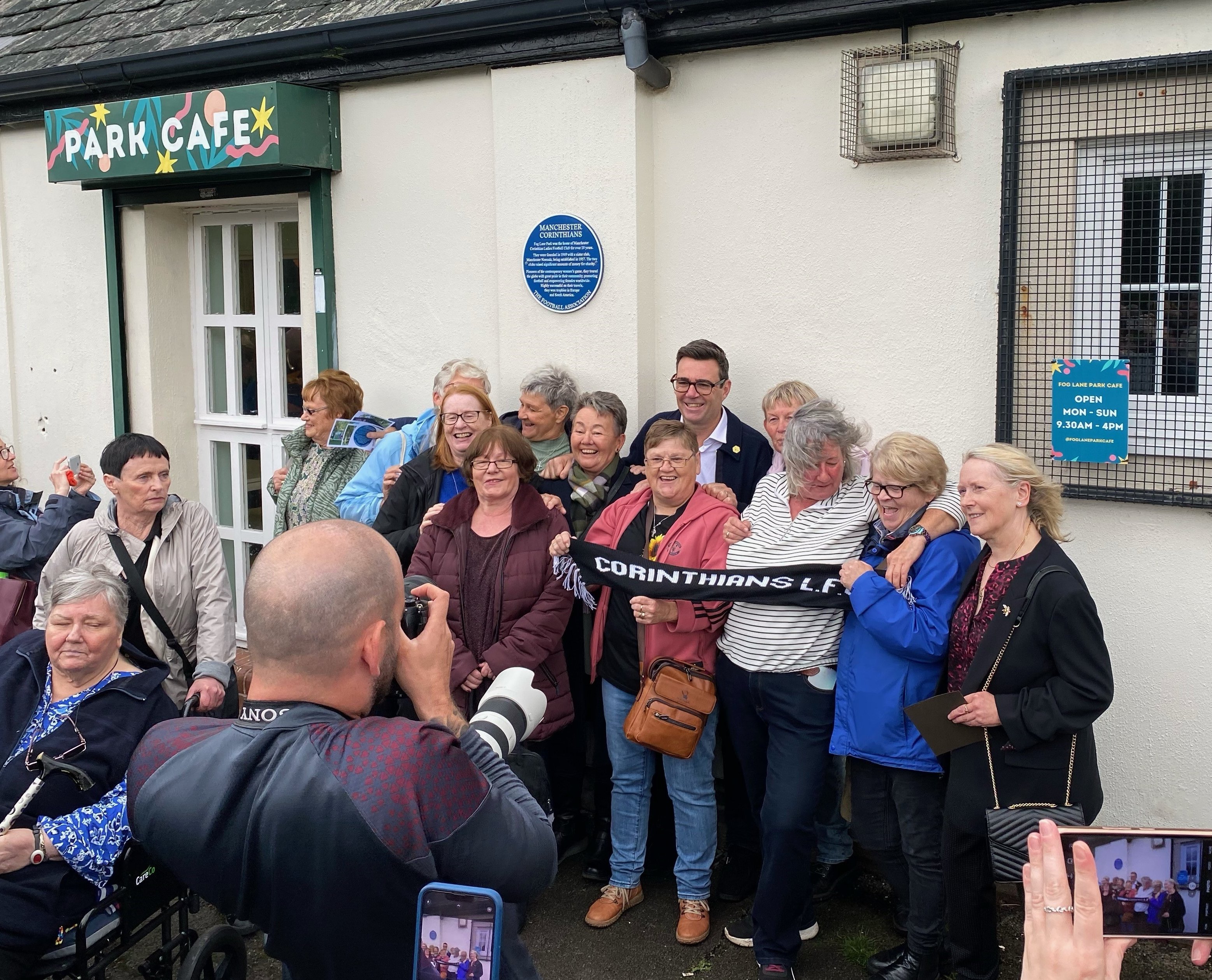
The plaque unveiling was supported on the day by Greater Manchester Mayor Andy Burnham, who spoke about the Corinthians as the suffragettes of football, and former England international Kerry Davis. She had actually played against many of the Corinthians in attendance that day too. Hundreds of people attended with strong support from fans of women’s football, including several key members of the Manchester City Women Supporters Club. Former City player Stacey Copeland was a key supporter that day (as she has been at other events, including the one at Hebden Bridge) and she has made efforts herself to promote the story and help the Corinthians frequently.
It really was quite remarkable the amount of interest demonstrated that day and how the story of the Corinthians has continued to receive attention.
I know this has been a lengthy piece but I think it’s both necessary and valuable to remember what a remarkable day the plaque unveiling was and to remember all those who contributed along the way. All of those involved, especially the Friends of Fog Lane Park, put considerable effort into that day and they quite rightly stood back to ensure the Corinthians’ achievements were recognised first and foremost. That day – and in the months leading up to it – a great community came together to ensure the Corinthians were thanked for all they had done for football and Manchester and the media support ensured that story was spread loud and clear.
I am really pleased and proud with the way it developed and how such a huge community has helped along the way.
The plaque unveiling and the campaign leading up to it has been included within the Authorised History I have written. The book details every season of the Corinthians, plus their legacy, and pays tribute to these remarkable players, their managers, coaches and supporting family and friends. Community again, working together. Over 50 Corinthians covering every single season from 1940s through to the club’s demise have been interviewed, while archives have been researched extensively to correct myths and add facts to the memories of those who were there.
Over the last decade contemporary articles and film of the Corinthians has been found and I’ve written for a variety of footballing and non-footballing national, regional & local publications and websites. Some have inspired others and some have helped re-unite former players.
I think, out of everything that has been achieved over the last decade or so it’s the re-uniting of players that is most satisfying, along with the support of a wide community of organisations, volunteers, footballers and more. Thanks. The reunion in December 2024 was a truly special event and brought together over 80 people from the Corinthians’ family at the Etihad.
Manchester Corinthians Reunion 2024
Manchester Corinthians: The Authorised History is available from Amazon and other online retailers or direct from me here:
Ian Scott signed professional forms for Manchester City on this day (24 September) in 1985. You can find several articles that mention Ian throughout this website. Start looking here:






















 Gary James' Football Archive