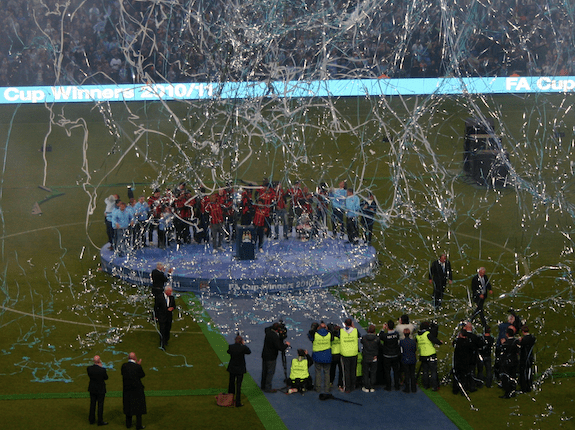
Following Manchester City’s victory in the League Cup last Sunday (April 25 2021) I’ve updated the table showing the span of success (above) – i.e. the number of years between a club’s first major success (FA Cup, League, League Cup, European trophy) and their most recent.
Despite the win City remain third behind Liverpool and Blackburn Rovers, though the gap with Blackburn is narrowing year on year at the moment.
Tottenham missed out on not only winning a major trophy last Sunday but also on leapfrogging City, Blackburn and Liverpool to take top spot! I doubt it would’ve made national headlines if they’d topped the span of success table though.
Okay, the span of success does not show how many trophies each club has won or how frequently that club has experienced great eras of success, but it does demonstrate how wrong those people are who believe certain clubs were unsuccessful until recent years, or those who think certain clubs have always been giants. The column on first major success helps to show when some first became significant (often after transformational investment).
While you’re here… You can now order my new book, Peter Barnes: The Authorised Biography, and get your name printed in it (if ordered before May 15 2021). All orders before May 15 will also have their copy signed by me & Peter Barnes. To order see:
Over the years several Manchester City fans have asked me about an old City song that I’ve played at various talks and events I’ve staged. The song, ‘Who Said City Couldn’t Play’, was based on a popular tune of the period and was sung by fans in the 1930s, possibly even the 1920s.
Here for subscribers is more information on the song and a recording of fans singing it back in the 1930s…
Want to read more like this?
If you would like to access everything on this site then please subscribe. I’m not employed by anyone and do not take advertising on this site, so every subscription directly helps my research and writing. It works out about £1.67 a month if you take out an annual subscription (£20 per year) or £3 a month if you’d like to sign up for a month at a time. Why not sign up for a month, see what’s here and then cancel if you don’t think it’s appropriate for you? Each subscriber gets full access to the 300+ articles posted so far. The entire Manchester A Football History is already live, so subscribers get all of that too!
St. George’s Day always marks the anniversary of Manchester City’s first FA Cup success. In fact the 1904 FA Cup win was the first major trophy success by any of the Manchester teams and has been recognised as the point when Manchester became a footballing city.
Subscribers to my site can read the following article highlighting the key people, moments and fan related material from that success:
Subscribe to get access
To read this and access the other in-depth articles please subscribe. It works out about £1.67 a month if you take out an annual subscription (£20 per year) or £3 a month if you’d like to sign up for a month at a time. Each subscriber gets full access to the 280+ articles posted so far and the hundreds scheduled to be posted in the coming weeks.
“Not a little of the success the City club has achieved is due to the indefatigable labours of the secretary, Mr T.E. Maley, who came to Manchester three years ago, when the City were in the Second Division. He brought to his duties valuable experience gained with the famous Celtic club, and he has had the benefit of being a player, a club official, a legislator, and a selector. His splendid services to the City are reflected in the position they at present occupy – the holders of the English Cup – the most coveted of football prizes, and one of the leading clubs in the League.”The Manchester Evening Chronicle, 12 November 1904
This season became Manchester’s first major trophy-winning season. It established the city’s trophy-winning heritage and it helped transform Manchester from a rugby playing city to a footballing one. Every Mancunian needs to know the story of this season. The following 10,000 word article tells the story of that season.
If you would like to read the full article and other pieces like this then please subscribe below. It works out about £1.67 a month if you take out an annual subscription (£20 per year) or £3 a month if you’d like to sign up for a month at a time. Each subscriber gets full access to the hundreds of articles posted so far and the hundreds scheduled to be posted in the coming months.
Subscribe to get access
Read more of this content when you subscribe today.
To commemorate the tenth anniversary of Manchester City’s FA Cup semi final victory over Manchester United at Wembley (April 16 2011) I’ve produced Restored 2011: The All-Manchester FA Cup Semi Final. This special 1 hour audio recording looks at the game and the years between the 1976 League Cup success and the FA Cup glory of 2011. The 2011 semi-final was a crucial step in City’s journey since the 2008 takeover and I felt it was vital to do a special marking this.
Following last night’s Champions League victory for City (May 4th – City beat PSG to reach the Champions League final) this will now be free to listen to until May 12th. After that date, as with audio recordings with John Bond, Malcolm Allison and George Graham (and hundreds of articles), it will only be available to subscribers to the site. So, if you don’t subscribe, have a listen now while you can.
So what’s in this special recording? Well, I’ve included exclusive material from interviews and recordings I’ve done over the years with Garry Cook, Brian Marwood, Roberto Mancini, Peter Barnes and Peter Swales. Why Swales? Well, have a listen and you’ll hear why. Basically though I’m trying to set the tone for why the 2011 FA Cup semi final victory and overcoming Manchester United was so significant.
On Mancini… I include a few words from him recorded in 2011 and at one point he talks about the view that was then being expressed that City were ‘trying’ to buy success (now they say City ‘have’ bought success!). His words are a reminder that City have been having that particular criticism thrown at them for over a decade! Oh well, I wonder how long those criticisms were laid at other clubs who had seen major investment which propelled them forward?
Anyway, get yourself a brew and be prepared to be transported back in time. Here’s the recording:
If you enjoy the recording then please let me know, comment or subscribe to the site. If it’s of interest then, over the coming months and years, I’ll produce others like this highlighting key points in Manchester City – and Manchester’s – footballing history. It costs £20 a year to subscribe (it works out £1.67 a month) or £3 if you’d like to sign up a month at a time to get full access for as long as you subscribe (you can always try it for a month). It’s worth bearing in mind that the 2010 Manchester A Football History cost £24.95 and all subscribers will be able to access all of that for as long as they are a subscriber (plus all the other stuff of course). You can subscribe below.
On this day (April 13) in 2014 Manchester City’s women’s team played its first competitive game after the relaunch. It was a FA Cup tie against Reading played at the Regional Athletics Arena.
Here for subscribers is a section of Manchester City Women: An Ora History discussing that opening game:
Subscribe to get access to this and entire site
Read this and have access to the rest of the site throughout your subscription. £20 per year (works out about £1.67 a week).
On this day (March 25) in 1939 Old Trafford attracted its highest ever attendance when 76,962 packed Manchester United’s ground to see Wolves defeat Grimsby 5-0 in the FA Cup semi-final.
At the time this was the third highest attendance ever attracted in Manchester (behind 84,569 MCFC v Stoke, 1934 & 79,491 MCFC v Arsenal, 1935; fourth highest was 76,166 MCFC v Cardiff, 1924) and today it is the eighth highest.
You can view film of the semi-final here. Well worth watching to see Old Trafford at that time. The Old Trafford scenes begin after about 48 seconds:
There were lots of crowd safety issues at this game – these were the days when fans were packed in without the authorities really considering the potential for disaster or injury (which happened frequently).
Incidentally, Dorsett (seen below after a collision) was related to two of Manchester City’s early heroes Joe and George Dorsett.
You can read about the 84,569 record attendance set in 1934 for Manchester here:
I’d like to thank you for taking the time and trouble to visit my website. I set up this website in December 2020 to help share my 32 years plus writing and research. The intention is to develop the archive and to provide access to as much of my material as possible over the coming weeks, months & years. Annual subscribers can access everything on here including the entire Manchester A Football History book and audio interviews with former City bosses Malcolm Allison and John Bond.
It costs £20 a year (it works out £1.67 a month) or £3 if you’d like to sign up a month at a time to get full access for as long as you subscribe (see below). Thanks for the support, Gary.
It costs £3 if you’d like to sign up a month at a time to get full access to everything posted since 1 October 2022 and for as long as you subscribe (see below). Thanks for the support, Gary.
On this day (17th March) in 1956 a solitary goal from Bobby Johnstone was enough to see Manchester City beat Spurs in the FA Cup semi-final at Villa Park. The game led to considerable abuse for City’s German ‘keeper Bert Trautmann. To understand why read the story of the semi-final here (for subscribers):
Subscribe to get access
Read more of this content when you subscribe today.
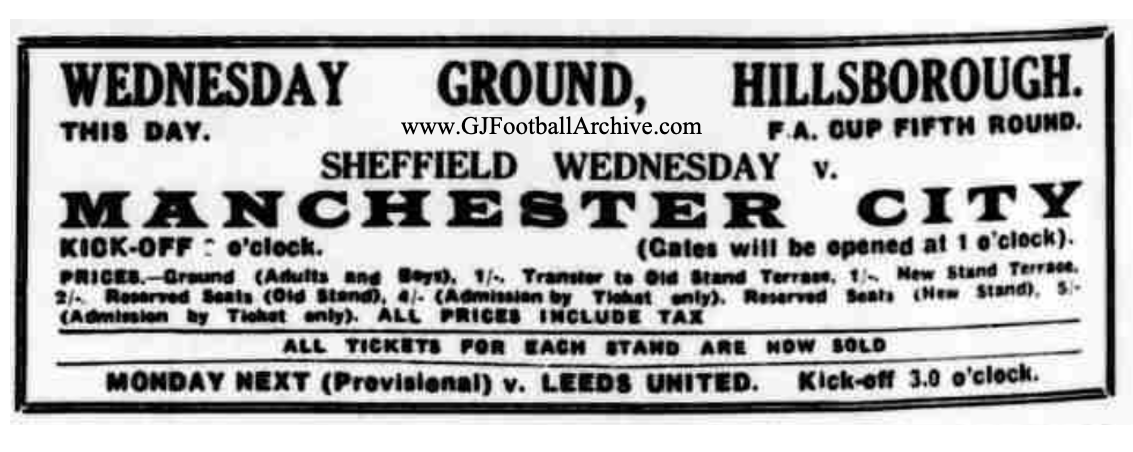
On this day (7th March) in 1993 Manchester City faced Tottenham in the FA Cup Quarter-Final at Maine Road. It was a day that saw the media express shock at the behaviour of City’s fans when they invaded the pitch during the tie with Spurs. They condemned the supporters without understanding the background story. To put the record straight it’s vital the day’s events are covered correctly. Here for subscribers is the full story of that game, including quotes from Niall Quinn and Peter Swales (from my interviews with them in the years since that day…
Subscribe to get access
If you would like to read this and all the in-depth articles on this site (including the entire Manchester A Football History book and the audio interview with John Bond) then please subscribe. It works out about £1.67 a month if you take out an annual subscription (£20 per year) or £3 a month if you’d like to sign up for a month at a time. Each subscriber gets full access to the 260+ articles posted so far and the hundreds scheduled to be posted in the coming weeks.
“I think Brook played in every position for the Club – he certainly went in nets once – and was a very good player. When the goal went in it was marvellous. Nirvana. On the final whistle I didn’t need to use my feet to leave I was wedged in a solid wall of human flesh and swept through the exit gate like a surfboarder.” Supporter Denis Houlston talking in 2003 about Eric Brook’s goal in the 1934 FA Cup tie with Stoke which was watched by 84,569.
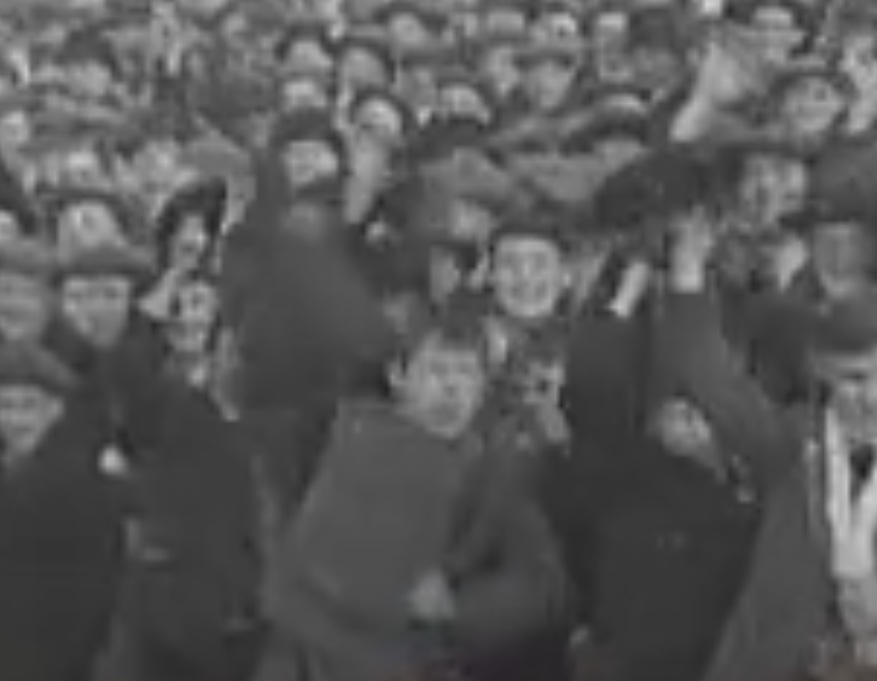
It has virtually slipped out of living memory but in 1934 the largest footballing crowd ever assembled on a club ground witnessed a game that still, almost 90 years later, remains etched in the record books. 84,569 paid to watch City face Stoke in the FA Cup quarter-final at Maine Road in March 1934 – a crowd that surpassed Manchester’s previous best (also a national record at the time) by around 8,000 (set in 1924 when Cardiff faced City in another FA Cup quarter-final). Here for subscribers is a long read on the day when 84,569 gathered for a football match in Manchester:
Subscribe to get access
If you would like to read this and all the in-depth articles on this site (including the entire Manchester A Football History book and the audio interview with John Bond) then please subscribe. It works out about £1.67 a month if you take out an annual subscription (£20 per year) or £3 a month if you’d like to sign up for a month at a time. Each subscriber gets full access to the 260+ articles posted so far and the hundreds scheduled to be posted in the coming weeks.