Book Launch at the Embassy of Ireland

Last Monday was a special night when a book I’ve co-edited with Fiona Skillen and Helena Byrne was launched at the Embassy of Ireland in London. We were absolutely delighted with the evening and support we received from the Embassy. I’ve been fortunate to have my books launched in some pretty spectacular venues over the years, this was the first time any of my books have been launched at an embassy. In fact, it’s the first time I can recall ever being in an embassy.
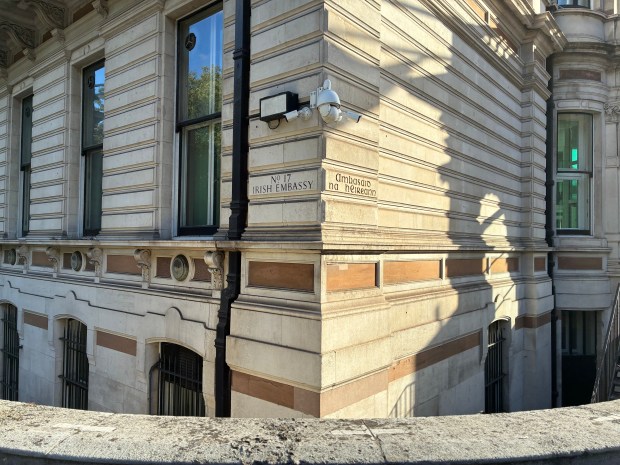
The book we launched was ‘Histories of Women’s Football in Britain and Ireland’ and the launch was attended by academics, researchers, historians, practitioners, international footballers and many others who have helped us along the way. The whole event was hosted by the Embassy and we were delighted that Orla McBreen, the Deputy Head of Mission, was so interested in the book. Both Orla and the rest of the Embassy team, made us feel so welcome and Orla introduced us with a nice speech too. Thanks for that.

Orla said: ‘The book turns our attention to an area of history that has too often been overlooked. By tracing both regional and national developments, and by spotlighting the work of historians, heritage practitioners, artists, and documentary makers, this volume shows how academic research can travel beyond archives into public spaces, shaping attitudes, inspiring communities, and ensuring that the struggles and achievements of women in football are preserved.’

After Orla’s speech came a panel discussion between myself, Fiona and Helena and then we opened up the discussion to questions from the audience. Over 100 people attended and the whole event was a great success. It was wonderful to see so many former players and administrators there and to have key representatives from organisations such as the Irish FA (Northern Ireland) and the FA, as well as officials from the Embassy of Ireland of course.

I’d like to say special thanks to Helena Byrne who, on behalf of all the authors and editors, put so much effort into making this launch happen at the Embassy. I’d also like to thank everybody at the Embassy for their efforts and support. It really is appreciated and was a special night.

The book is the culmination of several years work and includes the following chapters (author names in brackets after each chapter):

Setting the Scene: The Origins Story of Women’s Football in Scotland (Richard McBrearty)

The First Tour of Women’s Association Football – 1881 (Stuart Gibbs) 

Women’s Football in Wales, 1890–1950 (Craig Owen Jones) 

‘Testimonial to Mrs Walter Scott’: A Brief History of Diana Scott (Alexander Jackson)

Excommunicating the Women’s Game: The English FA’s 1921 Ban Revisited (Dilwyn Porter) 

The Media Framing of Women’s Football in Wales During the English FA’s 1921–1970 Ban (Beth G. Clarkson, Keith D. Parry, Rafaelle Nicholson and Alice Hunter)

‘Proving themselves no mean experts at the game’: Women’s Football in Scotland, 1914–1921 (Fiona Skillen) 

The Development of Women’s Football in Trafford (Gary James)

A Hollow Victory: Exploring the Limited Impact of the Removal of Formal Restrictions on Women’s Football in Scotland on the Development of the Women’s Game in the 1970s and 1980s (Karen Fraser)

Surviving or Thriving? Women’s Football in 1970s Northern Ireland (Conor Heffernan) 

The Development of Women’s Soccer in Dublin (Conor Curran) 

The Trailblazers – Organised Women’s Football in the Interwar Period (Helge Faller)

The Dick, Kerr Ladies from Paris and Sydney: Globalisation the Image and Influence of British Women’s Football Overseas (Keith Rathbone) 

Game Changer: Looking Back on the First UEFA Competition for Women (Helena Byrne) 

Winning Working Women – the Story of Sweet F.A. (Paul Beeson)

The Representation of Women Within the Scottish Football Museum (Demi Boyd) 

UEFA Women’s EURO 2022 Heritage Programme: A Case Study (Caterina Loriggio) 

From Pitch to Screen – PurpleTV’s Documentary Films on Women in Scottish Football (Margot McCuaig) 

The publishing blurb says: ‘This book brings together a range of researchers to explore the growth and development of the women’s game in Britain and Ireland. They are active across a diverse range of fields, from historians and heritage practitioners, to those from the arts such as playwrights and documentary directors. This edited collection draws together both regional and national studies to provide a more nuanced understanding of the history of the women’s game in Britain and Ireland than has been possible before. Chapters in this book explore new findings around the development of key teams, players, and organisations, and in doing so enrich the historiography of the game.


‘Often books on the history of football have taken a narrative approach focusing only on the research findings or ‘story’. This is of course important, but in this book the editors also wanted to reflect the ways in which research into the history of women’s football has been shared and explored within a range of spaces and communities. There is a huge untapped audience who want to engage with the history of the sport. By reflecting on previous arts/heritage-based projects we can explore new avenues regarding how academic research can be made accessible to the general public and in turn how arts/ heritage-based projects can inform academic research.’

The book has been published by academic publisher Peter Lang and is, inevitably, priced accordingly. If you’d like to read the book then I’d encourage you to ask your local library or archive to stock a copy. Thanks

Ten Years On

Ten years ago this month I was awarded my PhD. It’s been a remarkable decade since. there were two areas I wanted to make significant progress in during the time that followed. One was the establishment of an annual conference where those researching the history of football (of all codes) could meet and share ideas in a positive and supportive environment. the other was to perform detailed research into the history of women’s football in Manchester.

Both aims have been met with the establishment of the International Football History Conference and the setting up of a self funded project into women’s football. The next football conference is in Belfast next month and the women’s football history project has seen two books, a booklet, a chapter and lots of articles published.

I’ll be posting features on both soon. Thanks to all who have helped with these initiatives.

Frank Swift’s Birth

On this day in 1913: Frank Swift was born. Here for subscribers is a detailed article I wrote on Swift a few years back:

Swift, Frank Victor (1913-1958), footballer and journalist was born in Blackpool, Lancashire on 26 December 1913, the second son of five children.  From his earliest memories, he was always obsessed with the game of football, playing at every opportunity with his brothers, one of whom, Fred, became first team goalkeeper for a variety of clubs, most notably Blackpool, Oldham Athletic and Bolton Wanderers.

Subscribe to get access

Read more of this content when you subscribe today. It’s £20 for an annual subscription or £3 per month (cancel anytime, see below).

Oxford Dictionary of National Biography

I’m delighted to say that my latest biographical piece for the Oxford Dictionary of National Biography has been published. It’s on the life of Tommy Docherty, the former Preston & Scotland footballer and manager with a whole host of clubs including Manchester United of course. Details of all the people featured by the dictionary this year can be viewed here:

https://www.oxforddnb.com/newsitem/811/whats-new-april-2024

I’ve written several articles for the dictionary in recent years, including biographical pieces on footballers Jimmy Armfield, Ray Wilkins and Frank Swift. It’s a prestigious publication, recording the achievements of the nation’s most important figures. Anyone included within the book has achieved something remarkable, or perceived as an iconic figure in some way.

Hopefully, in the future I’ll be able to contribute biographical pieces on other important figures. Various panels decide who is to be included but I would be interested to know who you think should be covered in future editions. The important aspect to remember is that these figures must now be deceased and have contributed something remarkable or iconic. Those who died in 2021 or the years that have followed will be eligible to be considered for future editions. Sadly, I won’t decide but I have previously been asked my thoughts and have provided names.

Documenting the History of Women’s Football

There are some excellent books on women’s football out there but we still need more. There are many long forgotten clubs who deserve to be remembered and it’s up to those of us who research football history to ensure they are remembered, with their efforts properly recorded. There are people like Gail Newsham and her decades’ (many decades) worth of research into Dick, Kerr Ladies, that have helped us understand some of the achievements of women’s clubs over the years. Gail has been researching because it matters to her personally – it’s something I totally understand. Those of us who focus on our clubs or on teams from our towns or on people we’ve known over the decades, tend to research because it’s our passion. It matters to us personally – and it’s often clear when people jump on a bandwagon and mistakenly think there’s money to be made or it’ll give them some form of reflected glory.

For myself, I’ve been researching and writing about football in Manchester throughout my adult life. In my first book, published when I was 21 (but started when I was 19), I managed to include something on the newly formed Manchester City Ladies FC. I was at their first game (in fact I was a regular for the first 4 years of the club’s existence) and my girlfriend (now wife) played for them, scoring twice in the club’s first match. She’d previously played for another Manchester team and during this period we got to know several former Manchester Corinthians players.

The relaunch of Manchester City’s women’s team, 2014

Since that time in the 1980s I have been fortunate to meet so many fascinating former footballers – men and women – and have always been fascinated by their stories. I’ve also written lots of books and articles over the last 35 years or so, covering a variety of topics but predominantly focusing on the history of football in Manchester. Publishers have often tried to push me down particular pathways (or said there isn’t enough space for something I felt needed covering) and I understand that. Nevertheless, my motivation has always been to uncover the history of the region’s football clubs and to ensure it is recorded as accurately as possible – no matter how much space it takes. Facts not fiction, dispelling myths (and believe me there are a lot of myths out there!).

If you want to research a topic then do it. Don’t let anybody put you off.

In terms of women’s football in particular I’ve written dozens of articles for Sport in History, Soccer & Society, Manchester FA, Manchester Evening News, She Kicks, Trafford Council, When Saturday Comes, the FA, UEFA, Manchester City, Manchester United and many others, including various fanzines.

Research by Dr Gary James led to the history of Manchester United Ladies FC being documented as part of the UEFA Women’s EURO 2022 Arts and Heritage programme

There has also been Manchester City Women: An Oral History – the first detailed history of a WSL club. Many of these articles have been about the Manchester Corinthians and I have heard stories recently which talk about one of my articles on the Corinthians providing inspiration. That’s wonderful.

2024 will see the publication of two books I’ve been working on for several years. There’s a book for the publisher Peter Lang, co-edited with Fiona Skillen and Helena Byrne, on the history of women’s football in Britain and Ireland which includes contributions from several leading historians of women’s football. That will be an excellent historical analysis of women’s football.

Then there’s my labour of love – Manchester Corinthians: The Authorised History which I’ve self-funded. This will be of the same quality and size as my book on Manchester City Women and in many ways is a sort of prequel.

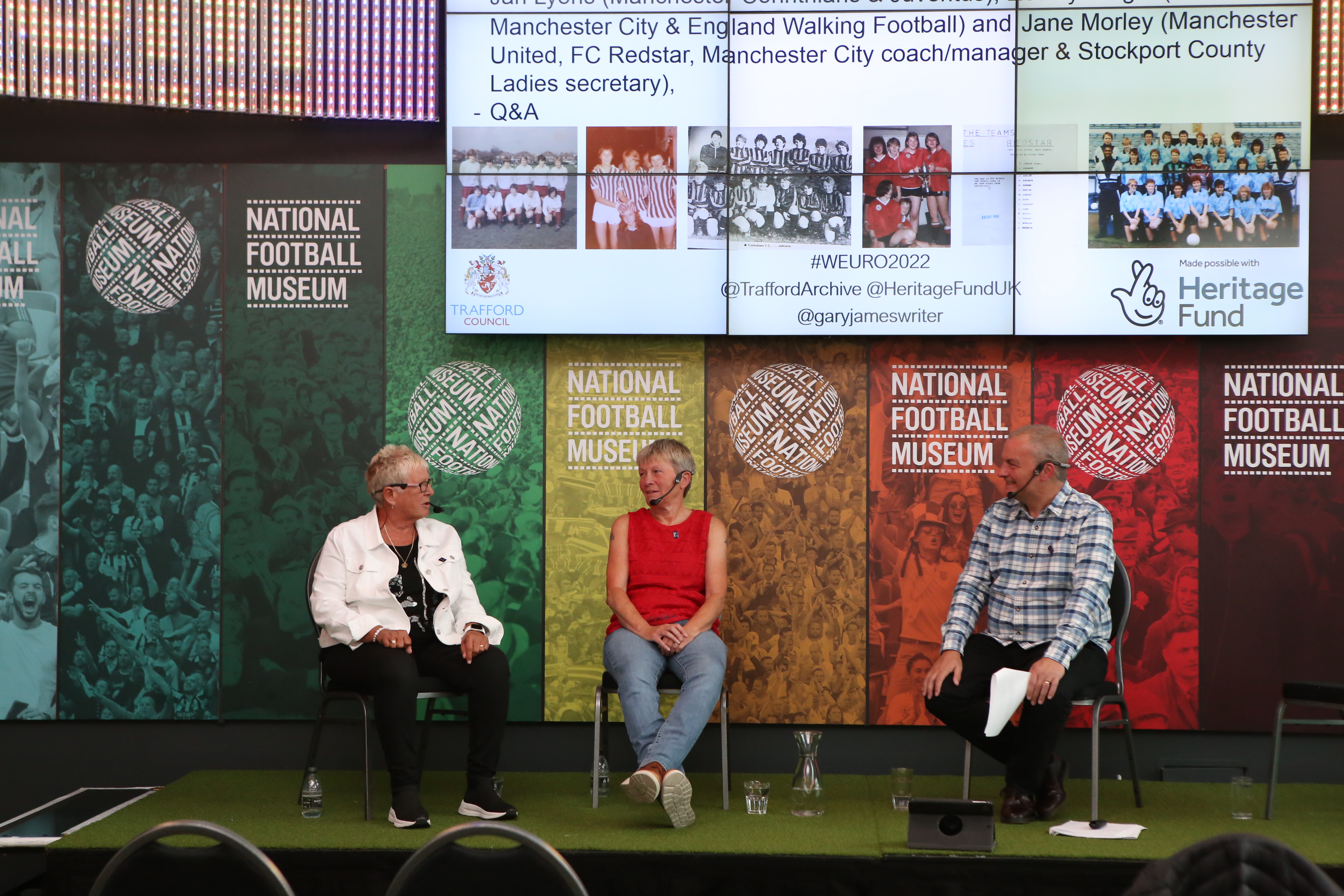
One of Gary James’ history of women’s football in Manchester talks at the National Football Museum, including interviews with Jan Lyons and Lesley Wright.

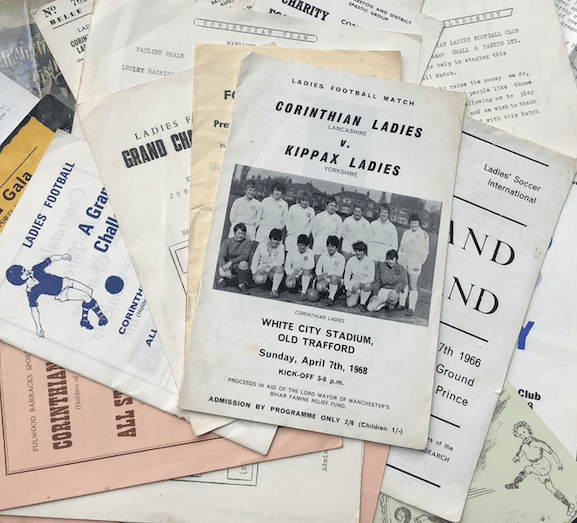
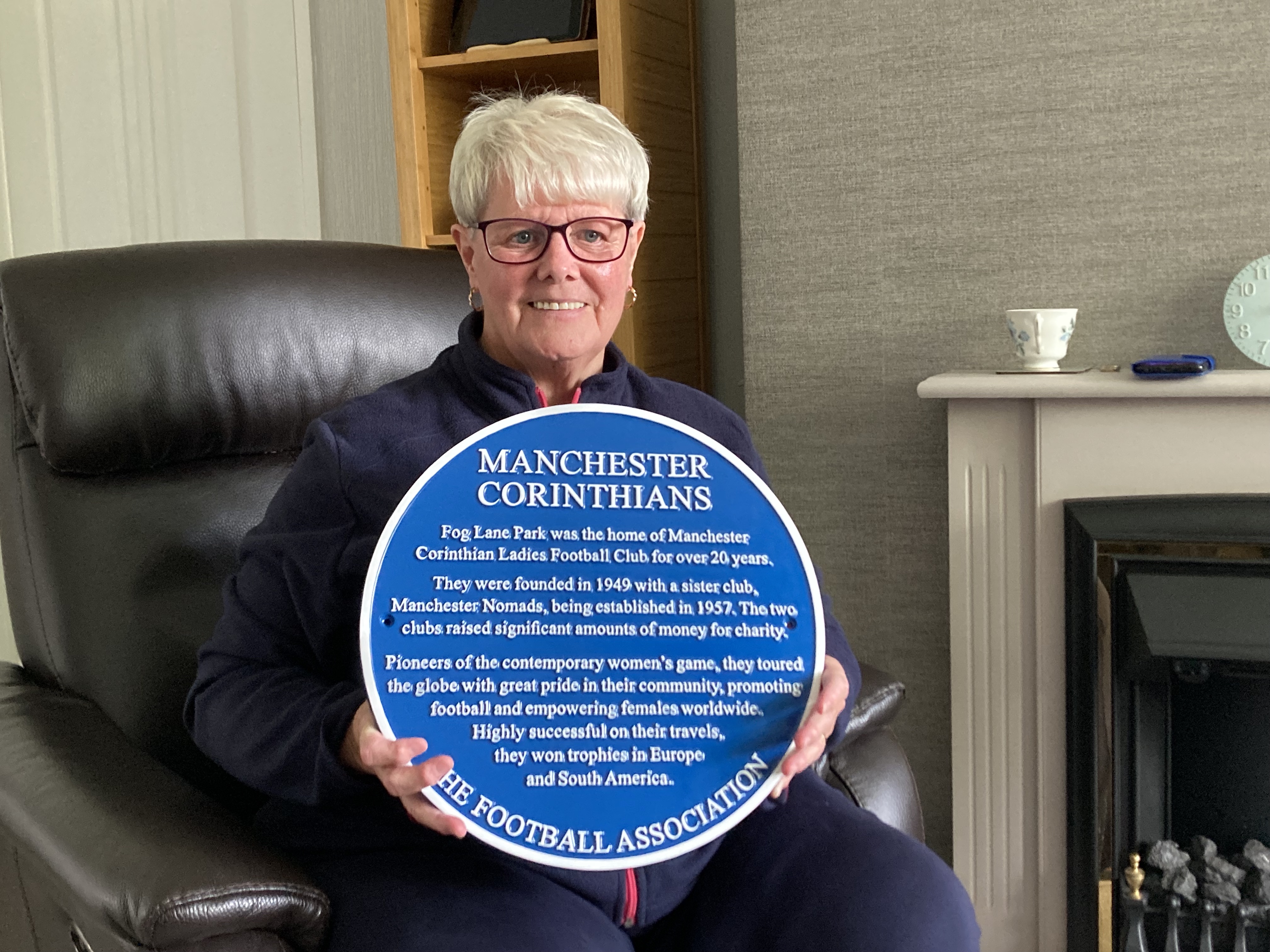
Why the Corinthians? Well, you’ll see from reading the book that I regard the club as the most significant women’s club in the region (possibly nationally) prior to the WSL era (and therefore of huge significance to football, Manchester and nationally!). There have been several prominent trophy winning women’s clubs in Greater Manchester and there have been many that have toured outside the UK, but the Corinthians did all of that and more. There are many myths out there about the club (and some have been promoted a lot recently) but the history of this club is truly significant – and I really do mean ‘truly significant’ as you’ll see in the book. We do not need myths because the facts are remarkable.

Rather than focus on one angle or era, the book covers every season from its formation in 1949 to its demise four decades later. This year marks the 75th anniversary of the Manchester Corinthians’ formation and over the last decade I have interviewed dozens of women involved with the club. I’ve captured stories and voices from women who played in games during EVERY season of the club’s long history. It’s been a shattering but utterly worthwhile experience.

Anyone who has bought my previous books, whether they be on the wider history of men’s football in Manchester, biographies on Mercer or Barnes, Maine Road, or Manchester City Women, will know the lengths I go to make sure the story is interesting, entertaining and factually correct, quoting those that experienced it at the time and supporting players’ memories with detailed archival research. My research into the Manchester Corinthians has been a labour of love. The women who played, and those who were involved but are sadly no longer with us, deserve to be remembered and celebrated.

My hope for the book is that long after we’ve all gone there will be people visiting the library or picking up the book who can learn more about this remarkable club and the people involved with it. Thanks.

You can find out more on the Manchester Corinthians book here:

Before the Corinthians there were the Manchester Ladies (and other clubs in the region – some will be mentioned in the Corinthians book of course!). Steve Bolton wrote a guest blog on Manchester Ladies which can still be read here:

Margaret Whitworth, Karen Bardsley, Margaret Shepherd & Gary James. Several Corinthians were guests of Manchester City for a WSL game.
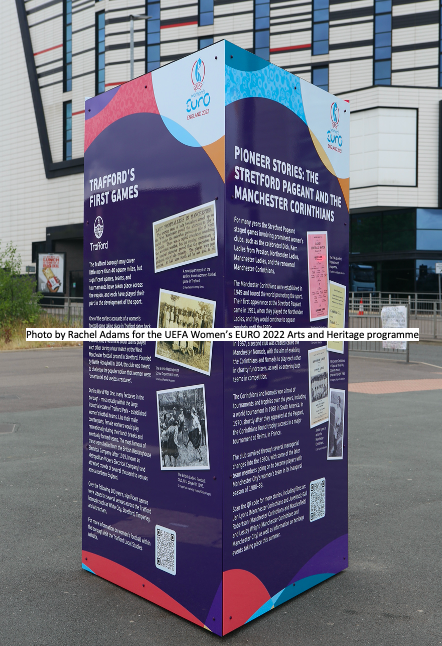
Research by Dr Gary James led to the history of women’s football in Trafford being documented as part of the UEFA Women’s EURO 2022 Arts and Heritage programme

Manchester’s Footballing Origins? There’s a Book For That

I’ve been asked a few questions this last week about the origins of men’s football in Manchester. For those that don’t know I researched & wrote a detailed history on the topic for Manchester University Press a few years back. I don’t have copies available myself but the publisher does have paperback copies, retailing at £21 on their website:

Follow the link (above) and it will explain more on the book but it basically tells the stories of the pioneering men’s clubs in the 1860s/1870s; the development of Manchester’s main two men’s clubs (City & United; correcting many myths!); first trophy successes; the scandal at City and the match fixing at United; plus much more. It considers the types of people who went to watch the clubs during early 20th Century and, again, there may be some detail in there that surprises a few.

If you want to know more then feel free to ask. Thanks

Manchester’s First FA Cup

As part of their All-Manchester FA Cup features the Athletic have asked their writers about the most important FA Cup final. Well, as it’s a City-Utd final then it makes sense to highlight the first ever FA Cup final featuring one of the teams. In 1904 Manchester found its first major trophy success and that led to Manchester being established as a footballing city. It’s part of the reason Manchester City retained a special place in the hearts and minds of Mancunians, even when the success faded.

The captain and goalscorer was the great Billy Meredith. The other year, following the purchase of the oldest surviving FA Cup by Sheikh Mansour (to loan to the National Football Museum) I helped Manchester City with the story of the cup and its significance to Manchester. They’ve produced a video telling the story and it can be viewed here:

https://www.mancity.com/citytv/mens/manchesters-first-trophy-1904-fa-cup-documentary-63745781

For more on the significance of this FA Cup trophy check out the category 1903-04 in the drop down list below.

International Football History Conference

30 June – 1 July 2023

***CFP Deadline 3 April***

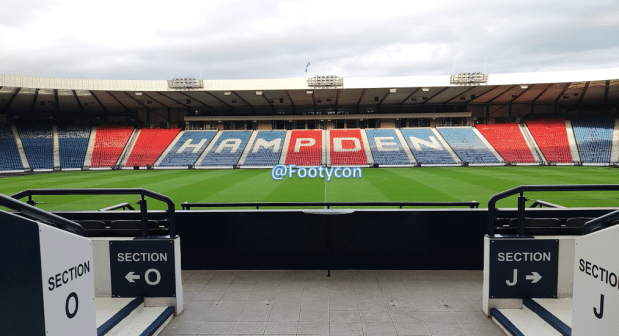
The 2023 annual International Football History Conference will take place at Hampden Park, Glasgow, G42 9BA and will be held over two days (30 June and 1 July 2023).

This is a call for papers to be presented at the conference. There will be an opportunity to present on any topic relating to the history of football of all codes.

  • Main conference proceedings will take place between 8.30am and 5pm on Friday and Saturday.
  • As with previous years the conference will be open to those presenting on football of any code.
  • Abstracts are welcomed on any football related topic (football of ALL codes)
  • Abstracts are welcomed from researchers from any discipline.
  • Presentations must not have appeared at another conference. As our conference does not have parallel sessions, we are insistent that presentations must not be a repeat of something presented elsewhere.

Abstracts for the following presentation styles are welcomed:

Short Form (7 minutes) – 20 slides (plus a title slide) with a maximum of 20 seconds per slide. Ideal for a summary of research; to present early findings; Image related research etc.

Twenty Minutes – Those choosing a 20 minute slot will be able to split that time between presentation and questions as they feel appropriate (for example 15 minutes of presentation and 5 minutes of questions or 20 minutes presentation and no audience questions).

Panel – One hour twenty minutes: three presenters and a moderator on a related theme with specific time for individual presentations within the session agreed by the moderator including allowance for questions at the end to the group.

To apply to present please send a 100 to 150 word proposal to footycon@outlook.com by Monday 3rd April 2023. Selection of presentations will take place by the committee by 30th April. We will ensure confirmation is as soon as possible.

COST OF ATTENDANCE  

The conference is self-funding and all delegates whether presenting or not will need to book their place before attending. It is anticipated that the cost of attendance for full-time delegates will be £139 and for students/unwagedl/retired delegates: £129

Special Day Rate: £75 (employed) & £65 (unwaged)

Tickets will be on sale soon.

Delegates will need to make their own arrangements regarding travel & accommodation for the conference. It is suggested delegates stay in city centre hotels but further information will be available by the end of April.

Scandals, Investigations… We’ve Been Here Before!

‘The punishment was the largest ever inflicted, wiping out an entire team, its directors and one of the most charismatic managers of the period.’

‘The League met and representatives of each club voted in favour of the punishment meted out to us being enforced. And while their representatives were passing this pious resolution most of them had other representatives busy trying to persuade the “villains whose punishment had been so well deserved” to sign for them under conditions very much better in most cases than the ones we had been ruled by at Hyde Road.’

These quotes are connected with investigations into Manchester City over 100 years ago when the FA considered the Blues to be a ‘nouveau riche’ club despite incredible support etc. Back then certain clubs who were regarded as the aristocracy of football (that included Aston Villa and Everton back then) were somewhat dissatisfied that Manchester City had come from foundation as MCFC in 1894 to FA Cup winners and League runners up within a decade. Lots of investigations followed with some determined to kill off this challenger. This all sound familiar? Well 118 years ago the largest punishment ever inflicted, wiping out an entire team, its directors and one of the most charismatic managers of the period was imposed on the club.

Below for subscribers is a 4,500 word article written on the topic by me. This is an academic piece, focusing on the facts and was written for an academic publication, not something club specific. The article considers the investigation, the ban and its long terms impact on Manchester football, where Manchester City’s first golden era came to an end but Manchester United’s first golden era followed. A truly transformational period in Manchester’s football story and essential reading for anyone looking at precedents or wanting to understand how football in the city was shaped.

Subscribe to get access – Annual

Read this indepth article and access everything else on the site when you subscribe. It costs £20 a year (about £1.67 a month) or £3 a month (see below). Annual subscribers access everything posted to the site since December 2020 (including PDFs of Manchester A Football History & my first book, audio & written interviews, history talks etc.).

Subscribe to get access – Monthly

It costs £3 a month (cancel anytime) or £20 a year (above) to subscribe. Monthly subscribers access everything posted to the site since 1 October 2022 (including PDFs of books, audio & written interviews, history talks etc.).

Manchester’s First Major Trophy Success

It’s the return of the FA Cup tonight with Manchester United facing Everton. It’s always worth reminding ourselves of the significance of the FA Cup to Manchester and the story of Manchester’s first major trophy success. The captain and goalscorer of the first triumph by Manchester in 1904 was the great Billy Meredith. In 2021 following the purchase of the oldest surviving FA Cup by Sheikh Mansour (to loan to the National Football Museum) I helped Manchester City with the story of the cup and its significance to Manchester. They’ve produced a video telling the story and it can be viewed here:

https://www.mancity.com/citytv/mens/manchesters-first-trophy-1904-fa-cup-documentary-63745781

For more on the significance of this FA Cup trophy check out the category 1903-04 in the drop down list below.