On this day (21 June) in 2001 newspapers carried the news that Stuart Pearce had joined Manchester City. The 39 year old joined City on 20 June and was to form part of manager Kevin Keegan’s backroom staff. He would also continue to play too. It proved to be a popular signing and the 2001-02 season was to be a truly entertaining one. You can read more about that below.
This is a 5,400 word article on the 2001-02 season which saw City win the old League Championship trophy. This is available to subscribers.
Subscribe to get access – Annual
This article is for subscribers to my website. It costs £20 a year to access everything on the site since creation in December 2020. That includes articles, history talks, videos, interviews & more. There’s also a monthly option below.
Monthly subscription costs £3 per month to access everything on the site since 1 October 2022 (cancel anytime). All subscribers access all new material until their subscription ends. Why not give it a try for a month?
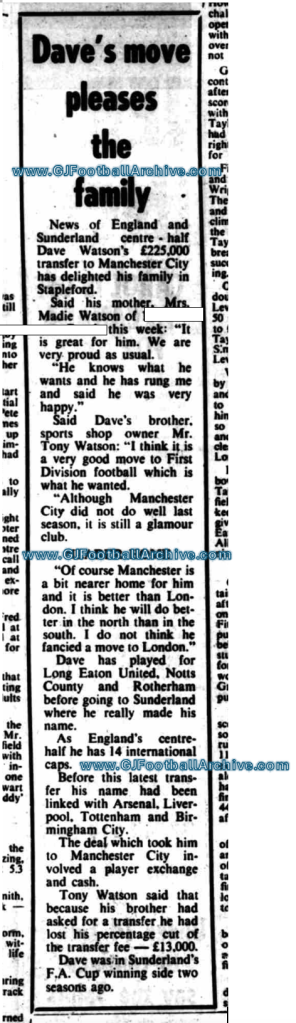
Fifty years ago today (20 June 1975) it was reported that Dave Watson’s move to Manchester City from Sunderland was great news for Watson’s family. In the article posted here a newspaper from the area of Nottingham that Dave was from included comments from his family. Interestingly, the paper quoted his mum and, amazingly, included her home address! I’ve blanked it out, but back in 1975 it would’ve been possible for any reader of the newspaper to turn up at Mrs Watson’s door. Fairly irresponsible I guess, but back then it was fairly standard for local papers to post addresses.
The article makes interesting reading and note the line about City remaining a glamour club – take note those who think football history started with the birth of the Premier League!
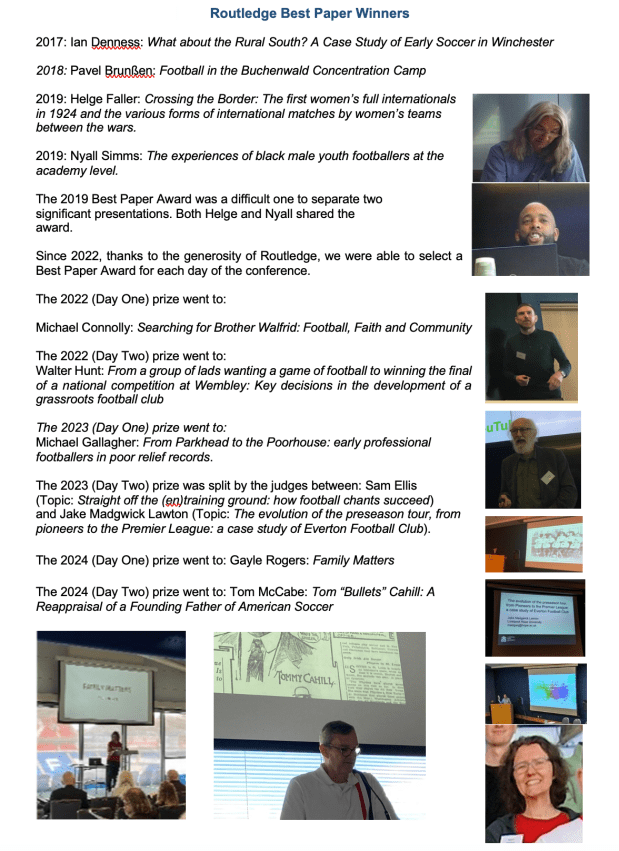
The International Football History Conference 2025 was held at Windsor Park Belfast last week and, as usual, we had a panel of judges picking out their best paper awards and an inclusivity award. Competition was fierce and the winners, once again, thoroughly deserved their recognition. The award winners were:
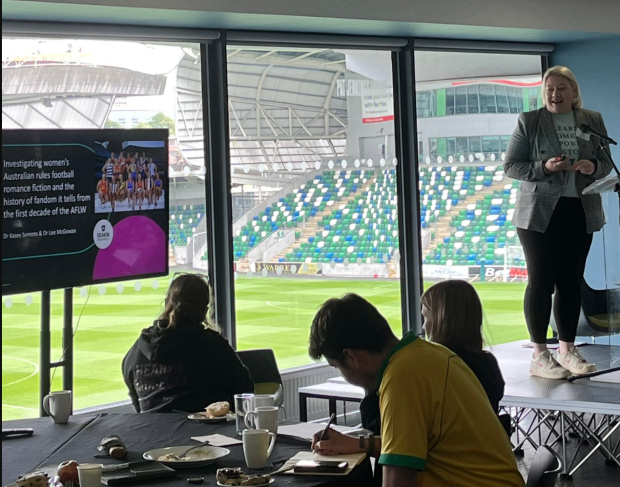
Day One (Friday 13 June 2025) Best Paper: The judges asked if they could make two awards at the end of this day and they selected Tim Mills for his presentation ‘Football & Museums – A model for community led programming’ and Kasey Symons for her presentation on ‘Investigating women’s Australian rules football romance fiction and the history of fandom it tells from the first decade of the AFLW’ (co-authored research with Lee McGowan). Kasey has been a regular attendee at the conference since it was established in 2017 and she has always presented high quality research in an engaging way.
Day Two (Saturday 14 June 2025) Best Paper: Gabriela Ríos-Infante won the award for her presentation on ‘The Philosophy of Women’s Football in Mexico: Interactions Through an Ethnographic Lens in El Volcán’. As well as this being a great research topic and presentation, it was particularly impressive that Gabriela was presenting in English for the first time.
The Inclusivity Award was judged over both days and this went to:
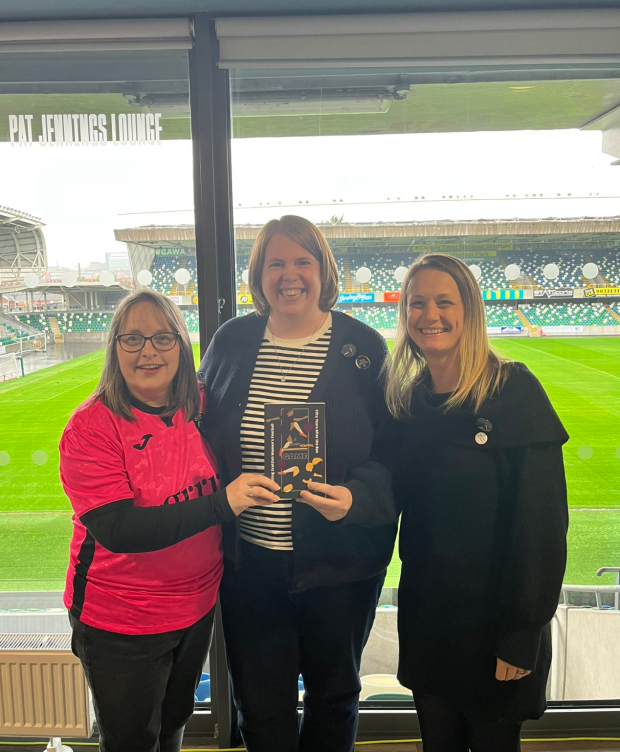
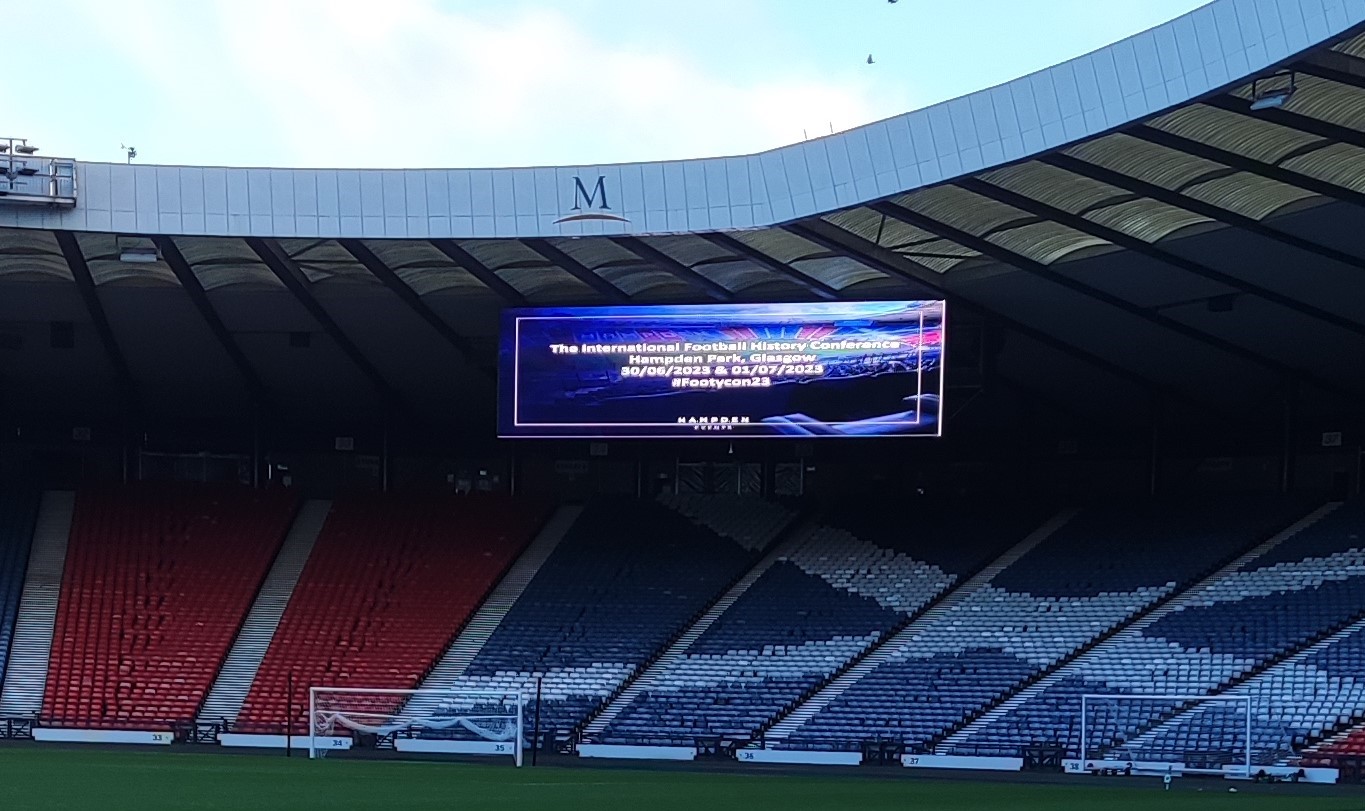
Karen Fraser, Fiona Skillen & Julie McNeill for their panel on ‘A most unsuitable game: Reflections on a community celebration of the women’s game in Scotland.’ Back in 2023 Karen, Fiona and Julie presented about this project at our Hampden Park conference and it was gratifying to see them return with reflections on what was clearly a well-managed, researched and impact-making project.
Congratulations to all winners. These awards are supported by Routledge books and they provided books and vouchers to each winner.
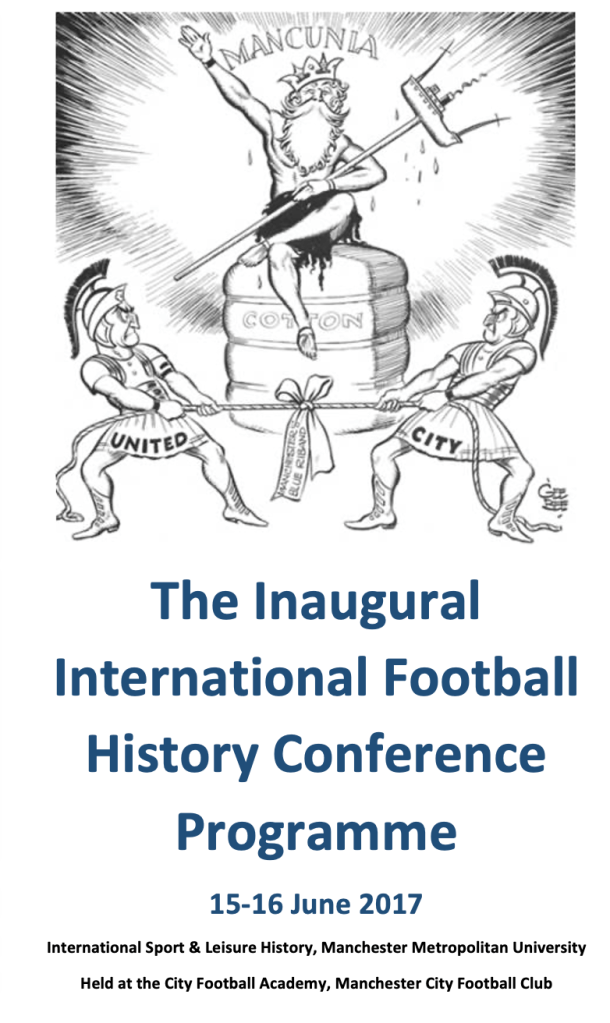
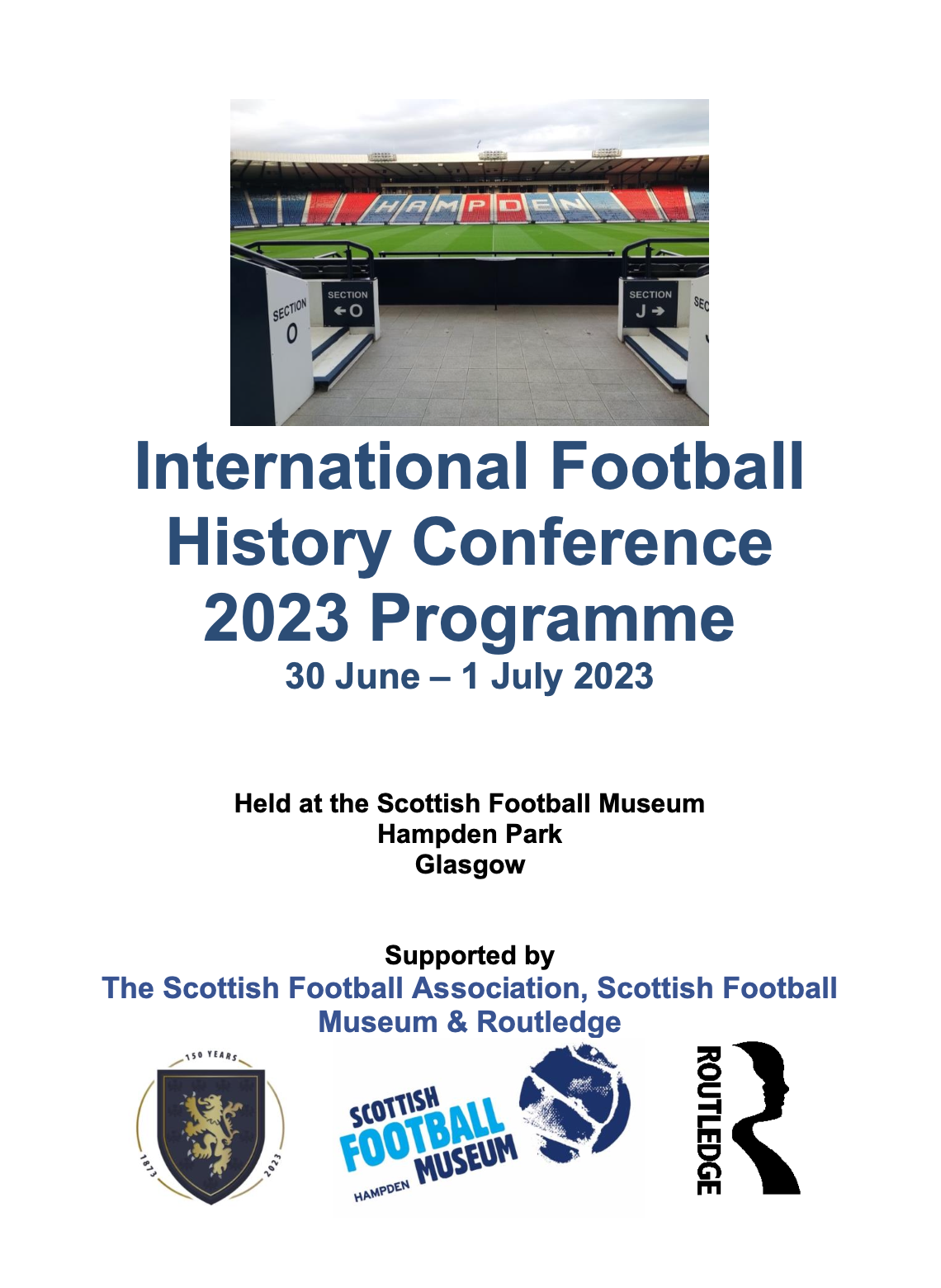
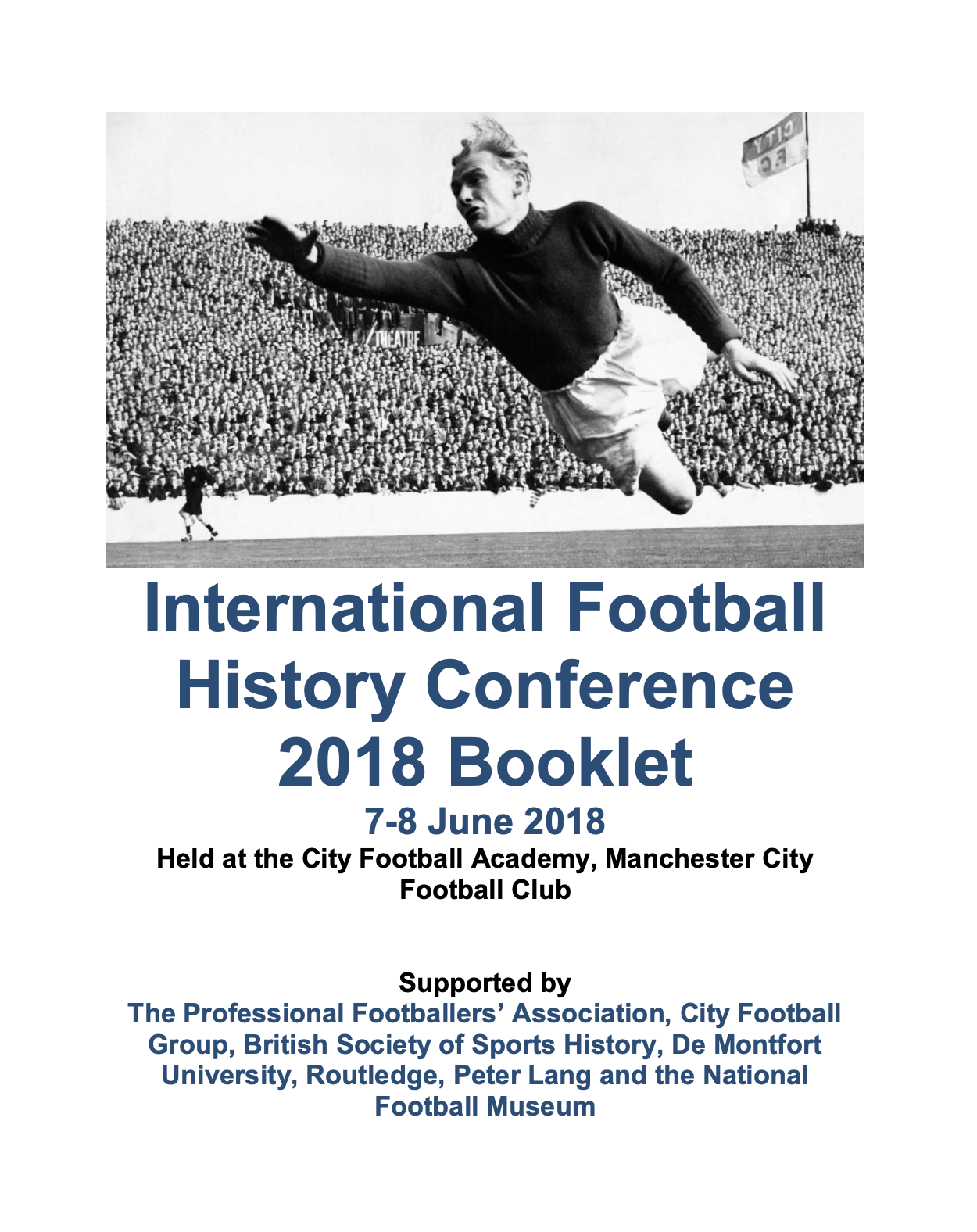
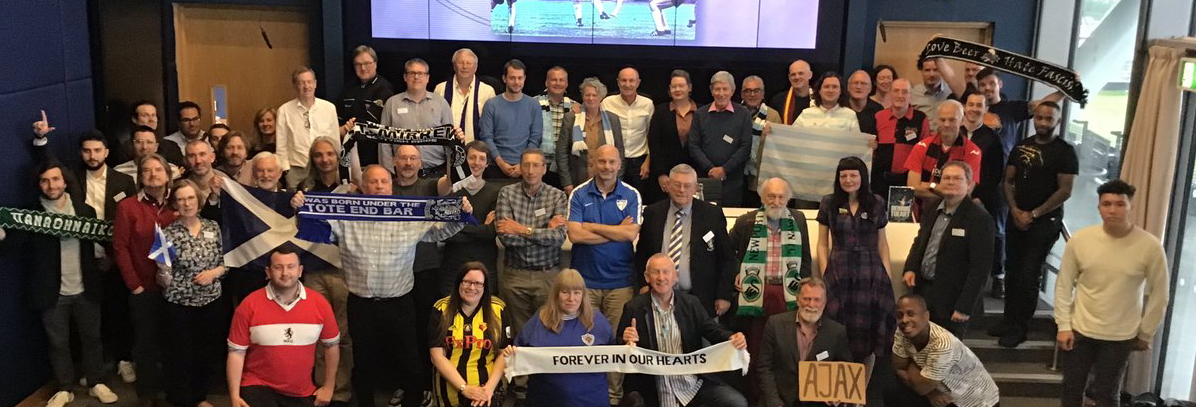
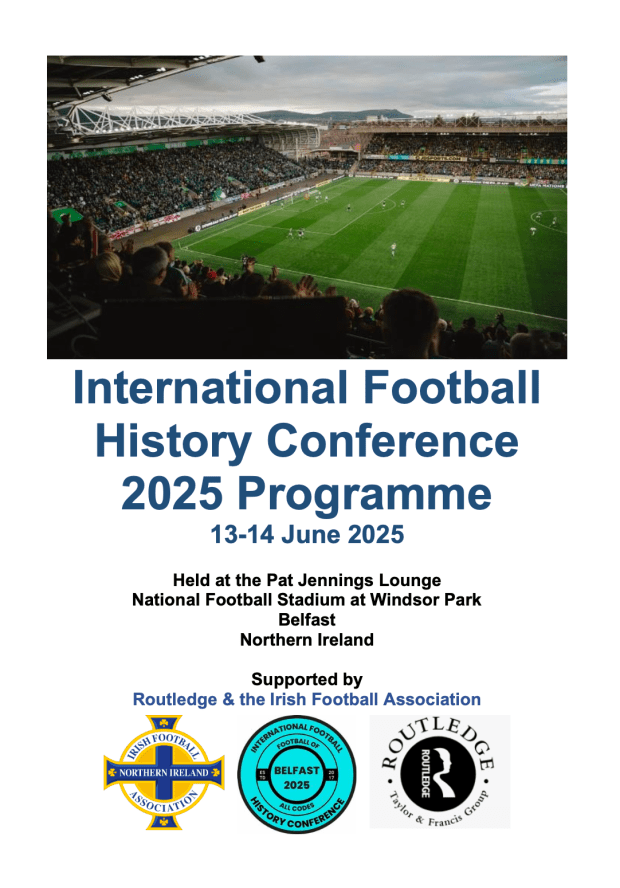
Last week (13 & 14 June 2025) we staged our annual International Football History Conference at Windsor Park, Belfast. It was a great occasion, attended by delegates from across the world and with presentations on football (of all codes) throughout the two days. Belfast was a great, welcoming city and we had a wonderful time. The conference was established almost a decade ago when I first discusssed the idea with colleagues at Manchester Metropolitan University, since then we’ve held the conference annually, starting with our first in Manchester in 2017.
Right at the start my aim was to bring together leading academics, researchers, historians and others passionate about football to discuss in a friendly environment their projects and research.
Since 2017 we’ve staged the conference at Manchester City (4 times), Hampden Park, Cardiff City and at Windsor Park, only taking a pause during the Covid years, We were supposed to stage our 2020 conference at Hibs but sadly that was cancelled and our financial reserves were lost as a result. The conference is self funding and non-profit with none of the organisers taking any payment for their time. It’s always a precarious financial commitment but fortunately, so far, each conference has covered its costs (just!).
We’re now looking for venues to stage the 2026, 2027 & 2028 conferences, so if you are involved with a footballing (again, any code) venue with conference facilities and you feel you can help then please get in touch at footycon@outlook.com.
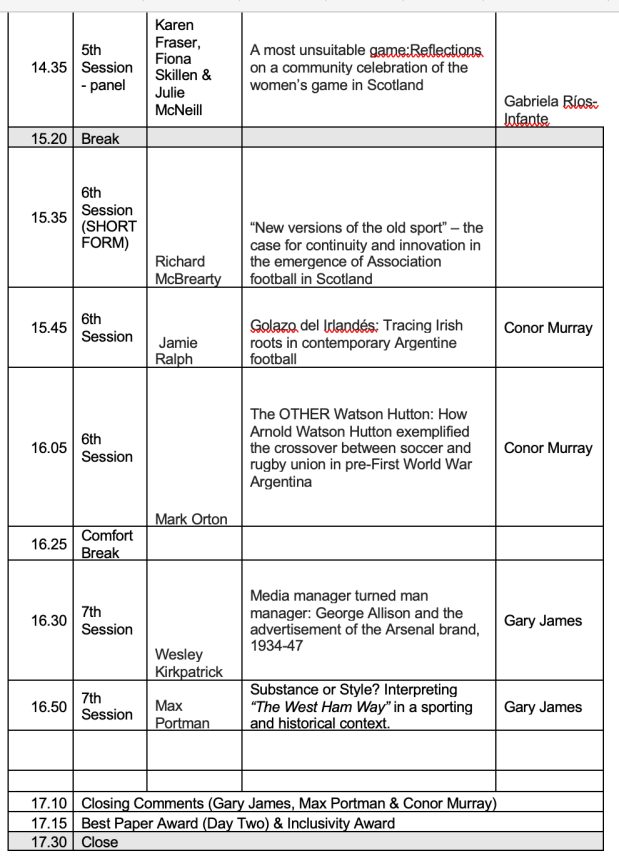
This was our agenda for 2025 in Belfast to give you a feel for the variety of topics presented:
On this day (17 June) in 2020 football returned to the Etihad after the pause in the 2019-20 season caused by the Covid pandemic. The first game there saw Manchester City defeat Arsenal 3-0 with goals from Sterling, De Bruyne and Foden. You can watch highlights here:
I’ve heard the sad news that the former Manchester City and Stockport County player Barney Daniels has died. He also played for Manchester United (though not in the first team), Chester City, Ashton United and Hyde United.
He joined City on 30 March 1973 and made his first team debut against Derby County on 6 Feb 1974 (report below). In total he played 3 games in 1973-74 (debut v Derby 1-0 win; 9/2/74 at Chelsea & came on as sub at Liverpool on 16/4/74).
Screenshot
The following season (1974-75) he made ten appearances and the first of those was against Leicester on 23/11/74 when he scored 2 goals and made the headlines as he helped City go to the top of the top flight (see following report):
Daniels moved to Chester City on 9 July 1975 (Chester’s record signing at the time) and went on to join Stockport County (July 1976), Ashton United (1978-82), Hyde United 1982 and back to Ashton United (1982-84).
At City he was a consistent performer for the reserves.
John Maddocks (City’s former statistician/historian in the 80s/90s) gave these notes he’d written on Barney in the late 1990s which are worth posting here: ‘Most enjoyable it was watching Barney Daniels in action in the Reserves in the 1970’s. He scored an average of almost a goal a game in 1973-74 including several hat-tricks and he deserved his first team chance when it came. He had had trials with Blackpool, scoring three goals in four reserve games, but was not taken on, and in his first season with Ashton United he scored 27 goals. City bought him for £1,000 and also played a friendly at Ashton.
‘Barney was top reserve team marksman in consecutive seasons from 1973-75, scoring 44 times.’
John’s stats showed that Barney made the following City appearances:
On 15 June 1995 Manchester City’s efforts to replace Brian Horton as manager seemed to be stumbling. Brian Kidd had been wanted by chairman Francis Lee, but that wasn’t happening; others who would be discussed widely (and fans were told would be possible) included George Graham and Franz Beckenbauer. Ultimately City appointed Alan Ball (you can read about his time at City elsewhere on this website if you’re brave enough to be reminded of those days!).
On 14 June in 1947 Manchester City’s George Smith (on right of photo the following season playing against Manchester United) scored five as the Blues defeated Newport 5-1 in the Second Division. At the time this was City’s latest finish to a season (eclipsed by the Covid affected 2019-20 season of course!). You can read more on the 1946-47 season below. This was the first league season after the war and ended with City winning the Second Division title. There were some truly significant – and well attended – games that season and future Liverpool manager Joe Fagan made his debut this season too. This subscriber article includes comments from an interview I did with George Smith back in 2003.
This is a subscriber article and you can read it by subscribing below.
Subscribe to get access
Read more of this content when you subscribe today. It costs £3 per month or you can subscriber for the discounted annual rate of £20 per year. Each subscriber gets access to everything posted so far, including PDFs of a couple of my books.
On 13 June 1975 Mike Summerbee signed for Burnley from Manchester City. That day also saw Burnley sign Manchester United’s Willie Morgan too. These were sad departures from both City and United as far as Manchester fans were concerned. Here’s a report including quotes from the 14 June 1975:
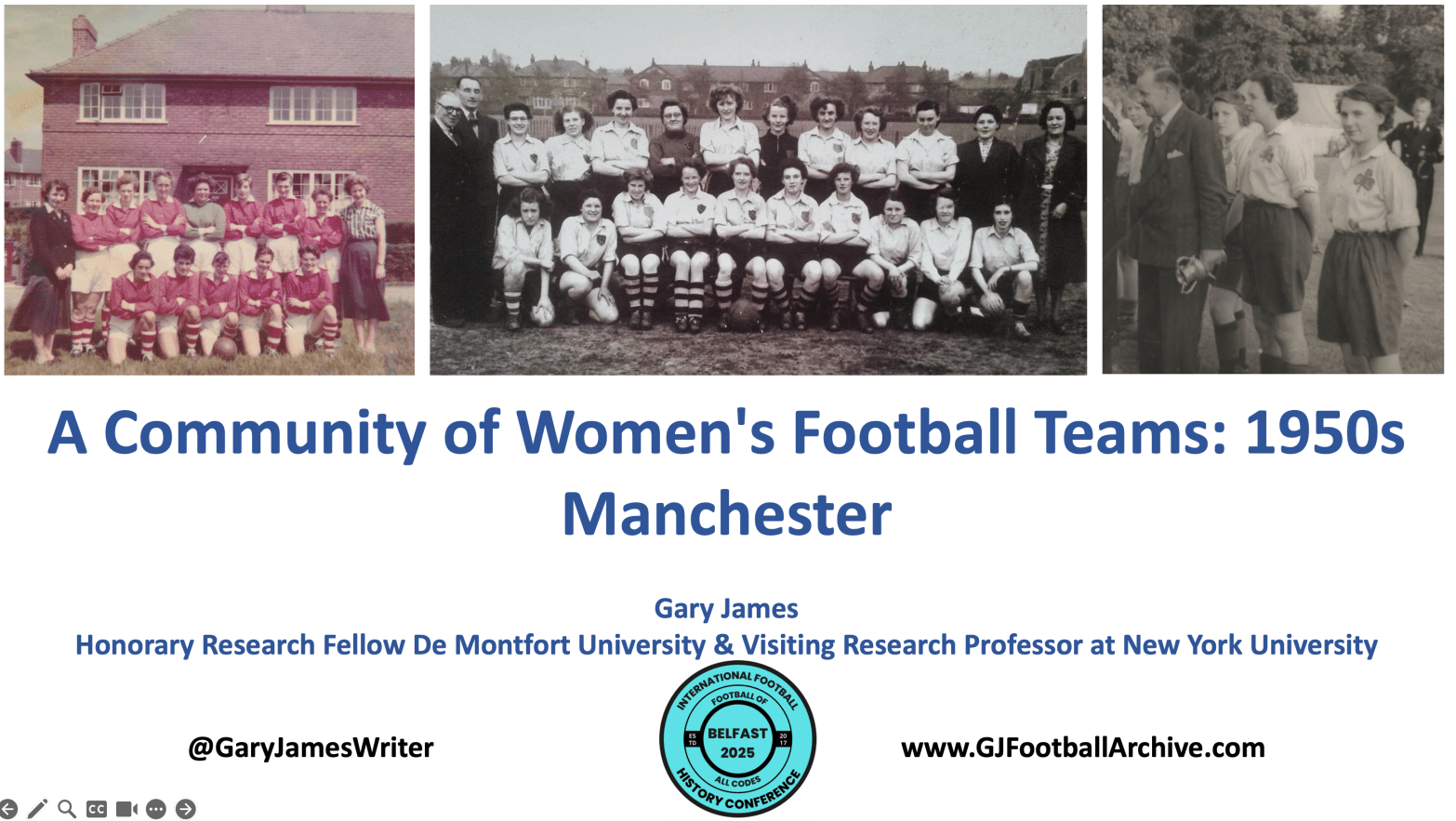
The history of women’s football in Manchester deserves to be properly recorded. This week I’m presenting at the International Football History conference in Belfast on the teams and communities of women’s footballers that existed in Manchester during the 1950s. People often assume there’s either no women’s football in the city back then or there are one, maybe two teams. My research is identifying that there are many more teams than that and that the community of women playing football in Manchester during the 50s was significantly greater than most believe.
Over the last decade I’ve been interviewing women who played football in Manchester, or for Manchester based teams, during the 1940s to modern years. This includes Maureen Charlton, Dorothy Allcock and Flo Cloake (who played in the 1940s & 50s) and players like Steph Houghton, Karen Bardsley and Jill Scott (who of course played in more recent times). For me the stories of all are inspiring. Many women from Manchester, or based in Manchester, played prominent roles in football’s development during the 50s, 60s, 70s and beyond. Some who played decades ago are still contributing significantly today.
To date I’ve published two books and written many articles, chapters and features for a variety of publications on Manchester’s women’s teams. The latest of these is the book on the Manchester Corinthians. I’m absolutely delighted with this from Matt Williams, a longlist judge for the William Hill Sports Book of the Year 2025 award. He has posted the following video about the Manchester Corinthians book as his ‘What are we reading this week?’ post on social media. It really does please me and demonstrates why I’ve been so keen to get the Corinthians story out there.
For those interested Manchester Corinthians: The Authorised History is a must for anyone interested in Manchester or women’s football and consists of 356 pages. Getting it into Manchester bookshops, particularly Waterstones, is proving difficult so if there’s anyone reading this who can help please get in touch. We can organise events if that helps?
Thanks to everyone who has helped so far to promote the Corinthians and their stories. But we need to bang the drum for all Manchester’s clubs, so please do all you can to spread the word.
I’ll let everyone know more about the other teams, the presentation at the conference and more later. For now… the Corinthians book is illustrated throughout and you can order it now for £25 (including UK postage and packaging). I’ll sign all copies ordered direct from me below.
If you live outside the UK then please contact for details of additional postage costs.
You do not need to have a PayPal account to order – use the ‘Pay with PayPal’ button above and it will give you the option to pay by credit/debit card without creating a PayPal account.
UK ONLY – Manchester Corinthians: The Authorised History
The story of a pioneering women’s club as told to Gary James by those who were there. This will be published in late December 2024. This is UK only at £25 (incl UK postage and packaging). Outside UK contact for additional postage costs.













 Gary James' Football Archive