Olympic Blues

Today I’m taking a look at links between City and Olympic gold winning medallists, in particular I’m focusing on City star Max Woosnam and Manuel Estiarte, a member of Pep’s staff.

This article is available to subscribers to my site. Subscribing costs £20 a year and subscribers have full access to everything posted on the site, including audio interviews with John Bond, Malcolm Allison, George Graham and others, plus the entire text of Manchester A Football History and a PDF of my first book From Maine Men to Banana Citizens. You can always try it out by subscribing £3 per month and cancel at any time. No matter whether you sign up for a year or a month at a time you get full access to everything for as long as you are a subscriber.

Anyway, here’s the article…

Subscribe to get access

Read more of this content when you subscribe today.

Historic Name That Ground – Week 15

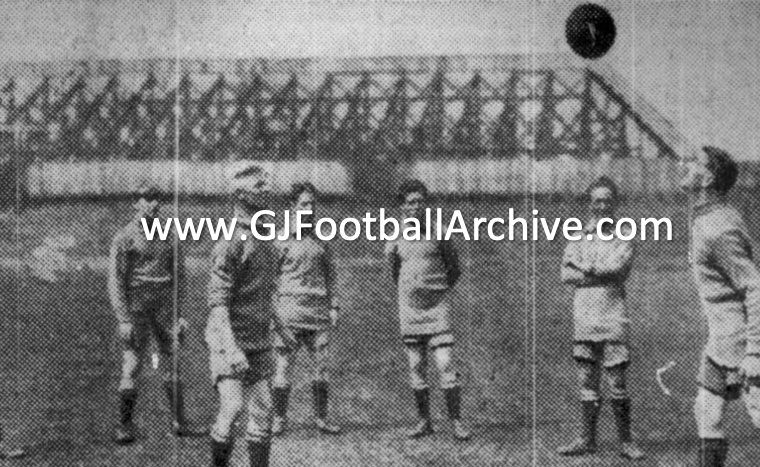
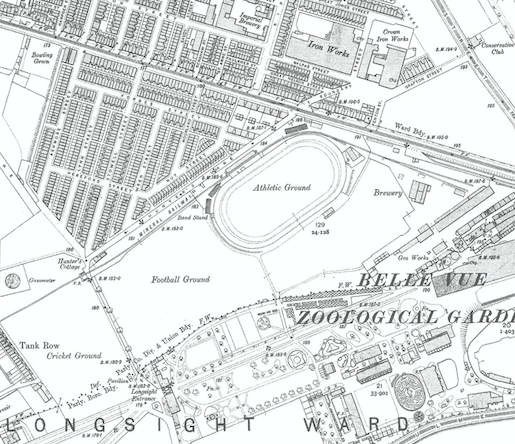
At first glance this one’s tough but many of these fields/open spaces still exist around this ground… Do you recognise this ground? If you’ve not seen this feature before then each week for the last 14 weeks I’ve been posting an image of a football ground taken in the past and you can see if you can recognise the ground. Some will be easy, others not so. You’ll be able to post your view in comments at the bottom of each page.

The following Friday I’ll post the answer. So here goes….

Can you name the ground featured in the image above? This is from before World War Two and shows a ground that is still standing although it’s changed considerably since this photo was taken. One clue I will give is that this ground has staged European football. Got it yet? Leave your answers in the comments area below. Thanks.

While you’re here why not subscribe to my site and you can then access every article, interview, audio recording etc. already posted and those that will be posted during your subscription. It costs £20 per year (about £1.67 a month) or you can sign up on a monthly basis at £3 per month (you can cancel at any time, so you could sign sign up for a month, access everything you want and then cancel). You can subscribe below:

Subscribe to get access

Read more of this content when you subscribe today.

I had planned to run ‘Historic Name That Ground’ only during the close season as in previous years, but it’s proving of interest so I’ll keep it going for a little while yet. If you have an old image of a ground that you think it’d be worth including in this weekly quiz then please get in touch. They don’t have to be from the 1900s to 1960s – even ground images from the 70s and 80s may prove a challenge to identify these days. You can email me at gary@GJFootballArchive.com Thanks.

Clues: The club still play at this ground, although all four sides have been completely rebuilt since the image was taken. The photo was taken in 1907. One of the players seen is called Ferguson.

Historic Name That Ground – Week 14 Answer

On Monday I asked: ‘Can you name the ground featured in the image above? I know it’s a poor quality image but that stand was quite a distinctive feature of the ground into the 1960s. This photo is from the early 1900s.’ The answer is:

Aston Villa’s Villa Park, photographed in 1904.

While you’re here why not subscribe to my site and you can then access every article, interview, audio recording etc. already posted and those that will be posted during your subscription. It costs £20 per year (about £1.67 a month) or you can sign up on a monthly basis at £3 per month (you can cancel at any time, so you could sign sign up for a month, access everything you want and then cancel). You can subscribe below:

Subscribe to get access

Read more of this content when you subscribe today.

I had planned to run ‘Historic Name That Ground’ only during the close season as in previous years, but it’s proving of interest so I’ll keep it going for a little while yet. If you have an old image of a ground that you think it’d be worth including in this weekly quiz then please get in touch. They don’t have to be from the 1900s to 1960s – even ground images from the 70s and 80s may prove a challenge to identify these days. You can email me at gary@GJFootballArchive.com Thanks.

The Sporting Broads: A Family’s Journey from Pedestrianism to Football

By the time professional football came to prominence as the leading working class sporting activity in the late nineteenth century the sport of pedestrianism was in decline. Pedestrians and trainers had to find alternative means of income and, for some, football provided a new focus for their skills, crafted through experience and passed on through familial and community links. This paper considers the life of Jimmy Broad, a competitor in pedestrian challenges, who went on to establish a career as a successful football trainer, and highlights how his career adapted. It also provides commentary on the training techniques utilized by Broad and goes on to outline the careers of his sons, one of whom also became a football trainer. The story of the Broads is of importance to those studying sport’s development during the late 1800s and early 1900s, and provides an understanding of one of the influential figures behind Manchester’s first footballing success. It adds to the research into athletic entrepreneurs which has seen the construction of individual biographies to aid understanding of sport’s development. 

Subscribe to get access

Read more of this content and everything else on this site when you subscribe today.

Historic Name That Ground – Week 14

Do you recognise this ground? If you’ve not seen this feature before then each week for the last few weeks I’ve been posting an image of a football ground taken in the past and you can see if you can recognise the ground. Some will be easy, others not so. You’ll be able to post your view in comments at the bottom of each page.

The following Friday I’ll post the answer. So here goes….

Can you name the ground featured in the image above? I know it’s a poor quality image but that stand was quite a distinctive feature of the ground into the 1960s. This photo is from the early 1900s.

While you’re here why not subscribe to my site and you can then access every article, interview, audio recording etc. already posted and those that will be posted during your subscription. It costs £20 per year (about £1.67 a month) or you can sign up on a monthly basis at £3 per month (you can cancel at any time, so you could sign sign up for a month, access everything you want and then cancel). You can subscribe below:

Subscribe to get access

Read more of this content when you subscribe today.

I had planned to run ‘Historic Name That Ground’ only during the close season as in previous years, but it’s proving of interest so I’ll keep it going for a little while yet. If you have an old image of a ground that you think it’d be worth including in this weekly quiz then please get in touch. They don’t have to be from the 1900s to 1960s – even ground images from the 70s and 80s may prove a challenge to identify these days. You can email me at gary@GJFootballArchive.com Thanks.

Historic Name That Ground – Week 13 Answer

Can you name the ground featured in the image above? Unlike previous weeks this is a drawing of the ground and so there may well have been a bit of interpretation by the artist. The image is pre-World War One. The answer is…

It’s Liverpool’s Anfield ground, drawn in 1906. This was actually architect Archibald Leitch’s drawing of what intended his ground developments would look like and, according to the newspaper report associated with this drawing, work wuld take another year to complete.

Next ground on Monday.

While you’re here why not subscribe to my site and you can then access every article, interview, audio recording etc. already posted and those that will be posted during your subscription. It costs £20 per year (about £1.67 a month) or you can sign up on a monthly basis at £3 per month (you can cancel at any time, so you could sign sign up for a month, access everything you want and then cancel). You can subscribe below:

Subscribe to get access

Read more of this content when you subscribe today.

I had planned to run ‘Historic Name That Ground’ only during the close season as in previous years, but it’s proving of interest so I’ll keep it going for a little while yet. If you have an old image of a ground that you think it’d be worth including in this weekly quiz then please get in touch. They don’t have to be from the 1900s to 1960s – even ground images from the 70s and 80s may prove a challenge to identify these days. You can email me at gary@GJFootballArchive.com Thanks.

MCFC V LFC: A Few Items From History

On this day (16th September) in 1893 Manchester City played Liverpool FC for the first time competitively. To mark this anniversary, here are a few items from history on games between the clubs.

Game One

The first meeting of these two clubs came when Liverpool visited Hyde Road on 16th September 1893 in the Football League.  Liverpool, playing their first season in the League (City had first joined the League as Ardwick in 1892), won the Division Two match 1-0 with an 80th minute goal from James Stott.  

Debuts

Former captains Sam Barkas and Jimmy McMullan both made their debuts in matches with Liverpool.  Barkas first appeared in the 3-2 defeat on 2nd May 1934 at Anfield, while McMullan’s debut came in a 1-1 draw on 27th February 1926 at Maine Road.

Another man to make his debut was the popular Roy Little, who helped City achieve a 1-0 win in January 1953.  Fifties cup hero Little is still a regular Maine Road attender.

Joe Royle made both his first and last league appearance for City against Liverpool.  His first match was on Boxing Day 1974, and his last came in October 1977.  Following that game he played a League Cup tie against Luton, and then moved to Bristol City where he scored 4 goals on his debut against Middlesbrough in Division One. You can read about the October 1977 game here:

MCFC v LFC, October 1977

You can read the remarkable story of a Blue who scored four on his debut for City against Liverpool here:

https://gjfootballarchive.com/2021/01/18/imagine-scoring-four-goals-for-mcfc-against-liverpool-on-your-debut/

There’s also the story of another City player scoring 4 v Liverpool here:

https://gjfootballarchive.com/2021/01/17/the-flu-limits-mcfcs-selections-but-they-beat-liverpool-5-0-roberts-4-goals/

Television

The first meeting of the sides to be shown on the BBC’s Match of the Day was on 12th August 1972.  Liverpool won 2-0 with a goal from Hall in the 3rd minute and one from Callaghan six minutes from time.  An Anfield crowd of 55,383 watched the opening day match.

The first match to be broadcast live was the March 1988 FA Cup sixth round tie.  44,047 witnessed a 4-0 home defeat for the Blues. Here’s film of that game:

Connections

Some of the more recent players to have appeared for both clubs include Raheem Sterling, James Milner, Craig Bellamy, Mario Balotelli, Nicolas Anelka, Albert Riera, Robbie Fowler, Steve McManaman, David James, Kolo Toure, Didi Hamann, Daniel Sturridge, Peter Beardsley, Mark Kennedy, Steve McMahon, Michael Robinson, Mark Seagraves, and Paul Stewart.  Others to have played for both clubs include Matt Busby, Joe Fagan, George Livingstone and Jimmy Ross.

Inside-forward Livingstone joined City from Liverpool in May 1903 and was an important member of the 1904 Cup winning side.  Incredibly, during a career that spanned 3 decades Livingstone played for both Manchester clubs and both Celtic and Rangers.  Somehow he never made it to Everton to complete a unique treble.

Jimmy Ross was one of football’s first stars and joined the Blues in 1898 after highly successful spells at Preston and Anfield.  Although he’s relatively unknown these days, Ross deserves a major place in football’s hall of fame for his achievements during the first 15 years of League football.  Incidentally, he also netted 7 (sometimes reported as 8) in Preston’s record 26-0 demolition of Hyde at Ewen Fields in the FA Cup.

Highest Attendance

The highest attendance for a match between the two sides is 70,640 at Maine Road for the fifth round FA Cup tie on 18th February 1956.  Here’s film of that game played in snowy conditions: 

https://www.britishpathe.com/video/f-a-cup-newcastle-v-stoke-manchester-city-v-liverp/query/manchester+city

The match ended goalless and four days later the highest attendance for a City-Liverpool match at Anfield (57,528) watched the Blues defeat the Reds 2-1.  City’s victory brought a crowd of 76,129 to Maine Road for the visit of Everton in the quarter-final.  

Interestingly, Liverpool have played in higher attendances at Maine Road.  Their semi-finals against Burnley (1947) and Everton (1950) both attracted crowds of 72,000.

The highest League crowd at Maine Road was 50,439 in April 1976 (of course games at the Etihad have attracted higher figures), while the highest at Anfield is 55,383 for the televised match in August 1972.

Did You Know?

The first recorded rendition by City fans of Blue Moon occurred following the 3-1 defeat at Anfield on the opening day of the 1989-90 season.  Despite the scoreline the Blues had played well with Clive Allen and Ian Bishop impressing on their debuts.  As the City fans left the stadium a couple of supporters started to sing the song that was later to become a Blue anthem.  The song seemed to dovetail neatly with the events of the day and over the course of the next few weeks it became popular.

Controversy

Don’t get me started on this but the 1981 League Cup semi-final still rankles with many of us! The story can be read here:

https://gjfootballarchive.com/2021/01/13/manchester-city-liverpool-and-the-1981-league-cup-semi-final/

Well I Never!

During City’s 1936-7 Championship season the Blues defeated Liverpool 10-1 on aggregate in the space of four days.  On 26th March an Eric Brook hat-trick, plus goals from Alec Herd and Peter Doherty brought a 5-0 Anfield win.  Then on 29th City achieved a 5-1 Maine Road victory despite being a goal down in the fifth minute.

In between those matches City had managed a 2-2 draw at home to Bolton on 27th while Liverpool had defeated Manchester United 2-0 on the same day.

Sadly, in 1995 Liverpool defeated the Blues 4-0 in the League Cup and 6-0 in the League over a similar time frame.  The League performance ended with Uwe Rosler throwing his boots into the crowd, while Alan Ball amazed all Blues by saying he enjoyed the game.

Own Goal

Dave Watson headed an 89th minute own goal in this fixture on 29th December 1976 to help League leaders Liverpool achieve a 1-1 draw.  Third placed City had taken a first half lead from Joe Royle, before 50,020 at Maine Road.  The result proved costly as that season City finished second – a mere point behind Liverpool. 

1996 – Timewasting

A deflection from Lomas (off a McManaman effort) gave Liverpool a 6th minute lead in a last day of the season match the Blues needed to win to stay up.   Rush scored Liverpool’s second in the 41st minute as City looked dead and buried.  Rosler (71st minute penalty) and Symons (78th minute) gave the Blues hope, but City decided to timewaste in the mistaken belief they were safe.  Quinn, on the touchline after being substituted, urged the players to attack, while Liverpool seemed determined to open up play, but the game ended with Ball’s side relegated.

2000- Weah’s Only Goal

Former World Player of the Year George Weah scored his first and only League goal for City in the 3-2 defeat at Anfield in September.

2003- Anelka Double

A 74th minute penalty and a stoppage-time volley gives Anelka two goals against his former club.  The Blues win 2-1 at Anfield in the penultimate match of the season. 

Subscribe to get access

If you would like to read other articles like this and all the in-depth longer articles (including the entire Manchester A Football History book and several interviews, including audio interviews with Malcolm Allison, John Bond & George Graham) then please subscribe. It works out about £1.67 a month if you take out an annual subscription (£20 per year) or £3 a month if you’d like to sign up for a month at a time. Each subscriber gets full access to the hundreds of articles posted so far and the hundreds scheduled to be posted in the coming months.

Historic Name That Ground – Week 13

Do you recognise this ground? If you’ve not seen this feature before then each week for the next few weeks I’ll post an image of a football ground taken in the past and you can see if you can recognise the ground. Some will be easy, others not so. You’ll be able to post your view in comments at the bottom of each page.

The following Friday I’ll post the answer. So here goes….

Can you name the ground featured in the image above? Unlike previous weeks this is a drawing of the ground and so there may well have been a bit of interpretation by the artist. The image is pre-World War One. Please post your guess below.

While you’re here why not subscribe to my site and you can then access every article, interview, audio recording etc. already posted and those that will be posted during your subscription. It costs £20 per year (about £1.67 a month) or you can sign up on a monthly basis at £3 per month (you can cancel at any time, so you could sign sign up for a month, access everything you want and then cancel). You can subscribe below:

Subscribe to get access

Read more of this content when you subscribe today.

I had planned to run ‘Historic Name That Ground’ only during the close season as in previous years, but it’s proving of interest so I’ll keep it going for a little while yet. If you have an old image of a ground that you think it’d be worth including in this weekly quiz then please get in touch. They don’t have to be from the 1900s to 1960s – even ground images from the 70s and 80s may prove a challenge to identify these days. You can email me at gary@GJFootballArchive.com Thanks.

Historic Name That Ground – Week 12 Answer

On Monday I asked: ‘Can you name the ground featured in the image above? This is tough because it doesn’t give much away, although the curve in the terracing may help.’ I also gave the following clues:

This image was taken in 1922 as the ground was being prepared for a major event; the venue is still used by a leading English club.

The answer is Chelsea’s Stamford Bridge. The image was taken as they were getting the ground ready to stage the 1922 FA Cup final.

While you’re here why not subscribe to my site and you can then access every article, interview, audio recording etc. already posted and those that will be posted during your subscription. It costs £20 per year (about £1.67 a month) or you can sign up on a monthly basis at £3 per month (you can cancel at any time, so you could sign sign up for a month, access everything you want and then cancel). You can subscribe below:

Subscribe to get access

Read more of this content when you subscribe today.

I had planned to run ‘Historic Name That Ground’ only during the close season as in previous years, but it’s proving of interest so I’ll keep it going for a little while yet. If you have an old image of a ground that you think it’d be worth including in this weekly quiz then please get in touch. They don’t have to be from the 1900s to 1960s – even ground images from the 70s and 80s may prove a challenge to identify these days. You can email me at gary@GJFootballArchive.com Thanks.

Soccer Aid for UNICEF 2021

I was present at the Etihad on Saturday night for the latest Soccer Aid fundraiser. It was my first experience of attending Soccer Aid, although I have watched it each year on television of course. It was also the first time it was staged at the Etihad after previously being held at Old Trafford, Wembley and Stamford Bridge.

It was a great event and it was wonderful to see some highly successful former Premier League players like Pablo Zabaleta and Wayne Rooney on the same pitch as entertainers, musicians and reality stars. 

Inevitably the crowd was also mixed with many regular football attendees present together with others who came to perhaps their first match as they were fans of one of the celebrities, or maybe they simply wanted to support the charity appeal. It actually created a good atmosphere with certain stars getting great support. The Manchester rapper Aitch was certainly popular, as was singer YUNGBLUD, YouTuber Chunkz and singer Olly Murs.

YUNGBLUD

Due to chance I ended up in a great place to see the Rest of the World players as they arrived at the stadium and you could see the delight on the faces of many of the players as they arrived at the Etihad. Line of Duty’s Martin Compston seemed to be taking in every moment – as he did during the game.

Ore Oduba & Martin Compton

Obviously, the quality of football varied but it was great entertainment. I thought singer James Bay played well. Chelcee Grimes seemed to set up Lee Mack for significant attempts on three occasions – a couple of which Mack fluffed – and she did some of the work before Mack finally scored. The other goals were both scored by Love Island’s Kem Cetinay and the Rest of the World won 3-0.

There are videos and match reports out there so I won’t go through any of that but I do want to say that it was a somewhat surreal experience at times. Most will know that ITV did a Masked Singer like reveal for the Soccer Aid mascot. Before the second half started his head was removed to chants from the crowd of ‘Take it off’ and it turned out it was entertainer Stephen Mulhern. He then played a few minutes in costume (without costme head) and it did seem odd seeing footballers like Paul Scholes in the same team as a costumed sidekick to Ant & Dec. However the majority of children – and many adults – in the stadium loved the pantomime of it all and his name was chanted at times.

For me the whole night was about raising funds and providing some entertainment. It wasn’t meant to be a major clash between two of the world’s strongest footballing teams and, for those reasons, I think anything that adds to the entertainment value of those in the stadium is fine. 

When we watch these things we want to see if the former footballers have still got it; whether that reality star or the people who talk about the game really can play; whether the comedian is doing it for laughs and so on. 

At the end of the game the players did a lap of honour and by the end of it YUNGBLUD and Olly Murs had given away their shorts to fans. Earlier, during the match, there was a great moment when Aitch was substituted for Max Whitlock. Aitch took off his shirt and handed it to a boy in the stands. He then signed it for the lad and the boy was delighted. He put on the shirt and Aitch took his place on the bench. Within only a few minutes Mo Farrar had to come off through injury and they decided to send Aitch back on. He shouted across to the lad to give him back his shirt but fortunately another shirt appeared and Aitch could get on the pitch. It was one of those typical testimonial style moments.

Soccer Aid is of course a worthy charity and can be supported via donations here:

https://donate.socceraid.org.uk/?_ga=2.269079862.631569536.1630922634-761543484.1630922634

Congratulations and thanks to everyone involved. This was a nice, positive and well supported event. Important work too!

On a personal level I thought the Etihad stadium looked fantastic on the night and it certainly added to the occasion. Hopefully, Soccer Aid will return there next year. As well as the entertainers on the pitch there were also several ‘faces’ in the stands including, a few rows behind me, Shaun Ryder. It was great to see the event supported in this way.