Maine Road 100 – Day 14

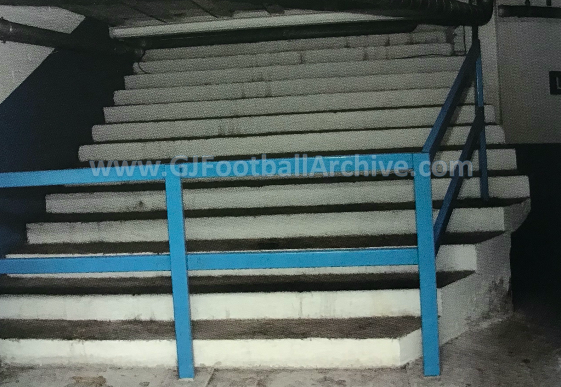
Day 14 of my posts counting down to the centenary of Maine Road’s opening game… I mentioned on a previous day how during 2002-03 I managed to wander around the stadium often exploring what the stadium had hidden away. Sometimes I’d wander with club photographer Ed Garvey but mostly I’d just go on a search myself. One day while exploring the Main Stand I spotted this staircase to nowhere.

It intrigued me quite a bit and then one game I happened to walk through here pre-match and fans were sat on the steps reading the programme and having a drink. The steps clearly once went somewhere (if you can’t tell via this photo there is a ceiling stretching across the concourse and over the steps. The steps go up to it but there’s no way through.

I started to ask people and show people this photo, which I’d taken during the week. Eventually former club employee Roger Reade, who has fulfilled a variety of roles over the years but is probably best known for his work with the Junior Blues, explained that when the club developed its hospitality functions in the 1980s the staircase was blocked off and an executive suite built above it. So that’s that. An original 1923 staircase that by the late 1980s was redundant. Incidentally, it’s not the only redundant staircase by this time and I’ll perhaps talk about one at the Kippax later this year.

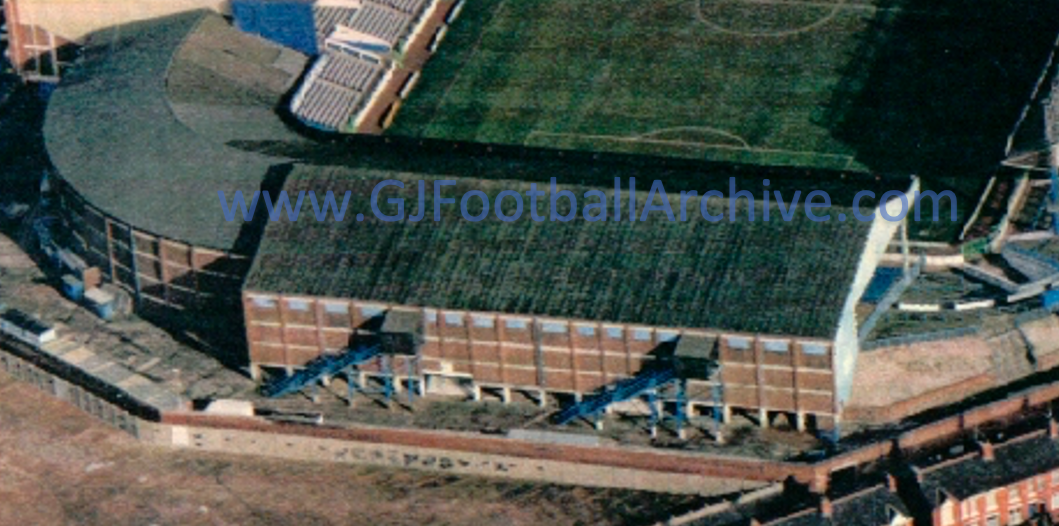
For those unfamiliar with Maine Road this may help locate the staircase to nowhere. It was in the public concourse area of the Main Stand, roughly behind the Main Stand tunnel to the right of number 3 on the photo below.

Maine Road aerial 1971 from Farewell To Maine Road
Stair case to nowhere Main Stand, photographed by Gary James in 2002

If you’d like to read more on the history of Maine Road, take a look at Farewell To Maine Road, which can be downloaded from this page:

If you enjoy all the free material on my website and would like to support my research and keep this website going (but don’t want to subscribe) then why not make a one-time donation (or buy me a coffee). All support for my research is valued and welcome. It allows me to keep some free material available for all. Thanks.

Choose an amount

£2.50
£5.00
£7.50

Or enter a custom amount

£

Your contribution is appreciated.

Donate

Maine Road 100 – Day 13 Answer

The answer to yesterday’s name the year question is….

Clues:

  • Both the Platt Lane Corner and Platt Lane Stand have been built (check previous days for that).
  • Neither the Kippax has been roofed nor floodlights erected.
  • There are few cars on the road
  • It’s a close season photo (goal posts are missing) but that year there was to be something bright erected in strategic locations around the ground

The year was 1953. This image was taken that close season, before the original floodlights were erected in each corner (used for the first time in October 1953).

If you’d like to read more on the history of Maine Road, take a look at Farewell To Maine Road, which can be downloaded from this page:

If you enjoy all the free material on my website and would like to support my research and keep this website going (but don’t want to subscribe) then why not make a one-time donation (or buy me a coffee). All support for my research is valued and welcome. It allows me to keep some free material available for all. Thanks.

Choose an amount

£2.50
£5.00
£7.50

Or enter a custom amount

£

Your contribution is appreciated.

Donate

Latest Manchester Confidential Article: The FA Cup

My latest article on football for Manchester Confidential is now live. It’s about the All-Manchester FA Cup final. It also asks a simple trivia question: can you name all the previous Greater Manchester FA Cup finals? For the answer to that and the article see:

https://confidentials.com/manchester/the-all-manchester-fa-cup-final?id=646f468595988

Maine Road 100 – Day 13

Day 13 of my posts counting down to the centenary of Maine Road’s opening game. Today is another name that year. Have a look at this amazing photo of Maine Road and tell me when you think this was taken. I’ll give a few clues (below) and will post the answer tomorrow.

Clues:

  • Both the Platt Lane Corner and Platt Lane Stand have been built (check previous days for that).
  • Neither the Kippax has been roofed nor floodlights erected.
  • There are few cars on the road
  • It’s a close season photo (goal posts are missing) but that year there was to be something bright erected in strategic locations around the ground

So what year do you think it was? It’s a great image and shows the scale of the place in a way that some images do not. Amazing to think that the base of the Main Stand remained until demolition in 2003 and the Platt Lane roofs were there until that stand was demolished in 1993.

This image of it is from 1968 and for those unfamiliar with Maine Road this may help. Number 7 below is the large open terracing on the older photo while number 10 is the open terracing behind the goal. The Main Stand roof (1) had been altered in between these two images being taken but the Platt Lane roof (4) & (5) was the same construction.

Maine Road aerial 1971 from Farewell To Maine Road

If you’d like to read more on the history of Maine Road, take a look at Farewell To Maine Road, which can be downloaded from this page:

If you enjoy all the free material on my website and would like to support my research and keep this website going (but don’t want to subscribe) then why not make a one-time donation (or buy me a coffee). All support for my research is valued and welcome. It allows me to keep some free material available for all. Thanks.

Choose an amount

£2.50
£5.00
£7.50

Or enter a custom amount

£

Your contribution is appreciated.

Donate
Party Like It’s 1999

On this day (30 May) in 1999 Manchester City won the Second Division Play Off final at Wembley in a tense, dramatic day. Understandably, Paul Dickov’s goal in that Play Off final has often been described as the most important Manchester City goal of all time.  That goal does deserve significant recognition, however it is also important to remember the other contributing factors on that day all those years ago, including the opening City goal scored by Kevin Horlock.

The late 1990s had been a very difficult period for City and Horlock’s goal came at a moment when all hope that the Club could resurrect itself seemed to have vanished.   This goal was obviously important as it gave City hope and ultimately that transferred into achievement.

The following article, covering Horlock’s goal and the story of that day, is available for subscribers to the website. It costs £20 a year (it works out £1.67 per month) and you get full access to all articles posted, including PDFs of the out of print Manchester A Football History and my first ever book about Manchester City. There are also audio interviews & more. Do a few searches on past content to see what’s available.      

Subscribe to get access

Read more of this content when you subscribe today.

Manchester’s Football origins

As we now build up to the first all-Manchester FA Cup final and at a time when Manchester will, regardless of who wins, sweep up all the major domestic trophies, I think it’s worth pausing to think about the city’s earliest clubs. I’ve done lots of research over the years on Manchester’s football origins and published both books and articles about it. Some of these are free to download. So why not take a look at the following article which briefly tells the story of Hulme Athenaeum – the earliest known association football club in Manchester (and Lancashire for that matter!):

https://www.tandfonline.com/doi/full/10.1080/17460263.2013.873075

The article also talks about other Manchester clubs, most significantly Manchester AFC who paved the way for City & United.

Worth noting the stuff about John Nall – the Hulme secretary and a founder of Manchester AFC. That man is often forgotten but he remained involved with football from Hulme’s formation through to his death in the late 1890s. He was present at several key moments in the formative years of Manchester City and was a key figure behind the Manchester FA. His story needs to be remembered.

Some have suggested that Hulme played rugby not football and it is fair to say that as the rules of football were developing there were many variations across the country. However, both Nall and others I’ve researched believed they were playing association football and his direct and active involvement with both the Manchester FA & the Lancashire FA proves he knew what ‘football’ was. Hulme played association football.

If you enjoy all the free material on my website and would like to support my research and keep this website going (but don’t want to subscribe) then why not make a one-time donation (or buy me a coffee). All support for my research is valued and welcome. It allows me to keep some free material available for all. Thanks.

Choose an amount

£2.50
£5.00
£7.50

Or enter a custom amount

£

Your contribution is appreciated.

Donate

The 2000s: This Week 2006-07

Continuing the weekly series on Manchester City’s seasons from 1999-2000 through to 2008-09. Each week I’ll be publishing here the story of a different season of that remarkable ten-year period. Today we have a 2,900 word article on the 2006-07 season (below).

Subscribe to get access – Annual

This article is for subscribers to my website. It costs £20 a year to access everything on the site since creation in December 2020. That includes articles, history talks, videos, interviews & more. There’s also a monthly option below.

Subscribe to get access – Monthly

Monthly subscription costs £3 per month to access everything on the site since 1 October 2022 (cancel anytime). All subscribers access all new material until their subscription ends. Why not give it a try for a month?

Maine Road 100 – Day 12

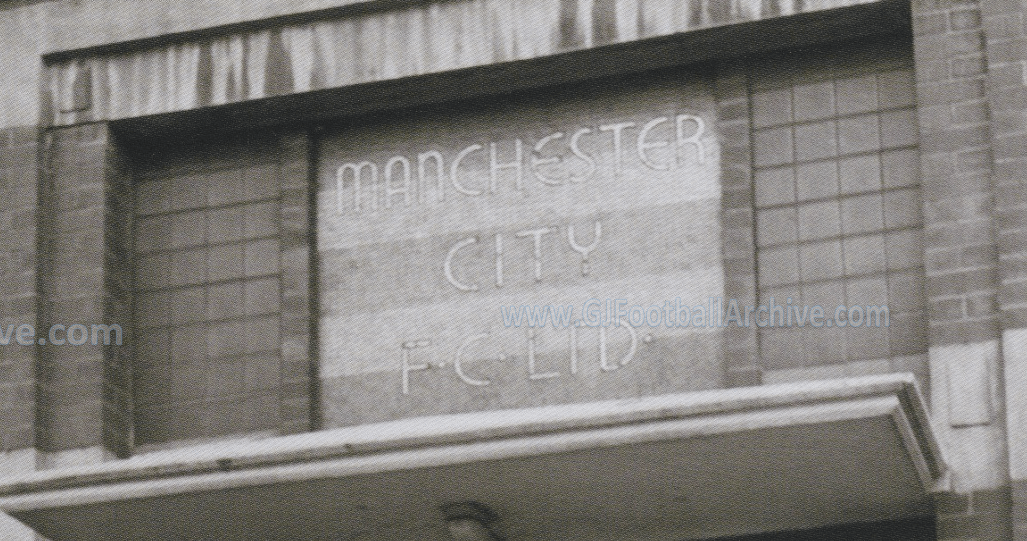
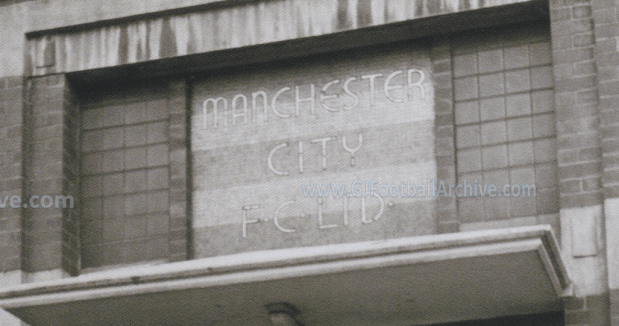
Day 12 of my posts counting down to the centenary of Maine Road’s opening game. Today is a simple photo of something that became lost after decades of proudly stating the club’s name – the central mosaic.

Created in 1923 for the new stadium the central mosaic was one of three created to proudly spell out the club’s name at their new home. I’ve written a lot about these and you can read more in the second chapter of Farewell To Maine Road (I talk about the people who made the mosaics there):

The central mosaic was proudly visible to all from 1923 through to the late 1970s when it was covered up by an advertising hoarding. I was told while researching the book that a refurbishment of the Main Stand saw an air conditioning unit get smashed through it, damaging it forever. You can see the advertising board in this photo:

I do know that during Maine Road’s demolition in 2004 part of the mosaic became visible briefly one day. How I wish we’d have been able to salvage it! If I get chance I’ll post that here, along with other demolition images, later in this series.

The central Mosaic at Maine Road, seen in 1968

This image of it is from 1968 and for those unfamiliar with Maine Road he specific location of the mosaic was above the main entrance of the Main Stand (the Main Stand is number 1 on this image) facing Maine Road itself.

Maine Road aerial 1971 from Farewell To Maine Road

If you’d like to read more on the history of Maine Road, take a look at Farewell To Maine Road, which can be downloaded from this page:

If you enjoy all the free material on my website and would like to support my research and keep this website going (but don’t want to subscribe) then why not make a one-time donation (or buy me a coffee). All support for my research is valued and welcome. It allows me to keep some free material available for all. Thanks.

Choose an amount

£2.50
£5.00
£7.50

Or enter a custom amount

£

Your contribution is appreciated.

Donate
The All-Manchester FA Cup Final

Well, the Premier League is now over for another year and we know who the Champions are and who has qualified for Europe etc. so it’s time to look forward to the first ever all Manchester FA Cup final. There have been FA Cup finals between two teams from present day Greater Manchester before (the first one being City v Bolton in 1904) but this is the first to involve both Manchester clubs.

Prior to this year’s final, the closest Manchester City and Manchester United have got to playing each other in a Wembley FA Cup final were the FA Cup semi finals in 1926 and 2011. I wasn’t around in 1926 but I definitely was in 2011! So a couple of years ago I made this special audio recording talking about the years building up to the semi and the day itself from a Manchester City perspective. Many of you have listened to this already but if you haven’t then it tells the story of the 2011 FA Cup semi final and the years between 1976 and that moment in 2011 for City.

I include audio from interviews I did with a variety of people including Khaldoon, Peter Swales, Garry Cook, Brain Marwood and many others.

If you have heard it before then maybe you should listen again to remind yourself of how we all felt and why that game was so significant.

I include a few words from Roberto Mancini recorded in 2011 and at one point he talks about the view that was then being expressed that City were ‘trying’ to buy success (now they say City ‘have’ bought success!). His words are a reminder that City have been having that particular criticism thrown at them for over a decade! Oh well, I wonder how long those criticisms were laid at other clubs who had seen major investment which propelled them forward?

Anyway, get yourself a brew and be prepared to be transported back in time. Here’s the recording:

If you enjoy the recording then please let me know, comment or subscribe to the site. If you don’t fancy doing that then there’s also the option to make a welcome donation to keep this site going (see below). I’ve produced videos/talks like this highlighting key points in Manchester City’s footballing history which subscribers can watch too. 

If you enjoy all the free material on my website and would like to support my research and keep this website going (but don’t want to subscribe) then why not make a one-time donation (or buy me a coffee). All support for my research is valued and welcome. It allows me to keep some free material available for all. Thanks.

Choose an amount

£2.50
£5.00
£7.50

Or enter a custom amount

£

Your contribution is appreciated.

Donate


Subscribe to get access – Annual

Read more of this content when you subscribe today. It costs £20 a year to subscribe (it works out £1.67 a month) or £3 if you’d like to sign up a month at a time. Annual subscribers get full access for as long as you subscribe (you can always try it for a month). It’s worth bearing in mind that the 2010 Manchester A Football History cost £24.95 and all subscribers will be able to access all of that for as long as they are a subscriber (plus all the other stuff of course).

Subscribe to get access – Monthly

It costs £3 a month to subscribe a month at a time. Why not give it a try! Monthly subscribers get access to everything posted since 1 October 2022 for as long as you subscribe.

Match Stats for the 2011 FA Cup Semi-final

City 1-0 United (HT 0-0)

Yaya Toure 52

City: 25 Hart 04 Kompany (yellow card), 05 Zabaleta (yellow card), 13 Kolarov, 19 Lescott, 11 Johnson (Wright-Phillips 79), 18 Barry, 21 Silva (Vieira 86), 34 De Jong (yellow card), 42 Y Toure, 45 Balotelli (yellow card). Substitutes 12 Taylor, 38 Boyata, 07 Milner, 08 Wright-Phillips, 24 Vieira, 10 Dzeko, 27 Jo

United: 01 Van der Sar, 03 Evra, 05 Ferdinand, 15 Vidic, 22 O’Shea (Fabio Da Silva 84), 13 Park Ji-Sung, 16 Carrick, 17 Nani, 18 Scholes (red card), 25 Valencia (Hernandez 65), 09 Berbatov (Anderson 74). Substitutes 29 Kuszczak, 12 Smalling, 20 Fabio Da Silva, 08 Anderson, 28 Gibson, 07 Owen, 14 Hernandez

Referee: Dean

Attendance: 86,549

Maine Road 100 – Day 11

Day 11 of my posts counting down to the centenary of Maine Road’s opening game. Today follows on from yesterday’s post and shows the demolition of the original Platt Lane Stand.

I know the quality isn’t great but hopefully you can just make out the end of the concrete terracing and see how the 1935 roof was built over a wooden extension to the stand.

Have a look back at yesterday’s post to find out more.

To help those unfamiliar with Maine Road locate the specific location of this post, the Platt Lane Stand is the one where the number 4 & 5 are on this plan. The demolition photo was taken from near the number 6 looking towards the stand.

Maine Road aerial 1971 from Farewell To Maine Road

If you’d like to read more on the history of Maine Road, take a look at Farewell To Maine Road, which can be downloaded from this page: