On this day (24 January) 1981 John Bond’s Manchester City defeated his former club Norwich 6-0 in the FA Cup fourth round tie. Subscribers can read a report and watch highlights here:
Subscribe to get access
If you would like to read this and all the other great content on here then please subscribe. Annual subscribers (£20 per year, sign up here) get access to everything posted on the site including PDFs of 2 of my out of print books and archived content like my exclusive audio interviews with John Bond, Malcolm Allison etc. Not only that but you’ll be helping to support this site’s development.
If you would like to read this and all other great content on here then please subscribe. Monthly subscribers (£3 per month, cancel anytime and sign up here) get access to everything posted on the site since 1 October 2022. Not only that but you’ll be helping to support this site’s development.
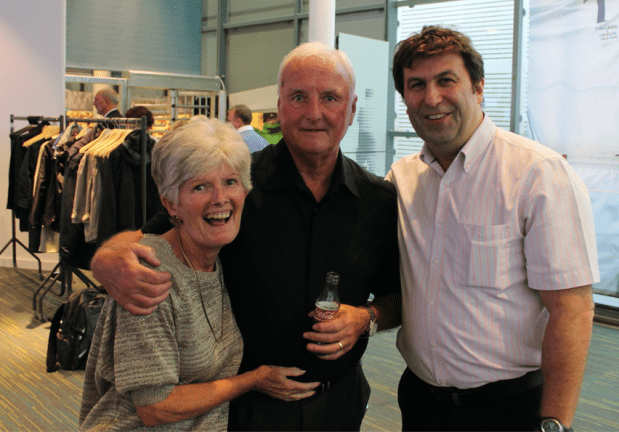
On this day (26 February) in 1966 Manchester City won away at Carlisle United, watched by 13,510, in Division Two. City won 2-1 with goals from Glyn Pardoe (photographed here at the launch of Manchester The City Years in 2012 with Janice Monk and Steve Mackenzie) and Mike Summerbee. Subscribers can read more on Manchester City during the 1965-66 season below. This was an important season in City’s development.
If you’d like to read this 4100 word article, plus all other articles on the site, then please subscribe (see below). As with most of the other features in this series it includes words from interviews I have performed with those who were there.
Subscribe to get access
Read more of this content when you subscribe today. It costs £3 per month (cancel anytime) or sign up for a year at the discounted price of £20 per year (works out £1.67 per month). Subscribers access the 1000+ articles posted so far and the others scheduled during the life of your subscription.
A new daily series of articles for subscribers started yesterday covering the 1980s. This is a seasonal journey through a truly important decade in the history of Manchester City Football Club. Today’s article is a 2,500 word feature on the 1981-82 season. Enjoy!
Subscribe to get access – Monthly
Read more of this content when you subscribe today. It costs £3 per month (cancel anytime) to access everything posted since 1 October 2022 or there’s a special annual rate below which gives greater access and works out much cheaper.
Read more of this content when you subscribe today. It costs £3 per month (above) or £20 a year (here) to access everything posted since the site was created in December 2020. This special rate works out about £1.67 a week and gives access to everything posted, including PDFs of 3 of my books.
On this day (24 January) 1981 John Bond’s Manchester City defeated his former club Norwich 6-0 in the FA Cup fourth round tie. Subscribers can read a report and watch highlights here:
Subscribe to get access
If you would like to read this and all the other great content on here then please subscribe. Annual subscribers (£20 per year, sign up here) get access to everything posted on the site including PDFs of 2 of my out of print books and archived content like my exclusive audio interviews with John Bond, Malcolm Allison etc. Not only that but you’ll be helping to support this site’s development.
If you would like to read this and all other great content on here then please subscribe. Monthly subscribers (£3 per month, cancel anytime and sign up here) get access to everything posted on the site since 1 October 2022. Not only that but you’ll be helping to support this site’s development.
The 1980-81 season was one of City’s most remarkable and culminated in two appearances at Wembley. At the season’s start, however, a trip to Wembley seemed like one of Manager Malcolm Allison’s more imaginative dreams, especially as the Blues succumbed to successive defeats to a Kevin Keegan inspired Southampton (2-0) and newly promoted Sunderland (4-0).
Subscribe to get access
Read more of this content when you subscribe today.
It’s the 40th anniversary of the 1981 FA Cup final on May 9 and ten years ago, as we looked forward to Manchester City appearing in the 2011 FA Cup final, I was asked by the Manchester Evening News to write profiles of the eleven players who started the 1981 final.
For the next few days I will post those profiles, one a day, free to read here. These will only be free to view until May 16, so please read them while you can. Thanks.
Here’s the latest (appearing here as it was written in 2011)…
As we look forward to the 2011 FA Cup final, Gary James takes a look at the eleven players who made the starting line-up for City’s last FA Cup final in 1981. Today,midfielder Steve Mackenzie
Malcolm Allison’s signing of Steve Mackenzie stunned the football world. The 17 year old signed from Crystal Palace for an incredible £250,000 in July 1979. The fee alone was huge – six months earlier the transfer record stood at £516,000 – but the fact that Mackenzie hadn’t even appeared in the League and was now the costliest teenager ever was astounding.
Inevitably, great pressure followed. Mackenzie appeared in the opening 14 League games of 1979-80 but spent more time playing reserve football. However, by the spring of 1981 Mackenzie was a permanent fixture in the side, delivering game after game. Captain Paul Power said at the time: “We look a different team when Steve is playing. He has fought his way back and proved to the boss that we can’t afford to be without him. He adds stability to our midfield.”
Mackenzie, as well as general play, contributed some significant goals such as the spectacular 25 yarder in the 4thround tie against Norwich, and the solitary goal in the February ’81 Manchester derby – “Mac The Knife” read the MEN headline.
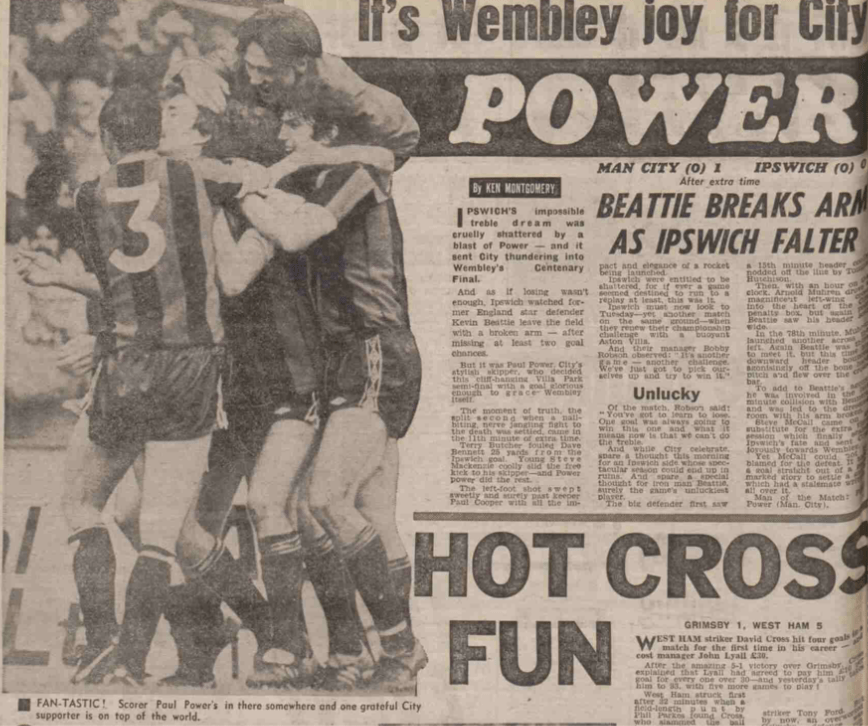
It was Mackenzie who rolled a free kick to Power – a move they had worked on in training – that brought the only goal of the semi-final.
In the 58th minute of the final with the Blues leading 1-0, Mackenzie came close to scoring. John Bond remembered: “Reeves and Mackenzie played this magnificent 1-2. Mackenzie got behind the defence, went around the goalkeeper, went to slot the ball into the net and it hit the post and went wide. They’d have been dead and buried!”
Three minutes after Spurs had taken an 8th minute lead in the replay, Mackenzie equalised with one of the greatest cup final goals of all time. A Ranson free kick was met by a half clearance allowing Mackenzie to volley home from about 20 yards. It was a tremendous goal and the type of effort that should have won the cup. Paul Power: “I still believe Steve Mackenzie’s strike was just as impressive as Villa’s second goal. If that goal had been the match winner it’s possible that would have been voted the best goal of all time.” Bond agreed: “Steve Mackenzie’s volley was unbelievable!”
As we all know, Spurs went on to win the replay. Mackenzie played in one further City game but was sold – to raise money for the purchase of Trevor Francis – for £600,000 to West Bromwich Albion the following August. Considering his age and performances during 1981 it was a disappointing departure.
Spells at Charlton and John Bond’s Shrewsbury followed. Once his playing career came to an end Mackenzie pursued his interest in computers to gain a BA Hons degree in Interactive Multimedia Communication in 1998. With a strong interest in teaching and learning Mackenzie gained further qualifications in teaching and e-learning.
He also obtained the Advanced Level FA Football Coaching award and coached at West Brom’s Academy until 2000. He also had an enjoyable two year stint in non-league management at Atherstone United.
Since 2003 he has worked full time in Higher Education at De Montfort University primarily as a designer and developer of distance learning courses.
In 2004 at the age of 42 he made one appearance – and scored – for Gresley Rovers. Today he keeps in touch with the game, reporting for the Press Association, and takes a keen informal interest in football coaching and player development.
Looking back in 2011, Mackenzie’s strongest recollections from 1981 focus on his side’s endeavours: “pride in fighting so hard to win the cup, knowing if we had to lose we could not have done much more.” The highlight remains, of course, his goal: “the exhilaration of scoring a spectacular goal to get us back in the game – I think my beaming smile said it all.”
Janice Monk (former City Store), Glyn Pardoe and Steve Mackenzie at the launch of Manchester The City Years in 2012
My biography of Peter Barnes is now available to subscribe to. Order by May 15 and you will receive a copy signed by me & Peter, the book posted to your home address before it appears in any shop AND your name printed in the book. Order (and more details) here:
First published in the build up to the 2011 FA Cup final, Gary James takes a look at the eleven players who made the starting line-up for City’s FA Cup final in 1981. Today, midfielder Steve Mackenzie
Subscribe to get access
Read more of this content when you subscribe today.



 Gary James' Football Archive