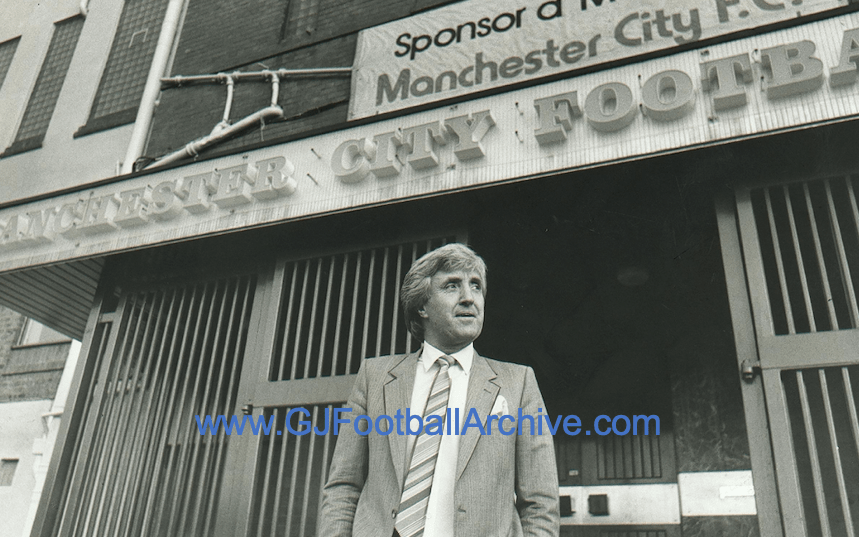
John Bond Interview – Part Four

Back in November 1995 I interviewed the former Manchester City manager John Bond. At the time I was researching my in-depth history of the club called Manchester The Greatest City (later updated as Manchester The City Years). 

I met John at his home and spent a good few hours with him chatting about the Blues and his career. I loved doing this interview and was always grateful for the time he gave me. He was extremely frank, open and honest – which delighted me because he was a great talker. He was also happy for me to share everything he said in the interview recording. I did end up quoting him extensively in the book (and in others I’ve produced) but, until publication on my blog, none of the interview had ever been heard by the wider public. 

This is part four of the interview. It’s about twenty minutes long and this is perhaps the most frank section of the entire recording. At the time we recorded this he was still somewhat upset at the way he’d been treated by City fans at the Bradford promotion game in 1989. I was one of the fans there who had not been happy with what he’d said on TV the night before and I ask him about it a little on here. Whenever I do an interview I’m never looking for soundbites or people to tell me the stories that they think I want to hear. I want the truth and to hear about their feelings. I try to ask them about moments that I remember as a fan but also the things that matter to me. So I wanted to know how he felt about City’s fans.

It upset me hearing how much he had been upset by the treatment he had received and – as you can hear in this clip – he also talks about feeling unwelcome at Maine Road (for various reasons, not simply fans). In 2002-03 I helped City with some of their plans for the end of Maine Road and I made sure that John Bond was on the guest list. I know he was reluctant about attending and had to be persuaded. City had this plan to parade a few legends around the pitch and I felt it would do John Bond some good to hear what the majority of fans actually felt about him. That final day at Maine Road he was given a fantastic ovation.

In a later interview he told me: “I was gobsmacked by their reaction!  When I came out and heard the cheering I was delighted.  I loved that reaction.  Afterwards I rushed home and told my family about the reception and how delighted I was with it. There were times during my management when I received fantastic support from the fans, and at Maine Road’s final game I was delighted with the ovation. I truly enjoyed that feeling when I walked around the pitch.  I’d like to thank the supporters for that reaction.”

So, when you’re listening to this section of the interview it’s important to remember that what happened in 2003 had allowed resolution to occur. He no longer felt so negatively about fans. His views in 1995 though should still be heard.

In this piece he also talks about Peter Swales, the City directors, why he left and so on. Again, his views are frank. I don’t necessarily agree with everything he said but much of what he said about the directors during his time should be heard. It adds context to what many of us always felt. As we recorded this in 1995 it’s also worth pointing out that Bond could see what perhaps those of us who supported City could not see entirely – that was the downward path the Blues were following and why. This interview occurred while City were still a Premier League side but listening to this provides some good indications of why things got worse for City as the decade progressed. 

Of course as this interview was recorded on my old cassette recorder the quality isn’t the best.

So, here exclusive to subscribers is the fourth part of my interview:

Subscribe to get access

If you would like to listen to the fourth part of this frank interview (and the other parts) and read all the in-depth articles on this site (including the entire Manchester A Football History book) then please subscribe. It works out about £1.67 a month if you take out an annual subscription (£20 per year, here) or £3 a month (below) if you’d like to sign up for a month at a time. Annual subscribers access everything since December 2020.

Subscribe to get access

If you would like to listen to the fourth part of this frank interview (and the other parts) and read all the in-depth articles on this site (including the entire Manchester A Football History book) then please subscribe. It works out about £1.67 a month if you take out an annual subscription (£20 per year, above) or £3 a month (here) if you’d like to sign up for a month at a time. Monthly subscribers access everything since 1 October 2022.

If you missed the other three parts then they can be accessed by selecting the John Bond tag below or by searching for his name.

The Story of 1974-75

Here’s a review of the 1974-75 season as experienced by Manchester City. That year Manchester City finished 8th with an average attendance of 32,898 (fifth highest in the top flight). The following explains how Denis Law played on into the 1974-75 season, even scoring in one game (this is often ignored by those who incorrectly claim Law retired after the 1974 Manchester derby – he did not and played club football in 1974-75 for City!).

Subscribe to get access

This 1500 word article is available to subscribers. It costs £3 per month (below) or £20 a year (here) to subscribe. Annual subscribers get access to all material (including PDFs of 2 books out of print and audio interviews etc.) posted since December 2020 and monthly subscribers get access to everything posted since 1 October 2022.

Subscribe to get access

This 1500 word article is available to subscribers. It costs £3 per month (here) or £20 a year (above) to subscribe. Why not subscribe for a month and see what you think? Monthly subscribers get access to everything posted since 1 October 2022.

Managerial Change at MCFC

On this day (November 25) in 1989 Brian Gayle played his last League match for City.  The game ended in a 1-1 draw (Clive Allen scored) and Chairman Peter Swales decided the time was right to dismiss manager Mel Machin.  Machin, who had guided the side to promotion the previous May, was dismissed that weekend and not replaced until 8th December.

You can read more about this era of Manchester City’s history here:

41 Years Ago Today: Trevor Francis Debut

I feel old today as 41 Years ago today (September 5, 1981) I attended my first away game. That day my parents told me we were going to Stoke v Manchester City. The reason why? It was to be the debut of new City striker Trevor Francis. This was perceived as a huge transfer at the time (don’t be fooled into thinking major transfers have only come in recent years!) and part of manager John Bond’s plan to challenge for the League title – and for a while it looked as if they would!

Here for subscribers is a piece on that day and what followed with quotes from interviews I’ve performed with Trevor Francis and Peter Swales who tell the story of that time. There are also contemporary match reports too:

Subscribe to get access

Read this and all other content when you subscribe today. It costs £20 per year and for that you get the full downloads of Manchester A Football History and From Maine Men To Banana Citizens plus access to all other posts, interviews etc. Or try it for £3 per month (cancel anytime) and access everything for as long as you subscribe.

Bidding War Between MCFC And Villa!

On this day (25 August) in 1981 Manchester City and Aston Villa were in a bidding war to sign Trevor Francis.

I know in recent years City have been criticised by some in the media for both high spending and for not spending more than they deem a player is worth (what a crazy world it is when a potential purchasing team is criticised for not wanting to spend what a selling club want when there are no other clubs interested in buying that player at that price!) but in 1981 the desire to sign Francis meant they were prepared to spend big if necessary.

A bidding war is always in the best interests of the selling club and occasionally a friendly word with a journalist or another club can create a bidding war even if there really isn’t much interest from a club. Thinking back I can’t remember Villa seriously going after Francis but this Daily Mirror report suggests they were interested.

It wasn’t long of course before City got their man.

Notice the brief mention of Peter Barnes at the bottom of that cutting? If you want to know more then obviously I recommend The Peter Barnes Authorised Biography (use tabs/menu to find out more).

The Peter Swales Video You’ve All Been Waiting For

Here it is online at last! On several occasions over the last decade myself & Will McTaggart have included a video profile of MCFC chairman Peter Swales in our Boys In Blue film show. each time those who missed it have asked if they could see a video of it. That’s never been possible until now! At long last you can now see the Swales profile here…

The BBC have included it in a series of films recently released. I would urge all MCFC fans and others to watch this in all its glory. Some of you may wish to jump to the David Brent-esque clip at 3 mins 20. Others may want to see the Ian Niven roof plan that was thwarted by signing Dave Watson at 1 min 45 secs. Then there’s the scene where Swales gives Watson financial advice (45 secs) and it ends with Swales telling us he was a bit like Kevin Keegan (4 mins).

This really is MCFC gold. Enjoy:

The First PL Season Ends and Swales Out!

The 1992-93 season ended on May 8 with a 5-2 defeat for Manchester City at home to Everton. The Blues finished ninth in the inaugural Premier League campaign – not a particularly depressing position but this had been a strange season. There had been protests throughout the season. 

Here for subscribers is some explanation of what happened:

Subscribe to get access

Read more of this content when you subscribe today.

The 2011 All-Manchester FA Cup Semi Final: 1 Hour Special Audio

It’s FA Cup week AND Manchester Derby week, so the time seems right to post this special 1 hour long audio I produced last year on Manchester City’s FA Cup semi final victory over Manchester United at Wembley on April 16 2011. This recording looks at the game and the years between the 1976 League Cup success and the FA Cup glory of 2011. The 2011 semi-final was a crucial step in City’s journey since the 2008 takeover and I felt it was vital to do a special marking this.

So what’s in this special recording? Well, I’ve included exclusive material from interviews and recordings I’ve done over the years with Garry Cook, Brian Marwood, Roberto Mancini, Peter Barnes and Peter Swales.  Why Swales? Well, have a listen and you’ll hear why. Basically though I’m trying to set the tone for why the 2011 FA Cup semi final victory and overcoming Manchester United was so significant.

On Mancini… I include a few words from him recorded in 2011 and at one point he talks about the view that was then being expressed that City were ‘trying’ to buy success (now they say City ‘have’ bought success!). His words are a reminder that City have been having that particular criticism thrown at them for over a decade! Oh well, I wonder how long those criticisms were laid at other clubs who had seen major investment which propelled them forward?

Anyway, get yourself a brew and be prepared to be transported back in time. Here’s the recording:

If you enjoy the recording then please let me know, comment or subscribe to the site. If it’s of interest then, over the coming months and years, I’ll produce others like this highlighting key points in Manchester City – and Manchester’s – footballing history. It costs £20 a year to subscribe (it works out £1.67 a month) or £3 if you’d like to sign up a month at a time to get full access for as long as you subscribe (you can always try it for a month). It’s worth bearing in mind that the 2010 Manchester A Football History cost £24.95 and all subscribers will be able to access all of that for as long as they are a subscriber (plus all the other stuff of course). You can subscribe below.

Subscribe to get access to the full site

£20 per year to access everything

Match Stats for the 2011 FA Cup Semi-final

City 1-0 United (HT 0-0)

Yaya Toure 52

City: 25 Hart 04 Kompany (yellow card), 05 Zabaleta (yellow card), 13 Kolarov, 19 Lescott, 11 Johnson (Wright-Phillips 79), 18 Barry, 21 Silva (Vieira 86), 34 De Jong (yellow card), 42 Y Toure, 45 Balotelli (yellow card). Substitutes 12 Taylor, 38 Boyata, 07 Milner, 08 Wright-Phillips, 24 Vieira, 10 Dzeko, 27 Jo

United: 01 Van der Sar, 03 Evra, 05 Ferdinand, 15 Vidic, 22 O’Shea (Fabio Da Silva 84), 13 Park Ji-Sung, 16 Carrick, 17 Nani, 18 Scholes (red card), 25 Valencia (Hernandez 65), 09 Berbatov (Anderson 74). Substitutes 29 Kuszczak, 12 Smalling, 20 Fabio Da Silva, 08 Anderson, 28 Gibson, 07 Owen, 14 Hernandez

Referee: Dean

Attendance: 86,549

Kaziu Deyna

Back in 2003 I wrote this profile of former Manchester City player and Polish World Cup star Kazimierz Deyna. Deyna was such an important and unusual signing at the time he joined City in November 1978 that I feel this article is still appropriate and of interest to subscribers to my blog today.

Subscribe to get access

If you would like to read this in-depth article and all the others on this site (including the entire Manchester A Football History book) then please subscribe. It works out about £1.67 a month if you take out an annual subscription (£20 per year) or £3 a month if you’d like to sign up for a month at a time. Each subscriber gets full access to the 500+ articles posted so far and the hundreds scheduled to be posted in the coming weeks.

Manchester City in the Early 1990s

We hear so much about the Premier League era and how the game has changed, so for today’s feature I’ve decided to take a look at the early 1990s and the birth of the Premier League. It’s almost thirty years since the structure of league football changed forever and during that time some clubs have benefitted from the new structure and others have found life difficult. City have experienced both extremes of course.

The narrative that we often hear about the Blues’ journey over the last thirty years is that they’ve gone from a struggling club to a hugely successful one and, while it is true City are highly successful today and that the Blues entered their lowest ever point in the late 1990s, it is wrong to assume that the position the club found itself in by 1999 was typical of the club’s full history. 

So, here for subscribers, I’m taking a look back at the early 1990s and remind ourselves where the Blues were; who their rivals were; and the state of football at that time:

Subscribe to get access

Read more of this content when you subscribe today. It costs £3 per month (cancel anytime) or £20 a year. Throughout your subscription you can access ALL content on this site. Have a search to see what’s included.