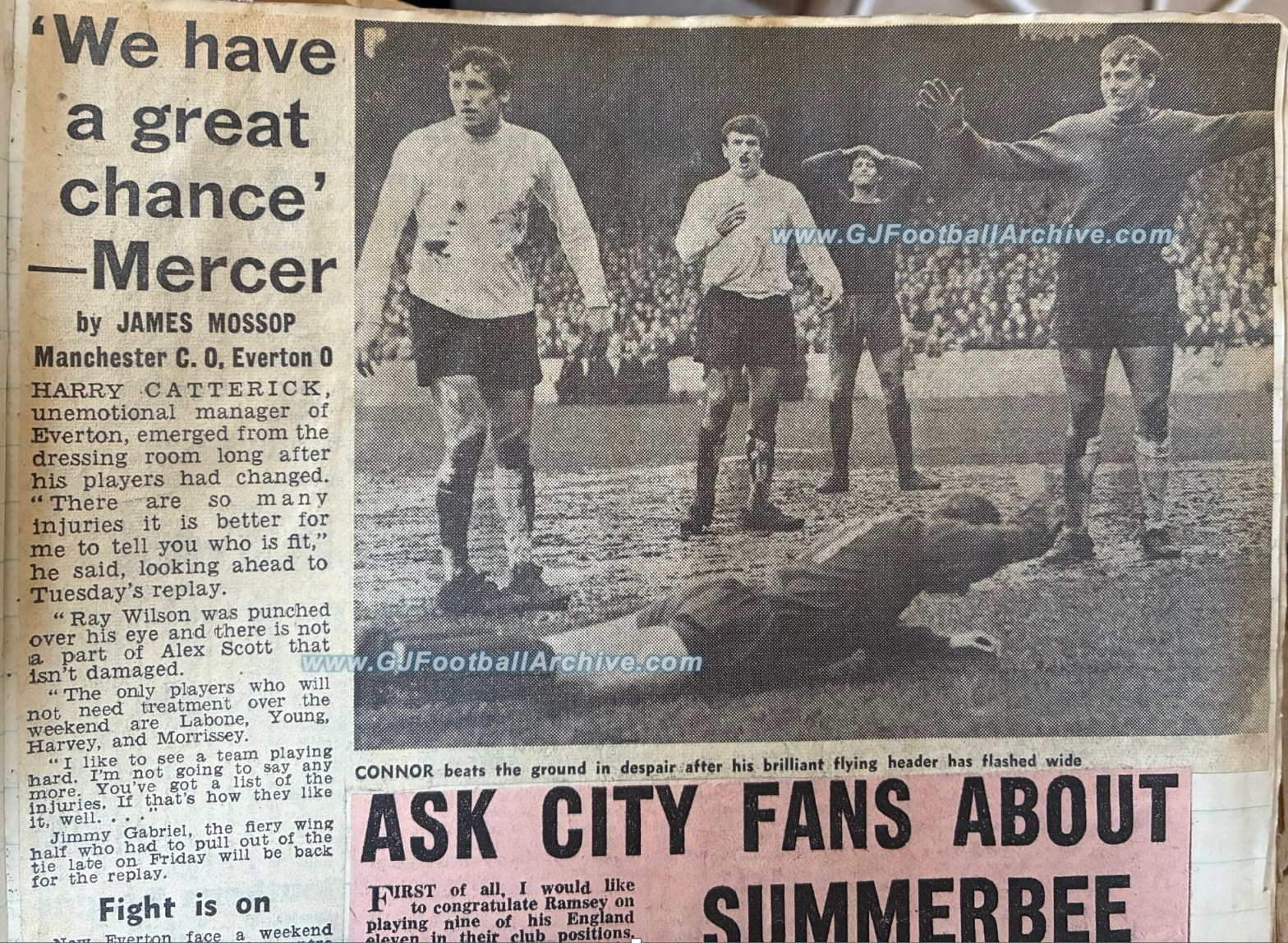
60 years ago today (26 March 1966) 63,034 watched a goalless FA Cup quarter final at Maine Road between Everton and Manchester City. It was a day that ultimately brought a lot of attention City’s way and City ‘keeper Harry Dowd was the star man according to some journalists. Here for subscribers are match reports and details of that day:
Subscribe to get access
Read more of this content when you subscribe today. It costs £3 per month (cancel anytime) or sign up at a discounted £20 per year. Every subscriber gets access to the 1000s of articles already posted and those posted throughout your subscription. This includes the full Manchester A Football History and my first City book published in 1989
If you enjoy all the free material on my website and would like to support my research and keep this website going (but don’t want to subscribe) then why not make a one-time donation (or buy me a coffee). All support for my research is valued and welcome. It allows me to keep some free material available for all. Thanks.
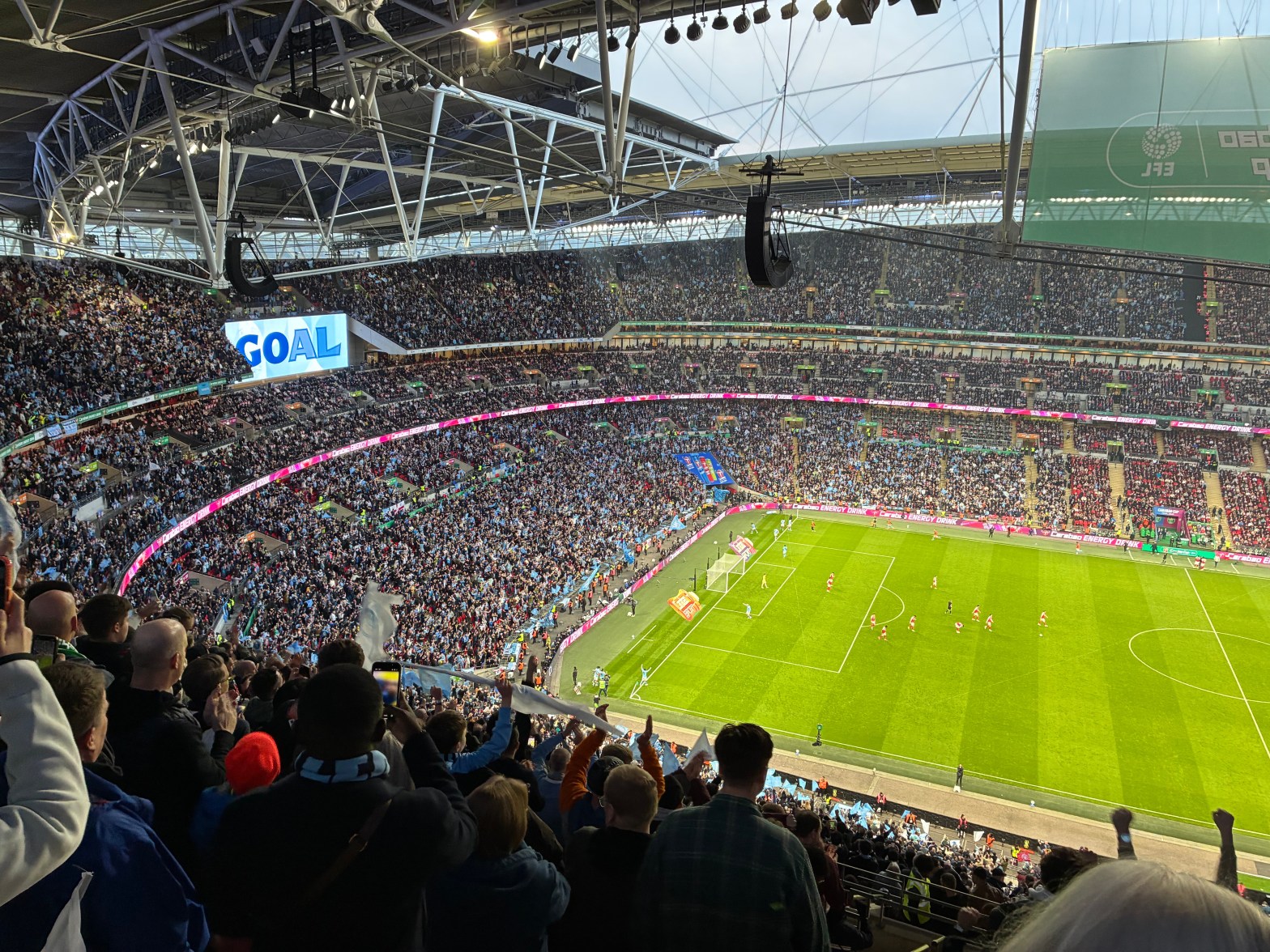
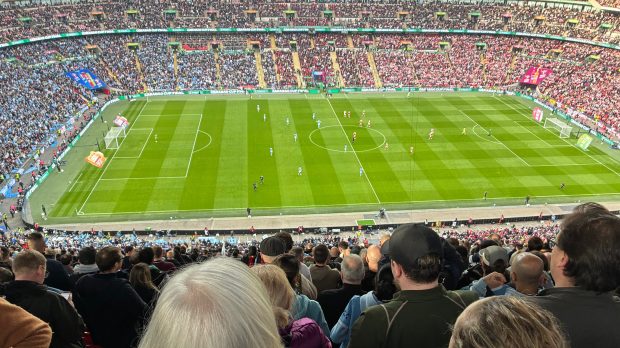
Congratulations to Manchester City on winning the League Cup last night (22 March 2026). It was, once again, great to be there and clashes between the top two are always special. Years ago the former Manchester City trophy winning assistant manager (and later manager) Malcolm Allison was in a reflective mood when he told me: ‘Celebrate every success as if it’s your first, because it could be your last.’ It’s always stuck with me because so often we see people make assumptions about trophy success and then it’s taken away. Allison definitely experienced that, so I guess what I’m saying is… Celebrate every trophy; every moment; every player etc.
Yesterday’s success was thoroughly deserved. I was nervous in that first half when it looked like Arsenal had control for key stages, but then the second half demonstrated quite clearly how City as a team can deliver. Having our 21st birthday boy Nico O’Reilly score two goals added to the occasion and allowed a few headlines to be created. Listening to his BBC R5L interview on the way back from Wembley suggested that Nico would certainly be celebrating that success last night.
So much has already been written about the final so I don’t need to add much here. I absolutely loved the win and enjoyed the wider experience of Wembley. It’s changed a lot since my first visit (1986 Full Member’s Cup – 40th anniversary today!) and even since the 2011 FA Cup semi & final. We didn’t have a Greggs or shopping centre at our end back then!
In the 1900s when City first started making trips to Cup Finals and the 1920s when they first went to Wembley newspapers would often carry stories of how the train companies and Wembley organisers would change the food on offer depending on where the clubs were from. The 1904 final at Crystal Palace between City and Bolton brought stories published on the number of pies ordered being significantly higher than some other years because of the volume of northern fans. Southern fans, it reported, preferred sandwiches. I’d love to see if we could find similar details today – was Greggs busier last year because Newcastle were there for example?
Anyway…. If you support City enjoy the success. It was absolutely deserved and a great occasion again.
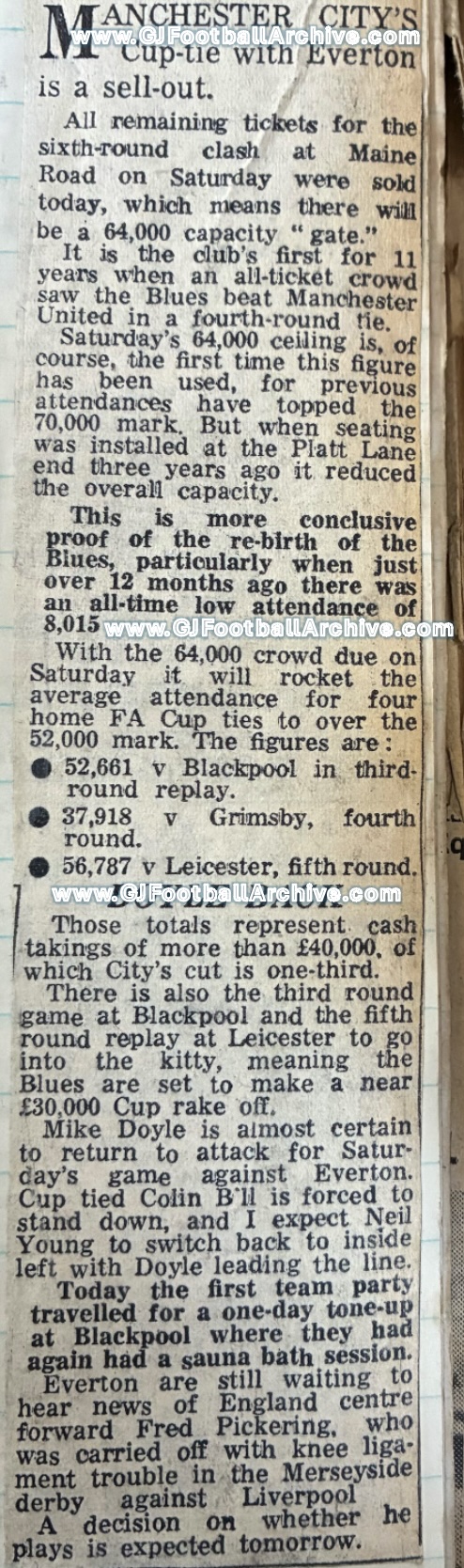
60 years ago this week (March 1966) Manchester City announced that their FA Cup quarter final was a 63,000 sell out. Why is this significant? Because the attendance was larger than any domestic crowd at Old Trafford that season, but why is that significant? Because at the start of the season United’s Pat Crerand bet City assistant manager Malcolm Allison that City would never get more than 30,000 for a game again! I interviewed Malcolm back in 1993 when we talked about this and he also mentioned it in he biography. The story…
Basically, Allison was sat at United’s League championship celebration and became somewhat frustrated by the glorification of United that night. While Joe Mercer took a diplomatic approach, afterall it was United’s celebration dinner, Allison decided to speak out. He told Matt Busby’s son Sandy that his dad had a twenty year start but ‘I’ll pass him in three’ and then Allison claimed he got into a discussion with Crerand about ‘little City’ compared to United. Allison claimed Crerand made a £10 bet with him that City would never again get 30,000+ in Maine Road.
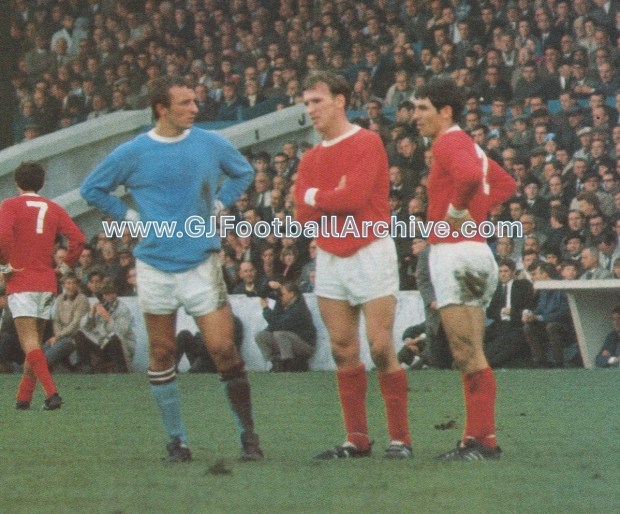
A pause in the action (September 1967 Manchester derby) gives Summerbee Crerand and Dunne an opportunity to debate the action so far (Image: The Pride of Manchester, 1991)
On a Wednesday night in October (27/10/65) City attracted 34,091 for the visit of Norwich in the Second Division. Allison told me he couldn’t remember whether he ever got his £10 but he did laugh a great deal when I told him that United’s attendance the previous Saturday was 32,716 for the top flight visit of Fulham.
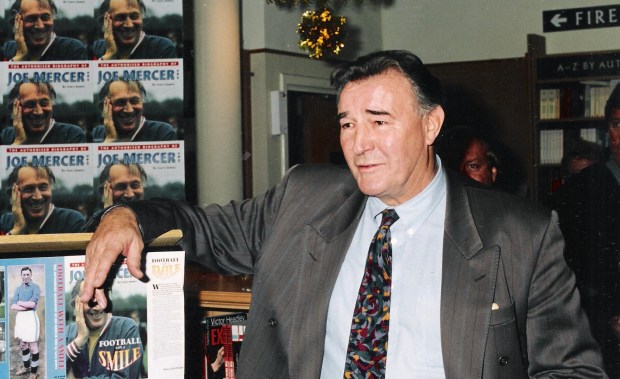
Malcolm Allison at the launch of Gary James’ Football With A Smile: The Authorised Biography of Joe Mercer, OBE in December 1993. Note Francis Lee appearing behind Allison.
What was even more remarkable was that the City-Everton FAC tie on 26 March 1966 was watched by 63,034 and that was higher than any domestic crowd at United that season. Allison laughed again when we discussed that briefly. As a comparison, United attracted 58,161 for their League game with Liverpool (lowest home League attendance 23,039 v Aston Villa) and they did get 60,433 for their FAC Cup quarter-final replay with Preston. Plus United managed to better all these attendances with 64,035 for their European Cup quarter-final with Benfica.
I did an earlier interview with Allison that can be listened to here:
If you’re new to this website there’s lots more like this elsewhere on the site. Some is available for subscribers and some is available for all. If you’d like to subscribe then see see ‘How To Subscribe’ lower down. If not why not help keep it going and support the research too:
If you enjoy all the free material on my website and would like to support my research and keep this website going (but don’t want to subscribe) then why not make a one-time donation (or buy me a coffee). All support for my research is valued and welcome. It allows me to keep some free material available for all. Thanks.
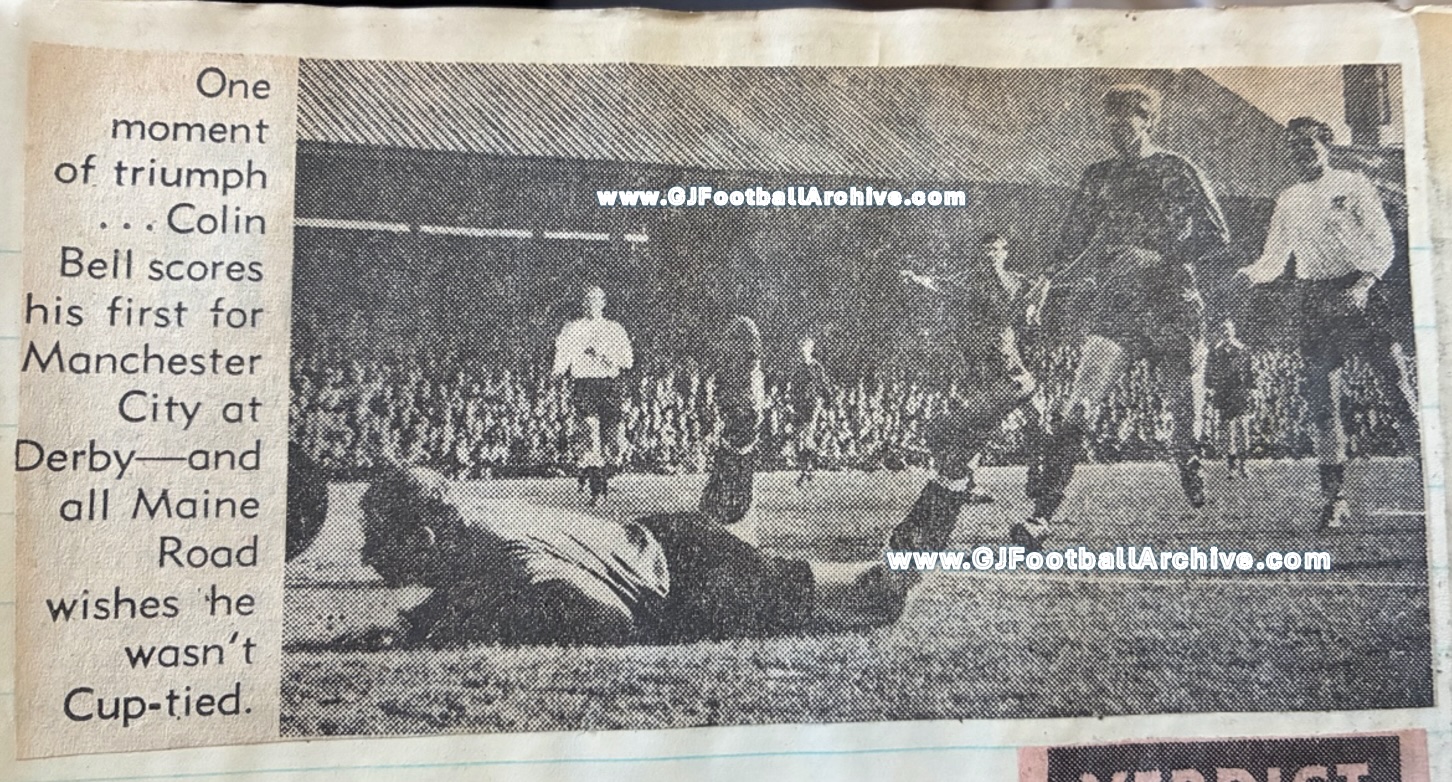
60 years ago today (19 March 1966) Colin Bell made his debut for Manchester City in a League game with Derby County. The game ended 2-1 with Colin Bell scoring a debut goal (see main photo). Joe Mercer and Malcolm Allison often joked about the goal (according to Allison it hit him and went in which Allison claimed caused Mercer to cry out: ‘Oh no, what have we done!’). That was more of a story used years later when Colin had proved his worth time and time again.
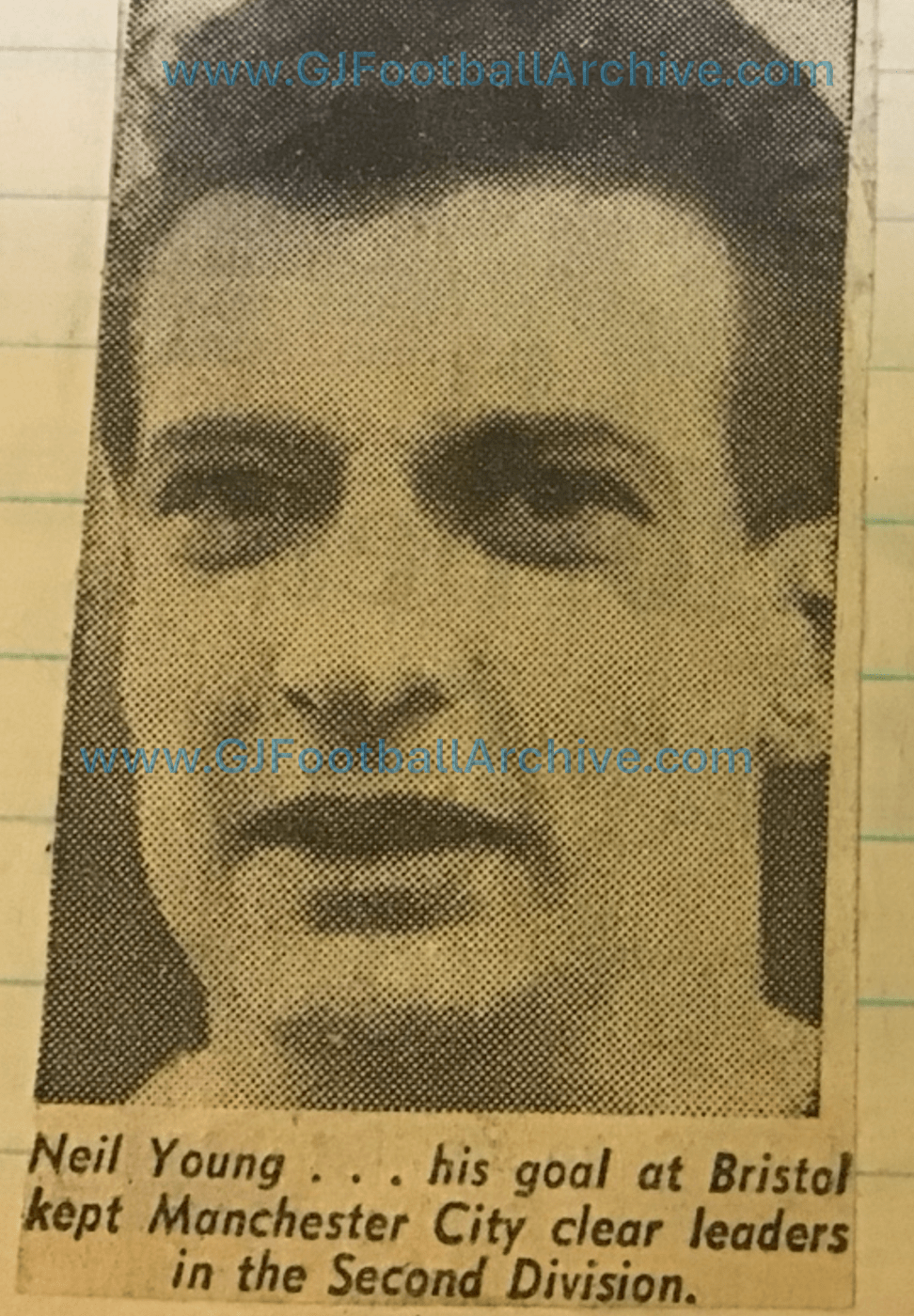
Bell signed on 16 March. Here for subscribers are contemporary match reports and also an image of Young’s goal too:
Subscribe to get access
Read more of this content when you subscribe today. It costs £3 per month (cancel anytime) or sign up at a discounted £20 per year. Every subscriber gets access to the 1000s of articles already posted and those posted throughout your subscription. This includes the full Manchester A Football History and my first City book published in 1989
If you enjoy all the free material on my website and would like to support my research and keep this website going (but don’t want to subscribe) then why not make a one-time donation (or buy me a coffee). All support for my research is valued and welcome. It allows me to keep some free material available for all. Thanks.
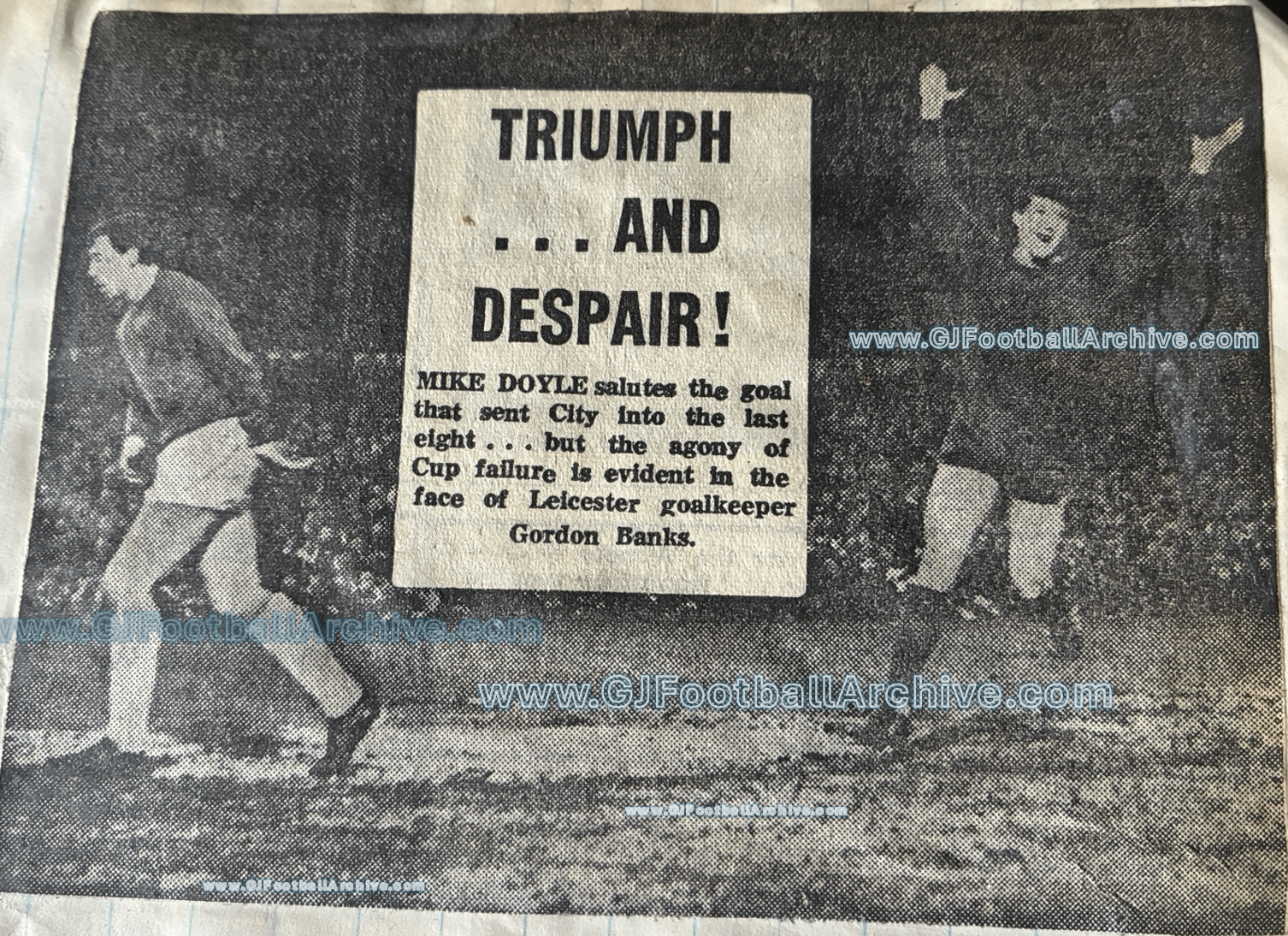
Today (9 March) in 1966 Second Division Manchester City defeated First Division Leicester City 1-0 in a FAC 5th round replay. Gordon Banks was the Leicester ‘keeper and City gained many plaudits from this display. More was to follow as the football world began to notice how City were revitalised under manager Joe Mercer and his assistant Malcolm Allison. Were you there that day? If you were please feel free to add your comments.
Here for subscribers are some contemporary match reports from this game:
Subscribe to get access
Read more of this content when you subscribe today. It costs £3 per month (cancel anytime) or sign up for a year at a time at a discounted price of £20 per year. This gives access to every article, book, interview etc. posted to the site so far. Why not sign up for a month and see what you think?
You can find out more on Manchester City during the 1965-66 season by reading the following 4100 word article. As with most of the other features in this series it includes words from interviews I have performed with those who were there. This is a subscriber article (see below).
Subscribe to get access
Read more of this content when you subscribe today. It costs £3 per month (cancel anytime) or sign up for a year at the discounted price of £20 per year (works out £1.67 per month). Subscribers access the 1000+ articles posted so far and the others scheduled during the life of your subscription.
If you enjoy all the free material on my website and would like to support my research and keep this website going (but don’t want to subscribe) then why not make a one-time donation (or buy me a coffee). All support for my research is valued and welcome. It allows me to keep some free material available for all. Thanks.
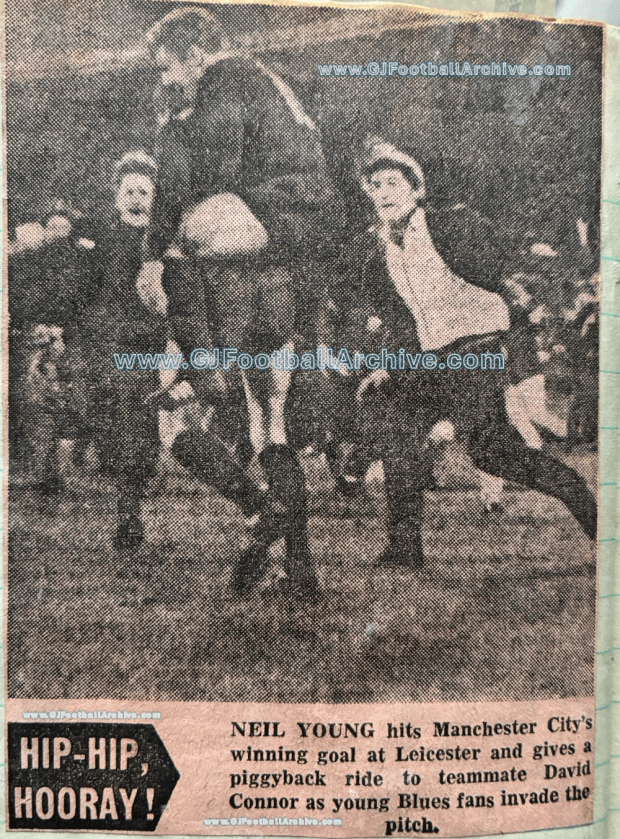
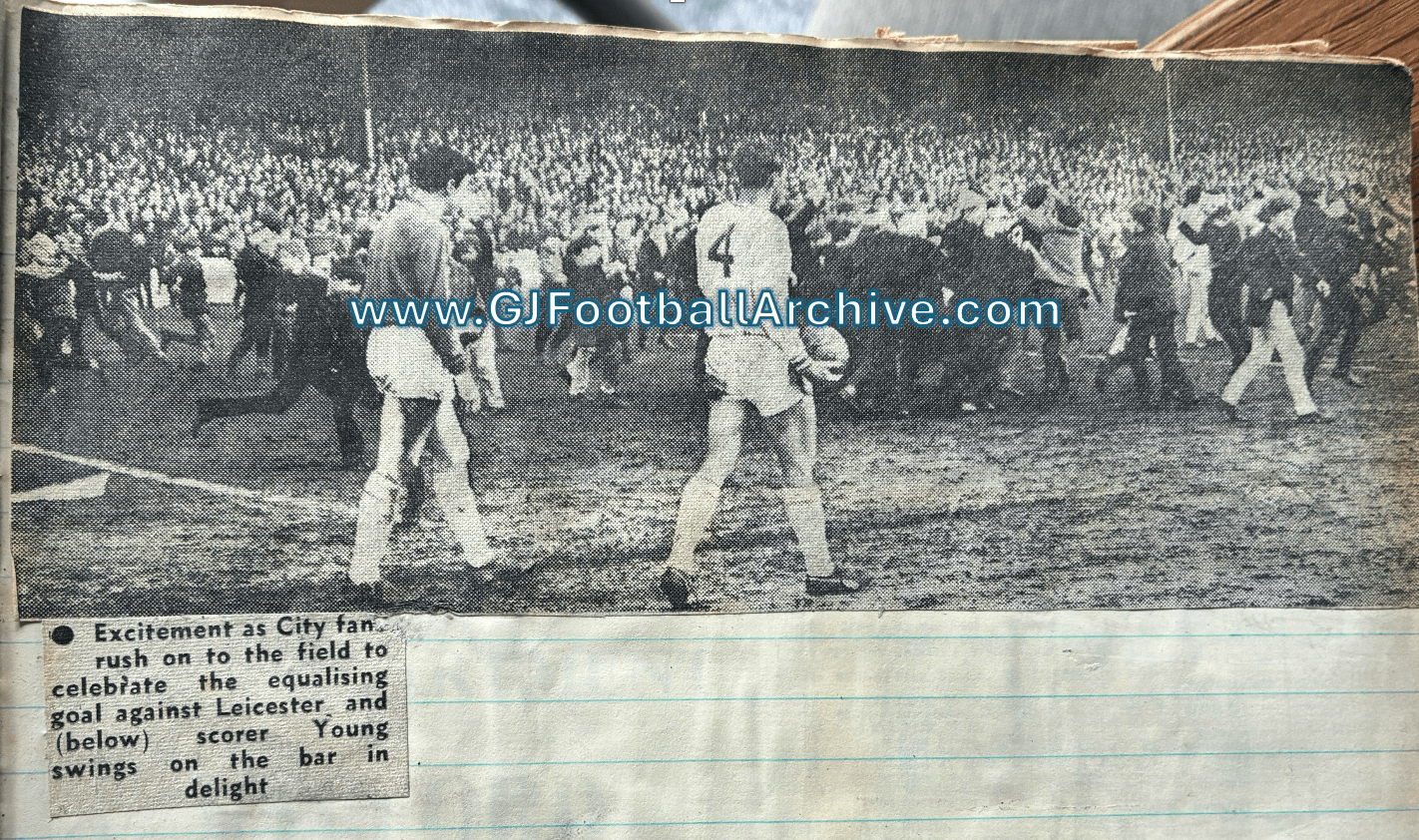
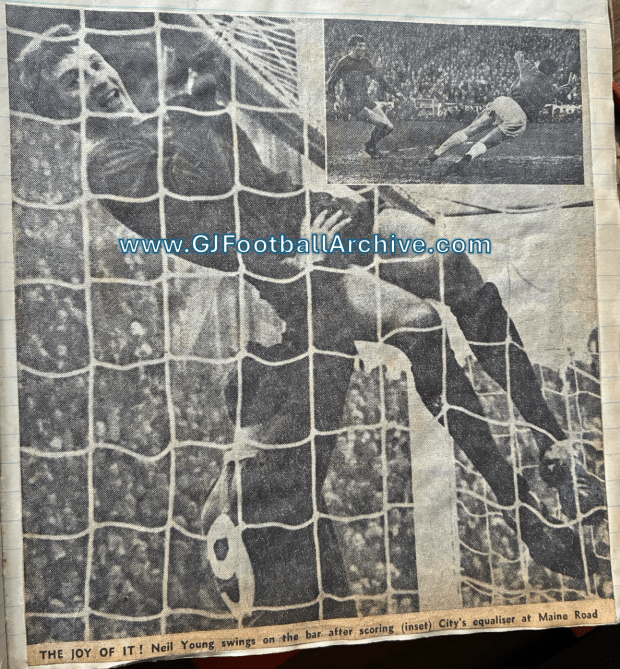
Today (5 March) in 1966 two goals from Neil Young helped Second Division Manchester City to a 2-2 draw against First Division Leicester City in the 5th round of the FA Cup. Gordon Banks was the Leicester ‘keeper and City gained many plaudits from this display. More was to follow as the football world began to notice how City were revitalised under manager Joe Mercer and his assistant Malcolm Allison. Were you there that day? If you were please feel free to add your comments.
Here for subscribers are some contemporary match reports and images from this game:
Subscribe to get access
Read more of this content when you subscribe today. It costs £3 per month (cancel anytime) or sign up for a year at a time at a discounted price of £20 per year. This gives access to every article, book, interview etc. posted to the site so far. Why not sign up for a month and see what you think?
You can find out more on Manchester City during the 1965-66 season by reading the following 4100 word article. As with most of the other features in this series it includes words from interviews I have performed with those who were there. This is a subscriber article (see below).
Subscribe to get access
Read more of this content when you subscribe today. It costs £3 per month (cancel anytime) or sign up for a year at the discounted price of £20 per year (works out £1.67 per month). Subscribers access the 1000+ articles posted so far and the others scheduled during the life of your subscription.
If you enjoy all the free material on my website and would like to support my research and keep this website going (but don’t want to subscribe) then why not make a one-time donation (or buy me a coffee). All support for my research is valued and welcome. It allows me to keep some free material available for all. Thanks.
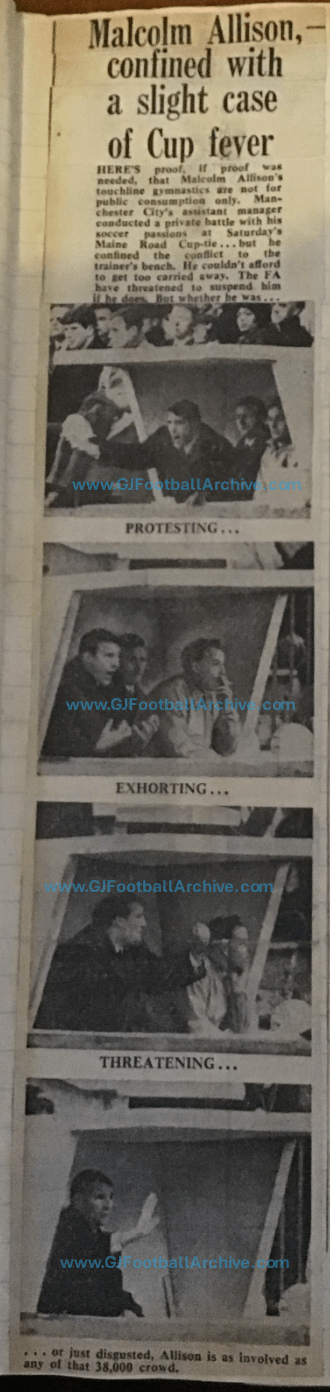
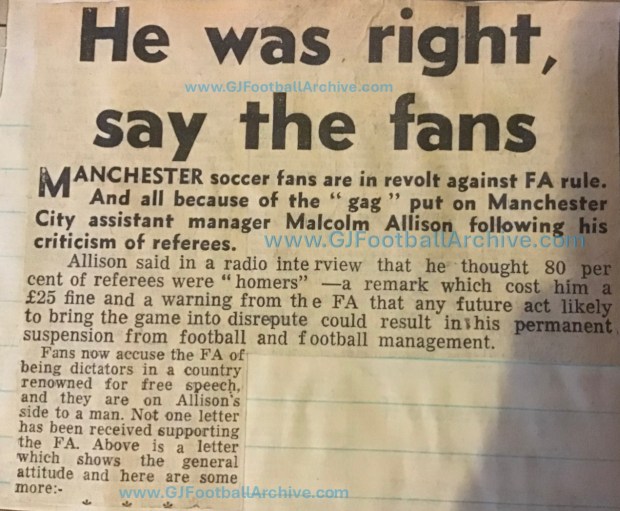
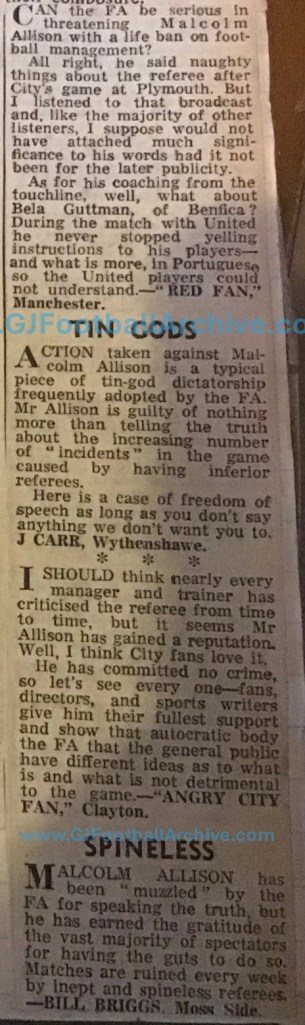
This week in 1966 Manchester City assistant manager Malcolm Allison was in trouble for criticising refereeing decisions on the radio. He was irate at inconsistencies seen and suggested that referees were ‘homers’ (giving decisions to home teams rather than being fair to both sides). Inevitably, his comments brought censure from the FA but he did receive a lot of support from fans. Here’s a selection of the newspaper coverage as it appears in the 1965-66 scrapbook I have:
You can find out more on Manchester City during the 1965-66 season by reading the following 4100 word article. As with most of the other features in this series it includes words from interviews I have performed with those who were there. This is a subscriber article (see below).
Subscribe to get access
Read more of this content when you subscribe today. It costs £3 per month (cancel anytime) or sign up for a year at the discounted price of £20 per year (works out £1.67 per month). Subscribers access the 1000+ articles posted so far and the others scheduled during the life of your subscription.
If you enjoy all the free material on my website and would like to support my research and keep this website going (but don’t want to subscribe) then why not make a one-time donation (or buy me a coffee). All support for my research is valued and welcome. It allows me to keep some free material available for all. Thanks.
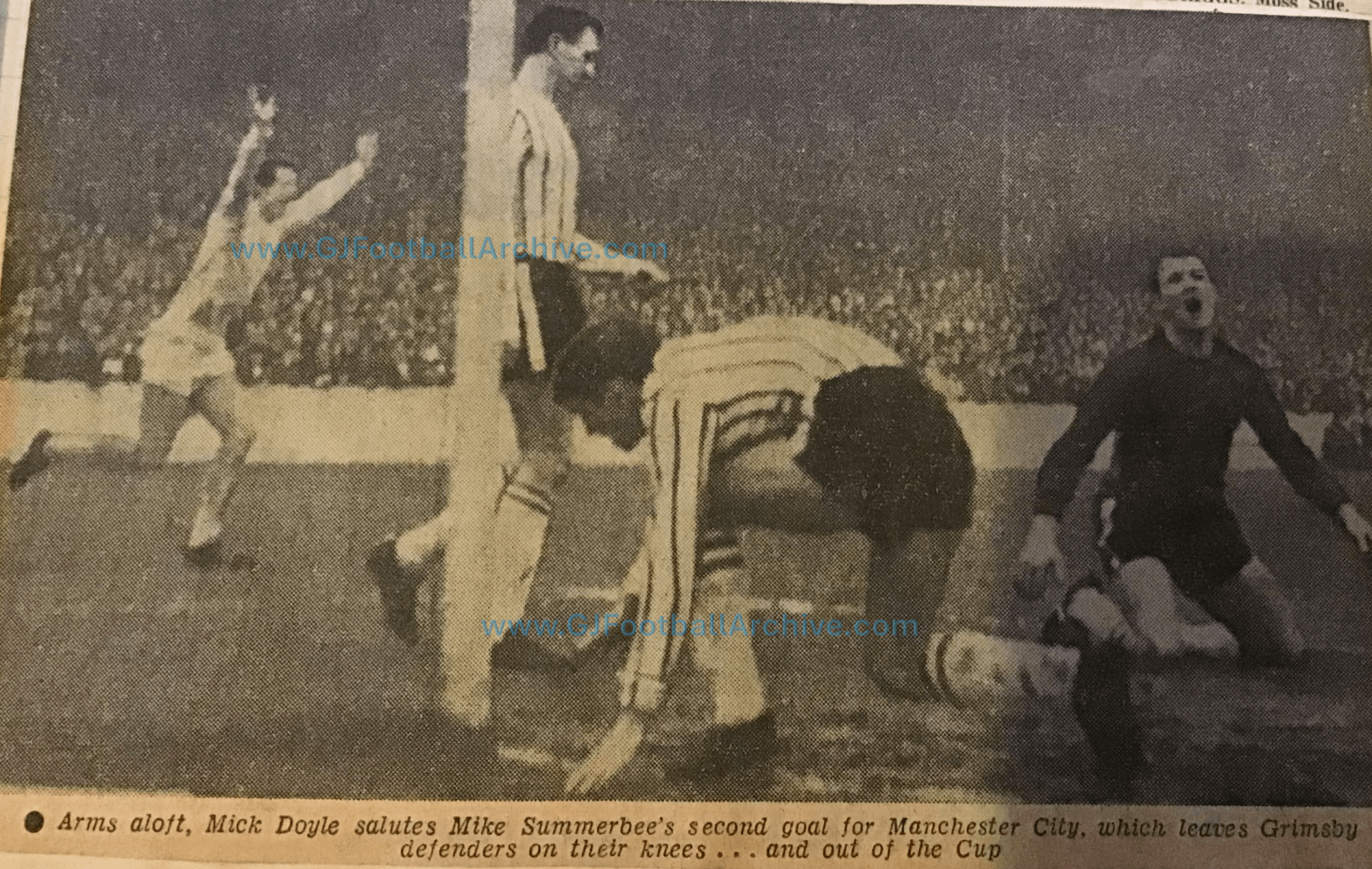
Today (12 February) in 1966 a goal from Mike Summerbee and an own goal brought City a 2-0 FA Cup win over Grimsby Town. The victory brought great praise City’s way. Were you at Maine Road that day? If you were please feel free to add your comments. Here for subscribers are match reports from this game:
Subscribe to get access
Read more of this content when you subscribe today. It costs £3 per month (cancel anytime) or sign up for a year at a time at a discounted price of £20 per year. This gives access to every article, book, interview etc. posted to the site so far. Why not sign up for a month and see what you think?
You can find out more on Manchester City during the 1965-66 season by reading the following 4100 word article. As with most of the other features in this series it includes words from interviews I have performed with those who were there. This is a subscriber article (see below).
Subscribe to get access
Read more of this content when you subscribe today. It costs £3 per month (cancel anytime) or sign up for a year at the discounted price of £20 per year (works out £1.67 per month). Subscribers access the 1000+ articles posted so far and the others scheduled during the life of your subscription.
If you enjoy all the free material on my website and would like to support my research and keep this website going (but don’t want to subscribe) then why not make a one-time donation (or buy me a coffee). All support for my research is valued and welcome. It allows me to keep some free material available for all. Thanks.
Today (5 February) in 1966 a goal from Neil Young brought City a 1-1 draw at promotion chasing Bristol City. League leaders Manchester City saw this as a point gained rather than one dropped and the wider media coverage talked positively of Manchester’s side. Were you at Bristol that day? If you were please feel free to add your comments.
Here for subscribers are match reports from this game:
Subscribe to get access
Read more of this content when you subscribe today. It costs £3 per month (cancel anytime) or sign up for a year at a time at a discounted price of £20 per year. This gives access to every article, book, interview etc. posted to the site so far. Why not sign up for a month and see what you think?
You can find out more on Manchester City during the 1965-66 season by reading the following 4100 word article. As with most of the other features in this series it includes words from interviews I have performed with those who were there. This is a subscriber article (see below).
Subscribe to get access
Read more of this content when you subscribe today. It costs £3 per month (cancel anytime) or sign up for a year at the discounted price of £20 per year (works out £1.67 per month). Subscribers access the 1000+ articles posted so far and the others scheduled during the life of your subscription.
If you enjoy all the free material on my website and would like to support my research and keep this website going (but don’t want to subscribe) then why not make a one-time donation (or buy me a coffee). All support for my research is valued and welcome. It allows me to keep some free material available for all. Thanks.
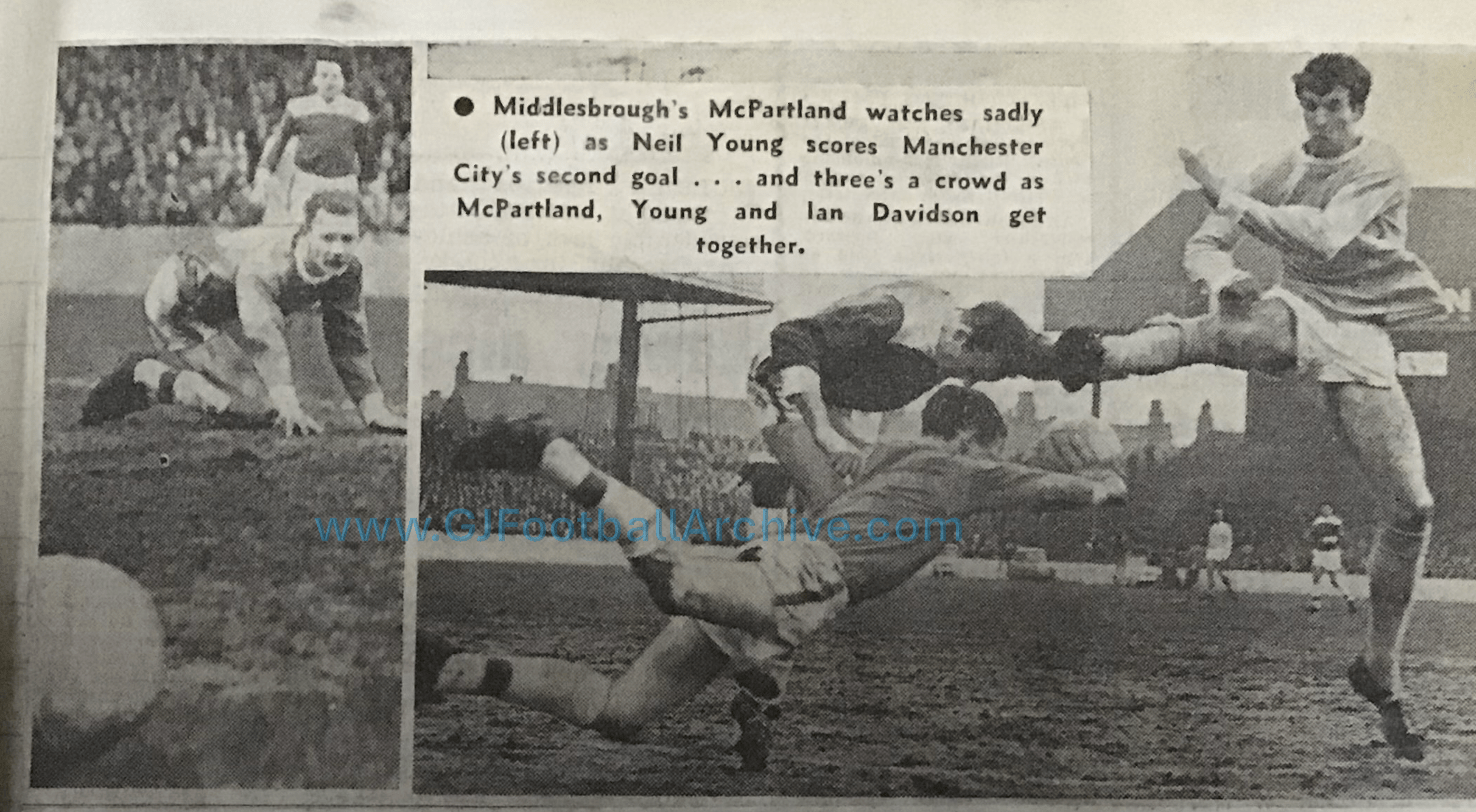
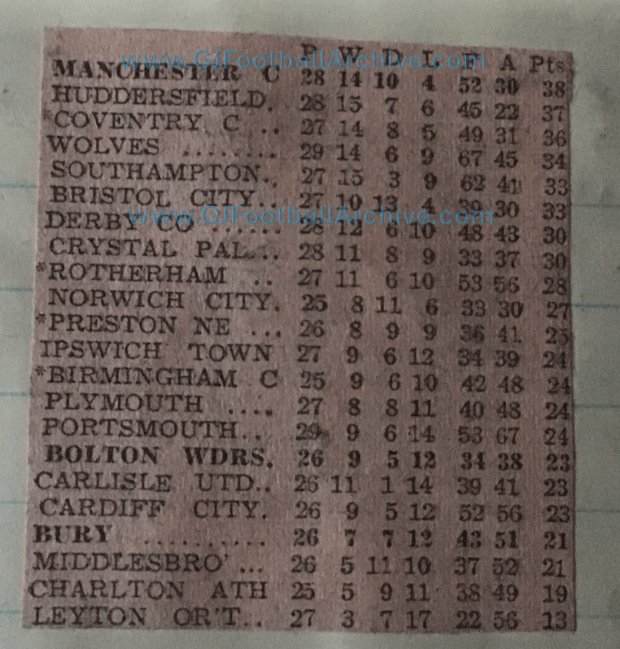
Today (29 January) in 1966 goals from Mike Summerbee (2) and Neil Young brought City a 3-1 victory over Middlesbrough and left City top of Division Two. It was a convincing win (Malcolm Allison boasted how City could have scored 6) but fans actually felt dissatisfied at the end as the Blues had eased off. Here’s the League table from after that game:
Here for subscribers are match reports from this game:
Subscribe to get access
Read more of this content when you subscribe today. It costs £3 per month (cancel anytime) or sign up for a year at a time at a discounted price of £20 per year. This gives access to every article, book, interview etc. posted to the site so far. Why not sign up for a month and see what you think?
You can find out more on Manchester City during the 1965-66 season by reading the following 4100 word article. As with most of the other features in this series it includes words from interviews I have performed with those who were there. This is a subscriber article (see below).
Subscribe to get access
Read more of this content when you subscribe today. It costs £3 per month (cancel anytime) or sign up for a year at the discounted price of £20 per year (works out £1.67 per month). Subscribers access the 1000+ articles posted so far and the others scheduled during the life of your subscription.
If you enjoy all the free material on my website and would like to support my research and keep this website going (but don’t want to subscribe) then why not make a one-time donation (or buy me a coffee). All support for my research is valued and welcome. It allows me to keep some free material available for all. Thanks.
 Gary James' Football Archive