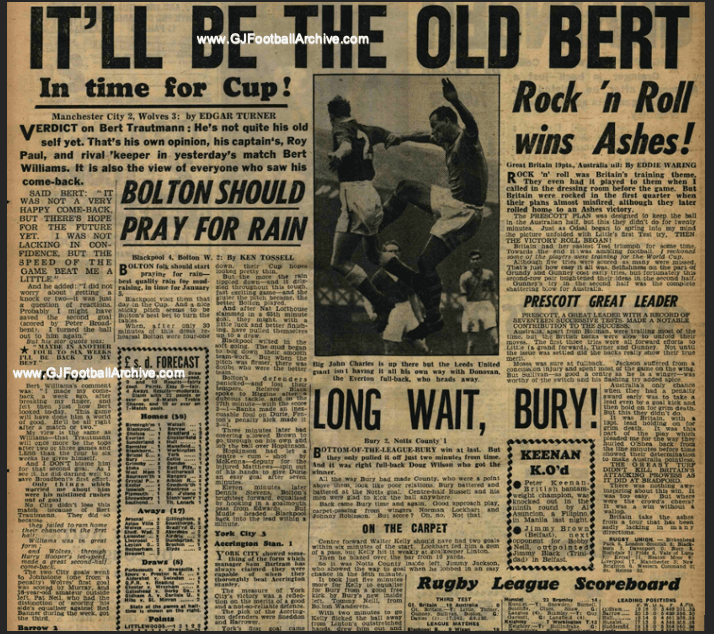
Today marks a special day in the history of football. 100 years ago today (22 October 1923) a boy was born in Bremen, Germany who would go on to be a major footballing icon with a remarkable story. Bernhard Carl Trautmann was that boy. Here to mark the centenary of his birth is a feature on a crucial game in his career. No, it’s not the 1956 FA Cup final, it’s 6 years earlier…
The game I’m talking about is a League game with Fulham – in fact it’s a City defeat! Why was this so special? Subscribers can find out below. There’s also a special video interview with me about Trautmann here for subscribers to view:
Subscribe to get access
Read more of this content when you subscribe today.
PIONEERING WOMEN’S FOOTBALL TEAM TO BE RECOGNISED WITH A BLUE PLAQUE
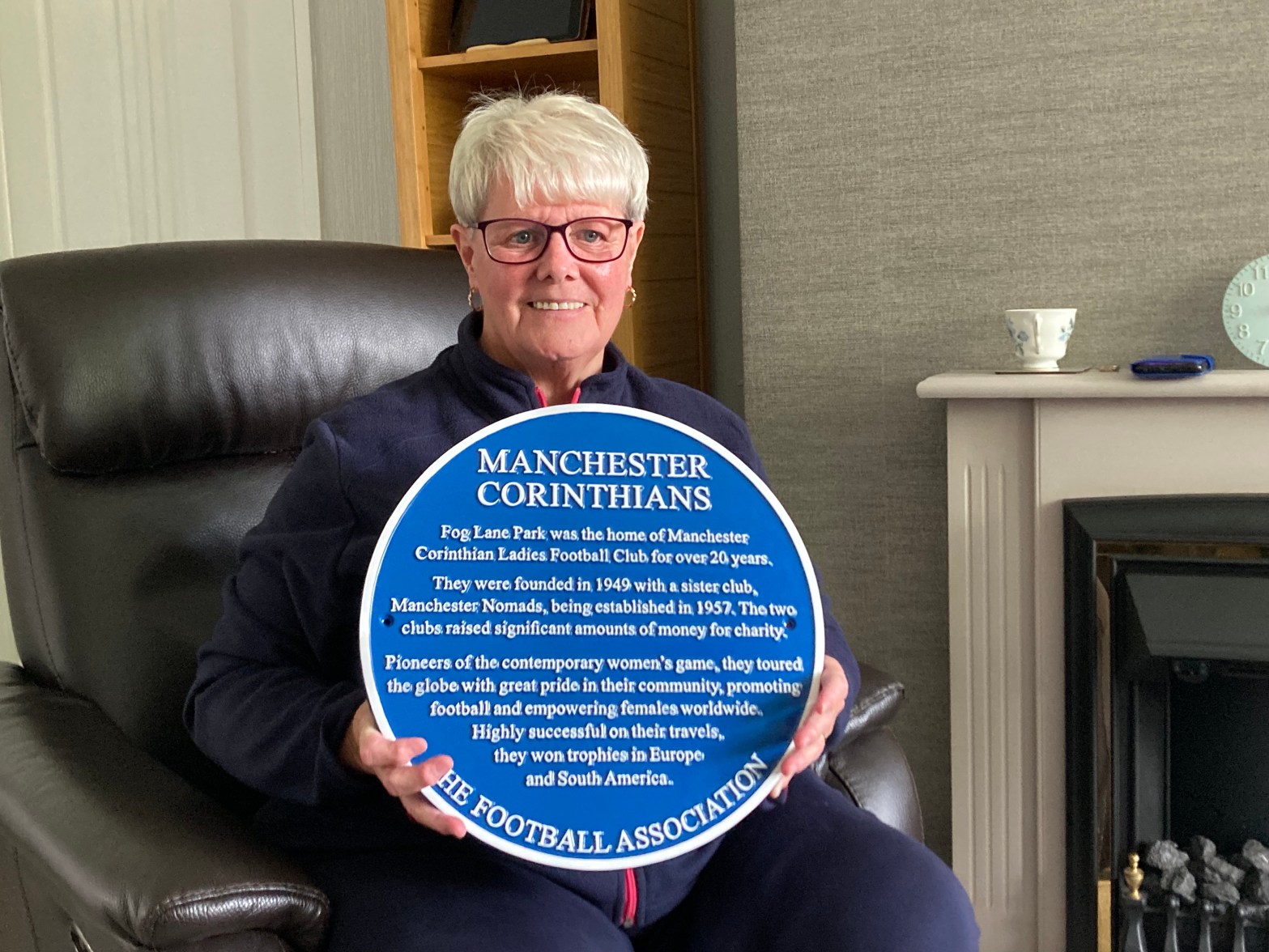
Manchester Corinthian Ladies Football Club to be recognised with a blue plaque
Unveiling will take place at Fog Lane Park, Didsbury, their home for over 20 years from formation in 1949
The plaque, two murals of the team and other tributes will be unveiled at the park on Friday 6 October at noon
The plaque and murals were funded by an appeal which included significant donations from the Football Association and Manchester City Council, alongside dozens of individual donations
Over 20 players, including a 92 year old who joined the team at formation, will be in attendance
A Blue plaque and other tributes to the pioneering women’s football team Manchester Corinthians will be unveiled on Friday 6 October at noon at the site of their formation, Fog Lane Park, Didsbury, Manchester. In attendance will be over 20 women who played for the club between 1949 and 1983 and representatives from the Football Association, Manchester Football Association, Manchester City Council, football fans, members of the public and former England international Kerry Davis.
One of the former players in attendance will be 92 year old, Dorothy Alcock, who first joined the team at formation in 1949. Others present on the day participated in trophy winning tours across Europe and South America during the fifties, sixties and seventies.
Dorothy Alcock, Manchester Corinthian from formation in 1949
The Corinthians raised significant amounts of money for charity during their existence while also promoting football and female endeavour at a time when participation in the sport was often frowned upon.
During the 1950s, playing as an unofficial England side, the Corinthians won a major European tournament in Germany and were supported on their travels by legendary Manchester City men’s goalkeeper Bert Trautmann.
In 1960 they found success in an unofficial ‘World Cup’ (officially the first ‘Torneo Internacional De Futbol Femenino’) in Venezuela as part of a significant tour of the West Indies and South America. Former player (outside right) Margaret Whitworth recalls: ‘We were treated like film stars. There were crowds everywhere we went. Playing in front of 56,000 was thrilling and the way women’s football was treated was so different to how it was back in England at the time. Here we had to play on park pitches or at other sports grounds, but there we played in major football stadiums.’
During the late 1960s the club’s management played a leading role in the creation of the Women’s Football Association. Both the Corinthians and their sister club the Nomads were founder members but their manager Gladys Aikin became a member of the governing body’s committee. By this time their determination was to see the growth of the game and lifting of all barriers.
The Corinthians continued to play and by the end of the 1970s they were frequently coached by the Manchester City 1956 FA Cup winner Dave Ewing at City’s Platt Lane training complex.
During the 1980s a ground move led to the club being renamed Woodley Ladies, and that club ceased to exist by the end of the decade. Many of the Corinthians from the late 1970s and 1980s became players with Manchester City’s women’s team during its inaugural season of 1988-89.
Today at least one former Corinthian, Lesley Wright, plays walking football at the highest level possible and continues to coach women’s football, continuing the Corinthian influence through to the modern day development of the sport.
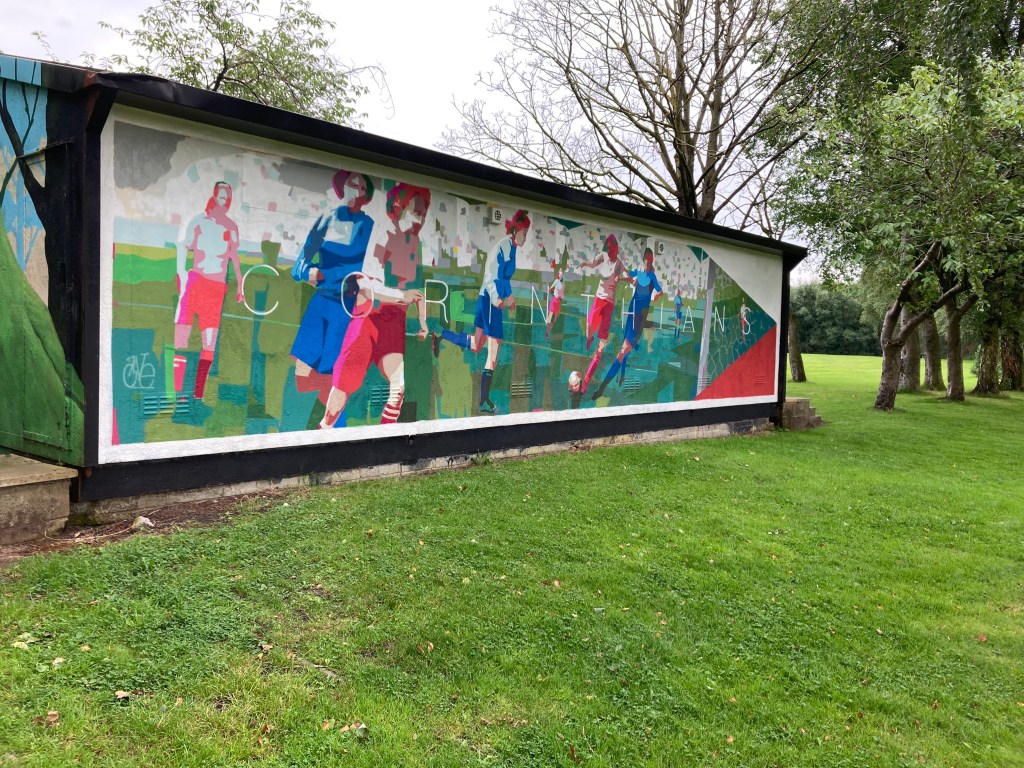
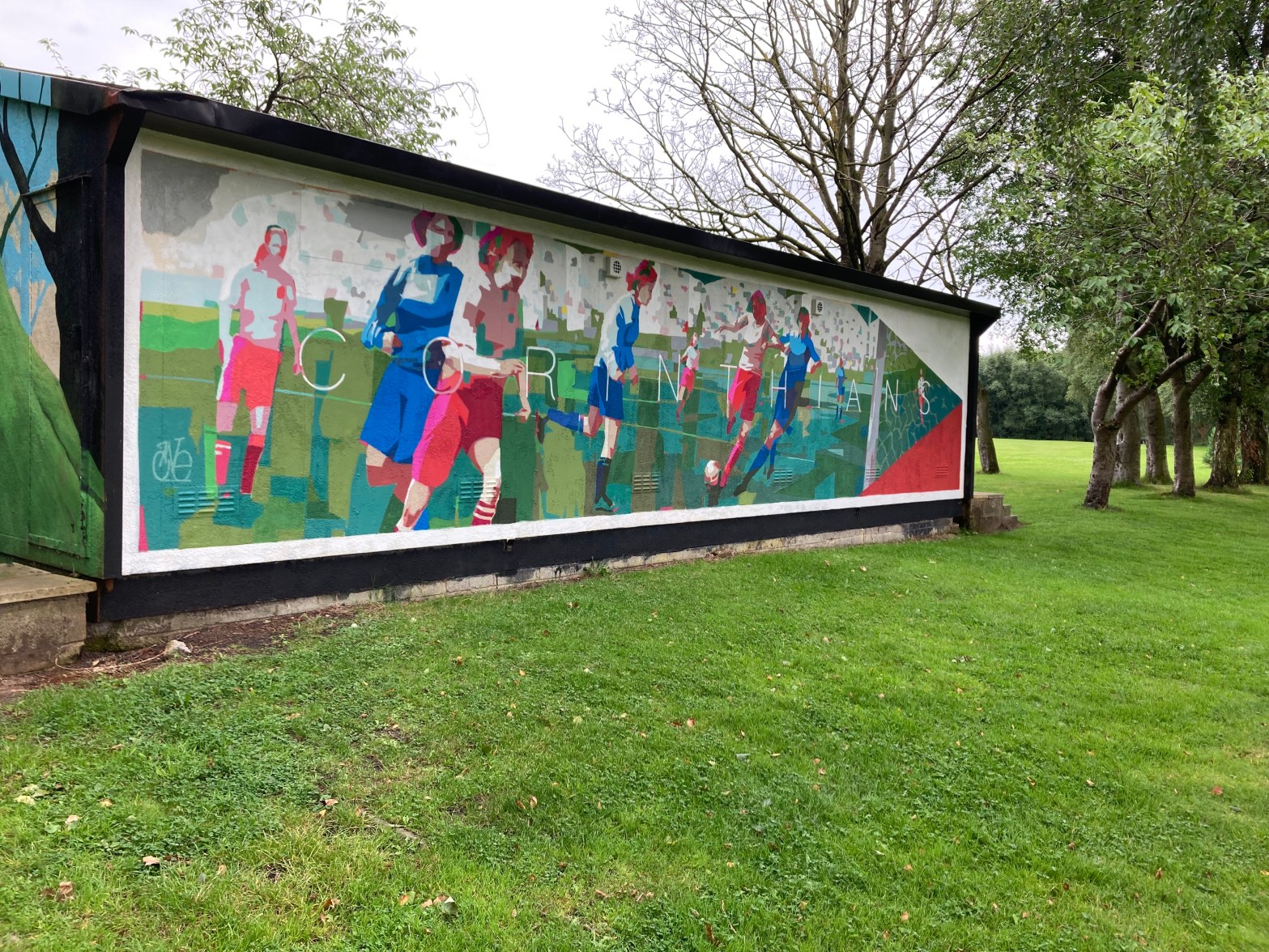
The plaque and murals were funded by an appeal which included significant donations from the Football Association and Manchester City Council, alongside dozens of individual donations. The community group, the Friends of Fog Lane Park, have been instrumental in ensuring the Corinthians are remembered and that this aspect of the park’s life is properly recorded and acknowledged. The murals were designed and painted by artist Gavin Renshaw.
Manchester Corinthians mural by artist Gavin RenshawWashing in the duck pond, Manchester Corinthians by Artist Gavin Renshaw
About Manchester Corinthian Ladies Football Club
Manchester Corinthian Ladies FC was an English football club founded in 1949 by Percy Ashley. He established the club because his daughter Doris wanted to play football but couldn’t find a team. At this time The FA ban on women’s football using FA affiliated grounds was in place (from 1921; lifted in 1970). During the inaugural seasons the Corinthians played friendlies and in small scale competitions in the UK, but during the mid to late 1950s they embarked on a series of European tours.
Their fame grew and they received invites to play across Europe, in Africa and in South America. Occasionally playing as an unofficial England side in tournaments (these were the days before there was an official England team), they found success often, becoming the most successful women’s team by some distance.
Under the management of Percy Ashley, followed by Gladys Aikin and then George Aikin, the Corinthians were important representatives of women’s football, both internationally and domestically, always contributing to the game’s growth and development.
PIONEERING WOMEN’S FOOTBALL TEAM TO BE RECOGNISED WITH A BLUE PLAQUE TOMORROW!
Manchester Corinthian Ladies Football Club to be recognised with a blue plaque
Unveiling will take place at Fog Lane Park, Didsbury, their home for over 20 years from formation in 1949
The plaque, two murals of the team and other tributes will be unveiled at the park tomorrow (Friday 6 October) at noon
The plaque and murals were funded by an appeal which included significant donations from the Football Association and Manchester City Council, alongside dozens of individual donations including one from the Dick, Kerr Ladies Foundation, demonstrating the great community of women’s football that existed in North West England
Over 20 players, including a 92 year old who joined the team at formation, will be in attendance
A Blue plaque and other tributes to the pioneering women’s football team Manchester Corinthians will be unveiled on Friday 6 October at noon at the site of their formation, Fog Lane Park, Didsbury, Manchester. In attendance will be over 20 women who played for the club between 1949 and 1983 and representatives from the Football Association, Manchester Football Association, Manchester City Council, football fans, members of the public and former England international Kerry Davis.
One of the former players in attendance will be 92 year old, Dorothy Alcock, who first joined the team at formation in 1949. Others present on the day participated in trophy winning tours across Europe and South America during the fifties, sixties and seventies.
The Corinthians raised significant amounts of money for charity during their existence while also promoting football and female endeavour at a time when participation in the sport was often frowned upon.
During the 1950s, playing as an unofficial England side, the Corinthians won a major European tournament in Germany and were supported on their travels by legendary Manchester City men’s goalkeeper Bert Trautmann.
In 1960 they found success in an unofficial ‘World Cup’ (officially the first ‘Torneo Internacional De Futbol Femenino’) in Venezuela as part of a significant tour of the West Indies and South America. Former player (outside right) Margaret Whitworth recalls: ‘We were treated like film stars. There were crowds everywhere we went. Playing in front of 56,000 was thrilling and the way women’s football was treated was so different to how it was back in England at the time. Here we had to play on park pitches or at other sports grounds, but there we played in major football stadiums.’
During the late 1960s the club’s management played a leading role in the creation of the Women’s Football Association. Both the Corinthians and their sister club the Nomads were founder members but their manager Gladys Aikin became a member of the governing body’s committee. By this time their determination was to see the growth of the game and lifting of all barriers.
The Corinthians continued to play and by the end of the 1970s they were frequently coached by the Manchester City 1956 FA Cup winner Dave Ewing at City’s Platt Lane training complex.
During the 1980s a ground move led to the club being renamed Woodley Ladies, and that club ceased to exist by the end of the decade. Many of the Corinthians from the late 1970s and 1980s became players with Manchester City’s women’s team during its inaugural season of 1988-89.
Today at least one former Corinthian, Lesley Wright, plays walking football at the highest level possible and continues to coach women’s football, continuing the Corinthian influence through to the modern day development of the sport.
The plaque and murals were funded by an appeal which included significant donations from the Football Association and Manchester City Council, alongside dozens of individual donations. The community group, the Friends of Fog Lane Park, have been instrumental in ensuring the Corinthians are remembered and that this aspect of the park’s life is properly recorded and acknowledged. The murals were designed and painted by artist Gavin Renshaw.
Manchester Corinthians mural by artist Gavin RenshawWashing in the duck pond, Manchester Corinthians by Artist Gavin Renshaw
About Manchester Corinthian Ladies Football Club
Manchester Corinthian Ladies FC was an English football club founded in 1949 by Percy Ashley. He established the club because his daughter Doris wanted to play football but couldn’t find a team. At this time The FA ban on women’s football using FA affiliated grounds was in place (from 1921; lifted in 1970). During the inaugural seasons the Corinthians played friendlies and in small scale competitions in the UK, but during the mid to late 1950s they embarked on a series of European tours.
Their fame grew and they received invites to play across Europe, in Africa and in South America. Occasionally playing as an unofficial England side in tournaments (these were the days before there was an official England team), they found success often, becoming the most successful women’s team by some distance.
Under the management of Percy Ashley, followed by Gladys Aikin and then George Aikin, the Corinthians were important representatives of women’s football, both internationally and domestically, always contributing to the game’s growth and development.
It’s Wolves v Manchester City today (30 September 2023) and there are dozens of stories referencing Wolves on this website. There have been major finals and significant league games. One of the away games I vividly remember going to came in October 1987 and is a great contrast with City’s modern day records:
I like this colour team photo of Manchester City which was taken as part of the build-up to the 1955 FA Cup final between the Blues and Newcastle United. City lost that final – and at the time of writing it remains the last major domestic trophy won by the Geordies.
At least two of the men here later had involvement in women’s football with the Manchester Corinthians. Bert Trautmann acted as an ambassador for the pioneering women’s team later in the 1950s while Dave Ewing coached the team when it used City’s Platt Lane facilities in the late 1970s/early 1980s. You can find out more about the Corinthians here:
Manchester City dominated the Manchester derby played on this day (19 September) in 1959. That day the Blues defeated the Reds 3-0 with an outstanding performance from Joe Hayes. Enjoy the match report here:
If you have enjoyed this then why not subscribe to the site to see all the other great content or make a donation to keep the site afloat. See below for details.
If you enjoy all the free material on my website and would like to support my research and keep this website going (but don’t want to subscribe) then why not make a one-time donation (or buy me a coffee). All support for my research is valued and welcome. It allows me to keep some free material available for all. Thanks.
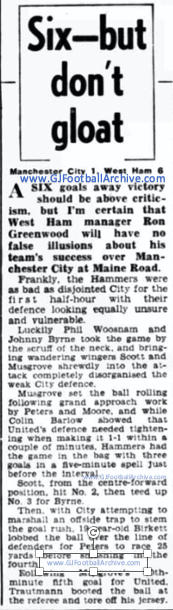
It was a miserable day all round as Manchester City’s Bert Trautmann was sent off for booting the ball at the referee on this day (8 September 1962). City lost the game with West Ham 6-1 with Trautmann’s dismissal coming after the fifth goal.
After he had booted the ball at the ref, the official took out his notebook and ordered Trautmann off. The German goalkeeper immediately took his shirt off and headed down the tunnel and straight out of the ground and into his car.
Here are Trautmann’s views, as told to a journalist the following day:
The view from West Ham was that their team was not particularly worth the 6-1 victory. This London report makes interesting reading:
Demonstrations followed the game expressing anger towards the manager Les McDowall but Trautmann managed to escape fan criticism.
It’s day 34 of my posts counting down to the centenary of Maine Road’s opening game. Today – Bert Trautmann’s testimonial scenes.
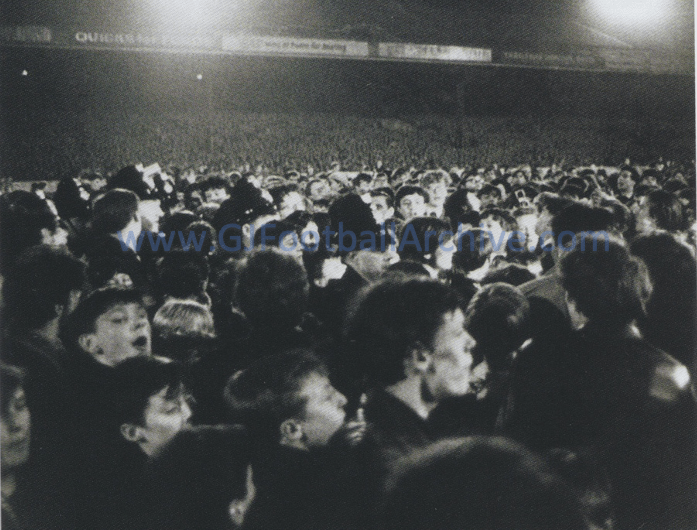
In 1964 Manchester City staged a testimonial game for legendary City goalkeeper Bert Trautmann. Officially there were less than 48,000 there (in a stadium that could hold in excess of 60,000) yet fans and others there that night know the attendance was much higher. My own dad told me last week how him & my mam were going to the game but when they arrived the turnstiles were closed and thousands were locked out a long time before kick off.
There are stories of some fans trying to climb walls to get in and others talk about the packed terraces and stands.
It was truly the biggest testimonial game ever at Maine Road in terms of numbers, even if officially it was short of capacity. In the 90s I often asked players and officials from that era about this attendance, including Bert. No one actually wanted to say much about the discrepancy between the numbers officially reported and the actual volume of people in attendance, so we can leave all of that to the imagination. What they did all agree on is that there must have been well over 60,000 there that night and that Bert deserved whatever was raised from the match.
This image from 1961 shows how the stadium looked at the time of Trautmann’s testimonial.
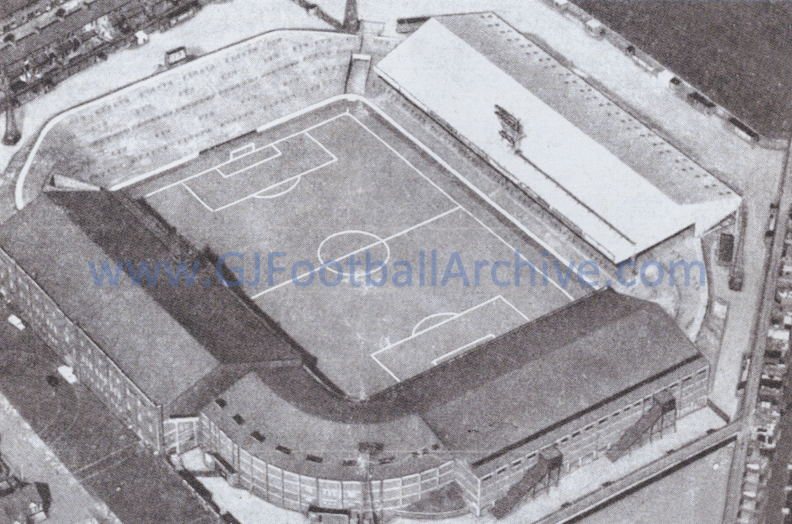
Below is a view of Maine Road from 1971. The main image of fans on the pitch (above) is taken from near the Main Stand (number 2) looking across to the Kippax (7/8).
Maine Road aerial 1971 from Farewell To Maine Road
If you’d like to read more on the history of Maine Road, take a look at Farewell To Maine Road, which can be downloaded from this page:
If you enjoy all the free material on my website and would like to support my research and keep this website going (but don’t want to subscribe) then why not make a one-time donation (or buy me a coffee). All support for my research is valued and welcome. It allows me to keep some free material available for all. Thanks.
As it’s FA Cup final day I thought I’d make my Maine Road post about the first Manchester derby in the FA Cup to be played at the old stadium… that was in 1955. It’s day 17 of my posts counting down to the centenary of Maine Road’s opening game.
The first FA Cup Manchester derby at Maine Road was played on 29 January 1955 and ended in a 2-0 City win. Subscribers to this site can read the full story of the game below:
Subscribe to get access – Monthly
Read more of this content when you subscribe today. It costs £3 per month (cancel anytime) or £20 a year (see below). For full details on what benefits you get see ‘How To Subscribe’ further down this page.
Read more of this content when you subscribe today. It costs £3 per month (above) or £20 a year (here). For full details on what benefits you get see ‘How To Subscribe’ further down this page.
For those unfamiliar with Maine Road the photo below may help locate where the above was taken from. It was taken looking towards the Popular Side (later Kippax) at the Platt Lane End. Basically the goals near 3 looking towards the tunnel at 8.
Maine Road aerial 1971 from Farewell To Maine Road
If you’d like to read more on the history of Maine Road, take a look at Farewell To Maine Road, which can be downloaded from this page:
If you enjoy all the free material on my website and would like to support my research and keep this website going (but don’t want to subscribe) then why not make a one-time donation (or buy me a coffee). All support for my research is valued and welcome. It allows me to keep some free material available for all. Thanks.
On this day (18 May) in 1952 Manchester City and Sevilla played each other for the first time. I’m sure most City fans will remember the club’s UEFA Champions League meetings in 2015-16 and in 2022-23. Many will have attended those games but what about their first meeting in 1952? Is there anyone out there who attended that game? If there is please get in touch and tell me your story. Anyway, here for subscribers is a 1400 word article on City’s first trip to Spain…
Subscribe to get access – Annual
Read more of this content when you subscribe today. Subscribe here for £20 a year and get access to everything posted on the site since launching in December 2020. Subscribe below for £3 a month for access to everything since 1st October 2022. Whichever subscription you take out you will get access to everything for the full length of your subscription. Why not do £3 for a month to see what you think?
Read more of this content when you subscribe today. Subscribe above for £20 a year and get access to everything posted on the site since launching in December 2020. Subscribe here for £3 a month for access to everything since 1st October 2022. Whichever subscription you take out you will get access to everything for the full length of your subscription. Why not do £3 for a month to see what you think?