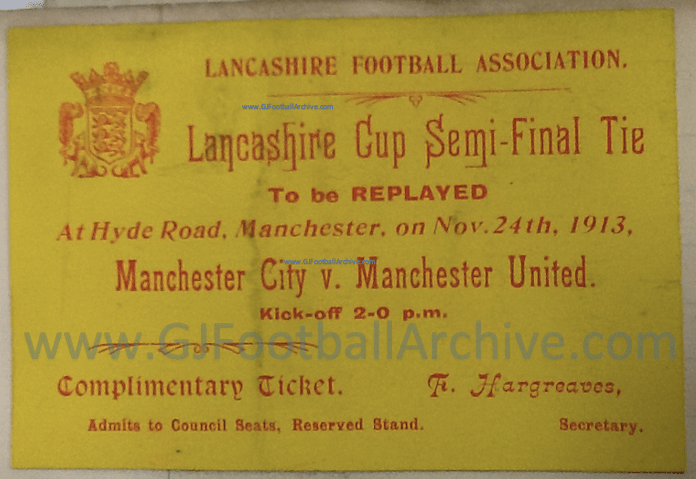
A ticket that may interest a few MCFC & MUFC collectors. This is for the Lancashire Cup semi final replay between City and United played at Hyde Road on this day (November 24) in 1913. Both the initial semi final and the replay were played at Hyde Road with the first game ending in a 1-1 drawn before approximately 8,000. The replay was watched by 12,000 and ended in a United 2-0 win.
Category Archives: Manchester United
November 1920 and A Controversial Offer by MUFC
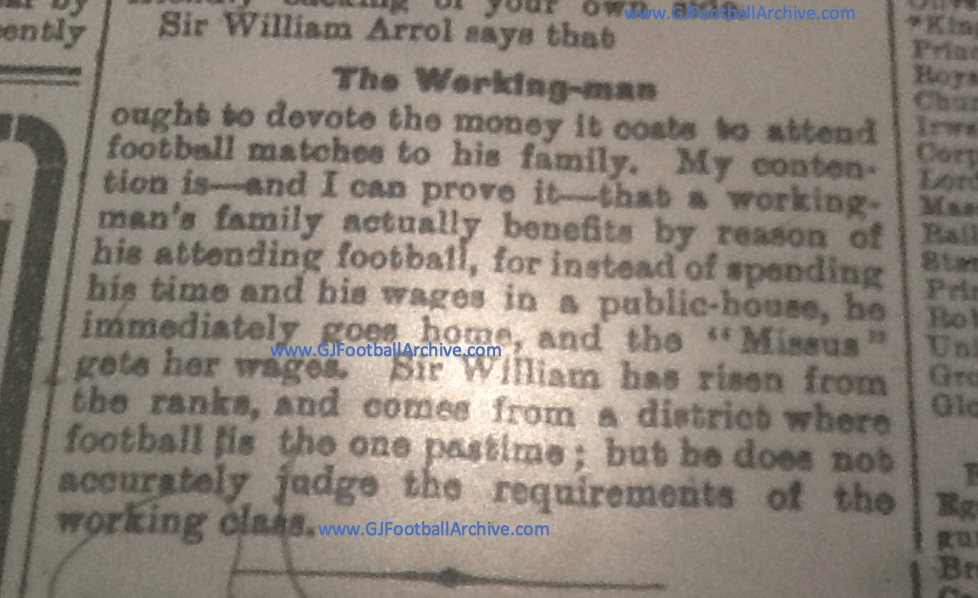
Back in November 1920 Manchester City’s main stand at Hyde Road was destroyed by fire. City asked United if they could move to Old Trafford but their terms were prohibitive according to the media of the day. This report was typical of the reaction. You can read the full story in Manchester A Football History which subscribers to GJFootballArchive.com get as part of their subscription. For more details see: https://gjfootballarchive.com/2021/01/09/manchester-a-football-history-part-one/

Historic Name That Ground – Week 21 Answer
On Monday I asked if you could name this ground. I said: ‘I know it’s a tough one BUT… there’s a reason I’ve chosen this week to post this image plus eagle-eyed visitors to this site may notice that I have actually used part of this image before in connection with another story. So where is it?’ The answer is…
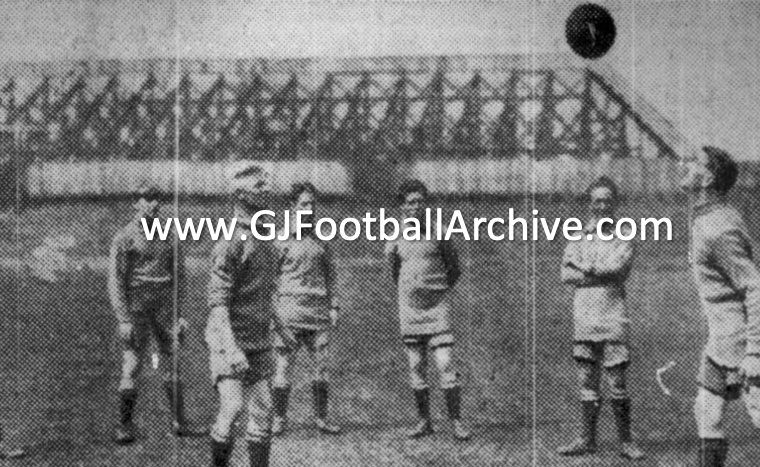
Manchester City’s old Hyde Road ground. So did you work out why I’ve posted the image this week and what the previous story I’d used part of this image for was in connection with? Well this equivalent week in 1920 saw the stand featured being built. This is the only known surviving photo of Hyde Road’s temporary Main Stand built in the week following the Hyde Road fire.
The Main Stand was destroyed on the night of the November 6 by fire and, after attempts to move to United’s Old Trafford failed as a result of United demanding an exorbitant rent. For the full story of this see this chapter of Manchester A Football History (available with the rest of the book as a download for subscribers):
Manchester A Football History part 13
City didn’t think the rent was fair (neither did the media – again see that chapter of Manchester A Football History) and so they decided to soldier on at Hyde Road. A new stand – the one seen from the back here – was constructed using wood.
So, what about the previous story part of the image was used for? That was a piece about Billy Meredith returning to City in July 1921. Meredith is the player on the far right and this photo was taken to show him back at Manchester City.
Watch out for another Historic Name That Ground on Monday.
While you’re here why not subscribe to my site and you can then access every article, interview, audio recording etc. already posted and those that will be posted during your subscription. It costs £20 per year (about £1.67 a month) or you can sign up on a monthly basis at £3 per month (you can cancel at any time, so you could sign sign up for a month, access everything you want and then cancel). You can subscribe below:
Subscribe to get access
Read more of this website including all of Manchester A Football History and my first book, From Maine Men To Banana Citizens, when you subscribe today.
The First ‘Manchester Derbies’
Back in 1881-82 the two teams that would eventually become Manchester City and Manchester United met for the first time with the first fixture occurring on this sate (12th November 1881). To mark this anniversary here’s a free article on the first two derby matches. Both were friendlies of course!
The First Time
Back in 1881-82 the two teams that would eventually become Manchester City and Manchester United met for the first time. This was only a year after the first reported games played by the clubs, then known as St Mark’s (MCFC) and Newton Heath (MUFC). The first St Mark’s game to make it into print was against Macclesfield Baptists on 12th November 1880 while Newton Heath’s earliest known game came seven days later against Bolton Wanderers’ 2nd team.
On the anniversary weekend of St. Mark’s first reported game, 12th November 1881, Newton Heath and West Gorton (St Mark’s) met for the first time. The game, played at North Road, Newton Heath, attracted an attendance of around 3,000 (according to details recorded many years later – I’m dubious about the number but we have nothing contemporary that’s accurate so we’ll go with that).
The ‘Heathens’, who went on to become Manchester United in 1902, defeated West Gorton (St. Mark’s) 3-0 in what was described as a ‘pleasant game’. I wonder what the reporter would make of 21st Century derby matches! Two goals were scored in the first half, one being an own goal by one of West Gorton’s ‘backs’. It is not reported who scored the goal, all the ‘Ashton Reporter’ match report says is that the player was “attempting to stop a shot by E. Thomas”.
One of the significant aspects of the way this game was reported which has created some confusion over the years concerns the St. Mark’s name. It was recorded as West Gorton (St. Mark’s) as opposed to St.Mark’s (West Gorton) and that change has caused some to suggest that the church were unhappy in some way with the club. There was a suggestion that the club was attracting players from outside of the parish and that was an issue, but none of this now appears to be correct. The church appeared to be happy with the way the side was developing and, if anything, the selection of Kirkmanshulme Cricket ground actually meant the team were playing fairly close to the St. Mark’s rectory. The move potentially increased the opportunity for spreading the church’s work and that may be why the person sending in the match reports to the local newspaper changed the emphasis.
The Return Match
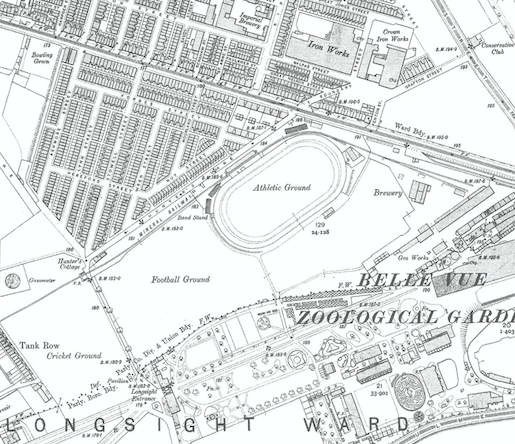
The return match took place at the Kirkmanshulme Cricket ground (West Gorton’s home) on 4th March 1882. On the image above this is the cricket ground to the right of Tank Row (and left of Belle Vue Zoo).
West Gorton (St Mark’s) gained revenge for the 3-0 defeat in their first encounter, as they overturned Newton Heath 2-1. The Gortonians had managed to take the lead, via Charles Beastow, as early as the eighth minute, and then had to hold off the Heathens who had been awarded a couple of consecutive corners. The second actually lead to West Gorton’s second goal. James Collinge obtained possession in front of the West Gorton goal then proceeded to run the full length of the pitch, before sending the ball flying between the Heathens’ posts amid loud cheering.
The score remained 2-0 until late in the game when, according to reports, the Heathens baffled the home ‘keeper Edward Kitchen by performing several good passes before the ball entered the goal. Exactly how baffled Kitchen was we don’t know, but we do know that this game was well attended.
Years later the attendance that day was reported as ‘around 5,000’, although it would be unfair and ridiculous to suggest that this was the actual attendance. It seems incredible that around a sixth of Gorton’s population would have been able to attend a game which, at that point, was not regarded as a ‘derby’ or an important fixture whatsoever. Nevertheless. it does provide an indication that football in West Gorton was becoming popular.
Subscribe to access everything else
This has been a sample of the material on http://www.GJFootballArchive.com If you would like to read all the in-depth articles (including the entire Manchester A Football History book and the audio interview with John Bond) then please subscribe. It works out about £1.67 a month if you take out an annual subscription (£20 per year) or £3 a month if you’d like to sign up for a month at a time. Each subscriber gets full access to the hundreds of articles posted so far and the hundreds scheduled to be posted in the coming weeks.
#ManchesterDerby – Utd 0 City 2
Here’s a brief clip I took today of City fans at the end of the Manchester Derby at Old Trafford. A dominant day for Manchester’s Blues.
Review
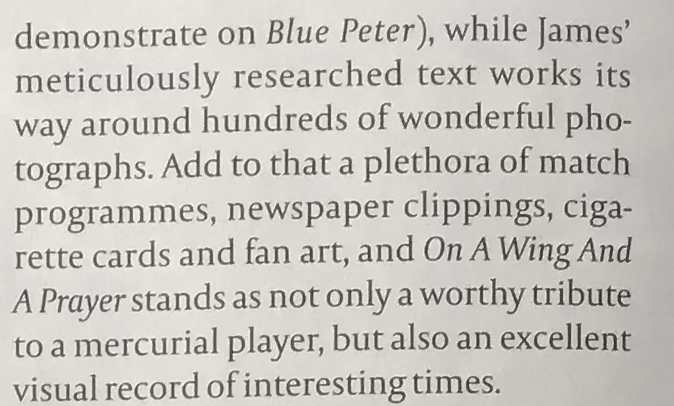
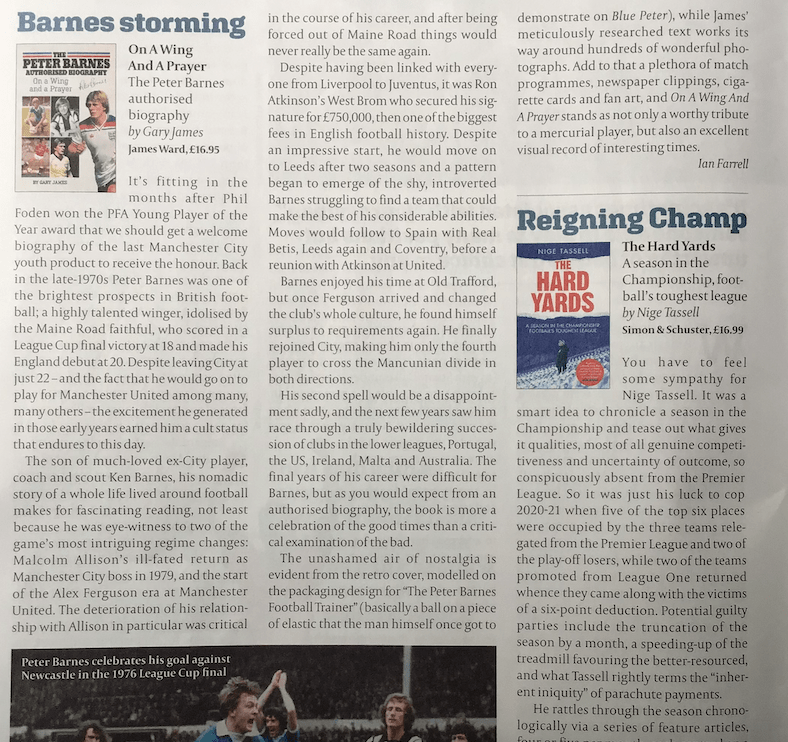
Absolutely delighted with the review of the Peter Barnes Authorised Biography in the November issue of When Saturday Comes. the magazine is out this week and i love the review by Ian Farrell. Thanks to Ian, Andy and all at WSC. it really is appreciated.

Who Decides the Big Six?
Today I’m taking a look at the so-called current Premier League Big Six and the significance of football history. It frustrates me when people assume that any group of clubs have been the biggest throughout football history and so I’ve decided to post this article.
It considers the claims of the so-called Big Six and has some findings that may surprise fans of some of those Big Six clubs. This article is available to subscribers to my site. Subscribing costs £20 a year and subscribers have full access to everything posted on the site, including audio interviews with John Bond, Malcolm Allison, George Graham and others, plus the entire text of Manchester A Football History and a PDF of my first book From Maine Men to Banana Citizens. You can always try it out by subscribing £3 per month and cancel at any time. No matter whether you sign up for a year or a month at a time you get full access to everything for as long as you are a subscriber.
Anyway, here’s the article…
Subscribe to get access
Read more of this content when you subscribe today.
The Peter Barnes Authorised Biography – Available Here!
Tonight Peter & I will be talking about my new book on Peter’s life and career. At Reddish MCFC Supporters Club. If you can’t make it you can still order the book here:
United Kingdom

The Peter Barnes Authorised Biography – UNITED KINGDOM
Order today for £16.95 (incl UK Postage and Packaging).
£16.95
This 372 page, colour paperback book is £16.95 (including UK postage).
You do not need to have a PayPal account to order – use the ‘Pay with PayPal’ button above and it will give you the option to pay by credit/debit card without creating a PayPal account. UK postage included; outside UK contact me for additional postage costs.
Here are the contents pages:

This is the life story of Peter Barnes who, at the age of 18, scored the opening goal in the 1976 League Cup final. Playing for the team he supported, Manchester City, Peter was idolised by fans and was awarded the 1976 PFA Young Player of the Year award. The following year he made his England debut and was described by one journalist as the ‘saviour of English football.’
These were the days when Manchester City won the League Cup; were runners up in the League (missing the title by a point); and were challenging in Europe but then Malcolm Allison returned as coach and within months Peter, and a whole host of international stars, were on their way out. Peter was sold for a record amount. City’s fortunes suffered while Peter carved out a new career at West Bromwich Albion (where he played for Ron Atkinson).
Another record breaking transfer to Leeds United followed, before spells at Real Betis, Coventry City, Manchester United (playing for both Ron Atkinson and his replacement Alex Ferguson) and Tampa Bay Rowdies.
Written by acclaimed author Dr Gary James, this book covers the highs and lows of Peter’s life with stories about his time playing for some of the game’s biggest clubs and most famous managers. It also discusses Peter’s ongoing involvement with the sport and the significance of his family.
Oh, and if you’re wondering where the cover came from… it’s based on the packaging and advertising for the cult toy from the late 1970s The Peter Barnes Football Trainer.
If you run a book shop and would like to know more about the book please email: accounts@manchesterfootball.org
If you’re a media company interested in interviewing Peter or Gary about the book then please contact author Gary James: gary@GJFootballArchive.com
The ISBN is 978-1-9168852-0-2 and stocks are now available for book shops.
You can listen to Peter in conversation with myself about the book here:
Thanks,
Gary James

Reddish Event – 20 August 2021
For those who are interested: tomorrow night Peter Barnes & I will be appearing at the Reddish branch of the Manchester City Supporters Club to talk about The Peter Barnes Authorised Biography. Copies of the book will be available on the night at the specially discounted price of £15 (Cash only).
Details of the evening here:
Welcome Back Party & Official Book Launch – Update 6/8/21
Bert Whalley Plaque Reveal
Earlier this evening I attended the unveiling of a blue plaque commemorating the life and career of Bert Whalley at Stalybridge Celtic.
Whalley is one of Manchester & Tameside’s unsung footballing heroes. Bert passed away in Munich, a victim of the air crash in 1958. The unveiling was performed by former United captain Bryan Robson and Bert’s granddaughter Lindsay Vare.
Several former United players were there, including Tony Whelan who had given a one hour talk to United’s under 23s about Bert. It’s great to see clubs educating their current/future stars about the names from their past.
Special recognition to Mark Metcalf for his efforts ensuring the plaque happened.
For those interested the plaque is situated at Stalybridge’s Bower Fold ground and can be viewed on the exterior of the main stand.
To read about Bert’s life see: